| Journal of Clinical Question. 2025; 2(1): e65 https://doi.org/10.69854/jcq.2025.0003 Advance access publication date 28 February 2025 |
 |
Meta-Analysis
Transcatheter Therapy for Severe Symptomatic Tricuspid Regurgitation: A Systematic Review and Network Meta-Analysis of Randomized Trials
Shihu Men1, Jun Liu2, Zaiqiang Yu 3,*
3,*
1Department of Intensive Care, The Affiliated Hospital of Inner Mongolia University for the Nationalities, Tongliao, Inner Mongolia Autonomous Region, China.
2Department of Cardiology, The Fourth Affiliated Hospital of China Medical University, Shenyang, China.
3Department of Thoracic and Cardiovascular Surgery, Hirosaki University, Aomori, Japan.
*Corresponding Author: e-mail: yuzaiqiang@hirosaki-u.ac.jp
Submitted: January 20, 2025 Accepted: February 27, 2025
Clinical Question Box
Is Transcatheter Therapy Recommended for Treating Severe Symptomatic Tricuspid Regurgitation?
Moderate-quality evidence supports the use of transcatheter therapy to improve the New York Heart Association functional class and quality of life. However, high-certainty evidence shows no significant benefit in reducing mortality or hospitalization rates. Additionally, moderate-quality evidence suggests an increased risk of pacemaker placement. Therefore, transcatheter therapy is weakly recommended for selected patients.
Abstract
Introduction: Tricuspid regurgitation (TR) is a common valvular disorder that primarily affects older adults and imposes an increasing burden on healthcare systems worldwide. The efficacy and safety of transcatheter therapy for TR remain uncertain, highlighting the need for further investigation. Methods: A comprehensive literature search was conducted across four databases—PubMed, Embase, Cochrane Library, and Web of Science—to identify randomized controlled trials (RCTs) comparing transcatheter therapy with medical treatment. The primary outcome was improvement in the New York Heart Association (NYHA) functional classification. Secondary outcomes included all-cause mortality, hospitalization rates, quality of life (QOL), and the risk of pacemaker implantation. Results: Four RCTs involving 1,070 patients were included. Transcatheter therapy significantly improved the NYHA functional class, with an odds ratio (OR) of 3.78 (95% confidence interval [CI]: 1.56–9.17, p = 0.003), and QOL, as assessed by the summary score of the Kansas City Cardiomyopathy Questionnaire, with a mean difference of 12.39 (95% CI: 7.52–17.27, p < 0.001). However, it did not demonstrate a significant benefit in reducing all-cause mortality (OR: 1.08, 95% CI: 0.74–1.58, p = 0.68) or hospitalization risk (OR: 0.98, 95% CI: 0.68–1.41, p = 0.92). Notably, an increased risk of pacemaker implantation was observed (OR: 8.55, 95% CI: 2.94–24.85, p < 0.001). Conclusion: Transcatheter therapy improves functional capacity and QOL in patients with severe symptomatic TR but does not significantly affect mortality or hospitalization rates. The elevated risk of pacemaker implantation underscores the importance of careful patient selection.
Keywords: Transcatheter therapy, tricuspid regurgitation, New York Heart Association, quality of life, mortality, meta-analysis,
Introduction
Tricuspid regurgitation (TR) is a prevalent valvular heart disease that disproportionately affects older individuals and poses a growing healthcare challenge worldwide.1 TR is classified into three types based on its underlying mechanisms: primary TR, caused by anatomical abnormalities of the tricuspid valve; secondary TR, resulting from tricuspid annular dilation due to right ventricular (RV) or atrial remodeling and increased RV pressures, often associated with left-sided heart disease; and isolated TR, which occurs without elevated RV pressures and is commonly linked to atrial fibrillation.2 Epidemiological studies reveal that the prevalence of significant TR increases markedly with age, with moderate to severe TR observed in 11.7%–22.3% of individuals over 75 years old.3,4 Additionally, over 1.6 million people in the United States and approximately 3.0 million people in Europe are estimated to suffer from clinically significant TR, highlighting its considerable disease burden.5 TR is associated with progressive RV dysfunction, systemic venous congestion, and multi-organ failure, which severely impair patients’ QOL and contribute to higher mortality rates.6 The economic implications of TR are significant. A study reported that the adjusted cost per hospitalization for patients undergoing tricuspid valve surgery reflects the high resource utilization associated with managing TR.7 The condition also contributes to increased healthcare utilization due to frequent hospital admissions, complications, and the need for long-term medical care, further emphasizing the necessity for improved therapeutic strategies.8
Current management of TR typically involves medical therapy to alleviate symptoms and reduce RV afterload.9 In patients with pulmonary hypertension, common approaches include diuretics to manage volume overload, vasodilators, and agents targeting pulmonary hypertension, such as endothelin receptor antagonists and phosphodiesterase-5 inhibitors.10 Despite these interventions, medical management only provides symptomatic relief and does not address the underlying valvular pathology. Studies show that the 5-year survival rate for patients with untreated severe TR is about 44%, highlighting the limitations of medical therapy in altering disease progression.11 In 2021, European Society of Cardiology guidelines recommend tricuspid valve surgery for symptomatic patients or asymptomatic patients with progressive RV dilatation or dysfunction.12 Surgical intervention, including tricuspid valve repair or replacement, remains the definitive treatment for severe TR. However, surgical outcomes are highly dependent on patient selection, particularly in cases involving advanced age, frailty, or significant comorbid conditions.13
In recent years, transcatheter therapies have emerged as a promising option for treating TR, particularly in high-risk surgical candidates. These minimally invasive procedures include edge-to-edge repair (e.g., the MitraClip and TriClip systems),14 annuloplasty devices, and transcatheter tricuspid valve replacement.15 Clinical trials such as the TRILUMINATE and CLASP studies have demonstrated significant reductions in TR severity, improved functional capacity, enhanced QOL, and a marked improvement in New York Heart Association (NYHA) functional class.16 While still in the early stages of widespread adoption, transcatheter therapies represent a transformative advance, offering a less invasive and safer alternative for patients who are unsuitable for surgery.
This manuscript evaluates the efficacy and safety of transcatheter therapy for TR by comparing it with medical therapy in randomized controlled trials (RCTs). It integrates evidence from clinical trials and real-world studies to inform clinical decision-making and clarify the role of these interventions in TR management.
Methods
Study Design
This systematic review and meta-analysis were conducted in accordance with the Preferred Reporting Items for Systematic Reviews and Meta-Analyses guidelines.17 The study was registered with the University Hospital Medical Information Network (UMIN), ID UMIN000056729.18 As the study utilized previously published data, ethical approval was not required.
Search Strategy
A thorough literature search was conducted across four electronic databases: PubMed, Embase, Cochrane Library, and Web of Science. The search included studies published up to January 15, 2025, using the key terms (((randomized controlled trial) OR (RCT)) AND ((percutaneous) OR (transcatheter))) AND (tricuspid regurgitation) to focus on relevant study designs. Additionally, the reference lists of key articles were manually reviewed to ensure the inclusion of all pertinent studies.
Eligibility Criteria
Studies were included if they met the following criteria: (1) focused on patients with moderate to severe TR; (2) evaluated transcatheter therapies, including edge-to-edge repair, annuloplasty devices, or valve replacement; (3) provided quantitative data on efficacy and safety; and (4) were RCTs. Studies were excluded if they: (1) compared transcatheter therapy with surgical treatments; (2) were single-arm studies; or (3) consisted of subgroup analyses of previous studies.
Data Extraction
Two independent reviewers (S.M. and J.L.) extracted data using a standardized, pre-piloted form to ensure consistency and accuracy. The data collected encompassed study characteristics (author, publication year, and study design), patient demographics (age, gender, and baseline clinical conditions), intervention details, and reported outcomes (primary and secondary endpoints, follow-up duration, and adverse events). Any discrepancies between the reviewers were addressed through consensus discussions. If necessary, a third reviewer (Z.Y.) was consulted to resolve conflicts and finalize decisions.
Outcomes
The primary outcome was defined as an improvement of at least one category in the NYHA functional classification. Secondary outcomes included all-cause mortality, unplanned heart failure hospitalizations, and QOL. QOL was assessed using the Overall Summary Score of the Kansas City Cardiomyopathy Questionnaire (KCCQ), which ranges from 0 to 100. A score of 0 represents the worst possible health status (severe symptoms, poor QOL, and significant limitations), while a score of 100 indicates the best possible health status.
Statistical Analysis
A meta-analysis was conducted using Review Manager (Version 4.5) software. The I² statistic was used to assess heterogeneity among the included studies, with values above 50% indicating substantial heterogeneity. To account for this variability, a random-effects model was employed, enabling more generalized findings and allowing for potential differences in effect sizes across studies. The outcomes of interest were synthesized as pooled effect estimates with corresponding 95% confidence intervals (CIs) to ensure statistical precision and reliability. For categorical outcomes, odds ratios (ORs) were calculated, while mean differences (MDs) were calculated for continuous outcomes. Sensitivity analyses were performed, where applicable, to assess the robustness of the results and identify potential sources of heterogeneity.
Risk and Evidence Level Assessment
The Cochrane Risk of Bias Tool was employed to assess the risk of bias in RCTs, categorizing studies as low, moderate, or high risk.19 Publication bias was assessed through funnel plots, and the quality of evidence was evaluated using the Grading of Recommendations, Assessment, Development, and Evaluation framework.20
Results
Overview
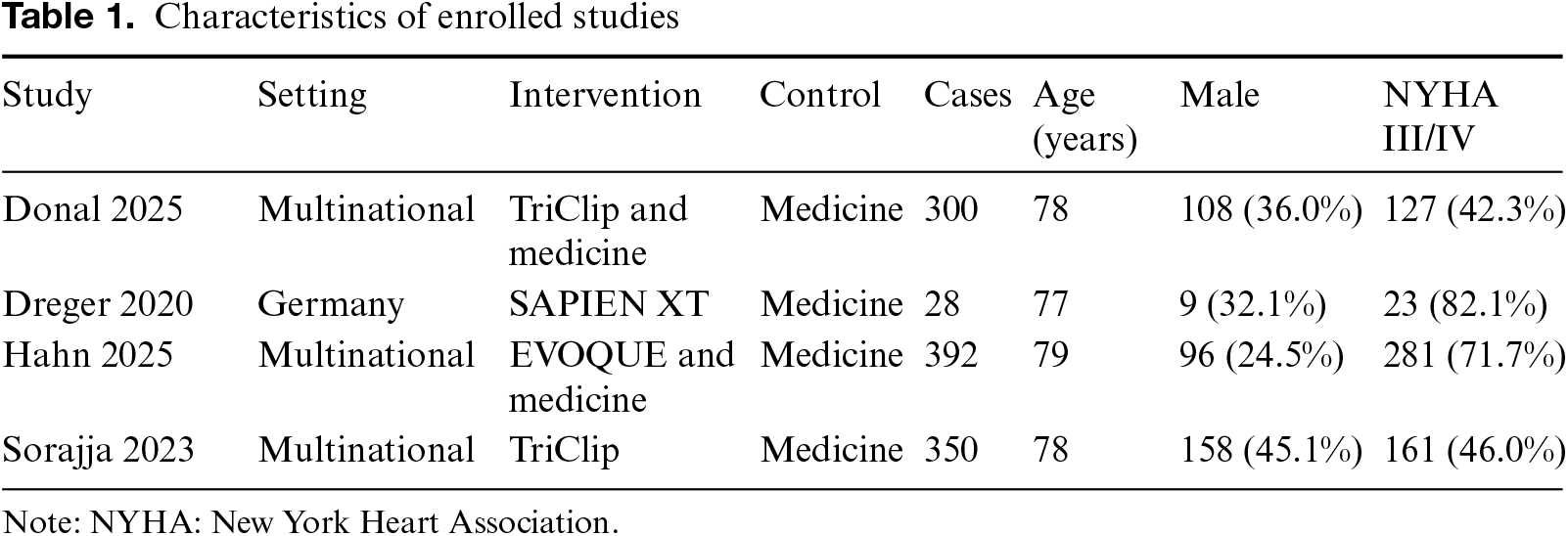
A total of 303 studies were initially identified through database searches. After removing 27 duplicates, 276 studies remained. Following the initial screening, 251 studies were excluded, and an additional 21 were removed during a secondary screening. In the end, four studies involving 1,070 cases were included in the final analysis (Fig. S1). The characteristics of these studies are summarized in Table 1.21–24 Three devices (EVOQUE, TriClip, and SAPIEN XT) were evaluated. The mean age of participants was approximately 78 years, with females comprising the majority of participants in all studies. One study from Germany assessed the Edwards device, though it had a small sample size, while the other studies were conducted in a multinational setting. Two studies on the TriClip device included a relatively low proportion of patients with NYHA Class III and IV symptoms. All studies enrolled patients with severe symptomatic TR and had a 12-month follow-up period.
Efficacy
Four studies, including 934 patients, compared transcatheter therapy with medical care alone. The analysis demonstrated a significantly higher proportion of patients achieving at least one-category improvement in NYHA functional class, with an OR of 3.78 (95% CI: 1.56–9.17, p = 0.003; I² = 86%) (Fig. 1A). A sensitivity analysis (Fig. S2) yielded an OR of 2.72 (95% CI: 1.56–4.87, p < 0.001; I² = 50%), indicating consistent findings with reduced heterogeneity. Four studies evaluated the efficacy of transcatheter therapy combined with medical care in reducing all-cause mortality, with the analysis showing a limited effect, with an OR of 1.08 (95% CI: 0.74–1.58, p = 0.68; I² = 0%) (Fig. 1B). Similarly, four studies assessing the impact on reducing unplanned heart failure hospitalizations also showed a limited effect, with an OR of 0.98 (95% CI: 0.68–1.41, p = 0.92; I² = 0%) (Fig. 1C). However, two studies investigating the efficacy of the TriClip device demonstrated significant improvement in QOL, as assessed by the KCCQ, with a MD of 12.39 (95% CI: 7.52–17.27, p < 0.001; I² = 42%) (Fig. 1D).
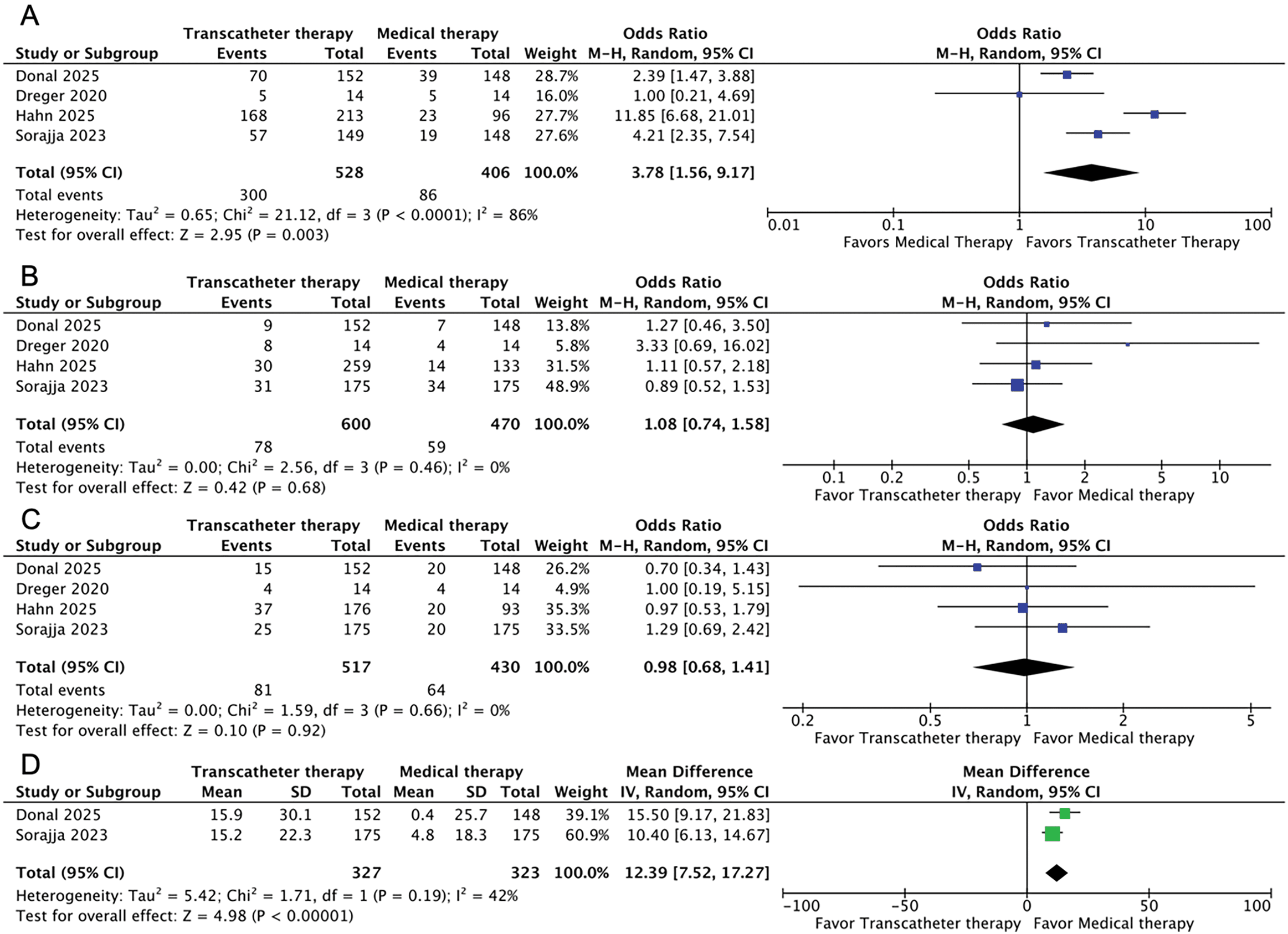
Figure 1. Efficacy of transcatheter therapy. (A) NYHA Improvement; (B) All-Cause Mortality; (C) Heart Failure Hospitalization; and (D) KCCQ Improvement.
Safety
Three studies reported the incidence of permanent pacemaker placement primarily due to arrhythmia or conduction system disturbances, indicating a trend toward a higher risk of pacemaker implantation with transcatheter therapy. The OR was 3.61 (95% CI: 0.70–18.59, p = 0.13; I² = 71%) (Fig. 2A). Sensitivity analysis revealed an OR of 8.55 (95% CI: 2.94–24.85, p < 0.001; I² = 0%) (Fig. 2B), further supporting this conclusion.
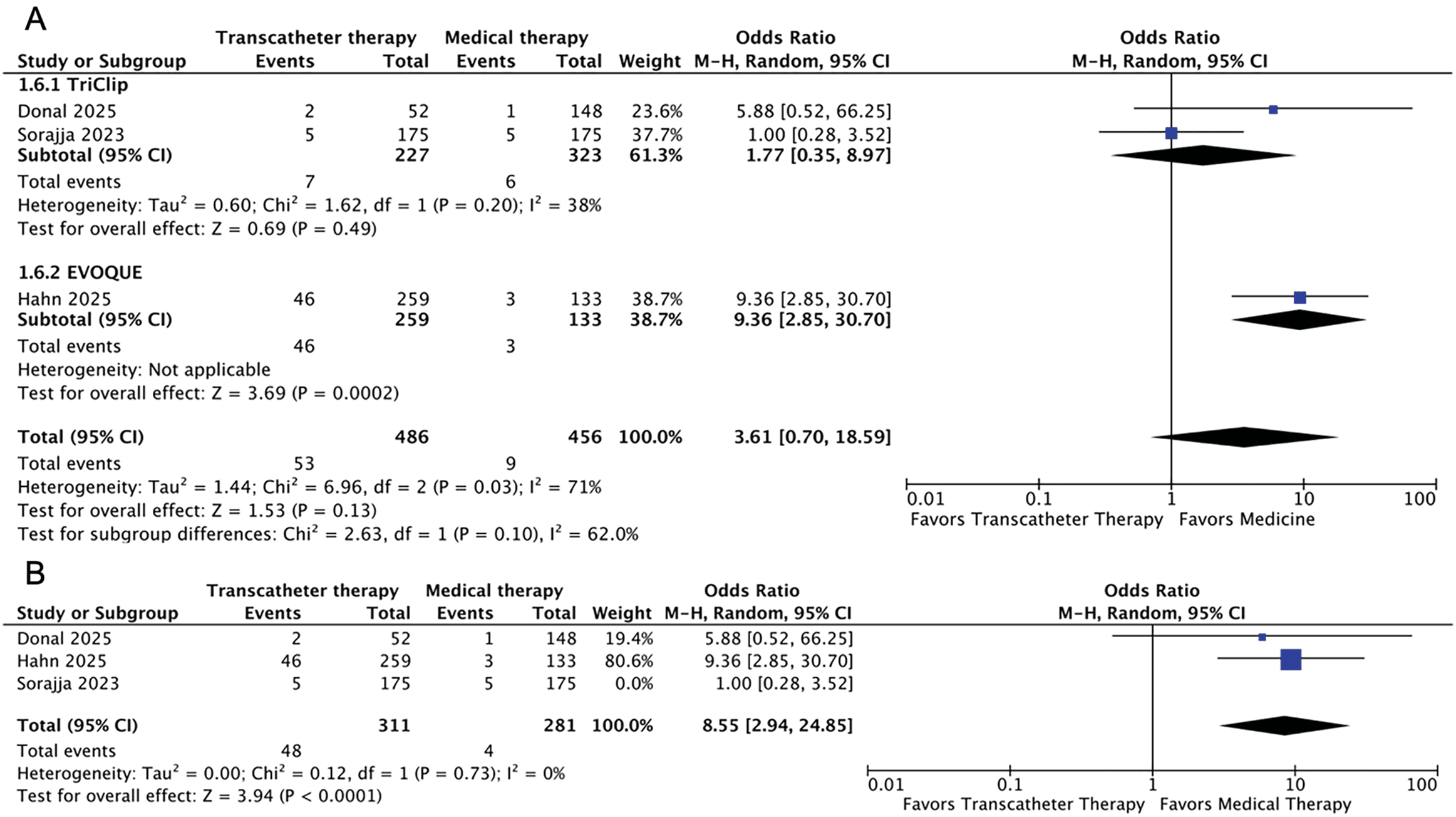
Figure 2. Risk of permanent pacemaker placement in transcatheter therapy. (A) Pooled Analysis and (B) Sensitivity Analysis.
Bias and Evidence Level
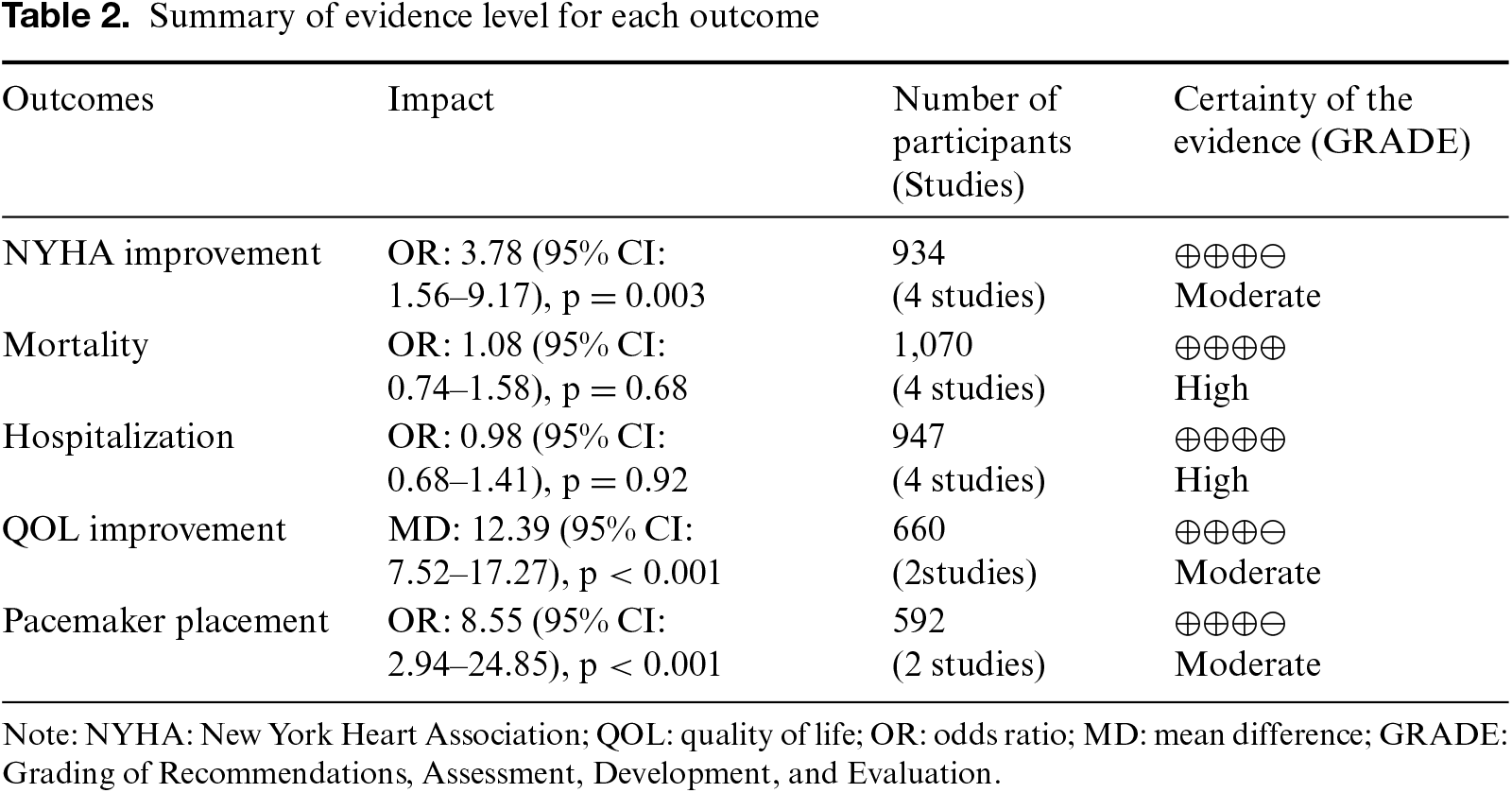
There was no apparent publication bias for any outcome (Figs. S5–S9). The risk of bias is illustrated in Fig. S10. One study, with an open-label design, demonstrated a high risk of performance bias and detection bias. The evidence level for each outcome is presented in Table 2. Moderate-certainty evidence supports the efficacy of transcatheter therapy in improving NYHA classification, enhancing QOL, and increasing the risk of pacemaker placement. In contrast, high-certainty evidence indicates no benefit in reducing mortality or hospitalization risk.
Discussion
This meta-analysis evaluated the efficacy and safety of transcatheter therapy compared to medical care for patients with symptomatic TR. Our findings demonstrate that transcatheter therapy significantly improves the NYHA functional class, while its impact on all-cause mortality and heart failure hospitalizations remains limited. The TriClip device significantly improved KCCQ scores, indicating meaningful QOL benefits. However, the analysis also suggests a potential increase in the risk of permanent pacemaker implantation, particularly in patients receiving EVOQUE transcatheter devices. These findings align with prior observational studies highlighting the symptomatic benefits of transcatheter intervention while raising concerns about conduction disturbances.14,25 Nevertheless, this meta-analysis offers updated insights by incorporating more recent and comprehensive patient-level data, along with a more detailed analysis of patient-reported outcomes.
From a clinical standpoint, the observed improvements in NYHA functional class and QOL support the role of transcatheter therapy as a viable option for patients who are poor surgical candidates.26 Given the progressive nature of TR and its association with increased morbidity, symptom relief remains a key therapeutic goal.27 The findings suggest that transcatheter interventions can provide meaningful symptomatic improvement and enhance functional capacity, particularly in elderly patients with frailty and multiple comorbidities. However, despite these benefits, no significant mortality reduction was observed at 12 months. This may be due to the short follow-up duration, the high burden of comorbidities, and the limited effect of isolated valve intervention on overall disease trajectory. Longer-term studies are needed to determine whether these therapies translate into survival benefits. An increased incidence of permanent pacemaker implantation following transcatheter therapy was observed, likely due to mechanical interaction with the conduction system, especially in valve replacement procedures. This underscores the importance of careful patient selection and device-specific risk assessment.
Devices such as EVOQUE, TriClip, and SAPIEN XT differ in mechanism and clinical application: EVOQUE replaces the native valve, offering anatomical correction; TriClip enhances leaflet coaptation for functional repair; and SAPIEN XT, repurposed for caval valve implantation, aims to reduce venous congestion rather than directly treating the tricuspid valve.28,29 While each device shows promise, direct comparative data are lacking, limiting conclusions regarding relative efficacy and safety. Although only four randomized controlled trials were included in this meta-analysis, the field is rapidly advancing. Ongoing trials such as TRICURE EU (NCT06581471) and CAPTURE (NCT06838611) are expected to provide more robust evidence regarding safety, efficacy, and long-term outcomes across diverse patient populations.30,31 These studies will be instrumental in refining device selection and optimizing treatment strategies.
Surgical repair or replacement remains the standard of care for severe TR; however, many patients are deemed ineligible due to advanced age, frailty, or significant comorbidities.32 Transcatheter therapy offers a less invasive alternative, especially for patients with severe symptomatic TR, preserved RV function, and minimal end-organ damage. In contrast, surgery may be preferable for patients with low operative risk, complex valvular anatomy, or concomitant cardiac conditions requiring open-heart intervention.33 The absence of head-to-head randomized trials comparing surgical and transcatheter approaches limits definitive conclusions regarding their comparative efficacy. Future RCTs directly comparing these modalities, along with long-term follow-up data, are essential to guide optimal patient selection, assess treatment durability, and evaluate the long-term impact on survival and cardiac remodeling.
Several limitations of this meta-analysis should be acknowledged. First, the heterogeneity observed in outcomes such as NYHA improvement may be due to variability in patient characteristics, procedural techniques, and device types. Notably, two studies evaluated transcatheter therapy as an adjunct to medical therapy, while the other two used medical therapy alone as the comparator. Second, the limited sample size and inclusion of only four RCTs constrain the generalizability of the findings and emphasize the need for larger, multicenter trials. Third, data beyond 12 months remain scarce, and long-term concerns such as device malposition, valve degeneration, and progression of right heart dysfunction require further investigation. Lastly, variations in baseline characteristics, including TR severity and comorbid left heart disease, may have influenced outcomes and introduced potential confounders.
Conclusion
Transcatheter therapy significantly improves functional capacity and QOL in patients with symptomatic TR, offering a promising alternative for those who are high-risk or ineligible for surgery. However, its impact on mortality and hospitalization risk remains uncertain, underscoring the need for longer follow-up studies to clarify its long-term survival benefits. Additionally, the increased risk of pacemaker implantation emphasizes the importance of careful patient selection, balancing potential benefits against the associated procedural risks.
Acknowledgment
None.
Funding Source
This research was funded by Grants-in-Aid for Scientific Research (Grant number 24K11946).
Author Contributions
Z.Y. was responsible for the study design and manuscript drafting, while S.M. and J.L. conducted the literature search, quality assessment, data extraction, and analysis. All authors contributed to data interpretation and manuscript revision, and all have reviewed and approved the final manuscript.
Data Availability
The corresponding author will make the datasets available upon reasonable request.
Ethical Statement
Institutional Review Board approval was waived due to the nature of the meta-analysis.
Conflict of Interest
The authors report no conflicts of interest in this work.
Supplemental Information
Supplemental information for this article can be found online at https://sup.jclinque.com/api/articles/65/download-suppl.
References
[1] Obayashi Y, Kato T, Yaku H, et al. Tricuspid regurgitation in elderly patients with acute heart failure: insights from the KCHF registry. ESC Heart Fail. June 2023;10(3):1948–1960. doi:10.1002/ehf2.14348.
[2] Prihadi EA, Delgado V, Leon MB, Enriquez-Sarano M, Topilsky Y, Bax JJ. Morphologic types of tricuspid regurgitation: characteristics and prognostic implications. JACC Cardiovasc Imaging. March 2019;12(3):491–499. doi:10.1016/j.jcmg.2018.09.027.
[3] Nkomo VT, Gardin JM, Skelton TN, Gottdiener JS, Scott CG, Enriquez-Sarano M. Burden of valvular heart diseases: a population-based study. Lancet. 2006;368(9540):1005–1011. doi:10.1016/S0140-6736(06)69208-8.
[4] Zheng J, Yu X, Zhou D, et al. Prevalence and contributing factors associated with tricuspid regurgitation among patients underwent echocardiography assessment. BMC Cardiovasc Disord. October 12, 2024;24(1):552. doi:10.1186/s12872-024-04178-2.
[5] Henning RJ. Tricuspid valve regurgitation: current diagnosis and treatment. Am J Cardiovasc Dis. 2022;12(1):1–18.
[6] Humbert M, Kovacs G, Hoeper MM, et al. ESC/ERS Guidelines for the diagnosis and treatment of pulmonary hypertension. Eur Respir J. 2022;2022(1):2200879. doi:10.1183/13993003.00879-2022.
[7] Mohamad A, Chalak B, Amer K, Fahad A, Vinay B. Comparative early outcomes of tricuspid Valve repair versus replacement for secondary tricuspid regurgitation. Open Heart. 2018;5(2):e000878. doi:10.1136/openhrt-2018-000878.
[8] Shariff M, Kumar A, Hirji SA, Majmundar M, Adalja D, Doshi R. Ten years mortality trends of tricuspid regurgitation in the United States, 2008 to 2018. Am J Cardiol. 2021;140:156–157. doi:10.1016/j.amjcard.2020.11.024.
[9] Adamo M, Chioncel O, Pagnesi M, et al. Epidemiology, pathophysiology, diagnosis and management of chronic right-sided heart failure and tricuspid regurgitation. A clinical consensus statement of the Heart Failure Association (HFA) and the European Association of Percutaneous Cardiovascular Interventions (EAPCI) of the ESC. Eur J Heart Fail. 2024;26(1):18–33. doi:10.1002/ejhf.3106.
[10] Rajagopal S, Ruetzler K, Ghadimi K, et al. Evaluation and management of pulmonary hypertension in noncardiac surgery: a scientific statement from the american heart association. Circulation. 2023;147(17):1317–1343. doi:10.1161/CIR.0000000000001136.
[11] Wang TKM, Mentias A, Akyuz K, et al. Effect of tricuspid valve repair or replacement on survival in patients with isolated severe tricuspid regurgitation. Am J Cardiol. 2022;162(7):163–169. doi:10.1016/j.amjcard.2021.08.069.
[12] Vahanian A, Beyersdorf F, Praz F, et al. 2021 ESC/EACTS guidelines for the management of valvular heart disease. Eur Heart J. February 12, 2022;12(7):561–632. doi:10.1093/eurheartj/ehab395.
[13] Hahn RT, Brener MI, Cox ZL, et al. Tricuspid regurgitation management for heart failure. JACC: Heart Fail. 2023;11(8_Part_2):1084–1102. doi:10.1016/j.jchf.2023.07.020.
[14] Balata M, Gbreel MI, Hassan M, et al. Comparative analysis of MitraClip/TriClip and PASCAL in transcatheter tricuspid valve repair for tricuspid regurgitation: a systematic review and meta-analysis. BMC Cardiovasc Disord. October 14, 2024;24(1):557. doi:10.1186/s12872-024-04201-6.
[15] Seligman H, Vora AN, Haroian NQ, et al. The current landscape of transcatheter tricuspid valve intervention. J Soc Cardiovasc Angiogr Interv. 2023;2(6):101201. doi:10.1016/j.jscai.2023.101201.
[16] Tang GHL, Hahn RT, Whisenant BK, et al. Tricuspid transcatheter edge-to-edge repair for severe tricuspid regurgitation. J Am Coll Cardiol. 2025;85(3):235–246. doi:10.1016/j.jacc.2024.10.086.
[17] Page MJ, McKenzie JE, Bossuyt PM, et al. The PRISMA, 2020 statement: an updated guideline for reporting systematic reviews. BMJ. 2021;372:n71. doi:10.1136/bmj.n71.
[18] University Hospital Medical Information Network. Efficacy and safety of transcatheter therapy for tricuspid regurgitation: a systematic review and network meta-analysis of randomized controlled trials. 2025. Accessed January 15, 2025. https://center6uminacjp/cgi-open-bin/ctr_e/ctr_viewcgi?recptno=R000064837
[19] Higgins JP, Altman DG, Gøtzsche PC, et al. The cochrane collaboration’s tool for assessing risk of bias in randomised trials. BMJ. October 18, 2011;343:d5928. doi:10.1136/bmj.d5928.
[20] Alonso-Coello P, Oxman AD, Moberg J, et al. GRADE Evidence to Decision (EtD) frameworks: a systematic and transparent approach to making well informed healthcare choices. 2: clinical practice guidelines. BMJ. June 30, 2016;353:i2089. doi:10.1136/bmj.i2089.
[21] Donal E, Dreyfus J, Leurent G, et al. Transcatheter edge-to-edge repair for severe isolated tricuspid regurgitation: the Tri.Fr randomized clinical trial. J Am Med Assoc. 2025;333(2):124–132. doi:10.1001/jama.2024.21189.
[22] Dreger H, Mattig I, Hewing B, et al. Treatment of severe TRIcuspid regurgitation in patients with advanced heart failure with CAval vein implantation of the Edwards Sapien XT VALve (TRICAVAL): a randomised controlled trial. EuroIntervention. April 17, 2020;15(17):1506–1513. doi:10.4244/eij-d-19-00901.
[23] Hahn RT, Makkar R, Thourani VH, et al. Transcatheter valve replacement in severe tricuspid regurgitation. N Engl J Med Jan. 2025;9(2):115–126. doi:10.1056/NEJMoa2401918.
[24] Sorajja P, Whisenant B, Hamid N, et al. Transcatheter repair for patients with tricuspid regurgitation. New Engl J Med. 2023;388(20):1833–1842. doi:10.1056/NEJMoa2300525.
[25] Fu G, Zhu J, Song W, et al. Transcatheter tricuspid valve intervention versus medical therapy for symptomatic tricuspid regurgitation: a meta-analysis of reconstructed time-to-event data. Int J Surg. 2024;110(10):6800–6809. doi:10.1097/JS9.0000000000001773.
[26] Madhavan MV, Agarwal V, Hahn RT. Transcatheter therapy for the tricuspid valve: a focused review of edge-to-edge repair and orthotopic valve replacement. Curr Cardiol Rep. June 2024;26(6):459–474. doi:10.1007/s11886-024-02051-4.
[27] Marwin B, Christoph Roland E, Ulrike K, et al. Natural course of tricuspid regurgitation and prognostic implications. Open Heart. 2021;8(1):e001529. doi:10.1136/openhrt-2020-001529.
[28] Blusztein DI, Hahn RT. New therapeutic approach for tricuspid regurgitation: transcatheter tricuspid valve replacement or repair. Front Cardiovasc Med. 2023;10:1080101. doi:10.3389/fcvm.2023.1080101.
[29] Romeo JD, Bashline MJ, Fowler JA, et al. Current status of transcatheter tricuspid valve therapies. Heart Int. 2022;16(1):49–58. doi:10.17925/hi.2022.16.1.49.
[30] ClinicalTrailgov. The TRICURE EU pivotal study (TRICURE EU); October 2024. Accessed February 20, 2025. https://clinicaltrialsgov/study/NCT06581471?cond=Tricuspid%20Regurgitation&aggFilters=status:rec&rank=10.
[31] ClinicalTrailgov. ChAracterization of patients and treatment OUtcomes in severe tricuspid regurgitation (CAPTURE); November 2023. Accessed February 20, 2025. https://clinicaltrialsgov/study/NCT06838611?cond=NCT06838611&rank=1.
[32] Chavez-Ponce A, El Shaer A, Samimi S, et al. Temporal improvement in outcomes of surgical treatment of isolated tricuspid regurgitation in the United States. JACC Adv. November 2024;3(11):101319. doi:10.1016/j.jacadv.2024.101319.
[33] Otto CM, Nishimura RA, Bonow RO, et al. 2020 ACC/AHA guideline for the management of patients with valvular heart disease: a report of the American College of Cardiology/American Heart Association Joint Committee on Clinical Practice Guidelines. J Thorac Cardiovasc Surg. August 2020;162(2):e183–e353. doi:10.1016/j.jtcvs.2021.04.002.
 |
Copyright: © 2025 Men et al. This work is licensed under a Creative Commons Attribution 4.0 International License, which permits unrestricted use, distribution, and reproduction in any medium, provided the original work is properly cited. |