| Journal of Clinical Question, 2024, Vol. 1, No. 2, 24–30 https://doi.org/10.69854/jcq.2024.0004 Advance access publication date 06 September 2024 |
 |
Meta-Analysis
The Uselessness of Anaerobic Antibiotic Coverage in Aspiration Pneumonia: A Systematic Review and Meta-Analysis
1Department of Internal Medicine, National Defense Medical College, Saitama, 359-8513, Japan.
2Department of Internal Medicine, Teikyo University Hospital, Tokyo, 173-8606, Japan.
3Shanghai Pulmonary Hospital, School of Medicine, Tongji University, Shanghai, 200433, China.
*Corresponding Author: e-mail: greendepzl@tongji.edu.cn
Submitted: July 22, 2024 Accepted: September 05, 2024
Clinical Question Box
Is it necessary to use anaerobic antibiotics to cover aspiration pneumonia?
Using anaerobic antibiotics for aspiration pneumonia did not reduce hospital mortality, length of stay, or intensive care unit admission. Given the lack of improvement in key clinical outcomes, the routine use of anaerobic antibiotics in managing aspiration pneumonia may not be warranted.
Abstract
Introduction: Aspiration pneumonia (AP) is a primary cause of community-acquired pneumonia. However, few studies have focused on promoting the necessity of anaerobic antibiotic coverage in AP. Methods: In May 2024, a systematic review and a meta-analysis were conducted to identify the clinical effectiveness of anaerobic antibiotic coverage in AP. Three databases, such as PubMed, Web of Science, and Cochrane were searched. Results: Through a comprehensive database search, 388 articles were initially identified, and four studies, including 4,940 patients, were considered in the final analysis. The analysis revealed that anaerobic antibiotics did not reduce in-hospital mortality risk, with an odds ratio (OR) of 1.13 (95% confidence interval [CI]: 0.97, 1.31; I2 = 0%; P = 0.11). There was also no significant effect on length of stay, with a mean difference of 0.92 days (95% CI: −0.40, 2.23; I2 = 76%; P = 0.17), or difference in intensive care unit admission rates, with an OR of 1.09 (95% CI: 0.72, 1.63; I2 = 0%; P = 0.69). Conclusion: The findings suggest that the routine use of anaerobic antibiotics in managing AP may not be warranted, given the lack of improvement in key clinical outcomes.
Keywords: Aspiration pneumonia, anaerobic antibiotic, in-hospital mortality, length of stay, intensive care unit.
1. Introduction
The increasing elderly population globally poses significant challenges for healthcare systems.1 Senior citizens face a higher risk of infectious diseases like pneumonia, which increases illness and death rates. This is mainly due to age-related changes in the immune system, multiple chronic health conditions, and overall frailty.2 In older adults, community-acquired pneumonia (CAP) frequently results from aspiration. However, the lack of definitive diagnostic criteria for aspiration pneumonia (AP) causes substantial variations in reported prevalence and clinical management.3 AP can be classified into two conditions: pneumonia and pneumonitis. Pneumonia is the primary pathogenic mechanism. In contrast, pneumonitis occurs when a substantial quantity of oropharyngeal or upper gastrointestinal contents is inhaled into the lungs through the vocal cords and trachea.4
AP should be viewed as part of a continuum that includes CAP and hospital-acquired pneumonia (HAP). Its prevalence within CAP cases varies extensively, particularly affecting frail individuals up to 10 times more frequently.5 Due to unclear diagnostic criteria, AP’s reported prevalence and clinical management differ significantly.6 Furthermore, the mortality rate for AP is higher than for non-AP.7 Risk factors for aspiration events involve complex anatomical and physiological dysfunctions in the nervous, gastrointestinal, and pulmonary systems.8 Preventing AP primarily involves addressing oropharyngeal dysphagia, which is a significant risk factor for AP, particularly among elderly individuals and those with cognitive and neurodegenerative disorders.
Current guidelines suggest antibiotic selection based on infection severity, pathogen risk factors, and whether the infection is community-acquired or healthcare-associated. Initial treatment typically starts with broad-spectrum antibiotics, adjusted as microbiological data become available. Recent studies indicate that anaerobic coverage may not improve clinical outcomes, as few anaerobes are now associated with CAP and HAP.9 Consequently, guidelines no longer recommend routine anaerobic pathogen coverage for AP.10 However, several studies on the effectiveness of anaerobic antibiotic coverage in AP prompted this meta-analysis to explore the latest evidence.
2. Methods
2.1. Search Strategy
A systematic literature search was conducted using PubMed, EMBASE, Cochrane Library, and Web of Science until May 31, 2024. The search terms were “aspiration pneumonia” and “anaerobic antibiotics.” Additional studies were identified by hand-searching the included studies’ reference lists and relevant reviews.
2.2. Inclusion and Exclusion Criteria
Randomized controlled trials (RCTs), cohort studies, or controlled observational studies that evaluated the effectiveness or outcomes of antibiotic treatments in AP patients and reported outcomes such as mortality, clinical resolution, or microbiological eradication were included in the study. On the other hand, case reports, editorials, expert opinions, studies that did not specifically address outcomes for AP patients, and studies involving pediatric populations, who have differing pathophysiology and treatment responses compared to adults, were excluded from the research.
2.3. Data Extraction
Two reviewers (R.A. and T.H.) extracted data independently using a standardized data extraction form. Discrepancies were resolved through discussion or by consulting a third reviewer. Extracted information encompassed study characteristics (i.e., author, year of publication, study design), patient demographics, antibiotic therapy type and duration, clinical outcomes, and microbiological profiles.
2.4. Quality Assessment
The quality of included studies was assessed using the Cochrane Risk of Bias tool for randomized trials and the Newcastle-Ottawa Scale for observational studies.11 Studies were rated based on various criteria, including the selection of participants, comparability of groups, and the assessment of outcomes.
2.5. Statistical Analysis
Meta-analysis was performed using the random-effects model to account for variability among studies. The key outcomes assessed were overall mortality and clinical resolution rates. Heterogeneity among studies was assessed using the I2 statistic and was interpreted as follows: I2 = 0%: no heterogeneity; I2 > 0% but < 25%: minimal heterogeneity; I2 ≥ 25% but < 50%: mild heterogeneity; I2 ≥ 50% but < 75%: moderate heterogeneity; and I2 ≥ 75%: strong heterogeneity.12 A p-value of less than 0.05 was considered statistically significant.
2.6. Ethical Considerations
Since this meta-analysis did not involve direct patient interaction and relied on already published data, formal ethical approval was not required. However, all procedures performed in studies involving human participants were according to the ethical standards of the institutional and/or national research committee and the 1964 Helsinki Declaration and its later amendments or comparable ethical standards.
3. Results
3.1. Overview
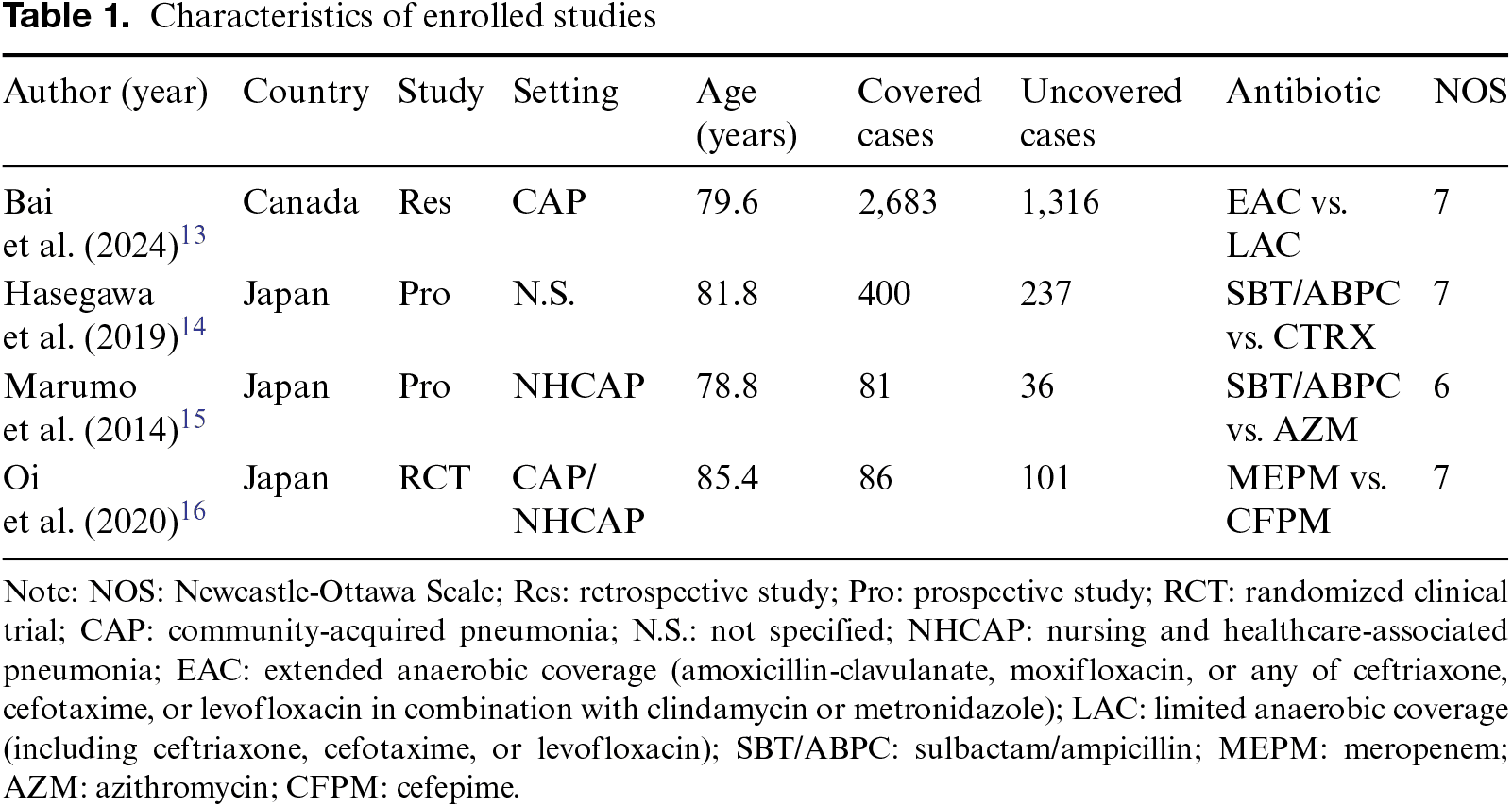
Through a comprehensive database search, 388 articles were initially identified (Fig. S1). After a rigorous screening and removing duplicates, four articles were selected for the final analysis.13–16 The studies encompassed 4,940 patients, as detailed in Table 1. Three studies were conducted in Japan and one in Canada. The study designs varied, with three being prospective and one retrospective. The average age of participants across the studies ranged from 78.8 to 85.4 years.
3.2 In-Hospital Mortality
Four articles assessed the impact of anaerobic antibiotic coverage compared to no coverage on in-hospital mortality. The analysis demonstrated that anaerobic antibiotics neither decreased nor increased mortality risk, with an odds ratio (OR) of 1.13 (95% confidence interval [CI]: 0.97, 1.31; I2 = 0%; P = 0.11), as illustrated in Fig. 1.
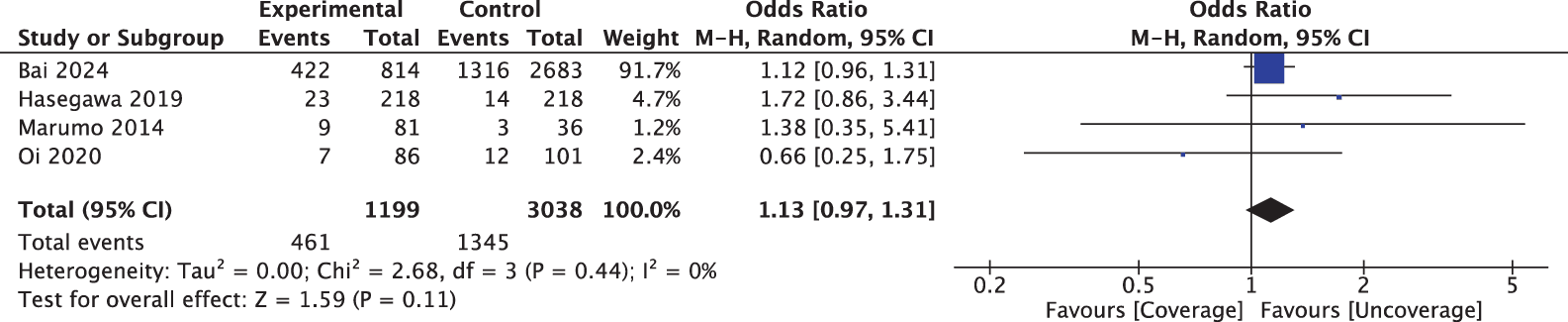
Figure 1. Odds ratio of in-hospital mortality in aspiration pneumonia by anaerobic antibiotic coverage compared with no coverage. CI: Confidence interval.
3.3 Length of Stay
Three studies evaluated the difference in hospital stay lengths between patients with and without anaerobic antibiotic coverage. The results indicated no significant effect on the length of stay, with a mean difference of 0.92 days (95% CI: −0.40, 2.23; I2 = 76%; P = 0.17) and strong heterogeneity, as presented in Fig. 2.

Figure 2. Mean difference in length of hospital stay in aspiration pneumonia by anaerobic antibiotic coverage compared with no coverage. CI: Confidence interval.
3.4 Intensive Care Unit (ICU) Admission
The risk of ICU admission was compared in two studies between patients treated with or without anaerobic antibiotics. These studies found no significant difference in ICU admission rates, with an OR of 1.09 (95% CI: 0.72, 1.63; I2 = 0%; P = 0.69), as depicted in Fig. 3.

Figure 3. Odds ratio of intensive care unit admission in aspiration pneumonia by anaerobic antibiotic coverage compared with no coverage. CI: Confidence interval.
3.5 Clinical Cure
Three studies investigated the clinical cure rates in patients who received anaerobic antibiotic coverage versus those who did not. The findings showed no significant difference in clinical cure rates, with an OR of 0.98 (95% CI: 0.90, 1.07; I2 = 37%; P = 0.64), but substantial heterogeneity (Fig. 4).

Figure 4. Odds ratio of clinical cure in aspiration pneumonia by anaerobic antibiotic coverage compared with no coverage. CI: Confidence interval.
3.6 Risk of Bias
The quality of the selected articles was evaluated using the Newcastle-Ottawa Scale, with scores ranging from 6 to 7, indicating limited bias. Reporting bias was further assessed through a funnel plot analysis, which also suggested minimal bias (Figs. S2–S5).
4. Discussion
This study presents compelling evidence that using anaerobic antibiotic coverage did not improve clinical outcomes in AP patients in terms of in-hospital mortality, length of stay, ICU admission rate, and clinical cure. This finding aligns with previous meta-analyses that exposed the limited effectiveness of anaerobic antibiotics in AP.9 Updating published studies identified new evidence of the limited effectiveness of anaerobic antibiotics in AP patients, such as length of stay and ICU admission. These results support the current guidelines that do not suggest routine anaerobic antibiotic use in AP based on the shallow quality of evidence.10 Only a few studies have centered on evidence of the effectiveness of anaerobic antibiotics in AP. Thus, this meta-analysis summarized the latest evidence of avoiding routine anaerobic antibiotic use in AP.
AP occurs when bacteria-laden secretions from the oropharynx or upper gastrointestinal tract enter the alveolar regions of the lungs, leading to lung consolidation and an inflammatory immune response.17 In healthy individuals, effective swallowing and coughing mechanisms prevent these secretions from reaching the lungs in amounts needed to cause pneumonia.18 To determine the necessity of anaerobic coverage, it is essential to understand the role of anaerobes in AP development. Research from the 1970s that used transtracheal sampling identified anaerobic bacteria as primary pathogens in AP, influencing the use of broad-spectrum antibiotics targeting anaerobes in treatments.19 Later, studies in the 1990s, which utilized protected specimen brushes, found that the predominant organisms in aspiration syndromes varied by location: CAP often involved S. pneumoniae, Staphylococcus aureus, Haemophilus influenzae, and Enterobacteriaceae, while HAP featured P. aeruginosa and other gram-negative bacteria. However, despite specific culturing methods, these studies did not find significant anaerobic organisms.20,21 Therefore, the 2019 ATS/IDSA CAP diagnostic and treatment guideline update advises that adding anaerobic coverage to standard CAP regimens in inpatients is unnecessary unless a lung abscess or empyema is suspected.
Despite advances in microbial testing methods, not all pathogens are identified. Anaerobes are challenging to obtain and culture.22 Thus, the non-identification of anaerobes does not rule out their possibility of being the causative organism. This risk of underestimating the involvement of anaerobes may lead to undertreatment, putting the patient at risk of prolonged illness, treatment failure, and death.23 Moreover, the definition of AP remains ambiguous. While it is generally accepted that AP refers to pneumonia in individuals with risk factors or signs of aspiration, there are no definitive criteria for diagnosis.24 The prevalence of AP in CAP cases varies widely, ranging from 5.6% to over 90%, impacted by diverse settings, populations, and local interpretations of the disease.25,26 These inconsistencies have thus hindered clinical research progress in AP.
There were several limitations to our study. First, only one RCT was conducted to identify the efficacy of anaerobic antibiotic coverage in AP. Second, there is no consensus on the definition of AP, and the selected studies varied in their design and methodology, which might have introduced biases that affected the comparability of the results. Although we used the Newcastle-Ottawa Scale to assess the quality of the studies, the inherent limitations of the original data could not be entirely overcome by meta-analytic techniques, potentially introducing selection bias in the considered studies. Third, the four included studies showed inconsistency in the types of antibiotics used, with variations in the specific agents, dosages, and treatment durations. This heterogeneity may affect the results’ comparability and influence the meta-analysis’s findings. Future studies should standardize antibiotic protocols to improve the comparability of results and enhance their generalizability to clinical practice. Fourth, the lack of individual patient data and detailed clinical information limited our ability to explore more nuanced questions about the effectiveness of anaerobic antibiotics in specific subgroups of patients, such as those with different severities of AP or coexisting conditions.
5. Conclusion
Our findings suggest that routine use of anaerobic antibiotics in managing AP may not be warranted, given the lack of improvement in key clinical outcomes. Hence, further research is necessary to refine these recommendations and optimize treatment strategies for AP.
Acknowledgments
None.
Funding Source
None.
Author Contributions
Conceptualization: L.Z. and R.A.; Data Curation: R.A. and T.H.; Original Draft Preparation: R.A.; Review & Editing: R.A., T.H., and L.Z.; Final approval of manuscript: All authors.
Data Availability Statement
The corresponding author makes the datasets available upon reasonable request.
Institutional Review Board Statement
Not applicable.
Conflict of Interest
The authors report no conflicts of interest in this work.
Supplemental Information
Supplemental information for this article can be found online at https://sup.jclinque.com/api/articles/40/download-suppl.
References
[1] Rudnicka E, Napierała P, Podfigurna A, et al. The World Health Organization (WHO) approach to healthy ageing. Maturitas. September 2020;139(6):6–11. doi:10.1016/j.maturitas.2020.05.018.
[2] Niederman MS, Cilloniz C. Aspiration pneumonia. Rev Esp Quimioter. April 2022;35 Suppl 1(Suppl 1):73–77. doi:10.37201/req/s01.17.2022.
[3] Yoshimatsu Y, Smithard DG. A paradigm shift in the diagnosis of aspiration pneumonia in older adults. J Clin Med. September 3, 2022;11(17):5214. doi:10.3390/jcm11175214.
[4] Neill S, Dean N. Aspiration pneumonia and pneumonitis: a spectrum of infectious/noninfectious diseases affecting the lung. Curr Opin Infect Dis. April 2019;32(2):152–157. doi:10.1097/qco.0000000000000524.
[5] Yoshimatsu Y, Melgaard D, Westergren A, Skrubbeltrang C, Smithard DG. The diagnosis of aspiration pneumonia in older persons: a systematic review. Eur Geriatr Med. October 2022;13(5):1071–1080. doi:10.1007/s41999-022-00689-3.
[6] Komiya K, Rubin BK, Kadota JI, et al. Prognostic implications of aspiration pneumonia in patients with community acquired pneumonia: a systematic review with meta-analysis. Sci Rep. December 7, 2016;6(1):38097. doi:10.1038/srep38097.
[7] Chen H, Hara Y, Horita N, et al. Declined functional status prolonged hospital stay for community-acquired pneumonia in seniors. Clin Interv Aging. 2020;15:1513–1519. doi:10.2147/cia.S267349.
[8] Pan D, Chung S, Nielsen E, et al. Aspiration pneumonia. Semin Respir Crit Care Med. April 2024;45(2):237–245. doi:10.1055/s-0043-1777772.
[9] Yoshimatsu Y, Aga M, Komiya K, et al. The clinical significance of anaerobic coverage in the antibiotic treatment of aspiration pneumonia: a systematic review and meta-analysis. J Clin Med. March 2, 2023;12(5):1992. doi:10.3390/jcm12051992.
[10] Metlay JP, Waterer GW, Long AC, et al. Diagnosis and treatment of adults with community-acquired pneumonia. An official clinical practice guideline of the American thoracic society and infectious diseases society of America. Am J Respir Crit Care Med. October 1, 2019;200(7):e45–e67. doi:10.1164/rccm.201908-1581ST.
[11] Stang A. Critical evaluation of the Newcastle-Ottawa scale for the assessment of the quality of nonrandomized studies in meta-analyses. Eur J Epidemiol. September 2010;25(9):603–605. doi:10.1007/s10654-010-9491-z.
[12] Higgins JP, Thompson SG. Quantifying heterogeneity in a meta-analysis. Stat Med. June 15, 2002;21(11):1539–1558. doi:10.1002/sim.1186.
[13] Bai AD, Srivastava S, Digby GC, et al. Anaerobic antibiotic coverage in aspiration pneumonia and the associated benefits and harms: a retrospective cohort study. Chest. 2024;166(1):39–48. doi:10.1016/j.chest.2024.02.025.
[14] Hasegawa S, Shiraishi A, Yaegashi M, et al. Ceftriaxone versus ampicillin/sulbactam for the treatment of aspiration-associated pneumonia in adults. J Comp Eff Res. November 2019;8(15):1275–1284. doi:10.2217/cer-2019-0041.
[15] Marumo S, Teranishi T, Higami Y, et al. Effectiveness of azithromycin in aspiration pneumonia: a prospective observational study. BMC Infect Dis. December 10, 2014;14(1):685. doi:10.1186/s12879-014-0685-y.
[16] Oi I, Ito I, Tanabe N, et al. Cefepime vs. meropenem for moderate-to-severe pneumonia in patients at risk for aspiration: an open-label, randomized study. J Infect Chemother. February 2020;26(2):181–187. doi:10.1016/j.jiac.2019.08.005.
[17] Shin B, Lee SH, Kwon K, et al. Automatic clinical assessment of swallowing behavior and diagnosis of silent aspiration using wireless multimodal wearable electronics. Adv Sci (Weinh). July 9, 2024. doi:10.1002/advs.202404211.
[18] Delforge Q, Gaudet A, Boddaert P, et al. Accuracy of the infectious diseases society of america and british thoracic society criteria for acute pneumonia in differentiating chemical and bacterial complications of aspiration in comatose ventilated patients following drug poisoning. Antibiotics (Basel). May 27, 2024;13(6):495. doi:10.3390/antibiotics13060495.
[19] Bartlett JG, Gorbach SL. The triple threat of aspiration pneumonia. Chest. October 1975;68(4):560–566. doi:10.1378/chest.68.4.560.
[20] Mier L, Dreyfuss D, Darchy B, et al. Is penicillin G an adequate initial treatment for aspiration pneumonia? A prospective evaluation using a protected specimen brush and quantitative cultures. Intensive Care Med. 1993;19(5):279–284. doi:10.1007/BF01690548.
[21] Marik PE, Careau P. The role of anaerobes in patients with ventilator-associated pneumonia and aspiration pneumonia: a prospective study. Chest. January 1999;115(1):178–183. doi:10.1378/chest.115.1.178.
[22] Vallianou NG, Skourtis A, Kounatidis D, et al. The role of the respiratory microbiome in the pathogenesis of aspiration pneumonia: implications for diagnosis and potential therapeutic choices. Antibiotics (Basel). January 10, 2023;12(1):140. doi:10.3390/antibiotics12010140.
[23] Brumit JC, Cluck DB, Brown TP, et al. The association between empiric antimicrobial therapy and the risk of clinical failure in critically ill patients with aspiration pneumonia. J Clin Pharm Ther. November 2022;47(11):1820–1825. doi:10.1111/jcpt.13773.
[24] Ueda A, Nohara K. Criteria for diagnosing aspiration pneumonia in Japan-A scoping review. Respir Investig. January 2024;62(1):128–136. doi:10.1016/j.resinv.2023.11.004.
[25] Komiya K, Ishii H, Kadota J. Healthcare-associated pneumonia and aspiration pneumonia. Aging Dis. February 2015;6(1):27–37. doi:10.14336/ad.2014.0127.
[26] Teramoto S, Fukuchi Y, Sasaki H, et al. High incidence of aspiration pneumonia in community- and hospital-acquired pneumonia in hospitalized patients: a multicenter, prospective study in Japan. J Am Geriatr Soc. March 2008;56(3):577–579. doi:10.1111/j.1532-5415.2008.01597.x.
 |
Copyright: © 2024 Asaga et al. This work is licensed under a Creative Commons Attribution 4.0 International License, which permits unrestricted use, distribution, and reproduction in any medium, provided the original work is properly cited. |