| Journal of Clinical Question, 2024, Vol. 1, No. 2, 74–81 https://doi.org/10.69854/jcq.2024.0010 Advance access publication date 31 October 2024 |
 |
Meta-Analysis
The Usefulness of Nasal High Flow in Endoscopic Retrograde Cholangiopancreatography: A Systematic Review and Meta-Analysis
1Digestive Endoscopy, First Affiliated Hospital of Dalian Medical University, Dalian, China.
2Department of Gastroenterology, The Fourth Affiliated Hospital of China Medical University, Shenyang, China.
3Department of Gastroenterology, The First Hospital of China Medical University, Shenyang, China.
*Corresponding Author: e-mail: wangxu_cmu@163.com
Submitted: August 21, 2024 Accepted: October 31, 2024
Clinical Question Box
Is nasal high flow useful in the procedure of endoscopic retrograde cholangiopancreatography?
Compared to standard care, nasal high flow has shown to be more effective as the preferred method for oxygen delivery during endoscopic retrograde cholangiopancreatography. It reduces the incidence of hypoxemia and is associated with higher minimum percutaneous oxygen saturation and lower carbon dioxide partial pressure levels. However, extensive cost-effectiveness studies are lacking in supporting this conclusion fully.
Abstract
Introduction: Endoscopic Retrograde Cholangiopancreatography (ERCP) is a critical procedure in gastroenterology, typically performed under sedation with the administration of supplemental oxygen. Nasal High Flow (NHF) is a newer method of oxygen administration combined with sedation for oxygen delivery. This meta-analysis was designed to identify the effects of NHF during ERCP. Method: Three major online databases (PubMed, Web of Science, and Cochrane) were searched on July 30, 2024. The search was not limited by publication language and focused on randomized controlled trials that compared the use of NHF with usual care in patients undergoing ERCP. Results: A total of 198 studies were identified after searching the three databases. Finally, five studies, encompassing a total of 581 patients, were included in the meta-analysis. The pooled analysis showed that using NHF was associated with a significantly lower incidence of hypoxemia than usual care. The odds ratio was 0.29 (95% Confidence Interval [CI]: 0.14–0.60, p < 0.001, I2 = 21%). The NHF group showed a higher minimum SpO2 value during the procedure, with a 2.55% increase in the mean difference (95% CI: 0.96, 4.13, p = 0.002; I2 = 57%). Compared to the usual care group, the NHF group demonstrated a reduction in CO2 partial pressure level at the end of the procedure, with a mean difference of 1.83 mmHg (95% CI: −3.25, −0.42, p = 0.01; I2 = 0%). The duration of ERCP showed no statistically significant difference between the usual care group and the NHF group, with a mean difference of 0.7 min (95% CI: −0.14, 1.53, p = 0.1; I2 = 0%). Conclusion: NHF effectively reduces the incidence of hypoxemia, supporting its consideration as the preferred method of oxygen delivery during ERCP, particularly for patients at higher risk of respiratory complications.
Keywords: Nasal High Flow, Endoscopic Retrograde Cholangiopancreatography, sedation, NHF, ERCP.
Introduction
Endoscopic Retrograde Cholangiopancreatography (ERCP) is a crucial procedure in gastroenterology, primarily used for the treatment of bile duct and pancreatic duct stones, as well as malignancies in these ducts.1 Sedation and anesthesia are typically administered to alleviate patient discomfort and anxiety, improve the quality of the procedure, and reduce the patient’s recollection of it.2 However, ERCP carries significant risks, including pancreatitis, bleeding, perforation, cholangitis, and complications related to sedation, such as hypoxia.3 Hypoxemia occurs in 3−30% of gastrointestinal endoscopy cases,4 is the most frequent sedation-related issue and poses particular concerns for patients with pre-existing respiratory or cardiovascular conditions, as it may worsen these conditions, thereby increasing the risk of serious complications and mortality.5
Sedation during ERCP often involves using a low-flow nasal oxygen cannula or a mouthguard with an oxygen delivery port.6 When nasal oxygen is administered at flow rates between 2 L/min and 4 L/min, assuming nasal breathing only, the fraction of inspired oxygen (FiO2) can reach 0.3–0.4.7 However, the actual FiO2 may vary and decrease with mouth breathing due to its dependence on minute volume. Nasal High Flow (NHF) is a newer technique for enhancing oxygenation during sedation. It can deliver oxygen at rates of up to 70 L/min, offering an FiO2 of up to 100% while also generating flow-dependent positive airway pressure, which can improve oxygenation.8 The use of NHF oxygen therapy has shown considerable progress in various medical settings, particularly in neonatal, pediatric, and adult critical care. Initially developed for neonatal and pediatric intensive care units to reduce intubation rates and improve respiratory outcomes, NHF has now been adopted in adult populations, especially during procedures requiring sedation.9 This therapy enhances oxygen delivery, assists in CO2 clearance, reduces dead space ventilation, and provides some level of positive airway pressure.10
Nasal High-flow oxygen therapy has gained attention as a possible strategy to reduce the risks of hypoxemia and other respiratory complications during sedated procedures like ERCP.11 Its mechanism involves delivering oxygen at high flow rates, thereby generating slight positive end-expiratory pressure, which enhances oxygen delivery efficiency.12 The application of NHF in ERCP is a relatively new area of exploration. Emerging studies suggest that NHF may reduce the incidence of hypoxemia during ERCP by providing more stable oxygenation than traditional methods such as low-flow nasal cannula or simple face masks.13,14
Despite the increasing evidence supporting NHF, its effectiveness in ERCP remains a subject of debate, especially due to the significant risks of hypoxemia associated with the procedure. This meta-analysis seeks to systematically review and consolidate the existing evidence on the effectiveness of NHF in ERCP, focusing on its impact on patient outcomes. The analysis will evaluate the incidence of hypoxemia, procedure duration, and other related complications to assess the overall effectiveness of NHF.
Methods
Study Overview
This systematic review and meta-analysis was structured according to the Preferred Reporting Items for Systematic Reviews and Meta-Analyses (PRISMA) statement.15 Due to the nature of this study, which reviewed published data, Institutional Review Board approval was waived.
Study Search
Three major online databases (PubMed, Web of Science, and Cochrane) were searched on July 30, 2024. The following search strategy was used for PubMed: patient: “endoscopic retrograde cholangiopancreatography” or “ERCP”; intervention: “nasal high flow” or “high flow” or “NHF.” The search was not limited by publication language. It included randomized controlled trials (RCTs), observational studies, and cohort studies that compared the use of NHF with usual care in patients undergoing ERCP.
Data Extraction
Two authors (X.W. and S.S.) independently screened the study titles and abstracts and carefully evaluated the full text to select eligible articles; in cases of discrepancy, they reached a consensus through discussion. Review articles and the included original articles were manually searched by the authors (X.W. and S.S.) for additional research papers that met the inclusion criteria.
Inclusion and Exclusion Criteria
Studies were included if they: 1) involved adult patients (18+ years) undergoing ERCP, 2) compared nasal high-flow (NHF) oxygen therapy with standard care, and 3) the safety and efficiency were reported such as hypoxemia, procedure duration et.al. Studies were excluded if they: 1) lacked comparative data between NHF and standard care, 2) involved pediatric patients or non-ERCP procedures, or 3) were case reports, reviews, or opinion articles without original data.
Study Selection
Full articles, brief reports, and conference abstracts published in any language were included if they provided data on studies involving adult patients (18 years and older) undergoing ERCP and compared NHF oxygen therapy with standard care. Studies that reported the incidence of hypoxemia as a primary or secondary outcome, as well as those that offered sufficient data on patient characteristics, sedation practices, and procedural details, were included. Studies were excluded if they lacked comparative data between NHF and standard care, involved pediatric populations, or focused on non-ERCP procedures.
Outcomes
The primary outcome of interest was the incidence of hypoxemia during ERCP. Hypoxemia was defined as a drop in oxygen saturation below 90%. Secondary outcomes of interest included the lowest saturation of percutaneous oxygen (SpO2) during the procedure, the partial pressure level of carbon dioxide (CO2) at the end of the procedure, and the duration of the procedure.
Statistics
Data were presented with means and standard deviations. This meta-analysis used a random-effects model to account for potential heterogeneity between the studies. The odds ratio (OR) was calculated for dichotomous outcomes, and the mean difference was calculated for continuous outcomes. The threshold for significance was set at 0.05. Heterogeneity, evaluated using I2 statistics, was interpreted as follows: when I2 = 0%, there is no heterogeneity; when I2 > 0% but <25%, there is minimal heterogeneity; when I2 ≥ 25% but <50%, there is mild heterogeneity; when I2 ≥ 50% but <75%, there is moderate heterogeneity; and when I2 ≥ 75%, there is strong heterogeneity.16 All analyses were performed using Review Manager version 5.3 (Cochrane Collaboration, Oxford, UK).
Results
Characteristics of Included Studies
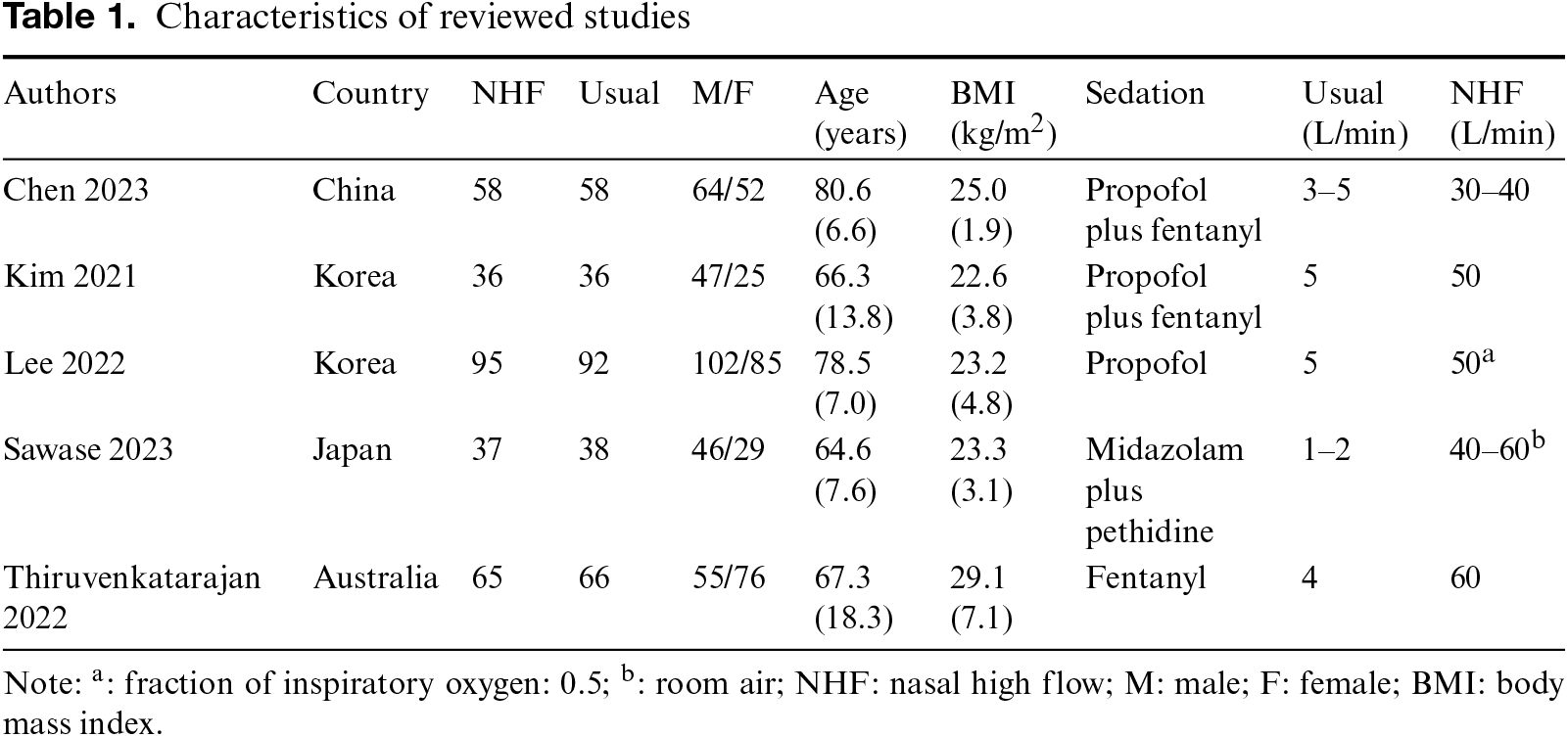
A total of 198 studies were identified after searching the three databases. Forty-three duplicate records were removed. After the first and second screenings, 142 and seven studies were excluded, respectively. Finally, five studies met the inclusion criteria and were included in the meta-analysis (Fig. S1). These studies were conducted in various countries, including Australia, China, Japan, and Korea, and represented a total of 581 patients (314 males and 267 females; see Table 1).17–21 Key demographic and clinical variables such as age, sex, BMI, the American Society of Anesthesiologists (ASA) grade, and procedure duration were reported in all studies (Table S1). The patient populations across the studies were similar in age, with mean ages ranging from 64.6 to 80.6 years. In the usual care group, oxygen was administered at rates of 1 L/min to 5 L/min, while in the NHF group, flow rates ranged from 30 L/min to 60 L/min. Three of the studies used 100% oxygen, while the other two used 50% oxygen and room air. Sedation practices varied; most of the studies used propofol-based sedation, while the rest used combinations of midazolam, fentanyl, and pethidine.
Efficacy of NHF in ERCP
The primary outcome of hypoxemia was consistently reported across all the studies. The pooled analysis showed that using NHF was associated with a significantly lower incidence of hypoxemia than usual care. The OR for hypoxemia in the NHF group was 0.29 (95% Confidence Interval [CI]: 0.14–0.60, p < 0.001, I2 = 21%), indicating a 71% reduction in the OR of hypoxemia compared to usual care (Fig. 1).
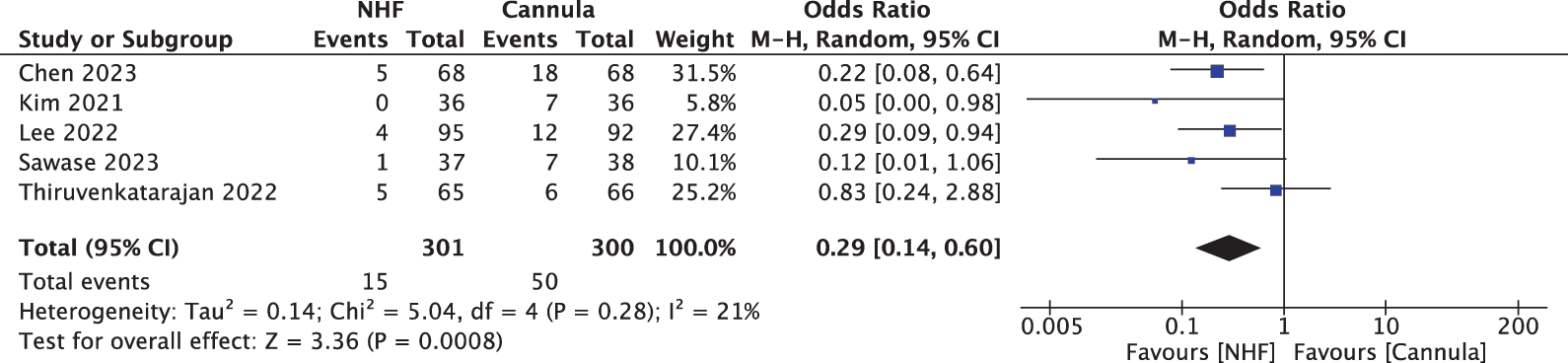
Figure 1. Comparison of the odds ratio of hypoxemia between the usual care and NHF groups. NHF: nasal high flow; CI: confidence interval.
The NHF group showed a higher minimum SpO2 value during the procedure (Fig. 2). The pooled data analysis revealed a 2.55% increase in the mean difference (95% CI: 0.96, 4.13, p = 0.002; I2 = 57%). The CO2 partial pressure level at the end of the procedure is shown in Fig. 3. Compared to the usual care group, the NHF group demonstrated a reduction in CO2 with a mean difference of 1.83 mmHg (95% CI: −3.25, −0.42, p = 0.01; I2 = 0%).

Figure 2. Comparison of the lowest SpO2 between the usual care and NHF groups. NHF: nasal high flow; SD: standard deviation; IV: inverse variance; CI: confidence interval.

Figure 3. The CO2 partial pressure level at the end of the procedure. NHF: nasal high flow; SD: standard deviation; IV: inverse variance; CI: confidence interval.
Four of the five studies reported the duration of the ERCP procedure (Fig. 4). The pooled data showed no statistically significant difference between the usual care group and the NHF group, with a mean difference of 0.7 minutes (95% CI: −0.14, 1.53, p = 0.1; I2 = 0%).

Figure 4. Comparison of duration of ERCP procedure between the usual care and NHF groups. ERCP: endoscopic retrograde cholangiopancreatography; NHF: nasal high flow; SD: standard deviation; IV: inverse variance; CI: confidence interval.
Risk of Bias
We included only RCTs in the meta-analysis and evaluated their quality using the Cochrane Risk of Bias Tool. Due to the unique characteristics of NHF therapy, adequate blinding of participants and personnel was impossible in any of the included studies, resulting in a high risk of bias in this domain. Detailed information on the risk of bias assessment is provided in Figs. S2 and S3. However, the compared outcomes showed no obvious publication bias (Figs. S4–S7).
Discussion
The findings of this meta-analysis highlight the potential benefits of NHF oxygen therapy during ERCP, particularly in reducing the incidence of hypoxemia. The higher number of lowest SpO2 values observed in the NHF group further support the effectiveness of NHF in maintaining better oxygenation throughout the procedure. Given the risks associated with hypoxemia during sedated procedures, particularly in elderly patients or those with underlying respiratory or cardiovascular conditions, this finding is consistent with that of previous research.22 Additionally, the reduction in CO2 partial pressure levels in the NHF group indicates improved ventilation and gas exchange, likely due to the positive airway pressure generated by high-flow oxygen therapy. This suggests that NHF can reduce the risk of hypercapnia, which is particularly relevant for patients with COPD, among whom hypercapnia is a significant concern. The meta-analysis did not find a significant difference in the duration of the ERCP procedure between the NHF and usual care groups, suggesting that while NHF improves oxygenation and ventilation, it does not necessarily impact procedural efficiency or duration, which is mainly determined by the complexity of ERCP itself.
While there were some differences in patient backgrounds across studies, randomization ensured that the experimental and control groups were comparable within each study. The pooled analysis revealed an I2 score of 21%, suggesting low heterogeneity and supporting the reliability of the overall conclusions drawn regarding the respiratory effects of ERCP under varying patient conditions. The consistency of the findings across different countries and patient populations suggests that the benefits of NHF are likely generalizable to a wide range of clinical settings. This is particularly important as ERCP is performed worldwide, often in settings with varying levels of resources and expertise. The effectiveness of NHF has been demonstrated across various patient populations, including those at higher risk, such as individuals with obesity, obstructive sleep apnea, or COPD.23–25 Given the significant reduction in hypoxemia incidence, NHF therapy should be considered a standard oxygenation strategy during ERCP, particularly for patients with respiratory or cardiovascular comorbidities.
Besides its clinical benefits, the adoption of NHF during ERCP could influence sedation practices. The ability of NHF to maintain higher oxygen levels and reduce CO2 retention might allow for deeper sedation levels without increasing the risk of respiratory complications.26 This could lead to better patient comfort, reduced movement during the procedure, and lower doses of sedative medications, thereby decreasing the risk of sedation-related side effects such as hypotension or prolonged recovery times.27 Furthermore, in high-risk patient populations, such as those with obstructive sleep apnea or severe COPD, the use of NHF could be particularly beneficial in preventing peri-procedural respiratory decompensation.28 This concern often limits the depth of sedation that can be safely administered.
The significant reduction in hypoxemia observed in the NHF group highlights its potential to address one of the most common complications associated with sedated endoscopic procedures. However, NHF systems are more complex and expensive than traditional oxygen delivery methods, and their routine use during ERCP could increase the overall cost of the procedure. Therefore, studies examining cost-effectiveness are essential to determine whether the benefits of NHF justify the additional expense, particularly in resource-limited settings where healthcare budgets are constrained. Studies have shown that long-term domiciliary HFNC treatment is likely to be a cost-effective addition to usual care for COPD and infants.29,30 However, while this meta-analysis strongly supports the use of NHF, the need for more comparative data on the cost-effectiveness of usual care and NHF treatment during ERCP remains, leading to a gap in evidence in this area.
It is important to recognize the limitations of this meta-analysis. First, the studies included in the analysis exhibited a high risk of performance and detection bias, primarily due to differences in the oxygen delivery methods between the NHF and usual care groups. Second, the heterogeneity observed in some outcomes, such as the lowest SpO2, indicates variability in the effectiveness of NHF across different patient populations and settings. Third, the research was conducted in only four countries, with a relatively small sample size. Larger studies with more homogeneous populations and standardized protocols are needed to confirm these findings and explore the potential benefits of NHF in specific patient subgroups, particularly those with a higher baseline risk for hypoxemia. Another limitation of this meta-analysis was the absence of data on long-term outcomes, including post-ERCP complications, in the included studies. None of the RCTs investigated the effect of NHF therapy on post-ERCP complications, such as pancreatitis, bleeding, or infections. The focus of the available studies was limited to short-term respiratory outcomes. Future research should aim to address these longer-term effects to provide a more comprehensive evaluation of NHF in the context of ERCP.
Conclusion
This meta-analysis provides evidence that NHF effectively reduces the incidence of hypoxemia. These findings support the consideration of NHF as a preferred method of oxygen delivery during ERCP, particularly for patients at higher risk of respiratory complications.
Acknowledgments
None.
Funding Source
This study is supported by Essential Research Funding from the Liaoning Province (2023JH2/101300033).
Author Contributions
X.W. contributed to the study search, quality check, data extraction, and drafting. As principal investigators, X.W. and S.S. worked on the study search, quality check, data extraction, and analysis. X.W., S.S., and S.Z. worked on the interpretation of data and the revision process. All authors have read the manuscript and agree with the content and data.
Data Availability
The data supporting this study’s findings are available from the corresponding author upon reasonable request.
Ethical Statement
Institutional Review Board approval was waived due to the nature of the meta-analysis.
Conflict of Interest
The authors declare no conflict of interest related to this study.
Supplemental Information
Supplemental information for this article can be found online at https://sup.jclinque.com/api/articles/47/download-suppl.
References
[1] Mahalingam S, Langdon J, Muniraj T, et al. Endoscopic retrograde cholangiopancreatography: deciphering the black and white. January–February 2021;50(1):74–84. doi:10.1067/j.cpradiol.2020.01.001.
[2] Zhang W, Wang L, Zhu N, et al. A prospective, randomized, single-blinded study comparing the efficacy and safety of dexmedetomidine and propofol for sedation during endoscopic retrograde cholangiopancreatography. BMC Anesthesiol. May 28, 2024;24(1):191. doi:10.1186/s12871-024-02572-z.
[3] Pal P, Ramchandani M. Management of ERCP complications. Best Pract Res Clin Gastroenterol. March 2024;69(2):101897. doi:10.1016/j.bpg.2024.101897.
[4] Wei C, Ma S, Jiang L, et al. A meta-analysis of the effects of transnasal high-flow oxygen therapy in gastrointestinal endoscopy. Front Med (Lausanne). 2024;11:1419635. doi:10.3389/fmed.2024.1419635.
[5] Kwak N, Yeoun D, Arroyo-Mercado F, et al. Outcomes and risk factors for ERCP-related complications in a predominantly black urban population. BMJ Open Gastroenterol. September 2020;7(1):e000462. doi:10.1136/bmjgast-2020-000462.
[6] Sheth SG, Machicado JD, Chalhoub JM, et al. American Society for Gastrointestinal Endoscopy guideline on the role of endoscopy in managing chronic pancreatitis: summary and recommendations. Gastrointest Endosc. August 8, 2024;100(4):584–594. doi:10.1016/j.gie.2024.05.016.
[7] Møller MH, Granholm A, Al Duhailib Z, et al. Higher versus lower oxygenation targets in adult ICU patients: a rapid practice guideline. Acta Anaesthesiol Scand. March 2024;68(3):302–310. doi:10.1111/aas.14366.
[8] Duprez F, de Terwangne C, Bellemans V, et al. High-flow nasal cannula therapy, factors affecting effectively, inspired oxygen fraction: an experimental adult bench model. J Clin Monit Comput. October 2022;36(5):1441–1448. doi:10.1007/s10877-021-00784-z.
[9] Thomas T, Khor YH, Buchan C, et al. Implementing high-flow nasal oxygen therapy in medical wards: a scoping review to understand hospital protocols and procedures. Int J Environ Res Public Health. May 30, 2024;21(6):705. doi:10.3390/ijerph21060705.
[10] Gray E, Menadue C. The role of high flow nasal therapy in chronic respiratory failure. Sleep Med Clin. September 2024;19(3):461–472. doi:10.1016/j.jsmc.2024.04.008.
[11] Schumann R, Natov NS, Rocuts-Martinez KA, et al. High-flow nasal oxygen availability for sedation decreases the use of general anesthesia during endoscopic retrograde cholangiopancreatography and endoscopic ultrasound. World J Gastroenterol. December 21, 2016;22(47):10398–10405. doi:10.3748/wjg.v22.i47.10398.
[12] Frat JP, Thille AW, Mercat A, et al. High-flow oxygen through nasal cannula in acute hypoxemic respiratory failure. N Engl J Med. June 4, 2015;4(23):2185–2196. doi:10.1056/NEJMoa1503326.
[13] Cha B, Lee MJ, Park JS, et al. Clinical efficacy of high-flow nasal oxygen in patients undergoing ERCP under sedation. Sci Rep. January 11, 2021;11(1):350. doi:10.1038/s41598-020-79798-7.
[14] Gamal M, Kamal MA, Abuelazm M, et al. Meta-analysis comparing the efficiency of high-flow nasal cannula versus low-flow nasal cannula in patients undergoing endoscopic retrograde cholangiopancreatography. Proc (Bayl Univ Med Cent). 2022;35(4):485–491. doi:10.1080/08998280.2022.2062554.
[15] Page MJ, McKenzie JE, Bossuyt PM, et al. The PRISMA, 2020 statement: an updated guideline for reporting systematic reviews. BMJ. March 29, 2021;372:n71. doi:10.1136/bmj.n71.
[16] Higgins JP, Thompson SG, Deeks JJ, et al. Measuring inconsistency in meta-analyses. BMJ. September 6, 2003;327(7414):557–560. doi:10.1136/bmj.327.7414.557.
[17] Chen N, Song DD, Qiu ZH, et al. Effect of high flow nasal catheter oxygen to prevent hypoxemia in endoscopic retrograde cholangiopancreatography surgery in aged. Zhonghua Yi Xue Za Zhi. November 7, 2023;103(41):3273–3278. doi:10.3760/cma.j.cn112137-20230414-00612.
[18] Kim SH, Bang S, Lee KY, et al. Comparison of high flow nasal oxygen and conventional nasal cannula during gastrointestinal endoscopic sedation in the prone position: a randomized trial, Comparaison de l’oxygénothérapie nasale à haut débit versus une lunette nasale conventionnelle pendant une sédation pour endoscopie gastro-intestinale en position ventrale : une étude randomisée. Can J Anaesth. April 2021;68(4):460–466. doi:10.1007/s12630-020-01883-2.
[19] Lee MJ, Cha B, Park JS, et al. Impact of high-flow nasal cannula oxygenation on the prevention of hypoxia during endoscopic retrograde cholangiopancreatography in elderly patients: a randomized clinical trial. Dig Dis Sci. August 2022;67(8):4154–4160. doi:10.1007/s10620-021-07272-z.
[20] Sawase H, Ozawa E, Yano H, et al. Respiratory support with nasal high flow without supplemental oxygen in patients undergoing endoscopic retrograde cholangiopancreatography under moderate sedation: a prospective, randomized, single-center clinical trial. BMC Anesthesiol. May 8, 2023;23(1):156. doi:10.1186/s12871-023-02125-w.
[21] Thiruvenkatarajan V, Dharmalingam A, Arenas G, et al. Effect of high-flow vs. low-flow nasal plus mouthguard oxygen therapy on hypoxaemia during sedation: a multicentre randomised controlled trial. Anaesthesia. January 2022;77(1):46–53. doi:10.1111/anae.15527.
[22] Lee CC, Ju TR, Lai PC, et al. Should we use high-flow nasal cannula in patients receiving gastrointestinal endoscopies? critical appraisals through updated meta-analyses with multiple methodologies and depiction of certainty of evidence. J Clin Med. July 3, 2022;11(13):3860. doi:10.3390/jcm11133860.
[23] Pitre T, Abbasi S, Su J, et al. Home high flow nasal cannula for chronic hypercapnic respiratory failure in COPD: a systematic review and meta-analysis. Respir Med. November–December 2023;219(5):107420. doi:10.1016/j.rmed.2023.107420.
[24] Ruan B, Nagappa M, Rashid-Kolvear M, et al. The effectiveness of supplemental oxygen and high-flow nasal cannula therapy in patients with obstructive sleep apnea in different clinical settings: a systematic review and meta-analysis. J Clin Anesth. September 2023;88(1):111144. doi:10.1016/j.jclinane.2023.111144.
[25] Zhou R, Wang HT, Gu W. Efficacy of high-flow nasal cannula versus conventional oxygen therapy in obese patients during the perioperative period: a systematic review and meta-analysis. Can Respir J. 2022;2022(1):4415313. doi:10.1155/2022/4415313.
[26] Thiruvenkatarajan V, Sekhar V, Wong DT, et al. Effect of high-flow nasal oxygen on hypoxaemia during procedural sedation: a systematic review and meta-analysis. Anaesthesia. January 2023;78(1):81–92. doi:10.1111/anae.15845.
[27] Gu WJ, Wang HT, Huang J, et al. High flow nasal oxygen versus conventional oxygen therapy in gastrointestinal endoscopy with conscious sedation: systematic review and meta-analysis with trial sequential analysis. Dig Endosc. September 2022;34(6):1136–1146. doi:10.1111/den.14315.
[28] Xu CX, Chen X, Jia Y, et al. Stepwise sedation for elderly patients with mild/moderate COPD during upper gastrointestinal endoscopy. World J Gastroenterol. August 2013;7(29):4791–4798. doi:10.3748/wjg.v19.i29.4791.
[29] Sørensen SS, Storgaard LH, Weinreich UM. Cost-effectiveness of domiciliary high flow nasal cannula treatment in COPD patients with chronic respiratory failure. Clinicoecon Outcomes Res. 2021;13:553–564. doi:10.2147/CEOR.S312523.
[30] Fleeman N, Mahon J, Bates V, et al. The clinical effectiveness and cost-effectiveness of heated humidified high-flow nasal cannula compared with usual care for preterm infants: systematic review and economic evaluation. Health Technol Assess. April 2016;20(30):1–68. doi:10.3310/hta20300.
 |
Copyright: © 2024 Song et al. This work is licensed under a Creative Commons Attribution 4.0 International License, which permits unrestricted use, distribution, and reproduction in any medium, provided the original work is properly cited. |