| Journal of Clinical Question, 2024, Vol. 1, No. 2, 57–66 https://doi.org/10.69854/jcq.2024.0008 Advance access publication date 31 October 2024 |
 |
Original Research
The Risk Factors for Thyroid Immune-Related Adverse Events Requiring Medical Intervention
1Department of Otorhinolaryngology, Tokyo Toritsu Bokutoh Hospital, Tokyo, Japan.
2College of Medicine, California Northstate University, Elk Grove, USA.
3Department of Respiratory, Kanto Rosai Hospital, Kawasaki, Japan.
*Corresponding Author: e-mail: chinsmd@gmail.com
Submitted: August 10, 2024 Accepted: October 31, 2024
Clinical Question Box
What are the risk factors for thyroid immune-related adverse events in patients who underwent immune checkpoint inhibitor treatment?
This study aimed to identify risk factors by comparing patients with Grade 1 and Grade 2 thyroid immune-related adverse events (irAEs). The analysis revealed that age and immune combination therapy are independent risk factors for the progression of Grade 2 hypothyroidism irAEs. Additionally, patients with breast cancer and mesothelioma demonstrated an increased risk of developing Grade 2 hyperthyroidism irAEs compared to those with lung, digestive, and urologic cancers.
Abstract
Introduction: Immune-related adverse events (irAEs) are frequently observed in patients undergoing immune checkpoint inhibitor (ICI) therapy, with thyroid irAEs being the most common among endocrine irAEs. According to the Common Terminology Criteria for Adverse Events, irAEs greater than Grade 1 typically require medical intervention. However, the risk factors associated with developing thyroid irAEs beyond Grade 1 remain unclear. Methods: A retrospective study was conducted in a community hospital. Medical records from the past ten years were extracted, and a multivariable analysis was performed comparing Grade 1 thyroid irAEs to those exceeding Grade 1. Results: Of the 384 patients who underwent ICI therapy, 134 (34.9%) developed thyroid irAEs, with 78 (20.3%) experiencing Grade 1 and 56 (14.6%) experiencing Grade 2. A total of 83 (21.6%) patients were diagnosed with hypothyroidism and 51 (13.3%) with hyperthyroidism. Multivariable analysis revealed that age and ICI combination therapy were risk factors for Grade 2 hypothyroidism irAE, with an Odds Ratio (OR) of 1.06 (95% Confidence Interval (CI): 1.01–1.13, p = 0.019) and OR 1.70 (95% CI: 1.08–2.75, p = 0.022), respectively. For hyperthyroidism, compared to digestive, lung, and urology cancers, breast cancer and mesothelioma showed an OR of 3.86 (95% CI: 1.61–9.25, p < 0.001). Conclusions: The management of hypothyroidism and hyperthyroidism during cancer treatment presents unique challenges. Chemotherapy regimen selection requires careful consideration of patient-specific factors such as age and type of cancer.
Keywords: ICI, irAE, hypothyroidism, hyperthyroidism, risk factor.
Introduction
Immune checkpoint inhibitors (ICIs) have substantially transformed the therapeutic landscape for various malignancies, introducing new treatment options while also presenting challenges in the form of immune-related adverse events (irAEs).1,2 These therapies involve antagonistic antibodies that block immune checkpoint molecules such as programmed cell death protein (PD-1), its ligand PD-L1, and T-lymphocyte-associated antigen 4 (CTLA-4). While ICIs are effective in achieving long-lasting tumor responses, they can also cause irAEs, affecting the gut, skin, endocrine glands, liver, lungs, and potentially any tissue.3 Endocrinologically, thyroid dysfunction is the most common endocrine irAE.4 Thyroid irAEs present a clinical paradox due to their frequent occurrence and varied manifestation, ranging from asymptomatic biochemical changes to clinically evident hypothyroidism or thyrotoxicosis. Destructive thyroiditis or hypothyroidism is observed in most cases, whereas hyperthyroidism is relatively less common. Most patients who develop destructive thyroiditis or hypothyroidism subsequently require thyroid hormone replacement therapy.5
The Common Terminology Criteria for Adverse Events (CTCAE) was used to evaluate irAEs.6 For Grade 1 irAEs, ICI treatment can generally continue with close monitoring. For Grade 2 irAEs, it is advisable to pause ICI treatment until symptoms improve to Grade 1 or lower.7 Various studies estimate that the overall incidence of ICIs-induced thyroid dysfunction for any grade was between 12% and 44%.8–10 However, the relative risk of Grade 3 to 5 hypothyroidism and hyperthyroidism was considered low, reported as 1.26 (95% confidence interval (CI) 0.83, 1.19) and 1.1 (95% CI 0.73, 1.68), respectively, compared with placebo.11 Thyroid irAEs, particularly overt thyrotoxicosis, are associated not only with increased immune toxicity in other organ systems but also with longer progression-free and overall survival12.
Risk factors associated with the development of irAEs include the type of ICI used, patient-specific genetic predispositions, pre-existing autoimmune conditions, and possibly the tumor type itself.13 These irAEs are distinct from those seen with traditional cancer therapies, often presenting later and lasting longer. IrAEs can affect any organ or system. While these effects are usually low-grade, treatable, and reversible, some can be severe and cause permanent issues14. For patients with thyroid irAE greater than Grade 1, medical intervention is necessary. Management typically involves pausing or stopping ICIs, corticosteroids, and other immunomodulatory agents, which should be used cautiously to minimize short-term and long-term complications. However, few studies have specifically examined the risk of thyroid irAE greater than Grade 1. This study aims to determine the real-world frequency of thyroid irAEs and examine the factors contributing to hypothyroidism and hyperthyroidism irAEs greater than Grade 1 in affected patients.
Methods
Study Design and Setting
This retrospective cohort study evaluated the medical records of inpatients admitted to a community-based hospital over a ten-year period, from January 2014 to July 2024. The institutional review board of Kanto Rosai Hospital approved the study (Reference number: KR2024-12), ensuring compliance with the ethical standards of the Declaration of Helsinki, as revised in Brazil in 2013.
Patient Selection
The patient selection process was conducted in two steps: First, medical records were identified displaying abnormal thyroid-stimulating hormone (TSH) values, ranging from 0.35 to 4.94 μIU/mL from blood tests conducted over the past ten years. Second, among these patients, those who had been administered any of the following ICIs: atezolizumab, durvalumab, nivolumab, ipilimumab, tremelimumab, and pembrolizumab, were chosen for further analysis.
Definitions
Only five and two cases used the combination of nivolumab and ipilimumab, and tremelimumab and atezolizumab, respectively. Due to the small sample size, these were classified within the nivolumab and atezolizumab groups. This study focused on four ICIs: atezolizumab, durvalumab, nivolumab, and pembrolizumab. Traditional cytotoxic agents were defined as chemotherapy, while molecular therapy was defined as tyrosine kinase inhibitors, vascular endothelial growth factor receptor inhibitors, etc. Thyroid dysfunction was graded using the CTCAE (version 5.0). Since no cases of thyroid irAE greater than Grade 2 were reported, the analysis compared differences between Grade 1 and Grade 2 thyroid irAEs. For patients previously diagnosed with thyroid dysfunction, the onset of thyroid irAEs was defined as the date of the first abnormal thyroid function test following the initiation of ICI therapy.
Inclusion and Exclusion Criteria
The inclusion criteria for the study were: adult cancer patients who received ICI treatment, underwent a comprehensive assessment of thyroid function including TSH, free triiodothyronine (FT3), and free thyroxine (FT4) levels during ICI therapy, and completed at least one full cycle of ICI therapy. Exclusion criteria consisted of patients with insufficient clinical data for accurate thyroid function assessment and those who withdrew consent for their data to be used in research.
Outcomes
The primary outcome was to delineate the risk factors associated with the development of thyroid irAEs, including both hyperthyroidism and hypothyroidism, following ICI treatment. The secondary outcomes were multifaceted and included the frequency and timing of the onset of Grade 1 and Grade 2 thyroid dysfunction, the duration conditions, and the frequency of combinations with other irAEs.
Statistical Analysis
Unless otherwise indicated, the results are presented as numbers and percentages or medians and interquartile ranges. Group comparisons were conducted using the Wilcoxon rank-sum tests. Factors potentially associated with thyroid irAEs were selected if their p-values in univariable analysis were below 0.2. The final variables were determined using the model with the minimum corrected Akaike Information Criterion (AICc) in the backward direction. In all instances, two-tailed p-values less than 0.05 were considered significant. Data analysis was performed using JMP software (version 17.0; SAS Institute, Cary, NC, USA).
Results
Overview
A total of 384 patients underwent ICI therapy, with 78 (20.3%) and 56 (14.6%) patients developing Grade 1 and Grade 2 thyroid irAEs, respectively (Table 1). A total of 83 (21.6%) patients were diagnosed with hypothyroidism and 51 (13.3%) with hyperthyroidism. The comparison between Grade 1 and Grade 2 thyroid irAEs reveals several significant differences. Patients with Grade 2 irAE tend to be older (median age 73 vs. 71, p = 0.01) and have a higher proportion of females (48.2% vs. 30.8%, p = 0.04). There are notable differences in cancer types, with more cases in Grade 2 classified as “others” (21.4% vs. 5.1%, p = 0.031). Combination therapies show a higher use of molecular agents in Grade 2 (25.0% vs. 11.5%, p = 0.025). No significant differences were found in cancer stages, lines of therapy, types of ICIs used, the presence of previous thyroid diseases, the duration of ICI treatment, or the onset time of irAEs.
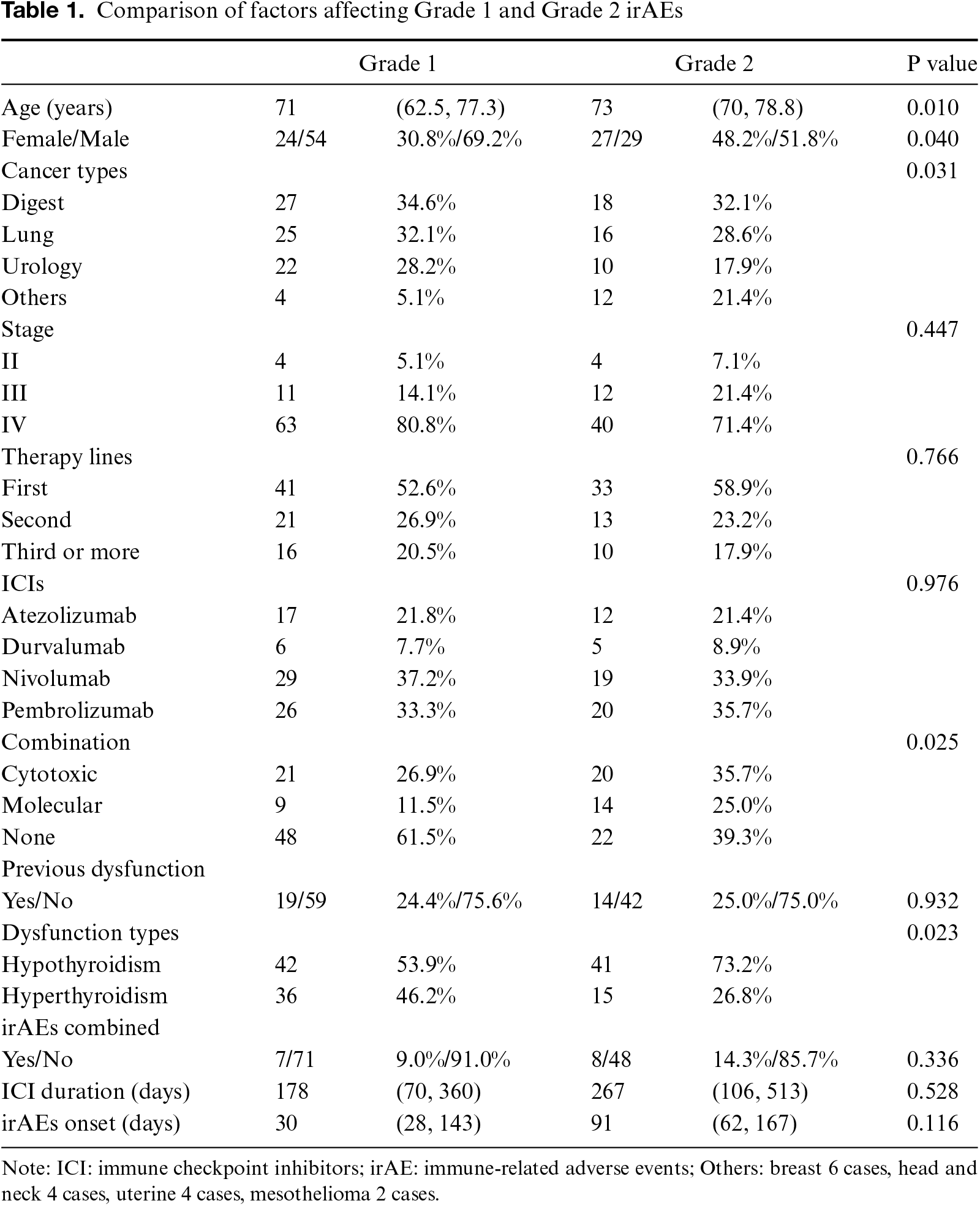
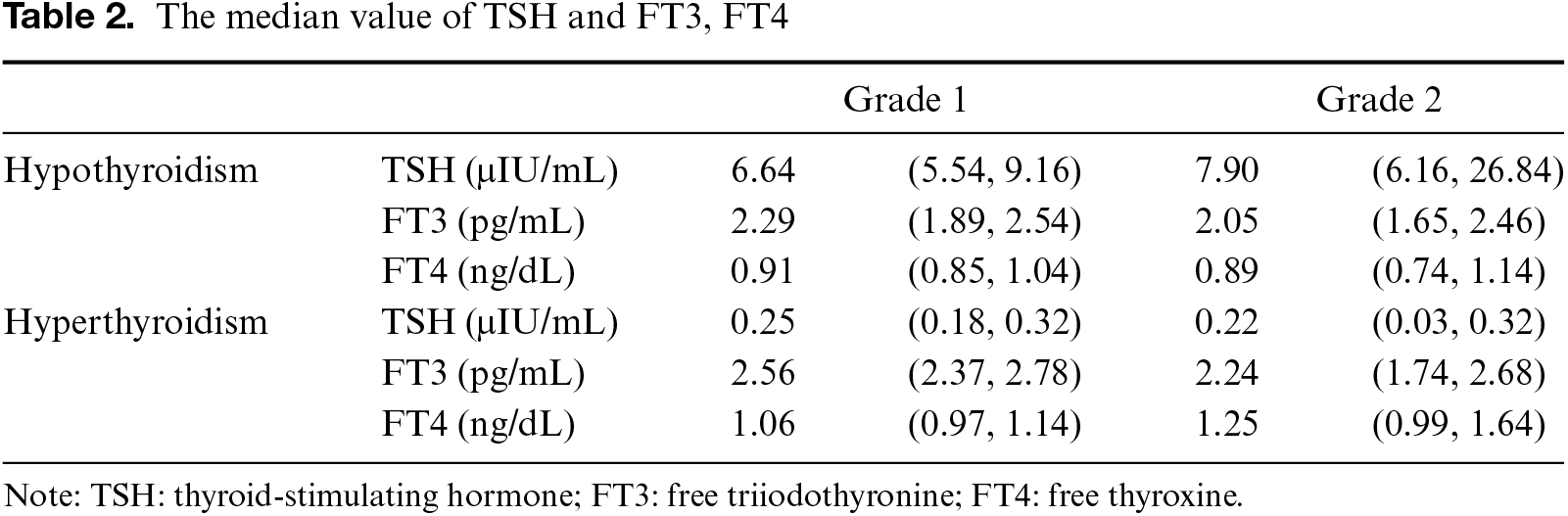
Table 2 shows the TSH, FT3, and FT4 levels for hypothyroidism and hyperthyroidism. Among patients with hypothyroidism irAE, the TSH levels were higher in Grade 2 than in Grade 1, with medians of 7.90 μIU/mL and 6.64 μIU/mL, respectively. In patients with hyperthyroidism irAE, TSH was lower in Grade 2 than in Grade 1, with medians of 0.25 μIU/mL and 0.22 μIU/mL, respectively.
Hypothyroidism
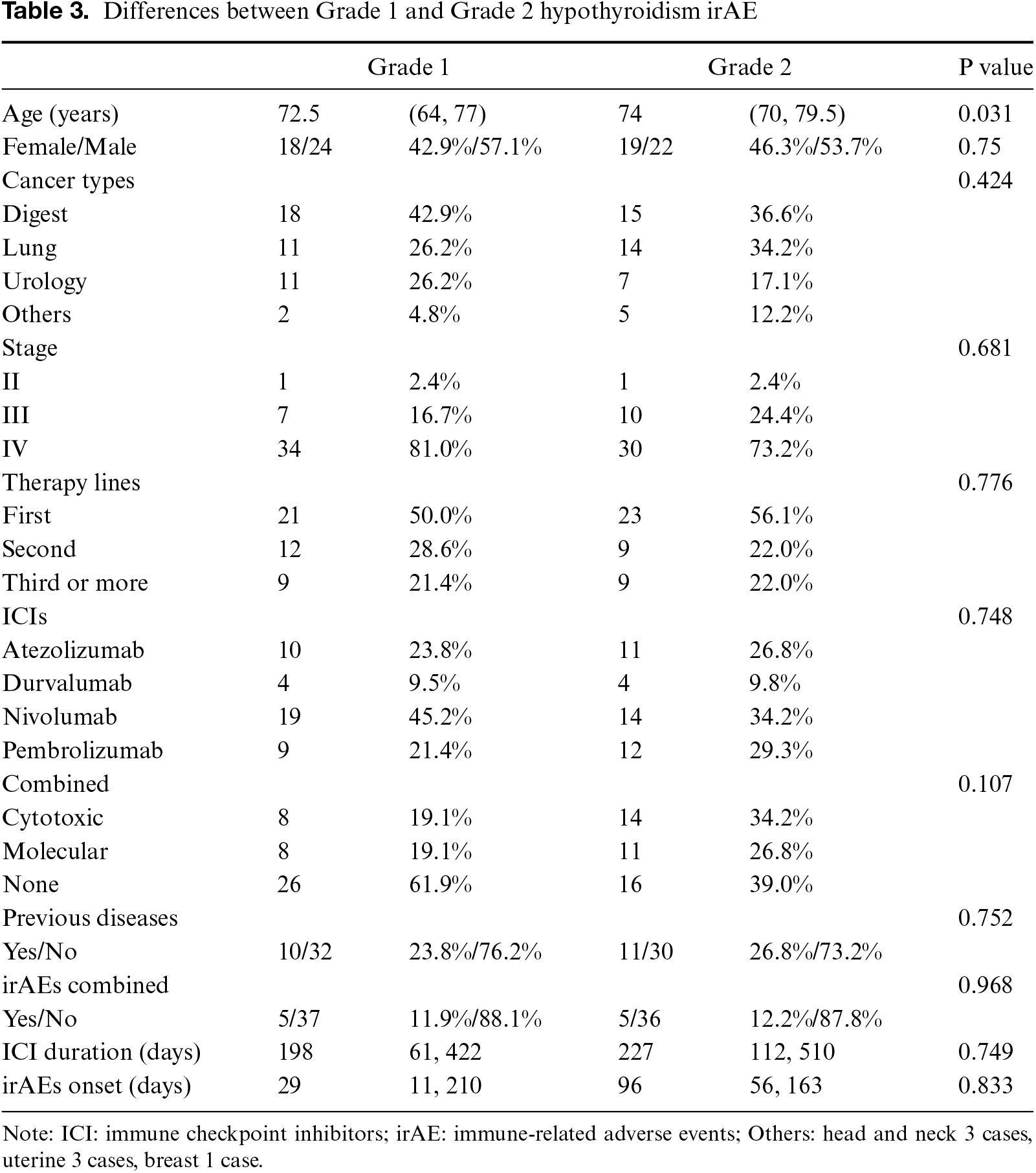
Table 3 compares hypothyroidism irAEs between Grade 1 and Grade 2. Grade 2 patients were slightly older (median 74 years vs. 72.5 years, p = 0.031). The gender distribution was similar between grades, with the percentage of females being higher in Grade 2 (46.3% vs. 42.9%, p = 0.75). The distribution of cancer types, cancer stages, lines of therapy, and types of ICIs used was comparable between the two grades. Combined therapies show higher cytotoxic and molecular agent usage in Grade 2. The presence of previous diseases and the combination of other irAEs were similar between the two groups. The duration of ICI treatment and the onset time of irAEs do not differ significantly between the two groups.
Hyperthyroidism
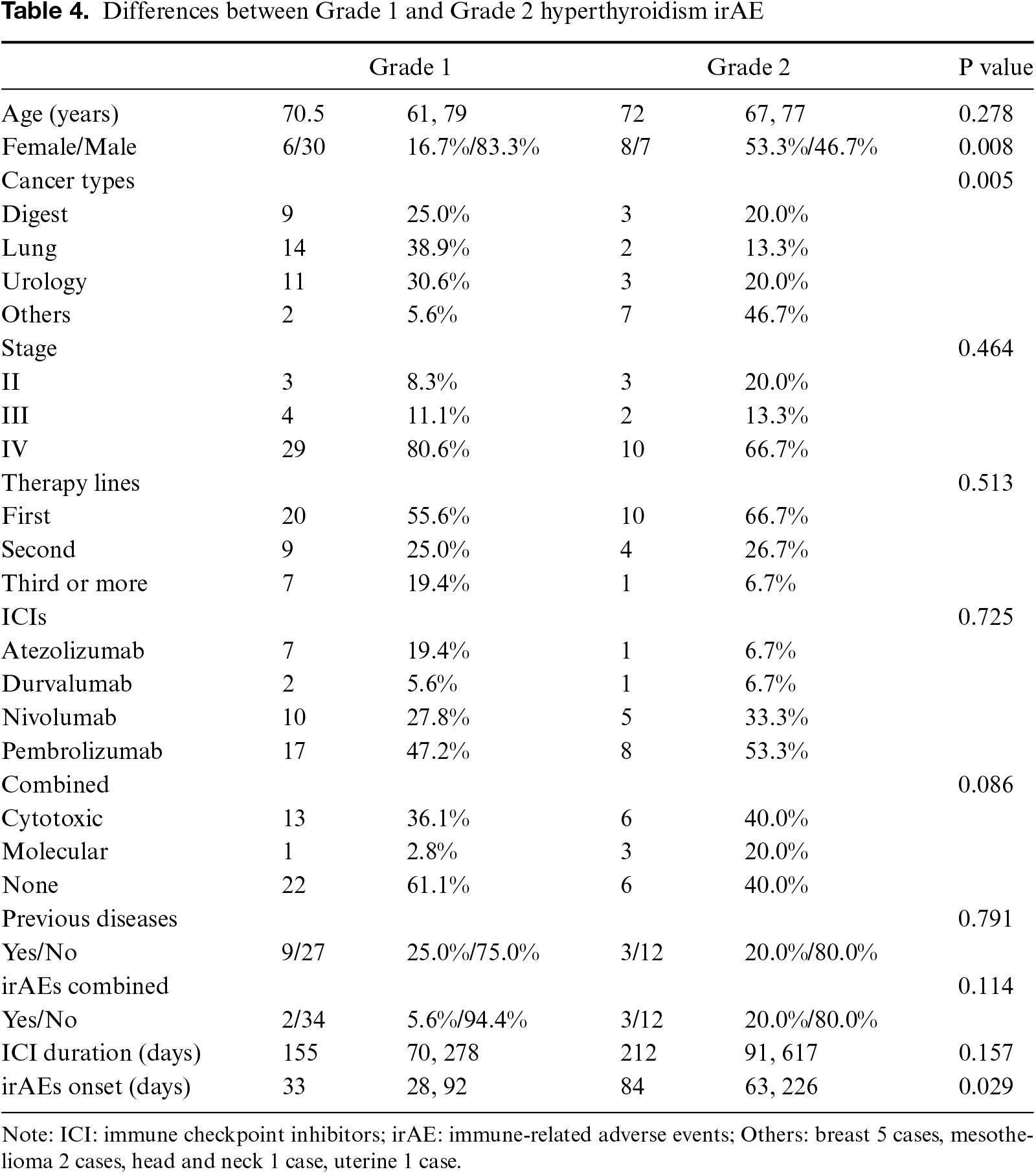
Table 4 compares the incidence of hyperthyroidism irAE between Grade 1 and Grade 2. Age and cancer stages were similar between the groups. Grade 2 patients had a higher proportion of females (53.3% vs. 16.7%, p = 0.008) and significant differences in cancer types, with more urology cancers in Grade 2 (46.7% vs. 5.6%, p = 0.005). The treatment lines and types of ICIs used are comparable. Combined therapies showed higher use of molecular agents in Grade 2 (20.0% vs. 2.8%). Previous thyroid diseases and the combination of irAEs were similar, but Grade 2 had a later onset of irAEs (median 84 vs. 33 days, p = 0.029).
Multivariable Analysis
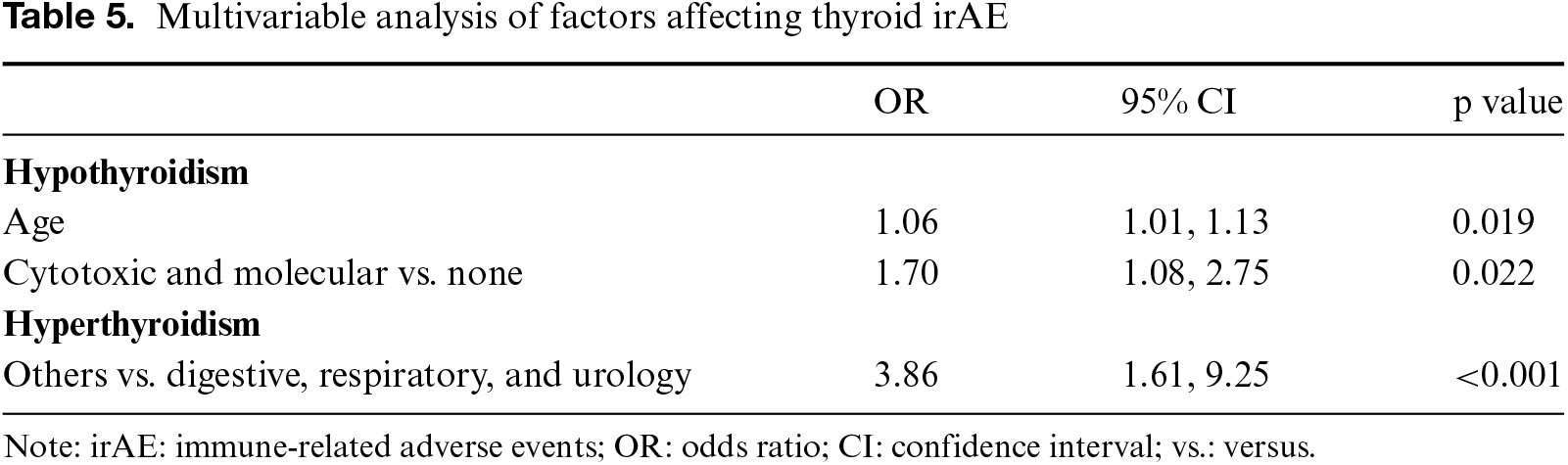
Table 5 presents the multivariable analysis of factors affecting thyroid dysfunction. For hyperthyroidism, age was a significant factor, with an OR of 1.06 (95% CI: 1.01–1.13, p = 0.019), and the use of cytotoxic and molecular therapies compared to no therapy also significantly increased the risk (OR: 1.70, 95% CI: 1.08–2.75, p = 0.022). For hypothyroidism, the “Others” category (including five cases of breast cancer, two mesothelioma, one case of head and neck cancer, and one case of uterine cancer) significantly raised the risk with an OR of 3.86 (95% CI: 1.61–9.25, p < 0.001).
Discussion
The findings of this retrospective cohort study highlight the significant impact of ICIs on thyroid function, emphasizing the clinical challenges and considerations required for managing irAEs. The observed incidence of 34.9% for thyroid irAEs among ICI-treated patients aligns with previously reported rates of 30% to 40% for any grade of thyroid irAEs.8,15 Hypothyroidism irAEs were more prevalent, affecting 21.6% of patients compared to 13.3% for hyperthyroidism. The higher incidence of hypothyroidism is consistent with existing literature, suggesting a predominance of destructive thyroiditis or hypothyroidism over hyperthyroidism in patients undergoing ICI therapy16. Age and ICI combination therapy were independent risk factors in the progression of Grade 2 hypothyroidism irAEs. Patients with breast cancer and mesothelioma showed an increased risk of Grade 2 hyperthyroidism irAEs compared to those with lung, digestive, and urology cancers. Notably, no patients reported thyroid irAEs of Grade 3 or higher, supporting the safety of ICI treatment across various cancer types.
Age appears to be a significant factor in the progression of Grade 2 hypothyroidism, particularly in the context of combination therapy. Studies have indicated that younger patients may respond more favorably to combination therapies involving levothyroxine and liothyronine than older adults.17,18 Older adults undergoing ICI treatment exhibit a heightened risk of irAEs compared to younger patients. This is associated with an upregulated inflammatory response gene signature in tissues prone to age-related increases in irAE risks, while tissues showing a decline in age-related irAE risks follow an inverse trend.19 This differential response may be due to variations in metabolic rates and comorbidities, which are more prevalent in older populations.20 Furthermore, the risk of adverse effects, such as cardiac arrhythmias, increases with age, necessitating more cautious and tailored treatment approaches in older individuals.21 Therefore, while combination therapy can offer enhanced symptom control for some patients, its use must be carefully considered in the context of patient age to balance efficacy and safety.
Patients with breast cancer and mesothelioma undergoing ICI treatment are more likely to develop Grade 2 hyperthyroidism, likely due to the robust immune activation these therapies provoke. The heightened immune response in breast cancer, often compounded by combination therapies, and the unique immunological environment of mesothelioma contribute to this increased risk.22,23 Notably, both mesothelioma patients in the study were treated with nivolumab and ipilimumab. Effective management requires vigilant endocrine monitoring and interdisciplinary collaboration to balance cancer treatment with the control of thyroid irAEs. Early identification, patient education, and personalized care plans are essential to optimize treatment outcomes and maintain patient quality of life amid the complexities of irAEs.
This study also observed that a combination of other irAEs is more frequently seen in Grade 2 irAEs, underscoring the complexity of immune modulation in patients receiving immunotherapy. These patients may experience concurrent irAEs affecting multiple organs, such as the dermatologic, gastrointestinal, hepatic, and endocrine systems.24 Thyroid irAEs can involve the activation of T and B lymphocytes, various cytokines, and other factors. Certain immunotherapeutic agents remove the suppressive effect on T cells, allowing them to regain their anti-tumor activity. Nevertheless, this immune activation can also damage normal tissues, resulting in cell death and the development of organ-specific irAEs.4,25 This multiplicity of irAEs poses a significant challenge in clinical management, as treatment strategies must address the interplay between different adverse events while maintaining the efficacy of cancer therapy.26 Comprehensive care plans and close interdisciplinary collaboration are essential for managing these patients effectively.
The onset time of irAEs and the duration of chemotherapy do not appear to have a straightforward relationship with the severity of irAEs, particularly between Grade 1 and Grade 2 events. This lack of correlation suggests that individual patient factors, such as genetic predisposition, immune system variability, and overall health status, likely influence the development of irAEs rather than just the timing or duration of treatment. As a result, it is challenging to predict the severity of irAEs based solely on these parameters. Instead of relying on the timing and duration of chemotherapy as predictors of irAE severity, clinicians should prioritize early detection and proactive management of irAEs through regular monitoring and patient education. As reported in previous studies, higher-grade irAEs are more likely to be associated with a treatment response.27,28 However, no statistically significant differences were found in the duration of ICI usage between Grade 1 and Grade 2. Patients showed a trend of longer ICI usage duration in both the hypothyroidism and hyperthyroidism groups.
This study had several limitations: First, it was carried out in a single medical center in Japan, introducing a potential selection bias in the conclusions. Second, although we analyzed medical records from the past ten years retrospectively, the sample size for several specific tumor types was small, limiting the robustness of our conclusions. Third, due to the data extraction methods and an insufficient follow-up period for recently treated patients, this study could not analyze the relationship between irAEs and overall patient survival.
Conclusion
In conclusion, this study provides valuable insights into the prevalence and risk factors of Grade 2 thyroid irAEs in the context of ICI therapy. Our findings highlight the importance of vigilant monitoring and a tailored approach to mitigating these adverse events, ultimately contributing to better patient care and optimized therapeutic outcomes in oncology.
Acknowledgments
We appreciate all participants enrolled in this analysis.
Funding Statement
This research was funded by Grants-in-Aid for Scientific Research, Grant Number JP24K19111.
Authors’ Contributions
Hao Chen contributed to the study design, data extraction, and drafting. T.Y., A.T., and Harrison Chu worked on data interpretation and the revision process. All authors read and approved the final manuscript.
Data Availability Statement
The datasets generated during and/or analyzed during the current study are available from the corresponding author upon reasonable request.
Ethical Statement
This study was approved by the Institutional Review Board of Kanto Rosai Hospital, and informed consent was obtained from all participants.
Conflicts of Interest
The authors report no conflicts of interest in this work.
References
[1] Carlino MS, Larkin J, Long GV. Immune checkpoint inhibitors in melanoma. Lancet. September 11, 2021;398(10304):1002–1014. doi:10.1016/s0140-6736(21)01206-x.
[2] Khoja L, Day D, Wei-Wu Chen T, et al. Tumour-and class-specific patterns of immune-related adverse events of immune checkpoint inhibitors: a systematic review. Ann Oncol. October 1, 2017;28(10):2377–2385. doi:10.1093/annonc/mdx286.
[3] Michot JM, Bigenwald C, Champiat S, et al. Immune-related adverse events with immune checkpoint blockade: a comprehensive review. Eur J Cancer. February 2016;54:139–148. doi:10.1016/j.ejca.2015.11.016.
[4] Muir CA, Tsang VHM, Menzies AM, et al. Immune related adverse events of the thyroid-a narrative review. Front Endocrinol (Lausanne). 2022;13:886930. doi:10.3389/fendo.2022.886930.
[5] Iwama S, Kobayashi T, Yasuda Y, et al. Immune checkpoint inhibitor-related thyroid dysfunction. Best Pract Res Clin Endocrinol Metab. May 2022;36(3):101660. doi:10.1016/j.beem.2022.101660.
[6] Ge X, Jiang W, Li H, et al. Immune-related adverse events and outcomes among pan-cancer patients receiving immune checkpoint inhibitors: a monocentric real-world observational study. Cancer Med. September 2023;12(18):18491–18502. doi:10.1002/cam4.6449.
[7] Martins F, Sofiya L, Sykiotis GP, et al. Adverse effects of immune-checkpoint inhibitors: epidemiology, management and surveillance. Nat Rev Clin Oncol. September 2019;16(9):563–580. doi:10.1038/s41571-019-0218-0.
[8] Muir CA, Clifton-Bligh RJ, Long GV, et al. Thyroid immune-related adverse events following immune checkpoint inhibitor treatment. J Clin Endocrinol Metab. August 18, 2021;106(9):e3704–e3713. doi:10.1210/clinem/dgab263.
[9] Yang P, Shen G, Zhang H, et al. Incidence of thyroid dysfunction caused by immune checkpoint inhibitors combined with chemotherapy: a systematic review and meta-analysis. Int Immunopharmacol. May 30, 2024;133:111961. doi:10.1016/j.intimp.2024.111961.
[10] Wu L, Xu Y, Wang X, et al. Thyroid dysfunction after immune checkpoint inhibitor treatment in a single-center Chinese cohort: a retrospective study. Endocrine. July 2023;81(1):123–133. doi:10.1007/s12020-023-03323-9.
[11] Vardarli I, Tan S, Brandenburg T, et al. Risk and incidence of endocrine immune-related adverse effects under checkpoint inhibitor mono-or combination therapy in solid tumors: a meta-analysis of randomized controlled trials. J Clin Endocrinol Metab. March 15, 2024;109(4):1132–1144. doi:10.1210/clinem/dgad670.
[12] Cheung YM, Wang W, McGregor B, et al. Associations between immune-related thyroid dysfunction and efficacy of immune checkpoint inhibitors: a systematic review and meta-analysis. Cancer Immunol Immunother. August 2022;71(8):1795–1812. doi:10.1007/s00262-021-03128-7.
[13] Chennamadhavuni A, Abushahin L, Jin N, et al. Risk factors and biomarkers for immune-related adverse events: a practical guide to identifying high-risk patients and rechallenging immune checkpoint inhibitors. Front Immunol. 2022;13:779691. doi:10.3389/fimmu.2022.779691.
[14] Ramos-Casals M, Brahmer JR, Callahan MK, et al. Immune-related adverse events of checkpoint inhibitors. Nat Rev Dis Primers. May 7, 2020;6(1):38. doi:10.1038/s41572-020-0160-6.
[15] Byun DJ, Wolchok JD, Rosenberg LM, et al. Cancer immunotherapy-immune checkpoint blockade and associated endocrinopathies. Nat Rev Endocrinol. April 2017;13(4):195–207. doi:10.1038/nrendo.2016.205.
[16] Pollack RM, Kagan M, Lotem M, et al. Baseline tsh level is associated with risk of anti-PD-1-induced thyroid dysfunction. Endocr Pract. August 2019;25(8):824–829. doi:10.4158/EP-2018-0472.
[17] da Silva Mazeto GMF, Sgarbi JA, Estrela Ramos H, et al. Approach to adult patients with primary hypothyroidism in some special situations: a position statement from the Thyroid Department of the Brazilian Society of Endocrinology and Metabolism (SBEM). Arch Endocrinol Metab. November 17, 2022;66(6):871–882. doi:10.20945/2359-3997000000545.
[18] Jonklaas J, Bianco AC, Cappola AR, et al. Evidence-based use of levothyroxine/liothyronine combinations in treating hypothyroidism: a consensus document. Thyroid. February 2021;31(2):156–182. doi:10.1089/thy.2020.0720.
[19] Yang K, Li J, Sun Z, et al. Effect of age on the risk of immune-related adverse events in patients receiving immune checkpoint inhibitors. Clin Exp Med. November 2023;23(7):3907–3918. doi:10.1007/s10238-023-01055-8.
[20] Guo J, Huang X, Dou L, et al. Aging and aging-related diseases: from molecular mechanisms to interventions and treatments. Signal Transduct Target Ther. December 16, 2022;7(1):391. doi:10.1038/s41392-022-01251-0.
[21] Flynn RW, Bonellie SR, Jung RT, et al. Serum thyroid-stimulating hormone concentration and morbidity from cardiovascular disease and fractures in patients on long-term thyroxine therapy. J Clin Endocrinol Metab. January 2010;95(1):186–193. doi:10.1210/jc.2009-1625.
[22] Cortes J, Rugo HS, Cescon DW, et al. Pembrolizumab plus chemotherapy in advanced triple-negative breast cancer. N Engl J Med. July 21, 2022;387(3):217–226. doi:10.1056/NEJMoa2202809.
[23] Tedesco J, Jaradeh M, Vigneswaran WT. Malignant pleural mesothelioma: current understanding of the immune microenvironment and treatments of a rare disease. Cancers (Basel). September 11, 2022;14(18):4415. doi:10.3390/cancers14184415.
[24] Blum SM, Rouhani SJ, Sullivan RJ. Effects of immune-related adverse events (irAEs) and their treatment on antitumor immune responses. Immunol Rev. September 2023;318(1):167–178. doi:10.1111/imr.13262.
[25] Zhan L, Feng HF, Liu HQ, et al. Immune checkpoint inhibitors-related thyroid dysfunction: epidemiology, clinical presentation, possible pathogenesis, and management. Front Endocrinol (Lausanne). 2021;12:649863. doi:10.3389/fendo.2021.649863.
[26] Thompson JA, Schneider BJ, Brahmer J, et al. NCCN guidelines insights: management of immunotherapy-related toxicities, version 1.2020. J Natl Compr Canc Netw. March 2020;18(3):230–241. doi:10.6004/jnccn.2020.0012.
[27] Aung WY, Lee CS, Morales J, et al. Safety and efficacy of immune checkpoint inhibitors in cancer patients and preexisting autoimmune disease: a systematic review and meta-analysis in non-small-cell lung cancer. Clin Lung Cancer. November 2023;24(7):598–612. doi:10.1016/j.cllc.2023.05.006.
[28] Zhou X, Yao Z, Yang H, et al. Are immune-related adverse events associated with the efficacy of immune checkpoint inhibitors in patients with cancer? A systematic review and meta-analysis. BMC Med. April 20, 2020;18(1):87. doi:10.1186/s12916-020-01549-2.
 |
Copyright: © 2024 Yamane et al. This work is licensed under a Creative Commons Attribution 4.0 International License, which permits unrestricted use, distribution, and reproduction in any medium, provided the original work is properly cited. |