| Journal of Clinical Question, 2024, Vol. 1, No. 3, 128–137 https://doi.org/10.69854/jcq.2024.0019 Advance access publication date 25 December 2024 |
 |
Meta-Analysis
The Efficiency and Safety of Chemoradiation Therapy in Limited Disease Small Cell Lung Cancer: A Systematic Review and Network Meta-Analysis of Randomized Clinical Trials
1The First Laboratory of Cancer Institute, The First Hospital of China Medical University, Shenyang, China.
2Shenzhen International Institute for Biomedical Research, Shenzhen, China.
3EPS Research Centre, Tokyo, Japan.
4Medical Research Institute, Tokyo Medical and Dental University, Tokyo, Japan.
*Corresponding Author: e-mail: mtang69@live.cn
Submitted: November 07, 2024 Accepted: December 24, 2024
Clinical Question Box
What is the suggested regimen for treating limited-disease small-cell lung cancer?
Etoposide-platinum combined with concurrent radiation therapy remains the standard treatment for limited-stage small-cell lung cancer. Adding maintenance Durvalumab has shown improvements in overall survival and progression-free survival compared to the traditional etoposide-platinum regimen alone, without an increased risk of adverse events. Maintenance Durvalumab, therefore, presents a promising alternative to conventional chemotherapy options for eligible patients, while evidence supporting other combination therapies remains limited.
Abstract
Introduction: Limited-disease small-cell lung cancer (LD-SCLC) is an aggressive form of lung cancer with a poor prognosis, and standard treatments provide limited survival benefits. Current approaches often combine platinum-based chemotherapy with etoposide and radiation therapy. The integration of immune checkpoint inhibitors (ICIs) is currently under investigation to improve outcomes in LD-SCLC. Methods: This network meta-analysis adhered to PRISMA guidelines to compare randomized controlled trials evaluating chemotherapy, chemoradiation, and chemoradiation plus ICIs in LD-SCLC. Relevant studies were identified through database searches, and data were extracted for overall survival (OS), progression-free survival (PFS), and adverse events (AEs). Mean differences (MD) and odds ratios (OR) were analyzed using R’s meta-analysis packages. Results: Four studies met the inclusion criteria, examining the Etoposide-Platinum with Durvalumab (EP_DUR), Etoposide-Lobaplatin (EL), Paclitaxel-Etoposide-Cisplatin (TEP), and Etoposide-Cisplatin followed by Irinotecan-Cisplatin (EP_IP) regimens, all in combination with radiation therapy. The EP_DUR regimen demonstrated significant improvements in OS and PFS compared to EP alone, with an MD of 4.2 months for OS (95% confidence interval [CI]: 1.01, 7.39) and 8.2 months for PFS (95% CI: 6.52, 9.88). The OR for AEs was 1.02 (95% CI: 0.68, 1.51). Although both the EL and TEP regimens showed gains in OS, these were not statistically significant. The EP_IP regimen was associated with the lowest risk of AEs, with an OR of 0.41 (95% CI: 0.20, 0.83). Conclusion: EP_DUR demonstrated survival benefits and a favorable safety profile, positioning it as a promising option for LD-SCLC. Future studies should continue to explore ICI combinations to optimize patient outcomes further.
Keywords: LD-SCLC, small cell lung cancer, limited disease, Durvalumab, network meta-analysis.
Introduction
Small-cell lung cancer (SCLC), though representing only 10%–15% of lung cancer diagnoses, is known for its highly aggressive nature.1 Limited-disease SCLC (LD-SCLC) is typically defined as cancer confined to the hemithorax, including ipsilateral hilar, bilateral mediastinal, and bilateral supraclavicular lymph node metastases.2 Despite its lower prevalence, SCLC’s rapid progression and early spread contribute to a poor prognosis. Mortality remains high, with a median survival of 16 to 24 months and a 5-year survival rate of roughly 14% for LD-SCLC due to its fast growth and resistance to conventional treatments.3 Consequently, LD-SCLC presents significant treatment challenges, underscoring the urgent need for more effective therapies to improve both survival and quality of life.4
Chemotherapy has long been the cornerstone of SCLC treatment, commonly involving platinum-based combinations, such as cisplatin or carboplatin with etoposide, to exploit the tumor’s initial sensitivity to these agents.5 Although chemotherapy can help reduce tumor size and alleviate symptoms, its impact on prolonging survival in LD-SCLC remains limited, with recurrences often occurring within months.6 Radiation therapy, particularly thoracic radiation, has also become integral to managing LD-SCLC.7 The combination of chemotherapy and radiation, or chemoradiation, is the standard treatment for LD-SCLC, with ongoing research aimed at evaluating the benefits of concurrent versus sequential administration.8 When combined with chemotherapy, radiation provides a survival advantage by improving local tumor control. However, determining the optimal schedule, dosage, and combination of these therapies remains a central focus of current research, as radiation can intensify the adverse effects associated with chemotherapy.9
The introduction of immunotherapy has opened a new chapter in the treatment of SCLC, with ICIs targeting the programmed cell death-1 (PD-1) and programmed death-ligand 1 (PD-L1) pathways gaining traction.10 ICIs have shown promising results in extensive-disease SCLC (ED-SCLC), improving survival outcomes when added to standard chemotherapy regimens.11 Integrating ICIs with chemoradiation has emerged as a strategy to enhance anti-tumor immune responses while maintaining control over local diseases.12 Although their use in LD-SCLC is less well-studied, early findings suggest that ICIs may be beneficial when combined with other treatments.13 However, challenges remain in defining the optimal application of ICIs within the SCLC treatment framework, including the need to manage immune-related side effects and the variability in patient responses, necessitating additional research.14,15 Furthermore, combining ICIs with chemoradiation presents added challenges related to safety and administration timing, as overlapping toxicities and uncertain survival benefits continue to be concerns.16,17
Cheng et al. conducted a randomized controlled trial (RCT) assessing the efficacy of maintenance Durvalumab following chemoradiation therapy in LD-SCLC, highlighting a potential shift in the treatment approach.18 This network meta-analysis was conducted to evaluate the efficacy and safety of combining ICI with chemotherapy in various treatment regimens for LD-SCLC. The study hypothesizes that integrating ICIs with chemotherapy may enhance therapeutic outcomes by leveraging both the direct cytotoxic effects of chemotherapy and the immune-mediated tumor suppression provided by ICIs. The primary objective is to identify the most effective and safe regimens by quantitatively comparing the benefits and risks of each approach. This analysis aims to offer robust, evidence-based recommendations for optimizing treatment selection in LD-SCLC, ultimately supporting the development of more personalized and effective patient care strategies.
Methods
Protocol and Registration
This systematic review and network meta-analysis adhered to the Preferred Reporting Items for Systematic Reviews and Meta-Analyses (PRISMA) guidelines, including the PRISMA extension for network meta-analyses.19 The study protocol was registered in the University Hospital Medical Information Network (UMIN) database (Registration number: UMIN000055948), ensuring compliance with predefined inclusion criteria, outcomes, and analysis methods.20
Eligibility Criteria
The inclusion criteria were as follows: 1) RCTs evaluating the efficacy and/or safety of treatments; 2) patients with LD-SCLC; 3) use of chemoradiation therapy; and 4) at least one arm utilizing a platinum agent combined with etoposide. The exclusion criteria were: 1) studies involving adjuvant medications without a direct anti-tumor effect; 2) trials in which any treatment arm included fewer than 15 patients; and 3) studies from which efficacy or safety data could not be extracted.
Search Strategy
A comprehensive search was conducted across multiple databases, including PubMed, Embase, Cochrane Library, and Web of Science, covering publications from January 1, 2000 to October 30, 2024. Additionally, the reference lists of relevant studies and review articles were manually screened to identify additional eligible studies. The search strategy was developed with input from an information specialist to enhance sensitivity and specificity. Terms such as “((limited disease) OR (limited stage)) AND ((small cell lung cancer) NOT (non-small cell lung cancer))” were used to identify patient populations. In contrast, “(((chemoradiation) OR (chemotherapy)) OR (radiation therapy)) OR (irradiation)” identified interventions. “(Randomized controlled trial) OR (RCT)” was included to specify the study design.
Study Selection
Titles and abstracts were independently screened for relevance by two reviewers, followed by a full-text review of studies that seemed eligible. Any discrepancies were resolved through discussion or by consulting a third reviewer. Studies meeting the predefined eligibility criteria were included, and the study selection process is summarized in a PRISMA flow diagram (Fig. S1).
Data Collection Process
Data extraction was conducted independently by two reviewers using a standardized form. The collected information included study details (author, year, sample size, country), patient demographics (age, gender), intervention specifics (type and dosage of chemotherapy, radiation regimen, ICIs used), and outcomes (overall survival (OS), progression-free survival (PFS), and adverse events (AEs)). Disagreements were resolved through discussion or by consulting a third-party reviewer.
Risk of Bias Assessment
The risk of bias for each included study was assessed independently by two reviewers using the Cochrane Risk of Bias tool for randomized trials. Bias was evaluated across multiple domains, including random sequence generation, allocation concealment, blinding of participants and personnel, blinding of outcome assessment, incomplete outcome data, and selective reporting. Studies were categorized as low, unclear, or high risk of bias. Any disagreements were resolved by consensus.
Data Synthesis and Statistical Analysis
The network meta-analysis was conducted to estimate the relative efficacy and safety of treatment regimens using the “meta” and “netmeta” packages in R. Not all studies provided hazard ratios (HRs) for OS and PFS; therefore, the MD with a 95% confidence interval (CI) in OS and PFS between different treatments was compared as the primary effect measure. In contrast, the odds ratio (OR) was used for categorical safety outcomes related to severe AEs. A random-effects model was employed to account for heterogeneity across studies. Direct and indirect comparisons between treatment regimens were synthesized, and inconsistency between direct and indirect evidence was evaluated using a node-splitting approach. Surface Under the Cumulative Ranking (SUCRA) scores ranked the treatment regimens based on their efficacy and safety profiles.
Quality of Evidence
The Grading of Recommendations Assessment, Development, and Evaluation (GRADE) approach was employed to assess the certainty of evidence across each outcome. Evidence quality was rated as high, moderate, low, or very low based on factors such as study limitations, consistency of results, indirectness of evidence, imprecision, and publication bias.
Results
Characteristics of Included Studies
A search across four databases identified 1,458 articles. After removing duplicates (237), conducting the first screening (1,099), and completing the second screening (118), four studies were ultimately included in the final analysis (Fig. S1). The characteristics of these studies are summarized in Table 1. Conducted in various countries, the studies differ in sample sizes, participant demographics, and the specific drug combinations used in each treatment arm. The analysis compared the effects of Etoposide, platinum, and Durvalumab maintenance (EP_DUR); Etoposide and Lobaplatin (EL); Paclitaxel, Etoposide, and Cisplatin (TEP); and Etoposide and Cisplatin followed by Irinotecan and Cisplatin (EP_IP) regimens with radiation therapy against the traditional regimen of Etoposide and Cisplatin (EP) with radiation therapy (Fig. 1).
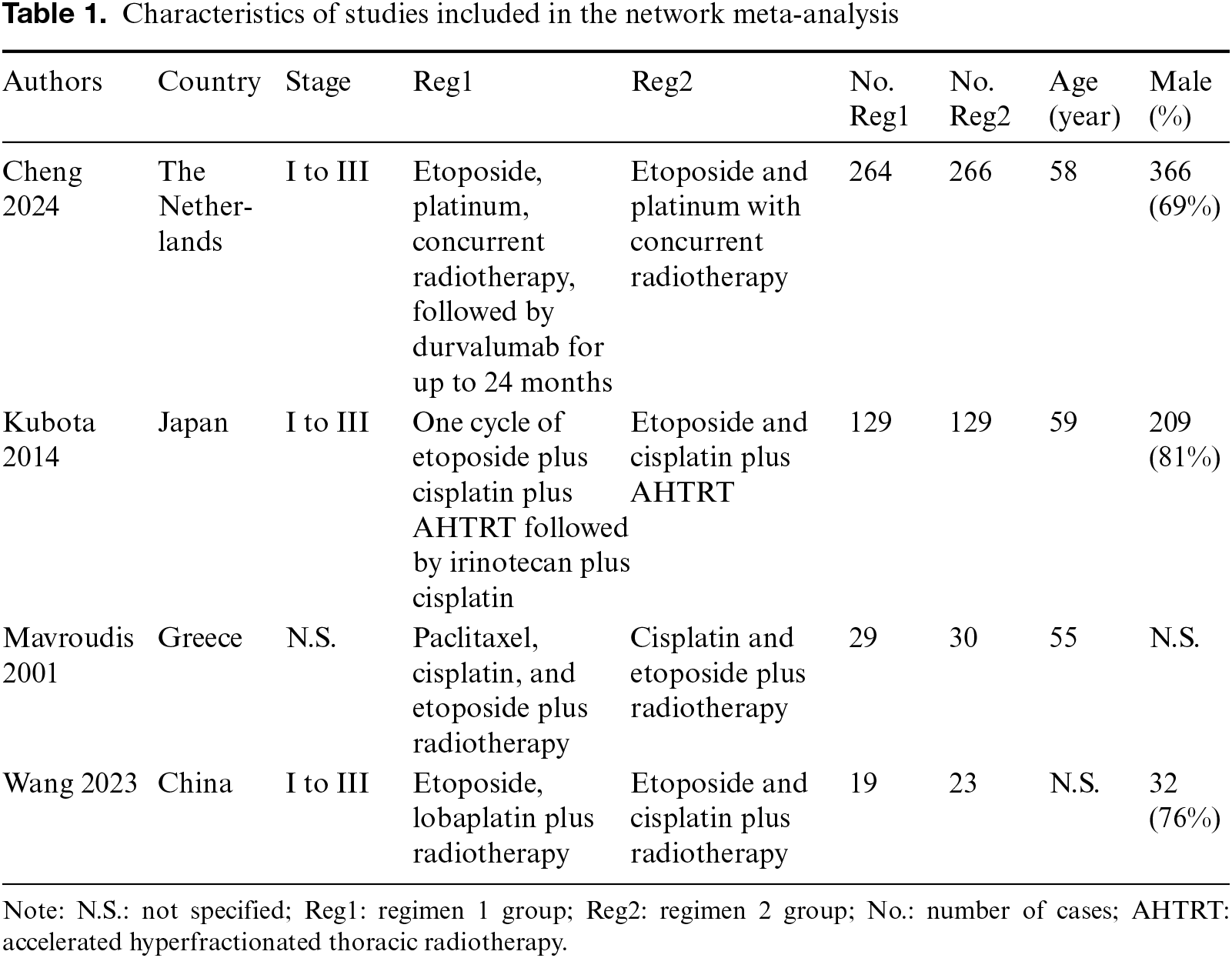
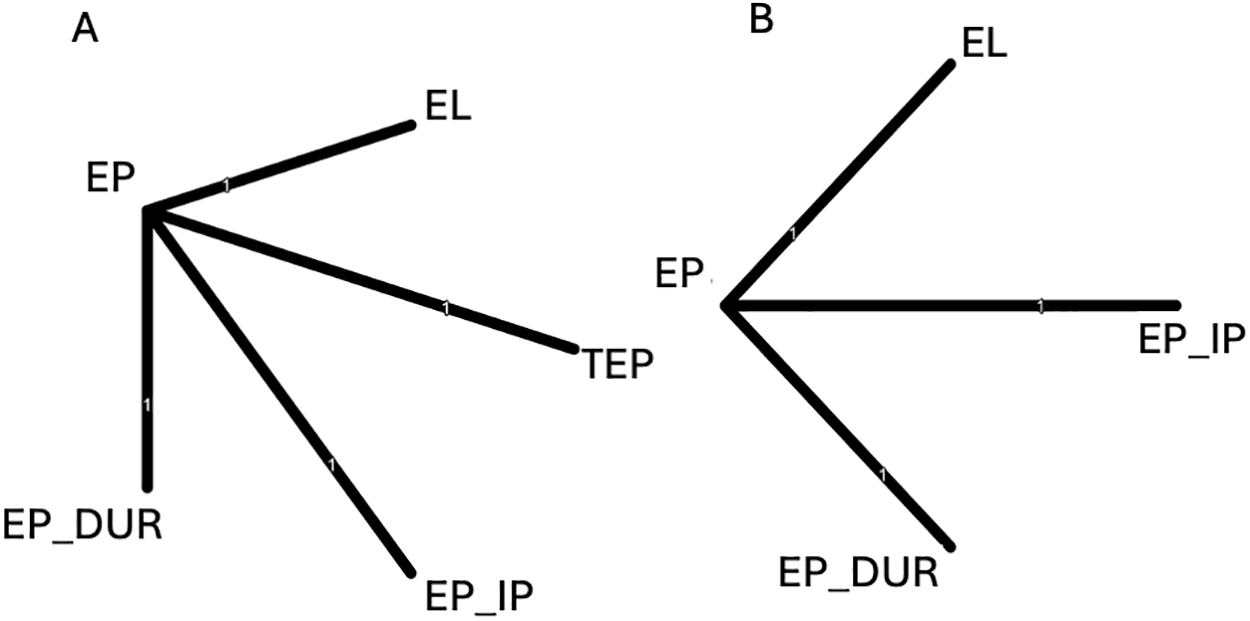
Figure 1. Network graph of studies in the network meta-analysis of OS, PFS, and AE. A: OS and PFS; B: adverse effects; EP: etoposide and cisplatin; EL: etoposide and lobaplatin; TEP: paclitaxel, etoposide, and cisplatin; EP_IP: etoposide and cisplatin followed by irinotecan and cisplatin; EP_DUR: etoposide, platinum, and durvalumab maintenance.
OS
The effect of different regimens on the MD in OS and PFS compared to the EP regimen is shown in Fig. 2A. The analysis revealed that the EP_DUR regimen was associated with a significant improvement in OS compared to EP alone, with an MD of 4.2 months (95% CI: 1.01, 7.39), indicating a survival benefit from adding durvalumab to the traditional EP regimen. Additionally, the EL and TEP regimens showed a trend toward prolonged OS without statistical significance, with MDs of 3.5 months (95% CI: −1.58, 8.58) and 0.40 months (95% CI: −1.62, 2.42), respectively. However, the EP_IP regimen showed an MD increase of 3.9 months (95% CI: 0.71, 7.09) compared with EP.
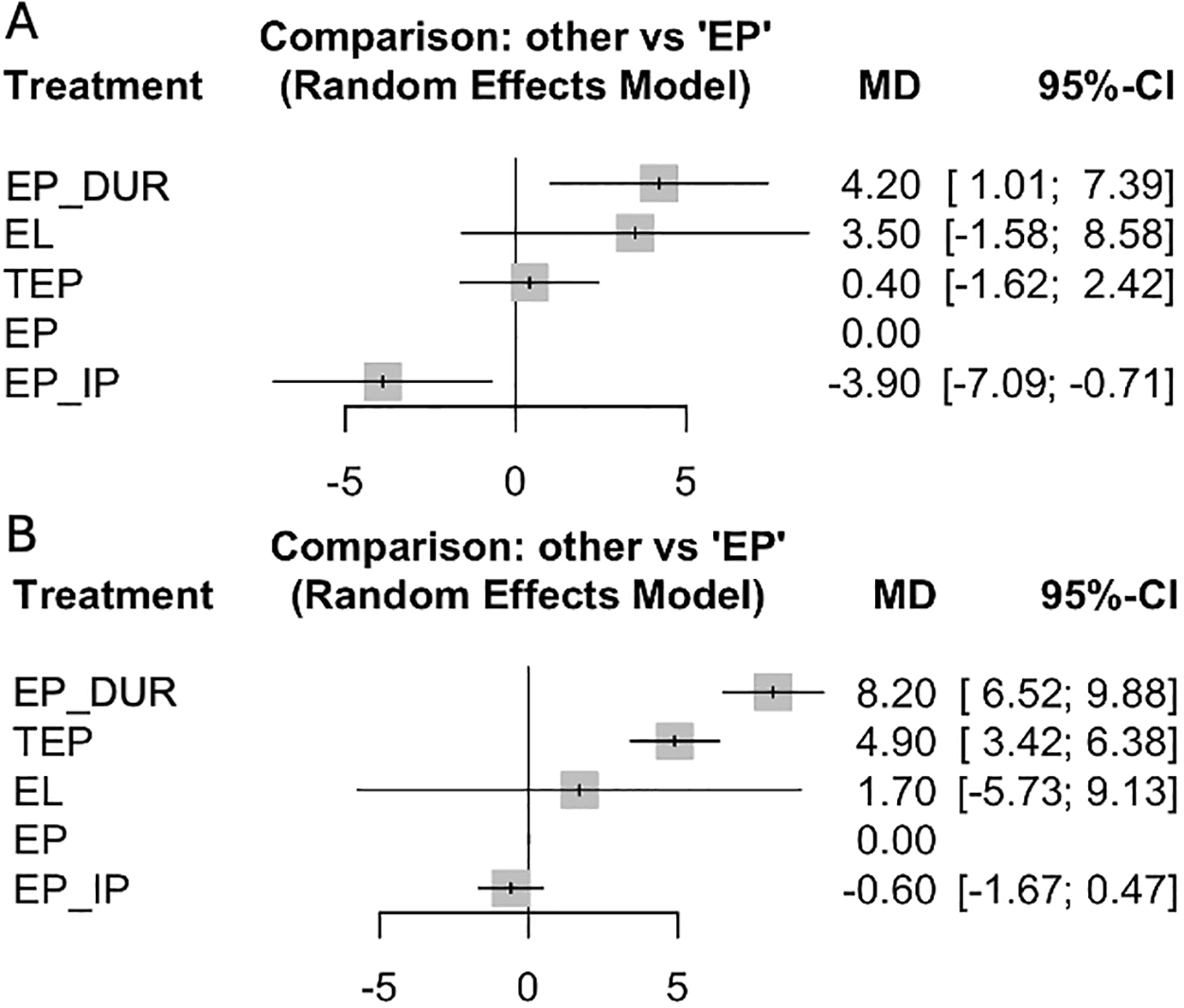
Figure 2. Effect of different regimens on the mean difference in OS and PFS compared to the EP regimen. A: OS; B: PFS; EP: etoposide and cisplatin; EL: etoposide and lobaplatin; TEP: paclitaxel, etoposide, and cisplatin; EP_IP: etoposide and cisplatin followed by irinotecan and cisplatin; EP_DUR: etoposide, platinum, and durvalumab maintenance.
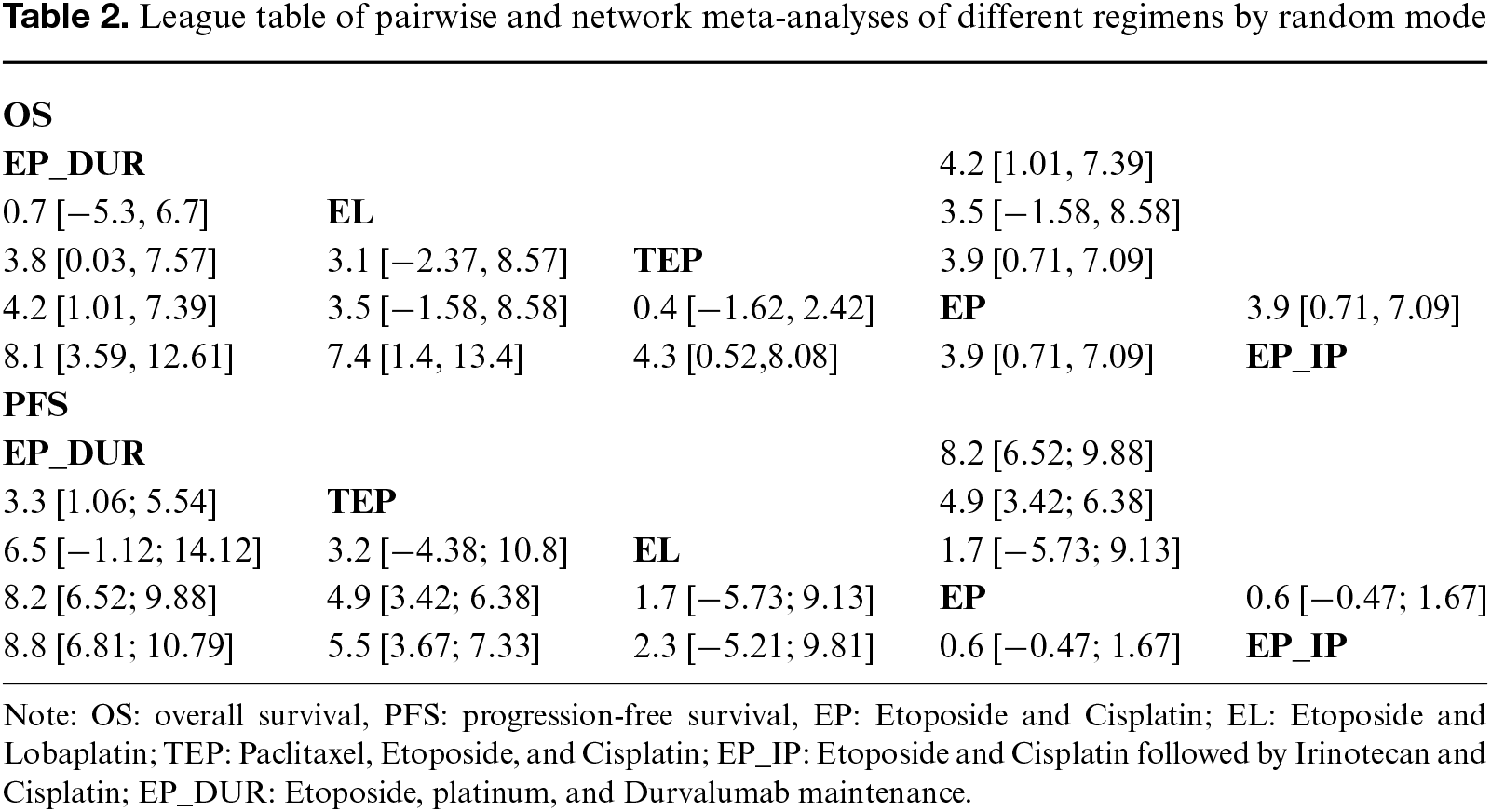
The ranking of each regimen’s efficacy for OS based on 1,000 simulations is shown in Fig. 3A. The EP_DUR regimen was the most effective in improving OS, followed by the EL, TEP, EP, and EP_IP regimens. In the network meta-analysis for OS, the EP_DUR regimen demonstrated a prolonged OS compared to the TEP and EP_IP regimens, with MDs of 3.8 months (95% CI: 0.03, 7.57) and 8.1 months (95% CI: 3.59, 12.61), respectively (Table 2). Additionally, the EP_DUR regimen showed a trend toward prolonged OS compared to the EL regimen, although this was not statistically significant, with an MD of 0.7 months (95% CI: −5.3, 6.7).
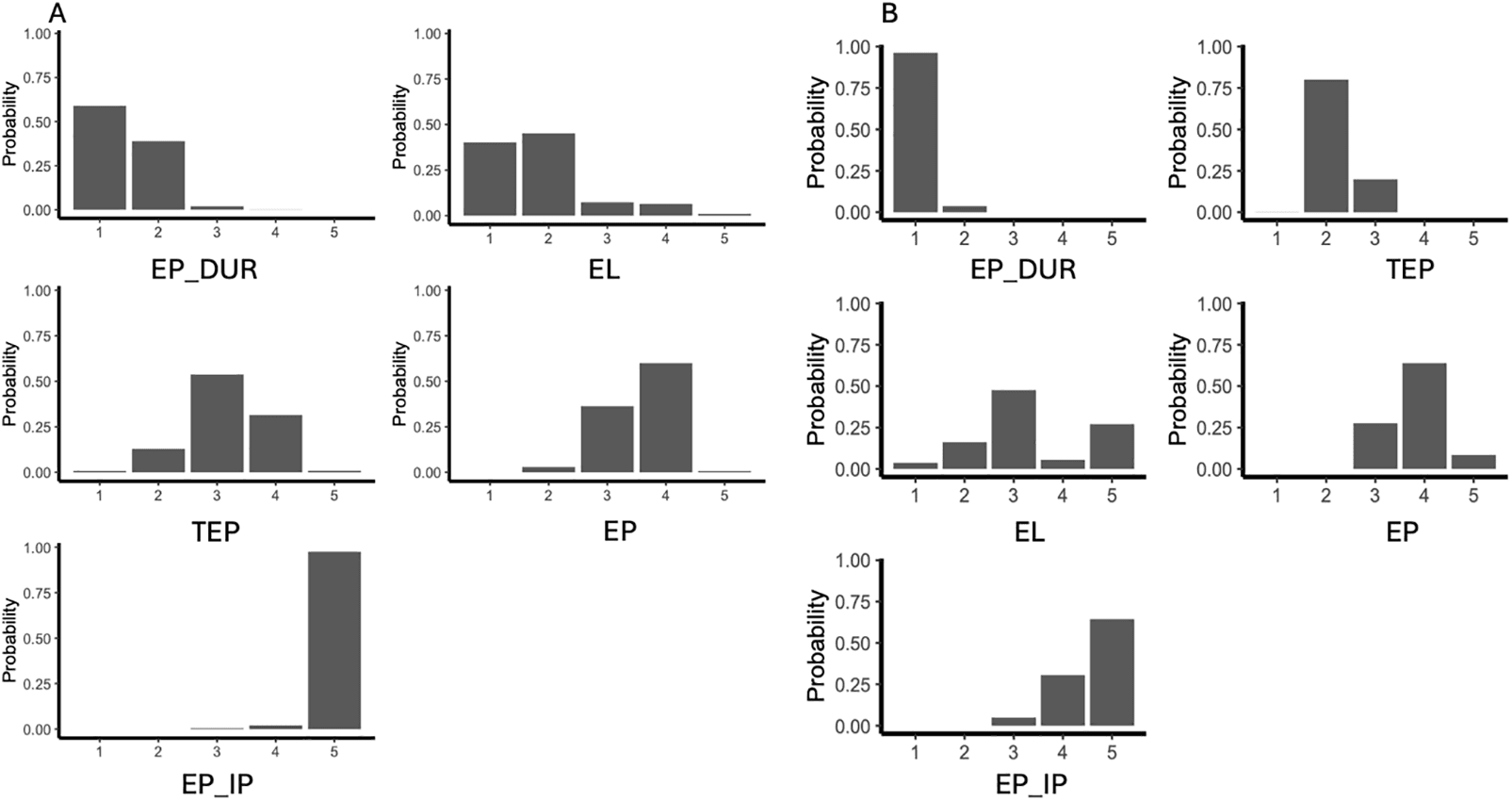
Figure 3. Ranking the possibility of each regimen based on 1000 simulations for OS and PFS. A: OS; B: PFS; EP: etoposide and cisplatin; EL: etoposide and lobaplatin; TEP: paclitaxel, etoposide, and cisplatin; EP_IP: etoposide and cisplatin followed by irinotecan and cisplatin; EP_DUR: etoposide, platinum, and durvalumab maintenance.
PFS
The analysis revealed that the EP_DUR and TEP regimens were associated with significant improvements in PFS compared to EP alone, with MDs of 8.2 months (95% CI: 6.52 to 9.88) and 4.9 months (95% CI: 3.42 to 6.38), respectively. Additionally, the EL regimen showed a trend toward prolonged PFS without reaching statistical significance, with an MD of 1.7 months (95% CI: −5.73 to 9.13). However, the EP_IP regimen exhibited a trend of reduced PFS, also without statistical significance, with an MD of −0.6 months (95% CI: −1.67 to 0.47) compared to EP.
The ranking of each regimen’s efficacy for PFS based on 1,000 simulations is shown in Fig. 3B. The EP_DUR regimen was the most effective in improving PFS, followed by the TEP, EL, EP, and EP_IP regimens. In the network meta-analysis for PFS, the EP_DUR regimen demonstrated a prolonged PFS compared to the TEP and EP_IP regimens, with MDs of 3.3 months (95% CI: 1.06, 5.54) and 8.2 months (95% CI: 6.52, 9.88), respectively (Table 2). Additionally, the EP_DUR regimen showed a trend toward prolonged OS compared to the EL regimen, although this was not statistically significant, with an MD of 6.5 months (95% CI: −1.12, 14.12).
AEs
Three studies reported AEs, with the network diagram presented in Fig. 1B. Compared to the EP regimen, the EP_IP regimen showed the lowest risk of AEs, with an OR of 0.41 (95% CI: 0.20 to 0.83) (Fig. S2). The EL and EP_DUR regimens showed no statistically significant differences compared to the EP regimen, with ORs of 0.61 (95% CI: 0.16 to 2.26) and 1.02 (95% CI: 0.68 to 1.51), respectively. The ranking of each regimen’s likelihood of AEs, based on 1,000 simulations, is shown in Fig. S3. The EP_IP regimen had the lowest risk of AEs, followed by the EL, EP_DUR, and EP regimens. The network meta-analysis indicated that the EP_IP regimen had a lower OR of AEs compared to the EP_DUR regimen, with an OR of 0.4 (95% CI: 0.18 to 0.91) (Table S1).
Risk and Evidence Level
The risk of bias is illustrated in Fig. S4. The study comparing the TEP and EP regimens showed a high risk of performance and detection bias, while the study comparing EP with EP indicated an unclear risk of selection and attrition bias. Although this meta-analysis included RCTs, the heterogeneity among the included studies and the small sample size in the two studies contribute to a low level of evidence.
Discussion
This study presents a comprehensive analysis comparing the effects of various chemotherapy regimens, including maintenance therapy, on OS and PFS in patients with LD-SCLC. The results indicate that adding Durvalumab to the EP regimen as maintenance led to the most substantial improvement in OS and PFS compared to the traditional EP regimen. While previous studies have established the benefit of platinum-based chemotherapy in ED-SCLC, the addition of ICIs to standard regimens marks a significant advancement in the treatment landscape, offering a new therapeutic direction for improving outcomes.21,22 The rankings of treatment efficacy from this study indicate that while the EP_DUR regimen holds the most promise, other combinations, such as TEP and EL, also provide some benefit. However, these gains are often accompanied by varying levels of toxicity, complicating treatment decisions, especially in patients with limited tolerance to AEs. The enhanced OS and PFS outcomes have expanded the use of Durvalumab from ED-SCLC to potentially all cases of SCLC. Furthermore, the EP_DUR regimen demonstrated a more favorable risk profile than other regimens, particularly regarding AE rates, positioning it as a promising option for enhancing survival while maintaining manageable toxicity. Maintenance therapy with Durvalumab may thus be considered essential for eligible patients undergoing ICI therapy.
SCLC remains one of the most challenging cancers to treat due to its rapid growth rate, high metastatic potential, and tendency to develop resistance to conventional chemotherapy.23 The integration of ICIs in LD-SCLC treatment has yielded promising outcomes, with the EP_DUR regimen showing particular efficacy in this analysis. Immunotherapy has emerged as a vital addition to SCLC therapy, providing a strategic approach to counter the rapid progression characteristic of this aggressive malignancy.24 This aligns with growing evidence that ICIs can sustain immune activation, potentially reducing recurrence rates in SCLC—a cancer often characterized by high relapse even after an initial response.25 Notably, the addition of Durvalumab demonstrates greater benefits compared to regimens without immune modulators, highlighting the importance of immune-based interventions in reshaping the disease trajectory of LD-SCLC.26 The substantial gains in both OS and PFS with EP_DUR underscore a strong case for incorporating ICIs into standard-of-care regimens for LD-SCLC, reinforcing the hypothesis that LD-SCLC’s immunogenic profile can be effectively targeted through ICIs. In clinical practice, Irinotecan combined with Cisplatin or Carboplatin, as well as Etoposide combined with Carboplatin, are commonly used in the treatment of SCLC. However, there are limited RCTs available specifically evaluating these regimens in the treatment of LD-SCLC with concurrent radiotherapy.
Recent studies have increasingly investigated the potential of combining ICIs with radiotherapy and chemotherapy for the treatment of LD-SCLC, representing a promising advancement in therapeutic strategies.27,28 This tri-modality approach leverages the complementary mechanisms of each treatment: chemotherapy reduces tumor burden, radiotherapy induces immunogenic cell death and releases tumor-associated antigens, and ICIs sustain an immune-mediated attack on cancer cells. By enhancing the immune response, this combination may effectively target residual or micrometastatic disease, which often contributes to recurrence.29 Emerging evidence indicates that integrating ICIs into concurrent chemoradiotherapy could significantly improve PFS and OS in LD-SCLC.29 However, challenges remain in optimizing the timing, dosing, and sequencing of these modalities to maximize efficacy while minimizing toxicity. Large-scale randomized trials are needed to define the role of this combination in clinical practice, identify predictive biomarkers, and tailor treatment to achieve the best outcomes for LD-SCLC patients.
While this network meta-analysis provides valuable insights, several limitations should be acknowledged. First, the relatively small number of included studies may reduce the robustness of the findings and limit their generalizability to broader patient populations. Second, considerable heterogeneity among the included studies—such as variations in sample sizes, participant demographics, and treatment regimens—may have contributed to a lower level of evidence supporting the conclusions. Third, the presence of a high risk of performance and detection bias in studies comparing specific regimens necessitates caution in interpreting the results. Future research should focus on conducting larger RCTs with standardized protocols to validate the findings of this analysis and strengthen the evidence base.
Conclusion
This study underscores the potential of the EP_DUR regimen as an effective strategy for prolonging survival in patients with LD-SCLC. The improvements observed in both OS and PFS, alongside a tolerable safety profile, suggest that EP_DUR could serve as a strong alternative to conventional chemotherapy options. Nevertheless, the current limitations in available evidence and the intrinsic variability within SCLC highlight the need for further investigation.
Acknowledgment
None.
Funding Source
None.
Author Contributions
T.M. contributed to the study design and drafting. C.Z. and Y.A. worked on the study search, quality check, data extraction, and analysis. C.Z., Y.A., X.Z., and X.Z. worked on interpreting the data and revising it. All authors have read the manuscript and agree with its content and data.
Data Availability Statement
The corresponding author makes the datasets available upon reasonable request.
Ethical Statement
Institutional Review Board approval was waived due to the nature of the meta-analysis.
Conflicts of Interest
The authors report no conflicts of interest in this work.
Supplemental Information
Supplemental information for this article can be found online at https://sup.jclinque.com/api/articles/54/download-suppl.
References
[1] Rudin CM, Brambilla E, Faivre-Finn C, et al. Small-cell lung cancer. Nat Rev Dis Primers. January 14, 2021;7(1):3. doi:10.1038/s41572-020-00235-0.
[2] Megyesfalvi Z, Gay CM, Popper H, et al. Clinical insights into small cell lung cancer: tumor heterogeneity, diagnosis, therapy, and future directions. CA Cancer J Clin. November–December 2023;73(6):620–652. doi:10.3322/caac.21785.
[3] PDQ Adult Treatment Editorial Board. Small cell lung cancer treatment (PDQ®health professional version. In: PDQ Cancer Information Summaries. Bethesda (MD): National Cancer Institute (US); June 27, 2024.
[4] Liu B, Zhou H, Tan L, et al. Exploring treatment options in cancer: tumor treatment strategies. Signal Transduct Target Ther. July 17, 2024;9(1):175. doi:10.1038/s41392-024-01856-7.
[5] Cani M, Napoli VM, Garbo E, et al. Targeted therapies in small cell lung cancer: from old failures to novel therapeutic strategies. Int J Mol Sci. May 17, 2023;24(10):8883. doi:10.3390/ijms24108883.
[6] Ellis PM, Swaminath A, Pond GR. Patterns of relapse in small cell lung cancer: competing risks of thoracic versus CNS relapse. Curr Oncol. July 20, 2021;28(4):2778–2788. doi:10.3390/curroncol28040243.
[7] Levy A, Botticella A, Le Péchoux C, et al. Thoracic radiotherapy in small cell lung cancer-a narrative review. Transl Lung Cancer Res. April 2021;10(4):2059–2070. doi:10.21037/tlcr-20-305.
[8] Glatzer M, Schmid S, Radovic M, et al. The role of radiation therapy in the management of small cell lung cancer. Breathe (Sheff). December 2017;13(4):e87–e94. doi:10.1183/20734735.009617.
[9] Waller V, Pruschy M. Combined radiochemotherapy: metalloproteinases revisited. Front Oncol. 2021;11:676583. doi:10.3389/fonc.2021.676583.
[10] Parvez A, Choudhary F, Mudgal P, et al. PD-1 and PD-L1: architects of immune symphony and immunotherapy breakthroughs in cancer treatment. Front Immunol. 2023;14:1296341. doi:10.3389/fimmu.2023.1296341.
[11] Chen H, Horita N, Ito K, et al. Systematic review of first-line chemotherapy for chemo-naïve extensive-stage small-cell lung cancer: network meta-analysis. Ther Adv Med Oncol. 2020;12:1758835920965841. doi:10.1177/1758835920965841.
[12] Liang Y, Wang L, Ma P, et al. Enhancing anti-tumor immune responses through combination therapies: epigenetic drugs and immune checkpoint inhibitors. Front Immunol. 2023;14:1308264. doi:10.3389/fimmu.2023.1308264.
[13] Pavan A, Attili I, Pasello G, et al. Immunotherapy in small-cell lung cancer: from molecular promises to clinical challenges. J Immunother Cancer. August 5, 2019;7(1):205. doi:10.1186/s40425-019-0690-1.
[14] Xiao Y, Li ZZ, Zhong NN, et al. Charting new frontiers: co-inhibitory immune checkpoint proteins in therapeutics, biomarkers, and drug delivery systems in cancer care. Transl Oncol. December 2023;38(6):101794. doi:10.1016/j.tranon.2023.101794.
[15] Wei Q, Li P, Yang T, et al. The promise and challenges of combination therapies with antibody-drug conjugates in solid tumors. J Hematol Oncol. January 4, 2024;17(1):1. doi:10.1186/s13045-023-01509-2.
[16] Scott SC, Hann CL. Immunotherapy for small cell lung cancer: established applications and novel approaches. Clin Adv Hematol Oncol. October 2021;19(10):654–663.
[17] Wong SK, Iams WT. Front line applications and future directions of immunotherapy in small-cell lung cancer. Cancers (Basel). January 29, 2021;13(3):506. doi:10.3390/cancers13030506.
[18] Cheng Y, Spigel DR, Cho BC, et al. Durvalumab after chemoradiotherapy in limited-stage small-cell lung cancer. N Engl J Med. October 10, 2024;391(14):1313–1327. doi:10.1056/NEJMoa2404873.
[19] Page MJ, McKenzie JE, Bossuyt PM, et al. The PRISMA, 2020 statement: an updated guideline for reporting systematic reviews. Bmj. March 29, 2021;372:n71. doi:10.1136/bmj.n71.
[20] University Hospital Medical Information Network. Network meta-analysis of chemoradiotherapy for limited-stage small cell lung cancer; Published 2024. Accessed October 26 2024. https://center6.umin.ac.jp/cgi-open-bin/ctr_e/ctr_view.cgi?recptno=R000063939.
[21] Gomez-Randulfe I, Leporati R, Gupta B, et al. Recent advances and future strategies in first-line treatment of ES-SCLC. Eur J Cancer. March 2024;200(12):113581. doi:10.1016/j.ejca.2024.113581.
[22] Li Y, Jiang Y, Pan L, et al. First-line chemoimmunotherapy for patients with small-cell lung cancer and interstitial lung abnormality: CIP risk and prognostic analysis. Thorac Cancer. 2024;15(34):2437–2448. doi:10.1111/1759-7714.15471.
[23] Patel SR, Das M. Small cell lung cancer: emerging targets and strategies for precision therapy. Cancers (Basel). August 8, 2023;15(16):4016. doi:10.3390/cancers15164016.
[24] Tong W, Xu H, Tang J, et al. Inflammatory factors are associated with prognosis of non-small cell lung cancer patients receiving immunotherapy: a meta-analysis. Sci Rep. October 30, 2024;14(1):26102. doi:10.1038/s41598-024-76052-2.
[25] Chow A, Perica K, Klebanoff CA, et al. Clinical implications of T cell exhaustion for cancer immunotherapy. Nat Rev Clin Oncol. December 2022;19(12):775–790. doi:10.1038/s41571-022-00689-z.
[26] Qiang M, Liu H, Yang L, et al. Immunotherapy for small cell lung cancer: the current state and future trajectories. Discov Oncol. August 1, 2024;15(1):355. doi:10.1007/s12672-024-01119-5.
[27] Schlick B, Shields MD, Marin-Acevedo JA, et al. Immune checkpoint inhibitors and chemoradiation for limited-stage small cell lung cancer. Curr Treat Options Oncol. August 2022;23(8):1104–1120. doi:10.1007/s11864-022-00989-7.
[28] Liu W, Zhang L, Xiu Z, et al. Combination of immune checkpoint inhibitors with chemotherapy in lung cancer. Onco Targets Ther. 2020;13:7229–7241. doi:10.2147/ott.S255491.
[29] Gong S, Li Q, Yu X, et al. Efficacy and safety of different immunotherapies combined with chemotherapy as first-line therapy in patients with small cell lung cancer: a network meta-analysis. Front Immunol. 2024;15:1362537. doi:10.3389/fimmu.2024.1362537.
 |
Copyright: © 2024 Zu et al. This work is licensed under a Creative Commons Attribution 4.0 International License, which permits unrestricted use, distribution, and reproduction in any medium, provided the original work is properly cited. |