| Journal of Clinical Question. 2025; 2(4): e80 https://doi.org/10.69854/jcq.2025.0020 Advance access publication date 16 August 2025 |
 |
Meta-Analysis
The Efficacy of Different Treatment Strategies of Direct Oral Anticoagulants in Cancer-Associated Thrombosis: A Systematic Review and Network Meta-Analysis
Yusuke Koitabashi1, Nadia Ghazali 2, Ajay Sheshadri3, Bilal Farooqi4,*
1Department of General Medicine, Fujioka General Hospital, Fujioka, Japan.
2Medical Oncology Department, University Health Network-Princess Margaret Cancer Center, Toronto, Canada.
3Division of Internal Medicine, Department of Pulmonary Medicine, The University of Texas MD Anderson Cancer Center, Houston, USA.
4Department of Medicine, Mercer University School of Medicine, Macon, Georgia, USA.
*Corresponding Author: e-mail: bilal.farooqi@wmchealth.org
Submitted: June 08, 2025 Accepted: August 15, 2025
Clinical Question Box
What is the optimal direct oral anticoagulant (DOAC) strategy for preventing thrombosis while minimizing bleeding in cancer-associated thrombosis (CAT)?
In patients with CAT, reduced-dose long-term DOAC therapy provides the best balance of efficacy and safety. It significantly reduces the risk of recurrent thrombosis compared to vitamin K antagonists and dalteparin, without a notable increase in major bleeding risk. For patients at high bleeding risk, dalteparin remains the safest option. Extended-duration DOAC therapy, lasting up to 18 months, may offer additional protection against recurrence in selected patients.
Abstract
Introduction: Cancer-associated thrombosis (CAT) is a significant cause of morbidity and mortality among cancer patients. Although DOACs are increasingly utilized, the optimal regimen and treatment duration remain uncertain. This systematic review and network meta-analysis (NMA) aimed to compare the efficacy and safety of various DOAC strategies in managing CAT. Methods: A comprehensive search of PubMed, Embase, the Cochrane Library, and Web of Science was conducted up to March 2025 to identify randomized controlled trials (RCTs) involving adult patients with active cancer and confirmed venous thromboembolism (VTE). A frequentist random-effects NMA framework was employed to evaluate outcomes related to recurrent VTE, major bleeding, and all-cause mortality. Results: Fifteen RCTs involving 8468 patients were included. Reduced-dosage long-term DOAC therapy significantly decreased the risk of thrombosis recurrence compared to vitamin K antagonists (VKAs) (odds ratio [OR]: 0.32; 95% confidence interval [CI]: 0.11–0.92) and dalteparin (OR: 0.33; 95% CI: 0.13–0.88). Dalteparin exhibited the lowest risk of major bleeding compared to VKAs (OR: 0.49; 95% CI: 0.25–0.97). No significant differences in all-cause mortality were observed among the treatment strategies. Subgroup analysis indicated that 18 months of DOAC therapy provided superior thrombosis prevention compared to 6 months (OR: 0.26; 95% CI: 0.10–0.68). The certainty of evidence was rated as moderate across outcomes. Conclusion: Reduced-dosage long-term DOAC therapy appears to offer a favorable balance between efficacy and safety for managing CAT, while dalteparin remains preferable for patients at high bleeding risk. Extended-duration DOAC therapy may further enhance thrombosis prevention in selected patient populations. Further high-quality head-to-head trials are warranted.
Keywords: Cancer-associated thrombosis, direct oral anticoagulants, venous thromboembolism, anticoagulation, network meta-analysis
Introduction
Cancer-associated thrombosis (CAT) is one of the most frequent and serious complications in patients with malignancy, affecting approximately 20% of all cancer patients during the course of their disease.1 The risk of venous thromboembolism (VTE), which includes deep vein thrombosis and pulmonary embolism, is significantly elevated in this population due to multiple factors, including tumor-induced hypercoagulability, chemotherapy, central venous catheters, and immobility.2 CAT not only increases morbidity and mortality but also complicates oncologic treatment strategies by contributing to treatment delays, hospitalizations, and reduced quality of life.3 Notably, VTE is the second leading cause of death in cancer patients, underscoring the urgent need for effective and safe anticoagulation strategies tailored to this unique patient group.4
Traditionally, low-molecular-weight heparin (LMWH), such as dalteparin, has been the standard of care in treating CAT due to its favorable efficacy and bleeding profile compared with vitamin K antagonists (VKAs).5 However, challenges such as the need for subcutaneous injections, cost, and patient adherence remain barriers to long-term LMWH use.6 VKAs, while historically used for VTE management, are less favored in cancer patients due to the need for regular monitoring, numerous drug and food interactions, and fluctuating international normalized ratio levels exacerbated by chemotherapy-induced anorexia, nausea, and liver dysfunction.7 In recent years, DOACs have emerged as an attractive alternative for the treatment of CAT, offering oral administration, predictable pharmacokinetics, and a reduced need for laboratory monitoring.8 DOACs such as edoxaban, rivaroxaban, apixaban, and dabigatran have been evaluated in various randomized controlled trials (RCTs) for their efficacy and safety in CAT.9
Various therapeutic strategies involving DOACs have been explored to optimize efficacy and safety in the management of CAT. These include extending treatment beyond the standard 6-month course, which may benefit patients with persistent risk factors such as active malignancy or ongoing chemotherapy.10 Additionally, dose reduction strategies, such as apixaban 2.5 mg twice daily or rivaroxaban 10 mg once daily following an initial treatment phase, have been investigated to balance thrombotic risk reduction with mitigation of bleeding risk during extended therapy.2,11 Some studies have also assessed initial dose escalation or tailored regimens based on factors such as cancer type, renal function, or thrombocytopenia.
This NMA evaluates and compares the relative efficacy and safety of various DOAC treatment strategies, encompassing different drugs, dosing regimens, and treatment durations in patients with CAT. By synthesizing data from both direct and indirect comparisons, it aims to clarify current uncertainties and support personalized anticoagulation approaches across diverse clinical scenarios.
Methods
Registration
This NMA was conducted and reported in accordance with the Preferred Reporting Items for Systematic Reviews and Meta-Analyses 2020 guidelines and its extension statement for NMAs.12,13 This review was registered with the Open Science Framework (Registration ID number: m74sx).14
Eligibility Criteria
We included RCTs that met the following criteria: adult patients (≥18 years) with active cancer and objectively confirmed VTE; comparison of any DOAC regimen (edoxaban, rivaroxaban, apixaban, or dabigatran) with other treatment regimens; and reporting of at least one relevant outcome, including recurrent VTE, major bleeding, or all-cause mortality. Studies were excluded if they involved patients who had undergone surgery, had unavailable or incomplete data, or were subgroup analyses of previous studies without newly reported data. No language restrictions were applied.
Search Strategy
A systematic search was conducted in PubMed, Embase, the Cochrane Library, and Web of Science from inception to March 15, 2025. The search strategy included the following terms: (((((thrombosis) OR (thromboembolism)) OR (embolism)) AND ((cancer) OR (cancer-associated))) AND ((edoxaban) OR (rivaroxaban) OR (apixaban) OR (dabigatran))) AND (randomized). In addition, the reference lists of the included studies and relevant review articles were manually screened to identify any additional eligible studies.
Study Selection
Two independent reviewers (initials blinded) screened the titles and abstracts of identified records for eligibility, followed by full-text assessment. Data extraction was performed independently by two reviewers using a standardized form. Extracted data included study characteristics (author, year, country), patient demographics (sample size, age, sex), treatment regimens, follow-up duration, and outcomes of interest. Any inconsistencies during screening or data extraction were resolved through discussion or, when necessary, adjudication by a third reviewer.
Outcomes
The primary outcome was recurrent VTE, while major bleeding and all-cause mortality were assessed as secondary outcomes. Treatment strategies were categorized based on the specific DOAC used and the duration of therapy. Interventions were grouped into short-term (3 months), intermediate-term (6 months), long-term (12–18 months), and reduced-dose long-term regimens (defined as a maintenance phase with approximately half the standard dose administered for at least 12 months). Differences between individual DOAC agents were not distinguished in the analysis.
Synthesis Methods
A frequentist random-effects NMA was conducted using a generalized linear mixed model framework, implemented in R (version 4.4.1) with the meta and netmeta packages. Odds ratio (ORs) with 95% confidence intervals (CIs) were calculated for all pairwise comparisons. The treatment network was structured around standard comparators, primarily dalteparin and VKAs. Statistical heterogeneity across studies was assessed using the I2 statistic. Potential publication bias and small-study effects were evaluated using comparison-adjusted funnel plots and Egger’s test.
Risk of Bias and Certainty Assessment
The risk of bias in the included RCTs was assessed using the Cochrane Risk of Bias 2.0 tool.15 The following domains were evaluated: the randomization process, deviations from intended interventions, missing outcome data, outcome measurement, and selection of reported results. Local inconsistency was assessed using the node-splitting method, while global inconsistency was evaluated using the design-by-treatment interaction model. The certainty of evidence was assessed using the GRADE framework, adapted for NMA.16 Each comparison was rated based on risk of bias, inconsistency, indirectness, imprecision, and publication bias.
Result
Characteristics of Enrolled Studies
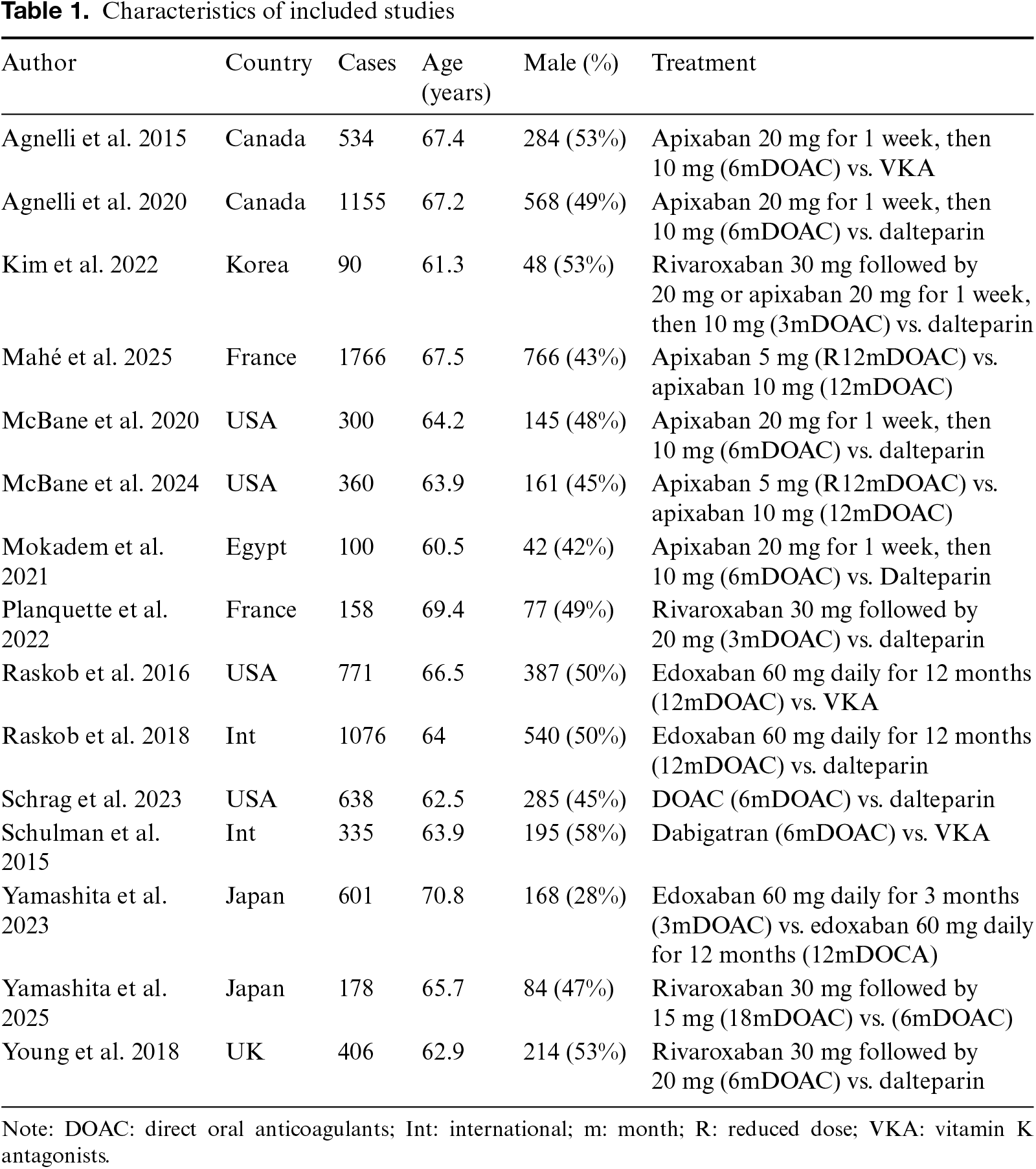
A comprehensive database search initially identified 1,975 articles. After removing duplicates (n = 339), 1,495 articles were excluded during the initial screening based on titles and abstracts. An additional 107 articles were excluded following full-text assessment (Fig. S1). Ultimately, 15 articles comprising 16 RCTs and involving a total of 8,468 patients were included in this NMA. These studies compared various DOAC regimens with standard treatments for CAT. The characteristics of the included studies are summarized in Table 1.17–30 The trials were conducted across a range of geographical regions, including North America, Europe, Asia, and international multicenter settings, enhancing the external validity and generalizability of the findings. All included trials enrolled adult patients with active cancer and objectively confirmed VTE. The interventions included two short-term, seven intermediate-term, four long-term, and two reduced-dosage long-term DOAC strategies.
Recurrence of the Thrombosis
Fig. 1 presents the network graph of the included studies. Five studies compared the intermediate-term effects of DOACs with dalteparin. Two studies compared long-term DOACs with reduced-dosage long-term DOACs, while one study compared long-term DOAC treatment with VKAs. The direct comparisons are illustrated in Fig. 2A. Compared with VKA, reduced-dosage long-term DOACs showed the lowest OR at 0.32 (95% CI: 0.11–0.92), followed by long-term DOACs with an OR of 0.37 (95% CI: 0.18–0.78). In contrast, intermediate-term DOACs, dalteparin, and short-term DOACs did not demonstrate significant differences compared with VKA, with ORs of 0.58 (95% CI: 0.29–1.16), 0.96 (95% CI: 0.44–2.08), and 1.38 (95% CI: 0.40–4.74), respectively.
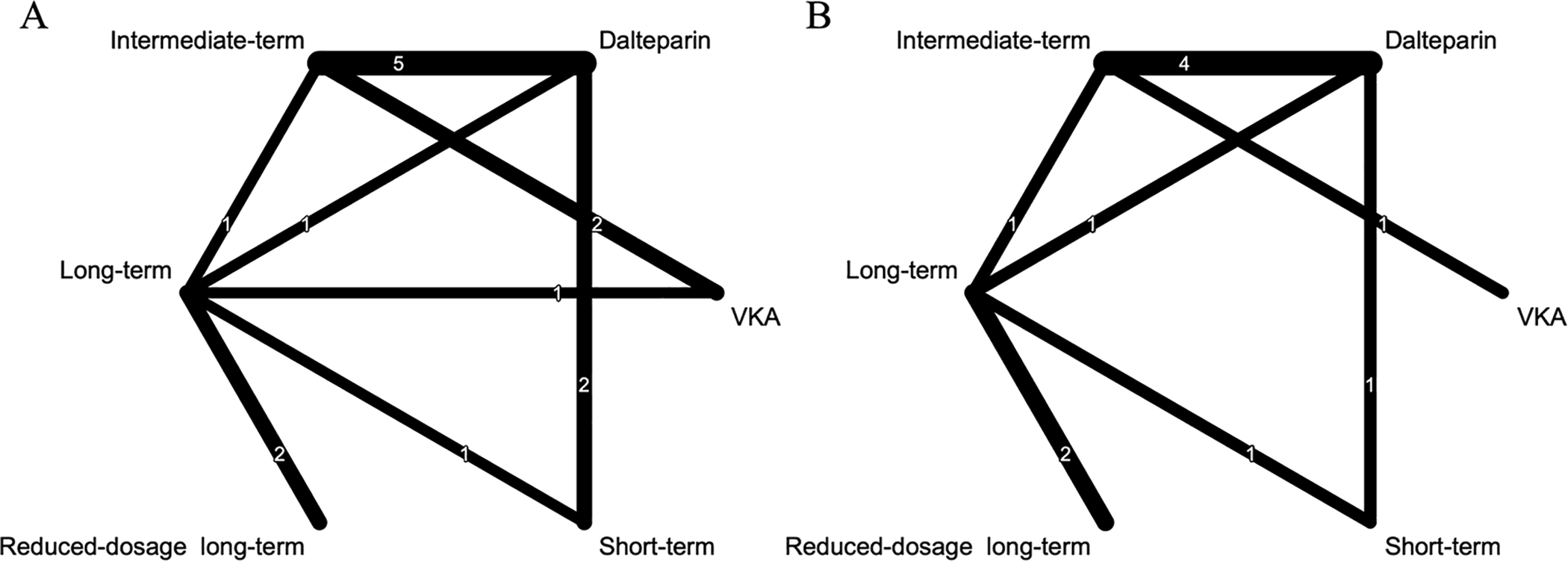
Figure 1. Network diagrams of included studies. (A) Recurrent VTE and major bleeding; (B) All-cause mortality.
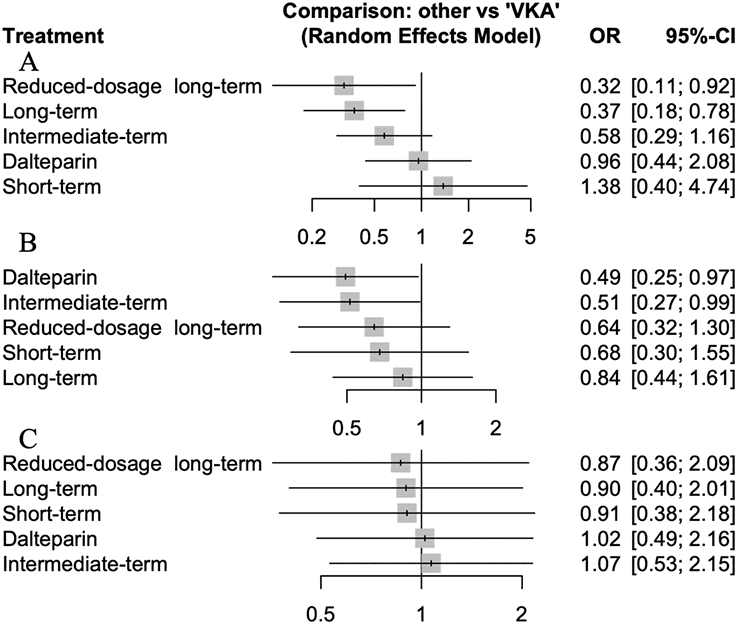
Figure 2. Direct comparisons of DOAC strategies in cancer-associated thrombosis. (A) Recurrent VTE; (B) Major bleeding; (C) All-cause mortality.
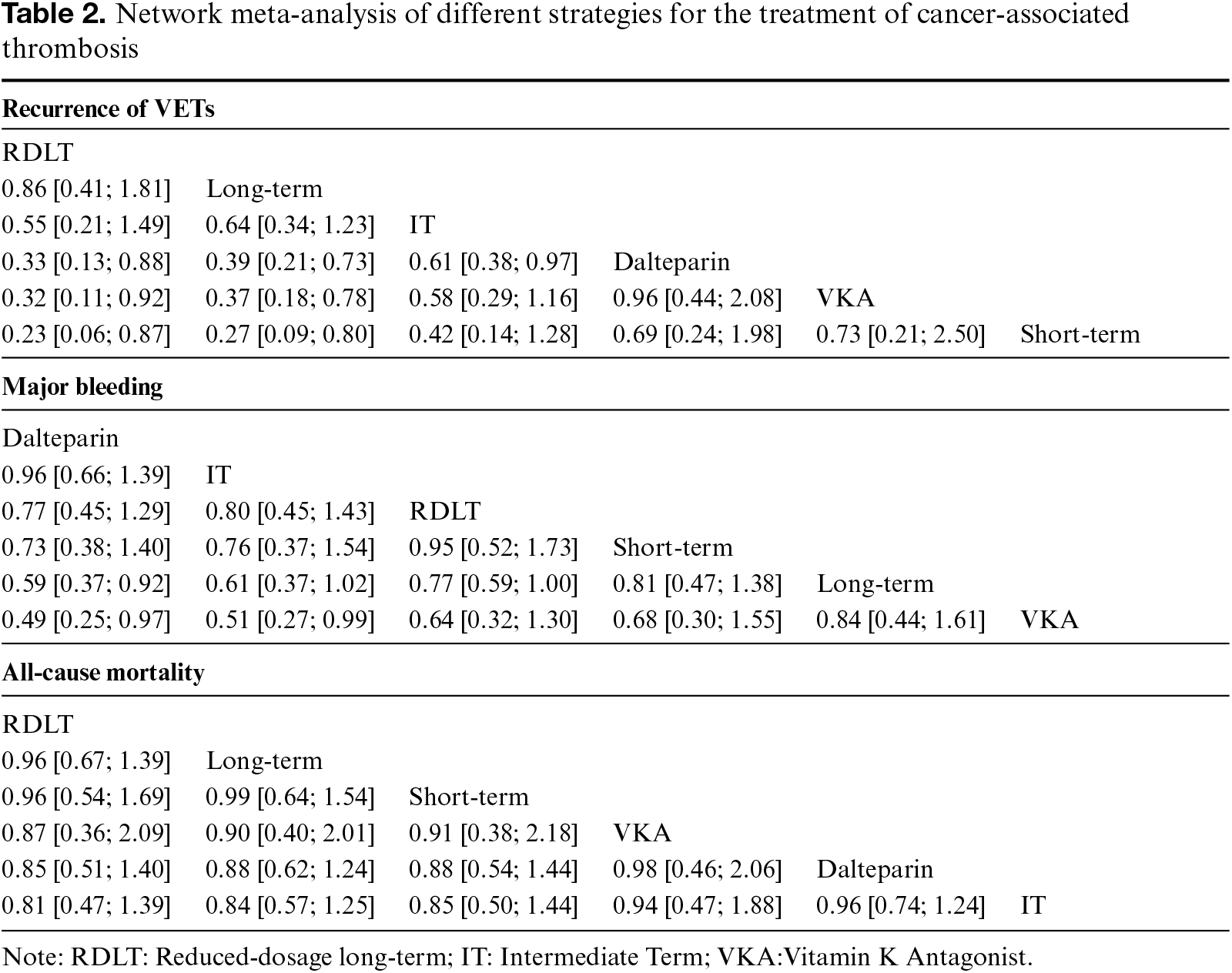
The results of this NMA are summarized in Table 2. Reduced-dosage long-term DOACs demonstrated superior efficacy compared to dalteparin, VKA, and short-term DOACs, with ORs of 0.33 (95% CI: 0.13–0.88), 0.32 (95% CI: 0.11–0.92), and 0.23 (95% CI: 0.06–0.87), respectively. However, they were not superior to long- or intermediate-term DOACs, with ORs of 0.86 (95% CI: 0.41–1.81) and 0.55 (95% CI: 0.21–1.49), respectively. Effectiveness in preventing recurrent thrombosis, based on 1,000 simulations, is shown in Fig. S2. The surface under the cumulative ranking (SUCRA) values were as follows: 0.894 for reduced-dosage long-term DOACs, 0.860 for long-term DOACs, 0.592 for intermediate-term DOACs, 0.270 for dalteparin, 0.253 for VKAs, and 0.130 for short-term DOACs. The Q statistic indicated no significant heterogeneity (p = 0.07), and Egger’s test showed no evidence of significant publication bias (p = 0.29).
Major Bleeding
The studies included for the outcome of major bleeding were the same as those for preventing thrombosis recurrence (Fig. 1A). Direct comparisons of the risk of major bleeding are illustrated in Fig. 2B. Compared with VKAs, dalteparin showed the lowest risk of major bleeding, with an OR of 0.49 (95% CI: 0.25–0.97), followed by intermediate-term DOACs with an OR of 0.51 (95% CI: 0.27–0.99). Reduced-dosage long-term DOACs, short-term DOACs, and long-term DOACs did not show a significantly higher risk compared to VKAs, with ORs of 0.64 (95% CI: 0.32–1.30), 0.68 (95% CI: 0.30–1.55), and 0.84 (95% CI: 0.44–1.61), respectively.
Table 2 presents the results of the NMA. Dalteparin was found to be safer than long-term DOACs and VKAs, with ORs of 0.59 (95% CI: 0.37–0.92) and 0.49 (95% CI: 0.25–0.97), respectively. However, it was not superior to intermediate-term, reduced-dosage long-term, or short-term DOACs, with ORs of 0.96 (95% CI: 0.66–1.39), 0.77 (95% CI: 0.45–1.29), and 0.73 (95% CI: 0.38–1.40), respectively. The ranking based on 1,000 simulations is shown in Fig. S3. The SUCRA values were 0.851 for dalteparin, 0.794 for intermediate-term DOACs, 0.536 for reduced-dosage long-term DOACs, 0.485 for short-term DOACs, 0.199 for long-term DOACs, and 0.135 for VKAs. The Q statistic indicated no significant heterogeneity (p = 0.54), and Egger’s test revealed no significant publication bias (p = 0.71).
All-Cause Mortality
The studies included for the outcome of all-cause mortality are presented in Fig. 1B. Direct comparisons of the risk of all-cause mortality are illustrated in Fig. 2C. Compared with VKAs, no treatment strategy demonstrated significant superiority or inferiority. Table 2 presents the results of the NMA. Reduced-dosage long-term DOACs showed ORs of 0.96 (95% CI: 0.67–1.39), 0.96 (95% CI: 0.54–1.69), 0.87 (95% CI: 0.36–2.09), and 0.81 (95% CI: 0.47–1.39) when compared with long-term, short-term, VKAs, and intermediate-term DOAC regimens, respectively. The treatment rankings based on 1,000 simulations are shown in Fig. S4. The SUCRA values were 0.654 for reduced-dosage long-term DOACs, 0.632 for long-term DOACs, 0.595 for short-term DOACs, 0.461 for VKAs, 0.368 for dalteparin, and 0.290 for intermediate-term DOACs. The Q statistic indicated no significant heterogeneity (p = 0.14), and Egger’s test revealed no significant publication bias (p = 0.16).
Subgroup Analysis Based on DOAC Treatment Duration
Subgroup analyses were conducted based on the specific duration of DOAC therapy. The network graphs for recurrence of thrombosis and major bleeding were identical (Fig. S5), while the network graph for all-cause mortality is shown separately (Fig. S6). For thrombosis prevention, direct comparisons demonstrated that 18 months of DOAC therapy yielded the lowest incidence of CAT, with an OR of 0.13 (95% CI: 0.30–0.47), followed by reduced-dosage 12 months, 12 months, and 6 months of DOAC therapy, with ORs of 0.39 (95% CI: 0.16–0.97), 0.46 (95% CI: 0.24–0.88), and 0.50 (95% CI: 0.27–0.94), respectively (Fig. S7). The NMA further indicated that 18 months of DOAC therapy was superior to 6 months of DOAC therapy but not superior to reduced-dosage 12 months or 12 months of DOAC therapy for thrombosis prevention (Table S1).
Fig. S8 presents direct comparisons of major bleeding risks. Six months of DOAC therapy showed a lower risk than VKAs, with an OR of 0.51 (95% CI: 0.26–0.98). The NMA revealed that dalteparin was superior to both 12-month DOAC therapy and VKAs, with ORs of 0.58 (95% CI: 0.36–0.93) and 0.49 (95% CI: 0.25–0.97), respectively (Table S2), while 6 months of DOAC therapy showed comparable results. Direct comparisons of all-cause mortality risks are shown in Fig. S9. There were no statistically significant differences between the various treatment strategies compared with VKAs. The NMA confirmed these findings (Table S3). The ranking of efficacy for each treatment, based on 1,000 simulations, is presented in Figs. S10–S12.
Subgroup Analysis of Patients with Gastrointestinal Cancer
Subgroup analyses were performed for patients with gastrointestinal cancer. The network graph illustrating major bleeding outcomes is presented in Fig. S13. Regarding the risk of major bleeding, direct comparisons indicated that a reduced dose of DOAC therapy administered for 12 months was associated with the lowest risk (OR 0.50; 95% CI: 0.16–1.60), followed by treatment durations of 18 months (OR 0.72; 95% CI: 0.11–4.85), 3 months (OR 0.74; 95% CI: 0.22–2.53), 12 months (OR 0.94; 95% CI: 0.38–2.32), and 6 months (OR 1.00; 95% CI: 0.48–2.21), as shown in Fig. S14. These results were supported by the NMA, which found no statistically significant differences among the treatment strategies (Table S4). Safety rankings for major bleeding based on 1,000 simulations are shown in Fig. S15, reflecting the same order observed in the direct comparisons.
Certainty of Evidence
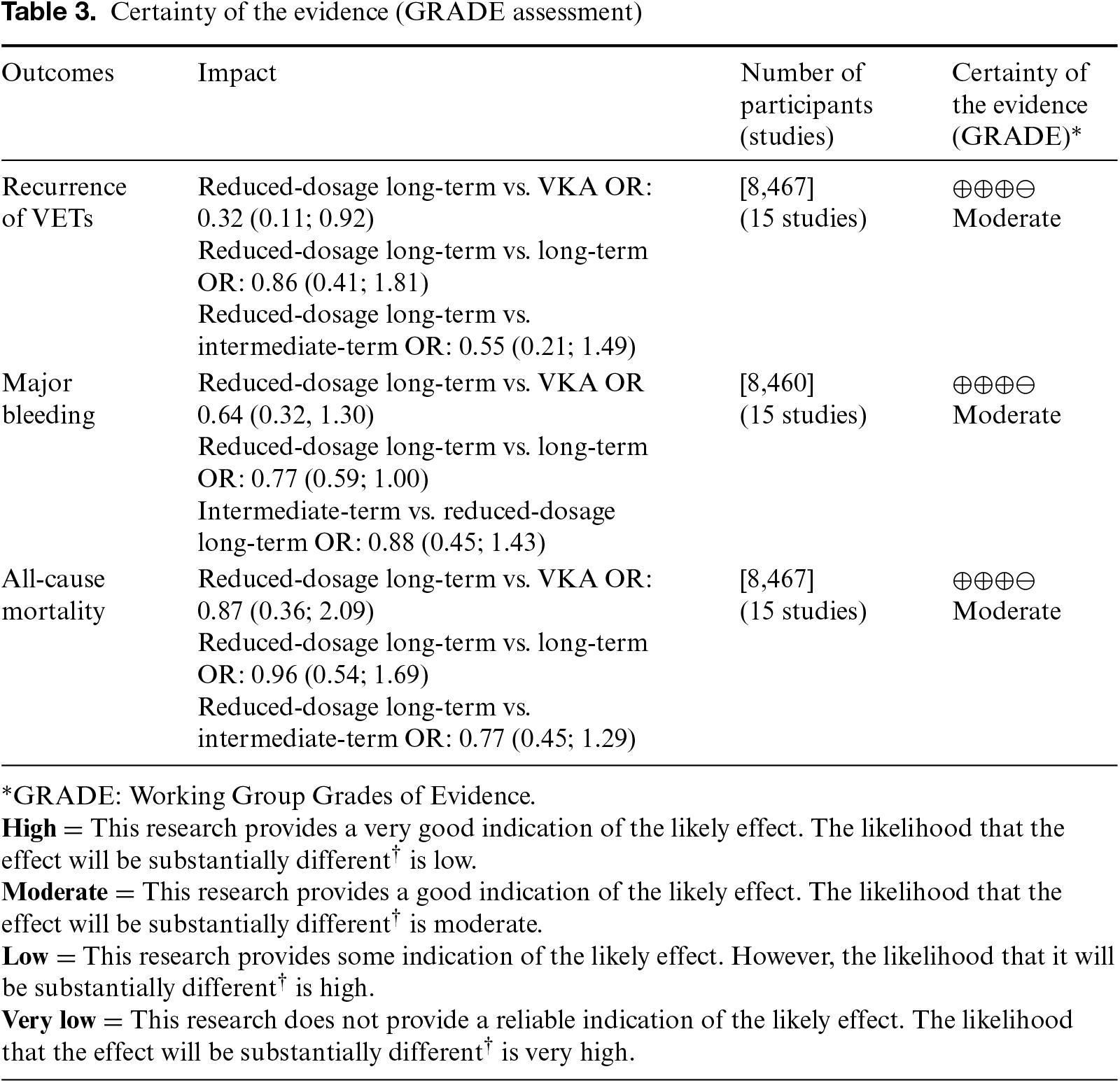
Fig. S16 presents the risk of bias assessment. Ten studies with an open-label design were judged to have a high risk of bias related to the lack of participant blinding. Overall, the risk of bias was considered to be of some concern. The certainty of evidence, summarized in Table 3, was rated as moderate across all three outcomes.
Discussion
This NMA comprehensively evaluated the efficacy and safety of various DOAC treatment strategies compared to standard therapies for CAT. Fifteen RCTs conducted across diverse regions were included, enhancing the external validity of our findings. Notably, the analysis revealed that reduced-dosage long-term DOAC therapy had the highest probability of preventing recurrent thrombosis without increasing the risk of major bleeding or all-cause mortality. This finding partially contrasts with earlier meta-analyses, which emphasized standard-dose long-term DOACs as the most effective option. Our results suggest that reduced-dosage regimens may offer a more favorable balance between efficacy and safety, particularly during the maintenance phase of treatment. These findings reinforce the role of DOACs as effective options for thrombosis prevention in cancer patients, while highlighting a potential advantage for dose-adjusted long-term regimens. Previous studies, such as the Hokusai VTE Cancer trial, have identified increased bleeding risks with full-dose DOACs, particularly in patients with gastrointestinal cancers.26 Our analysis indicates that reduced-dosage DOACs could mitigate these risks without compromising thrombotic protection, thereby offering a more tailored and safer strategy for patients at elevated risk of bleeding.
Regarding major bleeding, dalteparin was associated with the lowest risk, reaffirming previous findings and current guideline recommendations that favor LMWH in high-risk patients.10,31 Interestingly, intermediate-term DOAC therapy demonstrated a comparable bleeding risk to dalteparin, suggesting that shorter DOAC regimens may be a reasonable alternative—especially when considering patient preferences and quality of life. In terms of all-cause mortality, no significant differences were observed among treatment strategies, aligning with prior evidence that anticoagulation reduces thrombotic events but does not necessarily impact overall survival.3 This underscores the importance of individualized treatment decisions that prioritize thrombosis prevention and bleeding risk mitigation, without placing unrealistic expectations on survival outcomes.
Subgroup analyses based on treatment duration provided important insights. Our results suggest that extending DOAC therapy up to 18 months may offer superior thrombosis prevention compared to a 6-month regimen, supporting evolving clinical practices that advocate for prolonged anticoagulation in patients with active cancer. However, reduced-dosage regimens at 12 months demonstrated similar efficacy to standard regimens, indicating that a tailored treatment duration based on cancer activity and patient status may optimize outcomes. Future trials should compare reduced-dose and full-dose DOAC regimens, particularly in cancers with a high bleeding risk, such as gastrointestinal and genitourinary cancers. Long-term studies extending beyond 12 months, including reduced-dose maintenance, are needed to determine the optimal treatment duration for patients with persistent cancer. Real-world studies will help assess the generalizability of these findings, while research incorporating biomarkers, cancer risk profiles, and patient preferences may enable more personalized management of CAT.
Although an increased risk of major bleeding was not observed in patients with gastrointestinal cancers, clinicians should carefully weigh the benefits of reduced-dose long-term DOACs against the potential bleeding risks, particularly in cancers involving mucosal surfaces, where such risks may be higher. An individualized assessment, considering tumor location, bleeding history, and overall risk profile, is essential to guide the selection and dosing of anticoagulants.
Several limitations of this study should be acknowledged. First, our study was limited by the inability to perform agent-specific analyses of individual DOACs due to insufficient data in the included trials. Second, most of the trials had open-label designs, which may have introduced potential biases in outcome assessment, despite the use of objective endpoints. Third, heterogeneity in patient populations, including variations in cancer types, stages, and concurrent therapies, could have influenced the results, although NMA methods attempt to account for such variability. Fourth, subgroup classifications based on treatment duration may not accurately reflect individual patient adherence or actual treatment periods, potentially resulting in misclassification bias. Fifth, although a subgroup analysis in patients with gastrointestinal cancers showed no increased risk of major bleeding, there were insufficient data to support similar analyses for other specific cancer types in terms of effectiveness and safety.
Conclusion
Reduced-dosage long-term DOAC therapy offers a favorable balance between efficacy and safety in preventing CAT, particularly when compared to VKA and dalteparin. Shorter-term DOAC strategies may serve as acceptable alternatives in selected populations, while extended treatment durations (up to 18 months) may be considered in high-risk patients to optimize thrombosis prevention. Future high-quality, head-to-head RCTs are needed to confirm these findings and refine anticoagulation strategies for patients with CAT.
Acknowledgments
None.
Funding Source
None.
Author Contributions
Y.K. and B.F. contributed to the study design and drafting. Y.K. and N.G. worked on the study search, quality check, data extraction, and analysis. N.G., A.C., and B.F. worked on data interpretation and revision. All authors have read the manuscript and agree with its content and data.
Data Availability
The corresponding author shall make the datasets available upon reasonable request.
Ethical Statement
Institutional Review Board approval was waived due to the nature of this study as a meta-analysis of previously published data.
Conflict of Interest
The authors report no conflicts of interest in this work.
Supplemental Information
Supplemental information for this article can be found online at https://sup.jclinque.com/api/articles/80/download-suppl.
References
[1] Fernandes CJ, Morinaga LTK, Alves JLJ, et al. Cancer-associated thrombosis: the when, how and why. Eur Respir Rev. March 31, 2019;28(151):180119. doi:10.1183/16000617.0119-2018.
[2] Mahé I, Benarroch S, Djennaoui S, et al. Cancer-associated thrombosis: what is new? Curr Opin Oncol. March 01, 2025;37(2):150–157. doi:10.1097/cco.0000000000001125.
[3] Carrier M, Bertoletti L, Girard P, Laporte S, Mahé I. Preventative and curative treatment of venous thromboembolic disease in cancer patients. La Presse Médicale. December 01, 2024;53(4):104242. doi:10.1016/j.lpm.2024.104242.
[4] Donnellan E, Khorana AA. Cancer and venous thromboembolic disease: a review. Oncologist. February 2017;22(2):199–207. doi:10.1634/theoncologist.2016-0214.
[5] Wumaier K, Li W, Cui J. New oral anticoagulants open new horizons for cancer patients with venous thromboembolism. Drug Des Devel Ther. 2022;16:2497–2507. doi:10.2147/dddt.S373726.
[6] Schaefer JK, Li M, Wu Z, et al. Anticoagulant medication adherence for cancer-associated thrombosis: a comparison of LMWH to DOACs. J Thromb Haemost. January 2021;19(1):212–220. doi:10.1111/jth.15153.
[7] Wan T, Song J, Zhu D. Cancer-associated venous thromboembolism: a comprehensive review. Thromb J. April 16, 2025;23(1):35. doi:10.1186/s12959-025-00719-7.
[8] García-Escobar I, Brozos-Vázquez E, Gutierrez Abad D, Martínez-Marín V, Pachón V, Muñoz Martín AJ. Direct oral anticoagulants for the treatment and prevention of venous thromboembolism in patients with cancer: current evidence. Clin Transl Oncol. June 2021;23(6):1034–1046. doi:10.1007/s12094-020-02506-4.
[9] Chen X, Guo L, Lin M. Efficacy and safety of direct oral anticoagulants in cerebral venous thrombosis: meta-analysis of randomized clinical trials. Clin Appl Thromb Hemost. January–December 2024;30(1):10760296241256360. doi:10.1177/10760296241256360.
[10] Key NS, Khorana AA, Kuderer NM, et al. Venous thromboembolism prophylaxis and treatment in patients with cancer: ASCO clinical practice guideline update. J Clin Oncol. February 2020;10(5):496–520. doi:10.1200/jco.19.01461.
[11] Weitz JI, Lensing AWA, Prins MH, et al. Rivaroxaban or aspirin for extended treatment of venous thromboembolism. N Engl J Med. March 2017;30(13):1211–1222. doi:10.1056/NEJMoa1700518.
[12] Page MJ, McKenzie JE, Bossuyt PM, et al. The PRISMA, 2020 statement: an updated guideline for reporting systematic reviews. BMJ. 2021;372:n71. doi:10.1136/bmj.n71.
[13] Veroniki AA, Hutton B, Stevens A, et al. Update to the PRISMA guidelines for network meta-analyses and scoping reviews and development of guidelines for rapid reviews: a scoping review protocol. JBI Evid Synth. March 1, 2025;23(3):517–526. doi:10.11124/jbies-24-00308.
[14] Open Science Framework. The efficacy of different treatment strategies of direct oral anticoagulants in cancer-associated thrombosis: a systematic review and network meta-analysis. Published June 2025. Accessed June 8, 2025. https://osfio/m74sx.
[15] Flemyng E, Moore TH, Boutron I, et al. Using Risk of Bias 2 to assess results from randomised controlled trials: guidance from Cochrane. BMJ Evid Based Med. August 2023;28(4):260–266. doi:10.1136/bmjebm-2022-112102.
[16] Brignardello-Petersen R, Izcovich A, Rochwerg B, et al. GRADE approach to drawing conclusions from a network meta-analysis using a partially contextualised framework. BMJ. 2020;371:m3907. doi:10.1136/bmj.m3907.
[17] Agnelli G, Buller HR, Cohen A, et al. Oral apixaban for the treatment of venous thromboembolism in cancer patients: results from the AMPLIFY trial. J Thromb Haemost. December 2015;13(12):2187–2191. doi:10.1111/jth.13153.
[18] Agnelli G, Becattini C, Meyer G, et al. Apixaban for the treatment of venous thromboembolism associated with cancer. N Engl J Med. April 23, 2020;382(17):1599–1607. doi:10.1056/NEJMoa1915103.
[19] Kim JH, Yoo C, Seo S, et al. A Phase II study to compare the safety and efficacy of direct oral anticoagulants versus subcutaneous Dalteparin for cancer-associated venous thromboembolism in patients with advanced upper gastrointestinal, hepatobiliary and pancreatic cancer: PRIORITY. Cancers (Basel). January 22, 2022;14(3):559. doi:10.3390/cancers14030559.
[20] Mahé I, Carrier M, Mayeur D, et al. Extended reduced-dose apixaban for cancer-associated venous thromboembolism. N Engl J Med. March 29, 2025;392:1363–1373. doi:10.1056/NEJMoa2416112.
[21] McBane RD2nd, Wysokinski WE, Le-Rademacher JG, et al. Apixaban and dalteparin in active malignancy-associated venous thromboembolism: the ADAM VTE trial. J Thromb Haemost. February 2020;18(2):411–421. doi:10.1111/jth.14662.
[22] McBane RD2nd, Loprinzi CL, Zemla T, et al. Extending venous thromboembolism secondary prevention with apixaban in cancer patients. The EVE trial. J Thromb Haemost. June 2024;22(6):1704–1714. doi:10.1016/j.jtha.2024.03.011.
[23] Mokadem ME, Hassan A, Algaby AZ. Efficacy and safety of apixaban in patients with active malignancy and acute deep venous thrombosis. Vascular. October 2021;29(5):745–750. doi:10.1177/1708538120971148.
[24] Planquette B, Bertoletti L, Charles-Nelson A, et al. Rivaroxaban vs dalteparin in cancer-associated thromboembolism: a randomized trial. Chest. March 2022;161(3):781–790. doi:10.1016/j.chest.2021.09.037.
[25] Raskob GE, van Es N, Segers A, et al. Edoxaban for venous thromboembolism in patients with cancer: results from a non-inferiority subgroup analysis of the Hokusai-VTE randomised, double-blind, double-dummy trial. Lancet Haematol. August 2016;3(8):e379–87. doi:10.1016/s2352-3026(16)30057-6.
[26] Raskob GE, van Es N, Verhamme P, et al. Edoxaban for the treatment of cancer-associated venous thromboembolism. N Engl J Med. February 15, 2018;15(7):615–624. doi:10.1056/NEJMoa1711948.
[27] Schrag D, Uno H, Rosovsky R, et al. Direct oral anticoagulants vs low-molecular-weight heparin and recurrent VTE in patients with cancer: a randomized clinical trial. JAMA. June 13, 2023;329(22):1924–1933. doi:10.1001/jama.2023.7843.
[28] Yamashita Y, Morimoto T, Muraoka N, et al. Edoxaban for 12 months versus 3 months in patients with cancer with isolated distal deep vein thrombosis (ONCO DVT study): an open-label, multicenter, randomized clinical trial. Circulation. November 21, 2023;148(21):1665–1676. doi:10.1161/circulationaha.123.066360.
[29] Yamashita Y, Morimoto T, Muraoka N, et al. Rivaroxaban for 18 months versus 6 months in patients with cancer and acute low-risk pulmonary embolism: an open-label, multicenter, randomized clinical trial (ONCO PE trial). Circulation. March 4, 2025;151(9):589–600. doi:10.1161/circulationaha.124.072758.
[30] Young AM, Marshall A, Thirlwall J, et al. Comparison of an oral factor Xa inhibitor with low molecular weight heparin in patients with cancer with venous thromboembolism: results of a randomized trial (SELECT-D). J Clin Oncol. July 10, 2018;36(20):2017–2023. doi:10.1200/jco.2018.78.8034.
[31] Farge D, Frere C, Connors JM, et al. international clinical practice guidelines for the treatment and prophylaxis of venous thromboembolism in patients with cancer. Lancet Oncol. October 2019;20(10): e566–e581. doi:10.1016/s1470-2045(19)30336-5.
 |
Copyright: © 2025 Koitabashi et al. This work is licensed under a Creative Commons Attribution 4.0 International License, which permits unrestricted use, distribution, and reproduction in any medium, provided the original work is properly cited. |