| Journal of Clinical Question. 2025; 2(6): e95 https://doi.org/10.69854/jcq.2025.0036 Advance access publication date 28 November 2025 |
 |
Meta-Analysis
The Effectiveness of Forest Bathing in Improving Mood: A Systematic Review and Meta-Analysis of Randomized Controlled Trials
Boyi Yang 1, Yoichiro Aoyagi2, Qing Li2,*
1Department of Occupational and Environmental Health, School of Public Health, Sun Yat-Sen University, Guangzhou, China.
2Department of Rehabilitation Medicine, Graduate School of Medicine, Nippon Medical School, Tokyo, Japan.
*Corresponding Author: e-mail: qing-li@nms.ac.jp
Submitted: October 03, 2025 Accepted: November 27, 2025
Clinical Question Box
Does forest bathing improve mood compared with non-nature activities in adults?
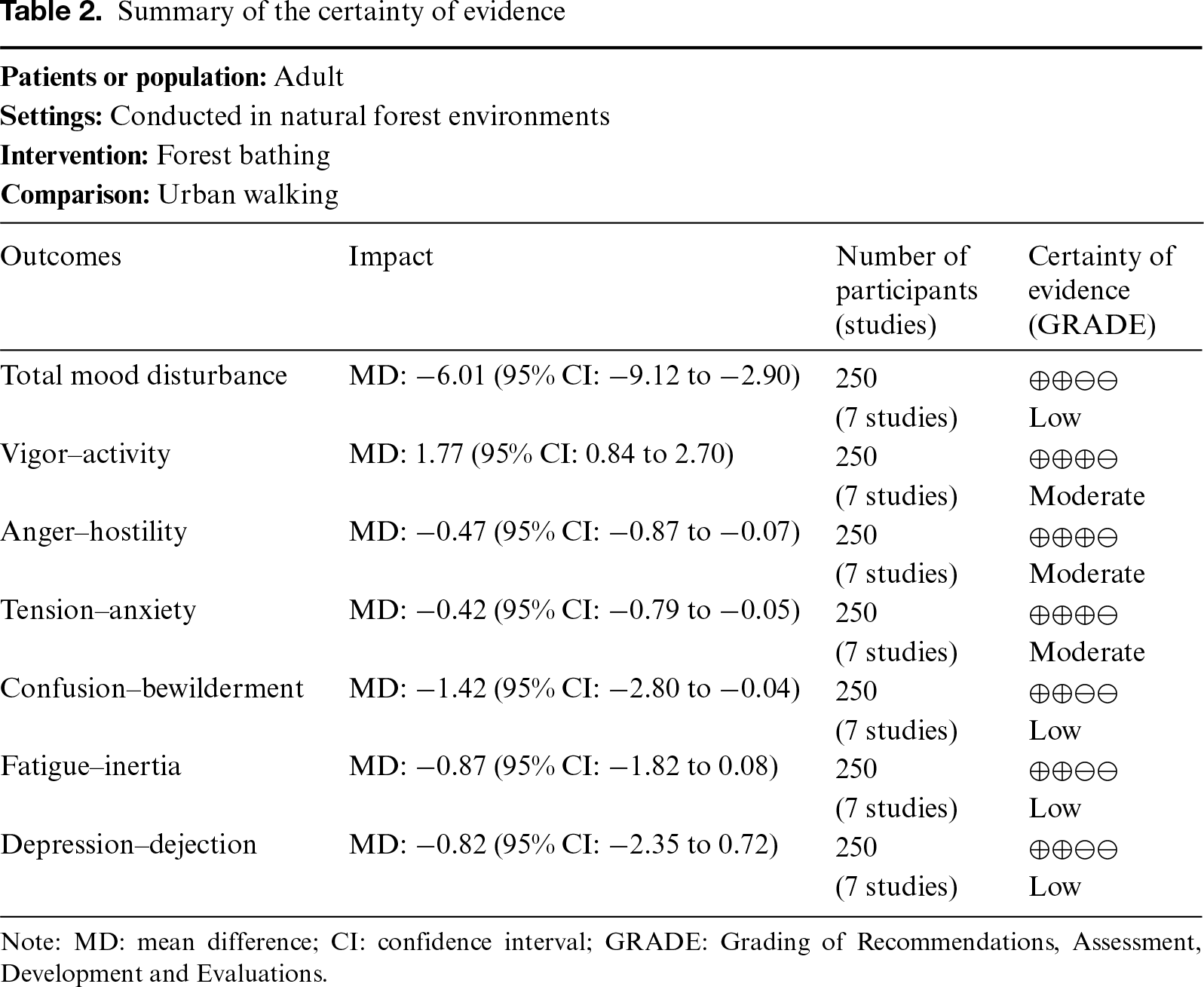
Evidence from seven randomized trials suggests that forest bathing improves mood and reduces mental stress compared with urban control activities. However, the certainty of evidence is low, downgraded due to small sample sizes, heterogeneity, and imprecision. The pooled mean difference in total mood disturbance exceeded the minimal clinically important difference, indicating a moderate and clinically meaningful psychological benefit.
Abstract
Introduction: Forest bathing (Shinrin-yoku), a nature-based practice involving mindful immersion in forest environments through the five senses, has been proposed as an intervention to alleviate stress and improve mood. This systematic review and meta-analysis evaluated its effectiveness in enhancing psychological well-being among adults. Methods: Following the PRISMA (Preferred Reporting Items for Systematic Reviews and Meta-Analyses) 2020 guidelines, randomized controlled trials (RCTs) comparing forest bathing with control conditions were identified through PubMed, Web of Science, and the Cochrane Library (up to October 2025). Continuous outcomes were pooled using random-effects models and expressed as mean differences (MDs) with 95% confidence intervals (CIs). The certainty of evidence was assessed using the GRADE (Grading of Recommendations, Assessment) approach. Results: Seven RCTs comprising 250 participants from Japan and China met the inclusion criteria. Forest bathing significantly reduced total mood disturbance (MD = −6.01; 95% CI: −9.12 to −2.90; p < 0.01), exceeding the minimal clinically important difference and indicating a clinically meaningful benefit. Significant improvements were also observed in vigor–activity (MD = 1.77; 95% CI: 0.84–2.70), tension–anxiety (MD = −0.47; 95% CI: −0.87 to −0.07), anger–hostility (MD = −0.42; 95% CI: −0.79 to −0.05), and confusion–bewilderment (MD = −1.42; 95% CI: −2.80 to −0.04). Fatigue–inertia and depression–dejection demonstrated nonsignificant trends toward improvement. Modest reductions were also observed in cortisol and C-reactive protein levels, although heterogeneity across studies was observed. The certainty of evidence for these outcomes ranged from moderate to low, primarily due to small sample sizes and interstudy variability. Conclusions: Forest bathing demonstrates measurable benefits for mood enhancement and stress reduction. While current evidence supports its psychological utility, larger, more standardized trials are needed to establish its clinical and public health applicability further.
Keywords: Forest bathing, Shinrin-yoku, mood, anxiety, meta-analysis, nature-based intervention
Introduction
In contemporary societies, mental health conditions such as stress, anxiety, and depression have emerged as pervasive public health concerns and leading contributors to disability worldwide.1 The World Health Organization (WHO) estimates that more than 300 million people globally experience depression and nearly 280 million live with anxiety disorders, making these among the most prevalent causes of psychological and functional impairment across the lifespan.2 Chronic stress—driven by factors such as economic insecurity, social isolation, technological overexposure, and the lingering psychosocial effects of the coronavirus disease 2019 pandemic—has been associated with immune dysregulation, cardiovascular morbidity, and diminished life satisfaction.3,4 According to the 2024 Gallup Global Emotions Report, 39% of adults worldwide reported experiencing a lot of worry on the previous day, while 37% reported feeling a lot of stress. Fewer adults reported experiencing daily physical pain (32%), sadness (26%), or anger (22%). All of these emotional and physical experiences were higher than those reported a decade ago.5 This persistent emotional burden not only undermines productivity and interpersonal functioning but also contributes to the rising economic costs associated with untreated or undertreated mental disorders.6 Collectively, these data underscore a “modern mood crisis,” in which psychosocial stressors outpace traditional medical resources, highlighting the urgent need for accessible, effective, and sustainable interventions to promote mental well-being.7
Non-pharmacological interventions have become central to contemporary mental health care, serving as complements or alternatives to pharmacotherapy, particularly for mild-to-moderate depression and anxiety.8 The WHO guidelines recommend psychosocial and behavioral therapies as first-line treatments for such cases.9 Recent meta-analyses provide robust evidence supporting the efficacy of behavioral and mind–body interventions in alleviating depressive and anxiety symptoms.10,11 Similarly, mindfulness-based interventions, yoga, and cognitive-behavioral strategies have demonstrated consistent benefits in reducing stress and enhancing emotional regulation.12 These non-pharmacological approaches promote holistic well-being, extending beyond mood enhancement to improvements in sleep quality, cardiovascular health, and social connectedness.13 Despite these benefits, barriers such as cost, accessibility, and adherence persist, underscoring the need to explore alternative, low-cost, nature-based strategies that can be feasibly scaled across diverse populations.
In recent years, forest bathing (Shinrin-yoku), a Japanese term meaning “forest-air bathing and walking,” has gained global attention as a promising nature-based intervention for promoting mental health.14,15 Forest bathing involves a mindful and unhurried immersion in forest environments, engaging the senses of sight, hearing, taste, smell, and touch to cultivate relaxation, attentional restoration, and emotional balance. This practice is grounded in the biophilia hypothesis and stress-reduction theory, which suggest that exposure to natural environments enhances parasympathetic nervous system activity while suppressing sympathetic nervous system activity.15 Emerging empirical evidence supports these theoretical mechanisms. A meta-analysis including more than 20 randomized and quasi-experimental trials reported significant reductions in depression and anxiety symptoms following forest bathing compared with control conditions, with small-to-moderate effect sizes.16 Physiological studies have also demonstrated increased heart rate variability, reduced cortisol concentrations, and improved autonomic balance during and after forest immersion.17 Moreover, exposure to forest environments appears to modulate neuroendocrine and immune pathways; increases in natural killer (NK) cell activity and elevated serotonin levels have been observed following repeated forest bathing sessions.15,18 Collectively, these findings suggest a complex biopsychophysiological interplay that may underlie forest bathing’s capacity to enhance mood and resilience.
Given the increasing prevalence of mood disturbances and the growing interest in nature-based therapies, this study aims to systematically evaluate the effectiveness of forest bathing in improving mood among adults. By synthesizing existing evidence, this review seeks to provide an updated, evidence-based understanding of the role of forest bathing in mood enhancement and to inform its potential integration into clinical and public mental health practices.
Methods
Study Registration
This systematic review and meta-analysis was conducted in accordance with the Preferred Reporting Items for Systematic Reviews and Meta-Analyses (PRISMA) 2020 guidelines. The review protocol was prospectively registered with the UMIN Clinical Trials Registry (Registration No. UMIN000059441). As all included studies were previously published in peer-reviewed journals, additional ethical approval was not required. All data were analyzed in aggregate form only.
Search Strategy
A comprehensive literature search was conducted across major electronic databases, including PubMed, Web of Science, and the Cochrane Library, from their inception to October 1, 2025. The search strategy combined controlled vocabulary and free-text terms related to forest-based interventions and mental health outcomes. The following keywords and Boolean operators were used: (“forest therapy” OR “Shinrin-yoku” OR “forest bathing”) AND (“stress” OR “well-being” OR “mood” OR “anxiety”) AND “control.” The results from each database are presented in Table S1. Additionally, the reference lists of included studies and relevant reviews were manually screened to identify further eligible publications. The search was restricted to studies published in English.
Eligibility Criteria
Studies were included if they met the following criteria: participants were adults (≥18 years), and the intervention involved forest bathing, forest therapy, or Shinrin-yoku conducted in natural forest environments. Eligible studies were required to include a control group (e.g., urban walk) and to report accessible quantitative data on psychological outcomes such as stress, mood, well-being, or anxiety. Studies were excluded if they used self-controlled or crossover designs without separate analyses, single-arm designs lacking independent control groups, or if data necessary for meta-analysis were incomplete or unavailable.
Study Selection and Data Extraction
Two reviewers independently screened titles and abstracts for eligibility, followed by a full-text review. Any discrepancies were resolved through discussion or consultation with a third reviewer. Data were extracted using a standardized form that captured study characteristics, including authors, publication year, country, population, intervention type, control condition, outcome measures, and results. The Profile of Mood States 2 (POMS 2) raw score served as the primary psychological outcome. As some earlier studies did not report the friendliness subscale, this measure was excluded from the analysis. The following subscales were extracted for quantitative synthesis: tension–anxiety, vigor–activity, confusion–bewilderment, fatigue–inertia, depression–dejection, anger–hostility, and total mood disturbance (TMD). Biomarkers such as C-reactive protein, interleukin-6, and cortisol were extracted when available. Because several studies focused on patients with hypertension or chronic heart failure, vital signs such as heart rate and blood pressure were not included in the pooled analysis. Continuous outcome data were recorded as means and standard deviations (SDs).
Effectiveness and Quality Assessment
The methodological quality and risk of bias of the included randomized controlled trials (RCTs) were independently assessed by two reviewers using the Cochrane Risk-of-Bias Tool (version 2). Discrepancies were resolved through consensus. The assessed domains included the randomization process, allocation concealment, blinding, incomplete outcome data, and selective reporting. The raw TMD score was calculated by adding the tension–anxiety, confusion–bewilderment, fatigue–inertia, depression–dejection, and anger–hostility scores, and then subtracting the vigor–activity score. It ranges from −20 to +100. The minimal clinically important difference (MCID) was defined as a moderate effect for reductions exceeding five raw points.
Statistical Analysis
Data synthesis was performed using Review Manager version 5.4 (Cochrane Collaboration, London, UK). Only continuous outcome measures were included in the analysis. Statistical heterogeneity was assessed using the I² statistic, with values >50% indicating substantial heterogeneity. Effect sizes were calculated as mean differences (MDs) with 95% confidence intervals (CIs), using a random-effects model when substantial heterogeneity was present and a fixed-effect model when heterogeneity was low. Publication bias was evaluated through funnel plot asymmetry and Egger’s regression test, employing both visual and statistical methods to identify potential small-study effects.
Certainty of Evidence
The certainty of evidence was assessed using the Grading of Recommendations, Assessment, Development, and Evaluation approach, which considers risk of bias, inconsistency, indirectness, imprecision, and publication bias. Each outcome was rated as having high, moderate, low, or very low certainty based on these domains, with all assessments independently performed by two reviewers.
Results
Study Selection
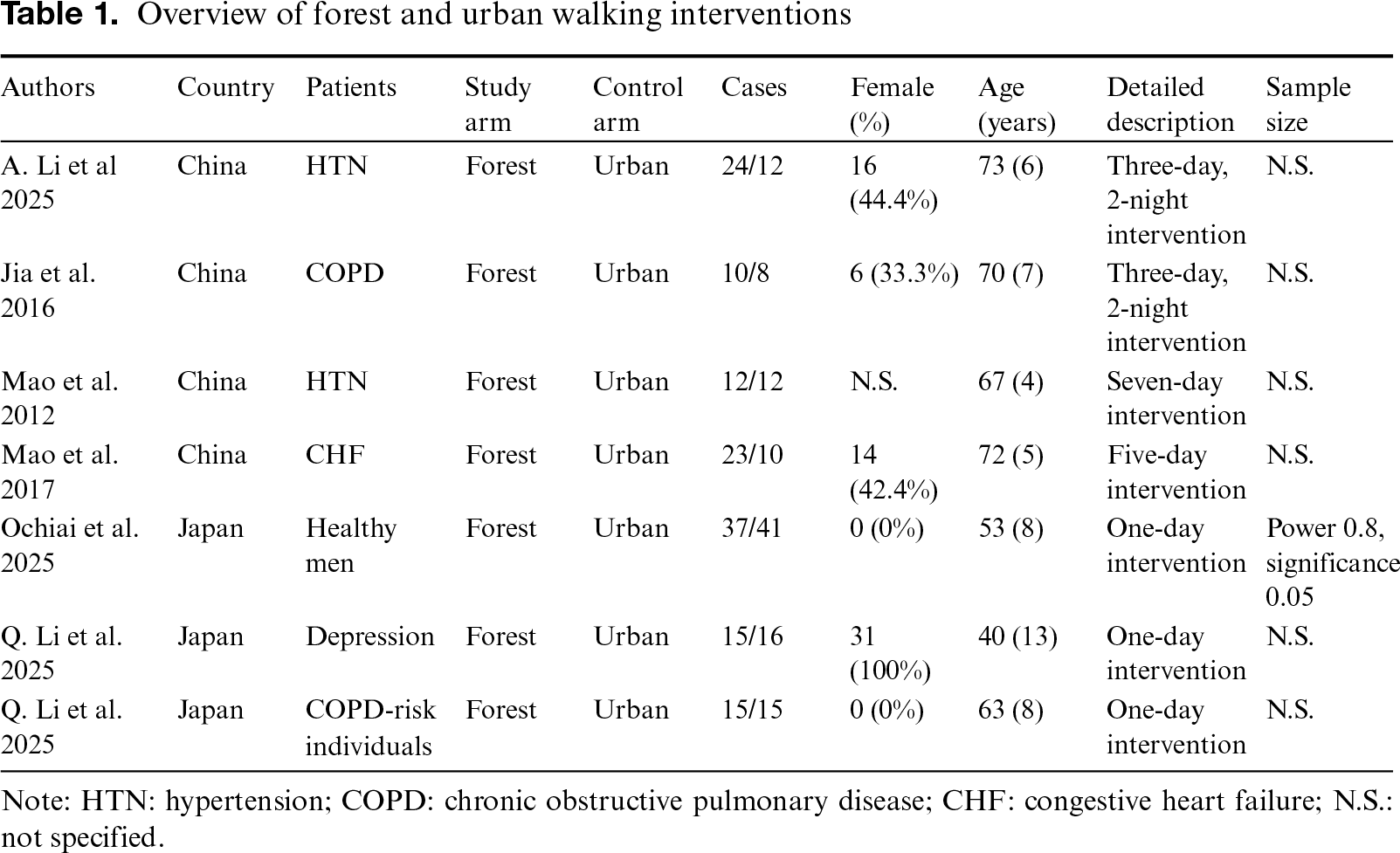
A total of 1,095 records were identified through database searches and manual reference screening. After removing duplicates, studies were screened by title and abstract, and 115 full-text articles were assessed for eligibility (Fig. S1). Ultimately, seven studies met the inclusion criteria and were included in the final meta-analysis. The majority of studies were conducted in China (n = 4), followed by Japan (n = 3) (Table 1).19–26 The included studies involved diverse participant groups, including individuals with hypertension, chronic obstructive pulmonary disease (COPD), chronic congestive heart failure, and depression, as well as participants at risk of developing COPD and healthy individuals, comprising a total sample of 250 participants. Sample sizes for intervention groups ranged from 10 to 37, and for control groups from 8 to 41. The mean participant age ranged from 40.1 to 72.5 years, and the proportion of female participants ranged from 0% to 100%. All studies compared forest-based interventions with urban control conditions, with intervention durations ranging from a single day to 7 days.
Psychological Outcomes
All included studies assessed the TMD score and demonstrated a statistically significant difference, with an MD of −6.01 (95% CI: −9.12 to −2.90, p < 0.01; I² = 81%) (Fig. 1A). Sensitivity analysis yielded an MD of −3.47 (95% CI: −4.92 to −2.01, p < 0.01; I² = 0%), supporting the robustness of the findings (Fig. 1B). The effect was considered moderate, as the reduction exceeded the MCID threshold.
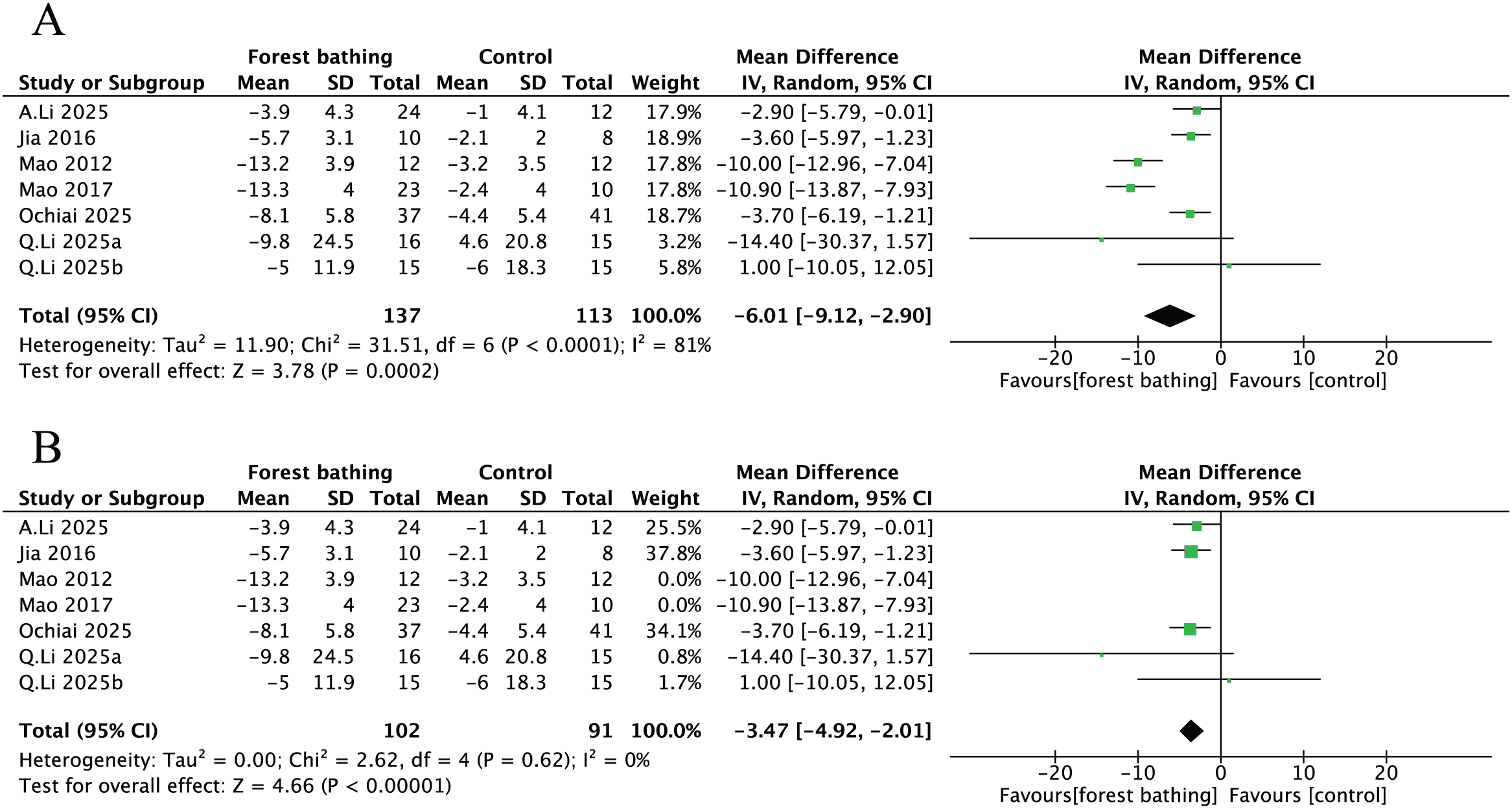
Figure 1. Meta-analysis of total mood disturbance scores between groups. (A) Original analysis and (B) sensitivity analysis. SD: standard deviation; CI: confidence interval.
Among the POMS subscale outcomes, vigor–activity, confusion–bewilderment, anger–hostility, and tension–anxiety showed statistically significant differences compared with control conditions, with MDs of 1.77 (95% CI: 0.84–2.70, p < 0.01; I² = 47%), −1.42 (95% CI: −2.80 to −0.04, p = 0.04; I² = 98%), −0.47 (95% CI: −0.87 to −0.07, p = 0.049; I² = 15%), and −0.42 (95% CI: −0.79 to −0.05, p = 0.03; I² = 0%), respectively (Fig. 2). However, the confusion–bewilderment outcome exhibited high heterogeneity. A sensitivity analysis excluding the studies by Mao (2012 and 2017) yielded an MD of −0.52 (95% CI: −1.01 to −0.04, p = 0.03; I² = 0%), supporting the robustness of this finding (Fig. S2).
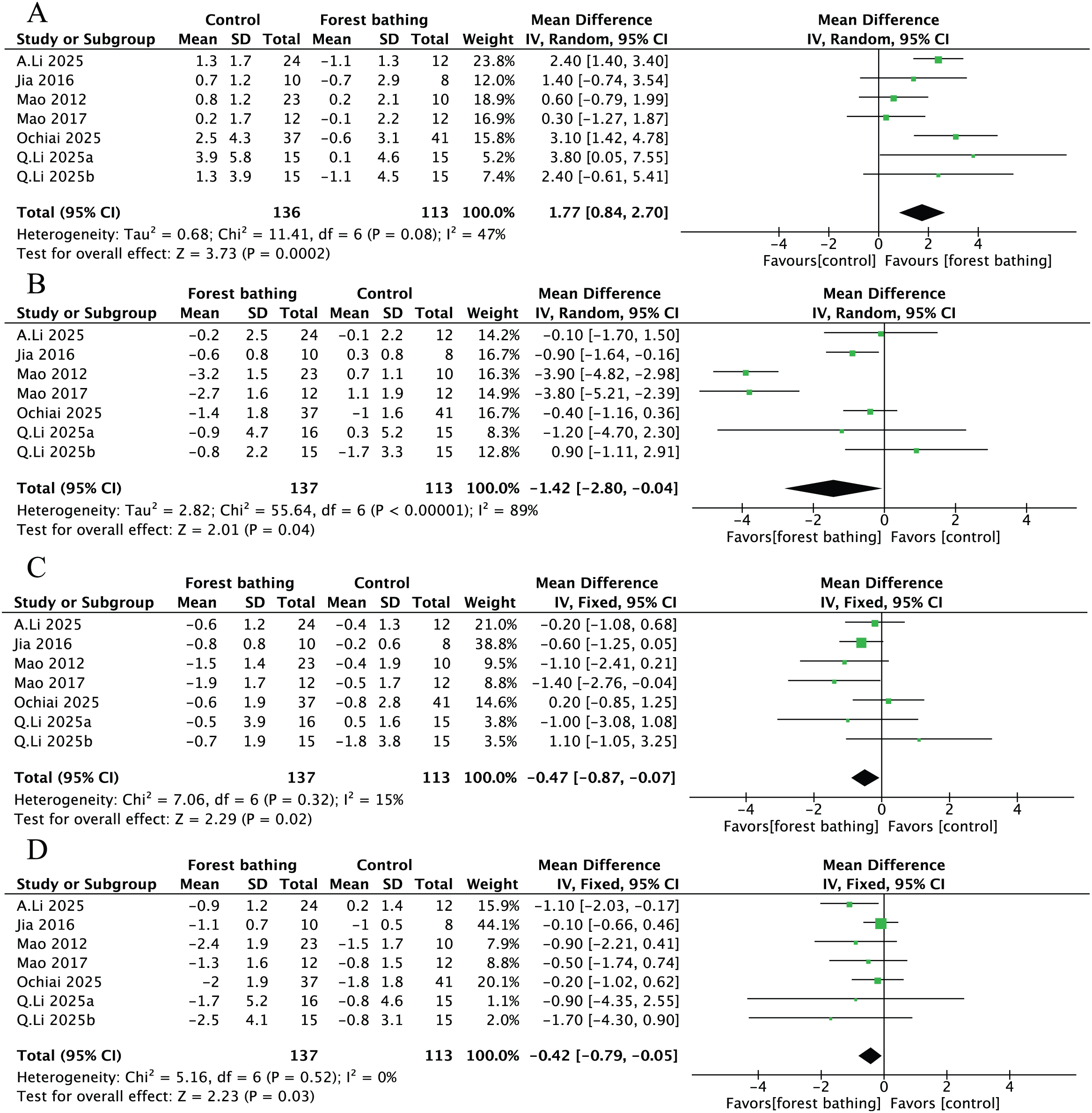
Figure 2. Subgroup analysis of POMS2 items with statistically significant differences. (A) Vigor–activity score; (B) confusion–bewilderment score; (C) anger–hostility score; and (D) tension–anxiety score. POMS2: Profile of Mood States 2; SD: standard deviation; CI: confidence interval.
The outcomes for fatigue–inertia and depression–dejection showed a trend toward improvement but did not reach statistical significance, with MDs of −0.87 (95% CI: −1.82 to 0.08, p = 0.07; I² = 66%) and −0.82 (95% CI: −2.35 to 0.72, p = 0.30; I² = 87%), respectively (Fig. 3). Given the high heterogeneity, sensitivity analyses were conducted, yielding MDs of −0.44 (95% CI: −0.96 to 0.07, p = 0.09; I² = 0%) and 0.27 (95% CI: −0.39 to 0.94, p = 0.42; I² = 0%) for fatigue–inertia and depression–dejection, respectively (Figs. S3 and S4).
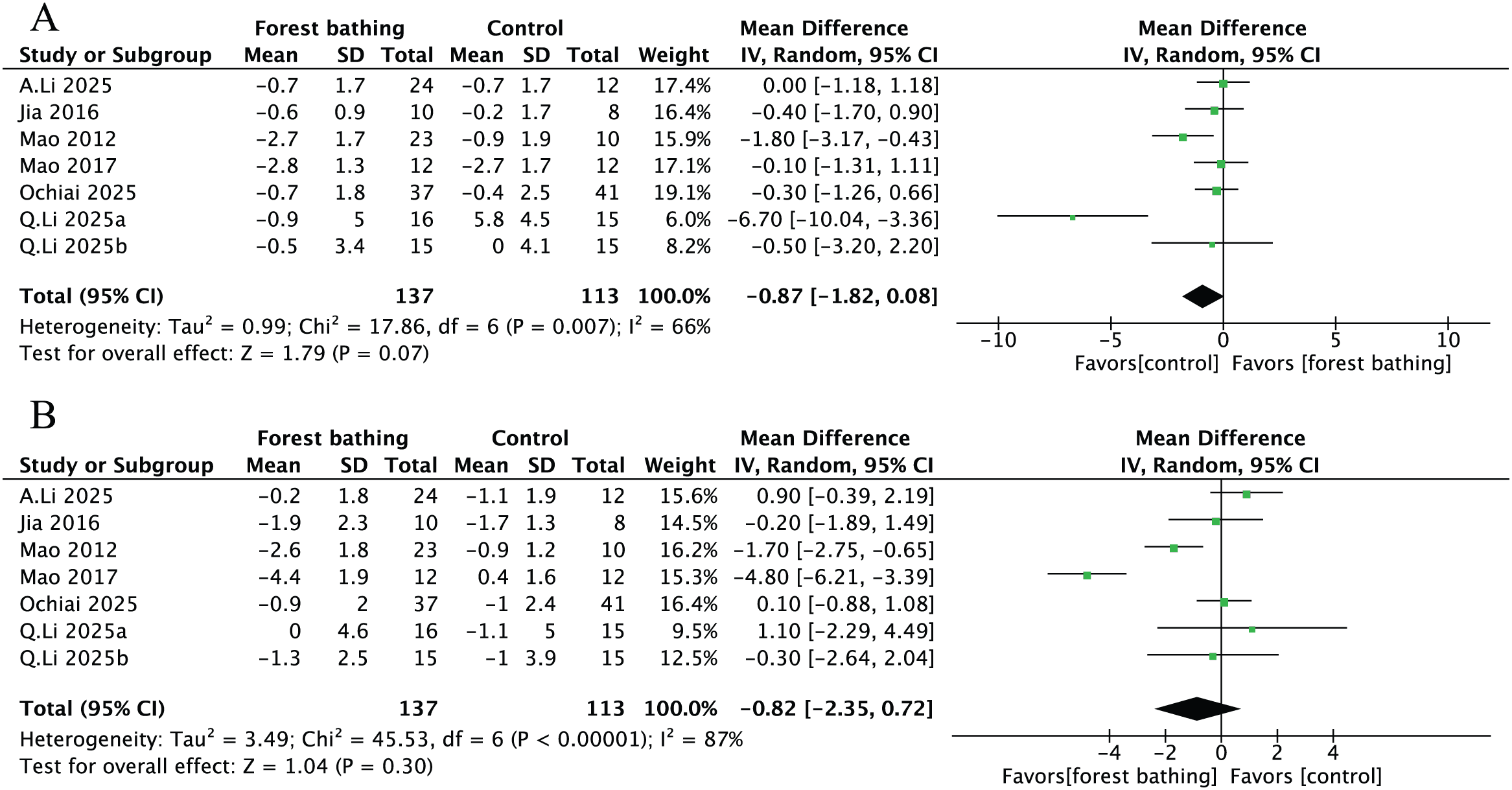
Figure 3. Subgroup analysis of POMS2 items without statistically significant differences. (A) Fatigue–inertia score and (B) depression–dejection score. POMS2: Profile of Mood States 2; SD: standard deviation; CI: confidence interval.
Physiological and Inflammatory Markers
Four studies investigated the effect of forest bathing on C-reactive protein levels, showing an MD of 0.01 mg/dL (95% CI: −0.07 to 0.09, p = 0.78; I² = 87%). However, sensitivity analysis revealed a statistically significant reduction, with an MD of −0.02 mg/dL (95% CI: −0.03 to −0.01, p < 0.01; I² = 0%) (Fig. S5). Several studies assessed the impact of forest bathing on interleukin-6, yielding an MD of −0.16 µg/dL (95% CI: −0.60 to 0.27, p = 0.46; I² = 77%). The sensitivity analysis produced an MD of 0.05 µg/dL (95% CI: −0.28 to 1.21, p = 0.42; I² = 42%) (Fig. S6). Both analyses indicated no statistically significant effect. Four studies examined the effect of forest bathing on cortisol levels, reporting an MD of −1.54 µg/dL (95% CI: −3.06 to −0.01, p = 0.049; I² = 74%). In contrast, the sensitivity analysis yielded an MD of −0.89 µg/dL (95% CI: −1.93 to 0.16, p = 0.10; I² = 34%), indicating no statistically significant difference (Fig. S7).
Bias and Certainty of Evidence
All outcomes showed no evidence of potential publication bias, as confirmed by the funnel plot and Egger’s test. However, the TMD outcome indicated a possible publication bias or small-study effect (p = 0.08; Fig. S8). The risk of bias assessment is presented in Fig. S9. Although all studies exhibited performance bias, the overall risk of bias across the included studies was considered low. The certainty of evidence is summarized in Table 2. Due to the small sample sizes, all outcomes were downgraded for imprecision. Additionally, the certainty of the evidence for TMD, confusion–bewilderment, fatigue–inertia, and depression–dejection was further downgraded due to heterogeneity, resulting in an overall low certainty rating.
Discussion
This systematic review and meta-analysis provide updated and comprehensive evidence for the beneficial effects of forest bathing on mood enhancement among adults. Across seven RCTs, forest bathing significantly improved TMD and specific subdomains—including vigor–activity, tension–anxiety, anger–hostility, and confusion–bewilderment—compared with urban control conditions. These findings extend previous meta-analyses by incorporating more recent trials, expanding the evidence base, and conducting sensitivity analyses that confirmed the robustness of the results.16,27 Notably, the observed mean reduction in TMD exceeded the MCID threshold, indicating that forest bathing produces not only statistically significant but also clinically meaningful moderate psychological benefits. Although improvements in fatigue–inertia and depression–dejection did not reach statistical significance, both outcomes showed favorable trends. Physiological markers such as C-reactive protein and cortisol likewise suggested potential reductions, albeit with modest effect sizes and variable heterogeneity. Taken together, these findings are consistent with prior research highlighting the salutogenic effects of forest exposure on mental well-being, thereby supporting forest bathing as a promising nature-based strategy for psychological restoration.28
Several interconnected biological and psychological mechanisms may underlie the mood-enhancing effects of forest bathing. From a psychophysiological perspective, immersion in natural environments activates the parasympathetic nervous system, resulting in lower blood pressure and heart rate, reduced levels of adrenaline, noradrenaline, and cortisol, and improved autonomic balance.29 Exposure to phytoncides, volatile organic compounds released by trees, has been linked to increased NK cell activity and decreased production of inflammatory cytokines, indicating an immunomodulatory response that may bolster stress resilience.28,30 Additionally, exposure to natural light and olfactory stimuli in forest environments may modulate serotonergic and dopaminergic pathways, thereby enhancing mood regulation.31 Psychologically, the multisensory engagement and attentional shift facilitated by forest bathing foster mindfulness, diminish rumination, and restore cognitive resources depleted by urban stressors.17 Collectively, these mechanisms align with stress-reduction and attention-restoration theories, offering a coherent biopsychological framework for understanding forest bathing’s therapeutic effects.
The present findings have significant implications for clinical practice and public health policy. Forest bathing offers a low-cost, noninvasive, and easily accessible intervention that can complement existing psychotherapeutic and pharmacological treatments for mood disorders. Integrating forest bathing programs into mental health promotion strategies, such as community wellness initiatives, workplace stress management efforts, and rehabilitation programs, may enhance psychological well-being and help reduce the healthcare burden associated with chronic stress and depression.32 Given its holistic and preventive nature, forest bathing could serve as an effective adjunctive therapy for individuals with mild-to-moderate emotional disturbances or for those seeking non-pharmacological approaches to improve overall well-being. Furthermore, ensuring equitable access to natural environments through urban planning could yield population-level mental health benefits.
Despite encouraging findings, several areas warrant further investigation. Future studies should employ larger sample sizes and standardized intervention protocols to enhance generalizability and reduce heterogeneity. Longitudinal designs are needed to assess the sustainability of psychological and physiological benefits over time and to clarify dose–response relationships related to frequency, duration, and forest type. In addition, mechanistic research integrating neuroimaging, hormonal, and immune markers could elucidate the biological pathways linking forest exposure to mood regulation. Comparative trials contrasting forest bathing with other mind–body interventions (e.g., mindfulness, yoga) would further contextualize its relative efficacy. Finally, qualitative studies exploring participants’ lived experiences could deepen understanding of the psychological mechanisms mediating these effects.
This study has several limitations. The number of included studies was relatively small, and sample sizes within individual trials were limited, resulting in imprecision and possible small-study effects. Variability in intervention duration, participant characteristics, and outcome measures may have influenced the pooled estimates. In addition, most studies lacked blinding, introducing potential performance bias, although this is an inherent challenge in behavioral and environmental interventions. Finally, the predominance of studies conducted in East Asia may limit the generalizability of the findings to other cultural or ecological contexts.
Conclusion
This meta-analysis demonstrates that forest bathing significantly enhances mood and emotional well-being, particularly by reducing overall mood disturbance and anxiety-related symptoms. These findings strengthen the growing body of evidence supporting nature-based therapies as effective, evidence-based strategies for mental health promotion. While current research supports forest bathing as a valuable complementary intervention for reducing psychological stress, further high-quality studies are needed to clarify its underlying mechanisms, optimize implementation strategies, and assess its applicability across diverse populations and healthcare contexts.
Acknowledgments
None.
Funding Statement
This study was supported by a Grant-in-Aid for Scientific Research (C) in Japan (24K13419) for Q.L. The funding helped with project initiation and manuscript publication but had no role in data collection, management, analysis, or interpretation.
Author Contributions
Q.L., Y.A., and B.Y. contributed to the study design and drafting of the manuscript. They also worked on data interpretation and manuscript revision. All authors have read and approved the final manuscript and agree with its content and data.
Availability of Data and Materials
The datasets used and analyzed in this study are available from the corresponding author upon reasonable request.
Ethics Approval and Consent to Participate
Not applicable, this study does not involve new human or animal studies.
Competing Interests
There are no conflicts of interest in this article.
Supplementary Information
Supplemental information for this article can be found online at https://sup.jclinque.com/api/articles/95/download-suppl.
References
[1] Kirkbride JB, Anglin DM, Colman I, et al. The social determinants of mental health and disorder: evidence, prevention and recommendations. World Psychiatry. February 2024;23(1):58–90. doi:10.1002/wps.21160.
[2] World Health Organization. Mental disorders. Published September 2025, Accessed October 15 2025. https://www.who.int/news-room/fact-sheets/detail/mental-disorders.
[3] Bertollo AG, Braga GC, Tonin PT, Luzardo AR, Bagatini MD, Ignácio ZM. The impact of stress from social isolation during the COVID-19 pandemic on psychiatric disorders: an analysis from the scientific literature. Brain Sci. October 5, 2023;13(10):1414. doi:10.3390/brainsci13101414.
[4] Ryu S, Fan L. The relationship between financial worries and psychological distress among U.S. adults. J Fam Econ Issues. 2023;44(1):16–33. doi:10.1007/s10834-022-09820-9.
[5] Gallup. State of the world’s emotional health. Published 2025, Accessed October 1 2025. https://www.gallup.com/analytics/349280/state-of-worlds-emotional-health.aspx.
[6] Taylor HL, Menachemi N, Gilbert A, Chaudhary J, Blackburn J. Economic burden associated with untreated mental illness in Indiana. JAMA Health Forum. October 6, 2023;4(10):e233535. doi:10.1001/jamahealthforum.2023.3535.
[7] Magomedova A, Fatima G. Mental health and well-being in the modern era: a comprehensive review of challenges and interventions. Cureus. January 2025;17(1):e77683. doi:10.7759/cureus.77683.
[8] Kumar R, Sahu M, Beniwal K, Bahurupi Y, Das A. Effects of non-pharmacological interventions in depression and anxiety in children and adolescents: A systematic review and meta-analysis of randomized controlled trials. Med J Armed Forces India. March 01, 2025;81(2):139–150. doi:10.1016/j.mjafi.2024.12.002.
[9] Leichsenring F, Abbass A, Fonagy P, et al. WHO treatment guideline for mental disorders. Lancet Psych. September 2024;11(9):676–677. doi:10.1016/s2215-0366(24)00169-x.
[10] Bandealy SS, Sheth NC, Matuella SK, et al. Mind-body interventions for anxiety disorders: a review of the evidence base for mental health practitioners. Focus (Am Psychiatr Publ). June 2021;19(2):173–183. doi:10.1176/appi.focus.20200042.
[11] Noetel M, Sanders T, Gallardo-Gómez D, et al. Effect of exercise for depression: systematic review and network meta-analysis of randomised controlled trials. Bmj. February 14, 2024;384:e075847. doi:10.1136/bmj-2023-075847.
[12] Liu N, Deng J, Lu F, Xiao J. Virtual reality enhanced mindfulness and yoga intervention for postpartum depression and anxiety in the post COVID era. Sci Rep. April 6, 2025;15(1):11766. doi:10.1038/s41598-025-96165-6.
[13] Vásquez-Carrasco E, Rojas M, Larenas L, et al. Effectiveness of non-pharmacological interventions for sleep disorders in enhancing quality of life, cognitive function, and sleep quality in older adults with mild cognitive impairment: a systematic review and meta-analysis. Medicina. 2025;61(4):583. doi:10.3390/medicina61040583.
[14] Ohtsuka Y, Yabunaka N, Takayama S. Shinrin-yoku (forest-air bathing and walking) effectively decreases blood glucose levels in diabetic patients. Int J Biometeorol. February 1998;41(3):125–127. doi:10.1007/s004840050064.
[15] Li Q. New concept of forest medicine. Forests. 2023;14(5):1024. doi:10.3390/f14051024.
[16] Siah CJR, Goh YS, Lee J, Poon SN, Ow Yong JQY, Tam WW. The effects of forest bathing on psychological well-being: a systematic review and meta-analysis. Int J Ment Health Nurs. August 2023;32(4):1038–1054. doi:10.1111/inm.13131.
[17] Queirolo L, Fazia T, Roccon A, et al. Effects of forest bathing (Shinrin-yoku) in stressed people. Front Psychol. 2024;15:1458418. doi:10.3389/fpsyg.2024.1458418.
[18] Li Q. Effect of forest bathing trips on human immune function. Environ Health Prevent Mede. January 01, 2010;15(1):9–17. doi:10.1007/s12199-008-0068-3.
[19] Li A, Liu Y, Qian H, et al. Therapeutic effects of forest bathing on older adult patients with essential hypertension: evidence from a subtropical evergreen broad-leaved forest. Front Public Health. 2025;13:1631613. doi:10.3389/fpubh.2025.1631613.
[20] Jia BB, Yang ZX, Mao GX, et al. Health effect of forest bathing trip on elderly patients with chronic obstructive pulmonary disease. Biomed Environ Sci. March 2016;29(3):212–218. doi:10.3967/bes2016.026.
[21] Mao GX, Cao YB, Lan XG, et al. Therapeutic effect of forest bathing on human hypertension in the elderly. J Cardiol. December 2012;60(6):495–502. doi:10.1016/j.jjcc.2012.08.003.
[22] Mao G, Cao Y, Wang B, et al. The salutary influence of forest bathing on elderly patients with chronic heart failure. Int J Environ Res Public Health. March 31, 2017;14(4):368. doi:10.3390/ijerph14040368.
[23] Park KH, Lee H, Park EY, et al. Effects of an urban forest healing program on cancer-related fatigue in cancer survivors. Support Care Cancer. December 5, 2023;32(1):4. doi:10.1007/s00520-023-08214-3.
[24] Ochiai H, Inoue S, Masuda G, et al. Randomized controlled trial on the efficacy of forest walking compared to urban walking in enhancing mucosal immunity. Sci Rep. January 25, 2025;15(1):3272. doi:10.1038/s41598-025-87704-2.
[25] Li Q, Takayama N, Katsumata M, et al. Impacts of forest Bathing (Shinrin-Yoku) in female participants with depression/depressive tendencies. Diseases. March 28, 2025;13(4):100. doi:10.3390/diseases13040100.
[26] Li Q, Takayama N, Kimura Y, et al. Forest bathing improves inflammatory markers, SpO2, and subjective symptoms related to chronic obstructive pulmonary disease (COPD) in male subjects at risk of developing COPD. J Occup Health. January 7, 2025;67(1):458. doi:10.1093/joccuh/uiaf041.
[27] Kotera Y, Richardson M, Sheffield D. Effects of shinrin-yoku (Forest Bathing) and nature therapy on mental health: a systematic review and meta-analysis. Int J Mental Health Addict. February 01, 2022;20(1):337–361. doi:10.1007/s11469-020-00363-4.
[28] Li Q. Effects of forest environment (Shinrin-yoku/Forest bathing) on health promotion and disease prevention -the Establishment of “Forest Medicine”. Environ Health Prev Med. 2022;27:43. doi:10.1265/ehpm.22-00160.
[29] Scott EE, LoTemplio SB, McDonnell AS, et al. The autonomic nervous system in its natural environment: immersion in nature is associated with changes in heart rate and heart rate variability. Psychophysiology. April 2021;58(4):e13698. doi:10.1111/psyp.13698.
[30] Andersen L, Corazon SSS, Stigsdotter UKK. Nature exposure and its effects on immune system functioning: a systematic review. Int J Environ Res Public Health. February 3, 2021;18(4):1416. doi:10.3390/ijerph18041416.
[31] Lee AW-C, Hirani R, Ogulnick J, Tiwari RK, Etienne M. Emerging therapies for neurological disorders: a clinical review of MANAGED (music, art, nature-based, animal-assisted, game, essential oil, dance) care. NeuroSci. 2025;6(2):51. doi:10.3390/neurosci6020051.
[32] Torner AJ, Meißner A, Borchert A, Immich G, Folta-Schoofs K. Audio-guided and mindfulness-based forest bathing in moderately affected Long/Post-COVID patients: a pre-post pilot-study. Mental Health Prevent. September 01, 2024;35:200359. doi:10.1016/j.mhp.2024.200359.
 |
Copyright: © 2025 Yang et al. This work is licensed under a Creative Commons Attribution 4.0 International License, which permits unrestricted use, distribution, and reproduction in any medium, provided the original work is properly cited. |