| Journal of Clinical Question, 2024, Vol. 1, No. 2, 67–73 https://doi.org/10.69854/jcq.2024.0009 Advance access publication date 31 October 2024 |
 |
Case Report
Successful Tezepelumab Response and the Usefulness of Serum TARC Level as a Biomarker in a Severe Type 2 Bronchial Asthma Patient After Dupilumab, Mepolizumab, and Benralizumab Failure
1Department of Respiratory Medicine, Yokohama Minami Kyosai Hospital, Yokohama, Japan.
2Department of Otolaryngology, Yokohama Minami Kyosai Hospital, Yokohama, Japan.
3Department of Dermatology, Yokohama Minami Kyosai Hospital, Yokohama, Japan.
4Department of Pathology, Yokohama Minami Kyosai Hospital, Yokohama, Japan.
*Corresponding Author: e-mail: f.kashizaki@gmail.com
Submitted: October 23, 2024 Accepted: October 31, 2024
Clinical Question Box
What clinical characteristics and biomarkers predict tezepelumab effectiveness in severe type 2 bronchial asthma after insufficient response to other biologics?
Some patients with severe type 2 bronchial asthma who develop secondary eosinophilia and experience asthma exacerbations following dupilumab treatment may be able to respond to tezepelumab. These patients may also fall into the category of multimorbid allergic disease, which has been recently proposed. In such cases, especially in patients receiving systemic corticosteroids, the serum thymus and activation-regulated chemokine levels could serve as valuable biomarkers for predicting tezepelumab efficacy.
Abstract
Background: Treatment for severe type 2 bronchial asthma (BA) has advanced rapidly with the development of biologics. However, research on the responders and biomarkers for each biologic remains limited. Case Presentation: A 64-year-old female non-smoker with eosinophilic chronic rhinosinusitis and severe type 2 BA was administered dupilumab due to worsening nasal obstruction and olfactory impairment. Following this, the patient experienced secondary eosinophilia and worsening asthma control, necessitating frequent administration of systemic corticosteroids. Additionally, widespread maculopapular exanthema developed. Consequently, the treatment was switched to mepolizumab, which reduced blood eosinophil count; however, asthma control did not improve, and the maculopapular exanthema worsened, prompting another change to benralizumab. Due to persistent inadequate asthma control, the treatment was subsequently switched to tezepelumab, which resolved the maculopapular exanthema and decreased asthma exacerbations. Additionally, improvements in forced expiratory volume in one second and the asthma control test score were observed, along with a reduction in the serum thymus and activation-regulated chemokine (TARC) level. Conclusions: In some patients with severe type 2 BA who experience secondary eosinophilia and worsening asthma control after dupilumab administration, tezepelumab can be effective, and serum TARC levels could serve as a biomarker.
Keywords: Tezepelumab, thymus and activation-regulated chemokine (TARC), dupilumab, mepolizumab, benralizumab, bronchial asthma.
Introduction
Bronchial asthma (BA) affects over 262 million people worldwide.1 Of these, 5–10% are classified as having severe BA, and more than half are thought to have type 2 BA.1 In the 21st century, the symptoms of patients with severe type 2 BA have significantly improved with biologic treatments and bronchial thermoplasty, prompting discussions about clinical remission.2,3 In particular, biologics such as anti-immunoglobulin E (IgE) antibodies, anti-interleukin-5 (IL-5) antibodies, anti-interleukin-4 (IL-4) receptor antibodies, and more recently, anti-thymic stromal lymphopoietin (TSLP) antibodies have benefited numerous patients with severe type 2 BA.1 However, many aspects regarding the biomarkers and responders for each biologic remain unclear.3 There is an ongoing debate about their effectiveness, particularly anti-TSLP antibodies, in different clinical profiles of severe BA patients, and no valuable biomarkers have been reported.4
This study presents a case of a patient with severe type 2 BA and eosinophilic chronic rhinosinusitis (ECRS) who developed secondary eosinophilia and inadequate asthma control after receiving dupilumab. After switching to mepolizumab and benralizumab, which failed to produce a sufficient effect, the patient was transitioned to tezepelumab, following which they experienced adequate therapeutic outcomes. The serum thymus and activation-regulated chemokine (TARC) level was identified as an effective biomarker for tezepelumab.
Case Presentation
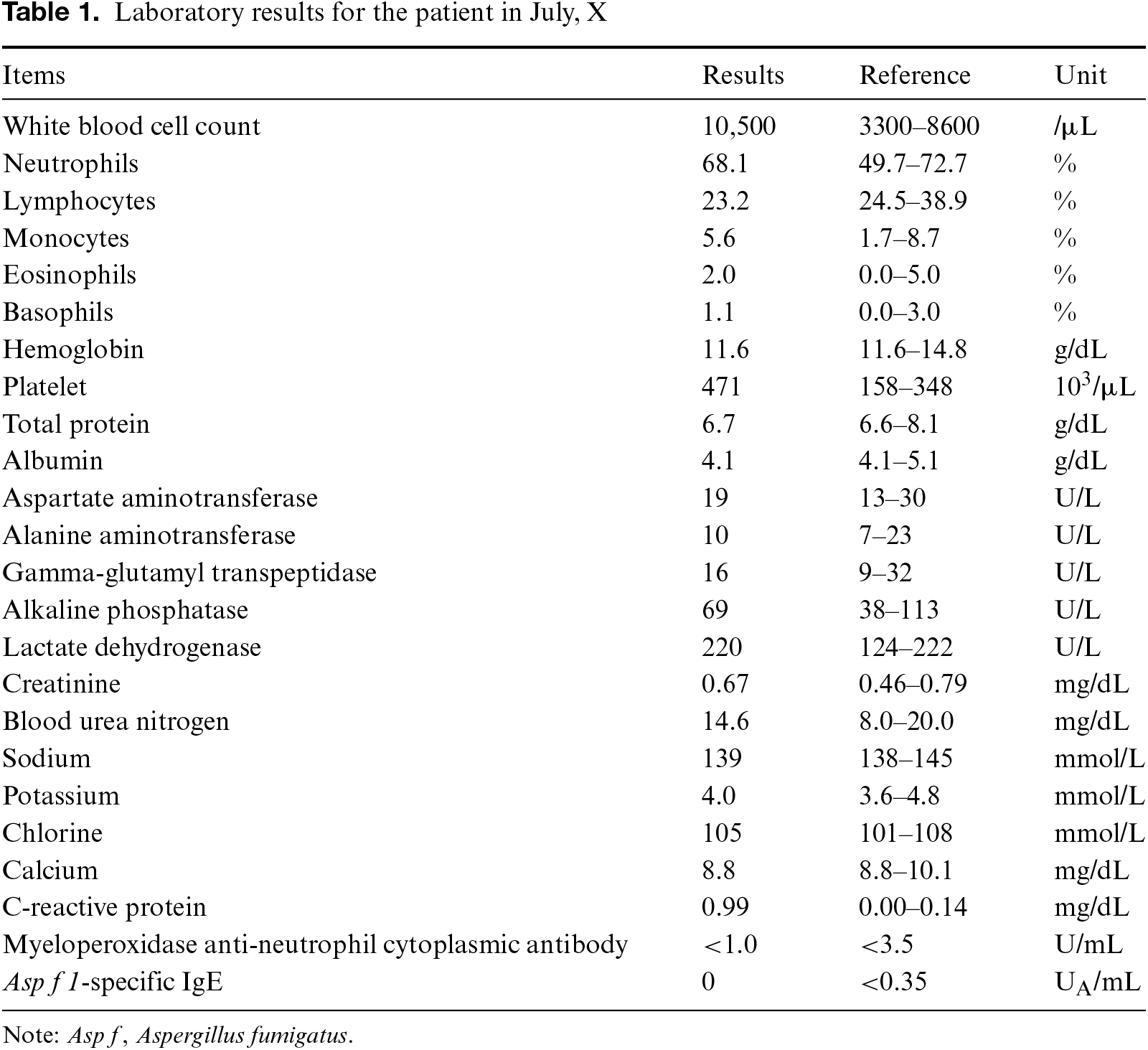
A 64-year-old female non-smoker presented to the respiratory medicine department in year X-2 (two years before the baseline year) for the management of BA. She had a history of type 2 BA diagnosed in year X-7 and underwent endoscopic sinus surgery for ECRS in year X-6 (Fig. 1A–C). The management of BA involves the use of inhaled corticosteroids, long-acting β2 agonists, long-acting muscarinic antagonists, and leukotriene receptor antagonists. After some time, small erythematous macules with mild pruritus spread from the extremities to the trunk. A skin biopsy of the right thigh (Fig. 1D) was performed in the dermatology department, resulting in a diagnosis of maculopapular exanthema, which resolved within one month. Due to worsening nasal obstruction and olfactory impairment caused by ECRS, dupilumab was initiated (300 mg subcutaneously every other week) in the otolaryngology department (Fig. 2). Following the administration of dupilumab, an increase in blood eosinophil count (BEC) was noted, and prednisolone (PSL) was added during asthma exacerbations. Additionally, the maculopapular exanthema gradually reemerged around June of year X (Fig. 1E, F). Although forced expiratory volume in 1 second (FEV1) improved after dupilumab administration, due to increased BEC and more frequent asthma exacerbations, PSL (40 mg/day) was initiated, and the treatment was switched from dupilumab to mepolizumab (100 mg subcutaneously every four weeks; Fig. 2). Before mepolizumab administration, during oral PSL at 10 mg/day, laboratory results showed elevated white blood cell and platelet counts with a slight increase in CRP, while BEC was normal and tests for serum myeloperoxidase-ANCA and serum Aspergillus fumigatus 1-specific IgE were negative (Table 1). After switching to mepolizumab, the BEC decreased, but the maculopapular exanthema worsened. Suspecting eosinophilic granulomatosis with polyangiitis (EGPA), a second skin biopsy was performed (Fig. 1G). However, no pathological findings suggestive of vasculitis were observed, and the patient was diagnosed with maculopapular exanthema. Asthma exacerbations persisted, accompanied by a decline in FEV1, fractional exhaled nitric oxide (FeNO) at 130 ppb, the serum TARC level at 596 pg/mL, and a BEC of 134 cells/µL. The treatment strategy was switched to benralizumab (30 mg subcutaneously every eight weeks, with the first three doses administered every four weeks) to suppress eosinophil activity further (Fig. 2). Thereafter, a decrease in the serum IgE level and an improvement in FEV1 to 1.22 L were observed. However, the maculopapular exanthema reappeared, asthma exacerbations persisted, and the serum TARC level increased to 767 pg/mL (Fig. 2). Consequently, PSL was increased to 50 mg/day, and tezepelumab (210 mg subcutaneously every four weeks) was administered instead of benralizumab. Several weeks after the initiation of tezepelumab, asthma exacerbations disappeared, and the serum IgE level, serum TARC level, and BEC improved, with FEV1 increasing to 1.64 L. The tezepelumab treatment entailed only one asthma exacerbation and a slight increase in the serum TARC level to 239 pg/mL; however, there was no relapse of maculopapular exanthema. After a year of continued tezepelumab treatment, there were no asthma exacerbations, and the asthma control test (ACT) score was 25, with stable serum TARC level, serum IgE level, and FeNO (Fig. 2).
![Figure 1. Clinical findings of the patient. (A) A coronal CT scan before endoscopic sinus surgery for eosinophilic chronic rhinosinusitis in year X-6 showed widespread mucosal thickening in all sinuses. (B) High-magnification biopsy of the right ethmoid sinus [hematoxylin and eosin (H&E) stain] revealed ciliated columnar epithelium with internal edema and significant eosinophil and lymphocyte infiltration. (C) A chest radiograph in year X-2 showed no infiltrative shadows. (D) High-magnification initial biopsy of the right thigh skin (H&E stain) revealed lymphocyte, eosinophil, and neutrophil infiltration around dermal capillaries without vasculitis. (E, F) Skin findings included mildly pruritic erythematous macules on the forearms (E) and lower legs (F). (G) A high-magnification second skin biopsy (H&E stain) of the left lower leg, taken during mepolizumab and prednisolone treatment, showed mild chronic inflammation in the superficial dermis, with predominantly neutrophils and a few eosinophils.](https://sup.jclinque.com/uploads/jcq_0017_fig_1_2b16441f05.png)
Figure 1. Clinical findings of the patient. (A) A coronal CT scan before endoscopic sinus surgery for eosinophilic chronic rhinosinusitis in year X-6 showed widespread mucosal thickening in all sinuses. (B) High-magnification biopsy of the right ethmoid sinus [hematoxylin and eosin (H&E) stain] revealed ciliated columnar epithelium with internal edema and significant eosinophil and lymphocyte infiltration. (C) A chest radiograph in year X-2 showed no infiltrative shadows. (D) High-magnification initial biopsy of the right thigh skin (H&E stain) revealed lymphocyte, eosinophil, and neutrophil infiltration around dermal capillaries without vasculitis. (E, F) Skin findings included mildly pruritic erythematous macules on the forearms (E) and lower legs (F). (G) A high-magnification second skin biopsy (H&E stain) of the left lower leg, taken during mepolizumab and prednisolone treatment, showed mild chronic inflammation in the superficial dermis, with predominantly neutrophils and a few eosinophils.
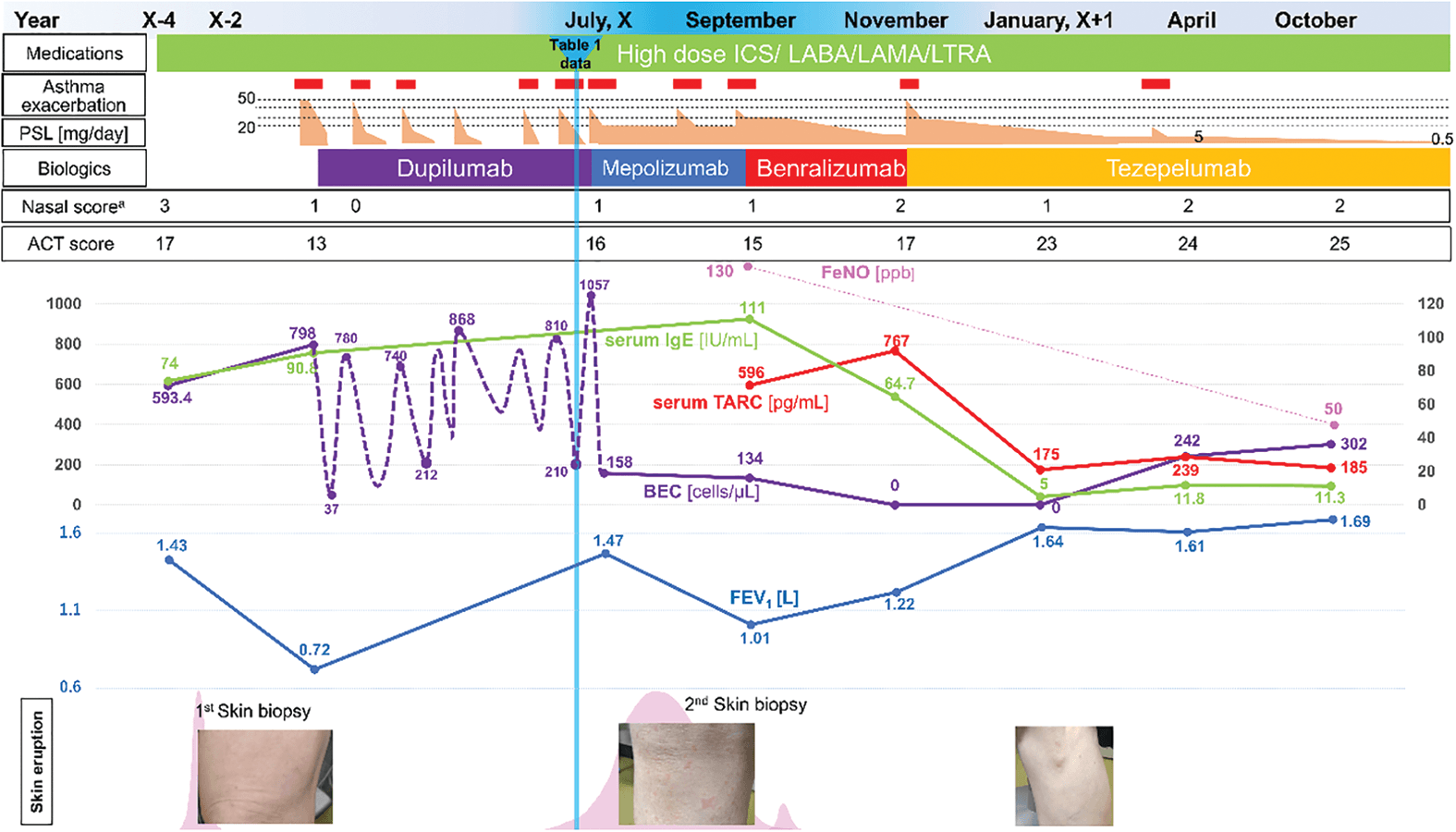
Figure 2. Clinical course of the patient. ICS, inhaled corticosteroids; LABA, long-acting β2 agonists; LAMA, long-acting muscarinic antagonists; LTRA, leukotriene receptor antagonists; OCS, oral corticosteroids; ACT, asthma control test; BEC, blood eosinophil count; TARC, thymus and activation-regulated chemokine; FeNO, fractional exhaled nitric oxide. aThe nasal congestion or obstruction score was assessed according to the evaluation method used in the LIBERTY NP SINUS-52 study.
Although influenced by the dosage of PSL, the patient’s nasal congestion or obstruction score5 showed the best results in the following order: dupilumab > mepolizumab > benralizumab = tezepelumab, indicating a difference in efficacy for BA and ECRS (Fig. 2).
Discussion
The patient had comorbid BA and ECRS, and eosinophilia and asthma exacerbations worsened after the initiation of dupilumab. Although the treatment was switched to mepolizumab and then benralizumab, sufficient asthma control was not achieved. However, after switching to tezepelumab, asthma control stabilized. Furthermore, the serum TARC level correlated with ACT score and FEV1.
TARC/chemokine ligand 17 (TARC/CCL17) was first isolated by Imai et al. in 1996.6 It is an 8-kDa protein expressed in the thymus, composed of 71 amino acids, and demonstrates T-cell chemotactic activity.6 They subsequently reported that C-C chemokine receptor 4 (CCR4), expressed on CD4+ T cells, is a receptor;7 however, it was also found to be present in type 2 innate lymphoid cells (ILC2s), airway epithelial cells, eosinophils, mast cells, and dendritic cells (DCs).8 Moreover, it has been elucidated that TARC/CCL17 secretion is stimulated by TSLP, which is produced in airway epithelial damage, leading to DCs inducing allergic inflammation9 and enhancing TARC/CCL17 secretion.10 Similarly, TSLP is overexpressed within nasal polyps, which is thought to contribute to the increased secretion of TARC/CCL17.11 Furthermore, it has been reported that serum TARC levels decrease following the administration of budesonide inhalation12, systemic corticosteroids,13,14 or anti-IL-5 antibody therapies15 in BA patients, demonstrating its utility as a monitoring indicator for asthma control and a potential biomarker in type 2 high BA.16 However, TARC levels have been observed to be elevated in conditions such as atopic dermatitis and EGPA.8 Therefore, careful interpretation is necessary in type 2 BA, which often coexists with these conditions.
According to recent reports, among patients with allergic diseases such as type 2 BA, 46% have chronic sinusitis, and 21% have nasal polyps.17 This has led to the proposal of the concept of multimorbid allergic disease.17 In other words, patients with type 2 BA frequently have comorbid allergic diseases that interact with one another, necessitating a comprehensive and integrated treatment approach. Studies using cultured epithelial cells derived from the nasal mucosa of patients with ECRS and BA have confirmed a significant decrease in steroid sensitivity.18 This is partly attributed to enhanced phosphorylation of the steroid receptor at the Ser226 residue. Consequently, in these patients, the rate of BA remission is notably reduced. In patients with comorbid allergic diseases and severe type 2 BA, serum TARC levels may indicate both overall type 2 inflammation and the TSLP state, including steroid resistance.
There are reports of secondary eosinophilia occurring in some patients with severe BA following dupilumab administration. Although most cases are asymptomatic and transient, they can occasionally lead to asthma symptoms.19,20 Kobayashi et al. reported that in some of these cases, the action of TSLP on its receptors present in eosinophils leads to the release of granular proteins and eosinophil extracellular trap cell death, prolonging eosinophil lifespan in the presence of IL-5.18,21,22 This study suggests the potential efficacy of tezepelumab in some patients with severe BA whose symptoms worsen after the initiation of dupilumab. Furthermore, it proposes that although several biologic agents are currently available, considering the order of administration of these agents in patients with severe type 2 BA who are resistant to dupilumab may yield effective therapeutic outcomes.
To the best of our knowledge, there have been no reports of patients with severe BA who did not respond to dupilumab, mepolizumab, or benralizumab but achieved control with tezepelumab, apart from non-type 2 cases.23
In this case, a limitation is that serum TARC levels were not measured before the initiation of dupilumab, making it unclear how the maculopapular exanthema may have influenced serum TARC levels. However, considering that serum TARC levels continued to rise after the improvement of maculopapular exanthema and were elevated during asthma exacerbation following the resolution of the exanthema, the serum TARC levels in this case may reflect type 2 inflammation across multiple allergic diseases, including BA. Regarding the efficacy of biologics, there was a difference between BA and ECRS, leading to prioritizing asthma treatment. The cause of this difference in efficacy remains unclear. However, it is worth noting that serum TARC levels were monitored throughout the duration of biological therapies, allowing us to confirm fluctuations in line with the effects of tezepelumab, making this a valuable case.
Conclusion
TSLP mediates TARC/CCL17 production in some patients with severe type 2 BA. In particular, for patients with severe type 2 BA receiving systemic corticosteroids who are considering the initiation or change of biologics, incorporating serum TARC levels alongside BEC, FeNO, and serum IgE levels may help select a more appropriate biologic and enhance treatment efficacy. Further research on serum TARC levels and severe type 2 BA is necessary.
Acknowledgments
We appreciate the patient’s cooperation during the data collection process.
Funding Source
None.
Author Contributions
F.K., Y.M., M.H., N.K., and R.I. were responsible for data curation. F.K. interpreted the data and drafted the original manuscript. All authors have read the manuscript and agree with the content, data, and the revision process.
Data Availability Statement
The datasets used in the current study are available from the corresponding author upon reasonable request.
Ethical Statement
The article does not involve the participation of any animals. A written informed consent was obtained from the patient for the publication of this report and accompanying images.
Conflicts of Interest
The authors declare no conflict of interest related to this study.
Supplemental Information
Supplemental information for this article can be found online at https://sup.jclinque.com/api/articles/46/download-suppl.
References
[1] Bourdin A, Brusselle G, Couillard S, et al. Phenotyping of severe asthma in the era of broad-acting anti-asthma biologics. J Allergy Clin Immunol Pract. April 2024;12(4):809–823. doi:10.1016/j.jaip.2024.01.023.
[2] Kashizaki F, Konishi K, Chen H, et al. Pretreatment asthma control test score as a predictive score for clinical remission after bronchial thermoplasty in younger patients with severe asthma and preserved lung function. J Asthma. July 2024;61(7):663–670. doi:10.1080/02770903.2023.2297375.
[3] Konishi K, Takeuchi K, Hayakawa N, et al. Biomarkers identifying the effectiveness of biologic agents in moderate to severe asthma: a systematic review and meta-analysis. Meta-analysis. J Clin Quest. October 15, 2024;1(2):31–41. doi:10.69854/jcq.2024.0005.
[4] Corren J, Pham TH, Garcia Gil E, et al. Baseline type 2 biomarker levels and response to tezepelumab in severe asthma. Allergy. June 2022;77(6):1786–1796. doi:10.1111/all.15197.
[5] Bachert C, Han JK, Desrosiers M, et al. Efficacy and safety of dupilumab in patients with severe chronic rhinosinusitis with nasal polyps (LIBERTY NP SINUS-24 and LIBERTY NP SINUS-52): results from two multicentre, randomised, double-blind, placebo-controlled, parallel-group phase 3 trials. Lancet. November 2, 2019;394(10209):1638–1650. doi:10.1016/S0140-6736(19)31881-1.
[6] Imai T, Yoshida T, Baba M, et al. Molecular cloning of a novel T cell-directed CC chemokine expressed in thymus by signal sequence trap using Epstein-Barr virus vector. J Biol Chem. August 30, 1996;271(35):21514–21521. doi:10.1074/jbc.271.35.21514.
[7] Imai T, Nagira M, Takagi S, et al. Selective recruitment of CCR4-bearing Th2 cells toward antigen-presenting cells by the CC chemokines thymus and activation-regulated chemokine and macrophage-derived chemokine. Int Immunol. January 1999;11(1):81–88. doi:10.1093/intimm/11.1.81.
[8] Catherine J, Roufosse F. What does elevated TARC/CCL17 expression tell us about eosinophilic disorders? Semin Immunopathol. June 2021;43(3):439–458. doi:10.1007/s00281-021-00857-w.
[9] Soumelis V, Reche PA, Kanzler H, et al. Human epithelial cells trigger dendritic cell mediated allergic inflammation by producing TSLP. Nat Immunol. July 2002;3(7):673–680. doi:10.1038/ni805.
[10] Nakanishi T, Inaba M, Inagaki-Katashiba N, et al. Platelet-derived RANK ligand enhances CCL17 secretion from dendritic cells mediated by thymic stromal lymphopoietin. Platelets. 2015;26(5):425–431. doi:10.3109/09537104.2014.920081.
[11] Kimura S, Pawankar R, Mori S, et al. Increased expression and role of thymic stromal lymphopoietin in nasal polyposis. Allergy Asthma Immunol Res. July 2011;3(3):186–193. doi:10.4168/aair.2011.3.3.186.
[12] Hoshino M, Nakagawa T, Sano Y, et al. Effect of inhaled corticosteroid on an immunoreactive thymus and activation-regulated chemokine expression in the bronchial biopsies from asthmatics. Allergy. March 2005;60(3):317–322. doi:10.1111/j.1398-9995.2005.00694.x.
[13] Sousa AR, Marshall RP, Warnock LC, et al. Responsiveness to oral prednisolone in severe asthma is related to the degree of eosinophilic airway inflammation. Clin Exp Allergy. July 2017;47(7):890–899. doi:10.1111/cea.12954.
[14] Leung TF, Wong CK, Chan IH, et al. Plasma concentration of thymus and activation-regulated chemokine is elevated in childhood asthma. J Allergy Clin Immunol. September 2002;110(3):404–409. doi:10.1067/mai.2002.126378.
[15] Oldhoff JM, Darsow U, Werfel T, et al. Anti-IL-5 recombinant humanized monoclonal antibody (mepolizumab) for the treatment of atopic dermatitis. Allergy. May 2005;60(5):693–696. doi:10.1111/j.1398-9995.2005.00791.x.
[16] Leung TF, Wong CK, Lam CW, et al. Plasma TARC concentration may be a useful marker for asthmatic exacerbation in children. Eur Respir J. April 2003;21(4):616–620. doi:10.1183/09031936.03.00083303.
[17] Bachert C, Luong AU, Gevaert P, et al. The unified airway hypothesis: evidence from specific intervention with anti-IL-5 biologic therapy. J Allergy Clin Immunol Pract. September 2023;11(9):2630–2641. doi:10.1016/j.jaip.2023.05.011.
[18] Kobayashi Y, Kanda A, Yun Y, et al. Reduced local response to corticosteroids in eosinophilic chronic rhinosinusitis with asthma. Biomolecules. February 18, 2020;10(2):326. doi:10.3390/biom10020326.
[19] Ryser FS, Yalamanoglu A, Valaperti A, et al. Dupilumab-induced eosinophilia in patients with diffuse type 2 chronic rhinosinusitis. Allergy. October 2023;78(10):2712–2723. doi:10.1111/all.15844.
[20] Olaguibel JM, Sastre J, Rodríguez JM, et al. Eosinophilia induced by blocking the IL-4/IL-13 pathway: potential mechanisms and clinical outcomes. J Investig Allergol Clin Immunol. January 20, 2022;32(3):165–180. doi:10.18176/jiaci.0823.
[21] Kobayashi Y, Chu HH, Kanda A, et al. CCL4 functions as a biomarker of type 2 airway inflammation. Biomedicines. July 23, 2022;10(8):1779. doi:10.3390/biomedicines10081779.
[22] Kanda A, Yun Y, Bui DV, et al. The multiple functions and subpopulations of eosinophils in tissues under steady-state and pathological conditions. Allergol Int. January 2021;70(1):9–18. doi:10.1016/j.alit.2020.11.001.
[23] Kai Y, Suzuki K, Kataoka R, et al. Efficacy of tezepelumab against uncontrolled severe non-type 2 asthma refractory to bronchial thermoplasty, benralizumab, dupilumab and mepolizumab. Respirol Case Rep. March 2024;12(3):e01311. doi:10.1002/rcr2.1311.
 |
Copyright: © 2024 Kashizaki et al. This work is licensed under a Creative Commons Attribution 4.0 International License, which permits unrestricted use, distribution, and reproduction in any medium, provided the original work is properly cited. |