| Journal of Clinical Question. 2025; 2(4): e77 https://doi.org/10.69854/jcq.2025.0008 Advance access publication date 03 July 2025 |
 |
Original Research
Resurgence of Death from Respiratory Infections after COVID-19 Pandemic
Saya Haketa1, Nobuyuki Horita 2,*, Takeshi Kaneko3
1School of Medicine, Yokohama City University, Yokohama, Japan.
2Chemotherapy Center, Yokohama City University Hospital, Yokohama, Japan.
3Department of Pulmonology, Yokohama City University School of Medicine, Yokohama, Japan.
*Corresponding Author: e-mail: horitano@yokohama-cu.ac.jp
Submitted: May 19, 2025 Accepted: July 02, 2025
Clinical Question Box
How did the coronavirus disease 2019 (COVID-19) pandemic affect deaths from respiratory infections such as influenza and invasive pneumococcal diseases, and did mortality rates change after the pandemic?
Due to strict control measures, the COVID-19 pandemic led to a significant decrease in deaths in Japan. However, after these measures were relaxed following the pandemic, mortality rates from both diseases increased. This highlights the importance of monitoring and maintaining infection prevention strategies to manage future outbreaks.
Abstract
Introduction: Numerous studies have reported a global decline in respiratory infection-related deaths during the coronavirus disease 2019 (COVID-19) pandemic. This decrease was primarily attributed to the implementation of precautionary measures and changes in public behavior. However, respiratory infections have increased since the pandemic ended and normal social activities have resumed. Methods: Data from e-Stat, Japan’s official database, covered influenza (2011–2024) and invasive pneumococcal diseases (2013–2024). The study period was divided into pre-pandemic, pandemic (April 2020–September 2021), and post-pandemic eras. The Mann–Whitney U test was used for comparisons. Results: Influenza-related deaths declined sharply during the pandemic era compared to the pre-pandemic period (P < 0.001), dropping from 3,353 in 2019 to 19 in 2022. However, mortality increased in the post-pandemic era, reaching 1,220 by mid-2024 (P = 0.005). Similarly, deaths from invasive pneumococcal diseases decreased significantly during the pandemic (P < 0.001), but rose again in the post-pandemic era. Conclusion: The coronavirus disease 2019 pandemic significantly reduced deaths from influenza and invasive pneumococcal diseases due to public health measures. However, there has been a noticeable resurgence in these deaths after the lifting of most restrictions. Ongoing monitoring and the maintenance of basic infection prevention measures are crucial to preventing future outbreaks.
Keywords: COVID-19, influenza, mortality, Pneumococcus, surveillance study, epidemiology
Introduction
The pandemic caused by severe acute respiratory syndrome coronavirus-2 emerged in December 2019 and rapidly escalated into one of the most severe global health crises in modern history. Policymakers worldwide implemented stringent mitigation strategies, such as national lockdowns and mandatory quarantine measures. In Japan, the first confirmed case was reported in January 2020, and the government declared a state of emergency in April 2020. This enforcement had few legally binding measures and relied on voluntary public cooperation, encouraging people to minimize social contacts by emphasizing the importance of non-pharmaceutical interventions, such as wearing masks, hand hygiene, and social distancing.1 As the pandemic spread and overwhelmed public healthcare systems across the world, there were concerns that the seasonal outbreaks of traditional respiratory infections would overlap with the ongoing pandemic and further strain these systems. Nonetheless, various researchers have reported that these respiratory deaths notably decreased during the pandemic.2,3 According to Chang et al. (2020), in Hong Kong, the number of deaths from laboratory-confirmed influenza in adults was 113, which is significantly lower than the average of 299.8 deaths per year during the period from 2015 to 2019.4 Moreover, in Japan, death from invasive pneumococcal diseases declined by 98.5% during the pandemic.5 This decrease is largely attributed to the high level of health awareness, as well as the basic infection prevention measures.
However, respiratory infections are increasing again as the coronavirus disease 2019 (COVID-19) pandemic ends.6 This issue extends beyond Japan and represents a global problem that demands immediate action. Despite this concern, there are no nationwide reports clearly indicating a resurgence in deaths from respiratory infections. The objective of this study is to analyze changes in the number of deaths from influenza and invasive pneumococcal diseases using a nationwide mortality database in Japan before, during, and after the pandemic.
Methods
The observational period was categorized into the “pre-pandemic era,” “pandemic era,” and “post-pandemic era.” The “pandemic era” was defined as April 2020 to September 2021 since the state of emergency declared by the government lasted until then. The period prior to this was classified as the “pre-pandemic era,” while the period following it was the “post-pandemic era.” We also defined the winter season as the most prevalent season for both influenza and invasive pneumococcal diseases, from September of the previous year to August of the current year.
The explanatory variable was the number of death cases recorded since January 2009. Data from all available periods were utilized, covering January 2011 to July 2024 for influenza and April 2013 to July 2024 for invasive pneumococcal diseases. The “pandemic era” was compared with both the “pre-pandemic era” and the “post-pandemic era” using the Mann–Whitney U test, a nonparametric test suitable for comparing two independent samples, with statistical significance set at P < 0.05. Informed consent was not required for this study. The data analyzed were obtained from e-Stat, Japan’s official statistical database.7
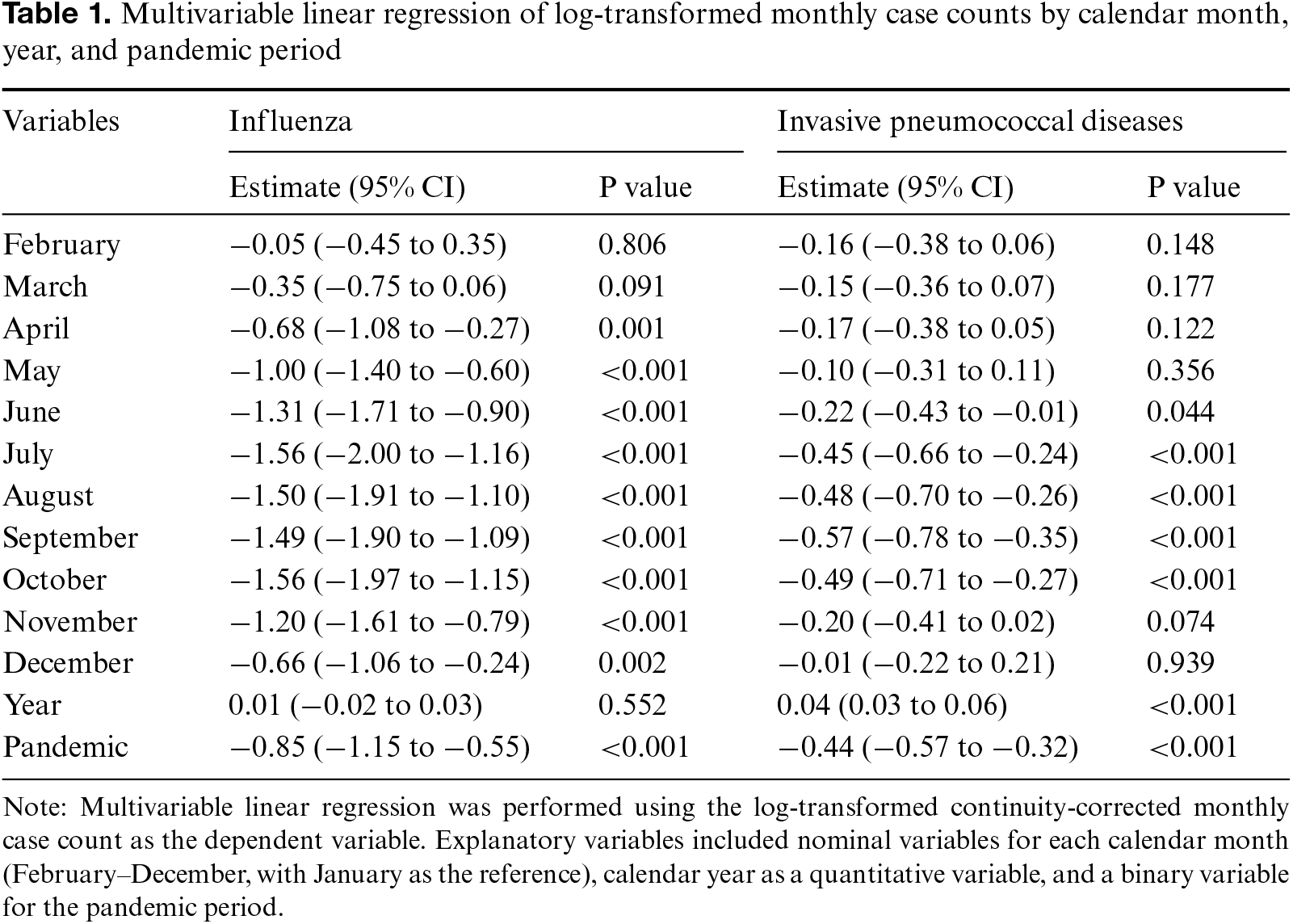
A multivariable linear regression analysis was conducted to evaluate monthly variation in influenza and invasive pneumococcal disease cases (Table 1). The dependent variable was the log-transformed, continuity-corrected monthly case count, calculated as log10(monthly cases + 0.5) to account for zero values. Explanatory variables included nominal indicators for each calendar month (February–December), with January as the reference; calendar year as a continuous variable; and a binary variable representing the pandemic period.
Results
Influenza
We obtained data from January 2011 to July 2024: a total of 187 months, during which 22,048 deaths due to influenza were reported nationwide. The number of deaths due to influenza in the winter season of 2019 was 3,353. The pandemic occurred during the winter season of 2020, and the number decreased to 1,275. It further dropped to 78 in 2021 and 19 in 2022. In 2023, classified as the “post-pandemic era,” it increased to 386. Although the data is limited to July, it reached 1,220 in 2024.
The monthly death count significantly decreased during the “pandemic era” compared to the “pre-pandemic period era” (P < 0.001) (Fig. 1). However, it increased dramatically in the “post-pandemic era” compared to the “pandemic era” (P = 0.005).
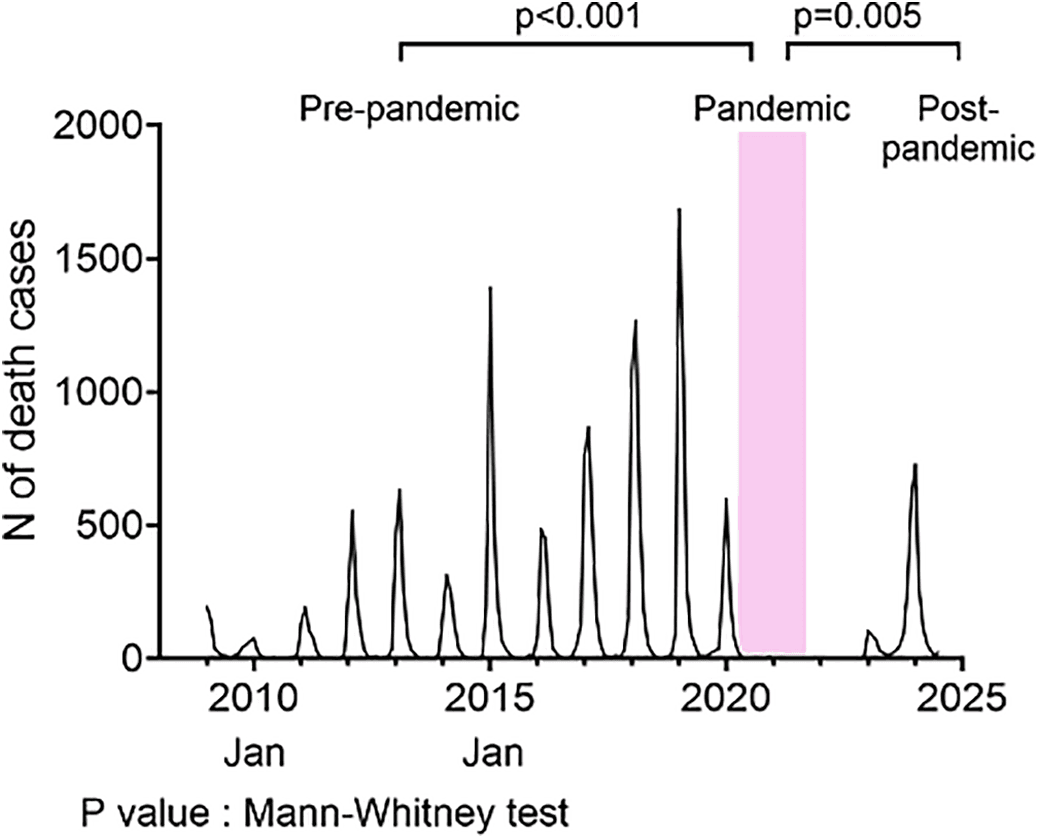
Figure 1. Impact of COVID-19 on Influenza mortality.
Invasive Pneumococcal Diseases
We collected data for the same period as for influenza, during which a total of 562 deaths from invasive pneumococcal diseases were reported nationwide. In the winter season of 2019, there were 69 deaths, which decreased to 60 in 2020, and further fell to 19 in 2021 and 14 in 2022. The number rose to 62 in 2023, during the “post-pandemic era,” and reached 54 in 2024.
The monthly death count saw a notable decline during the “pandemic era” compared to the “pre-pandemic era” (P < 0.001) (Fig. 2). Additionally, there was a notable increase in deaths during the “post-pandemic era” compared to the “pandemic era” (P < 0.001).
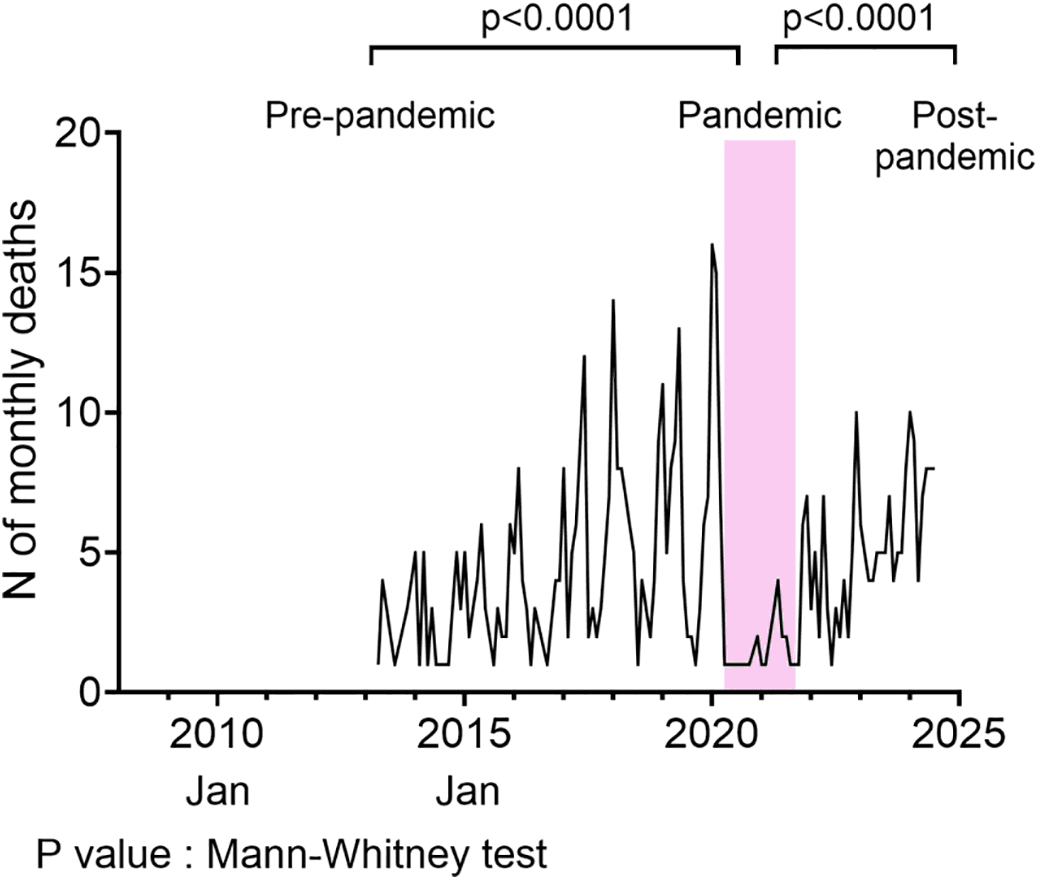
Figure 2. Impact of COVID-19 on Invasive pneumococcal disease mortality.
Discussion
The COVID-19 pandemic had a massive impact on the economy and public health worldwide. In Japan, the government successfully managed to curb the pandemic early on.8 This success was largely due to early actions taken by the government to prevent the spread of the virus through various infection control practices. These interventions coincided with a reduction in both COVID-19 and traditional respiratory tract infections. However, the worldwide resurgence of influenza and invasive pneumococcal disease in the post-pandemic period requires urgent attention. To the best of our knowledge, we are the first to report the death toll based on nationwide surveillance.
There are several factors that may have contributed to this phenomenon. First, the removal of precautionary measures may have contributed to this shift. The relaxation of these measures, notably basic infection prevention practices, allowed for an increase in human mobility and interactions, including social gatherings, resumed commuting, and engaging in social events. This return to pre-pandemic behaviors, combined with fewer public health restrictions in place, was likely associated with increased exposure to common pathogens.
Moreover, residual immunity in the population may have decreased during the pandemic, primarily due to reduced exposure to viruses resulting from unprecedented levels of social isolation.9 For instance, a recent study reported a significant resurgence in the positivity rate of influenza in the United States and England following the removal of non-pharmaceutical interventions, which may reflect the presence of immunity debt accumulated during the pandemic.10 Now that the restrictions have been lifted, the viruses are able to circulate among individuals with weakened immunity, potentially causing local outbreaks.
However, the main limitation of this study is that causal relationships cannot be inferred due to the use of an observational design. For instance, the rebound in healthcare access after the pandemic might have led to increased detection. It is possible that widespread avoidance of healthcare facilities during the pandemic led to underdiagnosis, which was offset as access improved.11 Further individual-level analyses are required to validate these observations.
Measures like international lockdowns and stay-at-home orders have had significant impacts on the economy and have limited individual freedoms. However, these findings highlight the importance of maintaining basic infection prevention measures even after the pandemic subsides. It is essential that we continue to monitor the prevalence of respiratory infections to ensure prompt interventions and minimize the risk of future outbreaks.
Conclusion
In conclusion, the COVID-19 pandemic had a significant impact worldwide on the incidence of respiratory infections, including influenza and invasive pneumococcal diseases due to stringent public health measures. However, we observed a noticeable resurgence in the number of deaths in the post-pandemic era as most restrictions were eased and pre-pandemic behaviors returned. This highlights the importance of monitoring respiratory infections and maintaining basic infection prevention measures even after the pandemic.
Acknowledgments
None.
Funding Source
This research received no external funding.
Author Contributions
SH worked on the design of the study, data acquisition, data analysis, interpretation, and drafting. NH contributed to data interpretation and critical revision. KY performed interpretation and critical revision. All the authors provided final approval for publication and took accountability.
Data availability
The datasets generated and/or analyzed during the current study are available in the e-Stat repository, https://www.e-stat.go.jp/.
Ethical Statement
Not applicable.
Conflict of Interest
The authors report no conflicts of interest in this work.
Supplemental Information
Supplemental information for this article can be found online at https://sup.jclinque.com/api/articles/77/download-suppl.
References
[1] Yamamoto T, Uchiumi C, Suzuki N, Yoshimoto J, Murillo-Rodriguez E. The psychological impact of ‘Mild Lockdown’ in Japan during the COVID-19 pandemic: a nationwide survey under a declared state of emergency. Int J Environ Res Public Health. December 15, 2020;17(24):9382. doi:10.3390/ijerph17249382.
[2] Horita N, Kato H, Watanabe K, Hara Y, Kobayashi N, Kaneko T. Decline in mortality due to respiratory diseases in Japan during the coronavirus disease 2019 pandemic. Respirology. February 2022;27(2):175–176. doi:10.1111/resp.14186.
[3] Horita N, Kato H, Watanabe K, Hara Y, Kobayashi N, Kaneko T. Declined mortality due to seasonal influenza in Japan during the Coronavirus Disease 2019 pandemic. Clin Infect Dis. June 10, 2022;74(11):2081. doi:10.1093/cid/ciab922.
[4] Chan KH, Lee PW, Chan CY, Lam KBH, Ho PL. Monitoring respiratory infections in covid-19 epidemics. BMJ. May 4, 2020;369:m1628. doi:10.1136/bmj.m1628.
[5] Horita N, Fukumoto T. Two years of the pandemic suppressed deaths from non-COVID-19 respiratory infections: a nationwide surveillance in Japan. Respirology. January 2023;28(1):82–83. doi:10.1111/resp.14392.
[6] Perniciaro S, van der Linden M, Weinberger DM. Reemergence of invasive pneumococcal disease in germany during the spring and summer of 2021. Clin Infect Dis. September 30, 2022;75(7):1149–1153. doi:10.1093/cid/ciac100.
[7] Portal Site of Official Statistics of Japan. Statistics of Japan. https://www.e-stat.go.jp/en (Published 2024, Accessed March 1, 2025).
[8] Sayeed UB, Hossain A. How Japan managed to curb the pandemic early on: lessons learned from the first eight months of COVID-19. J Glob Health. December 2020;10(2):020390. doi:10.7189/jogh.10.020390.
[9] Groves HE, Piché-Renaud PP, Peci A. The impact of the COVID-19 pandemic on influenza, respiratory syncytial virus, and other seasonal respiratory virus circulation in Canada: a population-based study. Lancet Reg Health Am. September 2021;1:100015. doi:10.1016/j.lana.2021.100015.
[10] Leung C, Konya L, Su L. Postpandemic immunity debt of influenza in the USA and England: an interrupted time series study. Public Health. February 2024;227:239–242. doi:10.1016/j.puhe.2023.12.009.
[11] Makiyama K, Kawashima T, Nomura S, et al. Trends in healthcare access in Japan during the first wave of the COVID-19 Pandemic, up to June 2020. Int J Environ Res Public Health. March 22, 2021;18(6):3271. doi:10.3390/ijerph18063271.
 |
Copyright: © 2025 Haketa et al. This work is licensed under a Creative Commons Attribution 4.0 International License, which permits unrestricted use, distribution, and reproduction in any medium, provided the original work is properly cited. |