| Journal of Clinical Question. 2026; 3(5): e474 https://doi.org/10.69854/jcq.2026.0030 Advance access publication date 08 October 2026 |
 |
Meta-Analysis
Pulsed-Field Ablation versus Thermal Ablation for Atrial Fibrillation: A Systematic Review and Meta-Analysis of Randomized Controlled Trials
Xianjihao Yu , Fuzhe Li, Xin Zhou, Le Yu, Jing Qi*
Department of Cardiology, The Affiliated Hospital of Liaoning University of Traditional Chinese Medicine.
*Corresponding Author: e-mail: saraok@126.com
Submitted: July 31, 2026 Accepted: October 06, 2026
Clinical Question Box
In patients undergoing catheter ablation for atrial fibrillation, how does pulsed-field ablation compare with conventional thermal ablation in terms of efficacy, procedural efficiency, and safety?
No statistically significant differences were detected in atrial arrhythmia recurrence, repeat ablation, or overall safety outcomes, while pulsed-field ablation reduced procedure time and left atrial dwell time. The certainty of evidence was low for atrial arrhythmia recurrence and repeat ablation and moderate for phrenic nerve injury and procedural efficiency. The clearest demonstrated advantage of pulsed-field ablation is greater procedural efficiency, while precision and certainty remain limited for several clinical outcomes.
Abstract
Background: Pulsed-field ablation (PFA) has emerged as a nonthermal alternative to radiofrequency ablation (RFA) and cryoballoon ablation (CBA) for atrial fibrillation (AF). Randomized evidence has expanded rapidly, but its relative efficacy, procedural performance, and safety across thermal comparators remain uncertain. Methods: We systematically searched PubMed, Embase, Web of Science, and the Cochrane Library from inception through June 30, 2026, for randomized controlled trials comparing PFA with thermal catheter ablation for AF. Random-effects meta-analyses were performed using odds ratios (ORs) for dichotomous outcomes and mean differences (MDs) for continuous outcomes. Prespecified subgroup analyses were conducted according to the thermal comparator. Risk of bias was assessed using RoB 2, and certainty of evidence was evaluated using GRADE. Results: Seven randomized controlled trials including 2,076 participants were included. PFA was not associated with a significant reduction in atrial arrhythmia recurrence (OR, 0.83; 95% CI, 0.65–1.07) or repeat ablation (OR, 0.96; 95% CI, 0.55–1.66). PFA significantly reduced total procedure time (MD, −29.85 minutes; 95% CI, −41.03 to −18.66) and left atrial dwell time (MD, −30.95 minutes; 95% CI, −42.89 to −19.01), although heterogeneity was substantial. Phrenic nerve injury did not differ significantly overall (OR, 0.37; 95% CI, 0.12–1.15), and no statistically significant difference was detected in procedure-related adverse events (OR, 0.90; 95% CI, 0.66–1.21). No statistically significant difference was detected in post-blanking class I or III antiarrhythmic drug use (OR, 0.82; 95% CI, 0.58–1.17). Conclusions: No statistically significant differences were detected in rhythm-control or overall safety outcomes, while PFA substantially reduced procedure time and left atrial dwell time. These findings apply mainly to first-time ablation for paroxysmal AF, and precision and certainty were limited for several clinical outcomes.
Keywords: Atrial fibrillation, pulsed-field ablation, radiofrequency ablation, cryoballoon ablation, randomized controlled trial, meta-analysis
Introduction
Atrial fibrillation (AF) is the most common sustained cardiac arrhythmia and represents a growing global public health burden.1 Approximately 59.7 million individuals worldwide were estimated to have AF or atrial flutter in 2019, and this number is expected to continue rising because of population aging, improved detection, and the increasing prevalence of cardiovascular and metabolic comorbidities.2 The prevalence of AF is projected to approximately double by 2050.3 AF is associated with substantial morbidity and mortality, including increased risks of ischemic stroke, heart failure, hospitalization, impaired quality of life, and premature death.4
Contemporary AF management requires a comprehensive and integrated approach that extends beyond control of the arrhythmia itself.5 The 2024 European Society of Cardiology guidelines introduced the AF-CARE framework, which emphasizes management of comorbidities and modifiable risk factors, prevention of stroke and thromboembolism, reduction of symptoms through rate or rhythm control, and continued evaluation and reassessment.2 Oral anticoagulation remains the cornerstone of stroke prevention in patients at increased thromboembolic risk, with direct oral anticoagulants generally preferred over vitamin K antagonists except in specific settings, such as mechanical heart valves or mitral stenosis.6 Rate control may be achieved with beta-blockers, digoxin, or nondihydropyridine calcium-channel blockers in appropriately selected patients, whereas rhythm-control strategies include electrical or pharmacological cardioversion, antiarrhythmic drug therapy, catheter ablation, and, in selected cases, surgical or hybrid ablation.7
The role of catheter ablation in rhythm control has expanded substantially. Current guidelines recommend catheter ablation when antiarrhythmic drug therapy is ineffective, contraindicated, or not preferred, and support its use as a first-line, rhythm-control strategy in selected patients with symptomatic paroxysmal AF.4 Pulmonary vein isolation (PVI) remains the cornerstone of catheter ablation for AF. Radiofrequency ablation (RFA) and cryoballoon ablation (CBA) are established thermal techniques that create myocardial lesions through heating and freezing, respectively.8 Although both approaches are effective, thermal energy may cause collateral injury to adjacent structures, including the esophagus, phrenic nerve, and pulmonary veins. In addition, procedural duration and the extent of left atrial instrumentation remain important considerations.9
Pulsed-field ablation (PFA) has emerged as a nonthermal alternative that uses high-voltage electrical pulses to induce irreversible electroporation.10 The greater susceptibility of cardiomyocytes to electroporation relative to surrounding noncardiac tissues may allow rapid and selective myocardial ablation while minimizing collateral injury.11 PFA may therefore provide advantages in procedural efficiency and safety while maintaining effective PVI.12 These characteristics have led to rapid clinical adoption and have prompted multiple randomized controlled trials (RCTs) directly comparing PFA with conventional thermal ablation.
However, the accumulating randomized evidence remains heterogeneous. Individual trials have used different thermal comparators, including CBA, RFA, or a combination of the two, and have assessed a broad range of efficacy, procedural, and safety outcomes. Determining whether the relative effects of PFA vary according to the comparator is clinically important because some proposed advantages of PFA, such as shorter procedural times or a lower risk of phrenic nerve injury, may depend on the thermal technique against which it is compared. Furthermore, individual RCTs may be insufficiently powered to evaluate relatively uncommon complications and clinically relevant downstream outcomes, including the need for repeat ablation.
A systematic review and meta-analysis of RCTs comparing PFA with thermal catheter ablation for AF was conducted. The primary efficacy outcomes included recurrence of atrial arrhythmias and repeat ablation. Procedural efficiency was assessed using total procedure time and left atrial dwell time, whereas safety outcomes included phrenic nerve injury and procedure-related adverse events. Post-ablation antiarrhythmic drug use was also evaluated. Prespecified subgroup analyses according to the thermal comparator were performed to determine whether the relative effects of PFA differed among CBA, RFA, and mixed thermal ablation strategies.
Methods
Study Design and Protocol Registration
This systematic review and meta-analysis was conducted and reported in accordance with the Preferred Reporting Items for Systematic Reviews and Meta-Analyses (PRISMA) 2020 statement.13 The review protocol was registered in the Open Science Framework (OSF; 10.17605/OSF.IO/AM7SW) before the literature search.14 Subsequent methodological clarifications were documented in the OSF record.
Literature Search
A systematic literature search was conducted in PubMed, Embase, Web of Science, and the Cochrane Library from database inception through June 30, 2026. Database-specific controlled vocabulary and free-text terms related to atrial fibrillation, pulsed-field ablation, irreversible electroporation, radiofrequency ablation, cryoballoon ablation, and catheter ablation were used. The reference lists of eligible studies and relevant systematic reviews were manually screened to identify additional potentially eligible studies. For included trials without complete peer-reviewed reports, conference presentations and ClinicalTrials.gov records were checked to verify study characteristics and outcome-specific data. The complete search strategies for all databases are provided in Supplementary Table S1.
Eligibility Criteria
Studies were eligible if they met all of the following inclusion criteria: (1) randomized controlled trial design; (2) inclusion of adult patients undergoing catheter ablation for atrial fibrillation; (3) direct comparison of pulsed-field ablation (PFA) with a thermal catheter ablation strategy, including radiofrequency ablation (RFA), cryoballoon ablation (CBA), or a comparator strategy permitting either RFA or CBA; and (4) reporting of at least one prespecified outcome of interest. Conference abstracts, trial presentations, and supplementary reports were used when they provided additional comparative data for prespecified outcomes. When multiple reports described the same trial population, the most complete report was used as the primary source, with supplementary reports used as needed without double-counting participants.
Studies were excluded if they met any of the following criteria: (1) nonrandomized, single-arm, or observational study design; (2) case reports, case series, reviews, or editorials; (3) absence of a direct comparison between PFA and thermal catheter ablation; or (4) insufficient comparative data for extraction of at least one prespecified outcome.
Study Selection
Two reviewers, F. L. and X. Z., independently screened the titles and abstracts of all records identified through the literature search. Potentially eligible reports were subsequently assessed against the prespecified eligibility criteria using the full text or other available source material. Disagreements regarding study eligibility were resolved through discussion and consensus or, when necessary, consultation with a third reviewer, J. Q. The study-selection process was documented using a PRISMA flow diagram.
Data Extraction
The two reviewers independently extracted data using a standardized data-extraction form. Extracted study characteristics included study design and setting, patient population, sample size, age, sex, body mass index, left atrial diameter, PFA platform and ablation strategy, thermal comparator, blanking period, rhythm-monitoring strategy, and duration of follow-up. For dichotomous outcomes, event counts and outcome-specific denominators were extracted; missing outcome data were not imputed. For continuous outcomes, the mean, standard deviation (SD), and the number of participants were extracted. When procedural-time outcomes were reported as medians and interquartile ranges (IQRs), means and SDs were estimated from the reported quantiles.15 Procedural duration variables were standardized to minutes. When necessary, data were supplemented by additional reports from the same study. Discrepancies were resolved through discussion between the reviewers.
Outcomes
The principal outcomes were atrial arrhythmia recurrence after the trial-defined blanking period, repeat catheter ablation, total procedure time, and phrenic nerve injury. Atrial arrhythmia recurrence was defined according to each trial, including the duration threshold used to define an arrhythmic episode. Supplementary outcomes included procedure-related adverse events or complications, left atrial dwell time, and post-ablation antiarrhythmic drug use. Procedure-related adverse events or complications were defined as any event considered by the investigators of the individual trials to be related to the ablation procedure, irrespective of severity.
Statistical Analysis
For dichotomous outcomes, pooled effects were expressed as odds ratios (ORs) with 95% confidence intervals (CIs) using Mantel–Haenszel random-effects models. Continuous outcomes were summarized as mean differences (MDs) with 95% CIs using inverse-variance random-effects models. Between-study variance was estimated using the DerSimonian–Laird method, and pooled 95% CIs were calculated using the Wald-type method based on the standard normal distribution. Studies with no events in either treatment group did not contribute to pooled OR estimates; when a zero cell occurred in only one treatment group, the default continuity correction of 0.5 was applied. Statistical heterogeneity was assessed using Cochran’s Q test and the I2 statistic.16 All analyses were conducted using Review Manager (RevMan), version 5.4 (The Cochrane Collaboration), with two-sided P values <0.05 considered statistically significant.
Risk-of-Bias Assessment
Two reviewers independently assessed outcome-specific risk of bias using the Cochrane Risk of Bias 2 (RoB 2) tool across the five standard domains.17 Overall judgments were classified as low risk, some concerns, or high risk. Disagreements were resolved through consensus. Each assessment was applied to the specific result contributing to the corresponding prespecified meta-analytic outcome.
Certainty of Evidence
The certainty of evidence for each outcome was assessed using the Grading of Recommendations Assessment, Development and Evaluation (GRADE) approach.18 Evidence from randomized controlled trials was initially rated as high certainty and downgraded, when appropriate, for risk of bias, inconsistency, indirectness, imprecision, or publication bias. Certainty was categorized as high, moderate, low, or very low. Two reviewers independently performed the GRADE assessments, with disagreements resolved through discussion and consensus. A Summary of Findings table was prepared for the principal outcomes.
Results
Study Selection and Characteristics
The literature search identified 994 records. After removal of 73 duplicates, 921 records underwent title and abstract screening, of which 818 were excluded. The remaining 103 reports were assessed for eligibility. Ultimately, seven randomized controlled trials comprising 2,076 participants were included in the meta-analysis (Table 1).19–25 The study-selection process and reasons for exclusion are shown in the PRISMA flow diagram.
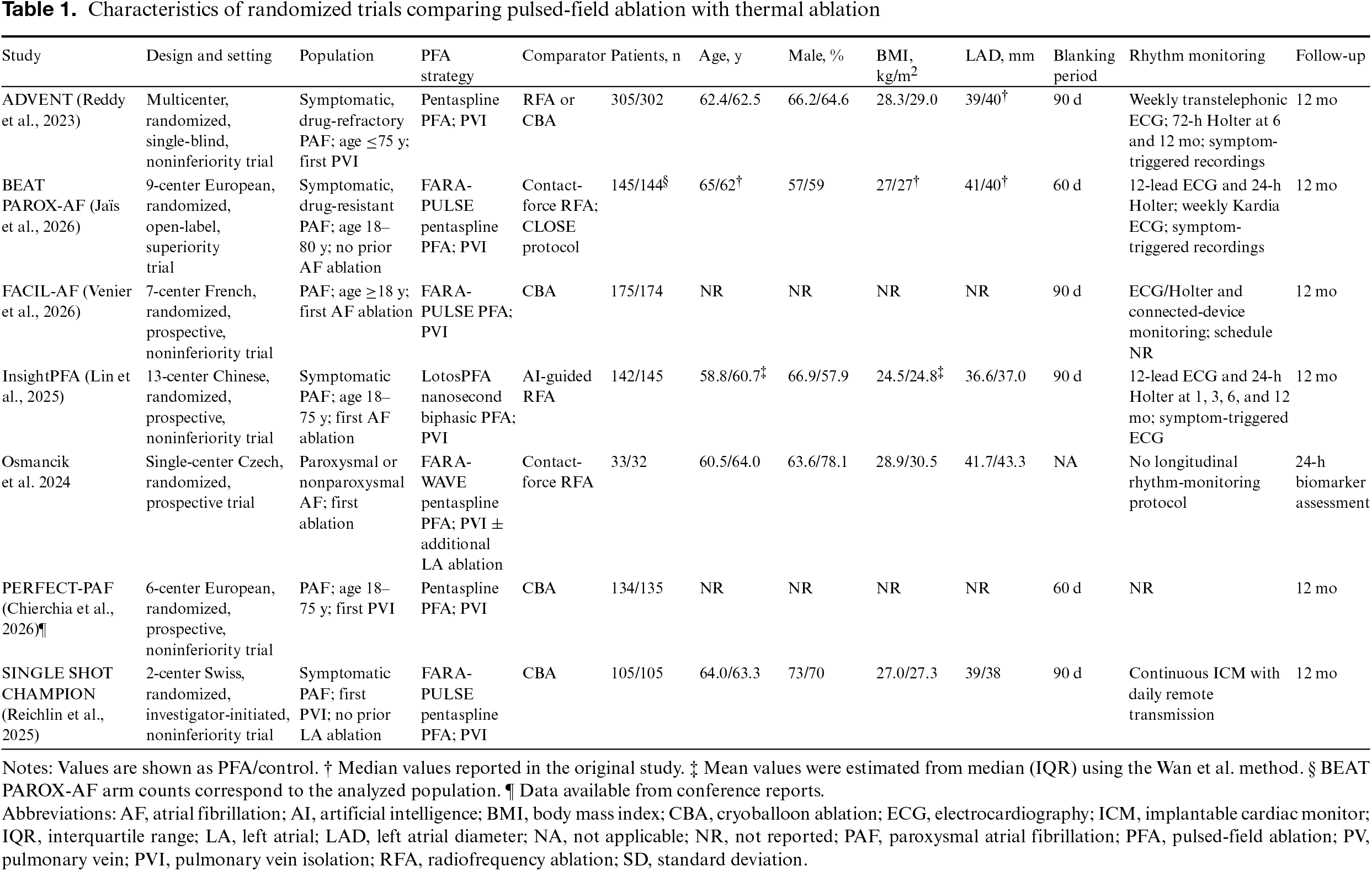
Individual trials enrolled 65 to 607 participants. Most included patients with symptomatic paroxysmal atrial fibrillation undergoing first-time pulmonary vein isolation, whereas Osmancik et al. also included patients with nonparoxysmal atrial fibrillation. Six trials were multicenter studies, and one was conducted at a single center. PFA was predominantly performed using pentaspline catheter systems, whereas InsightPFA evaluated a nanosecond biphasic PFA system. Three trials compared PFA with cryoballoon ablation, three with radiofrequency ablation, and ADVENT permitted either radiofrequency or cryoballoon ablation in the control group. Baseline characteristics were generally comparable between treatment groups. Blanking periods ranged from 60 to 90 days, rhythm-monitoring strategies varied across trials, and most efficacy outcomes were assessed at approximately 12 months (Table S3).
Atrial Arrhythmia Recurrence
Six studies comprising 2,011 participants contributed to the analysis of atrial arrhythmia recurrence (Fig. 1). Recurrence occurred in 209 of 1,006 patients treated with PFA and 238 of 1,005 patients undergoing thermal ablation. PFA was associated with a numerically lower risk of recurrence, although the overall difference was not statistically significant (OR, 0.83; 95% CI, 0.65–1.07; P = 0.150), with low between-study heterogeneity (I2 = 22%).
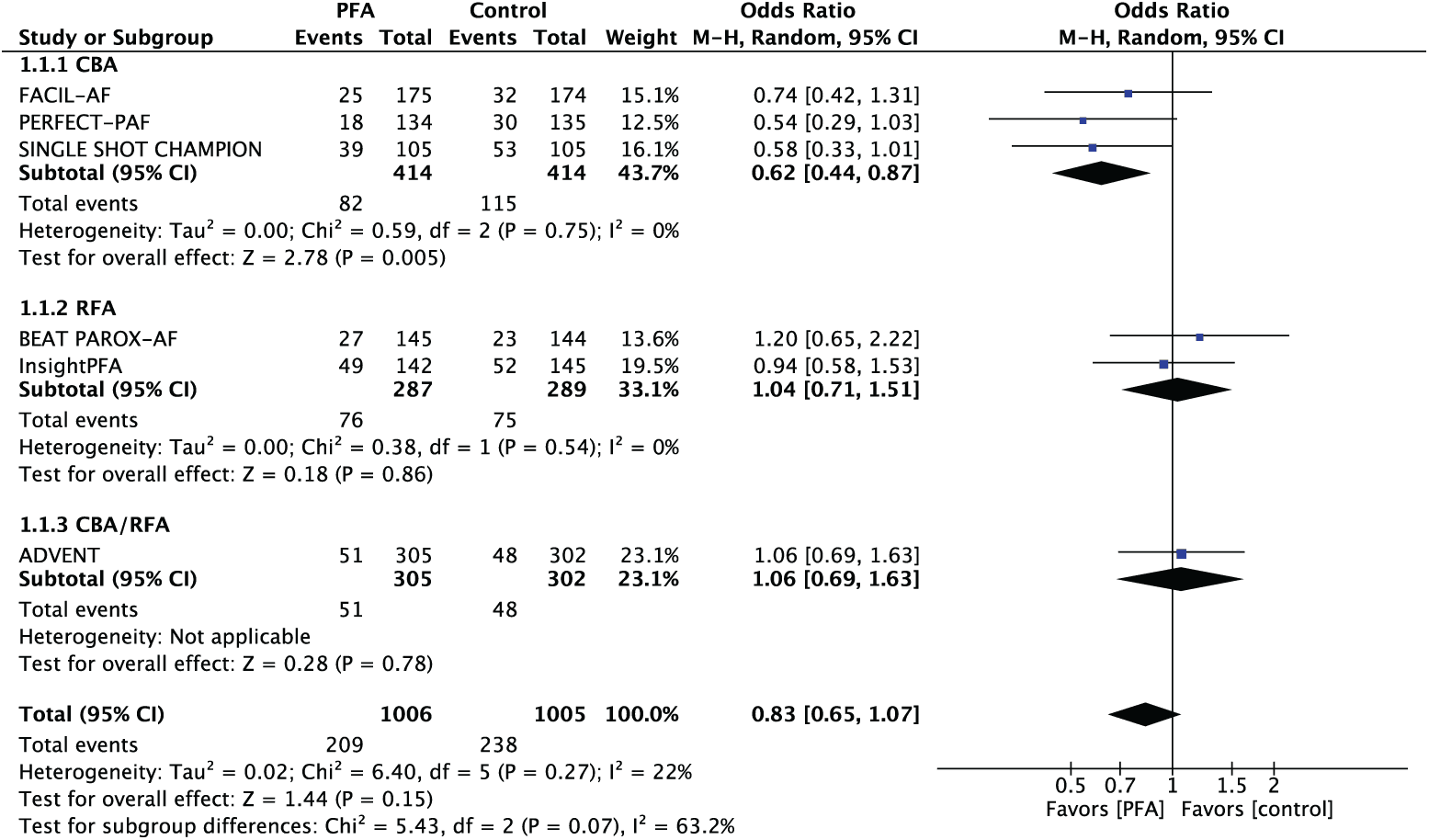
Figure 1. Atrial arrhythmia recurrence after pulsed-field versus thermal ablation.
In trials comparing PFA with cryoballoon ablation, PFA was associated with fewer recurrences (OR, 0.62; 95% CI, 0.44–0.87; P = 0.005). No significant difference was observed in trials comparing PFA with radiofrequency ablation (OR, 1.04; 95% CI, 0.71–1.51) or in ADVENT, which permitted either radiofrequency or cryoballoon ablation in the control group (OR, 1.06; 95% CI, 0.69–1.63). The test for subgroup differences was not statistically significant (P = 0.070).
Repeat Ablation
Four studies comprising 1,375 participants reported repeat ablation (Fig. 2). Repeat procedures were performed in 52 of 689 patients receiving PFA and 55 of 686 patients receiving thermal ablation. There was no significant difference between the two strategies (OR, 0.96; 95% CI, 0.55–1.66; P = 0.880), with moderate heterogeneity (I2 = 45%).
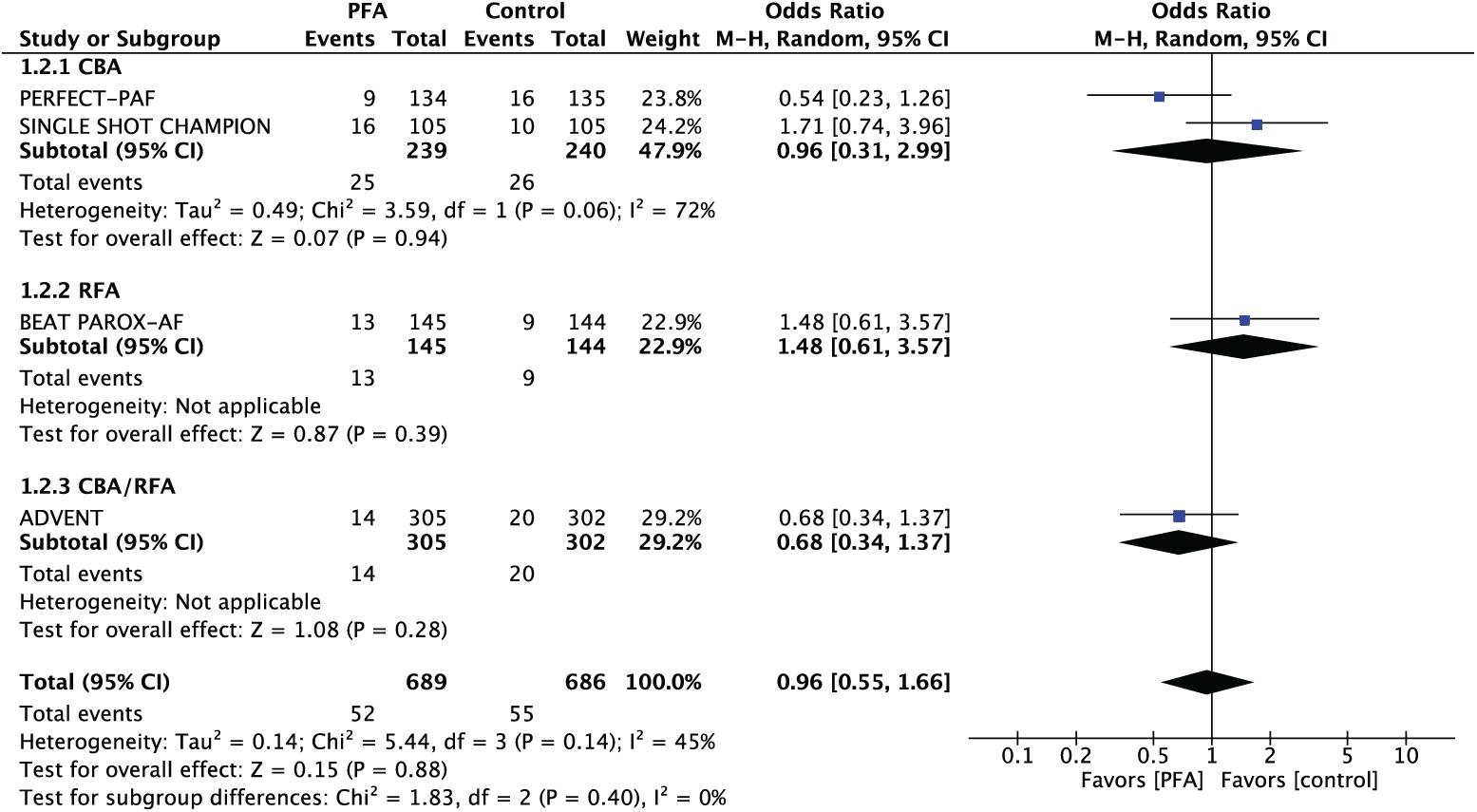
Figure 2. Repeat ablation after pulsed-field versus thermal ablation.
No significant differences were observed within the cryoballoon ablation subgroup (OR, 0.96; 95% CI, 0.31–2.99), radiofrequency ablation subgroup (OR, 1.48; 95% CI, 0.61–3.57), or mixed radiofrequency/cryoballoon subgroup (OR, 0.68; 95% CI, 0.34–1.37). There was no evidence of a subgroup difference according to thermal ablation modality (P = 0.400).
Procedural Efficiency
Seven studies comprising 2,076 participants provided data on total procedure time (Fig. 3). PFA significantly shortened procedure time compared with thermal ablation, with a pooled mean difference of −29.85 minutes (95% CI, −41.03 to −18.66; P < 0.001). Substantial between-study heterogeneity was observed (I2 = 96%).
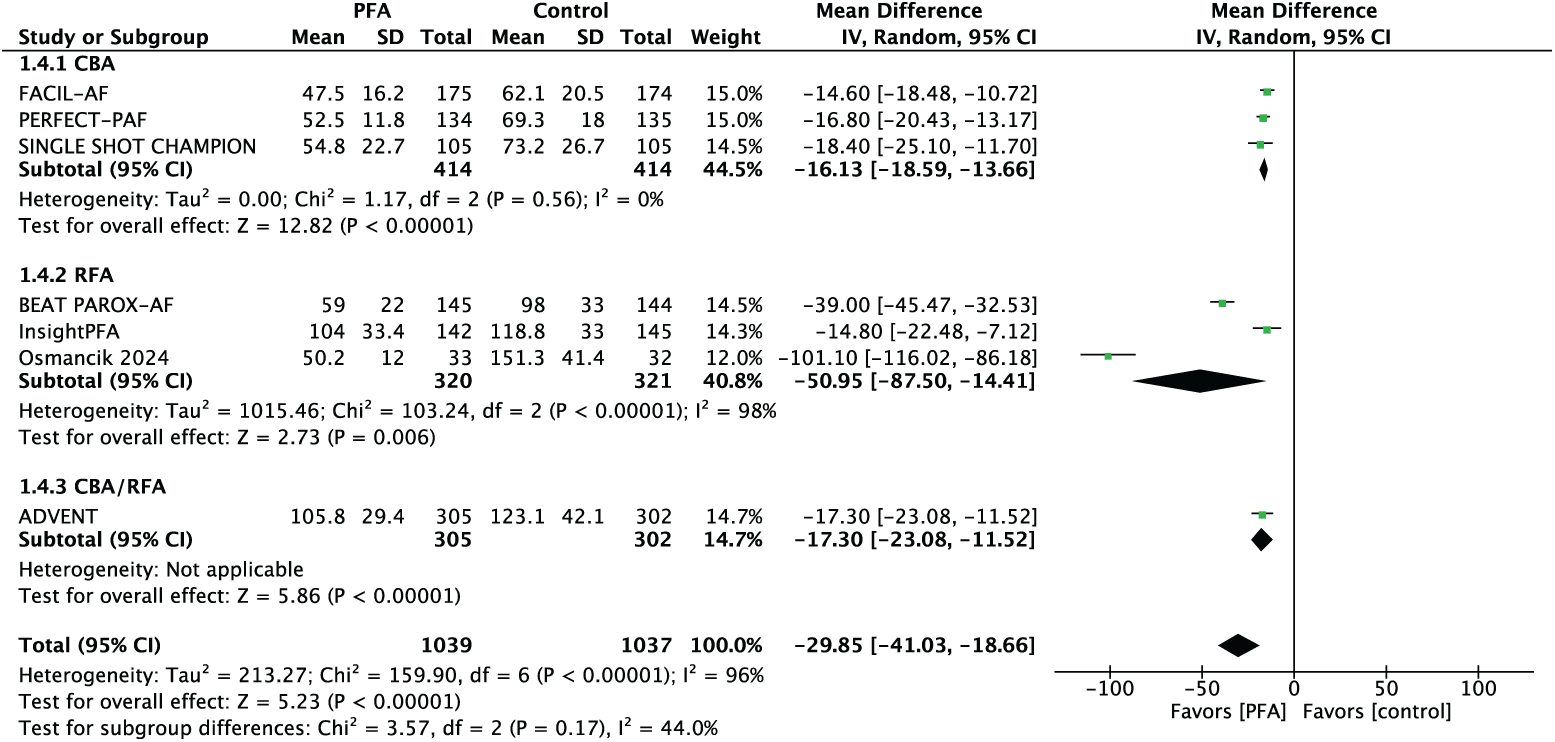
Figure 3. Procedure time with pulsed-field versus thermal ablation.
Compared with cryoballoon ablation, PFA shortened procedure time by 16.13 minutes (95% CI, −18.59 to −13.66; I2 = 0%). The pooled reduction versus radiofrequency ablation was 50.95 minutes (95% CI, −87.50 to −14.41), with considerable heterogeneity (I2 = 98%). In ADVENT, which permitted either radiofrequency or cryoballoon ablation, the mean difference was −17.30 minutes (95% CI, −23.08 to −11.52). The test for subgroup differences was not statistically significant (P = 0.170).
Left atrial dwell time was also significantly shorter with PFA (Fig. S2). Across six studies comprising 1,806 participants, the pooled mean difference was −30.95 minutes (95% CI, −42.89 to −19.01; P < 0.001), with substantial heterogeneity (I2 = 97%). The mean reduction was 12.44 minutes versus cryoballoon ablation (95% CI, −17.26 to −7.63), 46.82 minutes versus radiofrequency ablation (95% CI, −69.04 to −24.61), and 24.30 minutes in ADVENT (95% CI, −28.29 to −20.31). The magnitude of the reduction differed significantly among comparator subgroups (P < 0.001).
Safety Outcomes
Phrenic nerve injury was reported in seven studies comprising 2,076 participants (Fig. 4). Events occurred in 8 of 1,039 patients treated with PFA and 25 of 1,037 patients treated with thermal ablation. The overall difference was not statistically significant (OR, 0.37; 95% CI, 0.12–1.15; P = 0.090), with low-to-moderate heterogeneity (I2 = 35%).
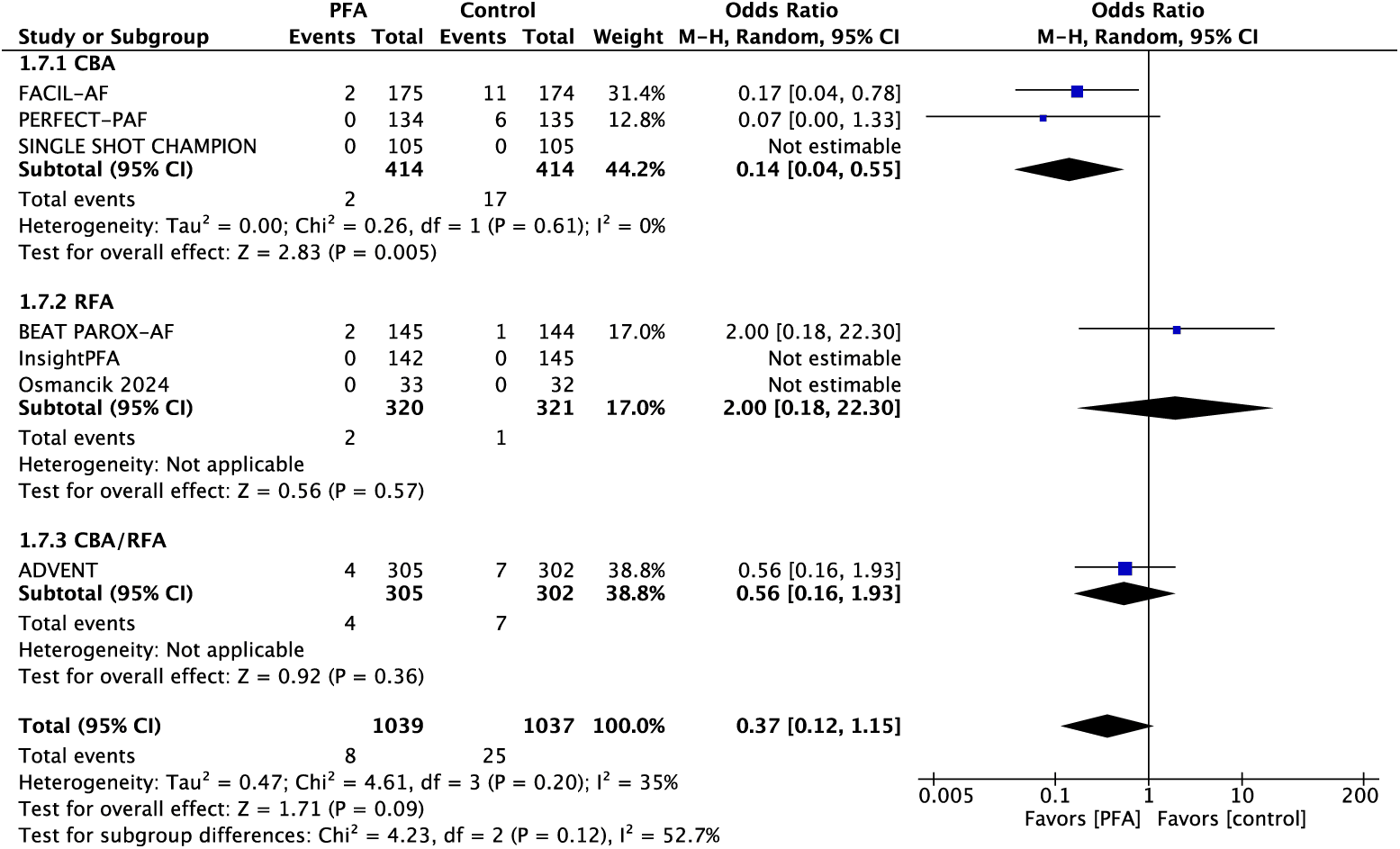
Figure 4. Phrenic nerve injury after pulsed-field versus thermal ablation.
In trials using cryoballoon ablation as the comparator, PFA was associated with a lower risk of phrenic nerve injury (OR, 0.14; 95% CI, 0.04–0.55; P = 0.005). No significant difference was observed in the radiofrequency subgroup (OR, 2.00; 95% CI, 0.18–22.30) or in the mixed-comparator subgroup (OR, 0.56; 95% CI, 0.16–1.93). The test for subgroup differences was not statistically significant (P = 0.120).
For overall procedure-related adverse events or complications, six studies comprising 1,727 participants were included (Fig. S3). Events occurred in 113 of 864 patients receiving PFA and 123 of 863 patients receiving thermal ablation. There was no significant difference between groups (OR, 0.90; 95% CI, 0.66–1.21; P = 0.480), with no observed heterogeneity (I2 = 0%). No significant subgroup difference according to comparator modality was detected (P = 0.200).
Post-Blanking Antiarrhythmic Drug Use
Post-blanking class I or III antiarrhythmic drug use was reported in four studies comprising 1,389 participants (Fig. S4). Antiarrhythmic drugs were used in 67 of 696 patients treated with PFA and 79 of 693 patients treated with thermal ablation. There was no significant difference between groups (OR, 0.82; 95% CI, 0.58–1.17; P = 0.280), with no observed heterogeneity (I2 = 0%). Results were consistent across cryoballoon, radiofrequency, and mixed-comparator subgroups, with no evidence of subgroup interaction (P = 0.930).
Risk of Bias and Certainty of Evidence
Overall RoB 2 judgments were low risk for two trials and some concerns for five trials, with no trial rated as high risk of bias (Fig. S5). GRADE certainty was moderate for total procedure time, left atrial dwell time, procedure-related adverse events, and phrenic nerve injury, and low for atrial arrhythmia recurrence, repeat ablation, and post-blanking antiarrhythmic drug use (Table S2). Downgrading was mainly due to risk of bias, imprecision, and inconsistency; phrenic nerve injury was downgraded by one level for serious imprecision because of the small number of events and wide confidence interval.
Discussion
Across seven RCTs, PFA significantly reduced procedure and left atrial dwell times compared with thermal ablation. No statistically significant overall differences were detected in atrial arrhythmia recurrence, repeat ablation, post-blanking antiarrhythmic drug use, or procedure-related adverse events. The confidence intervals and low certainty of evidence for several clinical outcomes preclude claims of equivalence. These findings are consistent with previous randomized studies and meta-analyses reporting no clear overall difference in rhythm-control outcomes between PFA and thermal ablation, together with a procedural efficiency advantage for PFA.12,26 Differences in blanking periods, rhythm-monitoring strategies, and recurrence definitions may affect interpretation of rhythm outcomes.19,25 Fewer recurrences were observed in the cryoballoon subgroup, but the subgroup interaction was not statistically significant.
The clearest advantage of PFA was procedural efficiency. The reduction in procedure time was greater relative to radiofrequency ablation than to cryoballoon ablation, which itself provides a relatively rapid single-shot approach.26 However, the substantial heterogeneity in procedure and left atrial dwell times indicates that the magnitude of time reduction varies across technologies and procedural settings. The small Osmancik trial contributed the largest procedure-time difference and included a mixed AF population with potentially more extensive left atrial ablation. The pooled estimates should therefore be interpreted as evidence of an overall efficiency advantage rather than a fixed expected time saving. The leave-one-out and conference-report exclusion analyses did not remove the direction or statistical significance of the total procedure-time effect, although the magnitude remained variable.
Safety findings require cautious interpretation. Although the tissue selectivity of electroporation provides a rationale for reducing collateral injury,11 the overall analysis did not demonstrate a statistically significant safety advantage for PFA, and estimates for uncommon complications were imprecise. PFA-associated intravascular hemolysis and hemoglobinuria-related acute kidney injury have also been reported, particularly after extensive energy delivery, but these outcomes were not consistently assessed in the included randomized trials.27 Larger registries and post-marketing surveillance remain important for evaluating rare adverse events.28 For phrenic nerve injury, significance differed between the prespecified random-effects analysis and the fixed-effect sensitivity analysis, further supporting cautious interpretation of the sparse-event estimate.
The choice of ablation technology should therefore reflect procedural requirements in addition to efficacy and safety. Radiofrequency ablation offers flexibility for tailored lesion placement, cryoballoon ablation provides an established single-shot workflow, and PFA offers rapid nonthermal lesion delivery.29 Evidence remains limited for persistent AF and more extensive substrate modification. Cardiac magnetic resonance may help characterize atrial cardiomyopathy and fibrosis in this setting, although the benefit of imaging-guided substrate ablation remains uncertain.30 Shorter procedure duration should also not be interpreted as a demonstrated cost-effectiveness, because economic outcomes were not evaluated.31 Moreover, rhythm outcomes alone do not fully capture patient benefit; symptoms, quality of life, and patient preferences remain important measures of treatment success.32
Several limitations should be acknowledged. The number of randomized trials was limited, particularly for uncommon safety outcomes, and some recent studies were available only as conference reports. Follow-up was generally approximately 1 year, rhythm-monitoring strategies and recurrence definitions varied, and substantial heterogeneity affected procedural outcomes. The small number of studies limited reliable prediction intervals and extensive sensitivity analyses, particularly for left atrial dwell time and rare safety outcomes; quality-of-life and other patient-reported outcomes could not be synthesized consistently.
Conclusion
In patients predominantly undergoing first-time ablation for paroxysmal AF, PFA was associated with shorter procedure and left atrial dwell times than conventional thermal ablation. No statistically significant differences were detected in atrial arrhythmia recurrence, repeat ablation, overall procedure-related adverse events, or post-blanking antiarrhythmic drug use. Phrenic nerve injury was less frequent with PFA in comparison with cryoballoon ablation, but an overall safety advantage was not established. Longer-term studies are needed to clarify outcomes in persistent AF, repeat procedures, and uncommon complications.
Acknowledgment
None.
Funding
This research received no external funding.
Authors’ contributions
Conceptualization, X. Y. and J. Q.; methodology, X. Y. and F. L.; literature search and study selection, F. L. and X. Z.; data extraction and risk-of-bias assessment, X. Y. and L. Y.; statistical analysis, L. Y.; writing—original draft, X. Y.; writing—review and editing, all authors; supervision, J. Q. All authors read and approved the final manuscript and meet the ICMJE authorship criteria.
Competing interests
The authors declare no competing interests.
Ethics approval
Ethics approval was not required because this systematic review and meta-analysis used aggregate data from previously published studies and did not involve the recruitment of participants or access to identifiable individual-level data.
Consent to participate
Not applicable because no participants were directly enrolled in this study.
Data availability
All data analyzed in this meta-analysis were extracted from the published reports and supplementary materials of the included studies. The extracted data used for the analyses are available from the corresponding author upon reasonable request.
Generative AI Declaration
OpenAI was used for language editing. All outputs were independently reviewed and verified by the authors against the original sources. Generative AI was not used to generate or alter study data or to perform the statistical analyses.
Supplemental Information
Supplemental information for this article can be found online at https://sup.jclinque.com/api/articles/129/download-suppl.
References
[1] Joglar JA, Chung MK, Armbruster AL, et al. 2023 ACC/AHA/ACCP/HRS guideline for the diagnosis and management of atrial fibrillation: a report of the American College of Cardiology/American Heart Association Joint Committee on Clinical Practice Guidelines. Circulation. January 02, 2024;149(1):e1–e156. doi:10.1161/CIR.0000000000001193.
[2] Van Gelder IC, Rienstra M, Bunting KV, et al. 2024 ESC Guidelines for the management of atrial fibrillation developed in collaboration with the European Association for Cardio-Thoracic Surgery (EACTS): developed by the task force for the management of atrial fibrillation of the European Society of Cardiology (ESC), with the special contribution of the European Heart Rhythm Association (EHRA) of the ESC. Endorsed by the European Stroke Organisation (ESO). Eur Heart J. 2024;45(36):3314–3414. doi:10.1093/eurheartj/ehae176.
[3] Rodríguez-García J, Ramos R, Blanch J, et al. Recent trends and future projections of atrial fibrillation epidemiology in a large european population. Eur J Intern Med. March 2026;145:106683. doi:10.1016/j.ejim.2025.106683.
[4] Ko D, Chung MK, Evans PT, Benjamin EJ, Helm RH. Atrial fibrillation: a review. JAMA. January 28, 2025;333(4):329–342. doi:10.1001/jama.2024.22451.
[5] Romiti GF, Corica B, Bucci T, et al. The ‘Atrial Fibrillation Better Care’ pathway for integrated care of atrial fibrillation: a systematic review and meta-analysis. Thromb Haemost. January 30, 2026. doi:10.1055/a-2787-0186.
[6] Bejjani A, Khairani Candrika D, Assi A, et al. When direct oral anticoagulants should not be standard treatment. JACC. January 23, 2024;83(3):444–465. doi:10.1016/j.jacc.2023.10.038.
[7] Zafeiropoulos S, Doundoulakis I, Bekiaridou A, et al. Rhythm vs rate control strategy for atrial fibrillation: a meta-analysis of randomized controlled trials. JACC Clin Electrophysiol. July 2024;10(7 Pt 1):1395–1405. doi:10.1016/j.jacep.2024.03.006.
[8] Mihordea A, Puiu M, Simu G, et al. Radiofrequency, cryoablation, and pulsed field ablation for atrial fibrillation: mechanisms, preclinical evidence, and clinical outcomes. Biomedicines. April 4, 2026;4 14(4):825. doi:10.3390/biomedicines14040825.
[9] Padalia K, Tzou WS. Pulsed field ablation versus thermal energy ablation for atrial fibrillation. Card Electrophysiol Clin. June 2025;17(2):167–181. doi:10.1016/j.ccep.2025.02.005.
[10] Guttipatti P, Saadallah N, Wan EY. Pulsed field ablation for the treatment of atrial fibrillation: a review and a look into its future. Heart Surg Forum. February 22, 2024;27(2):169–179. doi:10.59958/hsf.7141.
[11] Tabaja C, Mdaihly M, Noujaim C, Wazni OM, Santangeli P. Tissue selectivity of pulsed field ablation. Card Electrophysiol Clin. June 2025;17(2):147–154. doi:10.1016/j.ccep.2025.02.003.
[12] Latini AC, Penna M, Saglietto A, et al. Pulsed field ablation vs. thermal ablation for pulmonary vein isolation: a network meta-analysis of randomized controlled trials. Europace. June 2, 2026;28(6):e56. doi:10.1093/europace/euag112.
[13] Page MJ, McKenzie JE, Bossuyt PM, et al. The PRISMA, 2020 statement: an updated guideline for reporting systematic reviews. BMJ. 2021;372:n71. doi:10.1136/bmj.n71.
[14] Qi J. Pulsed field ablation versus thermal ablation for atrial fibrillation: a systematic review and meta-analysis; 2026. Updated on August 17, 2026. doi:10.1016/s0735-1097(24)02218-6.
[15] McGrath S, Zhao X, Steele R, Thombs BD, Benedetti A. Estimating the sample mean and standard deviation from commonly reported quantiles in meta-analysis. Stat Methods Med Res. September 2020;29(9):2520–2537. doi:10.1177/0962280219889080.
[16] Chen H, Gong Y. Heterogeneity in meta-analysis: concepts, quantification, exploration, and clinical interpretation. J Clin Quest. 2026;3(4):e373. doi:10.69854/jcq.2026.0025.
[17] Sterne JAC, Savović J, Page MJ, et al. RoB 2: a revised tool for assessing risk of bias in randomised trials. BMJ. 2019;366:l4898. doi:10.1136/bmj.l4898.
[18] Guyatt GH, Oxman AD, Vist GE, et al. GRADE: an emerging consensus on rating quality of evidence and strength of recommendations. BMJ. 2008;336(7650):924–926. doi:10.1136/bmj.39489.470347.AD.
[19] Reddy VY, Gerstenfeld EP, Natale A, et al. Pulsed field or conventional thermal ablation for paroxysmal atrial fibrillation. N Engl J Med. 2023;389(18):1660–1671. doi:10.1056/NEJMoa2307291.
[20] Jais P, Neuzil P, Scherr D, et al. Pulsed field vs radiofrequency ablation for paroxysmal atrial fibrillation: the BEAT PAROX-AF trial. Eur Heart J. 2026;47(13):1527–1537. doi:10.1093/eurheartj/ehaf1115.
[21] Venier S. FACIL-AF: pulsed field versus cryoballoon ablation in paroxysmal AF; 2026.
[22] Lin W, Chu H, Wang C, et al. Pulsed field ablation using a novel biphasic catheter vs thermal ablation for paroxysmal atrial fibrillation: InsightPFA trial. J Am Coll Cardiol. 2025;86(23):2314–2326. doi:10.1016/j.jacc.2025.09.1593.
[23] Osmancik P, Bacova B, Hozman M, et al. Myocardial damage, inflammation, coagulation, and platelet activity during catheter ablation using radiofrequency and pulsed-field energy. JACC Clin Electrophysiol. 2024;10(3):463–474. doi:10.1016/j.jacep.2023.11.001.
[24] Chierchia GB. PERFECT-PAF: PFA versus CRYO for Paroxysmal AF; 2026.
[25] Reichlin T, Kueffer T, Badertscher P, et al. Pulsed field or cryoballoon ablation for paroxysmal atrial fibrillation. N Engl J Med. 2025;392(15):1497–1507. doi:10.1056/NEJMoa2502280.
[26] de Campos M, Moraes VRY, Daher RF, et al. Pulsed-field ablation versus thermal ablation for atrial fibrillation: a meta-analysis. Heart Rhythm O2. June 2024;5(6):385–395. doi:10.1016/j.hroo.2024.04.012.
[27] Cersosimo A, Pierucci N, Mariani MV, et al. Hemolysis in pulsed field ablation for atrial fibrillation: a narrative review. Rev Cardiovasc Med. March 23, 2026;27(3):46485. doi:10.31083/rcm46485.
[28] Ekanem E, Neuzil P, Reichlin T, et al. Safety of pulsed field ablation in more than 17,000 patients with atrial fibrillation in the MANIFEST-17K study. Nat Med. July 2024;30(7):2020–2029. doi:10.1038/s41591-024-03114-3.
[29] Tzeis S, Gerstenfeld EP, Kalman J, et al. 2024 European Heart Rhythm Association/Heart Rhythm Society/Asia Pacific Heart Rhythm Society/Latin American Heart Rhythm Society expert consensus statement on catheter and surgical ablation of atrial fibrillation. EP Europace. 2024;26(4):euae043. doi:10.1093/europace/euae043.
[30] Jabbour JP, Palombi M, Bonanni M, et al. The role of cardiac magnetic resonance in characterizing atrial cardiomyopathy and guiding substrate ablation in atrial fibrillation: a narrative review. J Cardiovasc Dev Dis. March 25, 2025;12(4):114. doi:10.3390/jcdd12040114.
[31] Pierucci N, Bruti RM, Cipollone P, et al. Atrial fibrillation: economic burden and impact of catheter ablation. Minerva Cardiol Angiol. July 14, 2025. doi:10.23736/s2724-5683.25.06782-1.
[32] Matteucci A, Mariani MV, Sgarra L, et al. Beyond successful atrial fibrillation ablation: unmet patient needs, quality-of-life gap and patients’ perspective. Expert Rev Cardiovasc Ther. April 2026;24(4):285–287. doi:10.1080/14779072.2026.2649159.
 |
Copyright: © 2026 Yu et al. This work is licensed under a Creative Commons Attribution 4.0 International License, which permits unrestricted use, distribution, and reproduction in any medium, provided the original work is properly cited. |