| Journal of Clinical Question. 2026; 3(2): e112 https://doi.org/10.69854/jcq.2026.0009 Advance access publication date 06 April 2026 |
 |
Meta-Analysis
Prognostic Significance of Postoperative and Post-Adjuvant Circulating Tumor DNA in Resected Colon Cancer: A Systematic Review and Meta-Analysis
En Wang *, Maho Sasaki, Daisuke Nagashima, Yushi Fujiwara, Taigo Tokuhara
Department of Surgery, Asakayama General Hospital, Sakai, Japan.
*Corresponding Author: e-mail: wangen.cn@gmail.com
Submitted: February 16, 2026 Accepted: April 05, 2026
Clinical Question Box
Does postoperative or post-adjuvant chemotherapy circulating tumor DNA (ctDNA) positivity predict recurrence and survival in patients with resected colon cancer?
Postoperative ctDNA positivity is associated with more than a fivefold increased risk of recurrence and an approximately fourfold increased risk of mortality. Persistent ctDNA detection after adjuvant chemotherapy identifies an even higher-risk subgroup, with roughly an elevenfold increased risk of relapse, suggesting ongoing minimal residual disease. These findings support ctDNA positivity as a robust biomarker for postoperative risk stratification and provide potential treatment guidance.
Abstract
Background: Circulating tumor DNA (ctDNA) is a promising biomarker for detecting minimal residual disease in colon cancer. We performed a systematic review and meta-analysis to assess the prognostic value of postoperative and post-adjuvant chemotherapy (ACT) ctDNA positivity in resected colon cancer. Methods: We systematically searched PubMed, Embase, Web of Science, and the Cochrane Library for studies evaluating ctDNA after curative-intent surgery and/or ACT. Hazard ratios (HRs) for recurrence-free survival (RFS), disease-free survival (DFS), and overall survival (OS) were pooled using random-effects models. Results: Twenty-three studies comprising 10,217 patients were included. Postoperative ctDNA positivity was significantly associated with worse RFS (HR: 5.46, 95% confidence interval [CI]: 3.79–7.85, p < 0.01, I2 = 88%). In stage III disease, the pooled HR was 4.52 (95% CI: 2.90–7.05), while in stage II disease, the pooled HR was 6.67 (95% CI: 0.94–46.01). Post-ACT ctDNA positivity was associated with a marked increase in risk of recurrence (HR: 11.21, 95% CI: 6.92–18.15, p < 0.01, I2 = 58%). Among stage III patients, the pooled HR was 10.83 (95% CI: 5.38–21.82), with sensitivity analysis yielding a stable estimate (HR: 6.84, 95% CI: 4.58–10.21, I2 = 8%). Postoperative ctDNA positivity was also associated with inferior OS (HR: 3.99, 95% CI: 2.43–6.55, p < 0.01, I2 = 90%) and worse DFS (HR: 4.92, 95% CI: 2.60–9.32, p < 0.01, I2 = 83.5%). Conclusions: Postoperative and post-ACT ctDNA positivity are strong predictors of recurrence and mortality in resected colon cancer. ctDNA represents a robust biomarker of minimal residual disease that can inform risk-adapted treatment strategies. Prospective randomized trials are needed to determine whether ctDNA-guided management improves survival outcomes.
Keywords: Colon cancer, Circulating tumor DNA, Minimal residual disease, Recurrence-free survival, Disease-free survival, Overall survival
Introduction
Colon cancer remains one of the most common malignancies worldwide and a leading cause of cancer-related mortality.1 In 2022, approximately 1.9–2.2 million new cases of colorectal cancer were reported globally, with nearly 900,000 deaths attributed to the disease, making it one of the most impactful cancers in terms of both incidence and mortality.2 Surgical resection is the primary curative treatment for localized colon cancer. However, despite complete macroscopic tumor removal, approximately 20–40% of patients with stage II–III disease experience recurrence, largely due to undetected minimal residual disease (MRD) present at the time of surgery.3 Current postoperative risk stratification relies largely on clinicopathologic features such as tumor stage, lymph node involvement, lymphovascular invasion, perineural invasion, and tumor differentiation.4 Although these factors provide population-level prognostic information, they lack precision to accurately predict recurrence risk at the individual patient level, leading to overtreatment in some and undertreatment in others.
Circulating tumor DNA (ctDNA), a tumor-derived fraction of cell-free DNA released into the bloodstream through apoptosis, necrosis, and active secretion, has emerged as a promising biomarker for MRD detection.5 Advances in highly sensitive molecular techniques, including digital polymerase chain reaction (PCR) and next-generation sequencing–based (NGS-based) assays, now allow for the detection of low-frequency tumor-specific mutations in plasma following curative-intent surgery.6 In the postoperative setting, detectable ctDNA is hypothesized to reflect persistent microscopic disease, whereas undetectable ctDNA may indicate effective surgical clearance. Over the past decade, multiple prospective and retrospective studies in resected colon cancer have investigated the prognostic significance of postoperative ctDNA detection.7,8 Accumulating evidence suggests that patients with detectable ctDNA after surgery have a substantially higher risk of recurrence compared to ctDNA-negative patients, with hazard ratios (HRs) often markedly elevated.
Despite these promising findings, considerable heterogeneity exists among studies with regard to assay platforms, timing of blood collection, thresholds for ctDNA positivity, adjuvant treatment strategies, and reported clinical endpoints—including recurrence-free survival (RFS), disease-free survival (DFS), and overall survival (OS)—across different stages of colon cancer. Moreover, ctDNA detection rates and their prognostic implications differ by stage, potentially influencing risk stratification and adjuvant treatment decision-making. Therefore, this meta-analysis systematically synthesized current evidence on the stage-specific prognostic and predictive value of postoperative ctDNA detection following curative-intent surgery in patients with colon cancer.
Methods
Study Design
This meta-analysis was conducted in accordance with the Preferred Reporting Items for Systematic Reviews and Meta-Analyses (PRISMA) guidelines.9 The study protocol was prospectively registered with the University Hospital Medical Information Network (UMIN; registration ID: UMIN000060788) to ensure methodological transparency and minimize reporting bias.10 Because this study was based exclusively on published data, institutional review board approval was waived.
Literature Search Strategy
A systematic literature search was conducted in PubMed, Embase, Web of Science, and the Cochrane Library, covering records from database inception through January 31, 2026. The search strategy incorporated both controlled vocabulary and free-text keywords, including “colon cancer,” “circulating tumor DNA,” “ctDNA,” “minimal residual disease,” “surgery,” and “recurrence.” The detailed search strategies for each database, along with the corresponding numbers of retrieved records, are presented in Fig. S1. In addition, the reference lists of relevant reviews and eligible articles were manually screened to identify any further potentially eligible studies.
Eligibility Criteria
Eligibility criteria were as follows: Studies were included if they met all of the following conditions: (1) patients with colon cancer who underwent curative-intent surgery; (2) postoperative ctDNA tested using plasma samples only; and (3) observational (prospective or retrospective cohort) or randomized controlled trial design. Studies were excluded if: (1) they reported updated results of published cohorts without providing independent data; (2) outcome data were not extractable or were insufficient to estimate effect sizes; or (3) the primary focus was cost-effectiveness rather than prognostic outcomes.
Data Extraction and Outcome Measures
Data extraction was independently performed by two investigators (E.W. and M.S.) using a standardized data collection form. The extracted information included study characteristics (first author, publication year, country, and study design), sample size, patient demographics, tumor stage, timing and methodology of ctDNA assessment, proportion of ctDNA-positive patients, details of adjuvant treatment, follow-up duration, and reported survival outcomes. Discrepancies between reviewers were resolved through discussion; if consensus could not be reached, a third reviewer (D.N.) was consulted for adjudication. HRs with corresponding 95% confidence intervals (CIs) for RFS, DFS, and OS were preferentially extracted from multivariable analyses when available. When HRs were not directly reported, they were estimated from the available survival data whenever feasible. Additionally, postoperative ctDNA status following adjuvant chemotherapy (ACT) was assessed when such data were available.
Quality Assessment
The methodological quality of included observational studies was assessed using the Newcastle–Ottawa Scale (NOS), which evaluates the domains of selection, comparability, and outcome.11 Studies with higher NOS scores were considered to have a lower risk of bias. For randomized controlled trials, risk of bias was assessed using the Cochrane Risk of Bias 2 (RoB 2) tool.12
Statistical Analysis
All statistical analyses were conducted using Review Manager (RevMan 5.4). Pooled HRs with corresponding 95% CIs were calculated to evaluate the association between postoperative ctDNA positivity and survival outcomes. Statistical heterogeneity was assessed using the chi-squared (Q) test and quantified with the I2 statistic. A random-effects model was applied when significant heterogeneity was detected (I2 > 50%); otherwise, a fixed-effects model was used. Sensitivity analyses were performed to evaluate the stability of pooled estimates. A two-sided p-value < 0.05 was considered statistically significant.
Results
Study Selection and Characteristics
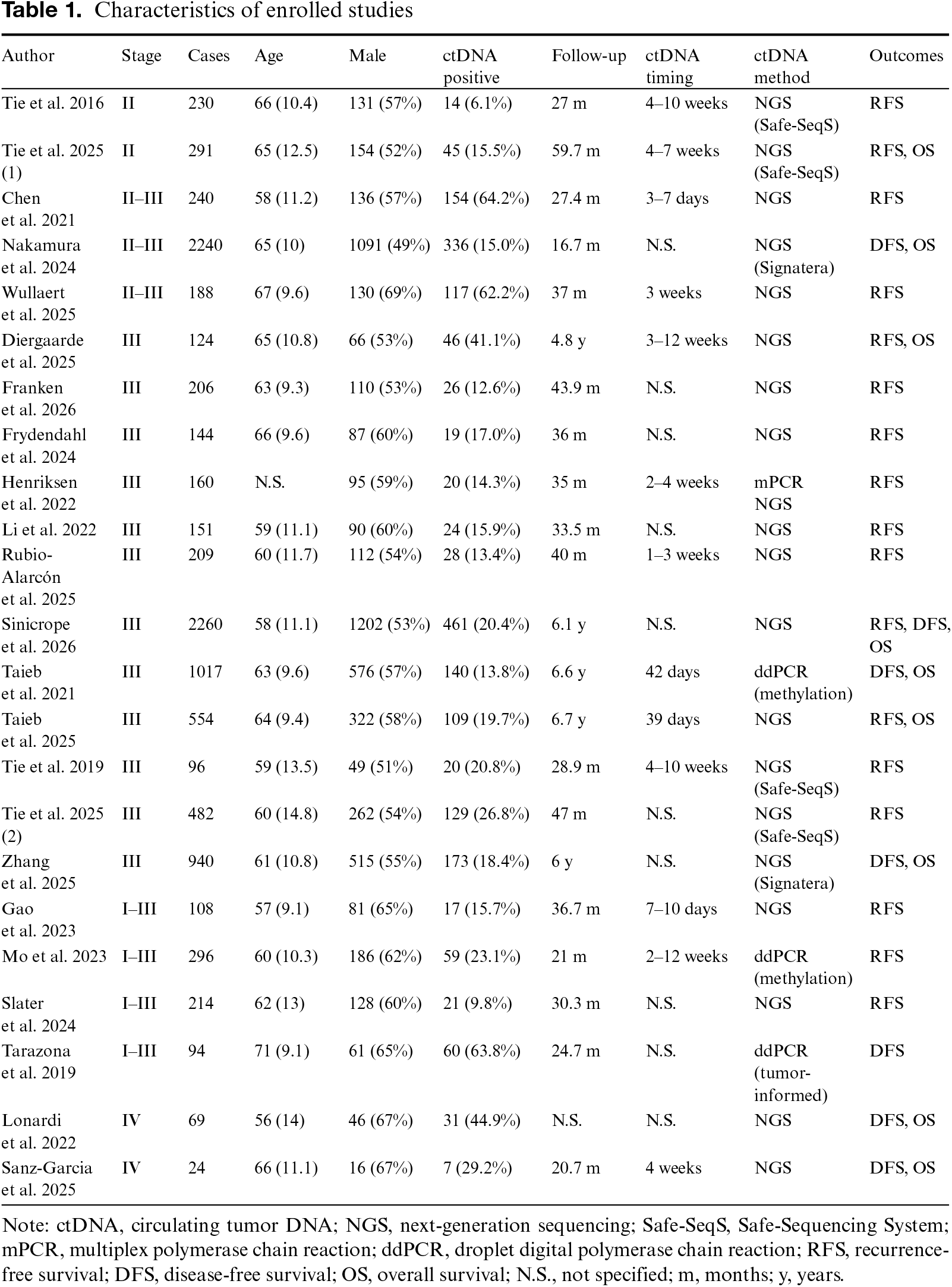
The study selection process is summarized in Fig. S1. A total of 901 records were identified through database searches. After the removal of 79 duplicates, 822 records remained for title and abstract screening, of which 752 were excluded. The full texts of the remaining articles were then assessed for eligibility, and 47 studies were further excluded. Ultimately, 23 studies met the inclusion criteria and were included in the final analysis. The baseline characteristics of the included studies are summarized in Table 1.13–35 A total of 10,217 patients with resected colon cancer were included, from studies published between 2016 and 2026. Of these, 12 studies focused on stage III disease, while two studies each specifically investigated stage II and stage IV disease, respectively. The remaining studies included mixed populations comprising stage I–III or stage II–III patients. Sample sizes ranged from 24 to 2,260 patients. The median or mean age ranged from 56 to 72 years, and the proportion of male patients varied between 49% and 69%. The proportion of postoperative ctDNA-positive patients showed substantial variability, ranging from 6.1% to 64.2%, reflecting differences in stage distribution, timing of sampling, and assay platforms. The timing of postoperative ctDNA assessment varied widely, ranging from 3–7 days to 3–12 weeks after surgery, with some studies not reporting the exact timing. Follow-up duration ranged from 16.7 months to over 6 years. Most studies used NGS-based platforms, including Safe-SeqS, Signatera, and multiplex PCR-NGS (mPCR-NGS).
Postsurgical ctDNA Status and RFS
Seventeen studies assessed the association between postoperative ctDNA status and RFS (Fig. 1). The pooled analysis showed a significantly increased risk of recurrence in ctDNA-positive patients (HR: 5.46, 95% CI: 3.79–7.85, p < 0.01), with substantial heterogeneity (I2 = 88%). Two studies focusing on stage II disease reported a pooled HR of 6.67 (95% CI: 0.94–46.01, p = 0.05, I2 = 92%). Ten studies focusing on stage III disease reported a pooled HR of 4.52 (95% CI: 2.90–7.05, p < 0.01, I2 = 90%). Four studies including stage I–III patients demonstrated a pooled HR of 7.48 (95% CI: 3.55–15.76, p < 0.001, I2 = 83%). Due to substantial heterogeneity, a sensitivity analysis was conducted in stage III patients. The pooled result remained statistically significant, with an HR of 4.86 (95% CI: 4.26–5.54, p < 0.001), and heterogeneity was eliminated (I2 = 0%) (Fig. S2).
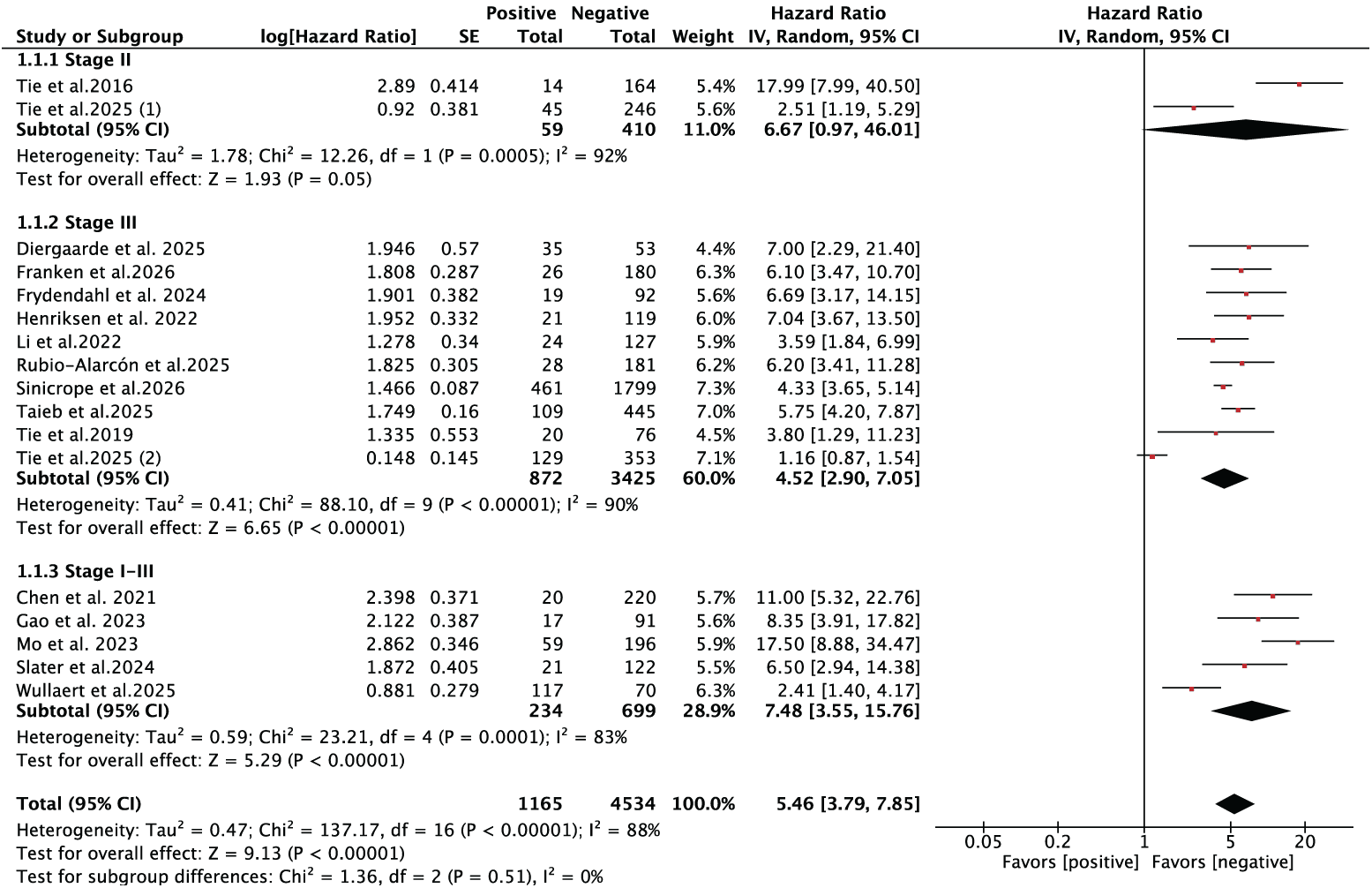
Figure 1. Meta-analysis of hazard ratios for postsurgical ctDNA status and RFS. CI, confidence interval; ctDNA, circulating tumor DNA; df, degrees of freedom; RFS, recurrence-free survival; SE, standard error.
Post-ACT ctDNA Status and RFS
Nine studies evaluated post-ACT ctDNA status and its association with RFS in stage I–III patients (Fig. 2). The pooled analysis demonstrated a significantly increased risk of recurrence in ctDNA-positive patients (HR: 11.21, 95% CI: 6.92–18.15, p < 0.01, I2 = 58%). The pooled HR of six studies focusing on stage III disease was 10.83 (95% CI: 5.38–21.82, p < 0.01, I2 = 72%). Three studies conducted on stage I–III patients reported a pooled HR of 13.04 (95% CI: 7.36–23.10, p < 0.001, I2 = 0%). Due to substantial heterogeneity in the stage III subgroup, a sensitivity analysis was performed. The association remained statistically significant (HR: 6.84, 95% CI: 4.58–10.21, p < 0.001), and heterogeneity was markedly reduced (I2 = 8%) (Fig. S3).
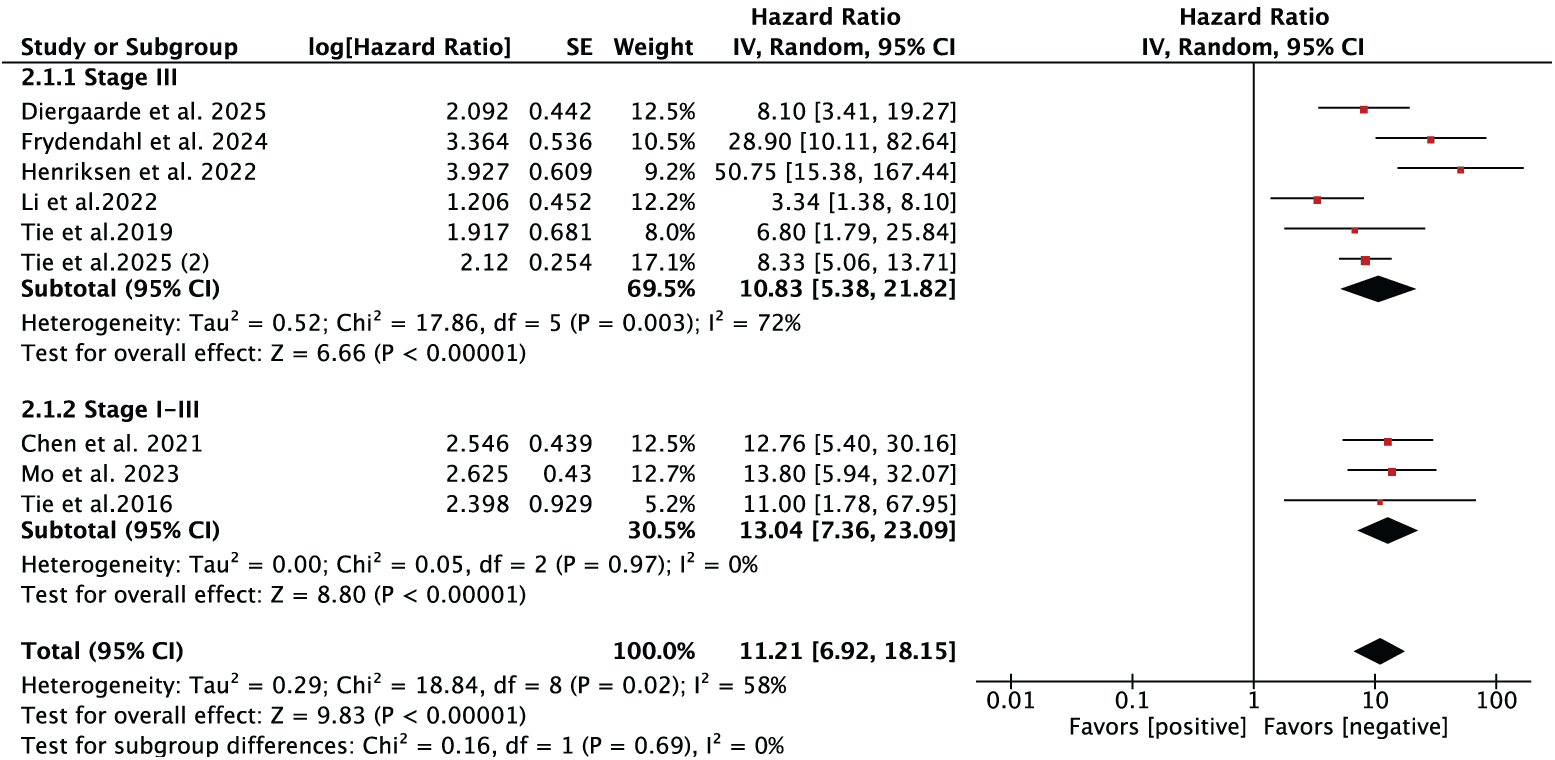
Figure 2. Meta-analysis of hazard ratios for post-chemotherapy ctDNA status and RFS. CI, confidence interval; ctDNA, circulating tumor DNA; df, degrees of freedom; RFS, recurrence-free survival; SE, standard error.
Postsurgical ctDNA Status and OS
Nine studies evaluated post-ACT ctDNA status and its association with OS in stage II–IV patients (Fig. 3). The pooled analysis demonstrated a significantly increased risk of mortality in ctDNA-positive patients (HR: 3.99, 95% CI: 2.43–6.55, p < 0.01), with substantial heterogeneity (I2 = 90%). Two studies focusing on stage IV disease yielded a pooled HR of 15.19 (95% CI: 3.41–67.72, p < 0.01, I2 = 0%), while two studies conducted on stage II–III patients reported a pooled HR of 6.33 (95% CI: 2.26–17.75, p < 0.001, I2 = 71%). Due to substantial heterogeneity in the stage III subgroup, a sensitivity analysis was performed. The association remained statistically significant (HR: 5.91, 95% CI: 4.72–7.40, p < 0.001), and heterogeneity was eliminated (I2 = 0%) (Fig. S4).
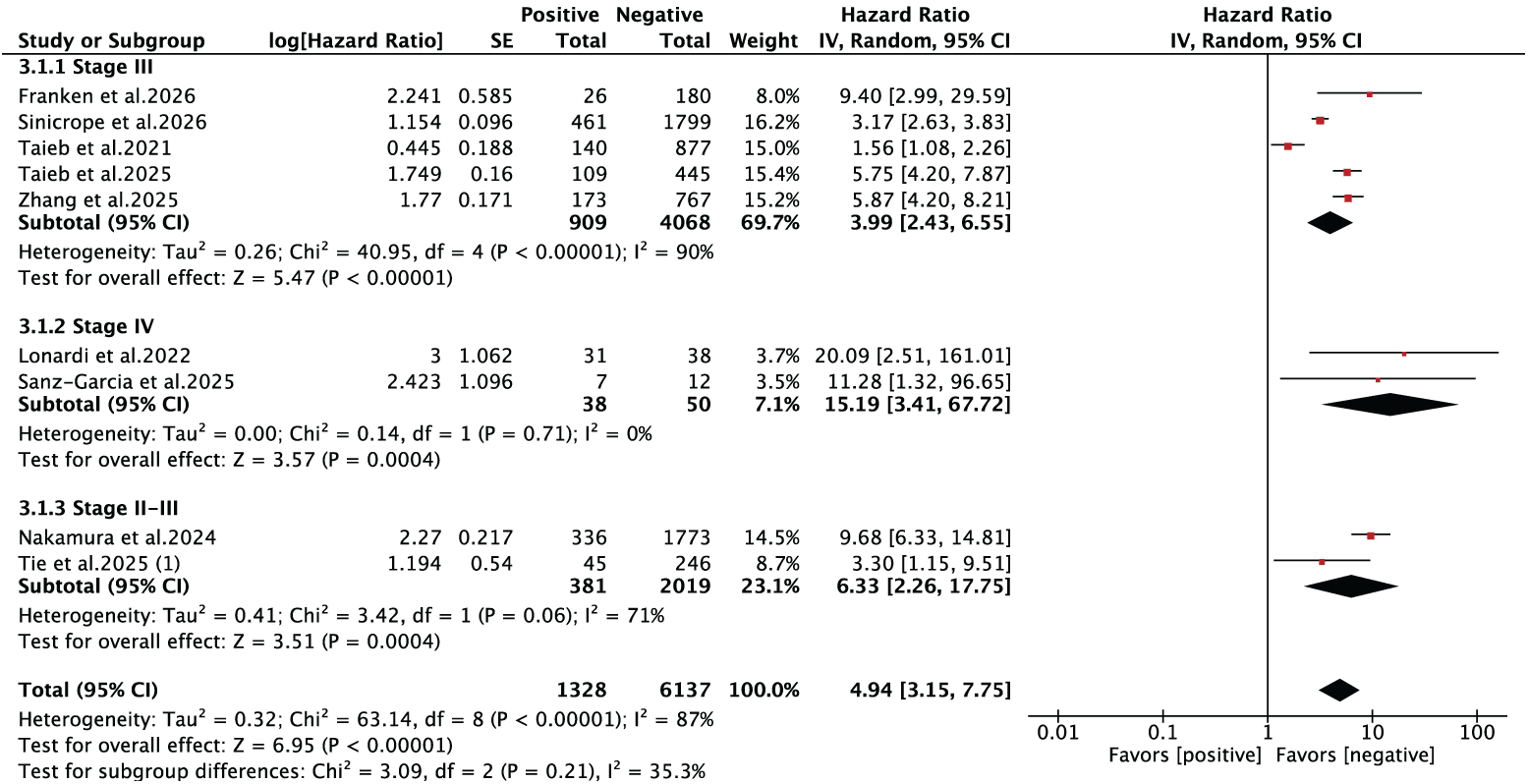
Figure 3. Meta-analysis of hazard ratios for postsurgical ctDNA status and OS. CI, confidence interval; ctDNA, circulating tumor DNA; df, degrees of freedom; OS, overall survival; SE, standard error.
Postsurgical ctDNA Status and DFS
Seven studies evaluated post-ACT ctDNA status and its association with DFS in stage I–IV patients (Fig. 4). The pooled analysis demonstrated a significantly increased risk of recurrence in ctDNA-positive patients (HR: 4.92, 95% CI: 2.60–9.32, p < 0.01, I2 = 83.5%). Due to substantial heterogeneity, a sensitivity analysis was performed. The association remained statistically significant (HR: 6.12, 95% CI: 4.78–7.82, p < 0.001), and heterogeneity was markedly reduced (I2 = 8%) (Fig. S5).
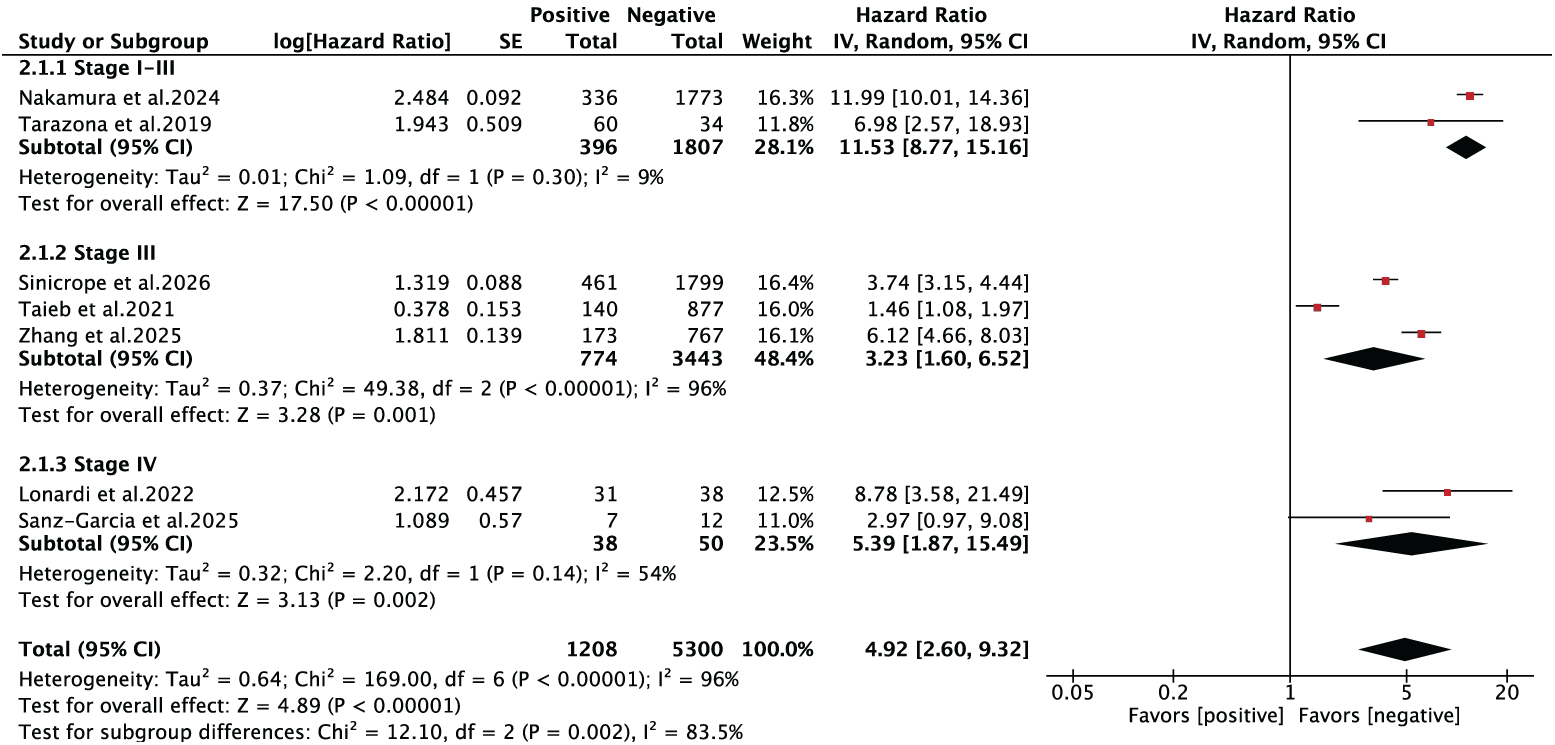
Figure 4. Meta-analysis of hazard ratios for postsurgical ctDNA status and DFS. CI, confidence interval; ctDNA, circulating tumor DNA; df, degrees of freedom; DFS, disease-free survival; SE, standard error.
Subgroup Analysis
Subgroup analysis was performed to explore potential sources of heterogeneity according to assay methodology among studies including only stage III disease (Fig. S6). For RFS, two PCR-based studies were included, showing a pooled HR of 5.97 (95% CI: 4.50–7.92; I2 = 0%). In comparison, NGS-based studies showed a pooled HR of 4.59 (95% CI: 3.97–5.32; I2 = 0%). The overall pooled HR was 4.86 (95% CI: 4.25–5.54; I2 = 0%). Although heterogeneity within each subgroup was absent, moderate heterogeneity was observed between subgroups (I2 = 61.6%). Subgroup analysis according to postoperative ctDNA testing timing was not feasible because six studies did not report sampling time, while the remaining seven studies used different postoperative time points.
Risk of Bias Assessment
Funnel plots for RFS, DFS, and OS showed no significant asymmetry, suggesting a low likelihood of substantial publication bias (Figs. S7–S10). Methodological quality was assessed using the NOS (Table S2). Overall, the included observational studies were of high quality, with adequate cohort selection, comparability, and outcome assessment. The overall risk of bias was considered acceptable for inclusion in the quantitative synthesis.
Discussion
In this comprehensive meta-analysis of patients with resected colon cancer, ctDNA positivity after curative-intent surgery and ACT was strongly and consistently associated with inferior survival outcomes. Postoperative ctDNA positivity was significantly associated with worse RFS, DFS, and OS. Similarly, persistent ctDNA positivity following ACT was associated with a marked increase in the risk of recurrence. Collectively, these findings support ctDNA as a robust biomarker of MRD in colon cancer.36,37 Despite complete macroscopic tumor resection, a substantial proportion of patients with stage II–III colon cancer experience recurrence, likely reflecting undetected residual disease. Traditional clinicopathologic risk factors offer limited individualized risk discrimination, leading to potential overtreatment of low-risk patients and undertreatment of high-risk individuals.38 Our pooled analysis demonstrated more than a fivefold increased risk of recurrence among postoperative ctDNA-positive patients, underscoring the strong prognostic stratification afforded by molecular detection of residual disease.
ctDNA is released into the circulation through apoptosis, necrosis, and active tumor cell shedding. Following complete tumor resection, circulating ctDNA levels are expected to decline rapidly; therefore, persistent detection likely reflects residual viable tumor clones with proliferative potential and risk of clinical relapse.39 In this setting, ctDNA provides a real-time molecular measure of tumor presence that complements pathologic staging and radiologic surveillance.40 Although ctDNA detection rates varied across studies, likely due to differences in stage distribution, sampling timing, and assay platforms, most employed NGS-based methods, including tumor-informed approaches such as Signatera and Safe-Sequencing System (Safe-SeqS), as well as mPCR–NGS assays. Despite methodological heterogeneity, the prognostic effect was consistent, supporting ctDNA as a biologically valid marker of MRD rather than a platform-specific artifact.
Postoperative ctDNA positivity was consistently associated with adverse outcomes across disease stages. The association with recurrence remained significant in both stage II and stage III disease. In stage III, the pooled HR remained robust after sensitivity analyses addressing heterogeneity, supporting the stability of the finding. Although the stage II subgroup included fewer studies and showed wider CIs, the magnitude of the effect was similarly elevated, indicating that ctDNA positivity is a biologically significant marker of persistent tumor presence irrespective of stage. Moreover, postoperative ctDNA positivity was associated with a nearly fourfold increased risk of mortality, with particularly pronounced effects observed in stage IV disease.
In contrast, the prognostic impact of post-ACT ctDNA positivity was even more marked. Across nine studies, detectable ctDNA after chemotherapy was associated with an approximately elevenfold increased risk of recurrence. This strong association indicates that post-ACT ctDNA positivity is a robust marker of poor prognosis.41 However, interpretation of this finding requires caution because ACT duration and intensity varied across studies, and reporting of treatment completion, adherence, and the timing of ctDNA assessment was inconsistent. These limitations precluded stratified analyses and limited our ability to distinguish prognostic significance from potential predictive implications.
Several limitations merit consideration. Substantial heterogeneity was observed in multiple pooled analyses, likely due to differences in stage distribution, assay methodologies, and timing of blood collection. Although sensitivity analyses reduced heterogeneity in key subgroups, residual variability remained. Moreover, most included studies were observational, introducing potential confounding despite multivariable adjustment. Variation in postoperative sampling time points may also have influenced detection rates due to perioperative ctDNA release. Additionally, the absence of individual patient-level data precluded more granular analyses based on molecular subtypes (e.g., RAS or BRAF status) or specific treatment regimens. Finally, although ctDNA positivity demonstrates strong prognostic value, optimal management of ctDNA-positive patients remains undefined. Ongoing prospective randomized trials are needed to determine whether early therapeutic intervention based solely on molecular detection can improve long-term survival.
Conclusion
This meta-analysis demonstrates that ctDNA positivity following curative-intent surgery and ACT is strongly associated with inferior survival outcomes in resected colon cancer. Postoperative and post-ACT ctDNA detection identifies patients at markedly increased risk of recurrence and mortality, supporting ctDNA as a robust biomarker of MRD. Despite methodological heterogeneity, the consistency of findings highlights the clinical relevance of ctDNA-guided risk stratification. Prospective randomized trials are needed to determine whether ctDNA-directed treatment strategies can improve survival while avoiding overtreatment.
Acknowledgment
None.
Funding statement
None.
Ethics Approval Statement
Ethical approval was waived for this study because it was based on secondary analysis of data from previously published studies and did not involve direct patient participation or new data collection.
Patient Consent Statement
Patient consent was waived because no identifiable patient information was collected or analyzed in this study.
Conflict of Interest
The authors declare that they have no competing interests.
Data Sharing Statement
The raw data underlying this study are available from the corresponding author upon reasonable request via email at wangen.cn@gmail.com.
Generative AI Declaration
During the preparation of this manuscript, the authors used ChatGPT to assist with proofreading. All content was subsequently reviewed and edited by the authors, who assume full responsibility for the accuracy and integrity of the published work.
Authors’ Contributions
E.W., M.S., and D.N. contributed to the study design and drafting of the manuscript. Y.F. and T.T. worked on data interpretation and manuscript revision. All authors have read and approved the final manuscript and agree with its content and data.
Supplemental Information
Supplemental information for this article can be found online at https://sup.jclinque.com/api/articles/113/download-suppl.
References
[1] Siegel RL, Miller KD, Wagle NS, Jemal A. Cancer statistics, 2023. CA: A Cancer J Clin. January 01, 2023;73(1):17–48. doi:10.3322/caac.21763.
[2] Wu S, Zhang Y, Lin Z, Wei M. Global burden of colorectal cancer in 2022 and projections to 2050: incidence and mortality estimates from GLOBOCAN. BMC Cancer. November 14, 2025;25(1):1770. doi:10.1186/s12885-025-15138-0.
[3] Jácome AA, Johnson B. Minimal residual disease in colorectal cancer: are we finding the needle in a haystack?. Cells. April 1, 2023;12(7):1068. doi:10.3390/cells12071068.
[4] Luo D, Yang Y, Shan Z, et al. Clinicopathological features of stage I–III colorectal cancer recurrence over 5 years after radical surgery without receiving neoadjuvant therapy: evidence from a large sample study. Front Surg. 2021;8:666400. doi:10.3389/fsurg.2021.666400.
[5] Ma D, Gao X, Wang L, Yin H, Feng L, Zhu Y. Circulating tumor DNA for MRD detection in colorectal cancer: recent advances and clinical implications. Biomark Res. June 23, 2025;13(1):89. doi:10.1186/s40364-025-00796-w.
[6] Kalil JA, Krzywon L, Petrillo SK, et al. Feasibility of ctDNA in detecting minimal residual disease and predicting recurrence for colorectal cancer liver metastases. Front Oncol. 2024;14:1418696. doi:10.3389/fonc.2024.1418696.
[7] Tie J, Cohen JD, Lahouel K, et al. Circulating tumor DNA analysis guiding adjuvant therapy in stage II colon cancer. N Engl J Med. June 16, 2022;386(24):2261–2272. doi:10.1056/NEJMoa2200075.
[8] Aliyeva T, Siddiqui H, Natche J, Al-Wraikat YA, Hossain FM, El-Amri I. Prognostic value of circulating tumor DNA for recurrence risk in stage III colorectal cancer: a systematic review and meta-analysis. Clin Colorectal Cancer. October 27, 2025. doi:10.1016/j.clcc.2025.10.004.
[9] Page MJ, McKenzie JE, Bossuyt PM, et al. The PRISMA, 2020 statement: an updated guideline for reporting systematic reviews. BMJ. 2021;372:n71. doi:10.1136/bmj.n71.
[10] University Hospital Medical Information Network. Prognostic significance of postoperative and post-adjuvant circulating tumor DNA in resected colon cancer: a systematic review and meta-analysis. Published 2026, Accessed March 15 2026. https://center6.umin.ac.jp/cgi-open-bin/ctr_e/ctr_view.cgi?recptno=R000069484.
[11] Stang A. Critical evaluation of the Newcastle-Ottawa scale for the assessment of the quality of nonrandomized studies in meta-analyses. Eur J Epidemiol. September 2010;25(9):603–605. doi:10.1007/s10654-010-9491-z.
[12] Sterne JAC, Savović J, Page MJ, et al. RoB 2: a revised tool for assessing risk of bias in randomised trials. BMJ. 2019;366:l4898. doi:10.1136/bmj.l4898.
[13] Tie J, Wang Y, Tomasetti C, et al. Circulating tumor DNA analysis detects minimal residual disease and predicts recurrence in patients with stage II colon cancer. Sci Transl Med. July 6, 2016;8(346):346ra92. doi:10.1126/scitranslmed.aaf6219.
[14] Tie J, Wang Y, Lo SN, et al. Circulating tumor DNA analysis guiding adjuvant therapy in stage II colon cancer: 5-year outcomes of the randomized DYNAMIC trial. Nat Med. May 2025;31(5):1509–1518. doi:10.1038/s41591-025-03579-w.
[15] Chen G, Peng J, Xiao Q, et al. Postoperative circulating tumor DNA as markers of recurrence risk in stages II to III colorectal cancer. J Hematol Oncol. May 17, 2021;14(1):80. doi:10.1186/s13045-021-01089-z.
[16] Nakamura Y, Watanabe J, Akazawa N, et al. ctDNA-based molecular residual disease and survival in resectable colorectal cancer. Nat Med. November 2024;30(11):3272–3283. doi:10.1038/s41591-024-03254-6.
[17] Wullaert L, Jansen M, Kraan J, et al. Circulating tumour cells & circulating tumour DNA in patients with resectable colorectal liver metastases (MIRACLE): a prospective, observational biomarker study. EClinicalMedicine. September 2025;87(5):103406. doi:10.1016/j.eclinm.2025.103406.
[18] Diergaarde B, Young G, Hall DW, et al. Circulating tumor DNA as a marker of recurrence risk in stage III colorectal cancer: the α-CORRECT study. J Surg Oncol. July 01, 2025;132(1):175–186. doi:10.1002/jso.27989.
[19] Franken IA, Heilijgers F, Bakker ME, et al. Added value of tumor-stroma ratio to postsurgery circulating tumor DNA and pTN stage in risk stratification of patients with stage III colon cancer treated with adjuvant chemotherapy. ESMO Open. January 2026;11(1):105935. doi:10.1016/j.esmoop.2025.105935.
[20] Frydendahl A, Nors J, Rasmussen MH, et al. Detection of circulating tumor DNA by tumor-informed whole-genome sequencing enables prediction of recurrence in stage III colorectal cancer patients. Eur J Cancer. November 01, 2024;211(6):114314. doi:10.1016/j.ejca.2024.114314.
[21] Henriksen TV, Tarazona N, Frydendahl A, et al. Circulating tumor DNA in stage III colorectal cancer, beyond minimal residual disease detection, toward assessment of adjuvant therapy efficacy and clinical behavior of recurrences. Clin Cancer Res. February 1, 2022;28(3):507–517. doi:10.1158/1078-0432.Ccr-21-2404.
[22] Li Y, Mo S, Zhang L, et al. Postoperative circulating tumor DNA combined with consensus molecular subtypes can better predict outcomes in stage III colon cancers: a prospective cohort study. Eur J Cancer. July 2022;169:198–209. doi:10.1016/j.ejca.2022.04.010.
[23] Rubio-Alarcón C, Georgiadis A, Franken IA, et al. Circulating tumour DNA in patients with stage III colon cancer: multicentre prospective PROVENC3 study. Br J Surg. December 24, 2025;113(1):1177. doi:10.1093/bjs/znaf281.
[24] Sinicrope FA, Segovia D, Sharma N, et al. Tissue-free circulating tumor DNA assay and patient outcome in a phase III trial of FOLFOX-based adjuvant chemotherapy (Alliance N0147). J Clin Oncol. January 30, 2026:Jco2502086. doi:10.1200/jco-25-02086.
[25] Taieb J, Taly V, Henriques J, et al. Prognostic value and relation with adjuvant treatment duration of ctDNA in stage III colon cancer: a post hoc analysis of the PRODIGE-GERCOR IDEA-France trial. Clin Cancer Res. October 15, 2021;27(20):5638–5646. doi:10.1158/1078-0432.Ccr-21-0271.
[26] Taieb J, Souglakos J, Boukovinas I, et al. Combined analyses of circulating tumor DNA and immunoscore in patients with stage III colon cancer: a post hoc analysis of the PRODIGE-GERCOR IDEA-France/HORG-IDEA-Greece trials. J Clin Oncol. May 2025;43(13):1564–1577. doi:10.1200/jco.24.00648.
[27] Tie J, Cohen JD, Wang Y, et al. Circulating tumor DNA analyses as markers of recurrence risk and benefit of adjuvant therapy for stage III colon cancer. JAMA Oncol. December 1, 2019;5(12):1710–1717. doi:10.1001/jamaoncol.2019.3616.
[28] Tie J, Wang Y, Loree JM, et al. Circulating tumor DNA-guided adjuvant therapy in locally advanced colon cancer: the randomized phase 2/3 DYNAMIC-III trial. Nat Med. December 2025;31(12):4291–4300. doi:10.1038/s41591-025-04030-w.
[29] Zhang GQ, Meyerhardt JA, Shi Q, et al. Predictive role of circulating tumor DNA in stage III colon cancer treated with celecoxib: a post hoc analysis of the CALGB (Alliance)/SWOG 80702 phase 3 randomized clinical trial. JAMA Oncol. December 4, 2025. doi:10.1001/jamaoncol.2025.5144.
[30] Gao Z, Huang D, Chen H, et al. Development and validation of postoperative circulating tumor DNA combined with clinicopathological risk factors for recurrence prediction in patients with stage I–III colorectal cancer. J Transl Med. January 30, 2023;21(1):63. doi:10.1186/s12967-023-03884-3.
[31] Mo S, Ye L, Wang D, et al. Early detection of molecular residual disease and risk stratification for stage I to III colorectal cancer via circulating tumor DNA methylation. JAMA Oncol. June 1, 2023;9(6):770–778. doi:10.1001/jamaoncol.2023.0425.
[32] Slater S, Bryant A, Aresu M, et al. Tissue-free liquid biopsies combining genomic and methylation signals for minimal residual disease detection in patients with early colorectal cancer from the UK TRACC part B study. Clin Cancer Res. August 15, 2024;30(16):3459–3469. doi:10.1158/1078-0432.Ccr-24-0226.
[33] Tarazona N, Gimeno-Valiente F, Gambardella V, et al. Targeted next-generation sequencing of circulating-tumor DNA for tracking minimal residual disease in localized colon cancer. Ann Oncol. November 1, 2019;30(11):1804–1812. doi:10.1093/annonc/mdz390.
[34] Lonardi S, Nimeiri H, Xu C, et al. Comprehensive genomic profiling (CGP)-informed personalized molecular residual disease (MRD) detection: an exploratory analysis from the PREDATOR study of metastatic colorectal cancer (mCRC) patients undergoing surgical resection. Int J Mol Sci. September 29, 2022;23(19):11529. doi:10.3390/ijms231911529.
[35] Sanz-Garcia E, Peinado P, Peláez A, et al. Circulating tumor DNA using a plasma-only assay predicts survival in patients with oligometastatic colorectal cancer after definitive therapy. J Gastrointest Oncol. April 30, 2025;16(2):580–590. doi:10.21037/jgo-24-819.
[36] Khan AU, Jasim YH, Shahid K, Saidov J, Atamuratova Z, Urazbaeva D. Circulating tumor DNA as a predictive biomarker for colorectal cancer postsurgical recurrence: a systematic review and meta-analysis. Clin Transl Oncol. October 17, 2025. doi:10.1007/s12094-025-04073-y.
[37] Negro S, Pulvirenti A, Trento C, et al. Circulating tumor DNA as a real-time biomarker for minimal residual disease and recurrence prediction in stage II colorectal cancer: a systematic review and meta-analysis. Int J Molec Sci. 2025;26(6):2486. doi:10.3390/ijms26062486.
[38] Abidoye O, Ahn DH, Borad MJ, et al. Circulating tumor DNA testing for minimal residual disease and its application in colorectal cancer. Cells. January 22, 2025;14(3):161. doi:10.3390/cells14030161.
[39] Chidharla A, Rapoport E, Agarwal K, et al. Circulating tumor DNA as a minimal residual disease assessment and recurrence risk in patients undergoing curative-intent resection with or without adjuvant chemotherapy in colorectal cancer: a systematic review and meta-analysis. Int J Mol Sci. June 16, 2023;24(12):10230. doi:10.3390/ijms241210230.
[40] Zhou Q, Chen X, Zeng B, et al. Circulating tumor DNA as a biomarker of prognosis prediction in colorectal cancer: a systematic review and meta-analysis. J Nat Cancer Cent. April 01, 2025;5(2):167–178. doi:10.1016/j.jncc.2024.05.007.
[41] Masfarré L, Vidal J, Fernández-Rodríguez C, Montagut C. ctDNA to guide adjuvant therapy in localized colorectal cancer (CRC). Cancers (Basel). June 8, 2021;13(12):2869. doi:10.3390/cancers13122869.
 |
Copyright: © 2026 Wang et al. This work is licensed under a Creative Commons Attribution 4.0 International License, which permits unrestricted use, distribution, and reproduction in any medium, provided the original work is properly cited. |