| Journal of Clinical Question. 2025; 2(2): e64 https://doi.org/10.69854/jcq.2025.0012 Advance access publication date 13 April 2025 |
 |
Original Research
Nutritional Status and Actual Dietary Practice of Lung and Gastrointestinal Cancer Patients at Nghe An Oncology Hospital: A Cross-Sectional Study
1General Medicine, Vinh Medical University, Nghe An, Vietnam.
2Department of Public Health, Vinh Medical University, Nghe An, Vietnam.
3Public Health, Hanoi University of Public Health, Hanoi, Vietnam.
4General Medicine, Hanoi Medical University, Hanoi, Vietnam.
*Corresponding Author: e-mail: trankimquypdp@gmail.com
Submitted: March 03, 2025 Accepted: April 12, 2025
Clinical Question Box
What is the nutritional status of patients with lung cancer and gastrointestinal cancer in Vietnam?
Patients with lung and gastrointestinal cancers at Nghe An Oncology Hospital exhibited a high prevalence of malnutrition, with 72% classified as malnourished—52% severely and 20% moderately—based on the Patient-Generated Subjective Global Assessment. Their dietary intake fell significantly below recommended levels, with their median energy intake being only 72% of the Vietnamese Recommended Nutrient Intake. Deficiencies concerning protein, several vitamins, and essential minerals such as calcium and iron were noted.
Abstract
Introduction: Malnutrition remains a prevalent and critical issue among hospitalized cancer patients, particularly those with lung and gastrointestinal (GI) cancers. In low- and middle-income countries such as Vietnam, cancer-related malnutrition may be further aggravated by limited access to nutritional support services. However, data on the nutritional status of Vietnamese cancer patients is limited. This study aimed to assess lung and GI cancer patients’ nutritional status and actual dietary intake at Nghe An Oncology Hospital. Methods: A cross-sectional descriptive study was conducted from February to June 2023. Adult inpatients with confirmed lung or GI cancer were randomly selected. Nutritional status was evaluated using the Patient-Generated Subjective Global Assessment (PG-SGA), categorizing patients as well-nourished (A), moderately malnourished (B), or severely malnourished (C). Dietary intake was assessed via a 24-hour dietary recall and analyzed using the Vietnamese food composition tables. Nutrient intake was compared with the Vietnamese Recommended Nutrient Intake (RNI) standards. Results: Among 100 patients, 72% were classified as malnourished, with 52% falling into PG-SGA category C and 20% in category B. Nutritional status showed no significant differences based on sex, cancer type, or duration since diagnosis. The median daily energy intake was 1,305 kcal, accounting for 72% of the RNI. Despite a lower absolute intake, females achieved a higher percentage of their RNI than males. Intake of protein, carbohydrates, and lipids met 80%, 70%, and 90% of the RNI, respectively. Intakes of vitamins A and C exceeded RNI, particularly among male patients, while vitamins B1, B2, and niacin were consumed below recommended levels. Mineral intake was also insufficient: calcium met 65% of RNI, iron 48%, and magnesium 80%. Conclusion: The study revealed a high prevalence of malnutrition among hospitalized cancer patients, along with substantial gaps between actual dietary intake and nutritional requirements.
Keywords: Nutritional status, diet, neoplasms, malnutrition, Vietnam.
Introduction
Malnutrition is a common and serious clinical issue among hospitalized patients, particularly those with chronic and severe illnesses.1 Among them, cancer patients—especially those with lung and gastrointestinal (GI) malignancies—face a higher risk due to both the disease itself and its associated treatments.2,3 The prevalence of malnutrition in lung cancer patients has been reported at 45%, varying based on treatment type and disease stage.4 In GI cancer patients, malnutrition rates vary widely, with some studies indicating prevalence as high as 61%.5 In low- and middle-income countries, this prevalence may be even higher due to limited access to nutritional support and cancer care services.6 Malnutrition negatively impacts quality of life, weakens immune response, reduces tolerance to anticancer drugs, and lowers survival rates.7 It also increases postsurgical complications, prolongs hospital stays, and raises healthcare costs.8 In severe cases, malnutrition can lead to cachexia, a condition marked by significant loss of lean muscle mass, muscle wasting, and impaired immune, physical, and mental functions. Cancer cachexia is further associated with poor treatment response, a higher risk of side effects, and worsened outcomes and quality of life.9
The mechanisms underlying cancer-related malnutrition are multifactorial. Tumor-induced metabolic changes, systemic inflammation, and anorexia contribute to an imbalance between energy intake and expenditure.10 In GI cancer, malabsorption, obstruction, and surgical resections can directly impair nutrient absorption and intake.11,12 In lung cancer, respiratory distress, fatigue, and the side effects of chemotherapy or radiotherapy can significantly reduce appetite and food consumption.13 Additionally, cancer cachexia—a complex syndrome characterized by the progressive loss of skeletal muscle mass—further deteriorates nutritional status, complicating treatment outcomes.14 A healthy diet rich in antioxidants and phytochemicals is crucial in preventing and managing chronic diseases such as hypertension, diabetes, cardiovascular disease, cancer, and metabolic syndrome.15 Dietary components like vitamins, polyphenols, and bioactive plant compounds help reduce oxidative stress and inflammation, which are key contributors to the development and progression of these conditions.16 In cancer patients, where metabolic disturbances and treatment-related side effects can impair nutritional status, early and accurate nutritional assessment is essential. It helps guide timely interventions that support treatment tolerance, maintain physical function, and improve overall quality of life. 2,17
There is limited evidence on the nutritional status and dietary practices of cancer patients in Vietnam, particularly among those undergoing chemotherapy. This study addresses that gap by focusing on patients with lung and GI cancers treated at tertiary oncology hospitals. By evaluating their nutritional status and actual dietary intake, the study aims to identify the prevalence and determinants of malnutrition in this population. The findings are intended to inform clinical interventions, enhance supportive care strategies, and ultimately improve treatment outcomes in Vietnam and other countries with comparable healthcare systems.
Methods
Study Design and Setting
This cross-sectional descriptive study employed a quantitative approach. It was conducted from February to June 2023 at Nghe An Oncology Hospital, a tertiary referral center for cancer care in Vietnam’s North Central region. The study targeted adult patients diagnosed with either lung or GI cancer who were undergoing treatment at the hospital during the study period. Convenience sampling was used to recruit participants who met the inclusion criteria and provided written informed consent. Data were collected through structured face-to-face interviews using a pretested questionnaire designed to assess nutritional status and actual dietary practices. The hospital’s Institutional Review Board approved the study protocol. All procedures complied with the ethical standards outlined in the Declaration of Helsinki (revised in Brazil, 2013), and participant confidentiality and anonymity were strictly maintained.
Sample Size
The sample size was calculated in advance using the standard population proportion estimation method. Based on a previous study reporting a 58.2% prevalence of malnutrition among cancer patients undergoing chemotherapy, we used p = 0.582 as the estimated proportion.18 With a 95% confidence level and a 10% margin of error, the minimum required sample size was 94. To improve reliability and account for potential incomplete responses, 100 patients were ultimately enrolled.
Participants
A total of 100 adult patients diagnosed with either lung cancer or GI cancer and admitted to the Internal Medicine Departments II and III were recruited. Patients were selected using simple random sampling by relying on the hospital’s inpatient registry.
Inclusion and Exclusion Criteria
Patients were eligible if they met the following criteria: (1) a confirmed diagnosis of lung cancer or GI cancer, (2) aged 18 years or older, (3) undergoing inpatient treatment, and (4) provided informed consent to be a part of the present study. Patients were excluded if they had a mental disorder, were unconscious, or were unable to comprehend and respond to the survey questions.
Data Collection Tools and Procedures
Data were collected through structured interviews, clinical observations, and patient medical records. Trained nutritionists conducted face-to-face interviews using the PG-SGA tool to assess nutritional status.19 The PG-SGA classifies patients into three categories: well-nourished (A), moderately malnourished or at risk (B), and severely malnourished (C), based on weight loss history, dietary intake, symptoms affecting food consumption, and functional capacity.20
Dietary intake was assessed using the 24-hour dietary recall method, in which participants reported all foods and beverages consumed in the previous 24 hours. The data were then entered into the Eiyokun dietary analysis software, which applies the Vietnamese Food Composition Table to estimate energy intake, macronutrients, and micronutrients. Nutrient intake was evaluated against the Vietnamese Recommended Nutrient Intake (RNI) standards.21
Data Analysis
Data were entered and cleaned using EpiData version 3.1 and analyzed with SPSS version 22.0. Descriptive statistics, including frequency, percentage, median, and interquartile range (IQR), were used to summarize demographic characteristics, PG-SGA classifications, and dietary intake. Chi-square tests and independent t-tests were conducted to examine differences in nutritional parameters by gender. A two-tailed p-value of less than 0.05 was considered statistically significant.
Results
Demographic and Clinical Characteristics
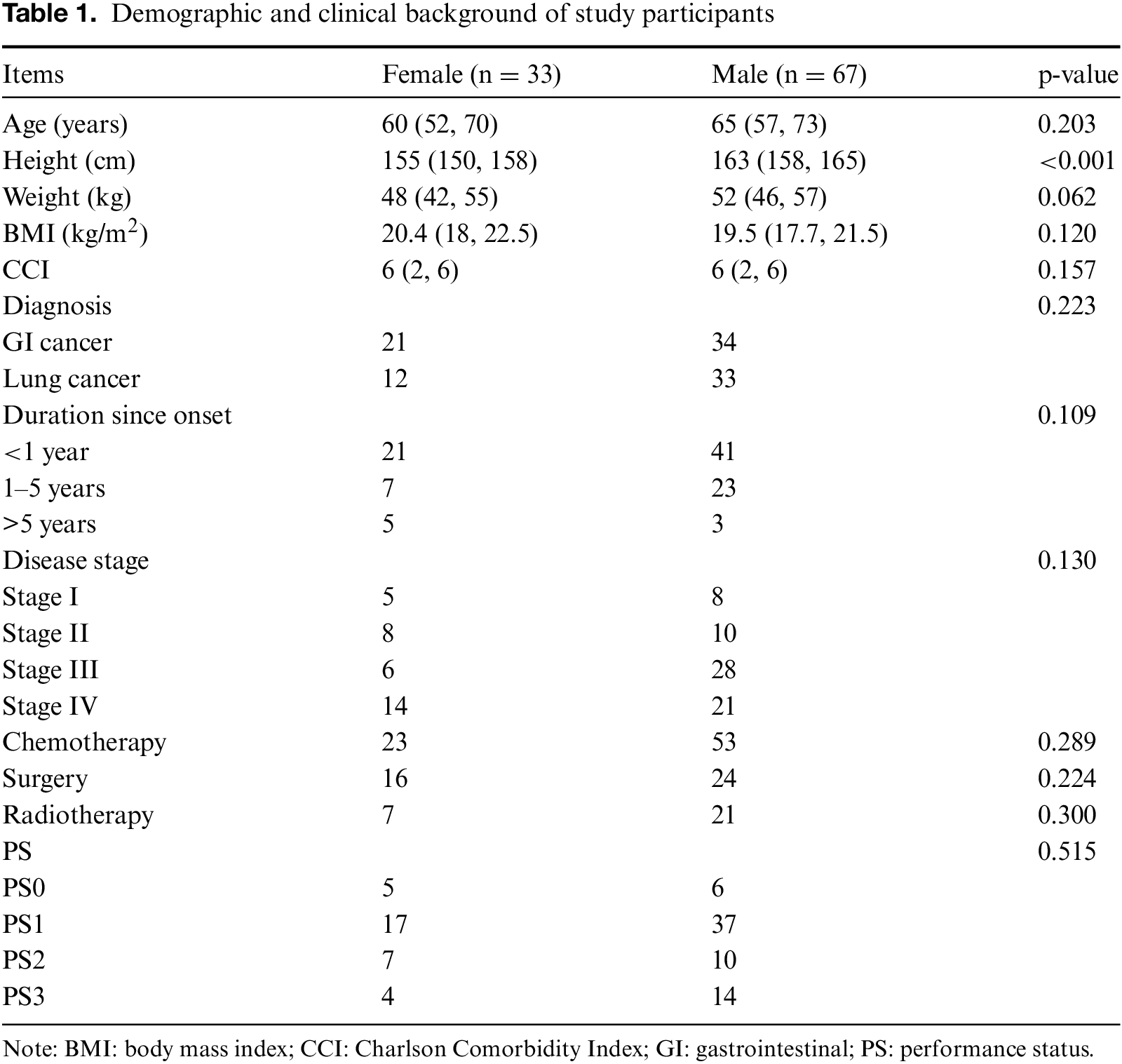
Of the 100 patients, 67% were male and 33% female (Table 1). The majority (90%) resided in rural or mountainous areas. The median age was 64 years (IQR: 55–71), with males generally older than females. While females had lower average height and body weight, there was no statistically significant difference in body mass index (BMI) between the sexes. The median BMI was 20.4 kg/m2 (IQR: 18.0–22.5) for males and 19.5 kg/m2 (IQR: 17.7–21.5) for females. No significant sex-based differences were observed in the PG-SGA category, diagnosis, disease duration, cancer stage, or performance status. The study population comprised patients with lung cancer (45%) and GI cancer (55%). Approximately 62% had been diagnosed within the past year. Advanced-stage cancers (stage 3 or 4) accounted for 69% of cases, indicating a high prevalence of late-stage diagnosis. Treatment modalities included chemotherapy (for 76% of the patients), surgery (for 40% of the patients), and radiotherapy (for 28% of the patients).
Nutritional Status by PG-SGA
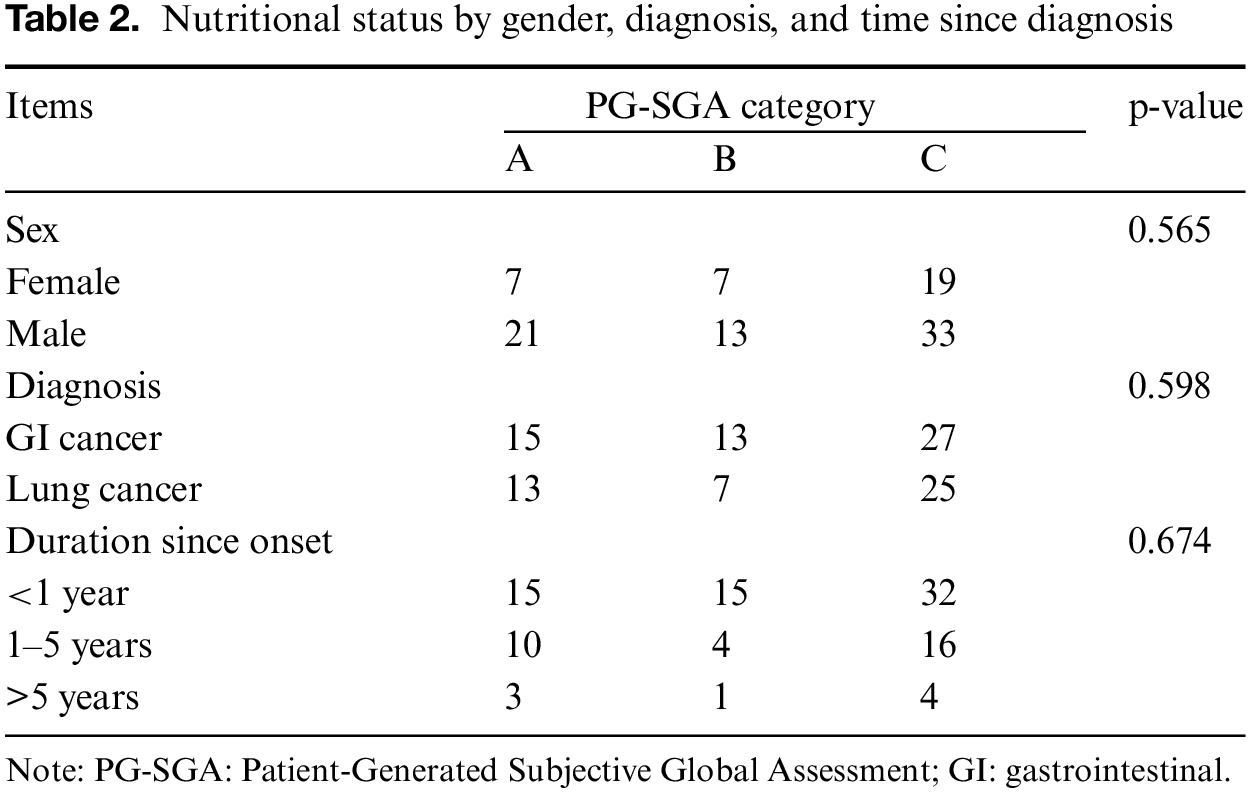
The nutritional status assessed by PG-SGA is presented in Table 2. Based on the PG-SGA classification, 72% of the patients were malnourished, with 20% classified as category B and 52% as category C. Only 28% were categorized as well-nourished (PG-SGA A). There were no statistically significant differences in nutritional status between male and female patients (p = 0.565) or between patients with GI or lung cancer (p = 0.598). Similarly, no significant difference was observed based on the time since diagnosis (p = 0.674).
Macronutrient Dietary Intake
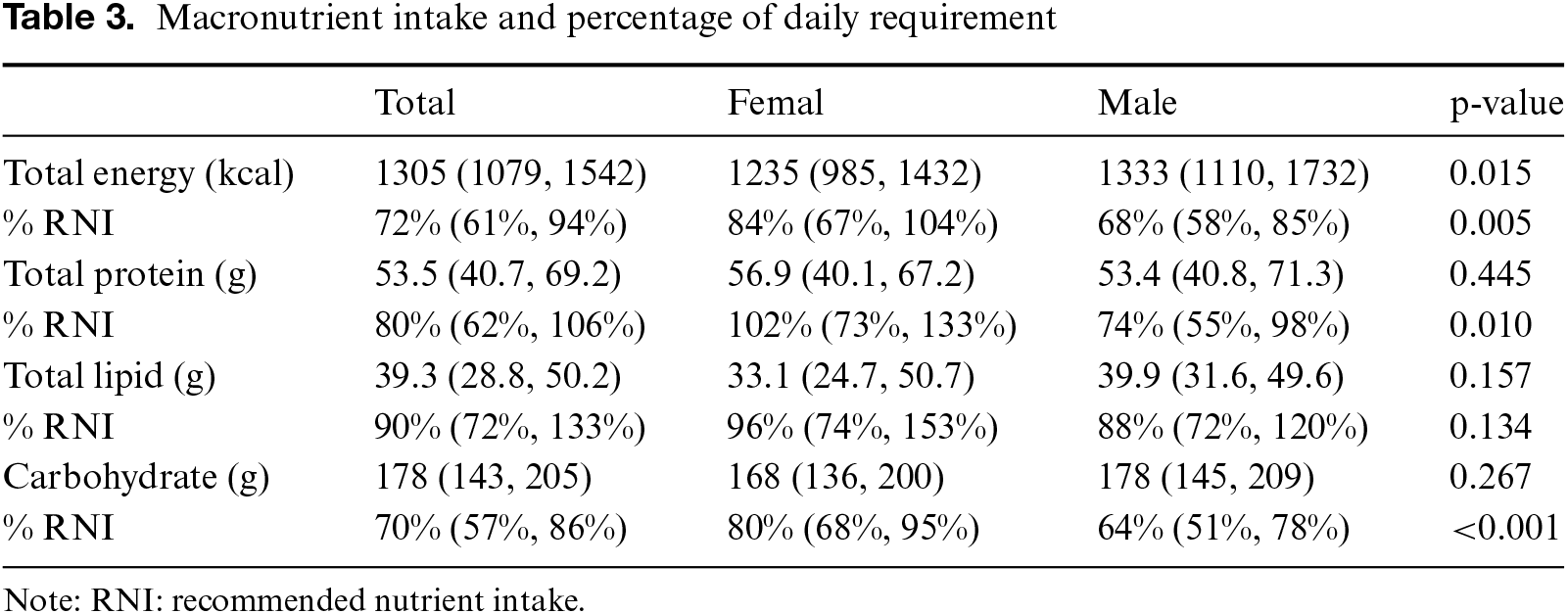
The patients’ daily energy intake is presented in Table 3. The median calorie intake was 1,305 kcal (IQR: 1079–1542), representing a median of 72% of the RNI. Although total energy intake was lower in females than males, the percentage of RNI achieved was significantly higher in females (84% vs. 68%, p = 0.005). The median protein intake was 53.5 g/day (IQR: 41–69), corresponding to 80% of the RNI. Lipid intake was 39.3 g/day (IQR: 29–50), with a median of 90% of the RNI. The median carbohydrate intake was 178 g/day (IQR: 143–205), reaching 70% of the RNI. Notably, the percentage of RNI achieved for total protein and carbohydrates was higher in females than in males (102% vs. 75% for protein and 80% vs. 64% for carbohydrates, respectively).
Vitamin Dietary Intake
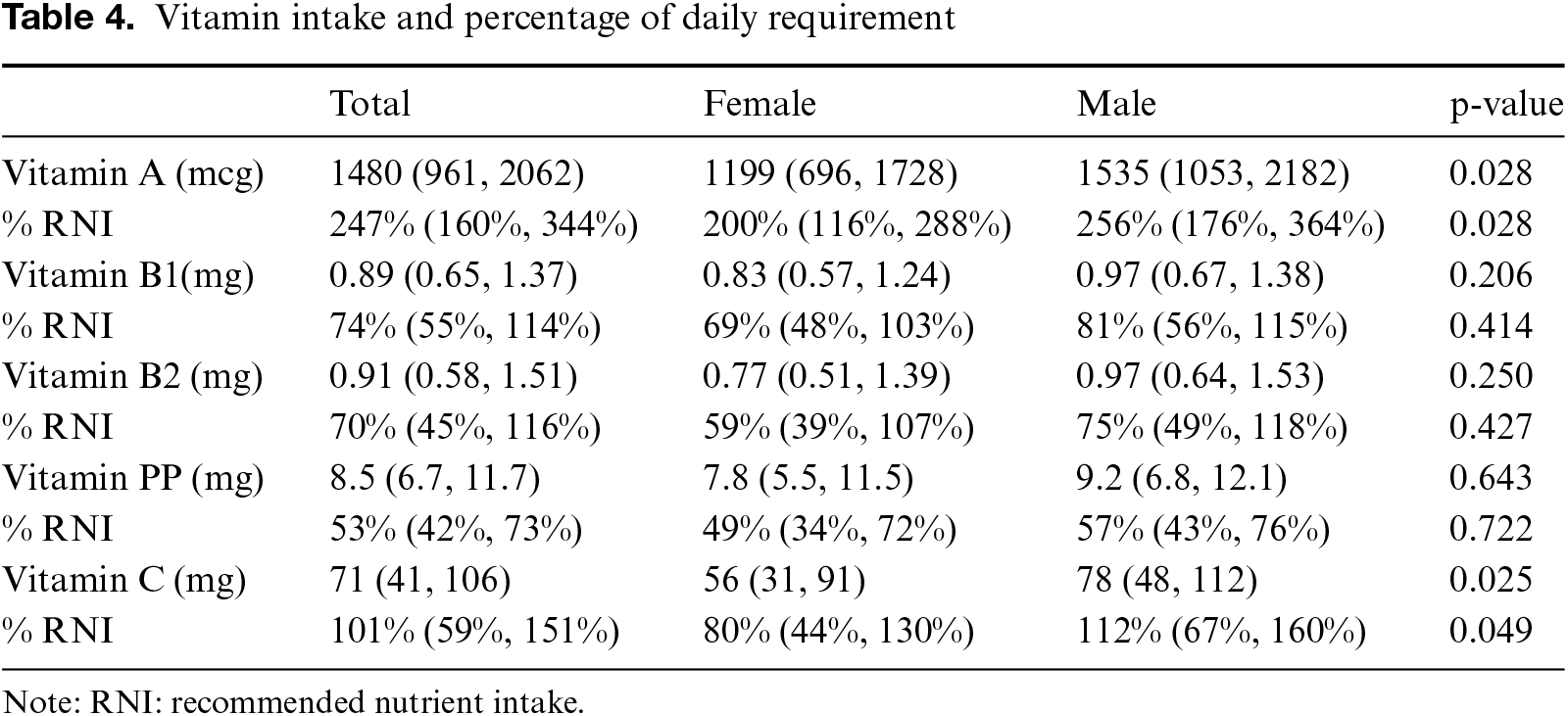
Table 4 presents the patients’ daily vitamin intake. The median intakes of vitamins A, B1, B2, PP (niacin), and C were 1480 mcg (IQR: 961–2062), 0.89 mg (IQR: 0.65–1.37), 0.91 mg (IQR: 0.58–1.51), 8.5 mg (IQR: 6.7–11.7), and 71 mg (IQR: 41–106), respectively. These correspond to median percentages of the RNI of 247% for vitamin A, 74% for B1, 70% for B2, 53% for PP, and 101% for vitamin C. Male patients had significantly higher intakes of vitamins A and C compared to females, with median RNI percentages of 256% vs. 200% for vitamin A (p = 0.028) and 112% vs. 80% for vitamin C (p = 0.049).
Minimal Dietary Intake
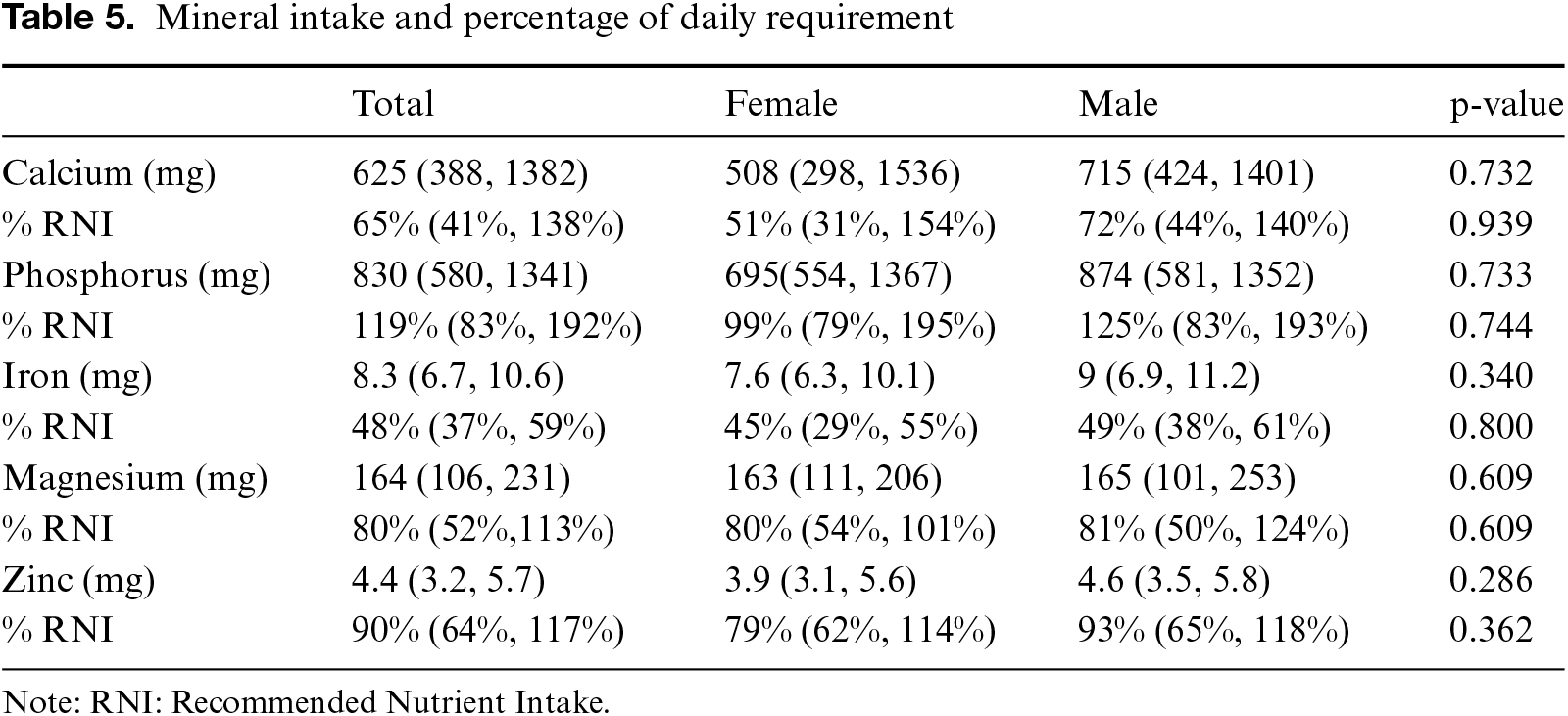
Table 5 presents the patients’ daily mineral intake. The median intakes of calcium, phosphorus, iron, magnesium, and zinc were 625 mg (IQR: 388–1382), 830 mg (IQR: 580–1341), 8.3 mg (IQR: 6.7–10.6), 164 mg (IQR: 106–231), and 4.4 mg (IQR: 3.2–5.7), respectively. These corresponded to median percentages of the RNI as follows: 65% for calcium, 119% for phosphorus, 48% for iron, 80% for magnesium, and 90% for zinc. There were no statistically significant differences in mineral intakes relative to the RNI between male and female patients.
Discussion
The present study offers a comprehensive evaluation of the nutritional status and dietary intake of cancer patients undergoing treatment at Nghe An Oncology Hospital, carried out in 2023. Using the PG-SGA tool, it was found that 72% of patients were malnourished, with more than half classified as severely malnourished (category C). This high prevalence aligns with previous research in similar oncology settings, particularly in low- and middle-income countries, where access to nutritional screening and support may be limited.22,23 The present study highlights the gap between actual dietary intake and the RNI, particularly concerning calories, protein, and several micronutrients. While previous research often focused on either macronutrients or subjective nutritional assessments, our analysis integrated both approaches and considered detailed intake data for vitamins and minerals, offering a more comprehensive view of cancer-related undernutrition in Vietnam.
An important and somewhat unexpected finding of the present study was that, although females had lower absolute intakes of energy and macronutrients, they achieved a higher RNI for energy, protein, and carbohydrates than males. This suggests that nutritional adequacy should be evaluated in both absolute terms and relative to individual needs. Male patients had significantly higher intakes of vitamins A and C than females. These gender-related nutrient intake patterns are rarely reported in the literature and warrant further investigation to improve nutritional interventions.24 Further, the absence of significant differences in nutritional status between the two cancer types or concerning disease duration and a patient’s sex suggests that malnutrition is widespread across subgroups. This finding emphasizes the need for routine nutritional screening in all cancer patients. The Vietnamese RNI standards were used as a reference to assess dietary intake, recognizing that these guidelines are intended for healthy individuals. Without national cancer-specific recommendations, the RNI provided a practical baseline. However, cancer patients often have altered nutritional needs due to factors such as age, sex, metabolic status, and treatment effects. Future studies should consider individualized assessments and refer to oncology-specific guidelines for more accurate evaluation.
From a clinical perspective, these findings highlight the urgent need to integrate nutritional care into oncology management, particularly in resource-limited settings. The high prevalence of malnutrition and inadequate intake of key nutrients—such as iron (only 48% of the RNI), calcium (65%), and B vitamins—suggests that standard dietary counseling may be insufficient. Malnutrition is linked to increased treatment toxicity, reduced therapeutic response, and a poorer quality of life.25 Early nutritional interventions, ideally guided by routine PG-SGA screening and personalized dietary planning, could be crucial in enhancing treatment tolerance and overall patient outcomes. Certain natural compounds may help counter cancer-related malnutrition. Conjugated linoleic acids exhibit anti-inflammatory and antioxidant properties that may help preserve muscle mass and physical function.26 Royal jelly has shown potential in improving glycemic control and liver function, while Momordica charantia L. may aid in blood pressure regulation. These effects could support metabolic balance and nutritional status in patients with GI or lung cancer undergoing chemotherapy.16,27
However, this study has several limitations. First, its cross-sectional design limits the ability to establish causal relationships between nutritional intake and clinical outcomes. Second, dietary intake data were self-reported, which may have introduced recall bias or led to underreporting. Third, although the PG-SGA is a validated tool, it may not fully capture all aspects of nutrition-related risk, such as inflammation or muscle mass loss. Fourth, the sample was drawn from a single center, which may limit the generalizability of the findings to broader cancer populations in Vietnam or other settings. Finally, the study did not collect information on participants’ socioeconomic status, such as household income or employment, which could have influenced dietary behaviors and nutritional status.
Conclusion
Malnutrition remains a significant concern among cancer patients in Vietnam, with most failing to meet basic dietary requirements. The present study’s findings highlight the importance of early and comprehensive nutritional assessments, particularly in addressing gender-based dietary differences and specific nutrient deficiencies. These findings can help shape hospital-based nutrition programs and guide future interventions to improve cancer patients’ nutritional and clinical outcomes in similar settings.
Acknowledgments
We appreciate all patients enrolled in this study.
Funding Source
None.
Author Contributions
Q.T.T. contributed to the study design and manuscript drafting. N.T.P., P.T.L., and T.N.H. were responsible for literature search, quality assessment, data extraction, and analysis. All authors participated in data interpretation and manuscript revision. All authors have read and approved the final version of the manuscript.
Data Availability
The datasets used in the current study are available from the corresponding author upon reasonable request.
Ethical Statement
The patients’ consent to participate in the study was obtained, and the Institutional Review Board of Nghe An Oncology Hospital approved it.
Conflict of Interest
None.
Supplemental Information
Supplemental information for this article can be found online at https://sup.jclinque.com/api/articles/64/download-suppl.
References
[1] Serón-Arbeloa C, Labarta-Monzón L, Puzo-Foncillas J, et al. Malnutrition screening and assessment. Nutrients. June 9, 2022;14(12):2392. doi:10.3390/nu14122392.
[2] Kiss N, Curtis A. Current insights in nutrition assessment and intervention for malnutrition or muscle loss in people with lung cancer: a narrative review. Adv Nutr. November 01, 2022;13(6):2420–2432. doi:10.1093/advances/nmac070.
[3] Pimiento JM, Evans DC, Tyler R, et al. Value of nutrition support therapy in patients with gastrointestinal malignancies: a narrative review and health economic analysis of impact on clinical outcomes in the United States. J Gastrointest Oncol. April 2021;12(2):864–873. doi:10.21037/jgo-20-326.
[4] Lemarie E, Goldwasser F, Michallet M, De Montreuil CB, Hebuterne X. P1-257: prevalence of malnutrition in lung cancer patients: a one-day survey. J Thoracic Oncol. 2007;2(8):S840–S841. doi:10.1097/01.JTO.0000284355.71284.e2.
[5] Seid A, Debebe Z, Ayelign A, et al. Malnutrition diagnosed by patient-generated subjective global assessment and the risk of all-cause mortality in adults with gastrointestinal cancer: a systematic review and meta-analysis. J Hum Nutr Diet. February 2025;38(1):e70012. doi:10.1111/jhn.70012.
[6] Shete K, Ghoulian J, Hu B, Alsyouf M. Genitourinary cancer care in low- and middle-income countries: disparities in incidence and access to care. Société Internationale d’Urologie J. 2024;5(5):330–338. doi:10.3390/siuj5050052.
[7] Arends J. Malnutrition in cancer patients: causes, consequences and treatment options. Eur J Surg Oncol. May 01, 2024;50(5):107074. doi:10.1016/j.ejso.2023.107074.
[8] de Pinho NB, Martucci RB, Rodrigues VD, et al. Malnutrition associated with nutrition impact symptoms and localization of the disease: Results of a multicentric research on oncological nutrition. Clin Nutr. June 01, 2019;38(3):1274–1279. doi:10.1016/j.clnu.2018.05.010.
[9] Meza-Valderrama D, Marco E, Dávalos-Yerovi V, et al. Sarcopenia, malnutrition, and cachexia: adapting definitions and terminology of nutritional disorders in older people with cancer. Nutrients. February 26, 2021;13(3):761. doi:10.3390/nu13030761.
[10] Gonçalves DC, Gomes SP, Seelaender M. Inflammatory, and molecular impact of cancer cachexia on the liver. Int J Mol Sci. November 07, 2024;25(22):11945. doi:10.3390/ijms252211945.
[11] Cencioni C, Trestini I, Piro G, et al. Gastrointestinal cancer patient nutritional management: from specific needs to novel epigenetic dietary approaches. Nutrients. April 08, 2022;14(8):1542. doi:10.3390/nu14081542.
[12] Pham Van B, Nguyen Thi Thanh H, Le Thi H, Nguyen Le Tuan A, Dang Thi Thu H, Dang Viet D. Nutritional status and feeding regimen of patients with esophagus cancer-a study from Vietnam. Healthcare (Basel). March 06, 2021;9(3):289. doi:10.3390/healthcare9030289.
[13] Polański J, Świątoniowska-Lonc N, Kołaczyńska S, Chabowski M. Diet as a factor supporting lung cancer treatment-a systematic review. Nutrients. March 19, 2023;15(6):1477. doi:10.3390/nu15061477.
[14] Chen H, Ishihara M, Kazahari H, et al. Efficacy and safety of pharmacotherapy for cancer cachexia: a systematic review and network meta-analysis. Cancer Med. September 2024;13:e70166. doi:10.1002/cam4.70166.
[15] Hossain MS, Wazed MA, Asha S, Amin MR, Shimul IM. Dietary phytochemicals in health and disease: mechanisms, clinical evidence, and applications-a comprehensive review. Food Sci Nutr. March 2025;13(3):e70101. doi:10.1002/fsn3.70101.
[16] Laczkó-Zöld E, Csupor-Löffler B, Kolcsár EB, et al. The metabolic effect of Momordica charantia cannot be determined based on the available clinical evidence: a systematic review and meta-analysis of randomized clinical trials. Front Nutr. 2023;10:1200801. doi:10.3389/fnut.2023.1200801.
[17] Nguyen LT, Dang AK, Duong PT, et al. Nutrition intervention is beneficial to the quality of life of patients with gastrointestinal cancer undergoing chemotherapy in Vietnam. Cancer Med. March 2021;10(5):1668–1680. doi:10.1002/cam4.3766.
[18] Gebremedhin TK, Cherie A, Tolera BD, Atinafu BT, Demelew TM. Prevalence and risk factors of malnutrition among adult cancer patients receiving chemotherapy treatment in cancer center, Ethiopia: cross-sectional study. Heliyon. June 2021;7:e07362. doi:10.1016/j.heliyon.2021.e07362.
[19] Detsky AS, McLaughlin JR, Baker JP, et al. What is subjective global assessment of nutritional status? JPEN J Parenter Enteral Nutr. January–February 1987;11:8–13. doi:10.1177/014860718701100108.
[20] Ottery FD. Definition of standardized nutritional assessment and interventional pathways in oncology. Nutrition. January 1996;12:S15–S19. doi:10.1016/0899-9007(96)90011-8.
[21] National Institute of Nutrition. Vietnamese Food Pyramid for adults (2016–2020): the recommendations for the amount of food groups intake for an adult per day. Published 2016, Accessed March 2025. https://viendinhduong.vn/vi/dinh-duong-hop-ly/thap-dinh-duong-hop-ly-cho-nguoi-truong-thanh-giai-doan-2016-2020-muc-tieu-thu-trung-binh-cho-mot-nguoi-trong-mot-ngay.html.
[22] Diakatou V, Vassilakou T. Nutritional status of pediatric cancer patients at diagnosis and correlations with treatment, clinical outcome and the long-term growth and health of survivors. Children (Basel). November 07, 2020;7(11):218. doi:10.3390/children7110218.
[23] Jones D, Knight SR, Sremanakova J, et al. Malnutrition and nutritional screening in patients undergoing surgery in low and middle income countries: a systematic review. JCSM Clin Rep. 2022;7(4):79–92. doi:10.1002/crt2.55.
[24] Sharkey T, Whatnall MC, Hutchesson MJ, et al. Effectiveness of gender-targeted versus gender-neutral interventions aimed at improving dietary intake, physical activity and/or overweight/obesity in young adults (aged 17–35 years): a systematic review and meta-analysis. Nutr J. July 30, 2020;19(1):78. doi:10.1186/s12937-020-00594-0.
[25] Arends J. Malnutrition in cancer patients: causes, consequences and treatment options. Eur J Surg Oncol. 2024;50(5):107074. doi:10.1016/j.ejso.2023.107074.
[26] Putera HD, Doewes RI, Shalaby MN, et al. The effect of conjugated linoleic acids on inflammation, oxidative stress, body composition and physical performance: a comprehensive review of putative molecular mechanisms. Nutr Metab (Lond). August 29, 2023;20(1):35. doi:10.1186/s12986-023-00758-9.
[27] Bahari H, Taheri S, Rashidmayvan M, et al. The effect of Royal jelly on liver enzymes and glycemic indices: a systematic review and meta-analysis of randomized clinical trials. Complement Ther Med. October 2023;77(29):102974. doi:10.1016/j.ctim.2023.102974.
 |
Copyright: © 2025 Tran et al. This work is licensed under a Creative Commons Attribution 4.0 International License, which permits unrestricted use, distribution, and reproduction in any medium, provided the original work is properly cited. |