| Journal of Clinical Question. 2025; 2(2): e67 https://doi.org/10.69854/jcq.2025.0007 Advance access publication date 29 April 2025 |
 |
Meta-Analysis
Intraosseous versus Intravenous Drug Administration in Out-of-Hospital Cardiac Arrest: A Systematic Review and Meta-Analysis of Randomized Controlled Studies
Yang-Zi Zhao 1, Fei Teng2, Ya Zhang3, Ren-Qing Zeng4,*
1Department of Accident & Emergency, The University of Hong Kong-Shenzhen Hospital, Shenzhen, China.
2Department of Radiology, Fuwai Shenzhen Hospital, Chinese Academy of Medical Sciences, Shenzhen, China.
3Department of Radiology, Shenzhen Maternity and Child Healthcare Hospital, Shenzhen, China.
4Department of Accident & Emergency, First Affiliated Hospital of Gannan Medical University, Jiangxi, China.
*Corresponding Author: e-mail: renqingz20635@163.com
Submitted: February 25, 2025 Accepted: April 29, 2025
Clinical Question Box
Which vascular access route is recommended for drug administration in out-of-hospital cardiac arrest (OHCA)?
Moderate-to high-certainty evidence indicates no significant clinical difference between intravenous and intraosseous drug administration in improving survival or achieving favorable neurological outcomes in OHCA. However, intravenous access remains the preferred route due to its cost-effectiveness and ease of accessibility. When intravenous access is challenging or delayed, particularly in prehospital settings, intraosseous access serves as a crucial alternative to ensure timely medication administration.
Abstract
Introduction: Optimal vascular access during out-of-hospital cardiac arrest (OHCA) is a critical consideration in resuscitation. While intravenous (IV) access is traditionally preferred, intraosseous (IO) access provides a rapid alternative when IV placement is challenging. This systematic review and meta-analysis compared the effectiveness of IO versus IV drug administration in OHCA. Methods: To identify randomized controlled trials (RCTs) comparing IO and IV drug administration in OHCA, a systematic search was conducted in PubMed, Embase, the Cochrane Library, and Web of Science. The primary outcomes included survival to hospital discharge, favorable neurological outcomes, and return of spontaneous circulation (ROSC). Results: This meta-analysis included six RCTs with a total of 20,002 patients. No significant differences were found between the IO and IV routes in terms of survival to hospital discharge (odds ratio [OR]: 0.83, 95% confidence interval [CI]: 0.58–1.19), favorable neurological outcomes (OR: 0.86, 95% CI: 0.59–1.30), 30-day survival (OR: 0.76, 95% CI: 0.43–1.33), or ROSC (OR: 1.04, 95% CI: 0.64–1.70). Although there was high heterogeneity for ROSC, a sensitivity analysis suggested a greater likelihood of ROSC with IV access (OR: 0.91, 95% CI: 0.84–0.99). Conclusion: Although IV access is often the preferred route because of its potential pharmacokinetic benefits, IO access is an essential alternative when IV placement is challenging or delayed. Considering the similar survival and neurological outcomes, IO access should be promptly employed in time-sensitive resuscitation situations.
Keywords: Out-of-hospital cardiac arrest, intraosseous, intravenous, drug administration, survival, meta-analysis.
Introduction
Out-of-hospital cardiac arrest (OHCA) is a significant global health concern, with an estimated annual incidence ranging from 55 to 82.1 cases per 100,000 people.1,2 As a critical public health challenge, OHCA accounts for approximately 10% of global mortality and nearly half of all cardiovascular-related deaths.3 In the United States alone, more than 356,000 OHCAs occur each year, with nearly 90% resulting in death.4 The financial burden is also substantial. Thanks to advancements in emergency medical services (EMS), the survival rate for hospital admission has improved to about 27.3%.5,6 However, among those who survive the initial event, healthcare costs vary based on prognosis. An analysis of the IBM MarketScan Commercial Claims and Encounters Database revealed that, in the year following discharge, average healthcare costs were $52,746 for patients under 65 who returned home, while those requiring rehabilitation or extended hospitalization faced costs of up to $130,530.7 These figures underline the significant healthcare demands and economic impact associated with OHCA.
The primary treatment approach for OHCA follows a structured chain of survival, which includes immediate high-quality cardiopulmonary resuscitation (CPR), early defibrillation, airway management, pharmacologic intervention, and post-resuscitation care.8 High-quality CPR, characterized by an optimal compression rate and minimal interruptions, is crucial for maintaining coronary and cerebral perfusion.9 Early defibrillation, particularly through automated external defibrillators (AEDs), significantly improves survival in patients with shockable rhythms.10 Airway management strategies range from basic maneuvers to advanced interventions such as supraglottic airways and endotracheal intubation, with recent evidence supporting the efficacy of supraglottic devices.11 Pharmacologic therapy, particularly epinephrine administration, remains a standard component of advanced life support, although its impact on long-term neurological outcomes remains debated.12 Antiarrhythmic medications such as amiodarone and lidocaine may be utilized in cases of refractory shockable rhythms.13 Post-resuscitation care, including targeted temperature management and hemodynamic stabilization, is vital for improving neurological outcomes and long-term survival.14
A comprehensive approach to OHCA management—integrating early recognition, rapid intervention, and post-resuscitation strategies—is essential for improving patient outcomes. Intravenous (IV) access has traditionally been the standard route for drug administration during OHCA. However, establishing IV access can be challenging in critically ill patients due to peripheral vasoconstriction and circulatory collapse. Intraosseous (IO) access offers a rapid and reliable alternative, particularly when IV access is difficult or time-consuming. Recent studies have explored the efficacy of IO versus IV access in OHCA.15,16 Conversely, a meta-analysis suggested that IV access might be superior to IO access in improving outcomes for OHCA patients, including favorable neurological outcomes, survival to hospital discharge, and return of spontaneous circulation (ROSC).17 However, significant heterogeneity across studies necessitates cautious interpretation of these findings. Another randomized trial reported that an IO-first vascular access strategy did not lead to higher 30-day survival compared to an IV-first strategy.18
These mixed results emphasize the necessity for additional research to identify the optimal vascular access route during OHCA resuscitation. This systematic review and meta-analysis aims to synthesize current evidence from randomized controlled trials (RCTs) that compare IO and IV drug administration in OHCA. Several meta-analyses have been conducted comparing IO and IV administration using direct study designs.19,20 However, subgroup analyses from previous RCTs comparing IO and IV routes have also provided valuable insights into the differences in their effectiveness. By assessing critical clinical outcomes, such as ROSC, survival to hospital admission, and survival to hospital discharge, this study seeks to provide evidence-based recommendations for the best route of drug administration in cardiac arrest. These findings may provide insights that could inform future considerations in the development or refinement of EMS protocols, pending further high-quality evidence.
Methods
Study Design and Registration
This systematic review and meta-analysis were conducted in accordance with the Preferred Reporting Items for Systematic Reviews and Meta-Analyses (PRISMA) guidelines.21 The study protocol was registered in the Open Science Framework.22
Eligibility Criteria
The inclusion criteria were as follows: (1) adults aged 18 years or older with OHCA; (2) RCT design; and (3) reported clinical outcomes such as mortality, ROSC, and other relevant measures. The exclusion criteria were: (1) studies in which the drug administration route was not randomized to IO or IV; (2) subgroup analyses of previously included studies; and (3) studies with non-extractable data. There were no restrictions on the language of publication.
Search Strategy
A comprehensive literature search was conducted across PubMed, Embase, the Cochrane Library, and Web of Science from their inception until February 10, 2025. The search strategy included the keyword “cardiac arrest” to identify the patient population (“Intraosseous” AND “Intravenous”) OR “Drug Route” to capture the intervention, and “randomized” OR “controlled” to specify the study design. The detailed search formula in each database was shown in Table S1. Additionally, relevant systematic reviews and the reference lists of selected studies were manually screened to enhance the completeness of the literature search.
Study Selection
All identified studies were imported into EndNote 20 (Clarivate Analytics) for reference management, and duplicate records were removed. Two independent reviewers (Y.-Z.Z. and F.T.) screened the titles and abstracts based on predefined eligibility criteria. Full-text articles of potentially relevant studies were then assessed independently. Discrepancies were resolved through discussion, and if consensus could not be reached, a third reviewer (Y.Z.) was consulted for the final decision.
Data Extraction
A standardized data extraction form was used to collect relevant information from the included studies. Extracted data included study characteristics such as author, year of publication, country, study design, and sample size. Population details, including inclusion criteria and baseline characteristics, were also recorded. Information on interventions, specifically the route of drug administration (IO versus IV), was extracted. There were no restrictions regarding the anatomical site of IO or IV access. Outcomes of interest, including ROSC, survival to hospital admission, survival to hospital discharge, and neurological outcomes, were collected. Two reviewers independently extracted the data, and any discrepancies were resolved through discussion.
Data Synthesis and Statistical Analysis
Pooled estimates were calculated using random-effects models to account for expected heterogeneity among studies. Odds ratios (ORs) with 95% confidence intervals (CIs) were used for dichotomous outcomes, including ROSC, survival to hospital admission, survival to hospital discharge, and neurological outcomes. Heterogeneity was assessed using Cochran’s Q-test and the I2 statistic, with an I2 value greater than 50% indicating substantial heterogeneity.23 Publication bias was evaluated using Egger’s test and visual inspection of funnel plots. All statistical analyses were conducted using R (version 4.4.1), with a p-value of less than 0.05 considered statistically significant.
Sensitivity and Subgroup Analyses
Predefined subgroup analyses were performed to explore potential sources of heterogeneity. These analyses included stratification based on the timing of drug administration, distinguishing between early and late dosing. Patient characteristics, such as age and initial cardiac rhythm, were analyzed to determine their impact on outcomes. Additionally, sensitivity analyses were conducted by excluding studies with a high risk of bias to evaluate the robustness of the overall findings.
Risk of Bias and Quality Assessment
The risk of bias in individual studies was evaluated using the Cochrane Risk of Bias 2 tool, which assesses bias across five domains: (1) the randomization process; (2) deviations from intended interventions; (3) missing outcome data; (4) measurement of the outcome; and (5) selection of the reported result. Each study was categorized as having a low risk of bias, some concerns, or a high risk of bias.23 Additionally, the certainty of evidence was assessed using the Grading of Recommendations, Assessment, Development, and Evaluation (GRADE) framework.24
Ethical Considerations
Since this study is a systematic review and meta-analysis of previously published RCTs, ethical approval and informed consent were not required. No patient-identifiable data were used, and all included studies had received prior ethical clearance from their respective institutions.
Results
Characteristics of Included Studies
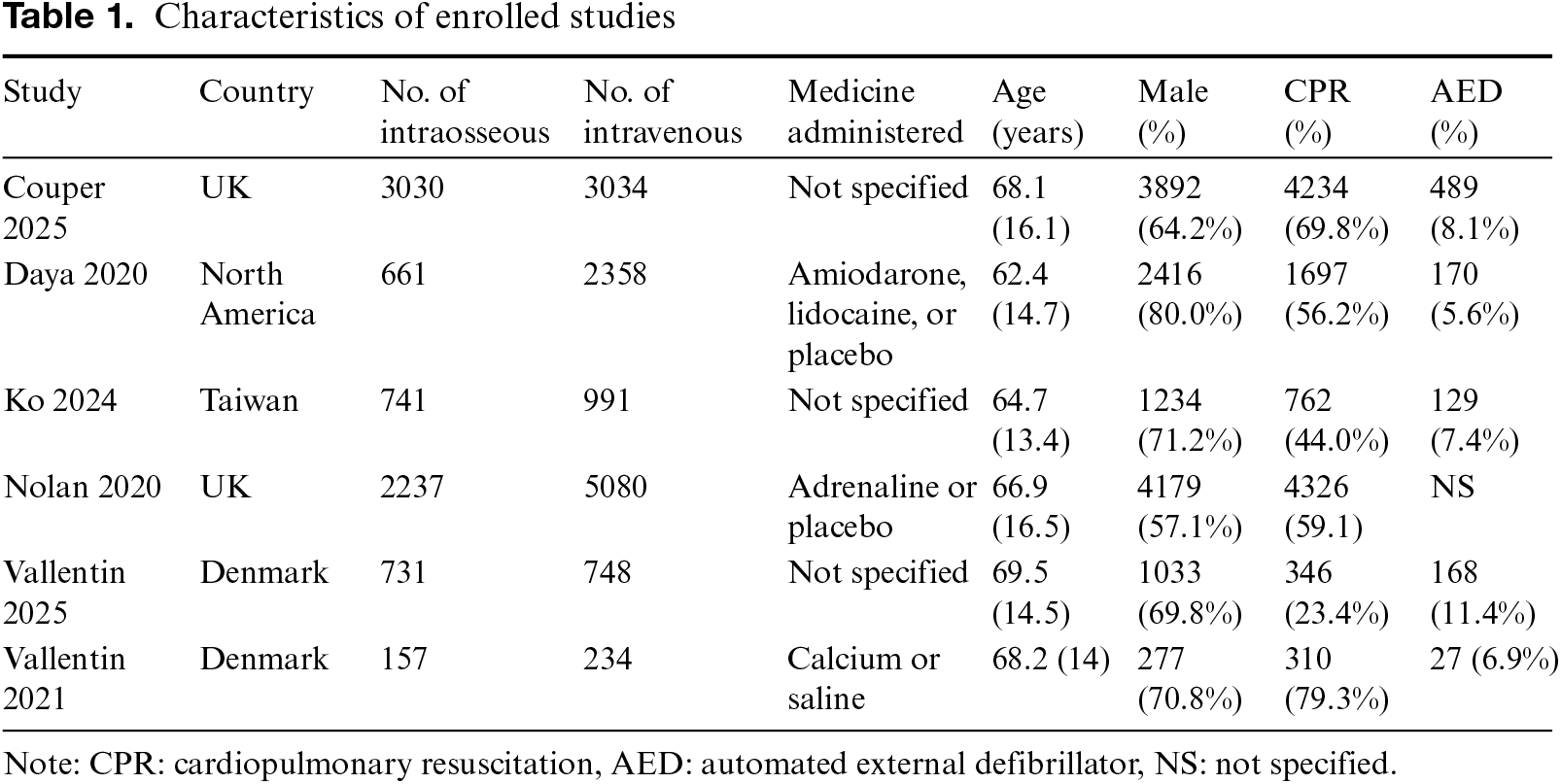
A comprehensive database search identified 559 studies. After removing duplicates and conducting two rounds of screening, 87, 430, and 36 studies were excluded, respectively. Ultimately, five RCTs were included in the final meta-analysis (Fig. S1). This analysis comprised 20,002 patients from the United Kingdom, North America, Taiwan, and Denmark (Table 1).25–30 Among them, 7,557 received IO drug administration, while 12,445 received IV access. The mean age of participants ranged from 62.4 to 69.5 years, with a male predominance across all studies. The proportion of patients who underwent bystander CPR before advanced life support interventions varied considerably, with the highest rate reported in Vallentin et al. (2021) (79.3%) and the lowest in Vallentin et al. (2025) (23.4%). AED use was reported in 5.6%–11.4% of cases across the included studies, while one study did not provide information on AED usage.
Survival to Hospital Discharge
Three RCTs directly compared the efficacy of IO versus IV administration. In contrast, the other three RCTs were primarily designed to compare different medications with a placebo in OHCA, and the differences between IO and IV routes were extracted through subgroup analyses, forming the indirect comparison group (Fig. 1). The pooled OR for the direct comparison studies was 1.03 (95% CI: 0.87–1.22; I2 = 0%), while the pooled OR for the indirect comparison group was 0.63 (95% CI: 0.32–1.23; I2 = 87%). The overall pooled analysis of all six RCTs yielded an OR of 0.83 (95% CI: 0.58–1.19; I2 = 80%). No statistically significant difference was observed between the direct and indirect comparison groups (p = 0.17). A sensitivity analysis, shown in Fig. S2, yielded an OR of 0.95 (95% CI: 0.84–1.09; I2 = 0%).
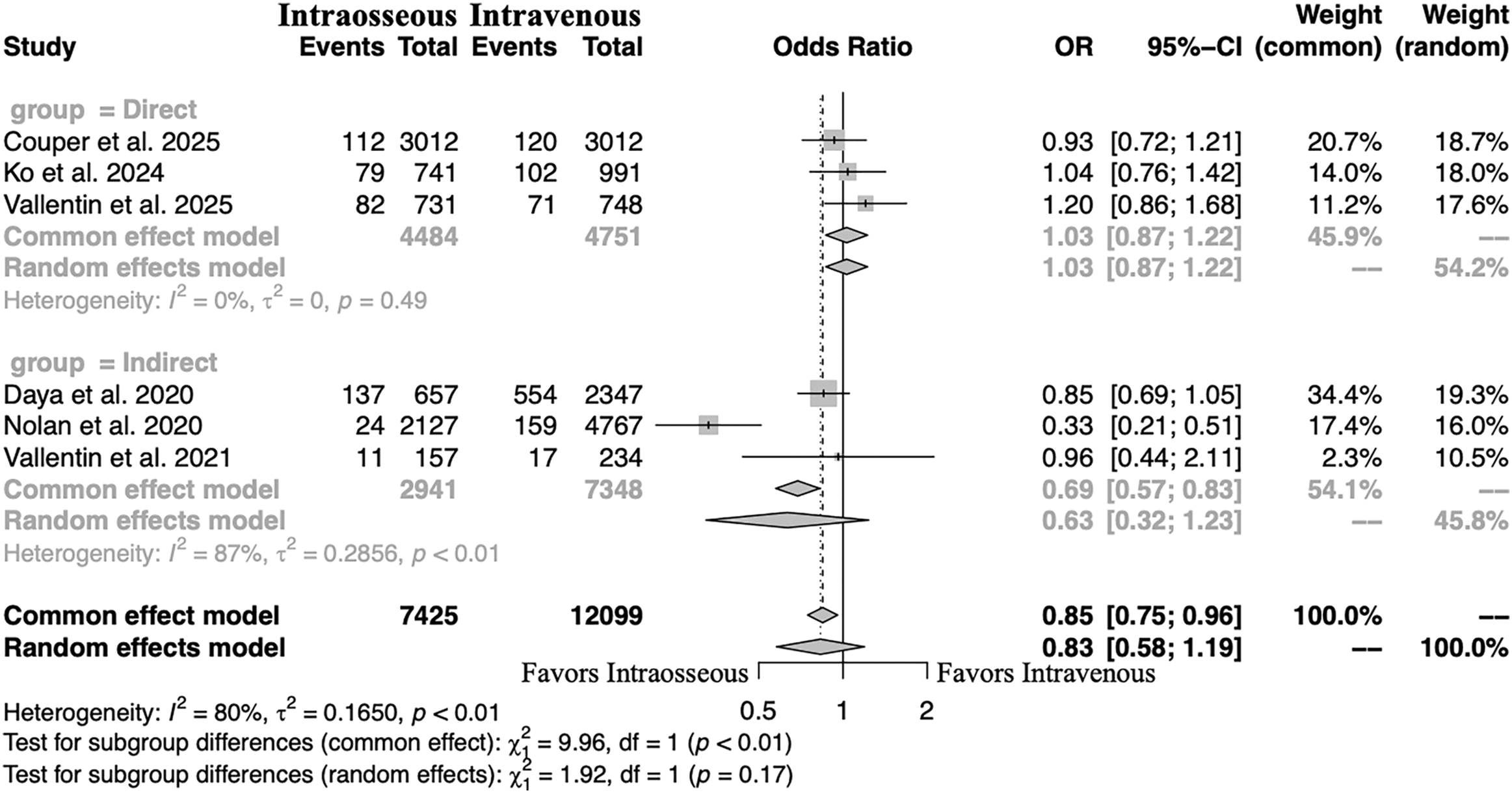
Figure 1. Meta-analysis of the odds ratio for survival to discharge. OR: odds ratio, CI: confidence interval.
Favorable Neurological Outcomes
Six RCTs identified the difference in favorable neurological outcomes at hospital discharge between IO and IV administration groups (Fig. 2). The pooled OR for the direct comparison studies was 1.07 (95% CI: 0.88–1.31; I2 = 0%), while the pooled OR for the indirect comparison group was 0.65 (95% CI: 0.32–1.30; I2 = 81%). The overall pooled analysis of all six RCTs yielded an OR of 0.86 (95% CI: 0.59–1.30; I2 = 76%). No statistically significant difference was observed between the direct and indirect comparison groups (p = 0.17). A sensitivity analysis, shown in Fig. S3, yielded an OR of 0.98 (95% CI: 0.80–1.20; I2 = 33%).
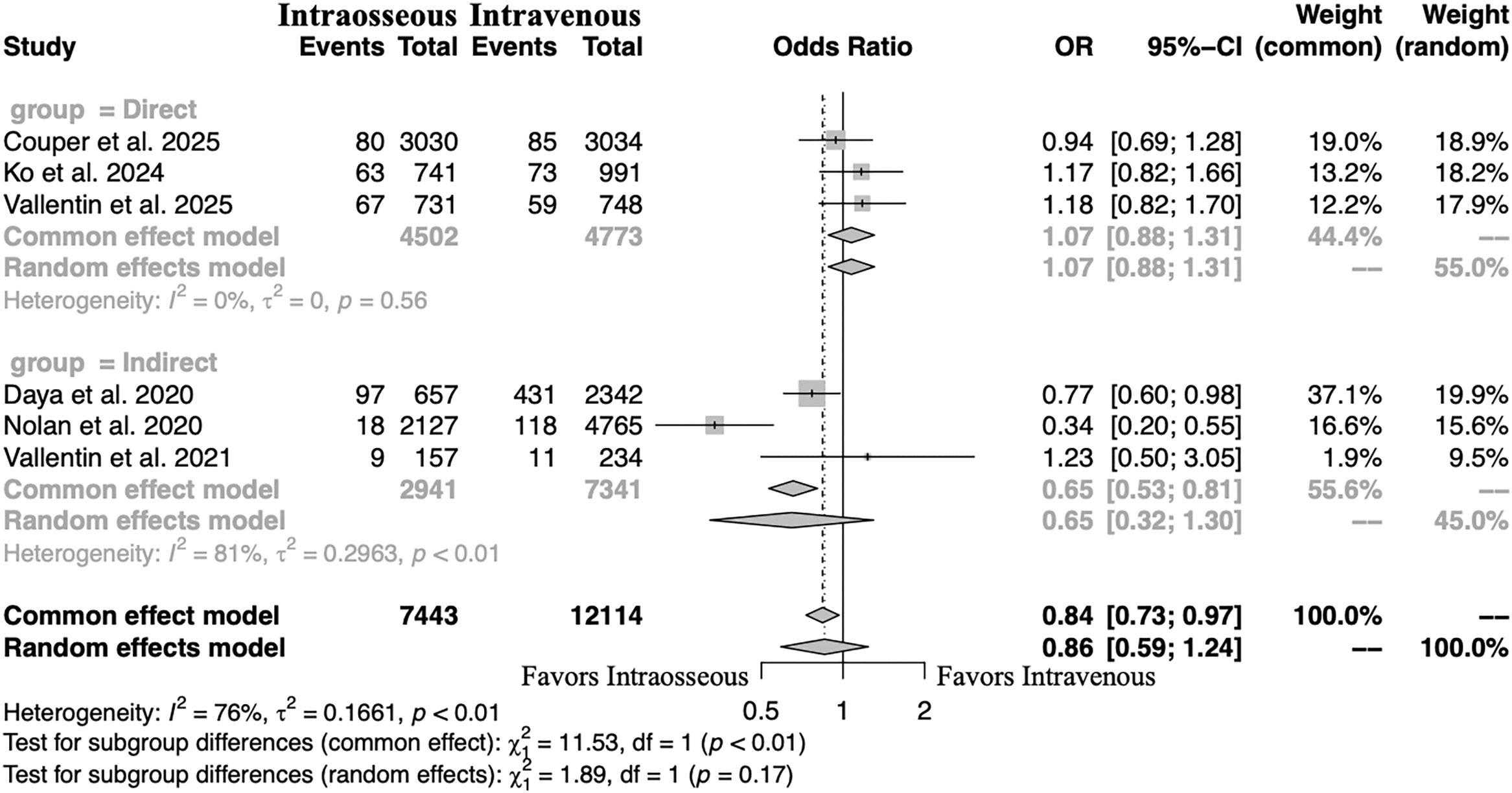
Figure 2. Meta-analysis of the odds ratio for favorable neurological outcomes. OR: odds ratio, CI: confidence interval.
ROSC
Five RCTs evaluated the difference in ROSC between IO and IV administration groups (Fig. 3). The pooled OR for the direct comparison studies was 0.91 (95% CI: 0.84–0.99; I2 = 0%), while the pooled OR for the indirect comparison group was 1.26 (95% CI: 0.26–6.19; I2 = 97%). The overall pooled analysis of all five RCTs yielded an OR of 1.04 (95% CI: 0.64–1.70; I2 = 93%). No statistically significant difference was observed between the direct and indirect comparison groups (p = 0.71). Due to the high heterogeneity in the indirect studies, a sensitivity analysis was performed only on the direct comparison studies, yielding the same OR as the direct subgroup analysis.
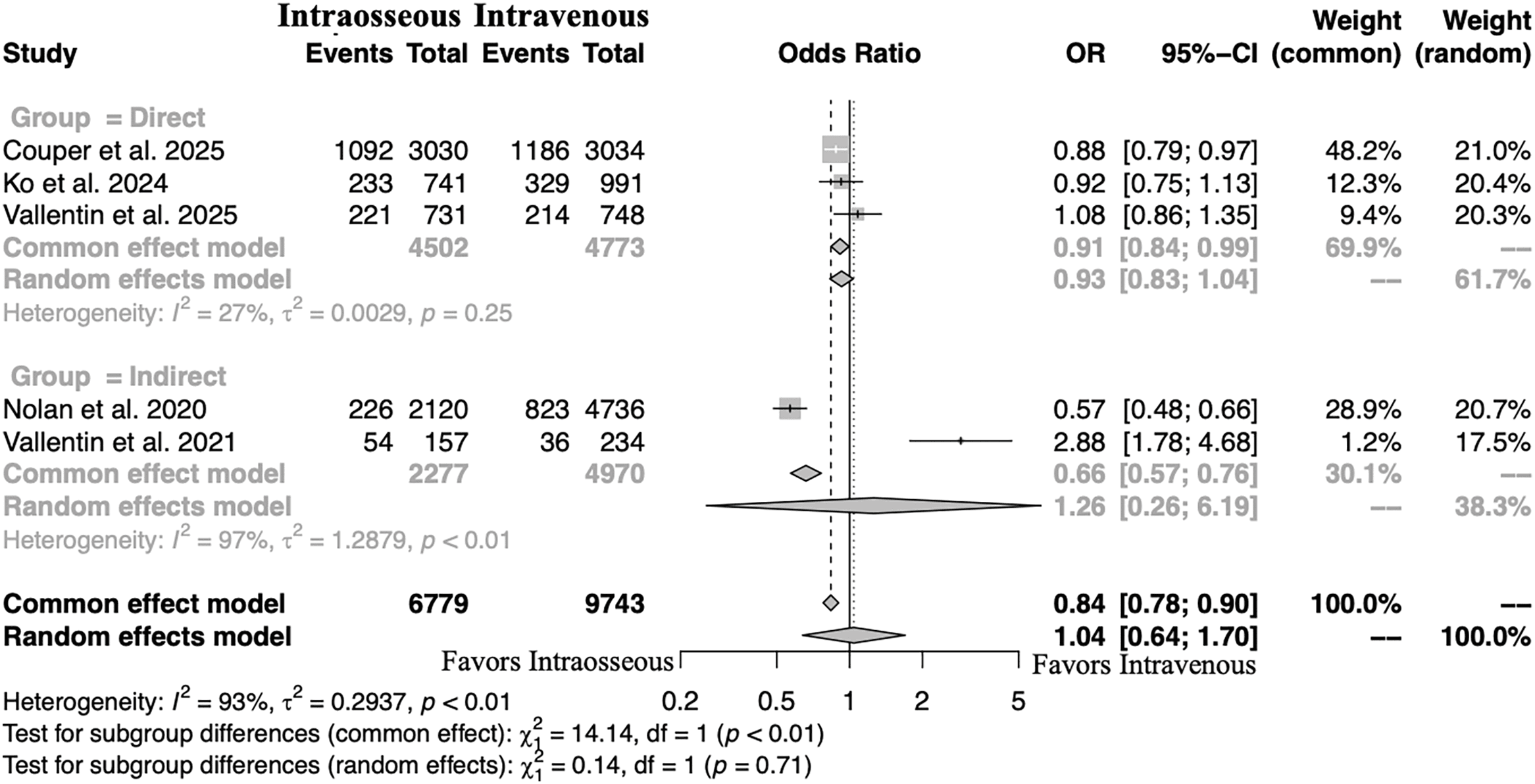
Figure 3. Meta-analysis of the odds ratio for return of spontaneous circulation. OR: odds ratio, CI: confidence interval.
30-Day Survival
Four RCTs evaluated 30-day survival between the IO and IV groups (Fig. S4). The pooled OR for the direct comparison studies was 1.0 (95% CI: 0.75–1.32; I2 = 51%), while the pooled OR for the indirect comparison group was 0.54 (95% CI: 0.19–1.50; I2 = 81%). The overall pooled analysis of all five RCTs yielded an OR of 0.76 (95% CI: 0.43–1.33; I2 = 87%). No statistically significant difference was observed between the direct and indirect comparison groups (p = 0.26). A sensitivity analysis, shown in Fig. S5, yielded an OR of 0.99 (95% CI: 0.78–1.25; I2 = 2%).
Publication Bias and Risk of Bias
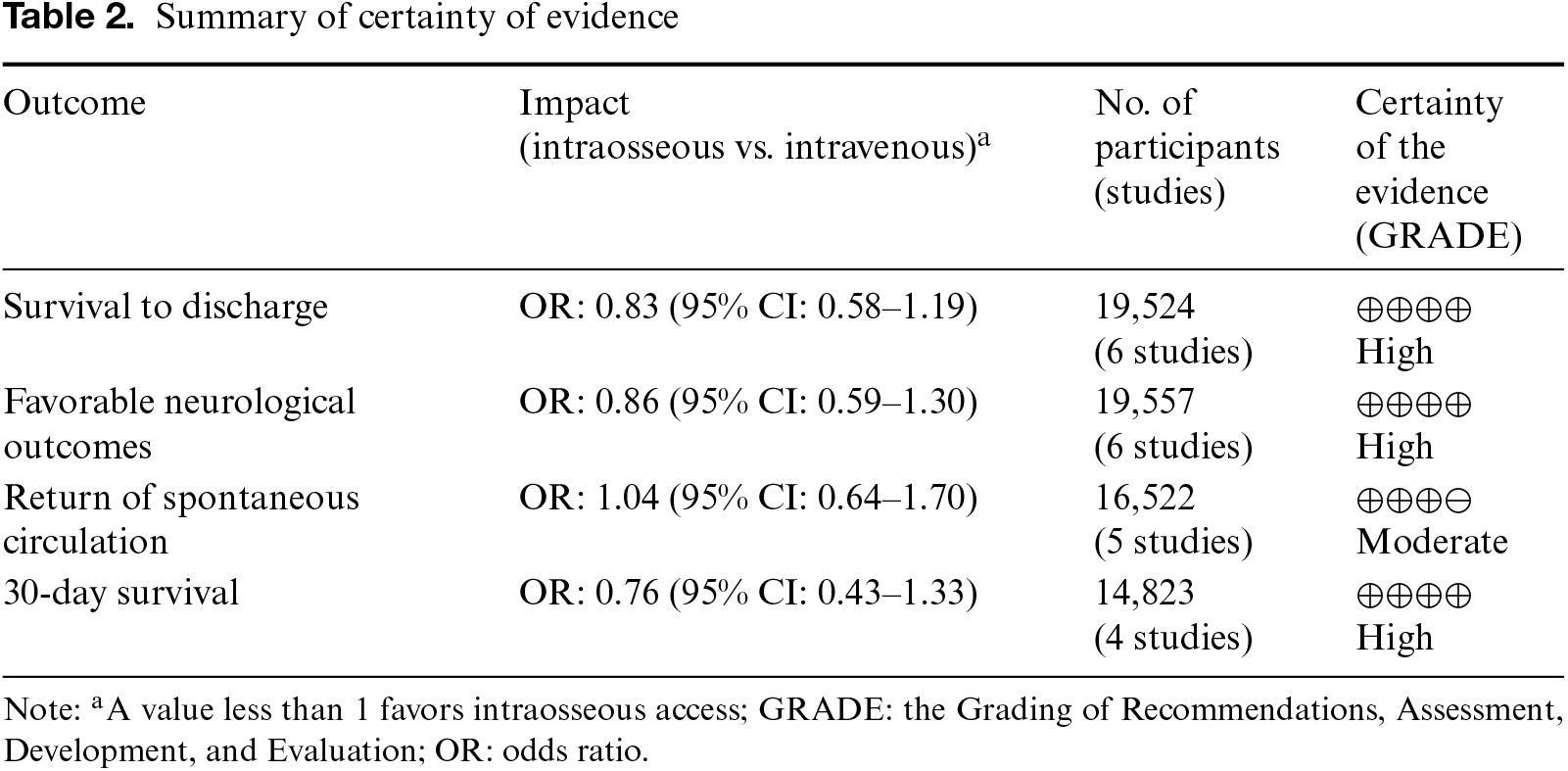
Publication bias was assessed using funnel plots (Figs. S6–S9) and further evaluated with Egger’s test, yielding p-values of 0.89, 0.85, 0.21, and 0.93, respectively. These results indicate no significant evidence of publication bias. The risk of bias assessment is shown in Fig. S10, where three studies demonstrated a high risk of bias related to random sequence generation and allocation concealment. The certainty of evidence is summarized in Table 2, with high confidence for outcomes such as survival to hospital discharge, favorable neurological outcome, and 30-day survival, whereas ROSC was rated as having moderate certainty.
Discussion
This systematic review and meta-analysis synthesized data from RCTs to compare IO and IV drug administration in OHCA. The findings indicate that IV drug administration was associated with a greater likelihood of ROSC in sensitivity analyses. However, no statistically significant differences were observed between the two routes regarding survival to hospital discharge, 30-day survival, or favorable neurological outcomes. These results align with prior research, reinforcing IV access as the preferred route.31 Nonetheless, IO access remains a critical alternative when IV access is challenging or delayed, ensuring timely medication administration in resuscitation efforts. The certainty of evidence was rated high for survival and favorable neurological outcomes and moderate for ROSC. The consistency of these findings with previous studies highlights the importance of selecting an optimal vascular access strategy in emergency settings and offers evidence-based insights to inform clinical decision-making.
From a clinical perspective, these results underscore the importance of selecting the most effective vascular access route based on the patient’s condition and the capabilities of EMS. Given its potential to improve ROSC rates, IV access should remain the first-line approach. However, due to the challenges of IV placement in critically ill patients, IO access serves as a vital alternative, particularly in prehospital environments where rapid drug administration is essential.32 The comparable survival and neurological outcomes between IO and IV routes suggest that IO access should be used without delay if IV access cannot be established quickly. Cost considerations also influence decision-making. While IV access is typically more cost-effective in well-equipped hospital environments, IO access may offer greater economic advantages in prehospital or resource-limited settings due to its reduced reliance on highly trained personnel.33 These findings support emergency protocols that integrate both access routes to maximize the effectiveness of advanced life support interventions.
Variations in resuscitation protocols, timing of drug administration, and patient characteristics across the included studies may have contributed to the observed heterogeneity. In addition, the effects of different IO access techniques, catheter types, and the pharmacokinetics of drugs delivered via the IO route remain insufficiently explored.34 Although IO access sites, such as humeral, tibial, and sternal, differ in flow capacity and drug delivery kinetics, the included studies offered limited or inconsistent data on site-specific outcomes. One study focused exclusively on humeral access,27 while others combined multiple IO sites without stratified analysis. Due to this heterogeneity and lack of detailed reporting, subgroup analyses by IO location could not be conducted. Nevertheless, pooling the available data remains valuable for identifying general trends in efficacy between IO and IV access. Given the unique physiological characteristics of IO circulation, future research should investigate whether modifications to IO drug delivery, such as optimized dosing strategies, alternative formulations, or adjusted infusion rates, could improve clinical effectiveness.
Furthermore, although drug classes commonly used during CPR, such as catecholamines and antiarrhythmic agents, have distinct pharmacokinetic and pharmacodynamic profiles, our analysis was constrained by the available evidence. Three RCTs directly comparing IV and IO administration did not specify the medications used, while the remaining studies either lacked consistent reporting or involved nonstandard interventions. Consequently, subgroup analyses based on drug class were not feasible. Future large-scale, well-designed trials should aim to evaluate the comparative effectiveness of IO versus IV access within specific drug categories and patient subgroups, particularly in scenarios involving difficult IV access or prolonged resuscitation, to help refine guidelines and optimize outcomes.
Despite the insights gained from this meta-analysis, several limitations must be considered. Although only RCTs were included, study heterogeneity remains a concern. Differences in EMS protocols, provider training levels, and patient demographics may have contributed to outcome variations. Second, while the meta-analysis included six studies, all were conducted in developed countries, raising concerns about the generalizability of the findings to a global context. Third, bystander CPR and AED use may have influenced the results, whereas drug administration routes might not have been the predominant treatment factor in these cases. Fourth, data on the timing of vascular access placement and its potential effects on delayed drug administration were lacking, limiting the applicability of these findings. While publication bias was not evident, it cannot be entirely ruled out, emphasizing the need for future high-quality, multicenter trials to validate these results.
Conclusion
This systematic review and meta-analysis compared IO and IV drug administration in OHCA, revealing that while IV access may improve ROSC rates, overall survival and neurological outcomes do not significantly differ between the two routes. These findings reaffirm IV access as the preferred approach but also highlight the critical role of IO access when IV placement is difficult or delayed, particularly in prehospital settings.
Acknowledgment
None.
Funding Source
None.
Author Contributions
Y.-Z.Z. contributed to the study design and drafting. Y.-Z.Z., F.T., and Y.Z. worked on the study search, quality check, data extraction, and analysis. Y.-Z.Z. and R.-Q.Z. worked on data interpretation and the revision process. All authors have read the manuscript and agree with its content and data.
Data Availability
The datasets will be made available by the corresponding author upon reasonable request.
Ethical Statement
Institutional Review Board approval was waived due to the nature of this meta-analysis.
Conflict of Interest
The authors declare no conflicts of interest.
Supplemental Information
Supplemental information for this article can be found online at https://sup.jclinque.com/api/articles/67/download-suppl.
References
[1] Sgueglia AC, Gentile L, Bertuccio P, et al. Out-of-hospital cardiac arrest outcomes’ determinants: an Italian retrospective cohort study based on Lombardia CARe. Intern Emerg Med. October 2024;19(7):2035–2045. doi:10.1007/s11739-024-03573-z.
[2] Brooks SC, Clegg GR, Bray J, et al. Optimizing outcomes after out-of-hospital cardiac arrest with innovative approaches to public-access defibrillation: a scientific statement from the international liaison committee on resuscitation. Circulation. 2022;145(13):e776–e801. doi:10.1161/CIR.0000000000001013.
[3] Patel H, Mahtani AU, Mehta LS, et al. Outcomes of out of hospital sudden cardiac arrest in India: a review and proposed reforms. Indian Heart J. September–October 2023;75(5):321–326. doi:10.1016/j.ihj.2023.08.005.
[4] Tsao CW, Aday AW, Almarzooq ZI, et al. Heart disease and stroke statistics—2022 update: a report from the American heart association. Circulation. 2022;145(8):e153–e639. doi:10.1161/CIR.0000000000001052.
[5] Hessulf F, Bhatt DL, Engdahl J, et al. Predicting survival and neurological outcome in out-of-hospital cardiac arrest using machine learning: the SCARS model. eBioMedicine. 2023;89(24):104464. doi:10.1016/j.ebiom.2023.104464.
[6] Garcia RA, Girotra S, Jones PG, et al. Variation in out-of-hospital cardiac arrest survival across emergency medical service agencies. Circul: Cardiovas Qual Outcomes. 2022;15(6):e008755. doi:10.1161/CIRCOUTCOMES.121.008755.
[7] Chirikov VV, Corman S, Qiao Y, Huang X. Clinical and economic burden of out-of-hospital cardiac arrest in US commercial insurance population (2014 to 2019). Am J Cardiol. April 15, 2022;15(1):42–50. doi:10.1016/j.amjcard.2021.12.038.
[8] Fowler JC, Morgan RW, O’Halloran A, et al. The impact of pediatric post-cardiac arrest care on survival: a multicenter review from the AHA get with the Guidelines®-resuscitation post-cardiac arrest care registry. Resuscitation. September 2024;202(2):110301. doi:10.1016/j.resuscitation.2024.110301.
[9] Pound G, Jones D, Eastwood GM, Paul E, Neto AS, Hodgson CL. Long-term outcomes of patients who received extracorporeal cardiopulmonary resuscitation (ECPR) following in-hospital cardiac arrest: analysis of EXCEL registry data. Crit Care Resusc. December 2024;26(4):279–285. doi:10.1016/j.ccrj.2024.08.008.
[10] Kim SH, Park JH, Jeong J, et al. Bystander cardiopulmonary resuscitation, automated external defibrillator use, and survival after out-of-hospital cardiac arrest. Am J Emerg Med. April 1, 2023;66(20):85–90. doi:10.1016/j.ajem.2023.01.033.
[11] Gage CB, Powell JR, Nassal M, Wang H, Panchal AR. Secular trends in airway management of out-of-hospital cardiac arrest in the national emergency medical services information system (NEMSIS) dataset. Resuscitation. October 27, 2023;193:110024. doi:10.1016/j.resuscitation.2023.110024.
[12] Kubo A, Hiraide A, Shinozaki T, et al. Impact of epinephrine on neurological outcomes in out-of-hospital cardiac arrest after automated external defibrillator use in Japan. Sci Rep. January 2, 2025;15(1):274. doi:10.1038/s41598-024-84950-8.
[13] Paganoni RC, Pluenneke JC, Mohamed AM, Hayes CH, Freiberger-O’Keefe CE, Chan PS. Early amiodarone or lidocaine administration during in-hospital cardiac arrest caused by shockable rhythms. Resuscitat Plus. March 1, 2025;22(16_suppl_2):100872. doi:10.1016/j.resplu.2025.100872.
[14] Katzenschlager S, Popp E, Wnent J, Weigand MA, Gräsner JT. Developments in post-resuscitation care for out-of-hospital cardiac arrests in adults-a narrative review. J Clin Med. April 20, 2023;12(8):3009. doi:10.3390/jcm12083009.
[15] Nilsson FN, Bie-Bogh S, Milling L, et al. Association of intraosseous and intravenous access with patient outcome in out-of-hospital cardiac arrest. Sci Rep. November 27, 2023;13(1):20796. doi:10.1038/s41598-023-48350-8.
[16] Vadeyar S, Buckle A, Hooper A, et al. Trends in use of intraosseous and intravenous access in out-of-hospital cardiac arrest across English ambulance services: a registry-based, cohort study. Resuscitation. October 2023;191:109951. doi:10.1016/j.resuscitation.2023.109951.
[17] Tabowei G, Dadzie SK, Khoso AA, et al. Efficacy of intraosseous versus intravenous drug administration in out-of-hospital cardiac arrest: a systematic review and meta-analysis. Cureus. October 2024;16(10):e72276. doi:10.7759/cureus.72276.
[18] Brebner C, Asamoah-Boaheng M, Zaidel B, et al. The association of intravenous vs. humeral-intraosseous vascular access with patient outcomes in adult out-of-hospital cardiac arrests. Resuscitation. 2024;202(16_suppl_2):110360. doi:10.1016/j.resuscitation.2024.110360.
[19] Couper K, Andersen LW, Drennan IR, et al. Intraosseous and intravenous vascular access during adult cardiac arrest: a systematic review and meta-analysis. Resuscitation. December 30, 2024;207(18_Supplement_1):110481. doi:10.1016/j.resuscitation.2024.110481.
[20] Alilou S, Moskowitz A, Rashedi S. Intraosseous versus intravenous vascular access in out-of-hospital cardiac arrest: a systematic review and meta-analysis of randomized controlled trials. Crit Care. March 19, 2025;29(1):124. doi:10.1186/s13054-025-05362-2.
[21] Page MJ, McKenzie JE, Bossuyt PM, et al. The PRISMA, 2020 statement: an updated guideline for reporting systematic reviews. BMJ. 2021;372:n71. doi:10.1136/bmj.n71.
[22] Zhao Y-Z, Teng F, Zhang Y, et al. Intraosseous versus intravenous drug administration in out-of-hospital cardiac arrest: a systematic review and meta-analysis of randomized controlled studies. Open Sci Framew. 2023. doi:10.17605/OSF.IO/VNDR5.
[23] Ruppar T. Meta-analysis: how to quantify and explain heterogeneity? Eur J Cardiovas Nurs. 2020;19(7):646–652. doi:10.1177/1474515120944014.
[24] González-Padilla DA, Dahm P. Evaluating the certainty of evidence in evidence-based medicine. Eur Urol Focus. September 1, 2023;9(5):708–710. doi:10.1016/j.euf.2023.10.014.
[25] Couper K, Ji C, Deakin CD, et al. A randomized trial of drug route in out-of-hospital cardiac arrest. N Engl J Med. January 23, 2025;392(4):336–348. doi:10.1056/NEJMoa2407780.
[26] Daya MR, Leroux BG, Dorian P, et al. Survival after intravenous versus intraosseous amiodarone, lidocaine, or placebo in out-of-hospital shock-refractory cardiac arrest. Circulation. January 21, 2020;141(3):188–198. doi:10.1161/circulationaha.119.042240.
[27] Ko YC, Lin HY, Huang EP, et al. Intraosseous versus intravenous vascular access in upper extremity among adults with out-of-hospital cardiac arrest: cluster randomised clinical trial (VICTOR trial). Bmj. July 23, 2024;386:e079878. doi:10.1136/bmj-2024-079878.
[28] Nolan JP, Deakin CD, Ji C, et al. Intraosseous versus intravenous administration of adrenaline in patients with out-of-hospital cardiac arrest: a secondary analysis of the PARAMEDIC2 placebo-controlled trial. Intens Care Med. May 2020;46(5):954–962. doi:10.1007/s00134-019-05920-7.
[29] Vallentin MF, Granfeldt A, Klitgaard TL, et al. Intraosseous or intravenous vascular access for out-of-hospital cardiac arrest. N Engl J Med. January 23, 2025;392(4):349–360. doi:10.1056/NEJMoa2407616.
[30] Vallentin MF, Granfeldt A, Meilandt C, et al. Effect of intravenous or intraosseous calcium vs saline on return of spontaneous circulation in adults with out-of-hospital cardiac arrest: a randomized clinical trial. Jama. December 14, 2021;326(22):2268–2276. doi:10.1001/jama.2021.20929.
[31] Granfeldt A, Avis SR, Lind PC, et al. Intravenous vs. intraosseous administration of drugs during cardiac arrest: a systematic review. Resuscitation. April 2020;149(June):150–157. doi:10.1016/j.resuscitation.2020.02.025.
[32] Qasim ZA, Joseph B. Intraosseous access in the resuscitation of patients with trauma: the good, the bad, the future. Trauma Surg Acute Care Open. 2024;9(Suppl 2):e001369. doi:10.1136/tsaco-2024-001369.
[33] Dornhofer P, Kellar JZ, Intraosseous vascular access. In: StatPearls. StatPearls Publishing LLC; 2025.
[34] Hooper A, Nolan JP, Rees N, Walker A, Perkins GD, Couper K. Drug routes in out-of-hospital cardiac arrest: a summary of current evidence. Resuscitation. December 1, 2022;181(Supplement 1):70–78. doi:10.1016/j.resuscitation.2022.10.015.
 |
Copyright: © 2025 Zhao et al. This work is licensed under a Creative Commons Attribution 4.0 International License, which permits unrestricted use, distribution, and reproduction in any medium, provided the original work is properly cited. |