| Journal of Clinical Question. 2025; 2(3): e71 https://doi.org/10.69854/jcq.2025.0009 Advance access publication date 22 May 2025 |
 |
Original Research
Impact of the COVID-19 Pandemic on Cancer Diagnosis in Japan
Saya Haketa1, Nobuyuki Horita 2,*, Takeshi Kaneko3
1School of Medicine, Yokohama City University, Yokohama, Japan.
2Chemotherapy Center, Yokohama City University Hospital, Yokohama, Japan.
3Department of Pulmonology, Yokohama City University School of Medicine, Yokohama, Japan.
*Corresponding Author: e-mail: horitano@yokohama-cu.ac.jp
Submitted: March 19, 2025 Accepted: May 21, 2025
Clinical Question Box
How did the COVID-19 pandemic impact cancer diagnosis in Japan, and what are the potential long-term effects on cancer outcomes?
The coronavirus disease 2019 (COVID-19) pandemic led to significant reductions in cancer screenings in Japan, especially in 2020 and 2021, due to strain on the healthcare system, government restrictions, and public fear of COVID-19 exposure. These disruptions are likely to result in delayed diagnoses, more aggressive treatments, and potentially worse long-term cancer outcomes. The study highlights the need for better preparedness and strategies to ensure continuity of cancer care during future pandemics.
Abstract
Introduction: The coronavirus disease 2019 (COVID-19) pandemic severely disrupted healthcare systems worldwide, including cancer diagnosis. In Japan, cancer diagnoses were significantly reduced during the pandemic. This study examines the changes in cancer diagnosis before and after the pandemic. Methods: Data were collected from the National Cancer Center’s hospital-based cancer registries, covering 875 facilities and over 70% of cancer cases in Japan from 2016 to 2022. The analysis focused on 10 cancer types: esophageal, gastric, colon, rectal, breast, prostate, pancreatic, non-small cell lung cancer, bladder, and cervical cancers. Linear regression was used to estimate expected diagnoses, and deviations from these estimates during the 2020 fiscal year were analyzed. Results: Diagnosed cases of prostate and gastric cancer decreased by 9.3% and 7.1%, respectively, with a total of 27,694 fewer diagnoses across nine cancer types. There was a significant decrease in cancer diagnoses during the pandemic years (2020–2021), followed by a resurgence post-pandemic. Conclusion: The COVID-19 pandemic caused substantial disruptions in cancer care, leading to a decrease in cancer diagnoses. While there was a significant recovery in diagnoses post-pandemic, the delays during the pandemic are expected to have long-term effects on cancer mortality. Future preparedness for pandemics should include strategies to minimize disruption in essential cancer care and maintain healthcare capacity.
Keywords: Cancer, Diagnosis, Surveillance study
Introduction
The pandemic caused by severe acute respiratory syndrome coronavirus 2 (SARS-CoV-2) in 2020 quickly spread across the globe, profoundly impacting healthcare systems worldwide. Policymakers around the world aimed to minimize the spread of the virus in healthcare institutions by implementing stringent mitigation strategies such as lockdowns and stay-at-home orders. Public healthcare systems were overwhelmed as the pandemic spread globally and caused significant disruptions in services, including cancer diagnosis and treatment such as screenings, checkups, and surgeries.
According to Toes-Zoutendijk et al., a decrease of up to 42% in monthly colorectal cancer screening during the first COVID-19 wave was seen in the Netherlands compared to what was expected.1 As for Japan, it is estimated that the pandemic prevented 28,817 resections for 10 cancers, including 8176 gastric cancers, 6032 colon cancers, and 3959 non-small cell lung cancers (NSCLCs).2 These declines can lead to increased cancer mortality rates and the need for more aggressive treatments, ultimately placing a greater burden on healthcare systems in the future.
Although the long-term effect of delayed diagnoses may take years to manifest, this issue requires urgent attention. Postponed cancer diagnoses may contribute to an increase in cancer-related mortality by allowing tumors to progress undetected. Consequently, patients are more likely to be diagnosed at an advanced stage, when curative treatment is no longer an option and best supportive care is often the only approach. However, it is expected that preventive cancer screenings and diagnosis will return to normal now that the pandemic has come to an end. The purpose of this study is to examine the changes in cancer diagnoses before and after the pandemic using the data.
Methods
We collected data from the hospital-based cancer registries operated by the National Cancer Center.3 They accumulated newly diagnosed cancer cases from 875 facilities, covering more than 70% of cancer cases in Japan. We were provided data from 2016 to 2022, including 2 years of the COVID-19 pandemic (2020–2021). Each case was registered with the first treatment provided soon after the diagnosis, such as surgery alone, endoscopic therapy alone, radiation alone, medication alone, or a combination of these.
The fiscal year is defined as April 1–March 31 of the following year because it aligns with government budgeting and financial reporting cycles. Accordingly, we designated fiscal year 2020 (April 2020–March 2021) as the primary “pandemic year” for the purpose of this analysis, since national cancer screening programs resumed to near-normal levels starting in fiscal year 2021 in Japan. We used data from fiscal years 2016 to 2022 to build a linear regression model, but excluded the pandemic year (2020).4 This allowed us to estimate what the number of diagnoses would have been in 2020 without the pandemic’s impact. The P-value was then calculated to assess the deviation between the observed and estimated number of events in 2020. The pre-pandemic period was defined as fiscal years 2016–2019, and the post-pandemic period as fiscal years 2021–2022.
Results
Among the 24 cancer types recorded in the hospital-based cancer registry, 10 major cancer types, such as esophageal, gastric, colon, rectal, breast, prostate, pancreatic, NSCLC, bladder, and cervical, were analyzed and are illustrated in Fig. 1. These cancers were selected due to their clinical significance and substantial caseloads. Compared to the expected estimates, prostate cancer experienced the most notable decrease in diagnoses, with 6,092 fewer cases than anticipated (−9.3%; P < 0.001). Gastric cancer followed closely, showing a reduction of 6,044 cases (−7.1%; P = 0.003) (Table 1). Breast cancer diagnoses also declined significantly by 4,513 cases (−5.4%; P < 0.001).
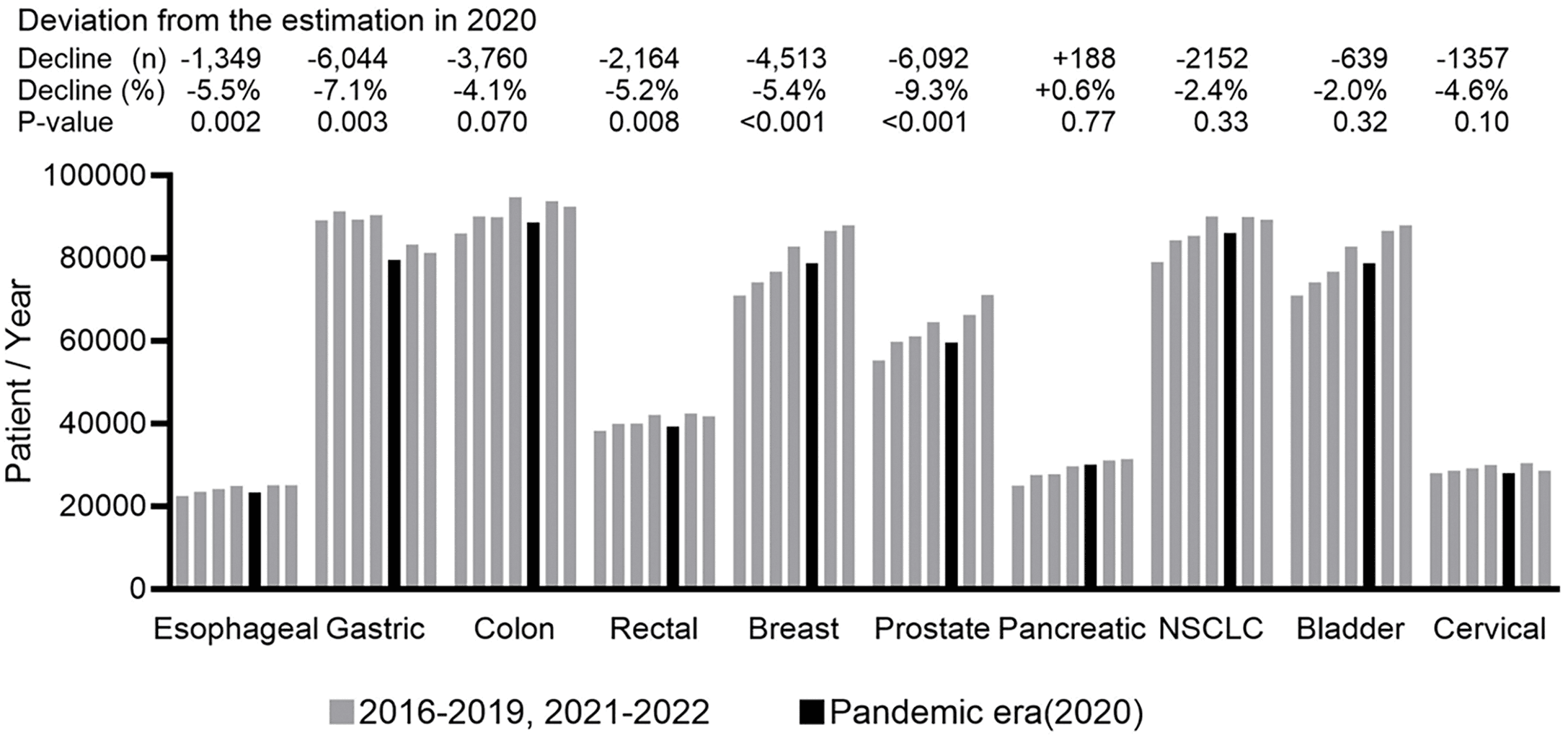
Figure 1. Decrease in diagnosed cases of 10 major cancer types compared to estimates. NSCLC, non-small cell lung cancer.
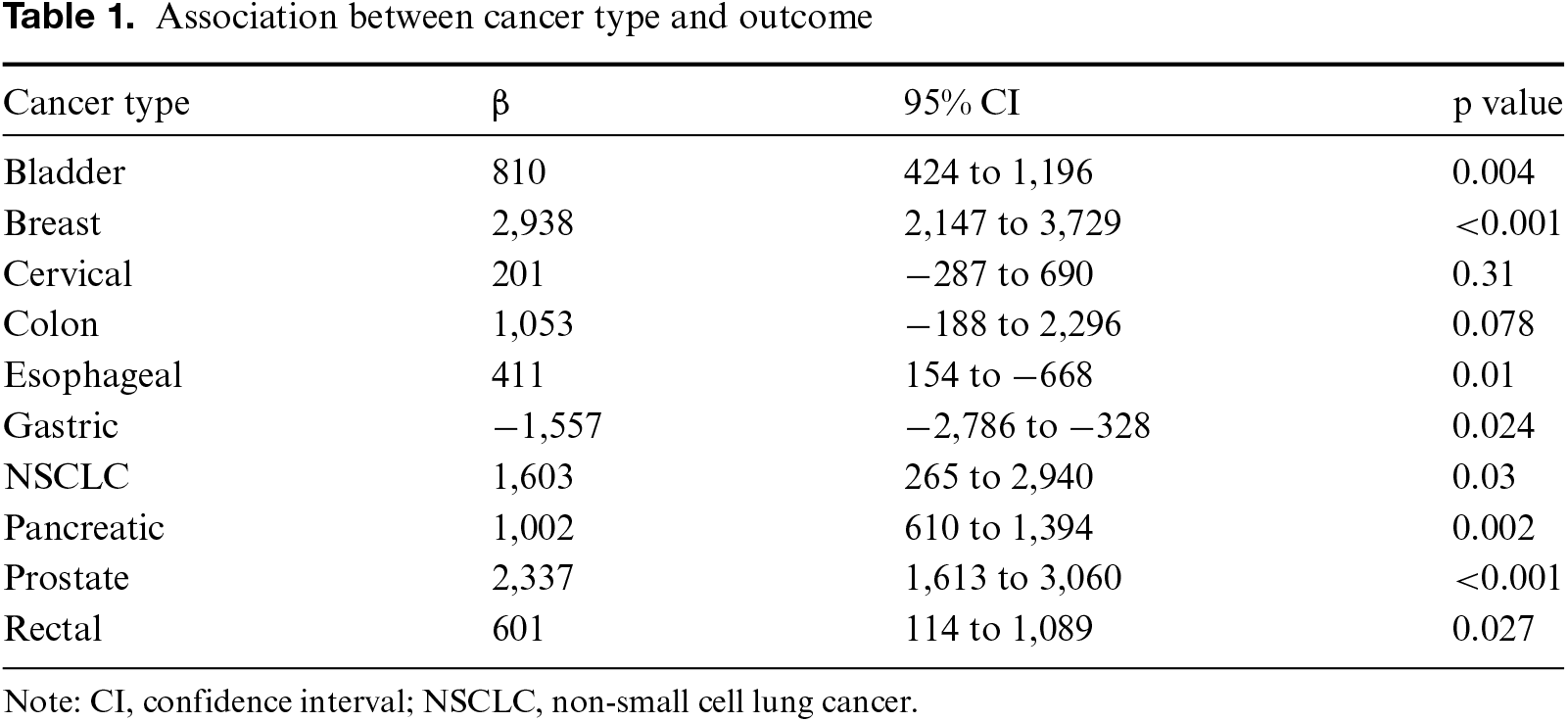
Esophageal cancer showed a statistically significant reduction of 411 cases (95% confidence interval [CI]: 154–668; P = 0.01), and rectal cancer declined by 601 cases (95% CI: 114–1,089; P = 0.027). Gastric cancer, notably, had a negative beta value (β = −1,557; 95% CI: −2,786 to −328; P = 0.024), indicating a significant reduction from the expected volume. In contrast, cancers such as pancreatic (β = 1,002; P = 0.002), NSCLC (β = 1,603; P = 0.03), and bladder (β = 810; P = 0.004) showed increases in diagnoses. Cervical and colon cancers did not show statistically significant changes (P = 0.31 and P = 0.078, respectively). Despite some variability, the cumulative shortfall across nine of the 10 cancers examined amounted to an estimated 27,694 missed diagnoses during the pandemic period, suggesting a considerable public health impact.
Discussion
The global pandemic caused by COVID-19 affected all aspects of healthcare, including the foundation of cancer treatment. Our study revealed a significant reduction in cancer screenings and elective surgeries during 2020 and 2021, when the pandemic occurred in Japan.
One contributing factor is the drastic change in cancer care brought about by COVID-19. Two main factors likely contributed to the decrease. First, the COVID-19 pandemic altered cancer care drastically. As governments imposed national lockdowns and outing restrictions, most national health systems suggested limiting nonurgent medical procedures to optimize the use of available beds for patients with COVID-19 and reduce the risk of infection in vulnerable patients and workers.5 For example, in Japan, the Ministry of Health, Labour, and Welfare instructed local governments to limit the number of screenings per unit time in 2021 to prevent overcrowding. This led to the introduction of stringent measures to halt cancer screenings, a decline in referrals from primary care to hospitals, and the postponement or cancellation of patient appointments.6 In addition, many people were reluctant to seek medical care or participate in recommended cancer screening programs because of the prevalent fear and anxiety of contracting COVID-19.7 These delays in screenings likely resulted in significant setbacks, including delayed diagnoses and initiation of treatments.
Second, patients diagnosed before the pandemic and who were undergoing treatment had to change the course of their treatments.8 For instance, surgical oncologists were forced to consider triage and rationing of cancer surgery cases due to the risk of exposing patients to COVID-19 infection during surgical procedures, especially as the transmission dynamics of the virus were not fully understood at that time.9 Moreover, this shift was largely due to a shortage of surgical staff, as many hospitals had to relocate their surgical workforce to maximize the capacity of the intensive care unit to manage the overwhelming influx of COVID-19 patients. We must also consider the fact that personnel who were trained or experienced in the use of ventilators were needed, since many critically ill patients with COVID-19 were under respiratory support on ventilators. Although the impact of delays on cancer recurrence and survival rates may extend beyond the pandemic and take several years to fully emerge, these delays are expected to have a significant effect on cancer-related mortality rates.
However, the extent of this decline in Japan appeared to be less severe compared to countries that experienced widespread and prolonged outbreaks, since Japan successfully curbed the pandemic early on with actions taken by the government. To understand the global impact of the pandemic on cancer care, we next compare the situation in Japan with that of other countries with a high COVID-19 burden. For example, Italy was one of the European countries most severely affected by the COVID-19 pandemic, with estimates of the excess mortality in Italy during the pandemic being more than 165,000 up to January 2022.10 Healthcare systems were quickly overburdened due to the modest number of intensive care unit beds and the lack of standardization of patient management.11 Moreover, Italy has the most elderly population in Europe and the second in the world after Japan, which represents one of the most significant risk factors for COVID-19-related mortality. According to Buscarini et al., an 11.9% reduction in the total number of diagnoses of colorectal cancer and a 15.9% reduction in stomach cancer diagnoses were found in 2020 compared to 2019, which is higher than those in Japan.12 This illustrates how differences in healthcare infrastructure and pandemic response strategies may have contributed to the variability in cancer care disruption globally.
We observed a significant resurgence of diagnosis cases after the pandemic in our study. With the advancement of research, we have a better understanding of the transmission system of COVID-19 and effective prevention measures. Despite this progress, we must reassess cancer care in case another pandemic arises in the future, such as ensuring an ample supply of medical equipment and preventing the neglect of cancer care treatment. Balancing both public health and cancer care will be essential in minimizing long-term consequences on cancer outcomes.
Conclusion
This study highlights the severe impact of the COVID-19 pandemic on cancer diagnosis in Japan. The significant decline in cancer screenings and surgeries during the pandemic years points to the long-term consequences for cancer care, including delayed diagnoses and treatment initiation. Despite the recovery in cancer care post-pandemic, the backlog of delayed cases poses an ongoing challenge to healthcare systems. These findings underscore the need for improved healthcare system preparedness for future pandemics, focusing on ensuring the continuity of essential cancer care. Balancing public health measures with uninterrupted cancer care will be critical in preventing long-term negative outcomes on cancer prognosis.
Acknowledgment
None.
Funding Source
This research received no external funding.
Author Contributions
S.H. worked on the design of the work, data acquisition, analysis of data, interpretation, and drafting. N.H. contributed to data interpretation and critical revision. K.Y. performed the interpretation and critical revision. All authors provided final approval for publication and accepted accountability.
Data availability
The datasets generated and/or analyzed during the current study are available in the Cancer Information Service, National Cancer Center repository (https://jhcr-cs.ganjoho.jp/hbcrtables/).
Ethical Statement
Not applicable.
Conflict of Interest
The authors report no conflicts of interest in this work.
Supplemental Information
Supplemental information for this article can be found online at https://sup.jclinque.com/api/articles/71/download-suppl.
References
[1] Toes-Zoutendijk E, Vink G, Nagtegaal ID, et al. Impact of COVID-19 and suspension of colorectal cancer screening on incidence and stage distribution of colorectal cancers in the Netherlands. Eur J Cancer. January 2022;161(10):38–43. doi:10.1016/j.ejca.2021.11.008.
[2] Horita N. Impact of the COVID-19 pandemic on cancer diagnosis and resection in a COVID-19 low-burden country: Nationwide registration study in Japan. Eur J Cancer. April 2022;165(1):113–115. doi:10.1016/j.ejca.2022.01.027.
[3] Hospital-Based Cancer Registry National Aggregate Results Viewing System. Cancer Statistics. 2024. Accessed March 1, 2025. https://jhcr-cs.ganjoho.jp/hbcrtables/.
[4] Xu T, Chen K, Li G. The more data, the better? Demystifying deletion-based methods in linear regression with missing data. Stat Interface. 2022;15(4):515–526. doi:10.4310/21-sii717.
[5] COVIDSurg Collaborative. Effect of COVID-19 pandemic lockdowns on planned cancer surgery for 15 tumour types in 61 countries: an international, prospective, cohort study. Lancet Oncol. November 2021;22(11):1507–1517. doi:10.1016/s1470-2045(21)00493-9.
[6] Addeo A, Friedlaender A. Cancer and COVID-19: unmasking their ties. Cancer Treat Rev. August 2020;88(382):102041. doi:10.1016/j.ctrv.2020.102041.
[7] Kızılırmak D, Yılmaz Z, Havlucu Y, Çelik P. Impact of the COVID-19 pandemic on diagnosis of lung cancer. SN Compr Clin Med. 2023;5(1):23. doi:10.1007/s42399-022-01366-z.
[8] Turtle L, Elliot S, Drake TM, et al. Changes in hospital mortality in patients with cancer during the COVID-19 pandemic (ISARIC-CCP-UK): a prospective, multicentre cohort study. Lancet Oncol. 2024;25(5):636–648. doi:10.1016/S1470-2045(24)00107-4.
[9] Bartlett DL, Howe JR, Chang G, et al. Management of cancer surgery cases during the COVID-19 pandemic: considerations. Ann Surg Oncol. June 2020;27(6):1717–1720. doi:10.1245/s10434-020-08461-2.
[10] Alicandro G, Remuzzi G, Centanni S, Gerli A, La Vecchia C. Excess total mortality during the Covid-19 pandemic in Italy: updated estimates indicate persistent excess in recent months. Med Lav. April 26, 2022;113(2):e2022021. doi:10.23749/mdl.v113i2.13108.
[11] Boccia S, Ricciardi W, Ioannidis JPA. What other countries can learn from italy during the COVID-19 pandemic. JAMA Intern Med. July 1, 2020;180(7):927–928. doi:10.1001/jamainternmed.2020.1447.
[12] Buscarini E, Benedetti A, Monica F, et al. Changes in digestive cancer diagnosis during the SARS-CoV-2 pandemic in Italy: a nationwide survey. Dig Liver Dis. June 2021;53(6):682–688. doi:10.1016/j.dld.2021.02.021.
 |
Copyright: © 2025 Haketa et al. This work is licensed under a Creative Commons Attribution 4.0 International License, which permits unrestricted use, distribution, and reproduction in any medium, provided the original work is properly cited. |