| Journal of Clinical Question. 2025; 2(6): e101 https://doi.org/10.69854/jcq.2025.0038 Advance access publication date 31 December 2025 |
 |
Original Research
Heart Failure Burden in 15–44-Year-Olds: Global Analysis 1990–2021 with 2050 Projections
Jing Chen1,2,#, Shiyu Li1,2,#, Yuanzhu Li1,2, Shunyu Yao1,2, Zhongshan Xiong 1,2, Suxin Luo1,2,*, Bi Huang1,2,*
1Department of Cardiovascular Medicine, Cardiovascular Research Center, The First Affiliated Hospital of Chongqing Medical University Chongqing, 400016, China.
2Cardiovascular Disease Laboratory, Chongqing Medical University, Chongqing, China.
#These authors contribute equally to this work
*Corresponding Authors: Suxin Luo: luosuxin0204@163.com; Bi Huang: 204194@hospital.cqmu.edu.cn
Submitted: October 23, 2025 Accepted: December 30, 2025
Clinical Question Box
What is the Global Burden and Etiological Profile of Heart Failure (HF) in Adolescents and Young Adults Aged 15–44 Years?
Heart failure (HF) in adolescents and young adults is an emerging public health challenge with distinct epidemiological features compared to older populations. This study quantifies the global prevalence, years lived with disability, and underlying causes of HF in individuals aged 15–44 years from 1990 to 2021, with projections to 2050. Findings indicate a substantial and growing burden, characterized by male predominance, a peak in the 40–44 age group, and a leading etiological role of cardiomyopathy, contrasting with the ischemic-driven profile in older adults. These results underscore the need for early screening, etiology-specific prevention, and targeted public health interventions in this demographic.
Abstract
Introduction: Heart failure (HF) persists as a critical public health priority globally, and comprehensive epidemiological assessments of the rising number of young HF patients remain limited. This study aimed to quantify the global burden of HF among individuals aged 15–44 years from 1990 to 2021 and predict trends until 2050. Methods: Using data from the Global Burden of Disease Study 2021, we quantified HF burden among adolescents and young adults (AYAs) aged 15–44 years from 1990 to 2021 globally, stratified by six 5-year age subgroups, sex, and the Socio-Demographic Index (SDI). Results: In 2021, HF affected 5.45 million cases (age-standardized prevalence rate: 156.43/100,000), with 525,221 years lived with disability (YLDs) (age-standardized YLD rate: 15.07/100,000) from 1990 to 2021, representing a substantial increase. High-SDI regions bore the highest burden. Analyses revealed a consistent male predominance, with the highest burden observed in the 40–44-year age group. Etiologically, cardiomyopathy dominated globally (25.84%). Projections to 2050 forecast continued increase. Conclusion: This study shows that HF burden in AYAs aged 15–44 years is substantial and continuously growing, characterized by significant gender, age, socio-economic, and geographic differences; cardiomyopathy dominates, highlighting the need for early screening and targeted global health actions.
Keywords: Adolescents and young adults (AYAs), global burden of disease (GBD), heart failure, joinpoint regression, public health
Introduction
Heart failure (HF) is a clinical syndrome characterized by structural and/or functional cardiac impairment leading to objective evidence of cardiopulmonary congestion, typically confirmed by elevated natriuretic peptide levels and imaging findings.1,2 HF imposes a substantial global health and economic burden, with estimated worldwide costs reaching $284.17 billion across 179 countries in 2021.3,4
Historically, HF predominantly affects older populations, with peak incidence occurring among adults aged ≥60 years. Ischemic heart disease (IHD), hypertension, and chronic obstructive pulmonary disease constitute the primary etiologies.5–9 While overall HF incidence has declined since the 1990s due to improved cardiovascular prevention and management, epidemiological trends reveal an alarming rise in incidence among adolescents and young adults (AYAs).10–14 Data from New Zealand documented a significant annual increase of 1.5% among 20–49-year-olds from 2006 to 2018.15–17 A total of 61,729 HF-related deaths occurred globally in AYA populations from 1990 to 2019,14 underscoring the substantial disease burden in this demographic.18 While incidence remains approximately 1% in adults under 55 years, it escalates dramatically to 46% among healthy 46-year-olds, signaling mid-adulthood as a pivotal period for preventive intervention.18–20 AYAs remain markedly underrepresented in both clinical research and public health policies, resulting in critical evidence gaps regarding disease mechanisms, optimal interventions, and burden stratification specific to this demographic. However, as a critical window for curbing HF progression through early lifestyle and medical intervention, the 15–44-year age group lacks tailored prevention strategies and dedicated resource allocation in global health agendas.
Based on Global Burden of Disease (GBD) 2021 dataset, this study quantifies the disease burden of HF among AYAs aged 15–44 years from 1990 to 2021. We systematically evaluated temporal trends stratified by sex, age cohort, and the Socio-Demographic Index (SDI); future trajectories and the etiological spectrum in this population were also projected. This comprehensive epidemiological assessment provides critical evidence to guide targeted public health interventions, optimize resource distribution, and mitigate the HF burden in the 15–44-year age demographic globally.
Materials and Methods
Study Population and Data Sources
This study utilized primary data from the GBD 2021, a comprehensive epidemiological database coordinated by the Institute for Health Metrics and Evaluation (IHME) at the University of Washington that collates data on 371 diseases and 88 risk factors across 204 countries and territories.21
Our analysis focuses specifically on HF burden among AYAs aged 15–44 years. Data were stratified by six age subgroups (15–19, 20–24, 25–29, 30–34, 35–39, and 40–44 years) and sex (both/male/female) to quantify age-specific trends and sex-based disparities. Primary metrics included prevalence and years lived with disability (YLDs). The complete dataset is publicly accessible through the GBD Results Tool (https://ghdx.healthdata.org/gbd-results-tool).
Definition
HF is clinically defined as a complex syndrome arising from structural or functional cardiac impairment that compromises ventricular filling or blood ejection capacity, leading to characteristic symptoms and signs, as defined in the GBD 2021 Data Resources (GHDx).1
Based on a systematic literature review and alignment with GBD 2021, this study identified 17 underlying causes of HF among AYAs aged 15–44 years.22,23 ICD codes (International Classification of Diseases) are detailed in Table S1. Additionally, for atrial fibrillation and flutter (AF/AFL), due to the lack of data for individuals under 30 years, the analysis for AF/AFL commenced at age 30.24
While the GBD database predominantly defines AYAs as individuals aged 15–39 years, this study extends the upper age limit to 44 years to capture the critical window for cardiovascular disease intervention prior to mid-adulthood.25,26 This adjustment aligns with epidemiological evidence indicating that cardiovascular risk trajectories undergo significant shifts before age 45, necessitating expanded surveillance in this demographic.27
To mitigate demographic heterogeneity, all burden metrics were age-standardized using the GBD global reference population.28 The formula is as follows:
where ai is the number of events (e.g., incident cases, deaths) in the ith age group; wi is the weight of the ith age group in the GBD standard population; and A is the total number of age groups.29
YLDs, a standardized measure of nonfatal health loss, are calculated through multiplicative integration of cause-age-sex-location-year-specific sequelae prevalence and their corresponding disability weights (range: 0–1), thereby capturing the morbidity burden attributable to functional impairment.29
Uncertainty intervals (UIs) quantify the robustness of estimates, expressed as 95% UIs derived from the 2.5th and 97.5th percentiles of 1000 posterior draws. This incorporates stochastic uncertainty from data inputs, model specification, and disability weight assignments, ensuring statistical rigor in reporting data.28
SDI serves as a composite indicator of development status, ranging from 0 (lowest) to 1 (highest). It integrates lag-distributed income per capita, average educational attainment in individuals aged ≥15 years, and total fertility rate under age < 25 years.30
Statistical Analysis
Joinpoint Regression Analysis
Temporal trends in HF burden among AYAs aged 15–44 years from 1990 to 2021 were evaluated using Joinpoint regression analysis (version 5.2.0; NCI). This segmented linear modeling approach identifies inflection points (“joinpoints”) where significant shifts in trend directionality occurr, minimizing residual sum of squared errors via iterative grid searches constrained to a maximum of five joinpoints. Annual Percent Change (APC) characterizes segment-specific trends, while the Average Annual Percent Change (AAPC), a geometric weighted mean of APCs, summarizes the overall trajectory. Monte Carlo permutation testing (9,999 iterations) assessed statistical significance (P < 0.05). Trends are deemed increasing if AAPC and its 95% confidence interval (CI) >0, decreasing if < 0, and stable if the CI spans 0.31
This analytical approach was selected for its specific capacity to identify discrete inflection points in temporal trends, a key advantage over methods that estimate a single, smoothed average trend, such as the Estimated Annual Percentage Change (EAPC).32 While EAPC provides a summarized annual rate of change over an entire period, our Joinpoint analysis reveals the specific timing and magnitude of significant shifts in disease burden trajectory. This enables a more dynamic interpretation of trends, linking epidemiological changes to potential period-specific drivers that may be obscured by average estimates.
Bayesian Age–Period–Cohort Analysis
The Bayesian Age–Period–Cohort (BAPC) model, implemented via R packages “BAPC” and Integrated Nested Laplace Approximation (INLA), projected the burden to 2050. This framework integrates prior epidemiological knowledge with GBD 2021 data to decompose temporal trends into orthogonal age, period, and cohort effects, addressing multicollinearity through Bayesian regularization. The intrinsic estimator method resolved identifiability constraints (Age = Period–Cohort).
In GBD studies, UIs are used to quantify overall uncertainty from multiple sources, such as data inputs, model parameters, and multistage modeling processes. Compared with conventional CIs, UIs provide a more comprehensive measure of statistical uncertainty in complex, hierarchical modeling frameworks. Our projections were derived from a BAPC model, which inherently accounts for uncertainty in future estimates. To remain consistent with the source data and propagate this foundational uncertainty through our analysis, we report projections with 95% UIs instead of CIs. Model fitting was conducted using the “INLA,” a deterministic approach that approximates marginal posterior distributions and, unlike Markov Chain Monte Carlo methods, avoids convergence-related challenges.33,34 Previous studies have shown that “INLA” offers comparable or superior coverage and accuracy relative to other Bayesian estimation techniques, supporting the reliability of our projections.35
All epidemiological analyses and statistical modeling were performed using R software, version 4.3.2 (R Foundation for Statistical Computing). Joinpoint regression analysis was conducted using version 5.2.0 to perform segmented trend analysis with Monte Carlo permutation testing. Statistical significance for all inferential analyses was defined as a two-tailed P < 0.05.
Results
Global Trends
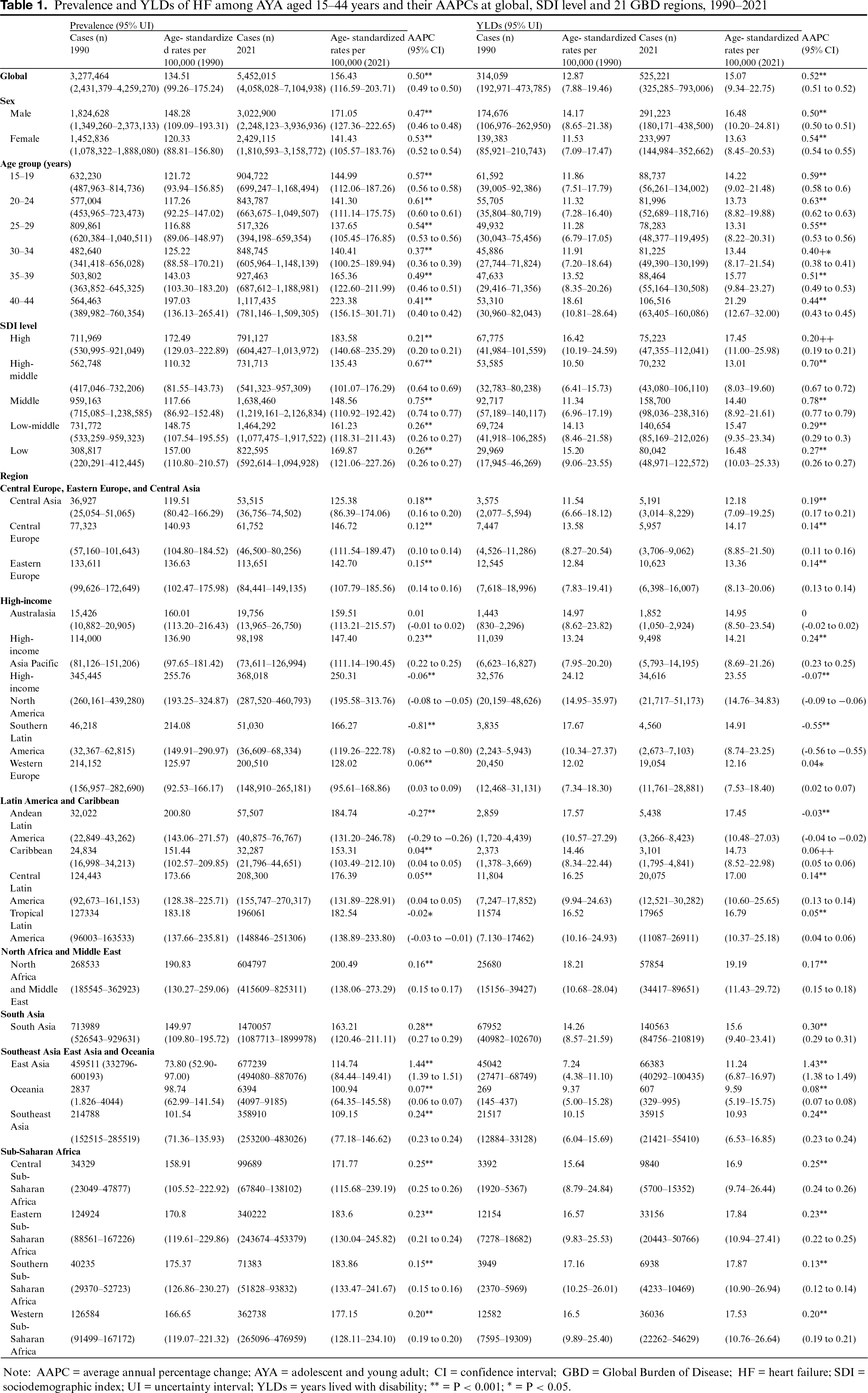
HF among AYAs aged 15–44 years caused 5,452,015 global cases (95% UI: 4,058,028–7,104,938) in 2021, corresponding to an age-standardized prevalence rate (ASPR) of 156.43 per 100,000 persons (95% UI: 116.59–203.71). This represents a substantial increase from 1990, when there were 3,277,464 cases (95% UI: 2,431,379–4,259,270) and an ASPR of 134.51 (95% UI: 99.26–175.24). Similarly, HF-related YLDs in this demographic reached 525,221 cases (95% UI: 325,285–793,006) in 2021, with an age-standardized YLD rate (ASYR) of 15.07 (95% UI: 9.34–22.75), compared to 314,059 cases (95% UI: 192,971–473,785) and an ASYR of 12.87 (95% UI: 7.88–19.46) in 1990 (Table 1).
Joinpoint regression analysis revealed a significant upward trend in ASPR from 1990 to 2021 (AAPC = 0.50%; 95% CI: 0.49%–0.50%; P < 0.001), with a marked increase between 2000 and 2005 (APC = 1.19%). The ASYR trend paralleled this rise (AAPC = 0.52%; 95% CI: 0.51%–0.52%; P < 0.001), peaking from 2000 to 2005 (APC = 1.26%) (Table 1 and Figs. 1A, 1B).
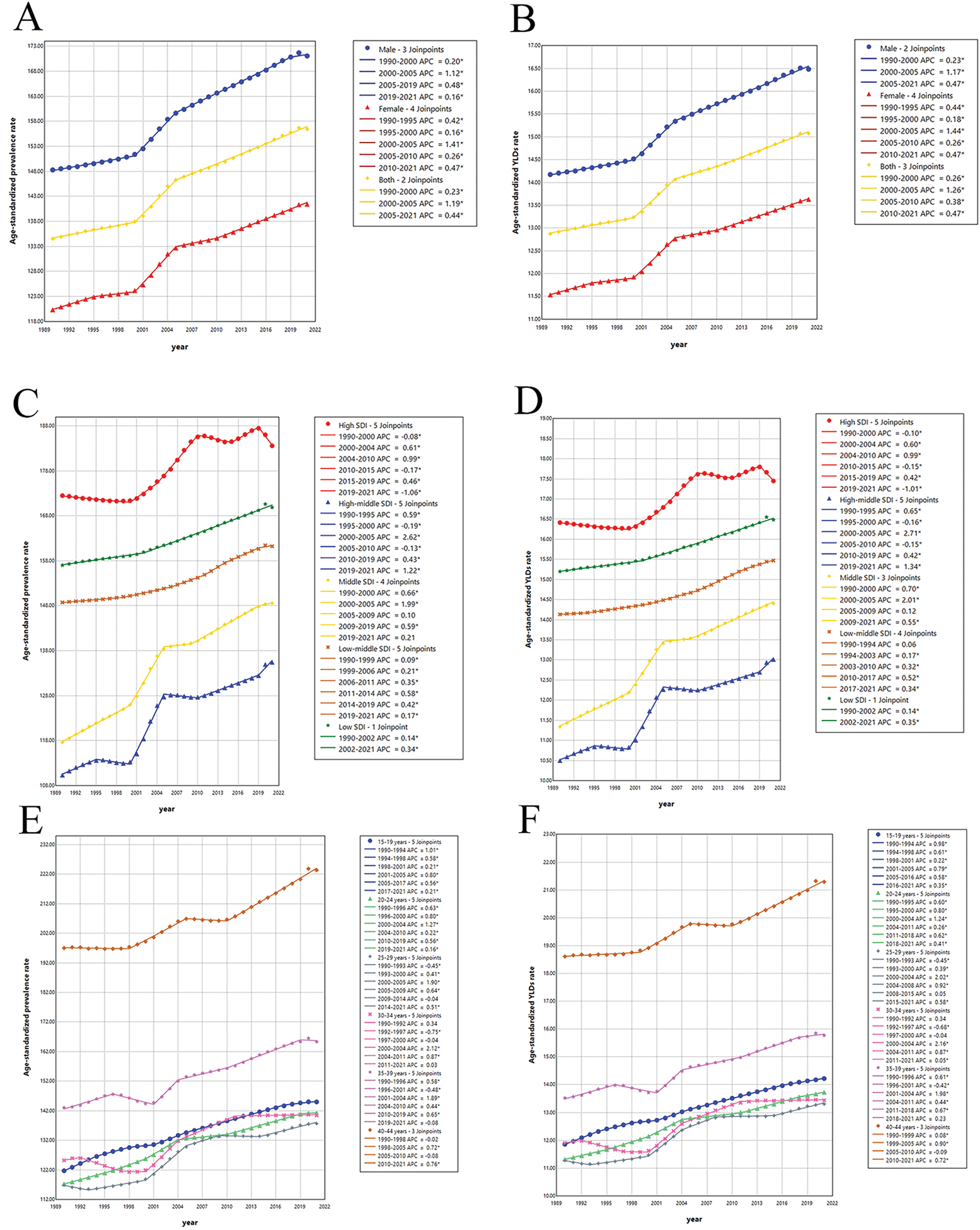
Figure 1. Joinpoint regression analysis of HF patients aged 15–44 years, 1990–2021. (A) ASPR by sex; (B) ASYR by sex; (C) ASPR by SDI level; (D) ASYR by SDI level; (E) ASPR by age groups; (F) ASYR by age groups. APC = annual percent change; ASPR = age-standardized prevalence rate; ASYR = age-standardized years lived with disability rate; HF = heart failure; SDI = Socio-Demographic Index; * = P < 0.05.
Socio-Demographic Level Trends
In 2021, high-SDI regions demonstrated the highest ASPR of 183.58 (95% UI: 140.68–235.29) and ASYR of 17.45 (95% UI: 11.00–25.98), while high-middle-SDI regions showed the lowest burden (ASPR: 135.43 [95% UI: 101.07–176.29]; ASYR: 13.01 [95% UI: 8.03–19.60]) (Table 1). All SDI quintiles showed increasing trends from 1990 to 2021 (all AAPC > 0, P < 0.05). Regions with lower baseline burdens exhibited the most accelerated growth, with middle-SDI regions demonstrating the highest increases. In contrast, high-SDI regions, which bore the highest absolute burden, displayed a significant decrease after 2019 (Table 1 and Figs. 1C, 1D).
Regional Trends
In 21 GBD regions, high-income North America exhibited the highest ASPR at 250.31 per 100,000 (95% UI: 195.58–313.76) and ASYR at 23.55 (95% UI: 14.76–34.83), closely followed by North Africa and the Middle East (ASPR: 200.49; ASYR: 19.19). Conversely, Oceania (ASPR: 100.94; ASYR: 9.59), Southeast Asia (ASPR: 109.15; ASYR: 10.93), and East Asia (ASPR: 114.74; ASYR: 11.24) demonstrated the lowest burdens in 2021 (Table 1). The majority of regions exhibited increasing trends, with East Asia showing the most accelerated growth (AAPC ASPR: 1.44%; ASYR: 1.43%). In contrast, only four regions experienced declines: Southern Latin America, Andean Latin America, high-income North America, and Tropical Latin America (Table 1 and Fig. S1).
Notably, the relationship between SDI and HF burden showed a nonlinear W-shaped distribution across 21 GBD regions. This pattern signifies elevated burdens in both low- and high-SDI regions, reflecting the dual influence of limited healthcare access in developing economies and lifestyle-associated risk factors in affluent societies.
National Trends
In 2021, Canada showed the highest ASPR (269.20 per 100,000; 95% UI: 191.28–356.07), followed by the United States (248.10; 194.30–310.10) and Qatar (236.53; 160.52–325.00). Conversely, Iceland (79.34; 55.39–108.36) and Greece (87.40; 62.08–117.66) exhibited the lowest burdens in 2021 (Fig. 2A and Table S2). Among 184 countries (90.2% of analyzed territories), HF burden significantly increased (all AAPC > 0, P < 0.05). The most accelerated growth occurred in China (ASPR AAPC: 1.49%; 95% CI: 1.43–1.55), the Netherlands (0.79%; 0.69–0.92), and the United Kingdom (0.61%; 0.47–0.72). Conversely, 19 nations demonstrated declining trends, with Bolivia exhibiting the steepest reduction (AAPC: −1.29%), followed by Sweden (−0.91%) and Argentina (−0.87%) (Fig. 2C and Table S2). While low-SDI regions showed marginally elevated ASPR, the heaviest absolute burdens concentrated in high-SDI countries (Fig. S3). This pattern mirrored ASYR, confirming consistent disability-adjusted burden metrics across countries and regions level (Figs. 2B, 2D, Table S2, and Fig. S3).
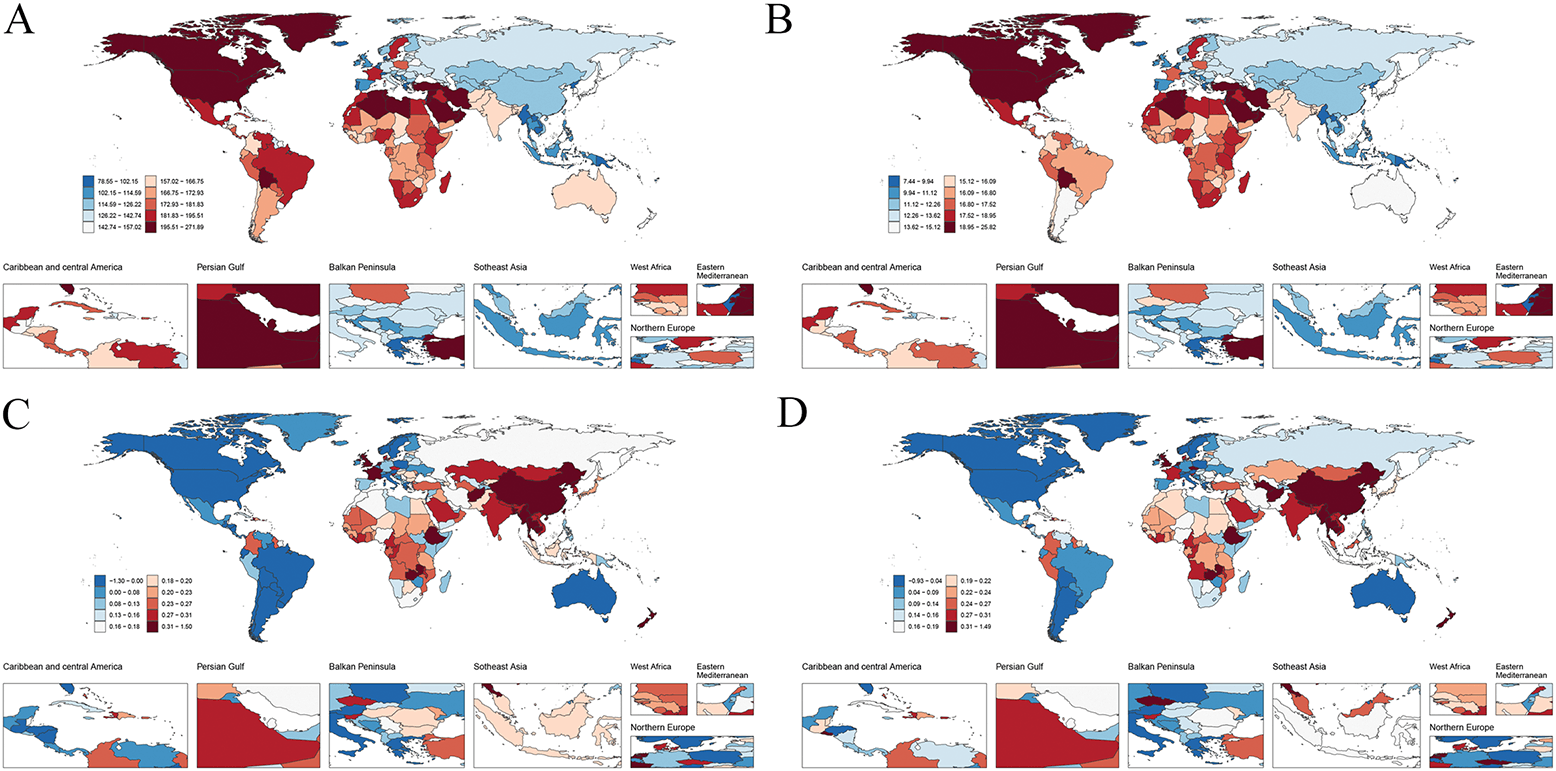
Figure 2. Map of HF burden aged 15–44 years and AAPCs, 1990–2021. (A) ASPR in 2021; (B) ASYR in 2021; (C) AAPCs in ASPR; (D) AAPCs in ASYR. AAPC = average annual percentage changes; ASPR = age-standardized prevalence rate; ASYR = age-standardized years lived with disability rate; HF = heart failure.
Sex Pattern
In 2021, males exhibited higher ASPR (175.05 per 100,000; 95% UI: 127.36–222.65) and ASYR (16.48 per 100,000; 95% UI: 10.20–24.81) compared to females (ASPR: 141.43; ASYR: 13.63 per 100,000). This male predominance persisted universally across different age subgroups, and all countries and territories (Tables 1 and S3). Temporal trends from 1990 to 2021 revealed consistent increases for both sexes globally. Males had an AAPC of 0.47% (95% CI: 0.46–0.48) for ASPR and 0.50% (0.50–0.51) for ASYR, while females showed slightly higher growth. Notably, the period 2000–2005 marked the most rapid acceleration, with APC of 1.12% (males) and 1.41% (females) in ASPR (Figs. 1A, 1B and Table 1). Stratification by SDI further confirmed no significant gender-based divergence in trend trajectories across development strata, reinforcing the robustness of these patterns (Fig. S4).
Age Pattern
Distinct age-dependent patterns in the global burden of HF among AYAs aged 15–44 years were observed in 2021. The 40–44-year cohort demonstrated the highest ASPR (223.38; 95% UI: 156.15–301.71) and ASYR (21.29; 12.67–32.00), followed by the 35–39- and 15–19-year groups. Conversely, the lowest burden was observed in the 30–34- and 25–29-year cohorts (Table 1). This age gradient persisted across most GBD regions (Fig. S5). All age groups demonstrated increases from 1990 to 2021. The most accelerated growth occurred in the 20–24-year cohort (Table 1). Notably, the 30–34-year subgroup experienced the sharpest short-term acceleration during 2000–2004 (ASPR APC: 2.12%), indicating critical period-specific influences (Fig. 1E). ASYR trends paralleled ASPR patterns (Table 1, Fig. 1F, and Fig. S6).
Underlying Causes Analysis
Analysis of 17 underlying causes of HF among AYAs aged 15–44 years revealed cardiomyopathy (CM) as the predominant etiology globally in 2021, accounting for 25.84% of the ASPR. IHD and rheumatic heart disease (RHD) constituted the next largest proportions (25.16% and 14.85%, respectively), followed by hypertensive heart disease (HHD) (13.79%) and congenital birth defects (CBD) (7.67%). Other causes collectively represented minor contributors (<1% individually) (Fig. 3 and Table S4). Age-stratified etiology patterns demonstrated significant transitions, in which CM, CBD, and RHD proportions decreased with advancing age, whereas IHD and HHD exhibited substantial increases (Fig. 3 and Table S4). Geographical stratification revealed CM as the primary driver across high-, high-middle-, and low-SDI regions. Conversely, IHD predominated in middle- and low-middle-SDI regions (Fig. S8). ASYR patterns mirrored ASPR distributions (Figs. S7, S9 and Table S5).
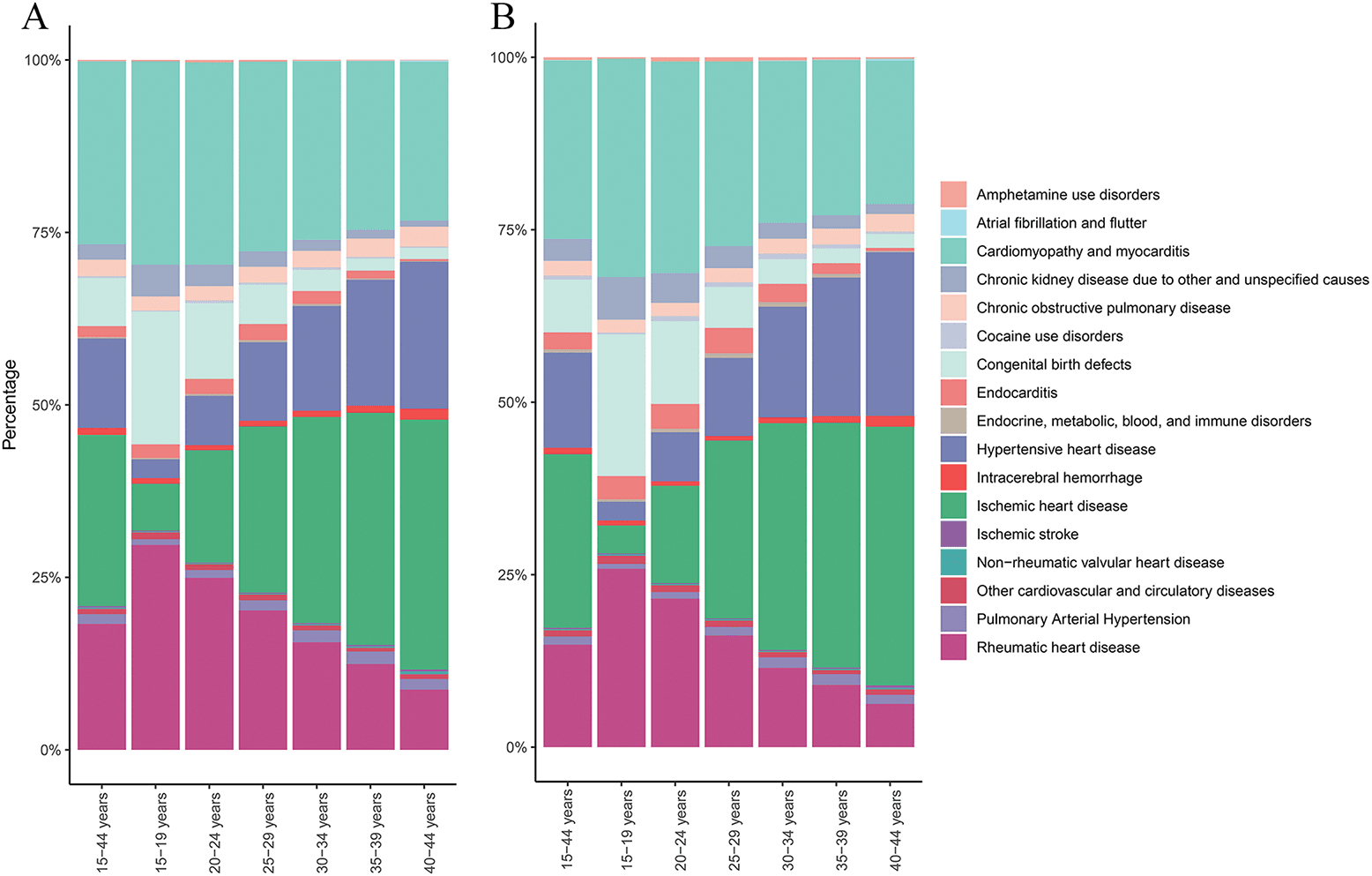
Figure 3. Underlying causes at different age groups. (A) The proportion of main underlying causes in 1990; (B) the proportion of main underlying causes in 2021. ASPR = age-standardized prevalence rate; HF = heart failure.
Prediction to 2050
By 2050, HF cases among AYAs are projected to reach 6,895,715 (95% UI: 4,745,769–9,045,662), corresponding to an ASPR of 178.44 per 100,000 (95% UI: 122.81–234.07). Concurrently, YLDs will rise to 673,591 (462,245–884,937), with an ASYR of 17.43 per 100,000 (11.96–22.90) (Figs. 4A, 4B and Table S6). Stratified analyses indicate uniform upward trajectories across both sexes and all age subgroups during this period, reflecting compounded effects of demographic momentum and evolving risk factor exposures (Figs. 4C–F, S10, and Tables S7, S8). Projected etiological patterns reveal divergent trajectories. While most underlying causes exhibit increasing burdens, PAH and RHD will be marginally declining, with IHD showing the steepest reduction (Fig. S11 and Table S9).
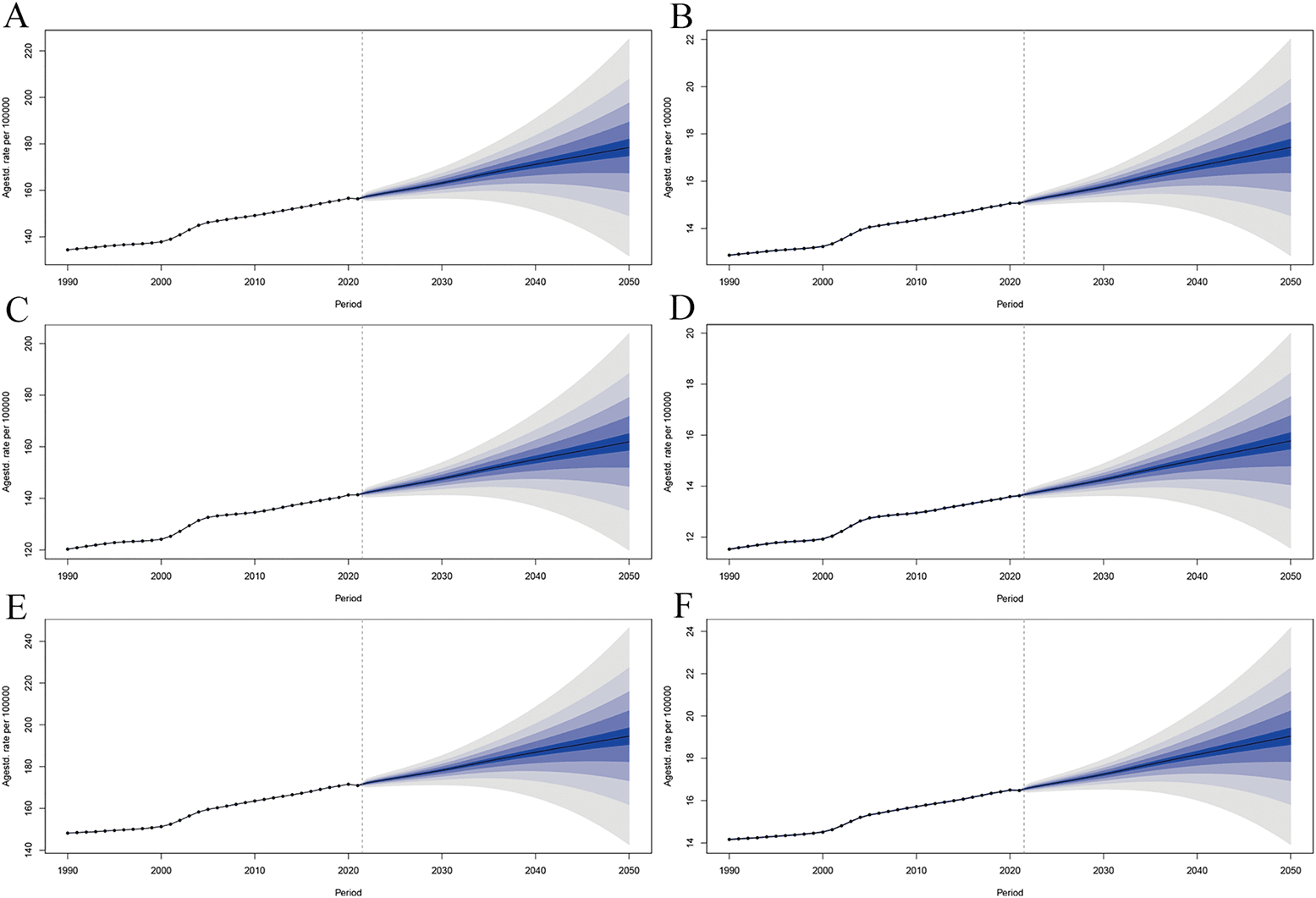
Figure 4. Global predictions to 2050. (A) ASPR prediction to 2050 in both sex; (B) ASYR prediction to 2050 in both sex; (C) ASPR prediction to 2050 in females; (D) ASYR prediction to 2050 in females; (E) ASPR prediction to 2050 in males; (F) ASYR prediction to 2050 in males. ASPR = age-standardized prevalence rate; ASYR = age-standardized years lived with disability rate; HF = heart failure; UI = uncertainty interval.
Discussion
This study presents the first comprehensive assessment of HF burden among AYAs aged 15–44 years across global, regional, and national levels from 1990 to 2021. First, our analyses reveal a sustained increasing trajectory in this disease burden, with projections indicating continued escalation through 2050. Second, persistent male predominance and distinct age-dependent patterns were observed. Third, a nonlinear relationship emerged between socioeconomic development and disease burden. High-SDI regions exhibited the highest absolute burden yet slowest growth, while middle-SDI regions demonstrated the steepest increases. Finally, etiologically, contrasting with ischemic-driven patterns in elderly populations, nonischemic factors are the causes of HF in this age group.
Our findings, derived from a focused analysis of the 15–44-year cohort, reveal critical distinctions from the recent report on 15–49-year-olds by Shu et al., underscoring the necessity of finer age stratification.36 First, burden distribution: approximately 77.4% of the prevalent cases and 87.6% of the ASMR within the broader 15–49-year cohort are concentrated in our younger 15–44-year population, identifying this subgroup as the core driver of the young-adult HF epidemic. Second, identification of critical transitions: By applying Joinpoint regression on the 15–44-year cohort, we were able to identify not only the magnitude but also the precise timing of significant shifts in HF burden trends. This capability to detect and date such inflection points offers a more dynamic understanding of disease progression than approaches that report only average trends. Third, national profiles: the country-level peak shifted from the United Arab Emirates to Canada, a change potentially attributable to high-risk Indigenous Canadian subpopulations characterized by early-onset cardiac lipid abnormalities.37 Most importantly, etiological profile: whereas IHD dominated in the 15–49-year cohort, CM emerges as the primary etiology in the 15–44-year group. This aligns with the early-life manifestation of nonischemic pathologies like CM, rheumatic, and congenital heart diseases, contrasting with IHD, which typically follows decades of risk factor exposure. Therefore, stratifying the young-adult population into 15–44 years is not merely a subset analysis but reveals a distinct epidemiological entity with unique burden drivers, necessitating tailored preventive strategies.
Our study reveals that globally, the burden of HF among AYAs exhibited a consistent upward trend from 1990 to 2021. This finding contrasts with previous reports of declining in ASPR of HF in the general population,38,39 which may be attributable to the predominance of elderly individuals in HF epidemiology.39 Actually, a study in the United States demonstrated a decrease in HF hospitalization rates among those aged 55 and older.40 Similarly, research in Australia found that the decline in HF hospitalization rates was primarily confined to older cohorts.41 Such stratified trajectories highlight an important limitation of population-wide analyses, namely, their potential to obscure rising morbidity in specific demographic subgroups.
Furthermore, our findings reveal a nuanced trend within specific socioeconomic groups. Contrary to a previous study reporting declining HF prevalence among those under 50 in high- and high-middle-SDI regions from 1990 to 2021,42 our analysis shows an upward trajectory in these quintiles until 2019, followed by a marked post-2019 decline specifically in high-SDI regions. This inflection point coincides with several developments: (i) the expansion of telemedicine during the coronavirus disease 2019 pandemic, which may have improved continuity of chronic HF management;43 (ii) a therapeutic paradigm shift following trials such as EMPEROR-Preserved (2017–2021) and the subsequent 2021 ESC guidelines endorsing sodium-glucose cotransporter-2 inhibitors as first-line therapy for HF;44,45 and (iii) greater healthcare resources and health literacy in high-SDI settings, which can facilitate preventive behaviors and early treatment.46 Despite these contextual factors, high-SDI regions retained the highest HF burden in 2021. This paradox may reflect underlying structural disparities. For instance, in many North African and Middle Eastern countries, healthcare expenditure constitutes less than 5% of GDP, which is below the global average, and physician distribution is uneven, with densities as low as two per 10,000 people in some nations.47 Concurrently, escalating behavioral risks in affluent societies contribute to the burden; in the United States, for example, an obesity/overweight rate of 57.4% among young adults (18–25 years) is a potential driver of its elevated HF ranking.48 Conversely, Oceania, Southeast Asia, and East Asia exhibited the lowest HF burdens, attributable to multiple protective factors: (i) tobacco control successes, such as Japanese male smoking prevalence reduction from 55% to 30% (2000–2020);49 (ii) cardioprotective diets rich in vegetables, fish, and olive oil. Asian diets are predominantly vegetable, and Japanese dietary patterns resemble the Mediterranean diet;50 and (iii) hypertension management excellence. Countries such as Japan, South Korea, Singapore, and Thailand exhibit relatively high awareness, treatment, and control rates of hypertension.51,52
Among 204 countries and territories analyzed, Iceland and Greece demonstrated the lowest HF burden, possibly attributed to distinct cardioprotective lifestyle patterns. Greek populations exhibit high adherence to the Mediterranean die,53 characterized by annual per-capita olive oil consumption of 12.08 kg.54 A large number of studies have shown that olive oil is a key source of monounsaturated fats and polyphenols that confer anti-inflammatory, antioxidant, and vasodilatory benefits, collectively mitigating atherosclerotic progression and myocardial dysfunction.55,56 Concurrently, Icelandic residents display exceptional physical activity engagement, with 56% of adults meeting World Health Organization-recommended exercise targets (≥150 minutes/week moderate-to-vigorous activity), markedly surpassing the European Union average of 33% and enhancing cardiovascular resilience through improved endothelial function and metabolic regulation.57 This contrasts sharply with the accelerating HF burden observed in >90% of nations. China exhibits the steepest growth (ASPR AAPC: 1.49%), driven by rising cardiometabolic risks despite the “Healthy China 2030” hypertension control initiative.58 The Netherlands (AAPC: 0.79%) and the United Kingdom (AAPC: 0.61%) similarly reflect persistent healthcare access disparities and suboptimal risk factor control in these countries and territories. Therefore, introducing policies targeting the primary causes of HF, such as taxation on sugar-sweetened beverages, and addressing socioeconomic health disparities could be important strategies for effective HF prevention and management in these regions.
Males exhibited a systematically higher burden of HF than females across all geographic regions and age subgroups from 1990 to 2021. This disparity can be attributed to a confluence of divergent behavioral and metabolic risk profiles, potential biological contributors, and sex-specific patterns in healthcare utilization. Men have historically demonstrated a higher prevalence of modifiable risk factors, including smoking, diabetes, and central obesity.59–61 Additionally, biological differences may play a role; premenopausal females benefit from relative cardioprotection linked to estrogen, which is associated with favorable vascular physiology and a lower incidence of heart failure compared to age-matched males.62–64
Crucially, healthcare engagement patterns significantly influence recorded burden. The peak burden observed in the 40–44-year age group in 2021 coincides temporally with the expansion of structured cardiovascular screening programs, such as the UK’s “Men’s Health MOT,” which enhance case detection specifically among middle-aged men. This pattern indicates that the elevated burden metric reflects not only the acceleration of cardiometabolic risk in mid-adulthood but also the sensitivity of burden estimates to diagnostic intensity and access to care.
The study addresses a critical evidence gap in cardiovascular epidemiology. We demonstrated that this demographic exhibits unique etiological profiles, with CM constituting the primary HF etiology, contrasting sharply with ischemic-driven disease in older cohorts. However, this global finding masks significant regional variation, which is principally mediated by socioeconomic development. In high-middle-SDI settings, economic advancement generates a dual force: it enhances diagnostic capacity to identify CM while concurrently promoting lifestyle transitions that increase cardiometabolic risk-related CM subtypes.65 Conversely, in low-middle-SDI regions, the CM burden remains closely linked to preventable infectious antecedents such as RHD, reflecting persistent gaps in primary healthcare. This divergence is crystallized in high-burden middle-SDI nations like Indonesia, which faces a composite burden of persistent infectious causes and rising metabolic cardiomyopathies.66 Consequently, the specific CM profile in a region acts as a direct marker of its stage in the epidemiological transition. Despite declining age-standardized HF incidence in general, AYAs experience a sustained burden escalation, attributable to rising cardiometabolic risks, diagnostic advancements, and socioeconomic transitions. This etiological stratification necessitates equally development-stratified interventions: high-income regions require enhanced cardiomyopathy surveillance and early pharmacotherapy, while low- and middle-income regions must prioritize rheumatic fever prevention and hypertension control programs targeting young populations.
This study has several limitations. First, substantial heterogeneity in primary data quality and availability across regions, particularly in low- and middle-income nations. While this variation contributes to wider uncertainty intervals for burden estimates in these settings, the GBD modeling framework employs strategies, such as spatiotemporal smoothing and crosswalk adjustments, to mitigate potential source bias. Consequently, these regional estimates should be interpreted with due caution, with a focus on their reported uncertainty ranges. Second, we did not further analyze the different pressure types of HF, which limits pathophysiological mechanism exploration and targeted intervention assessment. Third, the absence of HF-specific mortality data precludes analysis of fatality trends among AYAs, restricting comprehensive burden assessment. Fourth, the ecological nature of the GBD data is an important limitation. While robust for describing population-level trends, the GBD framework cannot statistically adjust for potential unmeasured confounders, such as simultaneous policy reforms, healthcare access disparities, or environmental exposures, that may independently influence HF burden. Therefore, the observed associations between burden metrics and socioeconomic or healthcare factors represent correlations, not established causal effects. Fifth, the projections from the BAPC model offer baseline forecasts based on historical trends. As a static framework, the model cannot simulate the effects of future interventions, policy changes, or clinical advances. Consequently, our estimates do not include their potential mitigation, and sensitivity analyses of hypothetical strategies were not performed, as this study aimed to establish a data-informed reference scenario. These projections should therefore be interpreted as a benchmark for guiding public health planning, not as a definitive outcome. Sixth, although we discuss hormonal differences as a potential explanation for the observed sex disparity in HF burden, our analysis did not include individual-level data on menopausal status. We were therefore unable to stratify female participants to test whether HF risk rises following menopause. Future detailed clinical data are needed to directly examine this hormonal hypothesis. Finally, the observed associations between HF burden and SDI should be interpreted as correlations rather than causation. While socioeconomic gradients demonstrate significant ecological correlations, unmeasured confounders, such as healthcare infrastructure variability and environmental exposures, may drive these relationships. Future studies should incorporate causal inference methods to delineate direct SDI effects from contextual mediators.
Conclusion
The HF burden increased steadily among AYAs aged 15–44 years globally from 1990 to 2021, predominantly driven by nonischemic causes and disproportionately affecting males and females. Geographical disparities in HF burden correlate strongly with regional variations in dietary patterns, healthcare resource allocation, economic development, and policy implementation gaps. The projected continued increase in HF burden among AYAs underscores the urgent need for more proactive strategies to address its underlying causes.
Acknowledgment
The authors extend their gratitude to the collaborators of the Global Burden of Diseases, Injuries, and Risk Factors Study 2021 for their foundational work. We also acknowledge the Institute for Health Metrics and Evaluation for providing the comprehensive GBD dataset. Additionally, we thank Jingding Medical Technology Co., Ltd. for technical support in data visualization through the JD_GBDR software (version 2.27). We also gratefully acknowledge the use of GraphPad Prism (version 10.1.2) for the creation of figures in this study and thank DeeSeek (V3.1) for language polishing and grammatical refinements, which enhanced the professionalism of the language in our study.
Funding Source
None.
Author Contributions
B.H. and S.L. contributed equally to this study as co-senior authors. They were responsible for the conceptualization, supervision, and acquisition of funding, and critically reviewed and edited the manuscript. J.C. and S.L. conceived and designed the study, curated the data, and wrote the original draft. They also contributed to visualization, software development, and manuscript revision. Y.L., S.Y., and Z.X. were involved in data curation, drafting sections of the manuscript, and contributing to the study’s conception and critical review.
Data Availability
The datasets supporting this study are publicly available via the Global Burden of Disease (GBD) 2021 database. Detailed information regarding data sources and access is provided in the Materials and methods section.
Ethical Statement
Not applicable
Conflict of Interest
The authors report no conflicts of interest in this work.
Supplemental Information
Supplemental information for this article can be found online at https://sup.jclinque.com/api/articles/101/download-suppl.
References
[1] Bozkurt B, Coats AJS, Tsutsui H, et al. Universal definition and classification of heart failure: a report of the Heart Failure Society of America, Heart Failure Association of the European Society of Cardiology, Japanese Heart Failure Society and Writing Committee of the Universal Definition of Heart Failure: Endorsed by the Canadian Heart Failure Society, Heart Failure Association of India, Cardiac Society of Australia and New Zealand, and Chinese Heart Failure Association. Eur J Heart Fail. March 2021;23(3):352–380. doi:10.1002/ejhf.2115.
[2] Sinescu C, Axente L. Heart failure–concepts and significance. Birth of a prognostic model. J Med Life. October–December 2010;3(4):421–429.
[3] Darvish M, Shakoor A, Feyz L, et al. Heart failure: assessment of the global economic burden. Eur Heart J. August 14, 2025;46(31):3069–3078. doi:10.1093/eurheartj/ehaf323.
[4] Heidenreich PA, Fonarow GC, Opsha Y, Sandhu AT, Sweitzer NK, Warraich HJ. Economic issues in heart failure in the United States. J Card Fail. March 2022;28(3):453–466. doi:10.1016/j.cardfail.2021.12.017.
[5] Senni M, Tribouilloy CM, Rodeheffer RJ, et al. Congestive heart failure in the community: trends in incidence and survival in a 10-year period. Arch Intern Med. January 11, 1999;159(1):29–34. doi:10.1001/archinte.159.1.29.
[6] Conrad N, Judge A, Tran J, et al. Temporal trends and patterns in heart failure incidence: a population-based study of 4 million individuals. Lancet. February 10, 2018;391(10120):572–580. doi:10.1016/s0140-6736(17)32520-5.
[7] Yang R, Zhang X, Bai J, Wang L, Wang W, Cai J. Global, regional, and national burden of hypertensive heart disease among older adults in 204 countries and territories between 1990 and 2019: a trend analysis. Chin Med J (Engl). October 20, 2023;136(20):2421–2430. doi:10.1097/cm9.0000000000002863.
[8] Qu C, Liao S, Zhang J, et al. Burden of cardiovascular disease among elderly: based on the Global Burden of Disease Study 2019. Eur Heart J Qual Care Clin Outcomes. March 1, 2024;10(2):143–153. doi:10.1093/ehjqcco/qcad033.
[9] Zhi H, Yang Y, Zhao J, Mao C, Shen J, Wang X. Global, regional, and national burdens of ischemic heart disease in the older adults aged 60–89 years: a systematic analysis for the Global Burden of Disease Study 2019. Front Cardiovasc Med. 2025;12:1443881. doi:10.3389/fcvm.2025.1443881.
[10] Gerber Y, Weston SA, Redfield MM, et al. A contemporary appraisal of the heart failure epidemic in Olmsted County, Minnesota, 2000 to 2010. JAMA Intern Med. June 2015;175(6):996–1004. doi:10.1001/jamainternmed.2015.0924.
[11] Levy D, Kenchaiah S, Larson MG, et al. Long-term trends in the incidence of and survival with heart failure. N Engl J Med. October 31, 2002;347(18):1397–1402. doi:10.1056/NEJMoa020265.
[12] Zarrinkoub R, Wettermark B, Wändell P, et al. The epidemiology of heart failure, based on data for 2.1 million inhabitants in Sweden. Eur J Heart Fail. September 2013;15(9):995–1002. doi:10.1093/eurjhf/hft064.
[13] Khera R, Kondamudi N, Zhong L, et al. Temporal trends in heart failure incidence among medicare beneficiaries across risk factor strata, 2011 to 2016. JAMA Netw Open. October 1, 2020;3(10):e2022190. doi:10.1001/jamanetworkopen.2020.22190.
[14] Wang Y, Wang X, Wang C, Zhou J. Global, regional, and national burden of cardiovascular disease, 1990–2021: results from the 2021 Global Burden of Disease Study. Cureus. November 2024;16(11):e74333. doi:10.7759/cureus.74333.
[15] Barasa A, Schaufelberger M, Lappas G, Swedberg K, Dellborg M, Rosengren A. Heart failure in young adults: 20-year trends in hospitalization, aetiology, and case fatality in Sweden. Eur Heart J. January 2014;35(1):25–32. doi:10.1093/eurheartj/eht278.
[16] Christiansen MN, Køber L, Weeke P, et al. Age-specific trends in incidence, mortality, and comorbidities of heart failure in Denmark, 1995 to 2012. Circulation. March 28, 2017;135(13):1214–1223. doi:10.1161/circulationaha.116.025941.
[17] Chan DZL, Kerr A, Grey C, et al. Contrasting trends in heart failure incidence in younger and older New Zealanders, 2006–2018. Heart. February 2022;108(4):300–306. doi:10.1136/heartjnl-2021-319853.
[18] Jain V, Minhas AMK, Morris AA, et al. Demographic and regional trends of heart failure-related mortality in young adults in the US, 1999–2019. JAMA Cardiol. September 1, 2022;7(9):900–904. doi:10.1001/jamacardio.2022.2213.
[19] Tromp J, Paniagua SMA, Lau ES, et al. Age dependent associations of risk factors with heart failure: pooled population based cohort study. BMJ. 2021;372:n461. doi:10.1136/bmj.n461.
[20] Huffman MD, Berry JD, Ning H, et al. Lifetime risk for heart failure among white and black Americans: cardiovascular lifetime risk pooling project. J Am Coll Cardiol. April 9, 2013;61(14):1510–1517. doi:10.1016/j.jacc.2013.01.022.
[21] GBD 2021 Risk Factors Collaborators. Global burden and strength of evidence for 88 risk factors in 204 countries and 811 subnational locations, 1990–2021: a systematic analysis for the Global Burden of Disease Study 2021. Lancet. 2024;403(10440):2162–2203. doi:10.1016/s0140-6736(24)00933-4.
[22] Yang C, Jia Y, Zhang C, et al. Global, regional, and national burdens of heart failure in adolescents and young adults aged 10–24 years from 1990 to 2021: an analysis of data from the Global Burden of Disease Study 2021. EClinicalMedicine. January 2025;79:102998. doi:10.1016/j.eclinm.2024.102998.
[23] Ran J, Zhou P, Wang J, et al. Global, regional, and national burden of heart failure and its underlying causes, 1990–2021: results from the global burden of disease study 2021. Biomark Res. January 23, 2025;13(1):16. doi:10.1186/s40364-025-00728-8.
[24] Cheng S, He J, Han Y, et al. Global burden of atrial fibrillation/atrial flutter and its attributable risk factors from 1990 to 2021. Europace. July 2, 2024;26(7):e13070. doi:10.1093/europace/euae195.
[25] Huang Z, Wang J, Liu H, et al. Global trends in adolescent and young adult female cancer burden, 1990–2021: insights from the Global Burden of Disease study. ESMO Open. November 2024;9(11):103958. doi:10.1016/j.esmoop.2024.103958.
[26] Sun J, Qiao Y, Zhao M, Magnussen CG, Xi B. Global, regional, and national burden of cardiovascular diseases in youths and young adults aged 15–39 years in 204 countries/territories, 1990–2019: a systematic analysis of Global Burden of Disease Study 2019. BMC Med. June 26, 2023;21(1):222. doi:10.1186/s12916-023-02925-4.
[27] Andersson C, Vasan RS. Epidemiology of cardiovascular disease in young individuals. Nat Rev Cardiol. April 2018;15(4):230–240. doi:10.1038/nrcardio.2017.154.
[28] GBD 2021 Diseases and Injuries Collaborators. Global incidence, prevalence, years lived with disability (YLDsdisability-adjusted life-years (DALYsand healthy life expectancy (HALE) for 371 diseases and injuries in 204 countries and territories and 811 subnational locations, 1990–2021: a systematic analysis for the Global Burden of Disease Study 2021. Lancet. 2024;403(10440):2133–2161. doi:10.1016/s0140-6736(24)00757-8.
[29] Yang K, Yang X, Jin C, et al. Global burden of type 1 diabetes in adults aged 65 years and older, 1990–2019: population based study. BMJ. June 12, 2024;385:e078432. doi:10.1136/bmj-2023-078432.
[30] Wang F, Ma B, Ma Q, Liu X. Global, regional, and national burden of inguinal, femoral, and abdominal hernias: a systematic analysis of prevalence, incidence, deaths, and DALYs with projections to 2030. Int J Surg. April 1, 2024;110(4):1951–1967. doi:10.1097/js9.0000000000001071.
[31] National Cancer Institute. Joinpoint regression program (Version 5.2.0); 2024. https://surveillance.cancer.gov/joinpoint/
[32] Tian Q, Zheng Y, Li Y, Wu R, Lin Y, Chen Z. Global trends, inequalities, and pathogen shifts in infectious diarrhea among children under five: a comprehensive analysis of the global burden of disease study 1990–2021. Front Nutr. 2025;12:1679081. doi:10.3389/fnut.2025.1679081.
[33] Bai Z, Han J, An J, et al. The global, regional, and national patterns of change in the burden of congenital birth defects, 1990–2021: an analysis of the global burden of disease study 2021 and forecast to 2040. EClinicalMedicine. November 2024;77:102873. doi:10.1016/j.eclinm.2024.102873.
[34] Chen A, Zeng L, Yan Y, Gao G, Xie L. Global pulmonary arterial hypertension trends and projections to 2046: a multi-method analysis of epidemiologic and demographic drivers using GBD 2021. J Thorac Dis. July 31, 2025;17(7):4420–4438. doi:10.21037/jtd-2025-305.
[35] Knoll M, Furkel J, Debus J, Abdollahi A, Karch A, Stock C. An R package for an integrated evaluation of statistical approaches to cancer incidence projection. BMC Med Res Methodol. October 15, 2020;20(1):257. doi:10.1186/s12874-020-01133-5.
[36] Shu S, Zeng Z, Yang Y, et al. Trends and projections of heart failure among adolescents and young adults: an in-depth analysis for the Global Burden of Disease Study 2021. Eur Heart J Qual Care Clin Outcomes. November 4, 2025;11(7):1108–1122. doi:10.1093/ehjqcco/qcaf040.
[37] Garner RC, Gisèle S, Claudia, et al. The Health of First Nations Living Off-Reserve, Inuit, and Métis Adults in Canada: the Impact of Socio-economic Status on Inequalities in Health.pdf; 2010.
[38] Yan T, Zhu S, Yin X, et al. Burden, trends, and inequalities of heart failure globally, 1990 to 2019: a secondary analysis based on the Global Burden of Disease 2019 Study. J Am Heart Assoc. March 21, 2023;12(6):e027852. doi:10.1161/jaha.122.027852.
[39] Liu Z, Li Z, Li X, et al. Global trends in heart failure from 1990 to 2019: an age-period-cohort analysis from the Global Burden of Disease study. ESC Heart Fail. October 2024;11(5):3264–3278. doi:10.1002/ehf2.14915.
[40] Chen J, Dharmarajan K, Wang Y, Krumholz HM. National trends in heart failure hospital stay rates, 2001 to 2009. J Am Coll Cardiol. March 12, 2013;61(10):1078–1088. doi:10.1016/j.jacc.2012.11.057.
[41] Teng TH, Finn J, Hobbs M, Hung J. Heart failure: incidence, case fatality, and hospitalization rates in Western Australia between 1990 and 2005. Circ Heart Fail. March 2010;3(2):236–243. doi:10.1161/circheartfailure.109.879239.
[42] Li X, Zhao C, Liu M, Zhao W, Pan H, Wang D. Sociodemographic index-age differences in the global prevalence of cardiovascular diseases, 1990–2019: a population-based study. Arch Public Health. January 9, 2025;83(1):2. doi:10.1186/s13690-024-01454-7.
[43] Cleland JGF, Clark RA, Pellicori P, Inglis SC. Caring for people with heart failure and many other medical problems through and beyond the COVID-19 pandemic: the advantages of universal access to home telemonitoring. Eur J Heart Fail. June 2020;22(6):995–998. doi:10.1002/ejhf.1864.
[44] Bu S, Jung MH, Lee D, et al. Empagliflozin and dapagliflozin outcomes in heart failure. JAMA Netw Open. December 1, 2025;8(12):e2546865. doi:10.1001/jamanetworkopen.2025.46865.
[45] Sharma A, Verma S, Bhatt DL, et al. Optimizing foundational therapies in patients with HFrEF: how do we translate these findings into clinical care? JACC Basic Transl Sci. May 2022;7(5):504–517. doi:10.1016/j.jacbts.2021.10.018.
[46] Rosengren A, Smyth A, Rangarajan S, et al. Socioeconomic status and risk of cardiovascular disease in 20 low-income, middle-income, and high-income countries: the Prospective Urban Rural Epidemiologic (PURE) study. Lancet Glob Health. June 2019;7(6):e748–e760. doi:10.1016/s2214-109x(19)30045-2.
[47] OECD. Governing for Sustainable Prosperity in the Middle East and North Africa.pdf. OECD Public Governance Reviews. OECD Publishing; 2024.
[48] Kelly AS, Armstrong SC, Michalsky MP, Fox CK. Obesity in adolescents: a review. JAMA. 2024;332(9):738–748. doi:10.1001/jama.2024.11809.
[49] Ueshima H, Sekikawa A, Miura K, et al. Cardiovascular disease and risk factors in Asia: a selected review. Circulation. December 16, 2008;118(25):2702–2709. doi:10.1161/circulationaha.108.790048.
[50] Willcox DC, Scapagnini G, Willcox BJ. Healthy aging diets other than the Mediterranean: a focus on the Okinawan diet. Mech Ageing Dev. Mar–Apr 2014;136–137:148–162. doi:10.1016/j.mad.2014.01.002.
[51] NCD Risk Factor Collaboration (NCD-RisC). Worldwide trends in hypertension prevalence and progress in treatment and control from 1990 to 2019: a pooled analysis of 1201 population-representative studies with 104 million participants. Lancet. 2021;398(10304):957–980. doi:10.1016/s0140-6736(21)01330-1.
[52] WHO. Regional Health Forum: WHO South-East Asia Region. Published 2008, Accessed October 1 2025. https://www.uncclearn.org/resources/library/regional-health-forum-who-south-east-asia-region/
[53] Hackauf H, Winzen G; German Youth Institute. Information and Communication Network Concerning Health-Related Prevention Projects for Young People in the European Union: Final Report. European Commission; 2004. Accessed October 1, 2025. https://ec.europa.eu/health/ph_projects/2002/promotion/fp_promotion_2002_frep_01_en.pdf
[54] Mili S, Bouhaddane M. Forecasting global developments and challenges in olive oil supply and demand: a delphi survey from Spain. Agriculture. 2021;11(3):191. doi:10.3390/agriculture11030191.
[55] Nocella C, Cammisotto V, Fianchini L, et al. Extra Virgin Olive oil and cardiovascular diseases: benefits for human health. Endocr Metab Immune Disord Drug Targets. 2018;18(1):4–13. doi:10.2174/1871530317666171114121533.
[56] Milena E, Maurizio M. Exploring the cardiovascular benefits of extra Virgin Olive Oil: insights into mechanisms and therapeutic potential. Biomolecules. Feb 14 2025;15(2):284. doi:10.3390/biom15020284.
[57] OECD/European Observatory on Health Systems and Policies. Iceland: Country Health Profile 2023. State of Health in the EU. OECD Publishing; 2023. Accessed January 13, 2026. https://www.oecd.org/en/publications/iceland-country-health-profile-2023_f2868adb-en.html
[58] Sun Y, Sun G, Chang Y. Current status and future direction of community-based management of hypertension in China. J Transl Int Med. June 2021;9(2):61–64. doi:10.2478/jtim-2021-0022.
[59] Barrett-Connor E. Sex differences in coronary heart disease. Why are women so superior? The 1995 Ancel Keys Lecture. Circulation. January 7, 1997;95(1):252–264. doi:10.1161/01.cir.95.1.252.
[60] Bu S, Ruan D, Yang Z, et al. Sex-specific prevalence of diabetes and cardiovascular risk factors in the middle-aged population of China: a subgroup analysis of the 2007–2008 China national diabetes and metabolic disorders study. PLoS One. 2015;10(9):e0139039. doi:10.1371/journal.pone.0139039.
[61] Yerly A, van der Vorst EPC, Baumgartner I, Bernhard SM, Schindewolf M, Döring Y. Sex-specific and hormone-related differences in vascular remodelling in atherosclerosis. Eur J Clin Invest. January 2023;53(1):e13885. doi:10.1111/eci.13885.
[62] Arcones AC, Martínez-Cignoni MR, Vila-Bedmar R, et al. Cardiac GRK2 protein levels show sexual dimorphism during aging and are regulated by ovarian hormones. Cells. March 17, 2021;10(3):673. doi:10.3390/cells10030673.
[63] Sickinghe AA, Korporaal SJA, den Ruijter HM, Kessler EL. Estrogen contributions to microvascular dysfunction evolving to heart failure with preserved ejection fraction. Front Endocrinol (Lausanne). 2019;10:442. doi:10.3389/fendo.2019.00442.
[64] Van Essen BJ, Emmens JE, Tromp J, et al. Sex-specific risk factors for new-onset heart failure: the PREVEND study at 25 years. Eur Heart J. April 22, 2025;46(16):1528–1536. doi:10.1093/eurheartj/ehae868.
[65] Zeljkovic I, Gauthey A, Manninger M, et al. Genetic testing for inherited arrhythmia syndromes and cardiomyopathies: results of the European Heart Rhythm Association survey. Europace. August 30, 2024;26(9):1389. doi:10.1093/europace/euae216.
[66] Polo JM, Jeng KS, Lim B, et al. Transgenic mice support replication of hepatitis delta virus RNA in multiple tissues, particularly in skeletal muscle. J Virol. August 1995;69(8):4880–4887. doi:10.1128/jvi.69.8.4880-4887.1995.
 |
Copyright: © 2025 Chen et al. This work is licensed under a Creative Commons Attribution 4.0 International License, which permits unrestricted use, distribution, and reproduction in any medium, provided the original work is properly cited. |