| Journal of Clinical Question. 2025; 2(4): e84 https://doi.org/10.69854/jcq.2025.0025 Advance access publication date 26 August 2025 |
 |
Review
Global Expansion of Mpox: Addressing the Threat to Maternal Health and Healthcare Systems in Pakistan
Muhammad Aslam Rind1, Maria Nazir1, Sahir Bansari1, Mahek Bansari1, Kashaf Iman1, Khalid Sher Khan1, Suresh Kumar1, Farina Fatima Siddiqui1, Ramsha Gul1, Ayesha Naseer1, Muhammad Momin Khan1, Muhammad Rashid Asghar2, Muhammad Idrees 3,*
3,*
1Department of General Medicine, Liaquat University of Medical and Health Sciences, Sindh, Pakistan.
2Multan Institute of Kidney Diseases Multan, Punjab, Pakistan.
3Department of Internal Medicine, Lahore General Hospital, Lahore, Pakistan.
*Corresponding Author: e-mail: dridrees923@gmail.com
Submitted: June 26, 2025 Accepted: August 25, 2025
Clinical Question Box
Are vulnerable populations in Pakistan at risk of severe outcomes from current Mpox outbreaks?
Vulnerable groups in Pakistan, such as pregnant individuals and those in low-resource or flood-affected areas, face heightened risk due to limited immunity, scarce vaccines, and an already overburdened healthcare system. Preventive strategies such as public awareness, targeted vaccination, and international support are essential to reduce morbidity and mortality and to contain the outbreak effectively.
Abstract
Mpox, formerly known as monkeypox, is a zoonotic disease caused by the monkeypox virus of the Orthopoxvirus genus. Once confined to Central and West Africa, it has rapidly evolved into a global public health concern, with outbreaks reported in over 120 countries since 2022. The virus comprises two main clades: Clade I, associated with higher severity, increased complications, and poor maternal and fetal outcomes, and Clade II, particularly subclade IIb, which drove recent international transmission and is generally linked to milder disease. In August 2024, the World Health Organization re-declared Mpox a Public Health Emergency of International Concern following the emergence of a new Clade Ib lineage in the Democratic Republic of Congo, which has demonstrated higher transmissibility and disproportionate effects on pediatric and pregnant populations. Pregnant individuals remain especially vulnerable, as Clade I infections carry heightened risks of miscarriage, intrauterine fetal demise, and vertical transmission, while data on Clade II remain limited. In resource-limited settings like Pakistan, the Mpox threat is compounded by systemic healthcare challenges, including low health expenditure, inadequate infrastructure, and limited access to vaccines and antivirals. Addressing these challenges requires strengthened surveillance, equitable vaccine distribution, targeted maternal care strategies, and global collaboration to mitigate risks and safeguard maternal and neonatal health.
Keywords: Mpox, maternal health, Pakistan, pandemic, monkeypox
Virology and Global Spread of Mpox
Mpox, previously known as monkeypox, is a zoonotic viral disease caused by the monkeypox virus (MPXV), a member of the Orthopoxvirus genus.1 Although the disease resembles smallpox in its rash presentation, it is typically less severe and less transmissible.2 Mpox was first identified in monkeys in Denmark in 1958.3 Historically, it was confined mainly to regions of Central and West Africa, but recent global outbreaks have prompted renewed attention.4 In 2022, the World Health Organization (WHO) officially renamed the disease “Mpox” to eliminate geographic- and animal-associated stigma.5 However, the causative agent continues to be called Mpox until a new designation is provided by the International Committee on Taxonomy of Viruses. Mpox shares its genus with variola (smallpox) and vaccinia viruses. It exists in two primary clades: Clade I (formerly Central African or Congo Basin) and Clade II (formerly West African), with each clade containing additional subclades.6 Clade I tends to be more virulent, while Clade II, including subclade IIb, was the dominant strain in the 2022 global outbreak. Genetic analyses indicate ongoing viral evolution, possibly due to human adaptation.7 Clade Ia primarily affects children in endemic rural areas, while Clade Ib, associated with adult sexual transmission, has emerged in densely populated urban settings.7,8
Mpox is transmitted through multiple routes, involving both zoonotic and human-to-human mechanisms.9 Animal-to-human transmission typically occurs through direct exposure to infected animals via bites, scratches, bodily fluids, or during the handling and preparation of bushmeat. Rodents are suspected to be the primary reservoirs. Human-to-human transmission primarily occurs through direct contact with skin lesions, body fluids, or contaminated objects (fomites), such as bedding or clothing. Although respiratory droplet transmission is possible, it is less common.10 The 2022 outbreak highlighted sexual contact as a dominant transmission route, particularly through close, intimate, skin-to-skin interactions, often resulting in lesions localized to the genital and perianal areas.11 Vertical transmission from mother to fetus, as well as percutaneous transmission through needlestick injuries, has also been documented.12 Viral DNA has been detected in semen, although its role in transmission remains uncertain.
Clinically, Mpox typically begins with an incubation period of 5–13 days, though it can extend up to 21 days. Systemic symptoms such as fever, myalgia, headache, and lymphadenopathy often precede the rash.13,14 The number of lesions can vary from a few to several hundred. Over the following weeks, lesions progress through distinct stages: macules, papules, vesicles, and pustules, each lasting 1–2 days. Lesions are characterized by hard, deeply rooted formations up to 10 mm in size.15 However, during the 2022 outbreak, many patients lacked systemic symptoms and instead presented with localized lesions. The rash follows a predictable progression from macules to papules, vesicles, pustules, and finally crusting. In endemic areas, the rash tends to be widespread, while in recent global outbreaks it has often been confined to the genital, anal, or oral regions, aligning with observed patterns of close-contact transmission.16
Human cases of Mpox were first identified in the 1970s in the Democratic Republic of the Congo (DRC). After the global cessation of smallpox vaccination in 1980, the incidence of Mpox increased, particularly across endemic regions of Africa.17 The WHO reported over 60,000 suspected cases and nearly 1,800 suspected deaths between 2010 and 2023 in the DRC.18 The 2022 outbreak was marked by unprecedented person-to-person transmission across multiple non-endemic countries. Initially reported in the United Kingdom, cases quickly spread across Europe, the Americas, and beyond, often linked to close physical or sexual contact, particularly among men who have sex with men.19,20 A major outbreak began in the DRC in 2023 and expanded to neighboring nations, prompting the WHO to declare it a global public health emergency in 2024.21 During 2022–2023, Pakistan also reported 11 confirmed cases.15 The global Mpox situation further escalated in 2024, with nearly 98,000 cases reported in approximately 120 countries.22
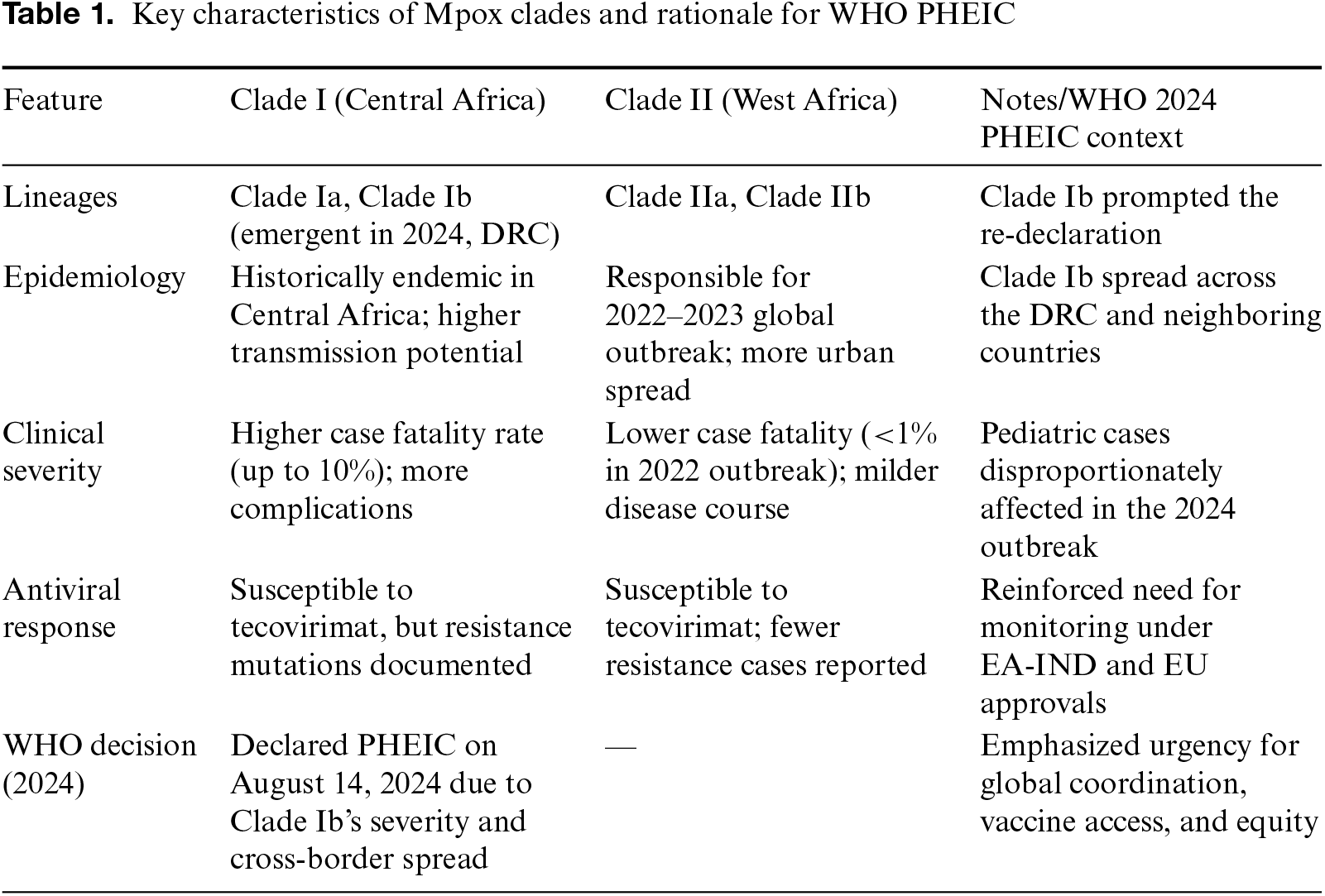
On August 14, 2024, the WHO re-declared Mpox a Public Health Emergency of International Concern (PHEIC) following the emergence of a new Clade Ib lineage in the DRC (Table 1).23 This decision was driven by the strain’s sustained transmission, geographic spread to neighboring countries, and association with increased severity, particularly among children. In contrast to Clade II, which was responsible for the 2022–2023 global outbreak and is typically associated with milder disease and lower mortality, Clade I infections have historically carried higher fatality rates and more complications. While both clades remain susceptible to antivirals such as tecovirimat, resistance mutations have been reported more frequently in Clade I, underscoring the importance of ongoing surveillance and regulatory oversight. This background highlights the rationale for the WHO’s 2024 PHEIC decision and provides critical context for global public health preparedness.
Treatment and Prevention
Clinical management of Mpox is best guided by a risk-stratified framework that balances disease severity, patient vulnerability, and resource allocation. Antiviral therapy, particularly tecovirimat, should be prioritized for those at highest risk of complications. These include patients with severe or progressive disease, immunocompromised individuals, pregnant or breastfeeding persons, infants, and those with ocular, neurologic, or extensive mucocutaneous involvement.24 In contrast, otherwise healthy patients with mild, self-limited illness are generally managed safely with supportive care alone, including analgesia, hydration, and treatment of secondary bacterial infections.25 This approach preserves limited antiviral resources for populations most likely to benefit.
Antiviral resistance is an emerging concern. Resistance to tecovirimat is most often associated with mutations in the VP37 gene, which encodes its target protein. Such mutations have been documented in vitro and, in a small number of clinical cases, linked to reduced treatment effectiveness.26 While resistance and treatment failures remain uncommon, these cases underscore the need for close clinical monitoring, particularly in patients with persistent or progressive disease. Genomic sequencing should be performed where feasible to detect resistance-associated mutations.27 To mitigate resistance risk, antivirals should be reserved for clear clinical indications, adherence should be supported, and therapy should be combined with comprehensive supportive care. Ongoing surveillance and systematic reporting of resistance patterns are essential to guide stewardship.
Regulatory approvals for orthopoxvirus countermeasures add complexity to clinical decisions. For prevention, JYNNEOS (MVA-BN) is licensed in the United States for both smallpox and Mpox, while ACAM2000 remains limited to smallpox, with safety concerns restricting its use in certain populations.28 Equity and access remain major challenges in the global Mpox response. While vaccines and antivirals are more readily available in high-income countries, endemic regions in Central and West Africa continue to face critical shortages. Addressing these disparities requires coordinated international mechanisms to link surplus stockpiles from high-income settings with Africa Centres for Disease Control and Prevention (CDC) procurement and distribution channels, ensuring that countermeasures reach populations at highest risk.
Regulatory pathways for tecovirimat differ across regions and require clear delineation between prevention and treatment indications. At present, tecovirimat is not approved for prophylactic use in any jurisdiction; its regulatory authorizations apply exclusively to treatment. In the United States, the Food and Drug Administration (FDA) has approved tecovirimat solely for the treatment of smallpox, while access for Mpox is limited to the Expanded Access Investigational New Drug (EA-IND) protocol.29 By contrast, the European Medicines Agency has authorized tecovirimat specifically for Mpox, while in Japan the drug has recently been approved for orthopoxvirus infections more broadly.30,31 Real-world outcomes reported through the U.S. EA-IND program have yielded mixed observational evidence, reflecting both the practical need to deploy therapy during outbreaks and the inherent limitations of non-randomized data.32 These findings underscore the importance of ongoing randomized controlled trials, which remain critical to defining the magnitude and consistency of treatment benefit in Mpox.
The clinical algorithms for managing Mpox exposure and symptoms are shown in Fig. 1. If there are no symptoms, vaccination with JYNNEOS is recommended within 4 days of exposure, may reduce severity if given up to 14 days post-exposure, and is considered on a case-by-case basis thereafter; infants under 6 months may receive vaccinia immune globulin intravenous (VIGIV) after public health consultation. If symptoms are present, patients should be evaluated for Mpox, with severe cases, such as those involving ocular, central nervous system, or airway involvement, severe pain, or rapid progression, referred for hospitalization and treated with tecovirimat, escalating to brincidofovir or cidofovir ± VIGIV if necessary. For mild cases, treatment is guided by risk factors, including immunosuppression, pregnancy, infancy, or significant skin disease: high-risk patients may receive antivirals alongside supportive care, while others typically require supportive care alone. Worsening symptoms should prompt reevaluation, and stable patients should remain in home isolation until all lesions are fully healed.
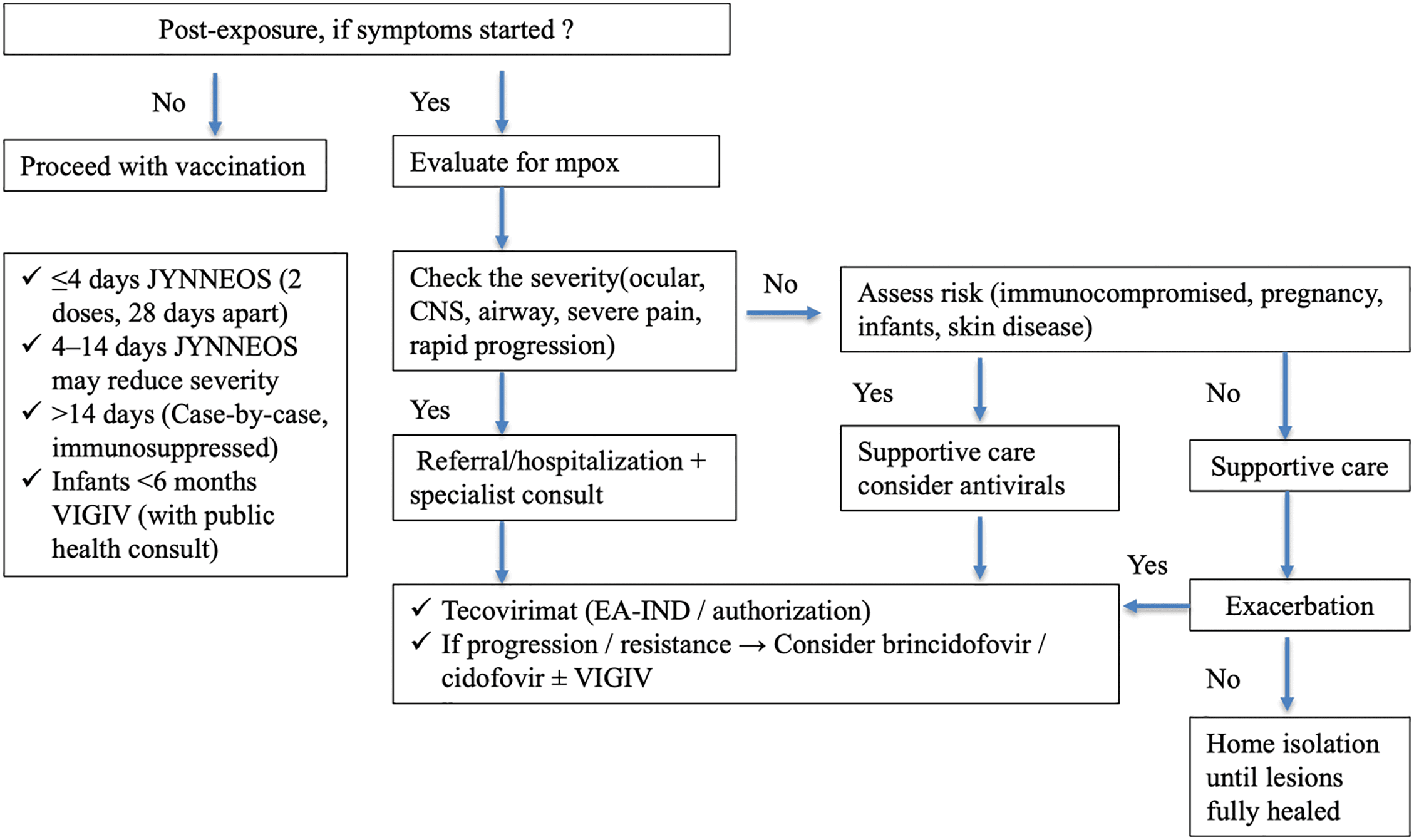
Figure 1. Clinical algorithms following Mpox exposure. CNS: central nervous system; EA-IND: expanded access—investigational new drug; VIGIV: vaccinia immune globulin intravenous.
Concerning Pregnancy
Mpox can cross the placenta and may lead to adverse outcomes in up to 50% of cases.33 Data from Clade I infections indicate a high risk of miscarriage, intrauterine fetal demise, and vertical transmission. For example, among eight pregnancies reported in the DRC between 2023 and 2024, four resulted in fetal loss.34 Historical cases have also documented in utero infection, including severe fetal complications such as hydrops fetalis and widespread fetal skin lesions.35 Among 222 symptomatic patients hospitalized with Mpox in the DRC between 2007 and 2011, four were pregnant; three of these women experienced stillbirths.36 While Clade II infections may be associated with less severe pregnancy outcomes, data remain limited. In one 2022 outbreak report involving 10 cases, no vertical transmission was identified. However, another report described three pregnancy losses among nine cases, along with two liveborn infants who developed rashes and tested positive for Mpox shortly after birth.37
Pregnant or lactating individuals diagnosed with or exposed to Mpox should be managed in consultation with an infectious diseases specialist whenever feasible. Clinical decision-making should account for the specific risks to the pregnant person, fetus, and newborn. Clinical manifestations of Mpox in pregnant individuals are generally similar to those observed in nonpregnant populations. Although Mpox was historically thought to cause more severe disease during pregnancy, recent evidence from the global outbreak beginning in May 2022 involving the Clade II virus does not support increased disease severity in this group.38 However, adverse fetal outcomes have primarily occurred during the first or early second trimester, indicating a period of heightened vulnerability in early gestation.22
Vaccination is a critical component in the prevention and post-exposure management of Mpox during pregnancy and the postpartum period.39 Pregnant individuals with significant exposure should be evaluated for post-exposure prophylaxis with the Modified Vaccinia Ankara vaccine, such as JYNNEOS, when indicated.28 Although Mpox-specific vaccines are not currently FDA-approved for use in pregnancy, animal studies and limited human data, including findings from a study involving 300 pregnant women, suggest a favorable safety profile.40 JYNNEOS is also considered safe during lactation due to its nonreplicating nature. LC16 is another vaccine option with minimal replication potential.41 Conversely, ACAM2000 has recently been authorized for use against Mpox in high-risk individuals; however, it is a live, replication-competent vaccinia virus with contraindications in immunocompromised persons and carries risks of myocarditis and other adverse effects.42 It should also be avoided in pregnant and breastfeeding individuals due to insufficient safety data.43
Antiviral treatment protocols for Mpox in pregnant individuals align closely with those for the general population, with modifications for fetal monitoring.44 The U.S. CDC recommends tecovirimat as the first-line antiviral for use during pregnancy and lactation.45 In the setting of acute maternal infection, fetal surveillance through nonstress testing or biophysical profiles is advised, particularly if findings could alter clinical management. Additionally, serial ultrasound monitoring until delivery may be prudent due to the limited understanding of Mpox’s effects on fetal development.46
Obstetric care should proceed according to standard guidelines, although cesarean delivery may be considered when genital lesions are present to reduce the risk of intrapartum transmission.47 The efficacy of cesarean section in preventing neonatal infection remains uncertain due to the possibility of antepartum transmission. Postnatally, infection control measures should include isolating uninfected neonates from infected parents and other newborns until the parent is no longer infectious. Infected individuals should refrain from breastfeeding unless no safe alternative is available, as the risk of transmission via breast milk or close contact is not fully understood. The WHO recommends isolating neonates from infected mothers until full maternal recovery, confirmed by two negative polymerase chain reaction (PCR) tests.48 Lesion swabs are the preferred specimens for Mpox diagnosis, with PCR targeting conserved regions such as F3L and G2R remain the gold standard. Clade or lineage testing is mainly useful for surveillance and atypical cases. Commercial assays, including the Alinity m MPXV, are authorized but may be affected by clade diversity, highlighting the need for ongoing validation.49
Preventive strategies for Mpox in pregnant individuals generally mirror those for nonpregnant populations but require additional consideration. Smallpox vaccines, which confer approximately 85% protection against Mpox, may be considered in this population despite limited pregnancy-specific data. Prophylaxis with nonreplicating or minimally replicating vaccines such as JYNNEOS and LC16 is preferred.50 Ongoing research is needed to better characterize vaccine safety, antiviral efficacy, and optimal management strategies in pregnant and postpartum individuals affected by Mpox.
Challenges for Pakistan’s Healthcare System
In Pakistan, the healthcare system is already overwhelmed by existing dengue and malaria outbreaks, with an estimated direct cost of PKR 35,823 (US$358) per case.51 Additionally, in 2022, malaria cases surged to 3.4 million, further complicated by historic floods that caused over $15 billion in damages.52 These compounded health crises have significantly strained the healthcare system, making it highly vulnerable to the additional burden of an Mpox outbreak.53 With healthcare expenditure in Pakistan at just 2.95% of GDP, significantly below the WHO recommended threshold of 5% for low-income countries, the country’s health infrastructure is critically underfunded.54 The shortage of healthcare professionals is stark, with only one doctor per 1,300 people, and even fewer nurses and paramedical staff.55 Pakistan faces significant challenges in dealing with Mpox outbreaks due to insufficient healthcare infrastructure. These challenges include inadequate resources: a lack of separate healthcare beds for infectious patients, and limited access to necessary medical supplies such as personal protective equipment (PPE), vaccines, and antiviral medications. An Mpox outbreak in such a context could overwhelm the already underfunded and overburdened health sector.
Mitigating the potential economic and health impacts of an Mpox outbreak requires several strategies. First, there is an urgent need for robust preventive measures, including widespread health education to raise awareness about the disease and its transmission. Vaccination programs, particularly with proven vaccines like JYNNEOS, should be expanded and made accessible to vulnerable populations. Second, international collaboration is crucial. Pakistan will require significant financial support and resources from the global community to bolster its healthcare infrastructure.56 This includes improving access to essential medical supplies such as PPE and medication. Ultimately, establishing a global surveillance system is crucial for monitoring emerging infectious diseases, such as Mpox.
Conclusion
Mpox has transitioned from a regional zoonotic disease to a global health concern, driven by changes in transmission patterns, waning immunity, and increased human-to-human spread. The resurgence of Clade I and the global spread of Clade IIb highlight the virus’s evolving threat. Pregnant individuals face risks, requiring tailored prevention and care. In countries like Pakistan, where healthcare systems are already overburdened, an Mpox outbreak could be especially damaging. Strengthening surveillance, expanding vaccine access, improving public awareness, and fostering international support are critical to controlling current outbreaks and preventing future ones.
Acknowledgments
None.
Funding Source
None.
Author Contributions
M.A.S. and M.M.K. were responsible for conceptualization, supervision, and original draft writing, with additional input from K.S.K. M.N. and S.K. conducted the literature review. S.B., K.I., A.N., and M.I. contributed to review and editing; A.N. and M.I. also supported visualization. M.B., F.F.S., and R.G. led the investigation and visualization. All authors reviewed and approved the final manuscript and its data.
Data Availability
This study is a review-based short communication/perspective and does not include primary data. All data supporting the findings are derived from publicly available sources, which are cited in the manuscript.
Ethical Statement
There are no human participants in this article, and ethical approval or informed consent is not required.
Conflict of Interest
The authors declare no potential conflicts of interest regarding the research, authorship, or publication of this article. M.I. serves on the editorial board.
Supplemental Information
Supplemental information for this article can be found online at https://sup.jclinque.com/api/articles/84/download-suppl.
References
[1] Alakunle E, Kolawole D, Diaz-Cánova D, et al. A comprehensive review of monkeypox virus and mpox characteristics. Front Cell Infect Microbiol. 2024;14:1360586. doi:10.3389/fcimb.2024.1360586.
[2] Shehryar A, Halappa Nagaraj R, Kanwal F, et al. Unraveling monkeypox: an emerging threat in global health. Cureus. August 2023;15(8):e43961. doi:10.7759/cureus.43961.
[3] Parker S, Buller RM. A review of experimental and natural infections of animals with monkeypox virus between 1958 and 2012. Future Virol. February 1, 2013;8(2):129–157. doi:10.2217/fvl.12.130.
[4] Majie A, Saha R, Sarkar B. The outbreak of the monkeypox virus in the shadow of the pandemic. Environ Sci Pollut Res Int. April 2023;30(17):48686–48702. doi:10.1007/s11356-023-26098-y.
[5] World Health Organization. WHO recommends new name for monkeypox disease. Published November 2022, Accessed Jule 20, 2025. https://www.who.int/news/item/28-11-2022-who-recommends-new-name-for-monkeypox-disease.
[6] Osborn LJ, Villarreal D, Wald-Dickler N, Bard JD. Monkeypox: clinical considerations, epidemiology, and laboratory diagnostics. Clin Microbiol Newsl. November 15, 2022;44(22):199–208. doi:10.1016/j.clinmicnews.2022.11.003.
[7] Vakaniaki EH, Kacita C, Kinganda-Lusamaki E, et al. Sustained human outbreak of a new MPXV clade I lineage in eastern Democratic Republic of the Congo. Nat Med. October 2024;30(10):2791–2795. doi:10.1038/s41591-024-03130-3.
[8] Yinda CK, Koukouikila-Koussounda F, Mayengue PI, et al. Genetic sequencing analysis of monkeypox virus clade I in Republic of the Congo: a cross-sectional, descriptive study. Lancet. November 9, 2024;404(10465):1815–1822. doi:10.1016/s0140-6736(24)02188-3.
[9] Martínez-Fernández DE, Fernández-Quezada D, Casillas-Muñoz FAG, et al. Human monkeypox: a comprehensive overview of epidemiology, pathogenesis, diagnosis, treatment, and prevention strategies. Pathogens. July 18, 2023;12(7):947. doi:10.3390/pathogens12070947.
[10] Ogunleye SC, Akinsulie OC, Aborode AT, et al. The re-emergence and transmission of monkeypox virus in Nigeria: the role of one health. Front. Public Health. 2023;11:1334238. doi:10.3389/fpubh.2023.1334238.
[11] Hatami H, Jamshidi P, Arbabi M, et al. Demographic, epidemiologic, and clinical characteristics of human monkeypox disease pre- and post-2022 outbreaks: a systematic review and meta-analysis. Biomedicines. March 20, 2023;11(3):957. doi:10.3390/biomedicines11030957.
[12] Velázquez-Cervantes MA, Ulloa-Aguilar JM, León-Juárez M. Mpox and pregnancy: a neglected disease and its impact on perinatal health. Rev Clin Esp (Barc). January 2023;223(1):32–39. doi:10.1016/j.rceng.2022.09.002.
[13] Al-Dabbagh J, Mohammad Deeb E, Younis R, Eissa R. The dermatological manifestations and differential diagnosis of monkeypox: a narrative review. Medicine. 2024;103(44):e40359. doi:10.1097/MD.0000000000040359.
[14] Lu J, Xing H, Wang C, et al. Mpox (formerly monkeypox): pathogenesis, prevention, and treatment. Signal Transduct Target Ther. December 27, 2023;8(1):458. doi:10.1038/s41392-023-01675-2.
[15] Mitjà O, Ogoina D, Titanji BK, et al. Monkeypox. Lancet. January 7, 2023;401(10370):60–74. doi:10.1016/s0140-6736(22)02075-x.
[16] Prasad S, Galvan Casas C, Strahan AG, et al. A dermatologic assessment of 101 mpox (monkeypox) cases from 13 countries during the 2022 outbreak: skin lesion morphology, clinical course, and scarring. J Am Acad Dermatol. May 2023;88(5):1066–1073. doi:10.1016/j.jaad.2022.12.035.
[17] Naga NG, Nawar EA, Mobarak AA, Faramawy AG, Al-Kordy HMH. Monkeypox: a re-emergent virus with global health implications—a comprehensive review. Trop Dis Travel Med Vaccines. January 15, 2025;11(1):2. doi:10.1186/s40794-024-00237-w.
[18] Bangwen E, Diavita R, De Vos E, et al. Suspected and confirmed mpox cases in DR Congo: a retrospective analysis of national epidemiological and laboratory surveillance data, 2010–23. Lancet. February 1, 2025;405(10476):408–419. doi:10.1016/s0140-6736(24)02669-2.
[19] Koenig KL, Beÿ CK, Marty AM. Monkeypox 2022 identify-isolate-inform: a 3I tool for frontline clinicians for a zoonosis with escalating human community transmission. One Health. December 2022;15(2):100410. doi:10.1016/j.onehlt.2022.100410.
[20] Thornhill JP, Barkati S, Walmsley S, et al. Monkeypox virus infection in humans across 16 countries—April–June 2022. N Engl J Med. August 25, 2022;387(8):679–691. doi:10.1056/NEJMoa2207323.
[21] Verma A, Nazli Khatib M, Datt Sharma G, et al. Mpox 2024: new variant, new challenges, and the looming pandemic. Clin Infect Pract. November 1, 2024;24(2557–2569):100394. doi:10.1016/j.clinpr.2024.100394.
[22] Bogacka A, Wroczynska A, Rymer W, et al. Mpox unveiled: global epidemiology, treatment advances, and prevention strategies. One Health. June 2025;20(2023):101030. doi:10.1016/j.onehlt.2025.101030.
[23] World Health Organization. WHO Director-General declares mpox outbreak a public health emergency of international concern. Published August 2024, Accessed August 19, 2025. https://www.who.int/news/item/14-08-2024-who-director-general-declares-mpox-outbreak-a-public-health-emergency-of-international-concern.
[24] Imran M, Sohail M, Kamran J, Abbas SQ, Azeem K, Korir E. Vaccines and antiviral therapies for Mpox virus in pregnant and breastfeeding women: efficacy and maternal–child outcomes. Viruses. 2025;17(4):456. doi:10.3390/v17040456.
[25] Tsige AW, Ayele SG. Monkeypox: prevention strategies and challenges: updated review. Health Sci Rep. April 2025;8(4):e70640. doi:10.1002/hsr2.70640.
[26] Wang Y, Wang X, Doğan T, Sam-Agudu NA, Al-Tawfiq JA, Pan Q. Mpox: disease manifestations and therapeutic development. J Virol. August 11, 2025;53:e0015225. doi:10.1128/jvi.00152-25.
[27] Hershan AA. Virology, epidemiology, transmissions, diagnostic tests, prophylaxis and treatments of human Mpox: Saudi Arabia perspective. Front Cell Infect Microbiol. 2025;15:1530900. doi:10.3389/fcimb.2025.1530900.
[28] Poland GA, Kennedy RB, Tosh PK. Prevention of monkeypox with vaccines: a rapid review. Lancet Infect Dis. December 2022;22(12):e349–e358. doi:10.1016/s1473-3099(22)00574-6.
[29] Yu PA, Elmor R, Muhammad K, Yu YC, Rao AK. Tecovirimat use under expanded access to treat Mpox in the United States, 2022–2023. NEJM Evid. October 2024;3(10):EVIDoa2400189. doi:10.1056/EVIDoa2400189.
[30] Costa V, Custodio MG, Gefen E, Fregni F. The relevance of the real-world evidence in research, clinical, and regulatory decision making. Frontiers in Public Health. 2025;13:1512429. doi:10.3389/fpubh.2025.1512429.
[31] Rizk JG, Lippi G, Henry BM, Notarte KI, Rizk Y. Tecovirimat and mpox: a regulatory balancing act between hope, hurdles, and high-risk populations. Eur J Intern Med. June 2025;136(10):144–145. doi:10.1016/j.ejim.2025.01.031.
[32] Postal J, Guivel-Benhassine F, Porrot F, et al. Antiviral activity of tecovirimat against monkeypox virus clades 1a, 1b, 2a, and 2b. Lancet Infect Dis. March 2025;25(3):e126–e127. doi:10.1016/s1473-3099(25)00014-3.
[33] Sanchez Clemente N, Coles C, Paixao ES, et al. Paediatric, maternal, and congenital mpox: a systematic review and meta-analysis. Lancet Glob Health. April 2024;12(4):e572–e588. doi:10.1016/s2214-109x(23)00607-1.
[34] Schwartz DA. High rates of miscarriage and stillbirth among pregnant women with Clade I Mpox (Monkeypox) are confirmed during 2023–2024 DR Congo outbreak in South Kivu Province. Viruses. July 13, 2024;16(7):1123. doi:10.3390/v16071123.
[35] Ubom AE, Oiwoh SO, Ajiboye AD, et al. Mpox in pregnancy: management, risks and challenges in Africa and lessons from the COVID-19 pandemic. Int J Gynaecol Obstet. November 2023;163(2):466–475. doi:10.1002/ijgo.14810.
[36] Mbala PK, Huggins JW, Riu-Rovira T, et al. Maternal and fetal outcomes among pregnant women with human monkeypox infection in the democratic Republic of Congo. J Infect Dis. 2017;216(7):824–828. doi:10.1093/infdis/jix260.
[37] Khalil A, Samara A, O’Brien P, et al. Monkeypox in pregnancy: update on current outbreak. Lancet Infect Dis. November 2022;22(11):1534–1535. doi:10.1016/s1473-3099(22)00612-0.
[38] Titanji BK, Hazra A, Zucker J. Mpox clinical presentation, diagnostic approaches, and treatment strategies: a review. JAMA. November 19, 2024;332(19):1652–1662. doi:10.1001/jama.2024.21091.
[39] Imran M, Sohail M, Kamran J, Abbas SQ, Azeem K, Korir E. Vaccines and antiviral therapies for Mpox virus in pregnant and breastfeeding women: efficacy and maternal-child outcomes. Viruses. March 22, 2025;17(4):456. doi:10.3390/v17040456.
[40] Dashraath P, Nielsen-Saines K, Rimoin A, Mattar CNZ, Panchaud A, Baud D. Monkeypox in pregnancy: virology, clinical presentation, and obstetric management. Am J Obstet Gynecol. December 2022;227(6):849–861.e7. doi:10.1016/j.ajog.2022.08.017.
[41] Wahid M, Mandal RK, Sikander M, et al. Safety and efficacy of repurposed smallpox vaccines against Mpox: a critical review of ACAM2000, JYNNEOS, and LC16. J Epidemiol Glob Health. June 24, 2025;15(1):88. doi:10.1007/s44197-025-00432-8.
[42] Rizk Y, Lippi G, Henry BM, Notarte KI, Rizk JG. Update on Mpox management: epidemiology, vaccines and therapeutics, and regulatory changes. Drugs. January 2025;85(1):1–9. doi:10.1007/s40265-024-02117-1.
[43] Abu-Azzam O, Abu-Jeyyab M, Daradkeh M, et al. Monkeypox infection and pregnancy in lower and middle-income countries: precautions & recommendations. Rev Bras Ginecol Obstet. 2024;46:e-rbgo54. doi:10.61622/rbgo/2024rbgo54.
[44] Yadav R, Chaudhary AA, Srivastava U, et al. Mpox 2022 to 2025 update: a comprehensive review on its complications, transmission, diagnosis, and treatment. Viruses. 2025;17(6):753. doi:10.3390/v17060753.
[45] Yu PA, Elmor R, Muhammad K, Yu YC, Rao AK. Tecovirimat use under expanded access to treat Mpox in the United States, 2022–2023. NEJM Evid. 2024;3(10):EVIDoa2400189. doi:10.1056/EVIDoa2400189.
[46] D’Antonio F, Pagani G, Buca D, Khalil A. Monkeypox infection in pregnancy: a systematic review and metaanalysis. Am J Obstet Gynecol MFM. January 2023;5(1):100747. doi:10.1016/j.ajogmf.2022.100747.
[47] Khalil A, Samara A, O’Brien P, et al. Monkeypox and pregnancy: what do obstetricians need to know? Ultrasound Obstet Gynecol. July 2022;60(1):22–27. doi:10.1002/uog.24968.
[48] Maru V, Ghaffar UB, Rawat A, et al. Clinical and epidemiological interventions for monkeypox management in children: a systematic review. Cureus. May 2023;15(5):e38521. doi:10.7759/cureus.38521.
[49] Barbhuiya PA, Laskar MA, Talukdar S, Kumari P, Pathak MP. Current trends in diagnostics, biomarker identification, and drug discovery targeting Monkeypox (Mpox). Microbe. June 1, 2025;7:100330. doi:10.1016/j.microb.2025.100330.
[50] Saadh MJ, Ghadimkhani T, Soltani N, et al. Progress and prospects on vaccine development against monkeypox infection. Microb Pathog. July 2023;180(2):106156. doi:10.1016/j.micpath.2023.106156.
[51] Idrees M, Khan MM, Talha M, et al. Strengthening Pakistan’s healthcare and economic resilience against potential mpox outbreaks. Asian Pacific Journal of Tropical Medicine. 2024;17(12):525–526. doi:10.4103/apjtm.apjtm_544_24.
[52] World Health Organization. “It was just the perfect storm for malaria” – Pakistan responds to surge in cases following the 2022 floods. Published 2022, Accessed July 20, 2025. https://www.who.int/news-room/feature-stories/detail/It-was-just-the-perfect-storm-for-malaria-pakistan-responds-to-surge-in-cases-following-the-2022-floods.
[53] Idrees M, Khan MM, Talha M, et al. Strengthening Pakistan’s healthcare and economic resilience against potential mpox outbreaks. Asian Pac J Trop Med. 2024;17(12):525–526. doi:10.4103/apjtm.apjtm_544_24.
[54] Khan SJ, Asif M, Aslam S, Khan WJ, Hamza SA. Pakistan’s healthcare system: a review of major challenges and the first comprehensive universal health coverage initiative. Cureus. September 2023;15(9):e44641. doi:10.7759/cureus.44641.
[55] Muhammad Q, Eiman H, Fazal F, Ibrahim M, Gondal MF. Healthcare in Pakistan: navigating challenges and building a brighter future. Cureus. June 2023;15(6):e40218. doi:10.7759/cureus.40218.
[56] Jamil H, Idrees M, Idrees K, et al. Socio-demographic determinants of monkeypox virus preventive behavior: a cross-sectional study in Pakistan. PLoS One. 2023;18(8):e0279952. doi:10.1371/journal.pone.0279952.
 |
Copyright: © 2025 Rind et al. This work is licensed under a Creative Commons Attribution 4.0 International License, which permits unrestricted use, distribution, and reproduction in any medium, provided the original work is properly cited. |