| Journal of Clinical Question. 2025; 2(3): e70 https://doi.org/10.69854/jcq.2025.0011 Advance access publication date 20 May 2025 |
 |
Meta-Analysis
Efficacy of Immunosuppression Therapy in Primary IgA Nephropathy in Adults: A Systematic Review and Network Meta-Analysis of Randomized Controlled Trials
Guihua Gao1, Yoshihito Iida2, Chadia Beaini3, Ali Ghanem3, Sandeep Varma4, Magdy Elsharkawy 5,*
5,*
1Department of Nephrology, Oeda Internal Medicine Clinic, Toyohashi, Japan.
2Department of Nephrology, Okanishi Clinic, Shimada, Japan.
3Department of Nephrology, Mediclinic Middle East, Dubai, United Arab Emirates.
4Department of Nephrology, Prime Hospital, Dubai, United Arab Emirates.
5Department of Nephrology, Ain-Shams University, Cairo, Egypt.
*Corresponding Author: e-mail: magdi35@hotmail.com
Submitted: March 26, 2025 Accepted: May 19, 2025
Clinical Question Box
Are immunosuppressive agents recommended for adults with high-risk primary IgA nephropathy?
Immunosuppressive agents have demonstrated a higher efficacy in reducing proteinuria, compared to placebo or standard care, in adults with primary IgA nephropathy. Notably, novel targeted immunosuppressive agents have shown superior effectiveness in lowering proteinuria while maintaining favorable safety profiles. Among these, atacicept and sibeprenlimab are the most effective in reducing the urine protein-to-creatinine ratio, while cemdisiran ranks highest for overall proteinuria reduction. Compared to placebo, these newer therapies are also associated with acceptable safety profiles.
Abstract
Introduction: Immunosuppressive therapy for primary IgA nephropathy (IgAN) remains controversial, particularly with the emergence of novel agents targeting specific pathogenic pathways. Therefore, this study aimed to evaluate the comparative efficacy and safety of immunosuppressive therapies in adults with IgAN through a systematic review and network meta-analysis (NMA) of randomized controlled trials (RCTs). Methods: A comprehensive search of the PubMed, Embase, Cochrane Library, and Web of Science databases was conducted through March 15, 2025, to identify RCTs comparing immunosuppressive therapies in adults with biopsy-confirmed primary IgAN. The primary outcome was the change in urine protein-to-creatinine ratio (UPCR). Secondary outcomes included changes in proteinuria reduction, estimated glomerular filtration rate (eGFR), and incidence of adverse events (AEs). Results: Eighteen RCTs involving 2,143 patients were included in the present study. Atacicept 150 mg daily showed the highest reduction in UPCR (mean difference [MD]: −0.80; 95% confidence interval [CI]: −0.94 to −0.66), followed by sibeprenlimab 8.0 mg/kg. Cemdisiran 600 mg reduced proteinuria significantly (MD: −0.90; 95% CI: −1.64 to −0.16). Regarding eGFR, telitacicept 160 mg daily demonstrated the highest efficacy (MD: 11.66; 95% CI: −0.70 to 24.00), although this result was not statistically significant. In the NMA of UPCR, atacicept 150 mg was found to be superior to iptacopan 200 mg (MD: −0.2; 95% CI: −0.4 to −0.01) and nefecon 16 mg (MD: −0.4; 95% CI: −0.5 to −0.2). Sibeprenlimab 8.0 mg/kg also outperformed atacicept 75 mg, iptacopan 200 mg, and nefecon 16 mg. Tacrolimus exhibited the highest risk of AEs, whereas cemdisiran and iptacopan exhibited favorable safety profiles. Conclusion: This NMA highlights the evolving landscape of IgAN management, demonstrating that emerging therapies such as atacicept, sibeprenlimab, and cemdisiran offer promising efficacy and safety profiles. These agents may represent effective alternatives to conventional immunosuppressants and support a shift toward more targeted treatment strategies in IgAN.
Keywords: IgA nephropathy, immunosuppressive therapy, network meta-analysis, atacicept, sibeprenlimab, cemdisiran
Introduction
IgA nephropathy (IgAN) is the most common primary glomerulonephritis worldwide, with an overall incidence of 2.5 per 100,000 per year, varying by geographic region.1,2 While many IgAN patients experience a slowly progressive course, up to 30% of affected individuals may develop end-stage kidney disease (ESKD) within 20 years of diagnosis in a severe progression, necessitating dialysis or kidney transplantation,3,4 both of which significantly impact patients’ quality of life and impose substantial economic burdens on them.5 Optimized supportive care is the cornerstone of IgAN management, as it significantly improves renal outcomes and delays ESKD. Renin–angiotensin–aldosterone system (RAAS) blockade with angiotensin-converting enzyme inhibitors or angiotensin receptor blockers remains the first line of treatment for IgAN, reducing proteinuria by 30%–50% and slowing estimated glomerular filtration rate (eGFR) decline.6 Emerging non-immunosuppressive therapies, including endothelin receptor antagonists and complement inhibitors, offer potential for high-risk patients.7 However, those with persistent proteinuria >1 g/day, despite optimal therapy, may require immunosuppressive treatment.8
Researchers have explored immunosuppressive therapy to modulate the immune-mediated pathogenesis of IgAN, targeting both systemic and intrarenal immune activation. Historically, corticosteroids have been the mainstay of treatment for certain kidney diseases. The TESTING trial demonstrated that a 6- to 9-month course of oral corticosteroids significantly reduces the risk of kidney function decline, kidney failure, or death due to kidney disease, with a hazard ratio of 0.53.9 However, the long-term safety of corticosteroids remains a concern, with their adverse effects including infection, diabetes, osteoporosis, and cardiovascular complications.10 Researchers have also explored alternative immunosuppressive strategies, including calcineurin inhibitors (cyclosporine and tacrolimus), mycophenolate mofetil (MMF), and azathioprine.11 In the STOP-IgAN trial, it was found that adding immunosuppressive therapy to optimized supportive care does not significantly improve renal outcomes in IgA nephropathy and increases the risk of adverse events (AEs), particularly in Western populations.12 Conversely, the NefIgArd trial demonstrated that targeted-release budesonide reduces proteinuria by 27% and stabilizes eGFR decline, offering a more localized and safer immunosuppressive approach.13 Recent guidelines, including those from Kidney Disease: Improving Global Outcomes, now emphasize an individualized approach to immunosuppression, weighing potential benefits against risks, particularly in patients with progressive disease despite optimized supportive care.14
Recent advancements in understanding IgAN pathophysiology have facilitated the development of targeted therapeutic approaches to arrest the disease’s progression. Atacicept, a dual inhibitor of B-cell activating factor and a proliferation-inducing ligand, has demonstrated potential in reducing proteinuria by suppressing IgA production.15 Complement-targeting therapies—including cemdisiran, a small interfering RNA that inhibits C5, and iptacopan, a factor B inhibitor of the alternative complement pathway—are being evaluated for their ability to attenuate immune-mediated kidney damage.16 Additionally, sibeprenlimab, an IgG2 monoclonal antibody against APRIL, is under clinical trials assessing its efficacy in modulating IgA production and slowing disease progression.17 These novel therapies offer promising alternatives to conventional treatment strategies for IgAN. Emerging clinical trials have expanded the evidence base for these therapies, highlighting the need for a comprehensive synthesis of available data. Therefore, this systematic review and network meta-analysis (NMA) aimed to evaluate the comparative efficacy and safety of different immunosuppressive regimens in adults with primary IgAN, synthesizing findings from randomized controlled trials (RCTs) to provide a quantitative framework for treatment selection and clinical decision-making.
Methods
Study Design and Registration
This systematic review and NMA was conducted following the Preferred Reporting Items for Systematic Reviews and Meta-Analyses extension for Network Meta-Analyses guidelines.18,19 The study protocol was prospectively registered in the Open Science Framework.20 Ethical approval was not required as this study is a secondary analysis of published data.
Search Strategy
A comprehensive search of the literature was conducted on the electronic databases PubMed, Embase, Cochrane Library, and Web of Science, covering publications from their inception until March 15, 2025. The search strategy incorporated free-text terms associated with the terms “IgA nephropathy,” “immunosuppressive,” and “randomized” or “controlled”’ trials without any language restrictions. Detailed search parameters are available in Table S1.
Eligibility Criteria
Studies were considered eligible for this NMA if they (1) included adult patients (≥18 years) with biopsy-confirmed primary IgAN; (2) evaluated traditional immunosuppressive therapies such as corticosteroids, calcineurin inhibitors, MMF, or azathioprine, as well as novel agents including atacicept, cemdisiran, iptacopan, sibeprenlimab, and telitacicept; (3) included a comparator group receiving placebo or standard supportive care (e.g., RAAS inhibitors); and (4) conducted RCTs with a parallel-group design, reporting at least one predefined outcome.
Studies were excluded if they (1) involved patients with secondary IgAN associated with autoimmune conditions such as systemic lupus erythematosus or Henoch–Schönlein purpura, (2) assessed combination immunosuppressive therapies that included corticosteroids, or (3) lacked sufficient data for analysis.
Study Selection
Two independent reviewers (G.G. and Y.I.) screened titles and abstracts for their potential eligibility for the current NMA. The full-text articles of the selected studies were retrieved and assessed vis-à-vis the inclusion and exclusion criteria. Discrepancies were resolved through discussion, and if necessary, a third reviewer (M.E.) was consulted.
Data Extraction
Data extraction was carried out using a standardized form to gather study details (author, publication year, country, design, and sample size), patient demographics (mean age, sex distribution, baseline eGFR, baseline proteinuria, and follow-up duration), specifics of the intervention and comparator (drug type, dosage, and treatment duration), as well as primary and secondary outcomes. The Cochrane Risk of Bias 2 tool was used to assess risk of bias. Two reviewers independently performed data extraction, and any disagreements were resolved through consultation with a third reviewer.
Outcomes
The primary outcome was change in the urine protein-to-creatinine ratio (UPCR, g/g). Secondary outcomes included changes in proteinuria (g/day), eGFR (mL/min/1.73 m2), and various AEs.
Statistical Analysis
A frequentist NMA was conducted to compare multiple immunosuppressive treatments within a single framework. Pairwise meta-analyses were first performed using a random-effects model to estimate direct comparisons. The NMA was then conducted using a random-effects model, incorporating all available direct and indirect evidence. For continuous outcomes (e.g., proteinuria or eGFR change), mean difference (MD) with 95% confidence intervals (CIs) was evaluated. For dichotomous outcomes (e.g., AEs), odds ratios (ORs) with 95% CIs were calculated. Treatment ranking was assessed using P-scores, which provide a frequentist analog to the surface under the cumulative ranking curve (SUCRA). The analysis was conducted in the software R (Version 4.4, Foundation for Statistical Computing, Vienna, Austria) using the Netmeta package, which applies a frequentist framework with restricted maximum likelihood estimation for heterogeneity.
Assessment of Consistency and Heterogeneity
Local inconsistency was assessed through the separation of indirect from direct evidence approach, while global inconsistency was evaluated using the Q statistic for inconsistency within the frequentist framework. Heterogeneity was assessed using the I2 statistic, and substantial heterogeneity (I² > 75%) was further investigated through meta-regression and sensitivity analyses. When such high heterogeneity was identified, sensitivity analyses and predefined subgroup analyses were conducted to explore potential sources of variation.21 Small-study effects and potential publication bias were examined using comparison-adjusted funnel plots and Egger’s test. The Grading of Recommendations Assessment, Development, and Evaluation approach was applied to assess the overall certainty of evidence and confidence in NMA estimates.
Results
Characteristics of Enrolled Studies
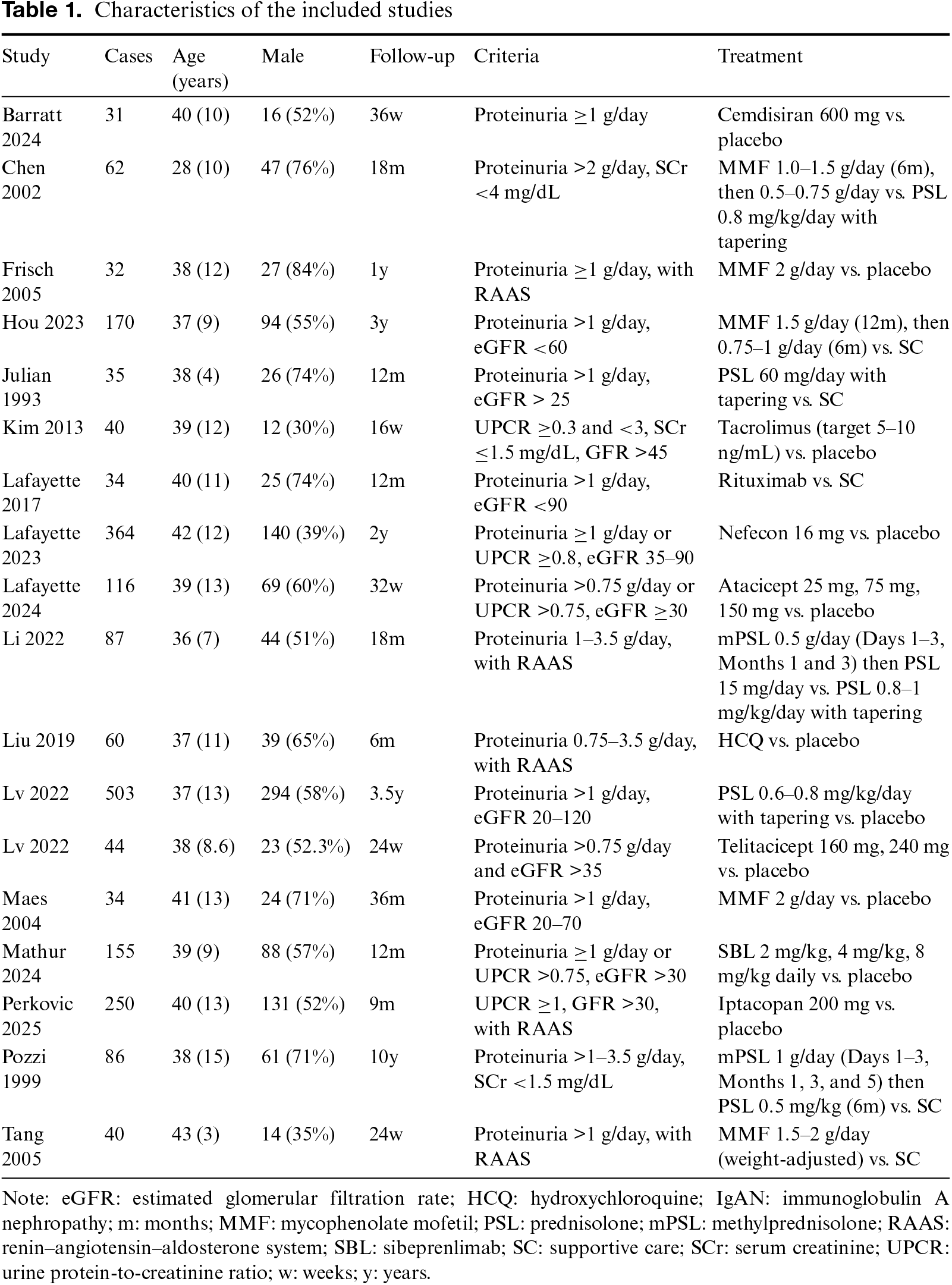
The database searches yielded 2,304 studies, and one additional study was identified through manual searching (Fig. S1). After the duplicates were removed and the first and second screenings were conducted, 109, 1,715, and 257 studies were excluded, respectively. Finally, 18 studies were included in the NMA; these studies evaluated various treatments for primary IgAN in 2,143 adult patients (Table 1), with a higher proportion of males (1,151, 54.8%) and a mean age ranging from 28 to 42.7 years.22–38 Follow-up durations varied considerably, from 16 weeks to 10 years. Common inclusion criteria among these studies included proteinuria levels ≥1 g/day and varying levels of eGFR or serum creatinine. The treatments evaluated included atacicept, sibeprenlimab, rituximab, cemdisiran, iptacopan, nefecon, telitacicept, MMF, prednisolone (PSL), methylprednisolone (mPSL), tacrolimus, and hydroxychloroquine (HCQ), compared to placebo or standard care (SC). mPSL was administered as a pulse infusion, followed by PSL (mPSL-PSL).
Reduction in UPCR
Studies reporting changes in UPCR are summarized in Fig. 1A. The analysis included novel agents such as atacicept, cemdisiran, iptacopan, nefecon, and sibeprenlimab. As shown in Fig. 2A, direct comparisons demonstrated that atacicept 150 mg daily had the most significant effect on UPCR, with an MD of −0.80 (95% CI: −0.94 to −0.66), compared to placebo. This was followed by sibeprenlimab 8.0 mg/kg daily (MD: −0.77, 95% CI: −0.80 to −0.74), sibeprenlimab 4.0 mg/kg daily (MD: −0.73, 95% CI: −0.75 to −0.71), atacicept 75 mg daily (MD: −0.65, 95% CI: −0.76 to −0.54), iptacopan 200 mg daily (MD: −0.61, 95% CI: −0.69 to −0.53), cemdisiran 600 mg (MD: −0.58, 95% CI: −1.06 to −0.10), nefecon 16 mg daily (MD: −0.44, 95% CI: −0.48 to −0.40), and sibeprenlimab 2.0 mg/kg daily (MD: −0.36, 95% CI: -−0.37 to −0.35).
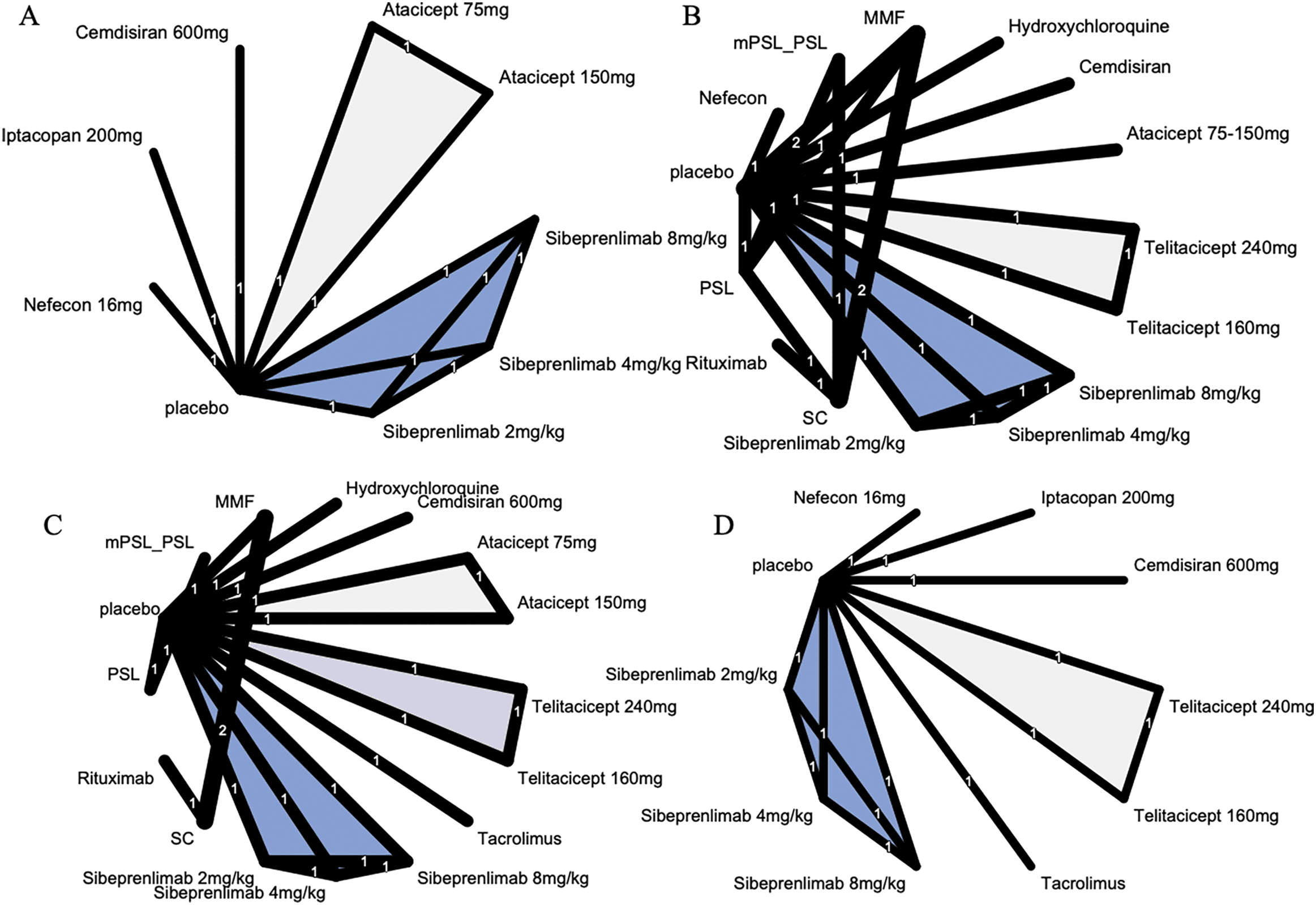
Figure 1. Network graph of studies included in different outcomes. (A) Urine protein-to-creatinine ratio; (B) proteinuria; (C) estimated glomerular filtration rate; (D) any adverse events.
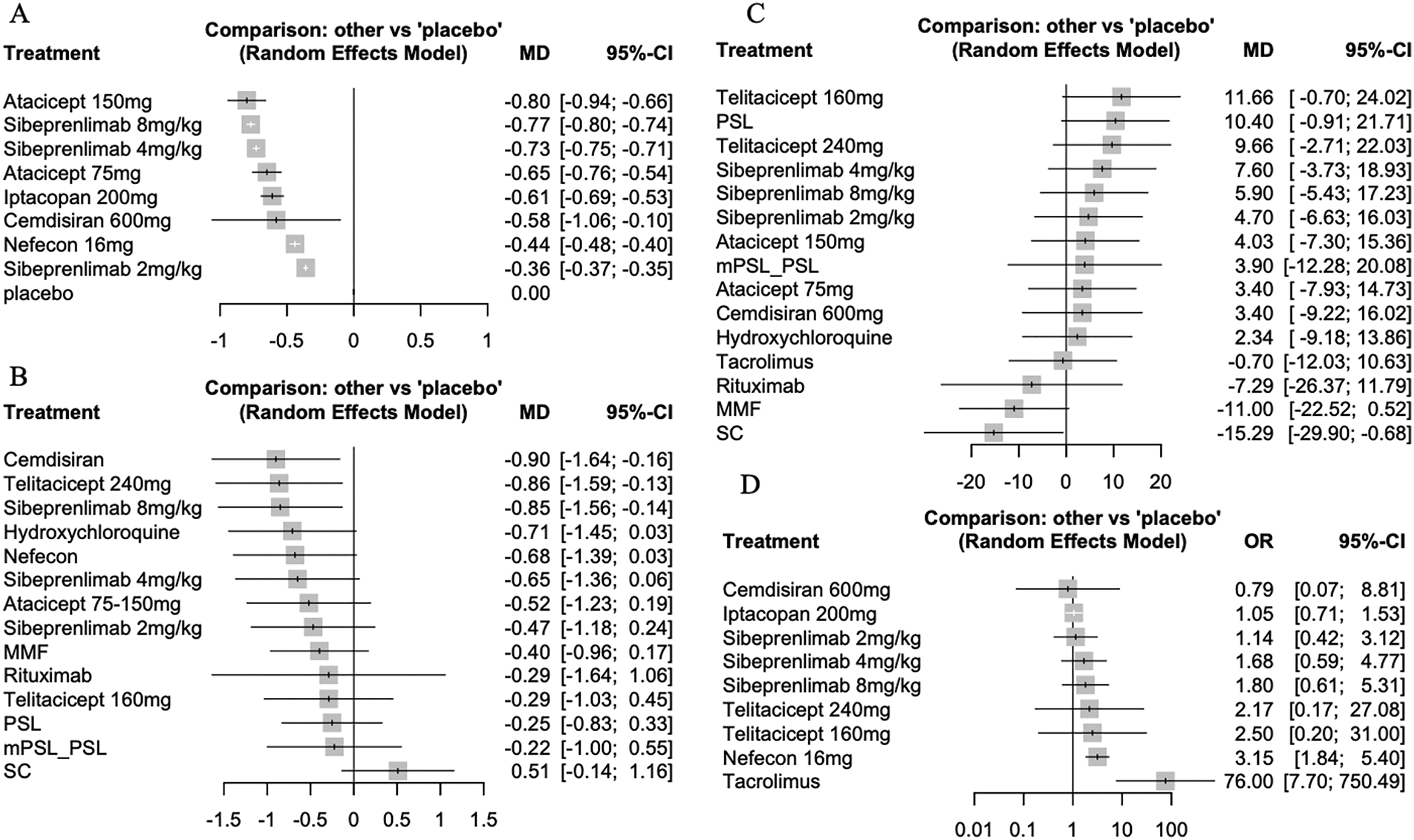
Figure 2. Direct comparison of treatments in different outcomes. (A) Urine protein-to-creatinine ratio; (B) proteinuria; (C) estimated glomerular filtration rate; (D) any adverse events.
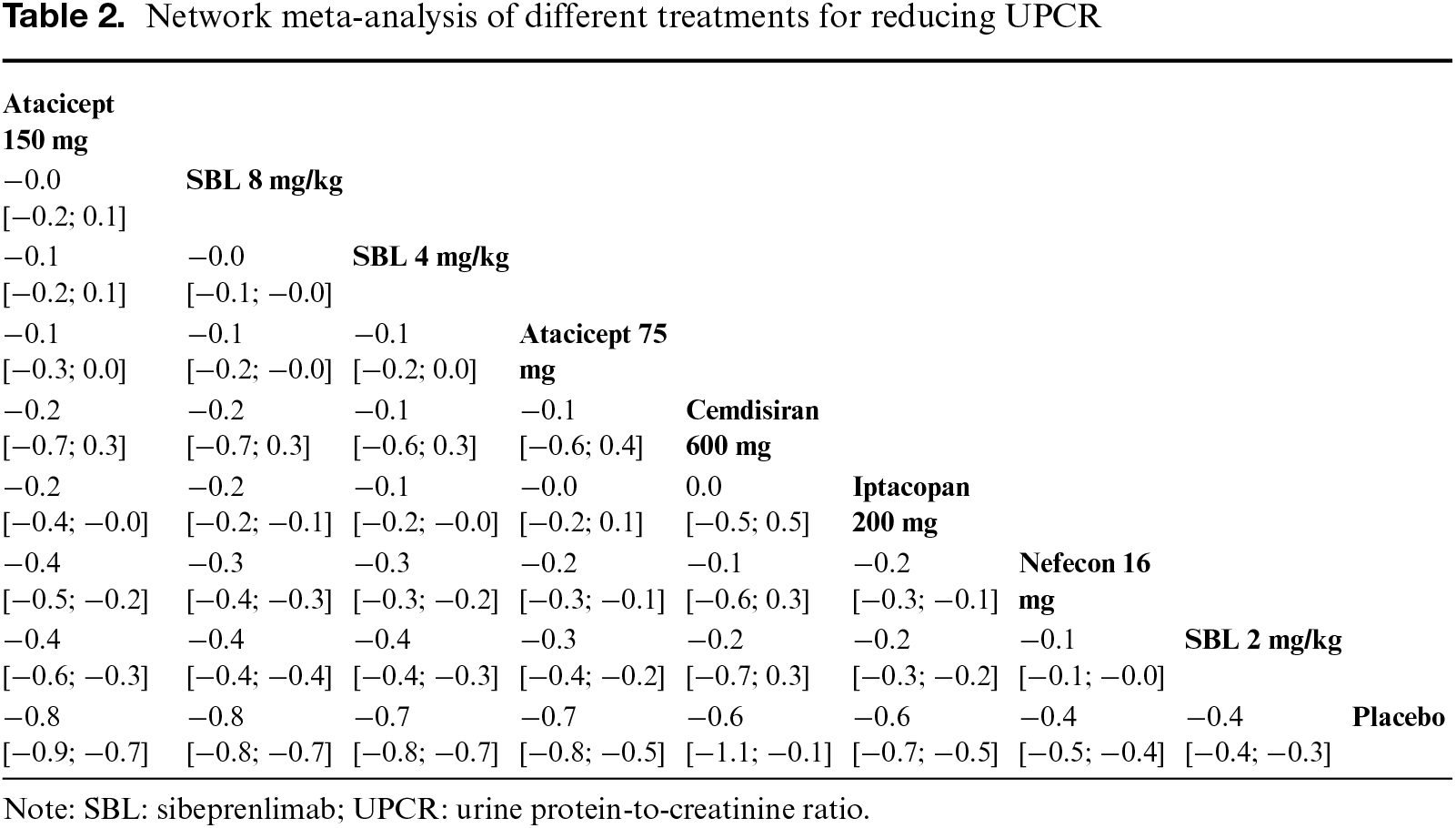
The results of the NMA are presented in Table 2. Atacicept 150 mg did not show statistically significant differences, compared to sibeprenlimab 8.0 mg/kg, sibeprenlimab 4.0 mg/kg, atacicept 75 mg, or cemdisiran 600 mg. However, it was superior to iptacopan 200 mg (MD: −0.20, 95% CI: −0.40 to −0.01), nefecon 16 mg (MD: −0.40, 95% CI: −0.50 to −0.20), and sibeprenlimab 2.0 mg/kg (MD: −0.40, 95% CI: −0.60 to −0.30). Sibeprenlimab 8.0 mg/kg also outperformed atacicept 75 mg (MD: −0.10, 95% CI: −0.20 to −0.01). Ranking results based on SUCRA values are shown in Fig. S2. Atacicept 150 mg (0.905) and sibeprenlimab 8 mg/kg (0.887) had the highest SUCRA scores, followed by sibeprenlimab 4 mg/kg (0.730), atacicept 75 mg (0.556), cemdisiran 600 mg (0.503), and iptacopan 200 mg (0.481). Nefecon 16 mg (0.289) and sibeprenlimab 2 mg/kg (0.149) had the lowest SUCRA scores. No significant heterogeneity was observed (I2 = 0), nor was there any indication of publication bias (Egger’s test, p = 0.76).
Reduction in Proteinuria
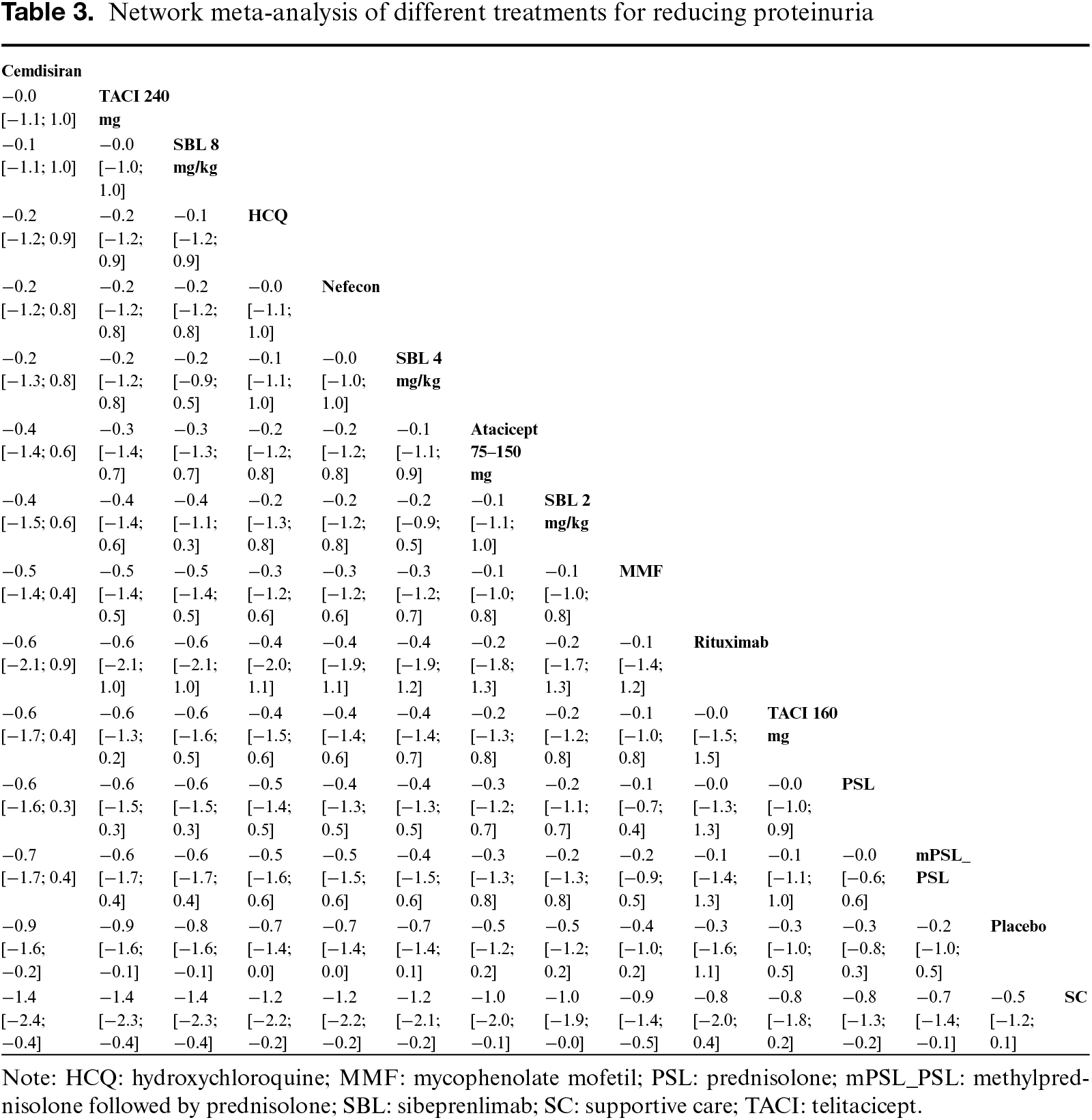
Fig. 1B presents studies assessing treatment effects on proteinuria reduction, including novel agents such as atacicept, cemdisiran, nefecon, sibeprenlimab, and telitacicept, as well as conventional therapies such as PSL, mPSL-PSL, MMF, rituximab, and HCQ. According to direct comparisons, cemdisiran 600 mg daily demonstrated a significant reduction in proteinuria levels, compared to placebo (MD: −0.90, 95% CI: −1.64 to −0.16), followed by telitacicept 240 mg daily (MD: −0.86, 95% CI: −1.59 to −0.13), and sibeprenlimab 8 mg/kg daily (MD: −0.85, 95% CI: −1.56 to −0.14) (Fig. 2B). Conversely, HCQ, nefecon, sibeprenlimab 4 mg/kg, atacicept (75–150 mg), sibeprenlimab 2 mg/kg, MMF, rituximab, PSL, and mPSL plus PSL did not demonstrate statistically significant effects.
The NMA results are summarized in Table 3. Cemdisiran did not show statistically significant differences, compared to telitacicept, sibeprenlimab, HCQ, nefecon, atacicept, MMF, rituximab, PSL, or mPSL-PSL. Similarly, no significant differences were observed among the other agents. The proteinuria-based ranking in Fig. S3 showed that cemdisiran ranked highest with a SUCRA value of 0.783, followed by telitacicept 240 mg (0.768), sibeprenlimab 8 mg/kg (0.766), HCQ (0.666), nefecon (0.663), sibeprenlimab 4 mg/kg (0.642), atacicept 75–150 mg (0.551), and sibeprenlimab 2 mg/kg (0.501). Moderate heterogeneity was observed (I2 = 46.8%), with no evidence of publication bias (Egger’s test, p = 0.07).
Effect on eGFR
Studies reporting changes in eGFR are summarized in Fig. 1C, including data for atacicept, cemdisiran, sibeprenlimab, mPSL-PSL, HCQ, tacrolimus, rituximab, and MMF. Direct comparisons showed that telitacicept 160 mg/day resulted in the highest numerical increase in eGFR compared to placebo (MD: 11.66; 95% CI: –0.70 to 24.00), followed by PSL (MD: 10.40; 95% CI: –0.90 to 21.70); however, neither result reached statistical significance (Fig. 2C). Similar nonsignificant findings were observed for sibeprenlimab, atacicept, mPSL-PSL, cemdisiran, and HCQ. Tacrolimus, rituximab, and MMF showed reductions in eGFR.
As shown in Table S2, the results of the NMA revealed that telitacicept 160 mg/day, PSL, telitacicept 240 mg/day, sibeprenlimab 4 mg/kg/day, and sibeprenlimab 8 mg/kg/day were significantly superior to MMF, with MDs of 22.7 (95% CI: 5.8 to 39.6), 21.4 (95% CI: 5.3 to 37.5), 20.7 (95% CI: 3.8 to 37.6), 18.6 (95% CI: 2.4 to 37.5), and 16.9 (95% CI: 0.7 to 33.1), respectively. The ranking based on SUCRA values (Fig. S4) showed telitacicept 160 mg ranked highest with a SUCRA value of 0.833, followed by PSL (0.797), telitacicept 240 mg (0.748), sibeprenlimab 4 mg/kg (0.695), and sibeprenlimab 8 mg/kg (0.638). Moderate heterogeneity was present (I2 = 63.7%), and no publication bias was detected (Egger’s test, p = 0.45).
AEs
The studies that evaluated the risk of any AEs are presented in Fig. 1D; they included novel agents such as cemdisiran, iptacopan, nefecon, sibeprenlimab, and telitacicept. Direct comparisons indicated that cemdisiran had the lowest OR for any AEs at 0.79 (95% CI: 0.07 to 8.81), followed by iptacopan (OR: 1.05, 95% CI: 0.71 to 1.53), with sibeprenlimab, telitacicept, and nefecon showing higher ORs (Fig. 2D). In contrast, tacrolimus demonstrated the highest OR at 76.0 (95% CI: 7.7 to 750.5), suggesting a substantially increased risk of AEs.
The results of the NMA are summarized in Table S3. Placebo was significantly safer than both nefecon (OR: 0.30, 95% CI: 0.20 to 0.50) and tacrolimus (OR: 0.013, 95% CI: 0.001 to 0.183). The SUCRA-based safety ranking is shown in Fig. S5. Placebo ranked highest with a SUCRA value of 0.750, followed by cemdisiran 600 mg (0.727), iptacopan 200 mg (0.721), and sibeprenlimab 2 mg/kg (0.674).
Sensitivity Analysis
Due to high heterogeneity in the overall analysis, a sensitivity analysis was performed including only studies with a follow-up duration of at least one year (Fig. S6). Direct comparisons indicated that PSL had the highest efficacy, with an MD of 10.4 (95% CI: 10.0 to 10.8), followed by sibeprenlimab and mPSL-PSL (Fig. S7). The results of the subgroup NMA are summarized in Table S4. PSL demonstrated significantly greater efficacy compared to sibeprenlimab (at all doses), mPSL-PSL, and rituximab. The SUCRA rankings were: PSL (1.000), sibeprenlimab 4 mg/kg (0.873), sibeprenlimab 8 mg/kg (0.736), sibeprenlimab 2 mg/kg (0.592), and mPSL-PSL (0.550). No heterogeneity was observed (I2 = 0%), and publication bias was not detected (Egger’s test, p = 0.65).
Bias and Certainty of Evidence
Fig. S9 presents the risk of bias. Eight studies were assessed as having a minimal risk of bias, eight had some concerns, and two were judged to have a considerable risk of bias. Due to indirect comparisons and concerns regarding the risk of bias, the overall certainty of the evidence is considered low.
Discussion
This NMA comprehensively evaluated the comparative efficacy and safety of various therapies for primary IgAN, integrating emerging and conventional agents across 18 trials involving over 2,000 adult patients. The findings contribute to the evolving treatment landscape of IgAN by incorporating novel immunomodulatory agents such as atacicept, cemdisiran, sibeprenlimab, telitacicept, and iptacopan, while benchmarking them against standard treatments, including corticosteroids, MMF, HCQ, and SC. In studies reporting UPCR, atacicept 150 mg exhibited the highest efficacy. Cemdisiran demonstrated the best performance in terms of proteinuria outcomes. The discrepancy in SUCRA rankings for atacicept 150 mg between UPCR and overall proteinuria reduction likely reflects differences in outcome definitions and variations in study populations contributing to each analysis. Regarding eGFR, telitacicept reached the top ranking. Importantly, these novel therapies did not lead to a clear increase in the number of AEs. Unlike earlier analyses primarily focusing on steroid-based regimens or general supportive approaches,11 the current NMA expands the comparative framework to include targeted biologics and RNA interference-based therapies. As such, it reinforces the therapeutic value of established treatments and highlights promising new candidates for proteinuria reduction and renal function preservation.
A key strength of this study was its evaluation of six novel agents for IgAN by assessing proteinuria outcomes using both UPCR and direct proteinuria measurements, providing robust and complementary endpoints for evaluating renal benefit. These emerging therapies target core disease mechanisms beyond traditional immunosuppression. Atacicept, sibeprenlimab, and telitacicept inhibit B-cell survival factors to reduce the production of pathogenic IgA, while cemdisiran uses RNA interference to suppress complement C5, thereby limiting glomerular inflammation.39,40 These agents represent a shift toward precision treatment strategies that address both upstream antibody generation and downstream complement activation, highlighting their potential as disease-modifying therapies rather than merely symptomatic interventions. Additionally, iptacopan and nefecon also demonstrated higher efficacy than placebo. Iptacopan is an oral inhibitor of factor B; it targets the alternative complement pathway to reduce complement-mediated kidney injury.41 Nefecon is a targeted-release formulation of budesonide that delivers corticosteroids to the gut-associated lymphoid tissue, aiming to suppress mucosal production of pathogenic IgAN.42 Compared with conventional immunosuppressive therapies, which broadly suppress immune activity and are associated with systemic side effects, these agents offer more targeted mechanisms with the potential for improved efficacy and safety.
Safety is a critical consideration in IgAN management, particularly given the risks associated with long-term immunosuppression.43 This analysis revealed marked differences in the safety profiles of the evaluated therapies. Conventional immunosuppressants, such as tacrolimus, were linked to a high incidence of AEs, limiting their clinical utility despite potential kidney benefits.44 In contrast, several novel agents, especially monoclonal antibodies like atacicept, telitacicept, and sibeprenlimab, demonstrated favorable safety profiles, with some showing tolerability comparable to placebo. This is especially relevant for IgAN, which often affects young adults who may require extended treatment durations. Therapies that offer kidney protection without substantial toxicity could represent a paradigm shift, particularly for patients with preserved kidney function or mild-to-moderate disease. However, inconsistencies in AE definitions and reporting across studies limited comprehensive safety synthesis, highlighting the need for standardized safety outcome reporting in future trials.
Nonetheless, several limitations of this analysis should be acknowledged. First, the included studies varied in design, follow-up duration, and outcome reporting standards, which may have affected the precision of effect estimates, and some outcomes exhibited notable heterogeneity. Second, differences in baseline characteristics, such as eGFR, proteinuria levels, and the use of renin–angiotensin system blockers, could have contributed to inter-study variability. Third, despite efforts to include recent and high-quality trials, the sample sizes for certain agents were relatively small, potentially limiting the generalizability of the findings. Fourth, direct head-to-head trials comparing promising novel agents are lacking and will be essential to validate these comparative insights.
Conclusion
This NMA comprehensively evaluates current and emerging treatments for primary IgAN, offering important insights into their relative efficacy and safety. Several novel agents demonstrated strong antiproteinuric effects and favorable tolerability, which highlights their potential role in future treatment algorithms. While traditional therapies continue to play a role in IgAN management, particularly in specific clinical contexts, the therapeutic landscape for IgAN is evolving toward targeted, safer, and potentially more effective options. Further research is warranted to validate these findings through larger, longer-term studies and to identify biomarkers that can guide personalized treatment strategies.
Acknowledgment
None.
Funding Source
None.
Author Contributions
M.E. contributed to the study design and drafting. Y.I. and G.G. worked on the study search, quality check, data extraction, and analysis. A.G., S.V., and C.B. worked on data interpretation and the revision process. All authors have read the manuscript and agree with its content and data.
Data Availability
The corresponding author shall make the datasets available upon reasonable request.
Ethical Statement
Institutional Review Board approval was waived due to the nature of the meta-analysis.
Conflict of Interest
The authors report no conflicts of interest in this work.
Supplemental Information
Supplemental information for this article can be found online at https://sup.jclinque.com/api/articles/70/download-suppl.
References
[1] Stamellou E, Seikrit C, Tang SCW, et al. IgA nephropathy. Nat Rev Dis Primers. November 30, 2023;9(1):67. doi:10.1038/s41572-023-00476-9.
[2] Zaidi O, Du F, Tang Z, Bhattacharjee S, Pareja K. Review on epidemiology, disease burden, and treatment patterns of IgA nephropathy in select APAC countries. BMC Nephrol. April 16, 2024;25(1):136. doi:10.1186/s12882-024-03555-5.
[3] Willey CJ, Coppo R, Schaefer F, Mizerska-Wasiak M, Mathur M, Schultz MJ. The incidence and prevalence of IgA nephropathy in Europe. Nephrol Dial Transplant. September 29, 2023;38(10):2340–2349. doi:10.1093/ndt/gfad082.
[4] Lim RS, Yeo SC, Barratt J, et al. An update on current therapeutic options in IgA nephropathy. J Clin Med. February 7, 2024;13(4):947. doi:10.3390/jcm13040947.
[5] Grabe DW. Preventing progression in IgA nephropathy: a managed care focus on emerging therapies. Am J Manag Care. March 2023;29(3 Suppl):S31–S43. doi:10.37765/ajmc.2023.89344.
[6] Bhandari S, Mehta S, Khwaja A, et al. Renin-angiotensin system inhibition in advanced chronic kidney disease. N Engl J Med. 2022;387(22):2021–2032. doi:10.1056/NEJMoa2210639.
[7] Kohan DE, Barratt J, Heerspink HJL, et al. Targeting the endothelin a receptor in IgA nephropathy. Kidney Int Rep. November 2023;8(11):2198–2210. doi:10.1016/j.ekir.2023.07.023.
[8] Stevens PE, Ahmed SB, Carrero JJ, et al. KDIGO 2024 clinical practice guideline for the evaluation and management of chronic kidney disease. Kidney Int. 2024;105(4):S117–S314. doi:10.1016/j.kint.2023.10.018.
[9] Chellappan A, Kermond R, Caza T, et al. Steroids for IgA nephropathy: a #NephJC editorial on the TESTING trial. Kidney Med. 2022;4(12):100565. doi:10.1016/j.xkme.2022.100565.
[10] Floege J, Rauen T, Tang SCW. Current treatment of IgA nephropathy. Semin Immunopathol. October 2021;43(5):717–728. doi:10.1007/s00281-021-00888-3.
[11] Natale P, Palmer SC, Ruospo M, et al. Immunosuppressive agents for treating IgA nephropathy. Cochrane Database Syst Rev. March 12, 2020;3(3):Cd003965. doi:10.1002/14651858.CD003965.pub3.
[12] Rauen T, Eitner F, Fitzner C, et al. Intensive supportive care plus immunosuppression in IgA nephropathy. N Engl J Med. 2015;373(23):2225–2236. doi:10.1056/NEJMoa1415463.
[13] Barratt J, Stone A, Kristensen J. POS-830 nefecon for the treatment of iga nephropathy in patients at risk of progressing to end-stage renal disease: the nefigard phase 3 trial results. Kidney Int Rep. 2021;6(4):S361. doi:10.1016/j.ekir.2021.03.868.
[14] KDIGO. The KDIGO 2024 clinical practice guideline for the management of IgA nephropathy (IgAN) and IgA vasculitis (IgAV). Published 2024, Accessed March 18, 2025. https://kdigoorg/guidelines/iga-nephropathy.
[15] Barratt J, Barbour SJ, Brenner RM, et al. Long-term results from an open-label extension study of atacicept for the treatment of IgA nephropathy. J Am Soc Nephrol. Octobe 26 2024;36(4). doi:10.1681/asn.0000000541.
[16] Cheung CK, Barratt J. The rapidly changing treatment landscape of IgA nephropathy. Semin Nephrol. September 3, 2025;2025:151573. doi:10.1016/j.semnephrol.2025.151573.
[17] Mathur M, Barratt J, Suzuki Y, et al. Safety, tolerability, pharmacokinetics, and pharmacodynamics of VIS649 (Sibeprenlimab), an APRIL-neutralizing IgG2 monoclonal antibody, in healthy volunteers. Kidney Int Rep. 2022;7(5):993–1003. doi:10.1016/j.ekir.2022.01.1073.
[18] Page MJ, McKenzie JE, Bossuyt PM, et al. The PRISMA, 2020 statement: an updated guideline for reporting systematic reviews. BMJ. 2021;372:n71. doi:10.1136/bmj.n71.
[19] Hutton B, Salanti G, Caldwell DM, et al. The PRISMA extension statement for reporting of systematic reviews incorporating network meta-analyses of health care interventions: checklist and explanations. Ann Intern Med. June 2, 2015;162(11):777–784. doi:10.7326/m14-2385.
[20] Open Science Framework. Efficacy of immunosuppression therapy in primary IgA nephropathy in adults: a systematic review and network meta-analysis of randomized controlled trials. Published 2025, Accessed on March 25, 2025. https://osfio/d6eqr.
[21] Higgins JPT, Thompson SG, Deeks JJ, Altman DG. Measuring inconsistency in meta-analyses. BMJ. 2003;327(7414):557–560. doi:10.1136/bmj.327.7414.557.
[22] Barratt J, Liew A, Yeo SC, et al. Phase 2 trial of cemdisiran in adult patients with IgA nephropathy: a randomized controlled trial. Clin J Am Soc Nephrol. April 1, 2024;19(4):452–462. doi:10.2215/cjn.0000000000000384.
[23] Chen X, Chen P, Cai G, et al. A randomized control trial of mycophenolate mofeil treatment in severe IgA nephropathy. Zhonghua Yi Xue Za Zhi. June 25, 2002;82(12):796–801.
[24] Frisch G, Lin J, Rosenstock J, et al. Mycophenolate mofetil (MMF) vs placebo in patients with moderately advanced IgA nephropathy: a double-blind randomized controlled trial. Nephrol Dial Transplant. October 2005;20(10):2139–2145. doi:10.1093/ndt/gfh974.
[25] Hou FF, Xie D, Wang J, et al. Effectiveness of mycophenolate mofetil among patients with progressive IgA nephropathy: a randomized clinical trial. JAMA Netw Open. February 1, 2023;6(2):e2254054. doi:10.1001/jamanetworkopen.2022.54054.
[26] Julian BA, Barker C. Alternate-day prednisone therapy in IgA nephropathy. Preliminary analysis of a prospective, randomized, controlled trial. Contrib Nephrol. 1993;104:198–206. doi:10.1159/000422413.
[27] Kim YC, Chin HJ, Koo HS, Kim S. Tacrolimus decreases albuminuria in patients with IgA nephropathy and normal blood pressure: a double-blind randomized controlled trial of efficacy of tacrolimus on IgA nephropathy. PLoS One. 2013;8(8):e71545. doi:10.1371/journal.pone.0071545.
[28] Lafayette RA, Canetta PA, Rovin BH. A randomized, controlled trial of rituximab in IgA nephropathy with proteinuria and renal dysfunction. J Am Soc Nephrol. April 2017;28(4):1306–1313. doi:10.1681/asn.2016060640.
[29] Lafayette R, Kristensen J, Stone A, et al. Efficacy and safety of a targeted-release formulation of budesonide in patients with primary IgA nephropathy (NefIgArd): 2-year results from a randomised phase 3 trial. Lancet. September 9, 2023;402(10405):859–870. doi:10.1016/s0140-6736(23)01554-4.
[30] Lafayette R, Barbour S, Israni R, et al. A phase 2b, randomized, double-blind, placebo-controlled, clinical trial of atacicept for treatment of IgA nephropathy. Kidney Int. June 2024;105(6):1306–1315. doi:10.1016/j.kint.2024.03.012.
[31] Li Y, Fu R, Gao J, et al. Effect of pulsed intravenous methylprednisolone with alternative low-dose prednisone on high-risk IgA nephropathy: a 18-month prospective clinical trial. Sci Rep. January 7, 2022;12(1):255. doi:10.1038/s41598-021-03691-0.
[32] Liu LJ, Yang YZ, Shi SF, et al. Effects of hydroxychloroquine on proteinuria in IgA nephropathy: a randomized controlled trial. Am J Kidney Dis. July 2019;74(1):15–22. doi:10.1053/j.ajkd.2019.01.026.
[33] Lv J, Wong MG, Hladunewich MA, et al. Effect of oral methylprednisolone on decline in kidney function or kidney failure in patients with IgA nephropathy: the TESTING randomized clinical trial. J Am Med Assoc. 2022;327(19):1888–1898. doi:10.1001/jama.2022.5368.
[34] Maes BD, Oyen R, Claes K, et al. Mycophenolate mofetil in IgA nephropathy: results of a 3-year prospective placebo-controlled randomized study. Kidney Int. May 2004;65(5):1842–1849. doi:10.1111/j.1523-1755.2004.00588.x.
[35] Mathur M, Barratt J, Chacko B, et al. A phase 2 trial of sibeprenlimab in patients with IgA nephropathy. N Engl J Med. January 4, 2024;390(1):20–31. doi:10.1056/NEJMoa2305635.
[36] Lv J, Liu L, Hao C, et al. Randomized phase 2 trial of telitacicept in patients with IgA nephropathy with persistent proteinuria. Kidney Int Rep. March 2023;8(3):499–506. doi:10.1016/j.ekir.2022.12.014.
[37] Pozzi C, Bolasco PG, Fogazzi GB, et al. Corticosteroids in IgA nephropathy: a randomised controlled trial. Lancet. March 1999;13(9156):883–887. doi:10.1016/s0140-6736(98)03563-6.
[38] Tang S, Leung JC, Chan LY, et al. Mycophenolate mofetil alleviates persistent proteinuria in IgA nephropathy. Kidney Int. Aug 2005;68(2):802–812. doi:10.1111/j.1523-1755.2005.00460.x.
[39] Filippone EJ, Gulati R, Farber JL. The road ahead: emerging therapies for primary IgA nephropathy. Front Nephrol. 2025;5:1545329. doi:10.3389/fneph.2025.1545329.
[40] Liu B, Zhao Y, Liu D, Li X, Ma Z, Yang Q. The latest progress in the application of telitacicept in autoimmune diseases. Drug Des Devel Ther. 2024;18:5811–5825. doi:10.2147/dddt.S493923.
[41] Rizk DV, Rovin BH, Zhang H, et al. Targeting the alternative complement pathway with iptacopan to treat IgA nephropathy: design and rationale of the APPLAUSE-IgAN study. Kidney Int Rep. May 2023;8(5):968–979. doi:10.1016/j.ekir.2023.01.041.
[42] Barratt J, Kristensen J, Pedersen C, Jerling M. Insights on nefecon(®), a targeted-release formulation of budesonide and its selective immunomodulatory effects in patients with IgA nephropathy. Drug Des Devel Ther. 2024;18:3415–3428. doi:10.2147/dddt.S383138.
[43] Chen P, Lv J. Low dose glucocorticoids, mycophenolate mofetil and hydroxychloroquine in IgA nephropathy, an update of current clinical trials. Nephrology (Carlton). September 2024;29(Suppl, 2):25–29. doi:10.1111/nep.14369.
[44] Salvadori M, Rosso G. What is new in the pathogenesis and treatment of IgA glomerulonephritis. World J Nephrol. December 25, 2024;13(4):98709. doi:10.5527/wjn.v13.i4.98709.
 |
Copyright: © 2025 Gao et al. This work is licensed under a Creative Commons Attribution 4.0 International License, which permits unrestricted use, distribution, and reproduction in any medium, provided the original work is properly cited. |