| Journal of Clinical Question. 2025; 2(2): e61 https://doi.org/10.69854/jcq.2025.0004 Advance access publication date 13 March 2025 |
 |
Meta-Analysis
Efficacy and Safety of Pharmacotherapy in Cancer-Related Anorexia and Cachexia Symptoms: An Updated Systematic Review and Network Meta-Analysis
Ashlynn Brar1, Noah Kim1, Pankaj Soni1,*, Kush Shah2, Jyoti Bajpai 3
3
1Department of Critical Care, EMC Super Specialty Hospital, Amritsar, Punjab, India.
2Department of Surgical Oncology, KD Hospital, Ahmedabad, India.
3Medical and Precision Oncology, Apollo Hospitals, Chennai, India.
*Corresponding Author: e-mail: drsonipankaj@rediffmail.com
Submitted: January 24, 2025 Accepted: March 13, 2025
Clinical Question Box
Is pharmacological treatment suggested for Cancer-Associated Anorexia and Cachexia?
Pharmacological treatment is moderately supported for Cancer-Associated Anorexia and Cachexia Syndrome. Olanzapine is effective for weight gain and improving the anorexia-cachexia subscore, with a favorable safety profile. Anamorelin and ponsegromab show promise as emerging options. In contrast, mirtazapine has limited efficacy and a higher risk of serious adverse events, making it less suitable.
Abstract
Introduction: Cancer-associated cachexia syndrome (CACS) is a complex condition characterized by anorexia, weight loss, and muscle wasting, significantly affecting quality of life and treatment outcomes. The comparative efficacy and safety of pharmacological treatments remain uncertain. Methods: A systematic review and network meta-analysis were conducted using randomized clinical trials (RCTs). Three databases were searched for studies published between 2000 and 2024. The analyzed outcomes included absolute weight gain, improvement in the anorexia-cachexia subscore (ACS), and the risk of serious adverse events (AEs). Results: Nine studies involving 1,505 participants were analyzed. Olanzapine demonstrated the most significant weight gain (MD 4.6 kg, 95% CI: 0.82–8.38), while ponsegromab 400 mg and anamorelin 100 mg were effective in maintaining weight, with gains of 3.26 kg (95% CI: 2.35–4.17) and 2.38 kg (95% CI: 1.82–2.94), respectively. However, the network meta-analysis did not confirm the superiority of olanzapine over ponsegromab or anamorelin. Mirtazapine showed limited benefits in weight gain. Regarding ACS, olanzapine demonstrated the highest efficacy, with significant improvement compared to ponsegromab 400 mg (MD 6.5, 95% CI: 1.3–11.7), anamorelin 100 mg (MD 6.9, 95% CI: 1.6–12.1), mirtazapine 15 mg (MD 10.0, 95% CI: 5.8–14.2), ponsegromab 200 mg (MD 10.3, 95% CI: 6.1–14.5), and anamorelin 50 mg (MD 10.3, 95% CI: 5.1–15.4), confirming its superior ACS improvement through network meta-analysis. All but mirtazapine showed acceptable safety profiles, with serious AEs (odds ratio: 5.93, 95% CI: 2.35–14.96). Only mirtazapine showed an increased risk of serious AEs with an odds ratio of 5.93 (95% CI: 2.35–14.96). Conclusions: Olanzapine demonstrated notable benefits in weight gain and ACS improvement with a favorable safety profile while emerging agents like anamorelin and ponsegromab show promise in managing CACS.
Keywords: Cancer-associated cachexia syndrome, anamorelin, olanzapine, mirtazapine, ponsegromab, meta-analysis
Introduction
Cancer-related anorexia-cachexia syndrome (CACS) is a complex condition marked by a persistent lack of appetite and progressive body weight loss, often accompanied by significant reductions in both muscle mass and adipose tissue.1 The prevalence of anorexia-cachexia varies depending on the type of cancer, affecting approximately 80% of patients with pancreatic or gastric malignancies, 54–60% of those with lung, prostate, or colorectal cancers, and 32–48% of individuals with breast cancer, sarcoma, lymphoma, or leukemia.2 Beyond its impact on physical health, CACS profoundly diminishes the quality of life (QOL), hampers the effectiveness of cancer therapies, leads to increased hospital admissions, and is implicated in nearly 20% of cancer-related fatalities.3 Management strategies for CACS encompass a multidisciplinary approach, including nutritional guidance, tailored physical activity programs, and pharmacological interventions aimed at enhancing appetite, facilitating weight gain, and addressing metabolic abnormalities.4
Pharmacological treatment for CACS has advanced significantly, reflecting a growing understanding of its complex pathophysiology. CACS involves multifactorial mechanisms, including systemic inflammation, metabolic dysregulation, and altered appetite signaling.5 Consequently, pharmacological interventions target various pathways to alleviate symptoms and improve patient outcomes. Progestogens, particularly megestrol acetate, have an extended treatment history and effectively stimulate appetite and promote weight gain, albeit primarily through fat accumulation rather than muscle preservation.6 Despite their efficacy, side effects such as fluid retention and thromboembolic risks limit their use in certain patients.7 Corticosteroids, such as dexamethasone, are widely employed for their appetite-stimulating and anti-inflammatory properties. However, their benefits are typically short-lived, and adverse effects, including muscle wasting and immunosuppression, constrain prolonged use.8
Emerging therapies for CACS have introduced innovative strategies targeting key physiological mechanisms to address its multifaceted challenges. Anamorelin, a ghrelin receptor agonist, exemplifies the promise of ghrelin analogs by mimicking the appetite-stimulating hormone to enhance food intake and preserve lean body mass with minimal adverse effects.9 Meanwhile, olanzapine and mirtazapine, traditionally used as psychotropic agents, have shown potential as cytokine inhibitors by modulating pro-inflammatory pathways, such as those involving IL-6 and TNF-α, thereby mitigating muscle degradation and metabolic disturbances.10,11 Ponsegromab, a humanized monoclonal antibody inhibiting growth differentiation factor 15 (GDF-15), has been associated with improved weight, appetite, physical activity, and suppressed serum GDF-15 levels.12
These emerging therapies mark significant progress in addressing CACS by targeting distinct mechanisms of action—stimulating appetite, mitigating inflammation, and promoting muscle anabolism. Despite these advancements, notable challenges remain, including the scarcity of robust long-term efficacy data, variability in patient responses due to heterogeneity, and the complexity of tailoring treatments to individual needs. These limitations highlight the critical need for ongoing research into multimodal interventions that integrate pharmacological, nutritional, and rehabilitative strategies. This network meta-analysis synthesizes data from recent randomized controlled trials (RCTs) to evaluate the comparative efficacy and safety profiles of these therapeutic options. By providing a comprehensive and evidence-based framework, the analysis aims to refine clinical decision-making, enhance individualized treatment planning, and ultimately improve QOL and clinical outcomes for patients with CACS.
Methods
Study Protocol
This network meta-analysis was conducted in accordance with the Preferred Reporting Items for Systematic Reviews and Meta-Analyses guidelines.13 The protocol for this study was registered in the Open Science Framework to ensure transparency and methodological rigor.14 This analysis is based solely on previously published data, so approval from an institutional review board was not required.
Data Search
Relevant studies were systematically identified through extensive searches of PubMed, Cochrane Library, and Web of Science databases, spanning January 1, 2000, to December 31, 2024. The search strategy employed terms addressing the condition and patient population (“cachexia” or “anorexia” and “cancer”), the interventions of interest (“treatment,” “pharmacotherapy,” or “therapy”), and the comparison group (“placebo”), ensuring a thorough selection of potential articles.
Eligibility Criteria
This network meta-analysis included RCTs that evaluated pharmacological interventions for cancer-related weight loss or anorexia in adults. Studies were eligible if they met the following criteria: (1) included adult patients diagnosed with CACS, (2) compared a pharmacological intervention with a placebo, and (3) reported relevant outcomes related to efficacy and safety. The exclusion criteria were as follows: (1) a sample size of fewer than 30 participants in all study arms, (2) outcomes assessed within a duration of one month, (3) pharmacotherapy combined with supplementary interventions, and (4) studies focusing solely on supplementary interventions.
Data Extraction and Synthesis
Two reviewers (A.B. and N.K.) independently screened the titles and abstracts of identified studies, followed by a detailed full-text review to determine eligibility. Any discrepancies that could not be resolved through discussion were referred to a third reviewer (P.S.) for resolution. Data extraction was performed independently by two reviewers using a standardized form, capturing details on study characteristics, interventions, outcomes, and follow-up periods. Extracted data included participant demographics, cancer types, inclusion criteria, intervention specifics, and reported outcomes. No language restrictions were applied, allowing for the inclusion of studies from a broad range of sources. Furthermore, the reference lists of relevant articles were reviewed to ensure a comprehensive and expanded scope of the research.
Outcomes
Most studies did not report fat mass, lean body mass, and body mass index. The primary outcome was absolute weight gain. The secondary outcomes included the Anorexia/Cachexia Subscale (ACS) of the Functional Assessment of Anorexia/Cachexia Therapy (FAACT) questionnaire and serious adverse events (AEs). The criteria for AEs were defined according to the Common Terminology Criteria for Adverse Events (CTCAE) version 5.0;15 however, using a previous version was also acceptable due to the study period.
Statistical Analysis
Network meta-analysis was conducted using R software (Version 4.4, New Zealand) with the “meta” and “netmeta” packages, employing a random-effects model to account for variability between studies. The primary outcomes included mean differences (MDs) for continuous data, such as weight gain and ACS, and odds ratios (ORs) for dichotomous data, including the incidence of serious AEs. Results were reported with 95% Confidence Intervals (CIs) to indicate the precision of the estimates. The I2 statistic was utilized to assess heterogeneity, with values of 0–25% indicating low heterogeneity, 25–50% representing moderate heterogeneity, 50–75% reflecting substantial heterogeneity, and >75% signifying considerable heterogeneity.16 Detected inconsistencies were further examined through sensitivity analyses to identify potential sources of heterogeneity. Treatment rankings were determined using surface under the cumulative ranking curve (SUCRA) values, which provide a probabilistic assessment of the efficacy and safety of each intervention. Statistical significance was defined as a two-tailed p-value < 0.05.
Bias and Evidence-level
The Risk of Bias tool evaluated potential biases related to randomization, deviations from intended interventions, missing outcome data, outcome measurement, and selection of reported results.17 Based on these criteria, studies were categorized as having low risk, some concerns, or a high risk of bias. The overall confidence in the findings of each study was considered during the synthesis. Publication bias was assessed using funnel plots and followed by the Egger test. The quality of evidence was further appraised using the Grading of Recommendations, Assessment, Development, and Evaluation (GRADE) approach.18
Results
Data Search and Characteristics of Included Studies
Database searches identified 1,174 articles. After duplicate removal, initial screening, and secondary screening, 247, 860, and 57 studies were excluded, respectively, leaving 10 articles for the final review (Fig. S1). However, one study comparing the efficacy of mirtazapine with megestrol acetate (160 mg daily) was ultimately excluded.19 This exclusion was necessary because a network meta-analysis was not feasible, as no studies assessed the effect of megestrol acetate (160 mg daily) as a reference.
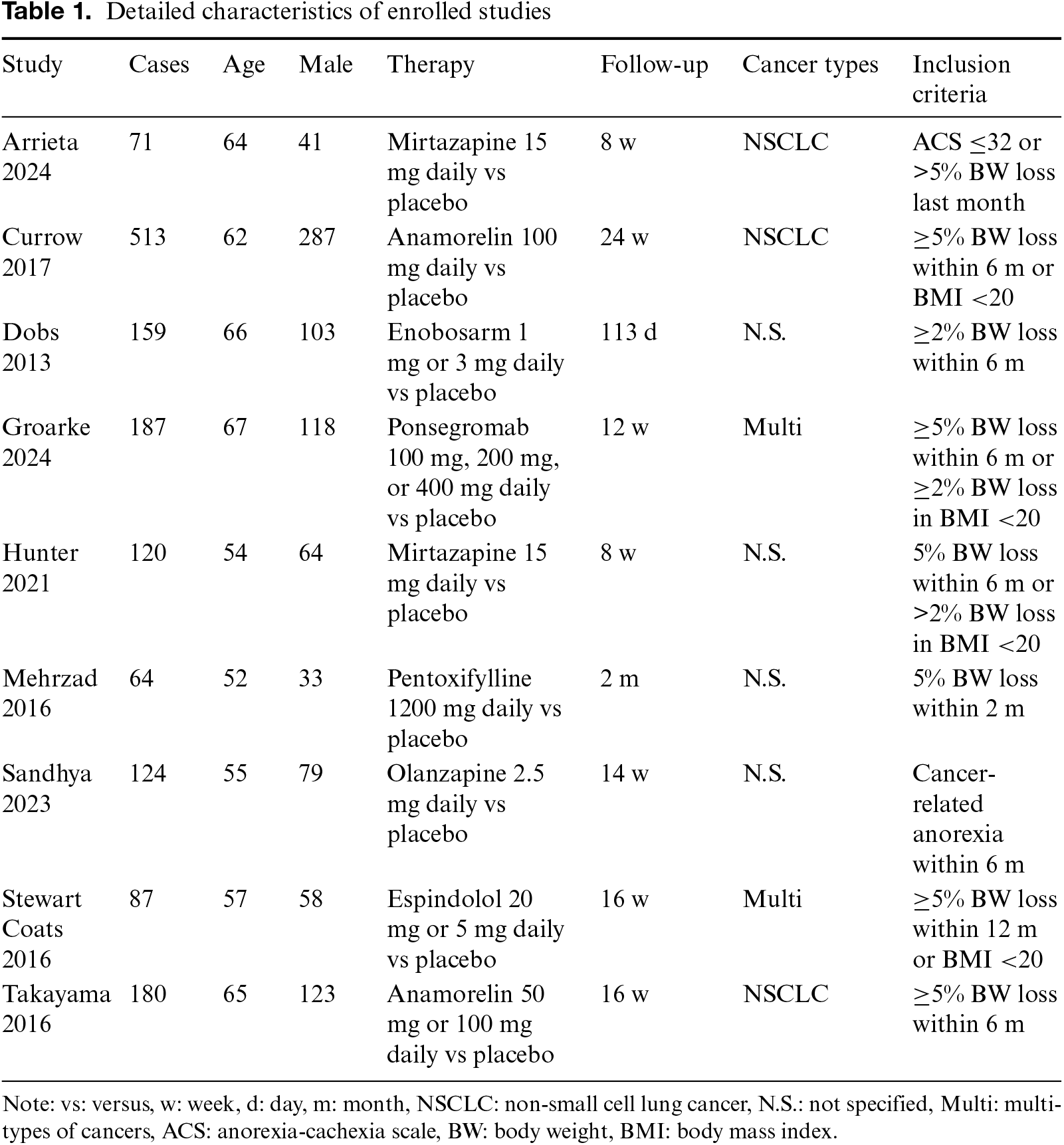
Nine studies, including a total of 1,505 participants, were analyzed.20–28 These consisted of two anamorelin studies, two mirtazapine studies, and one study each on enobosarm, espindolol, olanzapine, pentoxifylline, and ponsegromab (Table 1). The studies varied in population characteristics, intervention types, and cancer types. Due to the lack of consensus on diagnostic criteria for CACS, the inclusion criteria across the studies differed. Three studies investigated pharmacotherapy for non-small cell lung cancer, while the remaining studies assessed treatments in either a multi-cancer setting or among patients without specified cancer types. Most studies evaluated outcomes over two to four months, with only one study extending follow-up to six months.
Absolute Weight Gain
Nine studies evaluated absolute weight gain, with the network graph presented in Fig. S2. Direct comparisons indicated that olanzapine 2.5 mg daily resulted in the highest weight gain, with an MD of 4.6 kg (95% CI: 0.82 to 8.38). This was followed by espindolol 20 mg daily (MD 3.82 kg, 95% CI: 0.72 to 6.92), ponsegromab 400 mg daily (MD 3.26 kg, 95% CI: 2.35 to 4.17), anamorelin 100 mg daily (MD 2.38 kg, 95% CI: 1.82 to 2.94), ponsegromab 200 mg daily (MD 2.37 kg, 95% CI: 1.50 to 3.24), ponsegromab 100 mg daily (MD 1.67 kg, 95% CI: 0.82 to 2.52), and anamorelin 50 mg daily (MD 1.32 kg, 95% CI: 3.652.50 to 2.23). All these treatments showed statistically significant differences compared to placebo (Fig. 1A). In contrast, mirtazapine 15 mg daily did not demonstrate a significant benefit in weight gain.
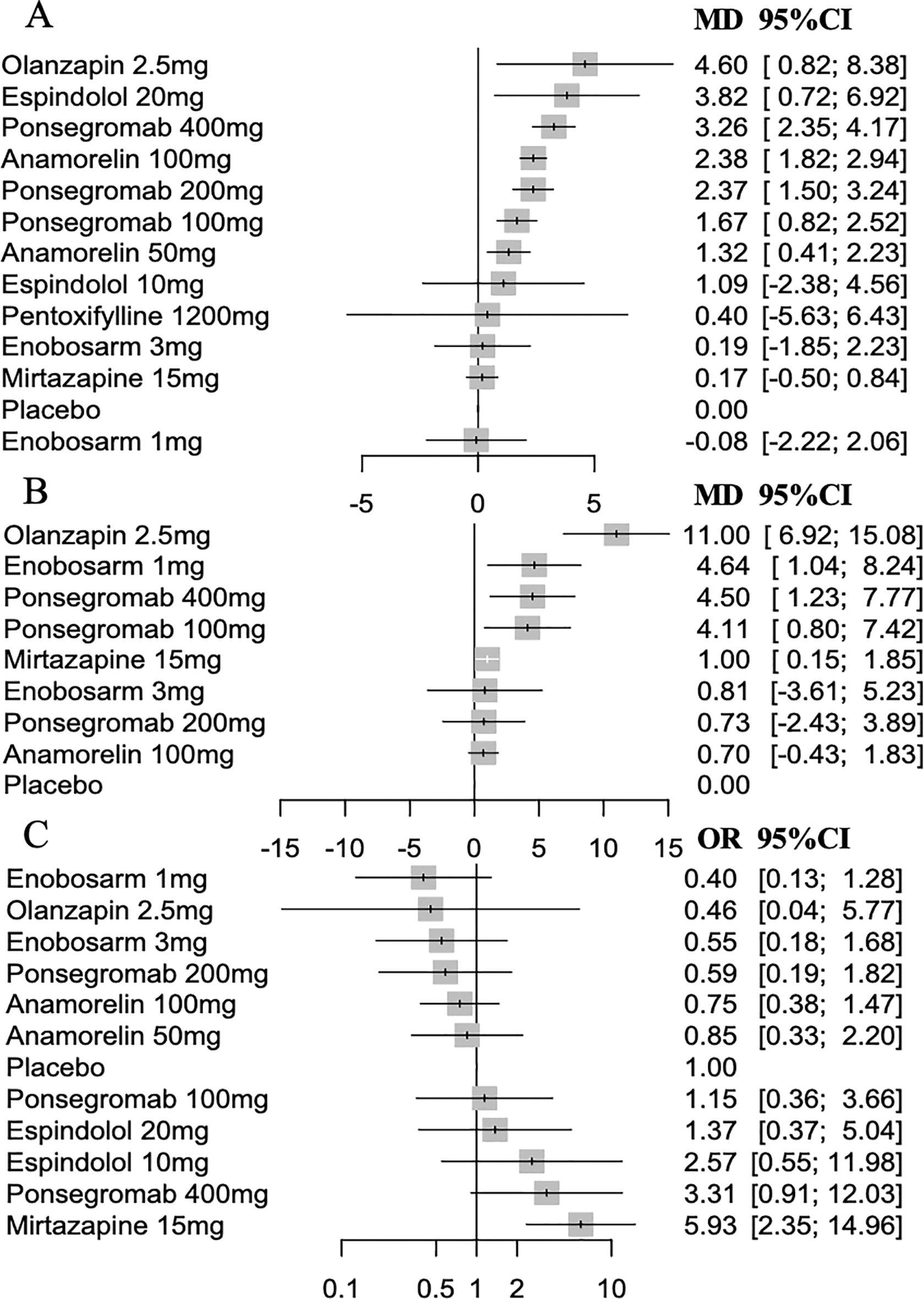
Figure 1. Direct comparison of weight gain using a random-effects model. A: weight gain, B: anorexia-cachexia scale, C: serious adverse events MD: mean difference, CI: confidence interval, OR: odds ratio.
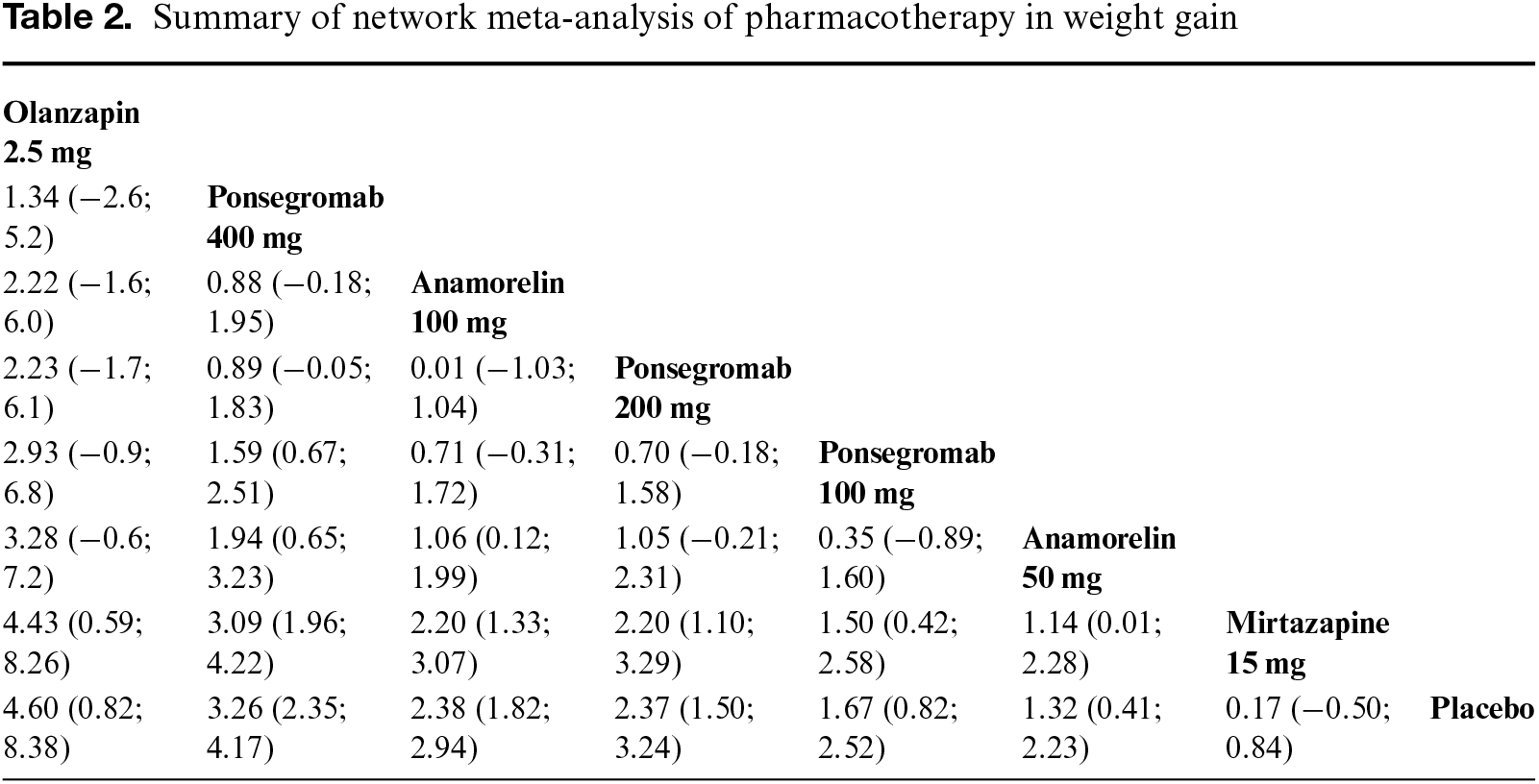
The ranking of treatments based on 1,000 simulations is shown in Fig. S3. Olanzapine 2.5 mg achieved the highest SUCRA value of 0.901, followed by espindolol 20 mg (0.855), ponsegromab 400 mg (0.845), anamorelin 100 mg (0.681), and ponsegromab 200 mg (0.676). The complete network meta-analysis is detailed in Table S1, while a summary is presented in Table 2. When comparing olanzapine 2.5 mg daily to ponsegromab 400 mg, anamorelin 100 mg, ponsegromab 200 mg, and anamorelin 50 mg, no significant weight gain differences were observed. The respective MDs were: 1.34 kg (95% CI: −2.6 to 6.0), 2.22 kg (95% CI: −1.6 to 6.1), 2.23 kg (95% CI: −1.7 to 6.1), 2.93 kg (95% CI: −0.9 to 6.8), and 3.28 kg (95% CI: −0.6 to 8.6).
Improvement in ACS
Six studies, including 1,174 patients, assessed ACS improvement; the network graph of these studies is shown in Fig. S4. Direct comparisons revealed that olanzapine 2.5 mg daily resulted in the highest ACS improvement, with a mean difference (MD) of 11.0 (95% CI: 6.92 to 15.08), followed by enobosarm 1 mg daily, ponsegromab 400 mg daily, anamorelin 100 mg daily, ponsegromab 100 mg daily, and mirtazapine 15 mg daily, all of which demonstrated statistically significant differences compared to placebo (Fig. 1B). In contrast, ponsegromab 200 mg and anamorelin 100 mg did not show statistically significant differences.
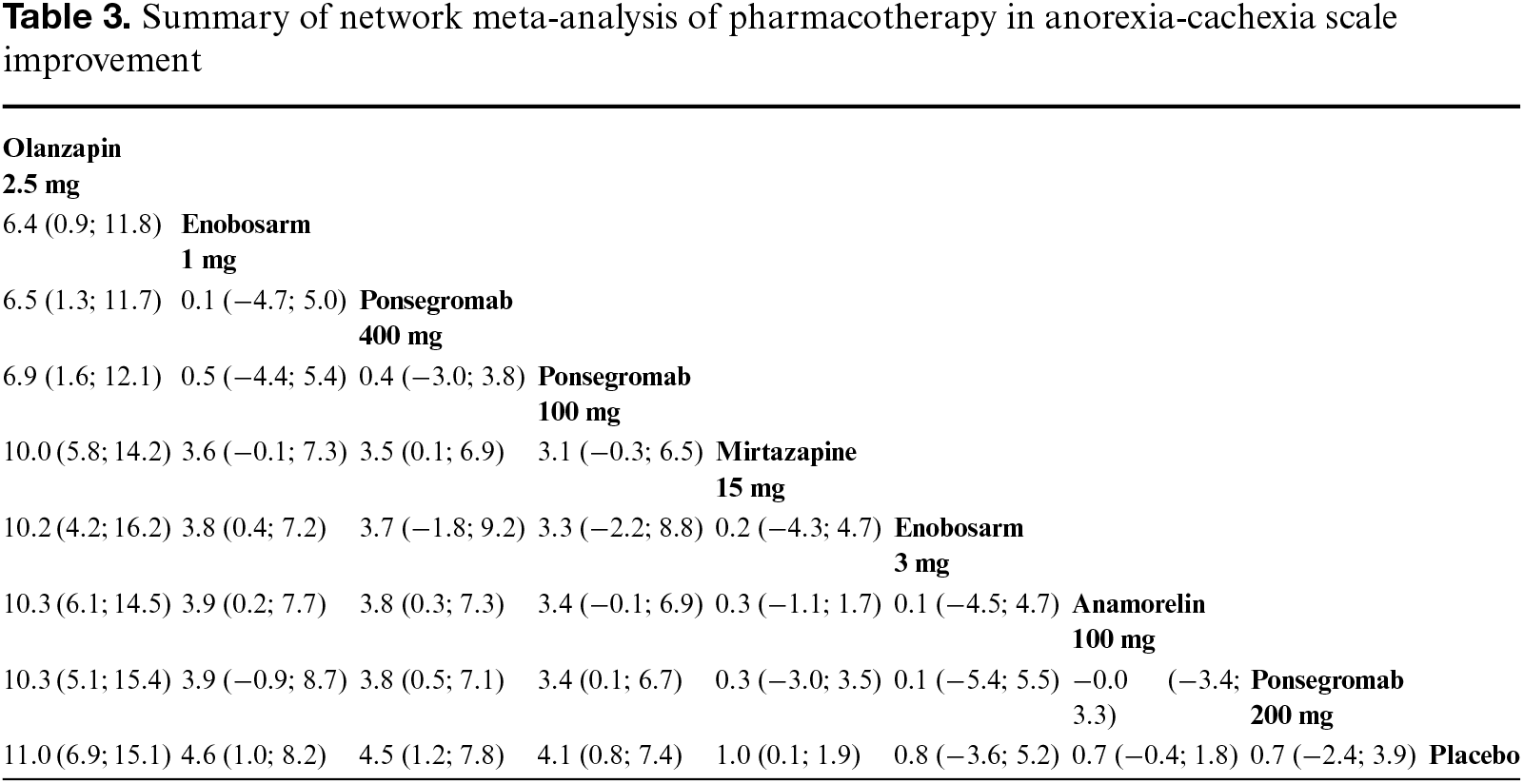
Fig. S5 shows the treatment ranking based on 1,000 simulations. Olanzapine 2.5 mg achieved the highest SUCRA value of 0.997, followed by ponsegromab 400 mg (0.743), enobosarm 1 mg (0.735), ponsegromab 100 mg (0.708), and mirtazapine 15 mg (0.338). The complete network meta-analysis is provided in Table 3. Olanzapine 2.5 mg daily demonstrated superior ACS improvement compared to ponsegromab 400 mg, anamorelin 100 mg, mirtazapine 15 mg, ponsegromab 200 mg, and anamorelin 100 mg, with MDs of 6.5 (95% CI: 1.3 to 11.7), 6.9 (95% CI: 1.6 to 12.1), 10.0 (95% CI: 5.8 to 14.2), 10.3 (95% CI: 6.1 to 14.5), and 10.3 (95% CI: 5.1 to 15.4), respectively.
Serious AEs
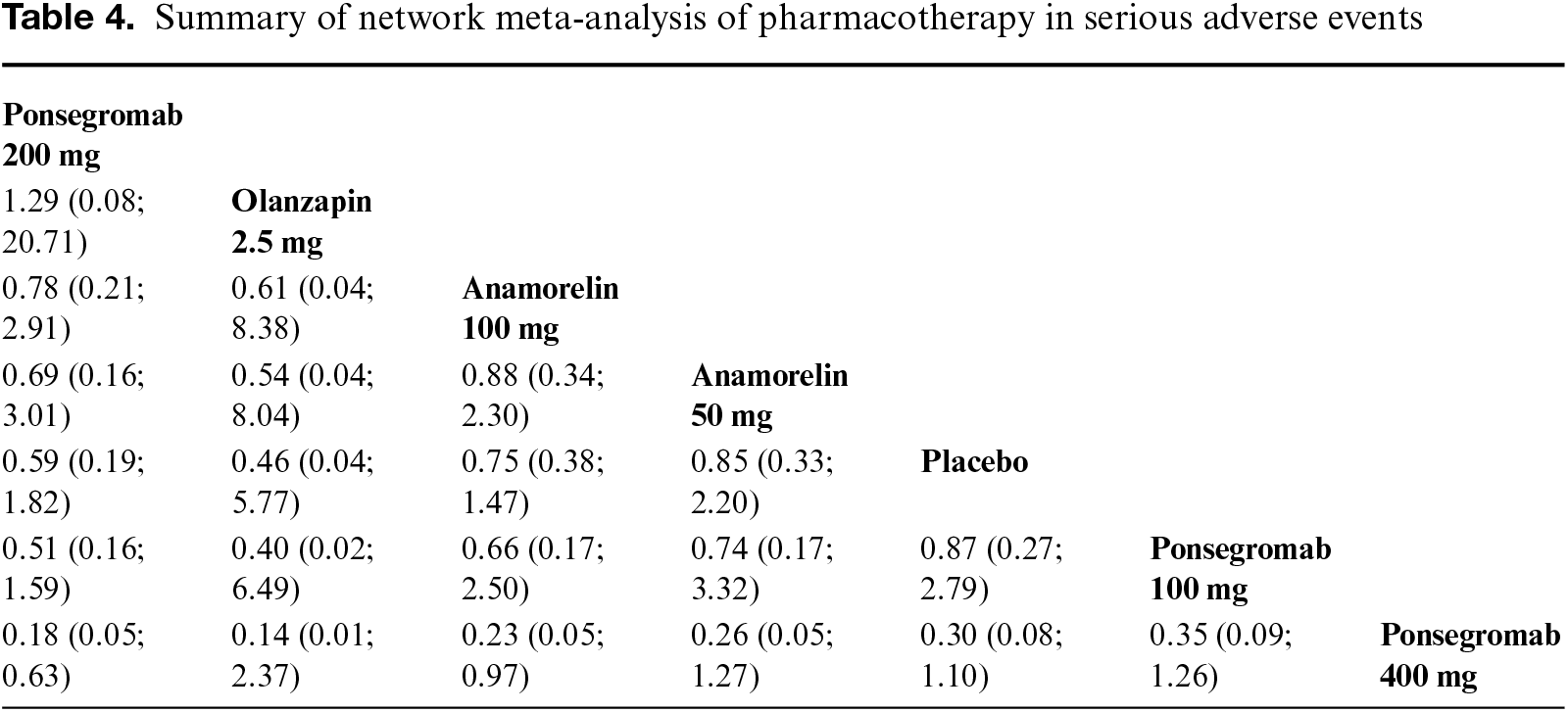
Eight studies, including 1,441 patients, assessed serious AEs; the network graph of these studies is shown in Fig. S6. Direct comparisons revealed that mirtazapine 15 mg daily was associated with an increased risk of serious AEs, with an OR of 5.93 (95% CI: 2.35 to 14.96). In contrast, no other agents demonstrated a statistically significant increase in serious AEs (Fig. 1C). Fig. S7 shows the treatment ranking based on 1,000 simulations. Enobosarm 1 mg had the lowest risk of serious AEs, followed by enobosarm 3 mg, ponsegromab 200 mg, olanzapine 2.5 mg, anamorelin 100 mg, and anamorelin 50 mg, with SUCRA values of 0.843, 0.739, 0.829, 0.719, 0.640, and 0.574, respectively. The summary of the risk of serious AEs was presented in Table 4, while the complete network meta-analysis results were detailed in Table S2. Ponsegromab 200 mg and anamorelin 100 mg were associated with a lower risk of serious AEs, with ORs of 0.18 (95% CI: 0.05 to 0.63) and 0.23 (95% CI: 0.05 to 0.97), respectively.
Risk and Evidence Level
The total I2 values for weight gain, improvement in ACS, and serious AEs were 45.5% (p = 0.16), 0%, and 46.9% (p = 0.15), respectively, indicating low to moderate heterogeneity. The I2 values for between-design heterogeneity were 51.9% (p = 0.15), 0%, and 71.9% (p = 0.06), respectively, particularly for serious AEs. A sensitivity analysis was performed by excluding the study by Arrieta 2024 from the serious AEs analysis. This exclusion resulted in a substantial reduction in heterogeneity, with the I2 dropping to 0% for both overall and between-design heterogeneity. Importantly, despite this change in heterogeneity, the ranking of AEs remained unchanged, reinforcing the robustness of the findings (Figs. S8, S9). The risk of bias is shown in Fig. S10. Three studies evaluated the efficacy of the agents over a two-month period, which was deemed inadequate follow-up, resulting in a high risk of bias20,24,25 Two additional studies displayed selection bias due to small sample sizes or ambiguous diagnostic criteria26,27 No significant publication bias was detected. The p-values from Egger’s test for the outcomes of weight gain, improvement in ACS, and serious AEs were 0.06, 0.22, and 0.11, respectively. According to the GRADE approach, the evidence showed moderate certainty for outcomes such as weight gain, improvement in ACS, and the incidence of serious AEs.
Discussion
This meta-analysis evaluated the efficacy and safety of pharmacological interventions for CACS, focusing on various agents. Olanzapine demonstrated notable efficacy in promoting weight gain, comparable to ponsegromab and anamorelin, although mirtazapine appeared less effective. However, the network meta-analysis did not establish olanzapine as superior to other agents for weight gain. This finding contrasts with the results of a previous network meta-analysis.29 For improving ACS, olanzapine, ponsegromab, and mirtazapine showed effectiveness, whereas anamorelin did not. The network meta-analysis highlighted olanzapine as a higher-priority option than ponsegromab, mirtazapine, and anamorelin for ACS improvement. Safety profiles varied, with mirtazapine associated with a higher incidence of serious adverse events, while most other treatments did not raise significant safety concerns. This analysis provides a comparative perspective on these interventions, emphasizing the potential role of olanzapine in managing CACS.
The findings of this analysis have significant clinical implications for the management of CACS, a debilitating condition with limited treatment options. Olanzapine, a medication traditionally used for psychiatric conditions, demonstrated a dual benefit by promoting weight gain and improving ACS.30 These results suggest that olanzapine could serve as a valuable addition to the therapeutic arsenal for CACS, particularly in patients at high risk for chemotherapy-induced nausea and vomiting.31 Conversely, mirtazapine, another agent with psychiatric indications, showed limited efficacy in promoting weight gain compared to olanzapine, although it demonstrated effectiveness in improving ACS. Notably, mirtazapine was associated with a higher incidence of serious adverse events, which may limit its clinical utility in this context. Taken together, these findings highlight olanzapine’s favorable balance of efficacy and safety, positioning it as a potentially superior option for managing CACS.32
Anamorelin and ponsegromab are emerging agents with unique mechanisms of action, offering promising therapeutic options for CACS. Anamorelin, a selective ghrelin receptor agonist, mimics the effects of ghrelin, a hormone known to stimulate appetite and promote anabolic processes.33 Anamorelin addresses key aspects of CACS by enhancing appetite and increasing lean body mass. However, clinical evidence suggests that while anamorelin improves ACS, its efficacy in promoting significant weight gain remains limited compared to other agents like olanzapine. Ponsegromab, a GDF15 inhibitor, is a monoclonal antibody that targets myostatin, a key regulator of muscle growth inhibition.34 By inhibiting myostatin, ponsegromab helps preserve muscle mass and potentially reduces muscle wasting in patients with CACS.35 Clinical studies have demonstrated its efficacy in improving ACS and maintaining weight, positioning ponsegromab as a promising option for CACS management. Despite their novel mechanisms and potential, further research is needed to establish their long-term efficacy and safety profiles and their comparative performance against other agents like olanzapine and anamorelin.
While this meta-analysis provides valuable insights, several questions remain unanswered. Future studies should address the variability in diagnostic criteria for CACS, which limits the generalizability of findings.36 Establishing standardized diagnostic and outcome assessment criteria is critical for advancing research in this field. Long-term studies are also needed to evaluate the sustained efficacy and safety of these interventions, as most studies included in this analysis had follow-up durations of two to four months. Additionally, head-to-head trials comparing promising agents such as olanzapine and ponsegromab could provide more definitive evidence for clinical decision-making.
This meta-analysis has several limitations. First, the included studies exhibited low to moderate heterogeneity in population characteristics, cancer types, and inclusion criteria, potentially affecting the comparability of outcomes. Second, the relatively short follow-up periods in most studies limit the assessment of long-term efficacy and safety. Third, small sample sizes in some studies and potential selection bias contribute to uncertainty in the findings.
Conclusion
This meta-analysis highlights the efficacy and safety of pharmacological interventions for CACS, with olanzapine showing notable benefits in promoting weight gain and improving ACS alongside a favorable safety profile. Emerging agents like Anamorelin and Ponsegromab offer promising effectiveness in CACS.
Acknowledgment
None.
Funding Source
None.
Author Contributions
P.S. oversaw the study design and took the lead in drafting the manuscript. A.B. and N.K. were responsible for the literature search, quality assessment, data extraction, and analysis. K.S. and J.B. participated in interpreting the findings and revising the manuscript. All authors have reviewed and approved the final version.
Data Availability
The corresponding author shall make the datasets available upon reasonable request.
Ethical Statement
Institutional Review Board approval was waived due to the nature of the meta-analysis.
Conflict of Interest
The authors report no conflicts of interest in this work.
Supplemental Information
Supplemental information for this article can be found online at https://sup.jclinque.com/api/articles/61/download-suppl.
References
[1] Gagnon B, Murphy J, Simonyan D, et al. Cancer anorexia-cachexia syndrome is characterized by more than one inflammatory pathway. J Cachexia Sarcopenia Muscle. June 2024;15(3):1041–1053. doi:10.1002/jcsm.13430.
[2] Soria Rivas A, Escobar Álvarez Y, Blasco Cordellat A, et al. SEOM clinical guidelines for cancer anorexia-cachexia syndrome. Clin Transl Oncol. November 2024;26(11):2866–2876. doi:10.1007/s12094-024-03502-8.
[3] Ispoglou T, McCullough D, Windle A, et al. Addressing cancer anorexia-cachexia in older patients: potential therapeutic strategies and molecular pathways. Clin Nutrit. February 1, 2024;43(2):552–566. doi:10.1016/j.clnu.2024.01.009.
[4] Herouvi D, Paltoglou G, Soldatou A, Kalpia C, Karanasios S, Karavanaki K. Lifestyle and pharmacological interventions and treatment indications for the management of obesity in children and adolescents. Children (Basel). July 17, 2023;10(7):1230. doi:10.3390/children10071230.
[5] Petruzzelli M, Wagner EF. Mechanisms of metabolic dysfunction in cancer-associated cachexia. Genes Dev. March 1, 2016;30(5):489–501. doi:10.1101/gad.276733.115.
[6] Ruiz-García V, López-Briz E, Carbonell-Sanchis R, Bort-Martí S, Gonzálvez-Perales JL. Megestrol acetate for cachexia-anorexia syndrome. A systematic review. J Cachexia Sarcopenia Muscle. June 2018;9(3):444–452. doi:10.1002/jcsm.12292.
[7] Ruiz Garcia V, López-Briz E, Carbonell Sanchis R, Gonzalvez Perales JL, Bort-Marti S. Megestrol acetate for treatment of anorexia-cachexia syndrome. Cochrane Database Syst Rev. March 28, 2013;2013(3):Cd004310. doi:10.1002/14651858.CD004310.pub3.
[8] Kuckuck S, van der Valk ES, Scheurink AJW, et al. Glucocorticoids, stress and eating: the mediating role of appetite-regulating hormones. Obes Rev. March 2023;24(3):e13539. doi:10.1111/obr.13539.
[9] Taniguchi J, Mikura S, da Silva Lopes K. The efficacy and safety of anamorelin for patients with cancer-related anorexia/cachexia syndrome: a systematic review and meta-analysis. Sci Rep. September 14, 2023;13(1):15257. doi:10.1038/s41598-023-42446-x.
[10] Li W-T, Huang X-F, Deng C, et al. Olanzapine induces inflammation and immune response via activating ER stress in the rat prefrontal cortex. Current Med Sci. August 1, 2021;41(4):788–802. doi:10.1007/s11596-021-2401-7.
[11] Arockiaraj N, Gupta R, Ahmad R, Halder S, Bhatia MS. Sertraline with desvenlafaxine and sertraline with mirtazapine as treatment initiation in MDD patients with moderate to severe depression and effect on inflammatory markers. Int J Psychiatry Clin Pract. March 2024;28(1):9–16. doi:10.1080/13651501.2023.2287754.
[12] Crawford J, Calle RA, Collins SM, et al. A Phase Ib first-in-patient study assessing the safety, tolerability, pharmacokinetics, and pharmacodynamics of ponsegromab in participants with cancer and cachexia. Clin Cancer Res. February 1, 2024;30(3):489–497. doi:10.1158/1078-0432.Ccr-23-1631.
[13] Page MJ, Moher D, Bossuyt PM, et al. PRISMA, 2020 explanation and elaboration: updated guidance and exemplars for reporting systematic reviews. BMJ. 2021;372:n160. doi:10.1136/bmj.n160.
[14] Open Science Framework. Efficacy and safety of pharmacotherapy in cancer-related anorexia and cachexia symp-toms: a systematic review and network meta-analysis of randomized controlled trials. Published 2025. Accssed January 24, 2025. https://osf.io/xfguk/.
[15] Freites-Martinez A, Santana N, Arias-Santiago S, Viera A. Using the common terminology criteria for adverse events (CTCAE-version 5.0) to evaluate the severity of adverse events of anticancer therapies. Actas Dermosifiliogr (Engl Ed). January 2021;112(1):90–92. doi:10.1016/j.ad.2019.05.009. CTCAE versión 5.0. Evaluación de la gravedad de los eventos adversos dermatológicos de las terapias antineoplásicas.
[16] Higgins JP, Thompson SG, Deeks JJ, Altman DG. Measuring inconsistency in meta-analyses. Bmj. September 6, 2003;327(7414):557–560. doi:10.1136/bmj.327.7414.557.
[17] Nejadghaderi SA, Balibegloo M, Rezaei N. The Cochrane risk of bias assessment tool 2 (RoB 2) versus the original RoB: a perspective on the pros and cons. Health Sci Rep. June 2024;7(6):e2165. doi:10.1002/hsr2.2165.
[18] Prasad M. Introduction to the GRADE tool for rating certainty in evidence and recommendations. Clin Epidemiol Global Health. January 1, 2024;25(7454):101484. doi:10.1016/j.cegh.2023.101484.
[19] Chowdhury IH, Rahman MS, Chowdhury MNK, et al. Mirtazapine versus megestrol acetate in treatment of anorexia-cachexia in advanced cancer patients: a randomized, double-blind trial. Jpn J Clin Oncol. May 7, 2024;54(5):530–536. doi:10.1093/jjco/hyae009.
[20] Arrieta O, Cárdenas-Fernández D, Rodriguez-Mayoral O, et al. Mirtazapine as appetite stimulant in patients with non-small cell lung cancer and anorexia: a randomized clinical trial. JAMA Oncol. March 1, 2024;10(3):305–314. doi:10.1001/jamaoncol.2023.5232.
[21] Currow D, Temel JS, Abernethy A, Milanowski J, Friend J, Fearon KC. ROMANA 3: a phase 3 safety extension study of anamorelin in advanced non-small-cell lung cancer (NSCLC) patients with cachexia. Ann Oncol. August 1, 2017;28(8):1949–1956. doi:10.1093/annonc/mdx192.
[22] Dobs AS, Boccia RV, Croot CC, et al. Effects of enobosarm on muscle wasting and physical function in patients with cancer: a double-blind, randomised controlled phase 2 trial. Lancet Oncol. April 2013;14(4):335–345. doi:10.1016/s1470-2045(13)70055-x.
[23] Groarke JD, Crawford J, Collins SM, et al. Ponsegromab for the treatment of cancer cachexia. N Engl J Med. December 19, 2024;391(24):2291–2303. doi:10.1056/NEJMoa2409515.
[24] Hunter CN, Abdel-Aal HH, Elsherief WA, Farag DE, Riad NM, Alsirafy SA. Mirtazapine in cancer-associated anorexia and cachexia: a double-blind placebo-controlled randomized trial. J Pain Symptom Manage. December 2021;62(6):1207–1215. doi:10.1016/j.jpainsymman.2021.05.017.
[25] Mehrzad V, Afshar R, Akbari M. Pentoxifylline treatment in patients with cancer cachexia: a double-blind, randomized, placebo-controlled clinical trial. Adv Biomed Res. 2016;5(1):60. doi:10.4103/2277-9175.179182.
[26] Sandhya L, Devi Sreenivasan N, Goenka L, et al. Randomized double-blind placebo-controlled study of olanzapine for chemotherapy-related anorexia in patients with locally advanced or metastatic gastric, hepatopancreaticobiliary, and lung cancer. J Clin Oncol. May 2023;10(14):2617–2627. doi:10.1200/jco.22.01997.
[27] Stewart Coats AJ, Ho GF, Prabhash K, et al. Espindolol for the treatment and prevention of cachexia in patients with stage III/IV non-small cell lung cancer or colorectal cancer: a randomized, double-blind, placebo-controlled, international multicentre phase II study (the ACT-ONE trial). J Cachexia Sarcopenia Muscle. June 2016;7(3):355–365. doi:10.1002/jcsm.12126.
[28] Takayama K, Katakami N, Yokoyama T, et al. Anamorelin (ONO-7643) in Japanese patients with non-small cell lung cancer and cachexia: results of a randomized phase 2 trial. Support Care Cancer. August 2016;24(8):3495–3505. doi:10.1007/s00520-016-3144-z.
[29] Chen H, Ishihara M, Kazahari H, et al. Efficacy and safety of pharmacotherapy for cancer cachexia: a systematic review and network meta-analysis. Cancer Med. September 2024;13(17):e70166. doi:10.1002/cam4.70166.
[30] Jin W, Chen S, Li D, et al. Metabolic effects and clinical outcomes of olanzapine in schizophrenia: a systematic review and meta-analysis. Heliyon. December 15, 2024;10(23):e40424. doi:10.1016/j.heliyon.2024.e40424.
[31] Yuan L, Li XY, Xu L, Quan SJ, Huang YB, Zheng H. Effects of olanzapine in the improvement of body weight and appetite in patients with cancer or receiving chemotherapy: a systematic review and meta-analysis. Eur J Clin Pharmacol. January 2025;81(1):45–63. doi:10.1007/s00228-024-03770-x.
[32] Andrade C. Therapeutic effects, side effects, and adverse effects of neuropsychiatric drugs in the context of treating cancer-related anorexia with olanzapine and mirtazapine. J Clin Psychiatry. 2024;85(3):24f15532. doi:10.4088/JCP.24f15532.
[33] Dawson-Hughes B, Barger K, Reitshamer E, Fielding RA, Evans W, Ceglia L. Effect of anamorelin, a ghrelin receptor agonist, on muscle and bone in adults with osteosarcopenia. J Clin Endocrinol Metab. February 20, 2024;109(3):e945–e955. doi:10.1210/clinem/dgad702.
[34] Ling T, Zhang J, Ding F, Ma L. Role of growth differentiation factor 15 in cancer cachexia (Review). Oncol Lett. November 2023;26(5):462. doi:10.3892/ol.2023.14049.
[35] Cortellino S, D’Angelo M, Quintiliani M, Giordano A. Cancer knocks you out by fasting: cachexia as a consequence of metabolic alterations in cancer. J Cell Physiol. September 8, 2024;240(1):e31417. doi:10.1002/jcp.31417.
[36] Escobar Y, Ramchandani A, Salgado M, et al. What do patients and oncologists think about the evaluation and management of cancer-related anorexia-cachexia? The Quasar_SEOM study. Clin Transl Oncol. December 2023;25(12):3479–3491. doi:10.1007/s12094-023-03212-7.
 |
Copyright: © 2025 Brar et al. This work is licensed under a Creative Commons Attribution 4.0 International License, which permits unrestricted use, distribution, and reproduction in any medium, provided the original work is properly cited. |