| Journal of Clinical Question. 2025; 2(2): e62 https://doi.org/10.69854/jcq.2025.0001 Advance access publication date 15 March 2025 |
 |
Meta-Analysis
Efficacy and Safety of Neoadjuvant Chemotherapy for Muscle-Invasive Bladder Cancer: A Systematic Review and Network Meta-Analysis of RCTs
Pasion Emily Noelle1, Fischer Joseph2, Alice Tsao3, Thomas Pashalides3, Mohd Razaleigh Yusof 4, Muhammad Uzair5, Liaqat Ali6,*
1Department of Internal Medicine, California Northstate University College of Medicine, Elk Grove, CA, USA.
2College of Biological Sciences, University of California, Davis, CA, USA.
3Department of Urology, Kaiser South Sacramento Medical Center, Sacramento, CA, USA.
4Department of Urology, Hospital Sultan Abdul Aziz Shah, Serdang, Selangor, Malaysia.
5Department of Laboratory Service, Star Diagnostic Center, Peshawar, Pakistan.
6Institute of Kidney Diseases, Hayatabad Medical Complex, Khyber Girls Medical College, Peshawar, Pakistan.
*Corresponding Author: e-mail: liaqat_99@yahoo.com
Submitted: January 03, 2025 Accepted: March 15, 2025
Clinical Question Box
Is the combination of chemotherapy and immune checkpoint inhibitors recommended as neoadjuvant chemotherapy for muscle-invasive bladder cancer?
The combination of gemcitabine, cisplatin, and durvalumab is recommended. This combination is emerging as a promising candidate due to strong evidence of its pathological complete response, although it shows moderate overall survival and presents adverse events. Further studies are required for exploring other combinations of different immune checkpoint inhibitors and chemotherapy.
Abstract
Introduction: Muscle-invasive bladder cancer (MIBC) is a highly aggressive malignancy associated with significant mortality. Neoadjuvant chemotherapy (NAC) has shown improved outcomes by reducing tumor burden and eradicating micrometastases prior to surgery. While platinum-based chemotherapy remains the standard, novel regimens incorporating immune checkpoint inhibitors have emerged, necessitating further investigation into their clinical benefits. Among these, durvalumab in combination with gemcitabine and cisplatin (GC-D) has gained attention for its potential efficacy in MIBC. However, its comparative effectiveness and safety relative to other NAC regimens remain unclear. Methods: This systematic review and network meta-analysis adhered to PRISMA (Preferred Reporting Items for Systematic Reviews and Meta-Analyses) guidelines and included randomized controlled trials (RCTs) for evaluating NAC in MIBC patients without metastatic disease. Comprehensive searches were conducted in PubMed, Embase, Cochrane Library, and Web of Science till December 2024. The primary outcome was the pathological complete response (pCR), while the secondary outcomes included overall survival (OS) and adverse events (AEs). Results: Seven RCTs involving 2,529 patients were analyzed. The GC-D regimen achieved the highest pCR rate, with an odds ratio (OR) of 50.6 (95% confidence interval [CI]: 2.7, 927.1) compared to radical cystectomy alone, also outperforming gemcitabine plus cisplatin (GC) (OR 1.5; 95% CI: 1.1, 1.9). As per the 3-year OS, GC-D demonstrated superior outcomes, surpassing GC (OR 0.61; 95% CI: 0.48, 0.78). The AE profiles of GC-D and dose-dense methotrexate, vinblastine, doxorubicin, and cisplatin (ddMVAC) were comparable to GC, with no significant increase in Grade 3–5 AEs (GC-D: OR 1.08; 95% CI: 0.82, 1.42; ddMVAC: OR 1.27; 95% CI: 0.50, 3.26). Conclusion: GC-D demonstrates superior pCR rates and OS while maintaining comparable safety to other NAC regimens, establishing it as a promising treatment option for MIBC. However, alternative regimens remain essential for patients for whom GC-D is not applicable.
Keywords: Muscle-invasive bladder cancer, MIBC, neoadjuvant chemotherapy, durvalumab, GC, meta-analysis
Introduction
Bladder cancer is a significant global health concern, ranking among the most common malignancies of the urinary tract.1 In 2022, bladder cancer was diagnosed in over 600,000 individuals globally, leading to more than 220,000 related deaths.2 According to recent epidemiological studies, it accounts for a substantial global burden of morbidity and mortality, with higher prevalence rates in men.3 The global incidence of bladder cancer has been rising steadily, particularly in regions with aging populations and increased exposure to risk factors such as smoking and occupational carcinogens.4 Muscle-invasive bladder cancer (MIBC), a particularly aggressive form of this disease, poses considerable therapeutic challenges due to its high risk of progression and metastasis. This subtype represents approximately 25% of newly diagnosed bladder cancer cases and is associated with poor prognostic outcomes if not managed effectively.5 Early and effective treatment is crucial for improving long-term outcomes and survival rates in affected patients, highlighting the clinical importance of investigating optimal therapeutic strategies. The clinical burden of MIBC extends beyond survival statistics, impacting quality of life, healthcare systems, and economic resources.6
Neoadjuvant chemotherapy (NAC) has emerged as a cornerstone in the management of MIBC, offering several advantages over immediate surgical intervention.7 By administering systemic chemotherapy before radical cystectomy (RC), NAC aims to reduce tumor burden, eradicate micrometastases, and enhance the likelihood of complete resection. Although questions remain regarding the choice between NAC and adjuvant chemotherapy, particularly in specific racial groups,8,9 NAC has shown a survival advantage over RC alone, enhancing cancer-specific outcomes in both localized and advanced stages.10 Among the NAC regimens, dose-dense methotrexate, vinblastine, doxorubicin, and cisplatin (ddMVAC) and gemcitabine plus cisplatin (GC) are widely recognized as first-choice options due to their proven efficacy and tolerability.11 This approach is supported by robust evidence from randomized controlled trials (RCTs) and meta-analyses, which demonstrate that NAC can improve overall survival (OS) and disease-free survival.12,13 Furthermore, NAC facilitates tumor downstaging, increasing the probability of a pathological complete response (pCR), which is strongly correlated with improved survival outcomes. Despite its well-documented benefits, the adoption of NAC in clinical practice remains suboptimal, partly due to concerns about patient selection, adverse events (AEs), and logistical challenges.14
The advent of immunotherapy has transformed the therapeutic landscape for bladder cancer, offering new opportunities to improve outcomes. Immune checkpoint inhibitors (ICIs) targeting the programmed death-1/programmed death-ligand-1 (PD-L1) axis and cytotoxic T-lymphocyte-associated protein-4 have shown efficacy in advanced and metastatic bladder cancer.15 Preliminary evidence suggests that combining ICIs with standard chemotherapy may enhance tumor eradication and immune responses, promising effective treatments for cisplatin-ineligible patients.16 Ongoing trials are exploring novel combinations and sequencing strategies to optimize immunotherapy in the neoadjuvant setting.17,18 PD-L1 biomarker expression and tumor mutational burden are being investigated to personalize treatment approaches.19 Additionally, understanding the interplay between chemotherapy and immunotherapy, as well as the tumor microenvironment’s response, is crucial for developing protocols that maximize benefits while minimizing adverse effects. Insights into resistance mechanisms and immune modulation will further refine strategies for improving outcomes in MIBC.
Despite numerous clinical trials highlighting the potential of combining ICIs with GC and other regimens, a comprehensive analysis of their efficacy and safety remains limited. This gap is particularly evident in the context of recent studies evaluating GC with durvalumab (GC-D), which have shown promising outcomes but require further validation through robust comparative analyses. This systematic review and network meta-analysis (NMA) aims to thoroughly evaluate the efficacy and safety of NAC for MIBC, using data from RCTs. By synthesizing evidence from both direct and indirect comparisons, this study seeks to identify the most effective and safe regimens, provide insights into the role of NAC in modern treatment algorithms, and guide clinical decision-making.
Methods
Study Protocol and Registry
This systematic review and NMA was conducted following the PRISMA (Preferred Reporting Items for Systematic Reviews and Meta-Analyses) guidelines.20 The protocol was registered in the Open Science Framework.21
Eligibility Criteria
This study included RCTs that evaluated the efficacy and safety of NAC for MIBC. Eligible studies met the following criteria: (1) enrolled patients had histologically confirmed MIBC without metastatic disease, (2) NAC was administered prior to RC or definitive treatments, (3) survival outcomes such as pCR, OS, or AEs were reported, and (4) underwent quality assessment using the Cochrane Risk of Bias tool where applicable. Studies were excluded if they met any of the following criteria: (1) not an RCT, (2) published only as abstracts or preclinical data, and (3) lacked sufficient data for analysis. Only peer-reviewed journal articles were considered, with no language restrictions.
Information Sources and Search Strategy
A comprehensive literature search was performed across PubMed, Embase, Cochrane Library, and Web of Science from inception to December 20, 2024. The search strategy combined terms related to (((urothelial carcinoma) OR (bladder cancer)) AND (neoadjuvant chemotherapy)) AND (randomized clinical trial) (Table S1). To ensure a comprehensive review, the reference lists of included studies and relevant reviews were manually screened. Grey literature, including conference proceedings and clinical trial registries, was also searched for additional relevant studies.
Study Selection
Two independent reviewers (P.E.N. and F.J.) screened titles and abstracts for potential inclusion. Full-text articles were assessed for eligibility based on the predefined criteria. Discrepancies were resolved through discussion or consultation with a third reviewer (M.U.). A standardized data extraction form was used to collect information on study characteristics (e.g., author, year, sample size, and setting), patient demographics, intervention details, comparator arms, and reported outcomes. Data were independently extracted by two reviewers and cross-verified to ensure accuracy.
Outcomes
The primary outcome was pCR, defined as T0. Secondary outcomes included OS and AEs. OS was defined as a 3-year OS to maximize the inclusion of available studies. AEs were categorized as Grade 3 to Grade 5, based on the Common Terminology Criteria for Adverse Events.22 The treatment regimens evaluated in the included studies were ddMVAC; GC; methotrexate, vinblastine, doxorubicin, and cisplatin (MVAC); methotrexate and cisplatin (MC); gemcitabine and cisplatin; and GC-D.
Data Synthesis
All statistical analyses were performed using R (Version 4.4, R Foundation for Statistical Computing, Vienna, Austria), utilizing the “meta” and “netmeta” packages. Visualizations were generated through forest plots and league tables to illustrate relative treatment effects. Pairwise meta-analyses were conducted for direct comparisons using random-effects models to address heterogeneity, with odds ratios (ORs) and 95% confidence intervals (CIs) either extracted or calculated as needed. An NMA was conducted to compare multiple NAC regimens simultaneously by integrating direct and indirect evidence. Model consistency was evaluated, and results were reported as relative treatment effects with 95% CIs.
Heterogeneity and Consistency Assessment
Statistical heterogeneity was evaluated using the I² statistic, with values greater than 25% indicating low heterogeneity, above 50% representing moderate heterogeneity, and over 75% suggesting high heterogeneity. Consistency between direct and indirect evidence in the NMA was evaluated using the node-splitting method. Potential inconsistencies were investigated through subgroup and sensitivity analyses. Subgroup analyses were performed based on factors such as cisplatin eligibility, age, performance status, and geographical location. Sensitivity analyses involved the exclusion of studies with a high risk of bias and the application of alternative statistical models to evaluate the robustness of the findings. The risk of bias in individual studies was assessed using the Cochrane Risk of Bias tool, which evaluates domains including the randomization process, deviations from intended interventions, missing outcome data, outcome measurement, and selective reporting. Each domain was rated as low risk, high risk, or some concerns, with overall risk categorized accordingly.23 Publication bias was examined through funnel plots of asymmetry.
Evidence Level Assessment
The Grading of Recommendations Assessment, Development, and Evaluation (GRADE) approach was used to assess the level of evidence for direct, indirect, and network comparisons for each outcome.24,25 Direct comparisons from head-to-head RCTs were prioritized over indirect comparisons. The evidence quality was categorized as high, moderate, low, or very low, considering factors such as study bias, result consistency, evidence directness, estimate precision, and potential publication bias. The evidence quality was reduced when study limitations were identified or upgraded in cases of robust effect sizes or large sample sizes, following GRADE guidelines.
Results
Study Selection and Characteristics
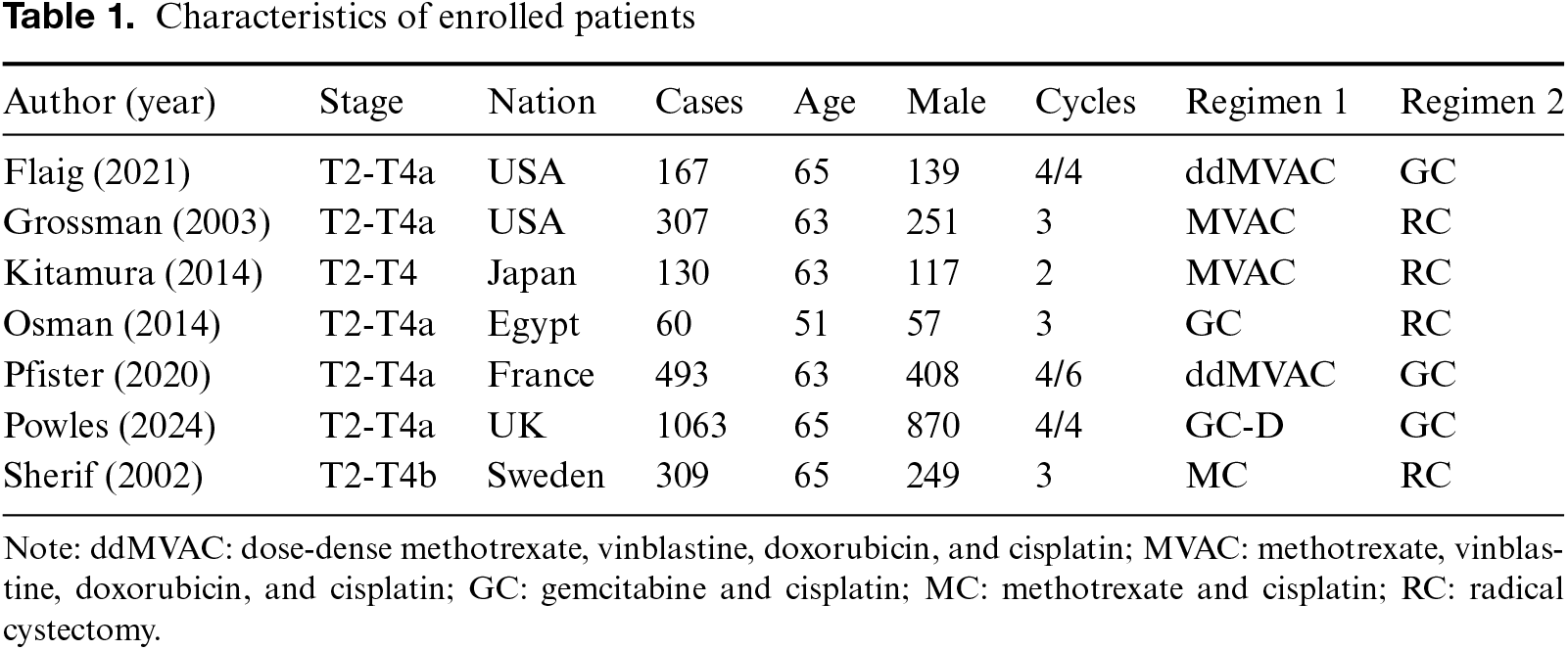
An initial search of the databases identified 1,633 studies. Following duplication removal, primary, and secondary screening, 489, 1,018, and 119 studies were excluded, respectively (Fig. S1). Ultimately, seven RCTs were included in this systematic review and NMA, comprising a total of 2,529 patients with MIBC. These studies, conducted between 2002 and 2024, targeted diverse demographics, including the United States of America, Japan, Egypt, France, Sweden, and the United Kingdom. The patient demographics, study characteristics, and treatment arms are detailed in Table 1.26–32 Most of the studies included patients with disease stages up to T4aN0M0, while one study also included patients with T4bN0M0. The majority of patients were approximately 60 years old, with a predominance of males. The evaluated regimens comprised ddMVAC, MVAC, MC, GC, and GC-D, with NAC courses ranging from two to six cycles.
pCR
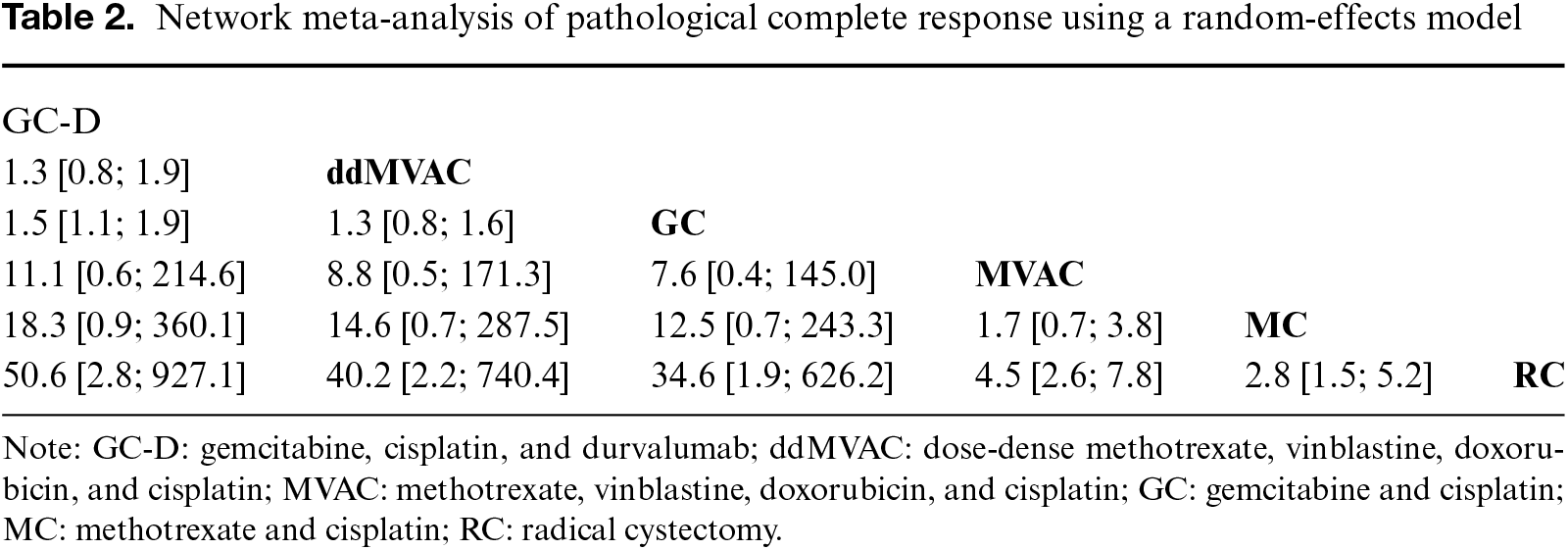
All RCTs reported pCR findings; the network graph is presented in Fig. S2. A direct comparison with RC using a random-effects model indicated that GC-D achieved the highest pCR, with an OR of 50.6 (95% CI: 2.7, 927.1), followed by ddMVAC, GC, and MVAC (Fig. 1A). A ranking based on 1,000 simulations for each treatment also confirmed GC-D as the most effective regimen (Fig. S3). The results of the NMA are detailed in Table 2. GC-D was superior to GC and RC, with ORs of 1.5 (95% CI: 1.1, 1.9) and 50.6 (95% CI: 2.8, 927.1), respectively. However, no statistically significant differences were observed when compared with ddMVAC, MVAC, and MC, with ORs of 1.3 (95% CI: 0.8, 1.9), 11.1 (95% CI: 0.6, 214.5), and 18.3 (95% CI: 0.9, 360.1), respectively.
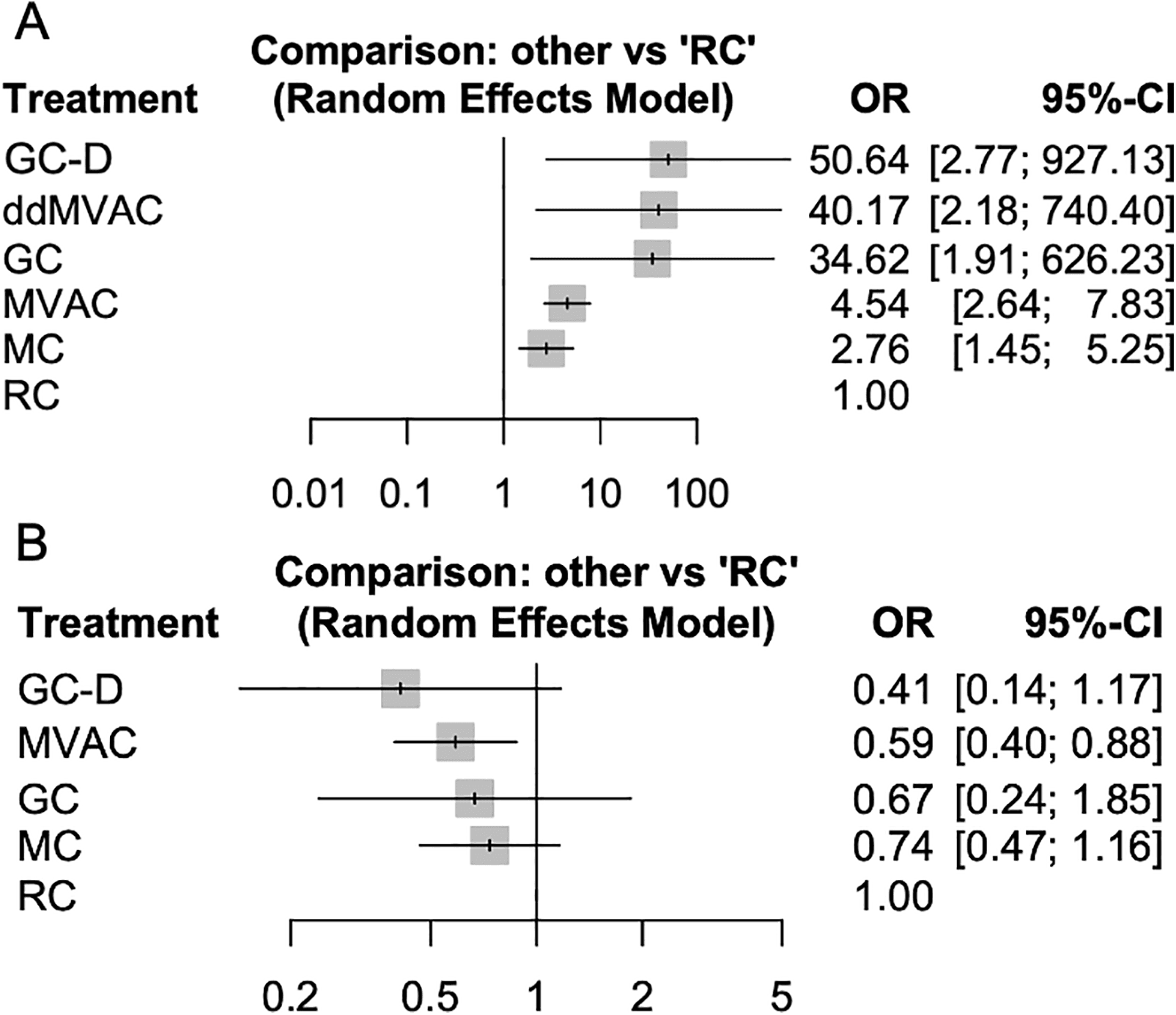
Figure 1. Direct comparison of pathological complete response and overall survival. (A) Pathological complete response and (B) overall survival. GC-D: gemcitabine, cisplatin, and durvalumab; ddMVAC: dose-dense methotrexate, vinblastine, doxorubicin, and cisplatin; GC: gemcitabine and cisplatin; MVAC: methotrexate, vinblastine, doxorubicin, and cisplatin; MC: methotrexate and cisplatin; RC: radical cystectomy.
OS
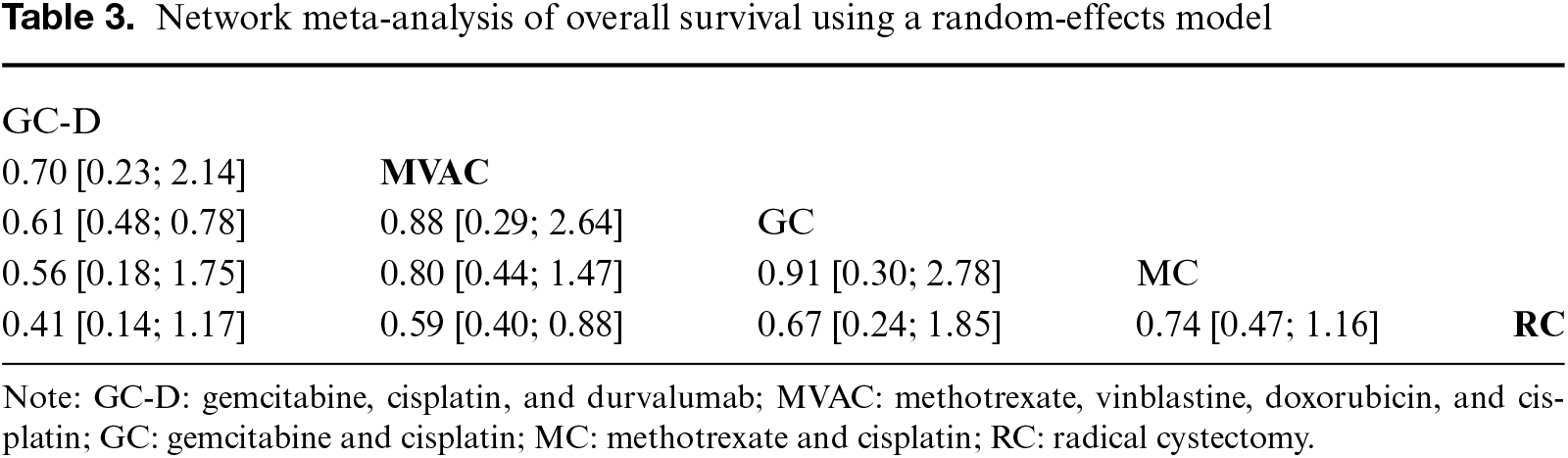
Five RCTs reported OS results; the network graph is presented in Fig. S4. A direct comparison with RC using a random-effects model indicated that GC-D achieved the longest OS, with an OR of 0.41 (95% CI: 0.14, 1.17), followed by MVAC, GC, and MC (Fig. 1B). A ranking based on 1,000 simulations for each treatment also confirmed GC-D as the most effective regimen (Fig. S5). The results of the NMA are detailed in Table 3. GC-D was superior to GC, with an OR of 0.61 (95% CI: 0.48, 0.78). However, no statistically significant differences were observed when compared with MVAC, MC, and RC, with ORs of 0.70 (95% CI: 0.23, 2.14), 0.56 (95% CI: 0.18, 1.75), and 0.41 (95% CI: 0.14, 1.17), respectively.
AEs
Only three studies compared AEs among ddMVAC, GC-D, and GC (Fig. 2). Pooled analysis showed that ddMVAC had an OR of 1.27 (95% CI: 0.50–3.26; p = 0.62; I² = 88%), while GC-D had an OR of 1.08 (95% CI: 0.82–1.42; p = 0.57). These results did not indicate a significant increase in AEs for ddMVAC and GC-D compared to GC. Sensitivity analysis and NMA were not feasible due to the limited number of studies.
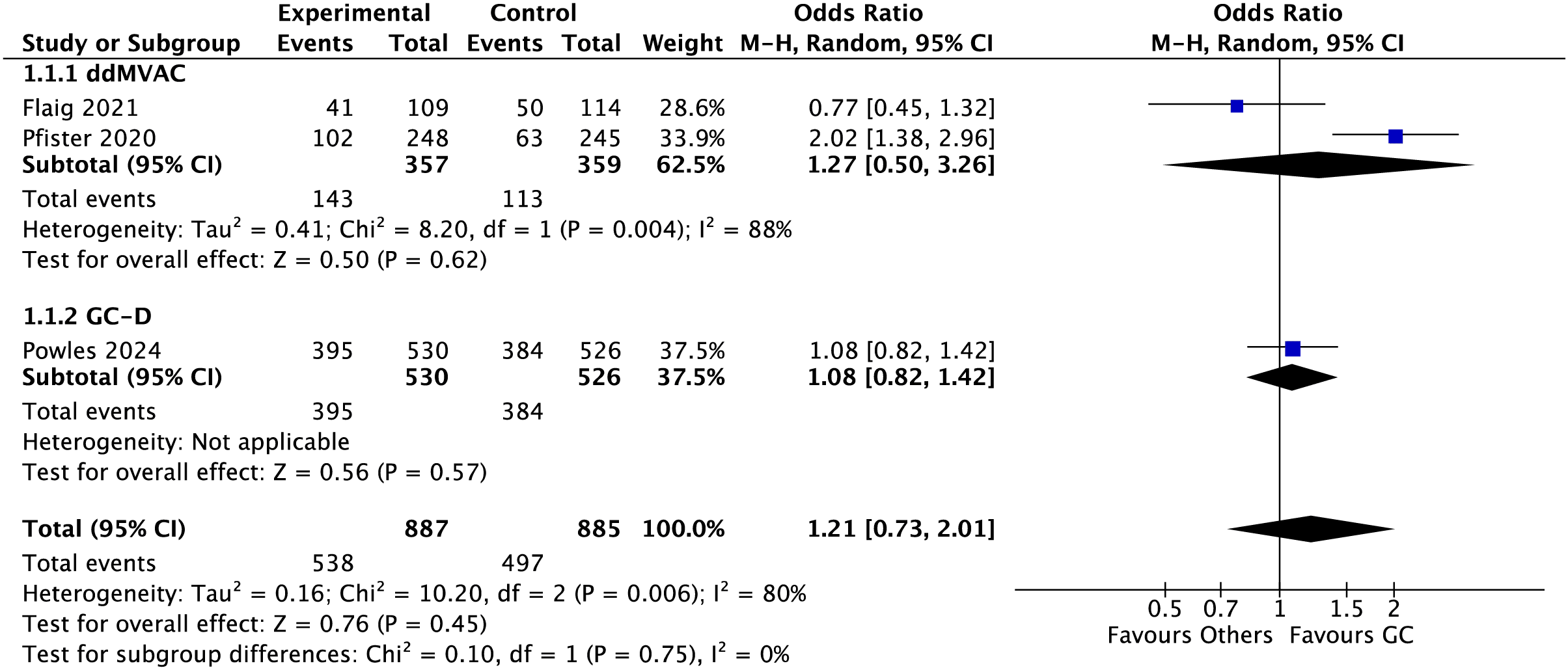
Figure 2. Direct comparison of adverse events with gemcitabine and cisplatin regimen. ddMVAC: dose-dense methotrexate, vinblastine, doxorubicin, and cisplatin; GC-D: gemcitabine, cisplatin, and durvalumab; CI: confidence interval.
Bias and Certainty of Evidence
The risk of bias is presented in Fig. S6. A high risk of bias was not identified in the included studies; however, two studies showed an uncertain risk regarding performance and detection bias. A significant publication bias was also not observed. According to the GRADE approach, the overall certainty of the evidence was high for pCR but moderate for OS and AEs, downgraded due to evidence directness and heterogeneity, respectively.
Discussion
This meta-analysis provides a comprehensive evaluation of the efficacy and safety of NAC regimens for MIBC, offering critical insights into treatment outcomes. Among the regimens assessed, GC-D demonstrated the highest pCR rates, reinforcing its superior efficacy relative to RC alone. Furthermore, while GC-D showed the longest OS outcomes among the analyzed regimens, these differences were not statistically significant when compared to alternatives such as ddMVAC and MVAC. Interestingly, ddMVAC achieved better pCR rates compared to GC, which remains a widely used regimen due to its balance of efficacy and safety, consistent with previous studies. Notably, the AE profiles of GC-D and ddMVAC were comparable to those of GC, supporting their acceptability from a safety perspective. While GC-D demonstrated modest OS advantages, an extended follow-up is imperative to confirm its long-term survival benefits. From a safety standpoint, the comparable AE profiles of GC-D, ddMVAC, and GC validate their feasibility in clinical practice, reinforcing the integration of GC-D into routine therapeutic protocols. The National Comprehensive Cancer Network and European Association of Urology guidelines currently recommend cisplatin-based NAC as the standard of care.33,34 However, our results suggest that GC-D may offer an alternative option with comparable efficacy and safety profiles.
The clinical implications of these findings are considerable. The superior pCR rates of GC-D position it as a potential preferred neoadjuvant regimen for MIBC. Combining ICIs with chemotherapy as a neoadjuvant approach for MIBC offers a promising strategy to enhance therapeutic outcomes. Preliminary studies and ongoing trials, such as the PURE-01 and NABUCCO studies, have demonstrated the potential of ICI-based regimens to improve pCR rates and enhance immune responses against residual tumor cells.17,35 Similarly, other studies have discussed the efficacy of pembrolizumab and nivolumab as neoadjuvant therapies for MIBC.36–38 However, the absence of a controlled arm precludes their inclusion in a meta-analysis. The results of ongoing phase 3 trials are eagerly awaited. Evidence suggests that PD-L1 expression, tumor mutational burden, and DNA damage response gene mutations may influence the response to GC-D.39 However, variability in biomarker assessment and limited standardized data precluded a comprehensive analysis. While GC remains widely used due to its balanced efficacy and safety, ddMVAC has demonstrated superior pCR rates, suggesting its potential as a more effective option for tumor downstaging.40 The integration of ICIs with regimens like ddMVAC merits further investigation given its superior pCR outcomes and the potential synergy between cytotoxic and immunotherapeutic mechanisms.
This meta-analysis synthesizes data from diverse RCTs through rigorous NMA, establishing a robust ranking of NAC regimens for MIBC. Unlike prior studies that focused on individual regimens or direct comparisons, this study offers a comprehensive perspective on the comparative efficacy and safety of various treatments.41,42 However, the lack of standardization in the number of chemotherapy cycles introduces variability, highlighting the need for consensus on treatment protocols to optimize outcomes. Observed discrepancies, such as variations in OS outcomes, may result from various study designs, patient demographics, and treatment protocols.43 High heterogeneity was observed in AEs, which can be attributed in part to differences in regimen compositions. Standardizing treatment protocols and incorporating a common add-on therapy in future studies may help reduce this heterogeneity. The variability in chemotherapy cycles across studies remains a significant limitation, potentially contributing to inconsistencies in treatment efficacy and AE profiles. Future clinical trials should aim to standardize the number and duration of chemotherapy cycles to improve comparability.
This study has several limitations. Firstly, variability in study designs, patient populations, and outcome measures across the included trials introduces uncertainty into the pooled estimates. Only one study directly compared the effectiveness of GC and RC, and its small sample size resulted in wide CIs for GC in NMA. Additionally, only one RCT reported on ICIs combined with chemotherapy, leaving the efficacy of other ICIs unclear. Furthermore, OS calculations were based on a 3-year follow-up period, which is shorter than that used in most RCTs. This limited follow-up duration may impact the comprehensiveness of survival outcome evaluation, underscoring the necessity for long-term data to fully assess treatment efficacy.
Conclusion
This meta-analysis offers a nuanced evaluation of NAC regimens for MIBC, with GC-D emerging as a promising candidate due to its efficacy and safety profile. By synthesizing diverse evidence and addressing critical gaps, this study provides a strong foundation for both clinical decision-making and future research aimed at improving outcomes for MIBC patients. Further research is warranted to refine patient selection criteria and optimize NAC strategies to maximize clinical benefits.
Acknowledgment
None.
Funding Source
None.
Author Contributions
M.U. contributed to the study design and drafting. P.E.N. and F.J. worked on the study search, quality check, data extraction, and analysis. A.T., T.P., M.R.Y., and L.A. worked on data interpretation and the revision process. All authors have read the manuscript and agree with its content and data.
Data Availability
The datasets are available from the corresponding author upon reasonable request.
Ethical Statement
Institutional Review Board approval was waived due to the nature of the meta-analysis.
Conflict of Interest
The authors report no conflicts of interest in this work.
Supplemental Information
Supplemental information for this article can be found online at https://sup.jclinque.com/api/articles/62/download-suppl.
References
[1] Zhang Y, Rumgay H, Li M, Yu H, Pan H, Ni J. The global landscape of bladder cancer incidence and mortality in 2020 and projections to 2040. J Glob Health. September 15, 2023;13(120):04109. doi:10.7189/jogh.13.04109.
[2] International Agency for Research on Cancer. Bladder cancer. https://www.iarc.who.int/cancer-type/bladder-cancer (Published in 2022, Accessed on February 14, 2025).
[3] Crimmins EM, Shim H, Zhang YS, Kim JK. Differences between men and women in mortality and the health dimensions of the morbidity process. Clin Chem. January 2019;65(1):135–145. doi:10.1373/clinchem.2018.288332.
[4] Saginala K, Barsouk A, Aluru JS, Rawla P, Padala SA, Barsouk A. Epidemiology of bladder cancer. Med Sci (Basel). March 13, 2020;8(1):15. doi:10.3390/medsci8010015.
[5] Boutaleb I, Mjaess G, Roumeguère T. Perioperative chemotherapy and immunotherapy to optimize cystectomy outcomes in the curative intent of non-metastatic muscle-invasive bladder cancer: A systematic review and meta-analysis. Fr J Urol. September 2024;34(9):102704. doi:10.1016/j.fjurol.2024.102704.
[6] Dong X, Song G, Guan K, et al. Clinical practice guideline on bladder cancer (Part II). UroPrecision. 2023;1(3):95–104. doi:10.1002/uro2.35.
[7] Roviello G, Catalano M, Santi R, et al. Neoadjuvant treatment in muscle-invasive bladder cancer: from the beginning to the latest developments. Front Oncol. 2022;12:912699. doi:10.3389/fonc.2022.912699.
[8] de Angelis M, Siech C, Jannello LMI, et al. Neoadjuvant versus adjuvant chemotherapy in non-metastatic locally-advanced stage radical cystectomy candidates. Clin Genitourin Cancer. October 2024;22(5):102132. doi:10.1016/j.clgc.2024.102132.
[9] de Angelis M, Jannello LMI, Siech C, et al. Race/ethnicity affects access and survival differences after neoadjuvant or adjuvant chemotherapy at radical cystectomy in urothelial carcinoma patients. J Racial Ethn Health Disparit. August 19, 2024. doi:10.1007/s40615-024-02131-9.
[10] de Angelis M, Jannello LMI, Siech C, et al. Neoadjuvant chemotherapy before radical cystectomy in patients with organ-confined and non-organ-confined urothelial carcinoma. Urol Oncol. January 2025;43(1):62.e1–62.e6. doi:10.1016/j.urolonc.2024.09.015.
[11] Pfister C, Gravis G, Fléchon A, et al. Dose-dense methotrexate, vinblastine, doxorubicin, and cisplatin or gemcitabine and cisplatin as perioperative chemotherapy for patients with nonmetastatic muscle-invasive bladder cancer: results of the GETUG-AFU V05 VESPER trial. J Clin Oncol. June 20, 2022;40(18):2013–2022. doi:10.1200/jco.21.02051.
[12] Hamid ARAH, Ridwan FR, Parikesit D, Widia F, Mochtar CA, Umbas R. Meta-analysis of neoadjuvant chemotherapy compared to radical cystectomy alone in improving overall survival of muscle-invasive bladder cancer patients. BMC Urol. October 14, 2020;20(1):158. doi:10.1186/s12894-020-00733-z.
[13] Pfister C, Gravis G, Flechon A, et al. Perioperative dose-dense methotrexate, vinblastine, doxorubicin, and cisplatin in muscle-invasive bladder cancer (VESPER): survival endpoints at 5 years in an open-label, randomised, phase 3 study. Lancet Oncol. February 2024;25(2):255–264. doi:10.1016/S1470-2045(23)00587-9.
[14] Lee HW, Kwon WA, Nguyen NT, Phan DTT, Seo HK. Approaches to clinical complete response after neoadjuvant chemotherapy in muscle-invasive bladder cancer: possibilities and limitations. Cancers (Basel). February 19, 2023;15(4):1323. doi:10.3390/cancers15041323.
[15] Catanzaro E, Beltrán-Visiedo M, Galluzzi L, Krysko DV. Immunogenicity of cell death and cancer immunotherapy with immune checkpoint inhibitors. Cell Mol Immunol. December 10, 2024;22(1):24–39. doi:10.1038/s41423-024-01245-8.
[16] Varayathu H, Sarathy V, Thomas BE, Mufti SS, Naik R. Combination strategies to augment immune check point inhibitors efficacy-implications for translational research. Front Oncol. 2021;11:559161. doi:10.3389/fonc.2021.559161.
[17] van Dijk N, Gil-Jimenez A, Silina K, et al. Preoperative ipilimumab plus nivolumab in locoregionally advanced urothelial cancer: the NABUCCO trial. Nature Med. December 1, 2020;26(12):1839–1844. doi:10.1038/s41591-020-1085-z.
[18] Bandini M, Gibb EA, Gallina A, et al. Does the administration of preoperative pembrolizumab lead to sustained remission post-cystectomy? First survival outcomes from the PURE-01 study. Ann Oncol. 2020;31(12):1755–1763. doi:10.1016/j.annonc.2020.09.011.
[19] Fan Y, Dai T, Zhang D, et al. PD-L1 expression and its correlation with tumor biomarkers in Chinese urothelial bladder cancer. Sci Rep. July 20, 2024;14(1):16753. doi:10.1038/s41598-024-67508-6.
[20] Page MJ, McKenzie JE, Bossuyt PM, et al. The PRISMA, 2020 statement: an updated guideline for reporting systematic reviews. BMJ. 2021;372:n71. doi:10.1136/bmj.n71.
[21] Open Science Framework. Efficacy and safety of neoadjuvant chemotherapy for muscle-invasive bladder cancer: a systematic review and network meta-analysis of randomized controlled trials. https://osfio/rmp7c (Published 2024, Accessed on January 3, 2025).
[22] Freites-Martinez A, Santana N, Arias-Santiago S, Viera A. Using the common terminology criteria for adverse events (CTCAE-version 5.0) to evaluate the severity of adverse events of anticancer therapies. Actas Dermosifiliogr (Engl Ed). January 2021;112(1):90–92. doi:10.1016/j.adengl.2019.05.021. CTCAE versión 5.0. Evaluación de la gravedad de los eventos adversos dermatológicos de las terapias antineoplásicas.
[23] Sterne JAC, Savović J, Page MJ, et al. RoB 2: a revised tool for assessing risk of bias in randomised trials. BMJ. 2019;366:l4898. doi:10.1136/bmj.l4898.
[24] Aguayo-Albasini JL, Flores-Pastor B, Soria-Aledo V. GRADE system: classification of quality of evidence and strength of recommendation. Cirugía Española (English Edition). 2014;92(2):82–88. doi:10.1016/j.cireng.2013.08.002.
[25] Izcovich A, Chu DK, Mustafa RA, Guyatt G, Brignardello-Petersen R. A guide and pragmatic considerations for applying GRADE to network meta-analysis. BMJ. 2023;381:e074495. doi:10.1136/bmj-2022-074495.
[26] Flaig TW, Tangen CM, Daneshmand S, et al. A randomized phase II study of coexpression extrapolation (COXEN) with neoadjuvant chemotherapy for bladder cancer (SWOG S1314; NCT02177695). Clin Cancer Res. May 1, 2021;27(9):2435–2441. doi:10.1158/1078-0432.Ccr-20-2409.
[27] Grossman HB, Natale RB, Tangen CM, et al. Neoadjuvant chemotherapy plus cystectomy compared with cystectomy alone for locally advanced bladder cancer. N Engl J Med. August 28, 2003;349(9):859–866. doi:10.1056/NEJMoa022148.
[28] Kitamura H, Tsukamoto T, Shibata T, et al. Randomised phase III study of neoadjuvant chemotherapy with methotrexate, doxorubicin, vinblastine and cisplatin followed by radical cystectomy compared with radical cystectomy alone for muscle-invasive bladder cancer: Japan Clinical Oncology Group Study JCOG0209. Ann Oncol. June 2014;25(6):1192–1198. doi:10.1093/annonc/mdu126.
[29] Osman MA, Gabr AM, Elkady MS. Neoadjuvant chemotherapy versus cystectomy in management of stages II, and III urinary bladder cancer. Arch Ital Urol Androl. December 30, 2014;86(4):278–283. doi:10.4081/aiua.2014.4.278.
[30] Pfister C, Gravis G, Fléchon A, et al. Randomized phase III trial of dose-dense methotrexate, vinblastine, doxorubicin, and cisplatin, or gemcitabine and cisplatin as perioperative chemotherapy for patients with muscle-invasive bladder cancer. Analysis of the GETUG/AFU V05 VESPER trial secondary endpoints: chemotherapy toxicity and pathological responses. Eur Urol. 2021;79(2):214–221. doi:10.1016/j.eururo.2020.08.024.
[31] Powles T, Catto JWF, Galsky MD, et al. Perioperative durvalumab with neoadjuvant chemotherapy in operable bladder cancer. N Engl J Med. 2024;391(19):1773–1786. doi:10.1056/NEJMoa2408154.
[32] Sherif A, Rintala E, Mestad O, et al. Neoadjuvant cisplatin-methotrexate chemotherapy for invasive bladder cancer–Nordic cystectomy trial 2. Scand J Urol Nephrol. 2002;36(6):419–425. doi:10.1080/003655902762467567.
[33] The National Comprehensive Cancer Network. NCCN Guidelines Bladder Cancer Version 6.2024. https://www.nccn.org/guidelines/guidelines-detail?category=1&id=1417 (Published in 2024, Accessed on February 14, 2025).
[34] European Association of Urology. Muscle-invasive and metastatic bladder cancer. https://uroweb.org/guidelines/muscle-invasive-and-metastatic-bladder-cancer (Published in 2024, Accessed on February 14, 2025).
[35] Necchi A, Anichini A, Raggi D, et al. Pembrolizumab as neoadjuvant therapy before radical cystectomy in patients with muscle-invasive urothelial bladder carcinoma (PURE-01): an open-label, single-arm, phase II study. J Clin Oncol. 2018;36(34):3353–3360. doi:10.1200/JCO.18.01148.
[36] Peyrottes A, Ouzaid I, Califano G, Hermieu JF, Xylinas E. Neoadjuvant immunotherapy for muscle-invasive bladder cancer. Medicina (Kaunas). July 29, 2021;57(8):769. doi:10.3390/medicina57080769.
[37] Califano G, Ouzaid I, Verze P, Stivalet N, Hermieu JF, Xylinas E. New immunotherapy treatments in non-muscle invasive bladder cancer. Arch Esp Urol. December 2020;73(10):945–953. Nuevos tratamientos de immunoterapia en cáncer de vejiga no musculoinvasivo.
[38] Galsky MD, Hoimes CJ, Necchi A, et al. Perioperative pembrolizumab therapy in muscle-invasive bladder cancer: phase III KEYNOTE-866 and KEYNOTE-905/EV-303. Future Oncol. August 2021;17(24):3137–3150. doi:10.2217/fon-2021-0273.
[39] Labriola MK, Zhu J, Gupta RT, et al. Characterization of tumor mutation burden, PD-L1 and DNA repair genes to assess relationship to immune checkpoint inhibitors response in metastatic renal cell carcinoma. J Immunother Cancer. March 2020;8(1):e000319. doi:10.1136/jitc-2019-000319.
[40] Chung DY, Kang DH, Kim JW, et al. Comparison of oncologic outcomes of dose-dense methotrexate, vinblastine, doxorubicin, and cisplatin (ddMVAC) with gemcitabine and cisplatin (GC) as neoadjuvant chemotherapy for muscle-invasive bladder cancer: systematic review and meta-analysis. Cancers (Basel). June 2, 2021;13(11):2770. doi:10.3390/cancers13112770.
[41] Yin M, Joshi M, Meijer RP, et al. Neoadjuvant chemotherapy for muscle-invasive bladder cancer: a systematic review and two-step meta-analysis. Oncologist. 2016;21(6):708–715. doi:10.1634/theoncologist.2015-0440.
[42] Eule CJ, Warren A, Molina Kuna E, et al. Neoadjuvant cisplatin-based chemotherapy in nonmetastatic muscle-invasive bladder cancer: a systematic review and pooled meta-analysis to determine the preferred regimen. Urology. 2024;188:118–124. doi:10.1016/j.urology.2024.04.034.
[43] Venkat S, Khan AI, Taylor BL, et al. Does neoadjuvant chemotherapy diminish the sex disparity in bladder cancer survival after radical cystectomy? Urolog Oncol: Sem Original Investig. 2022;40(3):106.e21–106.e29. doi:10.1016/j.urolonc.2021.09.003.
 |
Copyright: © 2025 Noelle et al. This work is licensed under a Creative Commons Attribution 4.0 International License, which permits unrestricted use, distribution, and reproduction in any medium, provided the original work is properly cited. |