| Journal of Clinical Question, 2024, Vol. 1, No. 3, 98–106 https://doi.org/10.69854/jcq.2024.0013 Advance access publication date 20 November 2024 |
 |
Meta-Analysis
Effectiveness of Bufei Formula and Bufei Yishen Formula as Adjuvant Treatment for Chronic Obstructive Pulmonary Disease: A Systematic Review and Meta-Analysis
1Shenzhen Bao’an Traditional Chinese Medicine Hospital Group, Shenzhen, China.
2State Key Laboratory of Biobased Material and Green Papermaking, School of Bioengineering, Qilu University of Technology, Jinan, China.
3Liver Center, Saga University Hospital, Saga, Japan.
*Corresponding Author: e-mail: 23624015@edu.cc.saga-u.ac.jp
Submitted: September 23, 2024 Accepted: November 19, 2024
Clinical Question Box
Are Bufei formula and Bufei Yishen formula effective in preventing chronic obstructive pulmonary disease exacerbations?
Bufei and Bufei Yishen formulas demonstrated benefits, including a significant reduction in chronic obstructive pulmonary disease exacerbations, improved dyspnea scores, and enhanced daily activity levels measured by the 6-minute walking distance. However, long-term effectiveness in prevention was identified only with the Bufei Yishen formula.
Abstract
Introduction: Chronic obstructive pulmonary disease (COPD) is a prevalent condition worldwide, and standardized targeted treatments can effectively control its symptoms. However, the efficacy of the Bufei formula or its modified versions as an adjuvant treatment for preventing COPD exacerbations has not been well established. Methods: To evaluate the effectiveness of the Bufei and modified Bufei formulas, a systematic review followed by a meta-analysis was conducted. In September 2024, four databases were searched for randomized controlled trials investigating the use of the Bufei formula and its variations in treating COPD. Results: Four studies were included in this meta-analysis: one on the Bufei formula and three on the Bufei Yishen formula, encompassing 775 patients. The Bufei and Bufei Yishen formulas demonstrated effectiveness in preventing COPD exacerbations, with mean differences (MD) of −0.6 times/person-year (95% CI: −0.68 to −0.52, p < 0.001) and −0.39 (95% CI: −0.47 to −0.32, p < 0.001; I2 = 0%), respectively. The combined effect of both formulas in reducing exacerbations was −0.45 (95% CI: −0.60 to −0.31, p < 0.001; I2 = 77%). For reducing dyspnea as measured by the modified Medical Research Council dyspnea scale, the Bufei and Bufei Yishen formulas showed mean differences of -0.39 points (95% CI: −0.62 to −0.16, p < 0.001) and −0.46 points (95% CI: −0.67 to −0.26, p < 0.001; I2 = 48%), respectively. Additionally, two studies evaluated the Bufei Yishen formula’s effectiveness in improving the 6-minute walking distance, showing a mean difference of 37.0 meters (95% CI: 21.1 to 52.9, p < 0.001; I2 = 0%). Conclusion: Bufei and Bufei Yishen formulas are effective adjuvant treatments for COPD.
Keywords: COPD, Bufei formula, Bufei Yishen formula, exacerbation, herbal
Introduction
Chronic obstructive pulmonary disease (COPD) is a common, preventable, and treatable condition characterized by persistent airflow limitation, which can progress to chronic pulmonary heart disease and respiratory failure, resulting in high rates of disability and mortality.1 It is currently the fourth leading cause of death worldwide.2 The exact cause of COPD is not fully understood but identified risk factors can be broadly categorized into exogenous and endogenous.3 Exogenous factors include smoking, inhalation of dust and chemicals, air pollution, and respiratory infections, with smoking being the primary cause.4 Endogenous factors include genetic predisposition, increased airway reactivity, and poor lung development or growth due to various reasons. The main clinical manifestations include breathlessness, fatigue, and cough, leading to a loss of functional capacity.5,6
The pathological mechanisms of COPD involve direct damage to airway epithelial cells by cigarette smoke, which triggers the release of endogenous molecules or danger signals.7 Pattern recognition receptors, including Toll-like receptors 4 and 2 on epithelial cells, detect these signals, initiating a non-specific inflammatory response. Chronic inflammation in the small airways can cause cellular infiltration, mucosal congestion, edema, thickening of airway walls, increased mucus production, narrowing of the airway lumen, and heightened airway resistance.8 Current clinical management of COPD emphasizes symptom control, with strategies such as smoking cessation, avoiding exposure to occupational dust and irritants, and the primary use of bronchodilators.9
Smoking cessation, vaccination, and pulmonary rehabilitation are first-line treatments recommended for all patients with COPD.10 Inhaled corticosteroids (ICS), long-acting beta-agonists (LABA), and long-acting muscarinic antagonists (LAMA) are commonly used to prevent exacerbations in COPD.11,12 In addition to inhalers, expectorants, and antibiotics, such as macrolides, have effectively reduced the number of exacerbations in patients with the frequent exacerbator phenotype. However, patients with COPD in Asia generally experience high readmission rates.13 Several studies have revealed the effectiveness of Chinese herbal medicine in preventing and treating COPD.14,15
The Bufei formula positively affects COPD by regulating apoptosis-related pathways and targets.16 Its main medicinal ingredients include Astragalus, Ginseng, Aster, Schisandra, Rehmannia, and Mulberry Bark.17 Based on this formula, adding other herbs, such as in the Bufei Huoxue formula and Bufei Yishen formula, has also shown effectiveness in preventing COPD exacerbations.18,19 Many randomized controlled trials have been conducted in China to evaluate the efficacy of the Bufei formula and its modified versions. However, no meta-analysis has been performed to assess the overall efficacy of the Bufei formula. This meta-analysis aims to analyze the effectiveness and safety of the Bufei formula comprehensively.
Methods
Literature Search Strategy
This meta-analysis was registered with the University Hospital Medical Information Network (UMIN), registration number UMIN000056044.20 A comprehensive search was conducted across PubMed, Cochrane Library, Web of Science, and Embase for all articles related to COPD and Bufei formula from the earliest available date up to September 14, 2024. The search terms included “chronic obstructive pulmonary disease” or “COPD” for the patient population and “Bufei” or “Bufei Formula” for the intervention. The detailed search formula is in Table S1. All variations and modified versions of the Bufei formula were included. There were no restrictions on the publication type, but only articles in English were considered.
Inclusion and Exclusion Criteria
Studies were included if they met the following criteria: (1) randomized controlled trials; (2) patients treated with Bufei formula or its modified versions; and (3) included relevant outcomes, such as exacerbation rates. Studies were excluded if they: (1) were not available in full text; (2) were animal or cellular studies; (3) involved patients without COPD; and (4) provided insufficient information or data.
Quality Assessment and Data Extraction
The methodological quality of the included studies was assessed using the quality assessment criteria recommended by the Cochrane Handbook for Systematic Reviews of Interventions. Two reviewers (Y.H. and D.Y.) worked independently in data extraction. The main assessment criteria included: (1) randomization method, (2) allocation concealment, (3) double-blinding, (4) blinding of outcome assessment, (5) data integrity, (6) selective reporting, and (7) potential bias. The risk of bias for each domain was rated as low, high, or unclear.
Outcomes
The primary outcome was the annual exacerbation rate. Secondary outcomes included the Modified British Medical Research Council (mMRC) dyspnea scale, 6-minute walk distance (6MWD), and forced expiratory volume in one second as a percentage of the predicted value (FEV1%). COPD severity was classified according to the Global Initiative for Chronic Obstructive Lung Disease (GOLD) criteria: GOLD 1 (%FEV1 ≥ 80), GOLD 2 (%FEV1 50–79), GOLD 3 (%FEV1 30–49), and GOLD 4 (%FEV1 < 30).
Statistical Analysis
The meta-analysis was performed using RevMan 5.4 software provided by the Cochrane Collaboration. Data analysis included tests for heterogeneity, meta-analysis, and assessment of publication bias. Statistical heterogeneity among the studies was evaluated using the Q-statistic and I2 statistics. An I2 value of ≤50% indicated low heterogeneity, while an I2 value of >50% indicated high heterogeneity. A random-effects model was used for the meta-analysis. The mean difference (MD) was used for continuous variables when measurement units and methods were consistent across studies, with a 95% confidence interval (CI). A p-value of <0.05 was considered statistically significant. Publication bias was assessed using funnel plot analysis.
Results
Literature Screening
An initial search of four databases identified 281 studies. After removing 64 duplicates using software, the first and second screenings excluded 172 and 41 articles, respectively, based on the inclusion criteria. Ultimately, four articles were included in the meta-analysis (Fig. S1). The risk of bias assessment is shown in Fig. S2. All studies were well designed, with a low risk of bias. Due to imprecision and risk of bias, the evidence level is graded as C according to the Grading of Recommendations, Assessment, Development, and Evaluation (GRADE) approach.21
Characteristics of Included Studies
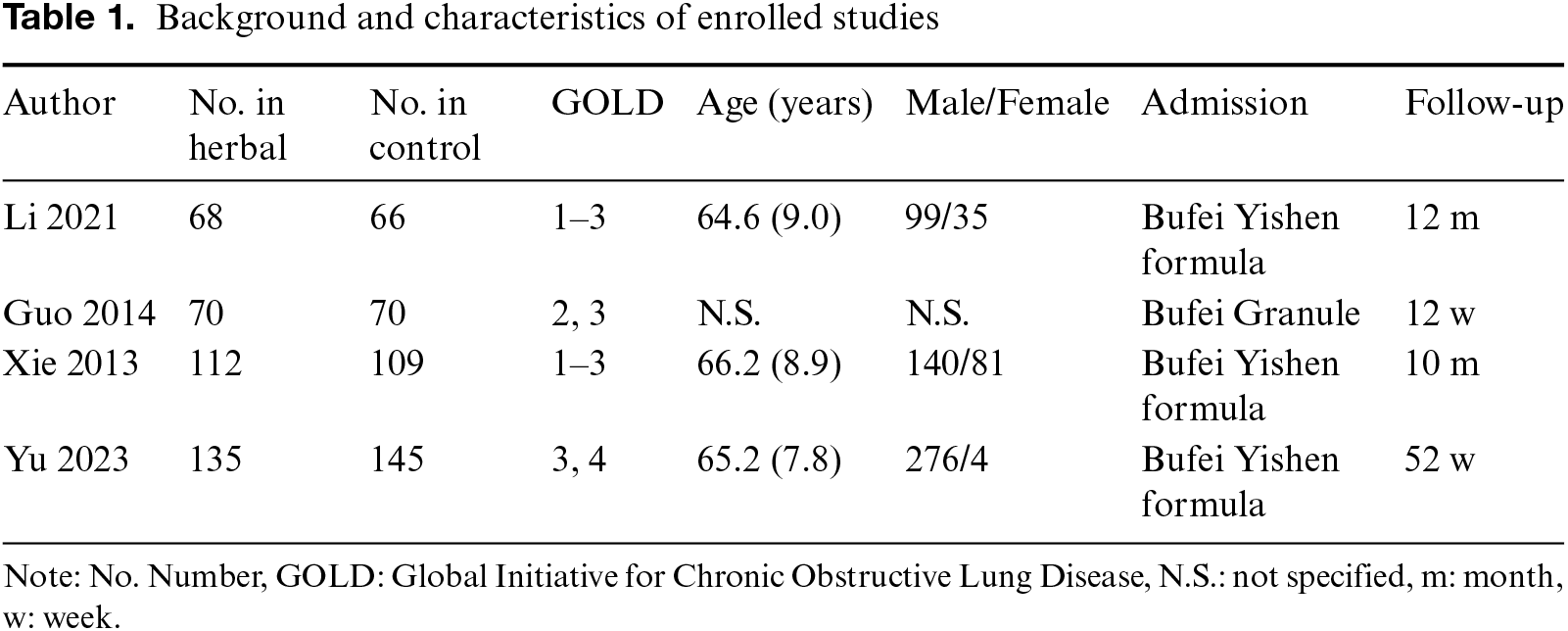
Table 1 summarizes the characteristics of the included studies.22–25 All studies were conducted in China, with 385 patients treated with Chinese herbal medicine and 390 patients receiving a placebo. Three studies evaluated the effectiveness of the Bufei formula in patients with COPD stages GOLD 1 to 3, while one study focused on GOLD 3 and 4 status. Three studies specifically assessed a verified variant of the Bufei formula (known as the Bufei Yishen formula); its components are detailed in Table S2. Studies on the Bufei Yishen formula demonstrated its long-term effectiveness in preventing COPD exacerbations. In contrast, only one study assessed the short-term efficacy of the Bufei formula. No study reported the side effects of Bufei and Bufei Yishen formulas.
Annual Exacerbations Prevention
One study evaluated the Bufei formula’s effectiveness in preventing COPD exacerbations, showing an MD of −0.6 times/person-year (95% CI: −0.68 to −0.52, p < 0.001) (Figure 1). Three studies assessed the Bufei Yishen formula’s effectiveness in reducing the annual exacerbation rate, with a mean difference of −0.39 (95% CI: −0.47 to −0.32, p < 0.001; I2 = 0%). The combined effect of both formulas in reducing exacerbations was −0.45 (95% CI: −0.60 to −0.31, p < 0.001; I2 = 77%). No significant publication bias was observed (Fig. S3).
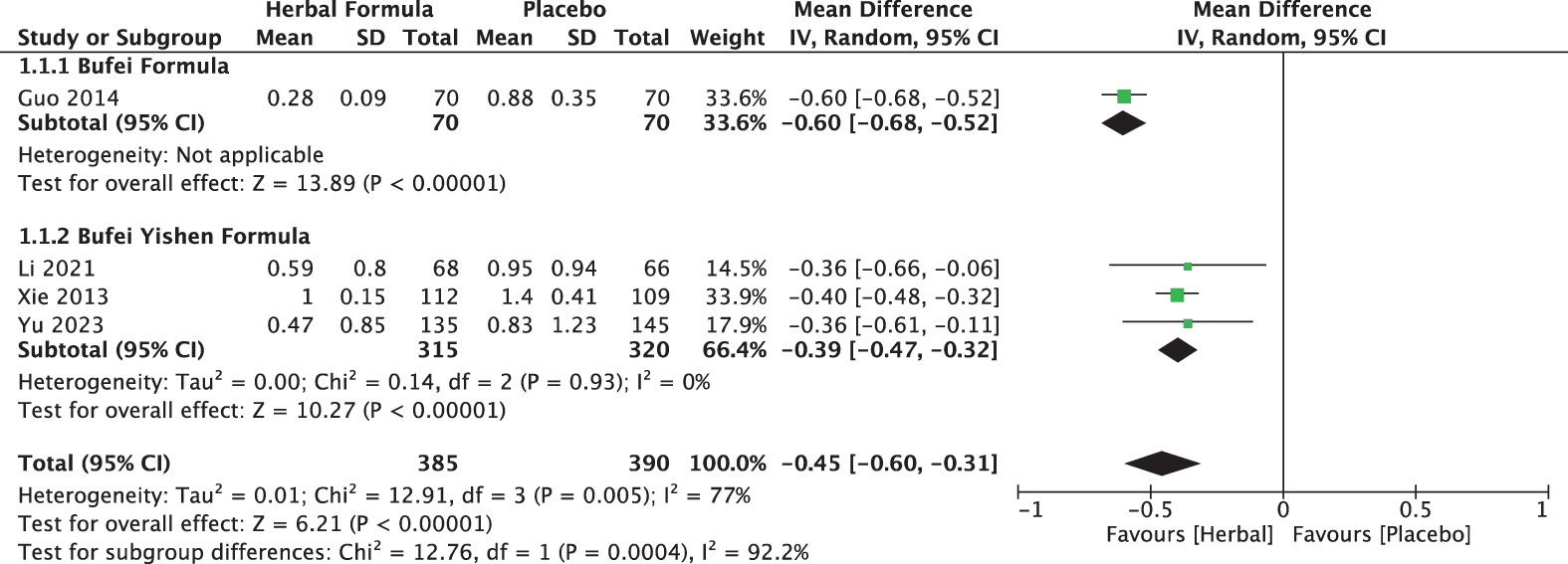
Figure 1. The effect of Bufei formula and Bufei Yishen formula in annual exacerbation prevention. CI: confidence interval.
Effectiveness on mMRC
One study examined the Bufei formula’s effectiveness in reducing the modified Medical Research Council (mMRC) dyspnea scale, with a mean difference of −0.39 points (95% CI: −0.62 to −0.16, p < 0.001) (Figure 2). Two studies evaluated the Bufei Yishen formula’s impact on mMRC, reporting a mean difference of −0.46 (95% CI: −0.67 to −0.26, p < 0.001; I2 = 48%). The overall effect of both formulas in reducing mMRC scores was −0.44 (95% CI: −0.58 to −0.31, p < 0.001; I2 = 11%). No significant publication bias was detected (Fig. S4).
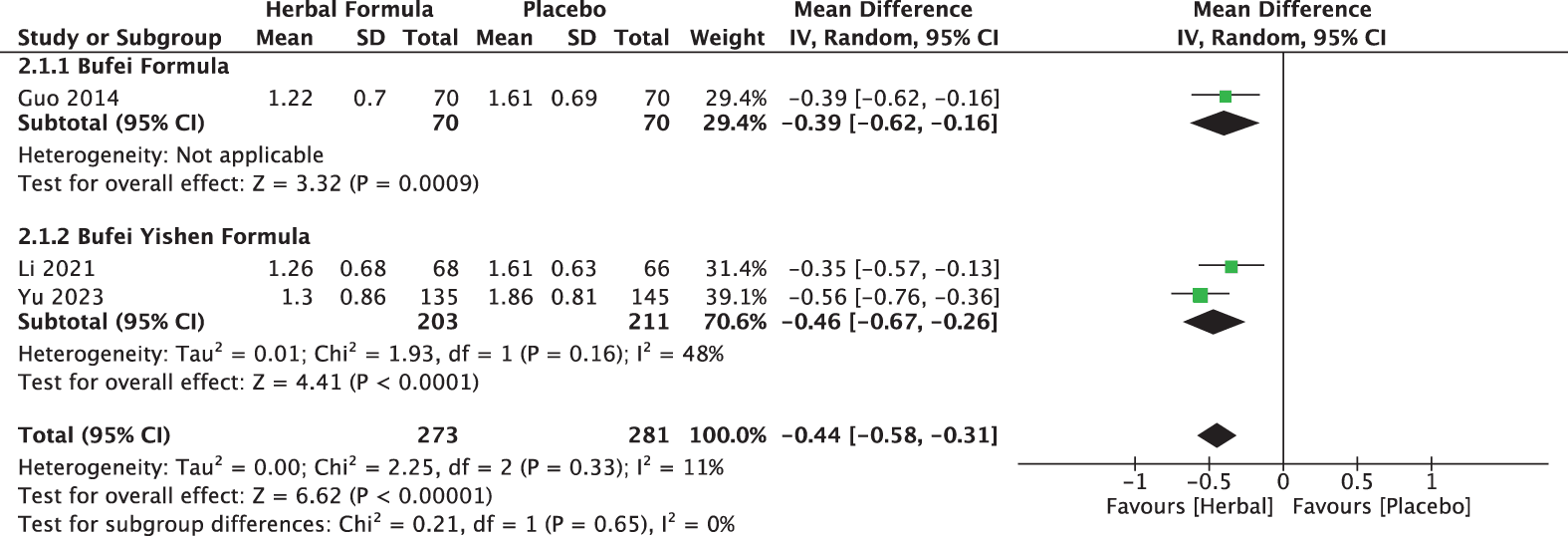
Figure 2. The effect of Bufei formula and Bufei Yishen formula in reducing mMRC. mMRC: Modified British Medical Research Council dyspnea scale, CI: confidence interval.
Effectiveness on 6MWD
Two studies evaluated the Bufei Yishen formula’s effectiveness in improving the 6MWD, showing a mean difference of 37.0 meters (95% CI: 21.1 to 52.9, p < 0.001; I2 = 0%) (Figure 3). No significant publication bias was detected (Fig. S5).

Figure 3. The effect of Bufei Yishen formula in the improvement of 6-minute walk distance. CI: confidence interval.
Effectiveness on FEV1%
One study assessed the Bufei formula’s effectiveness in improving the percentage predicted forced expiratory volume in one second (FEV1%), with a mean difference of 9.20% (95% CI: 4.51 to 13.89, p < 0.001) (Figure 4). Two studies evaluated the Bufei Yishen formula’s impact on FEV1%, reporting a mean difference of 1.18% (95% CI: −2.82 to 5.17, p = 0.56; I2 = 71%). The overall effect of both formulas on FEV1% was 3.67% (95% CI: −1.64 to 8.89, p = 0.18; I2 = 86%), with publication bias detected (Fig. S6).
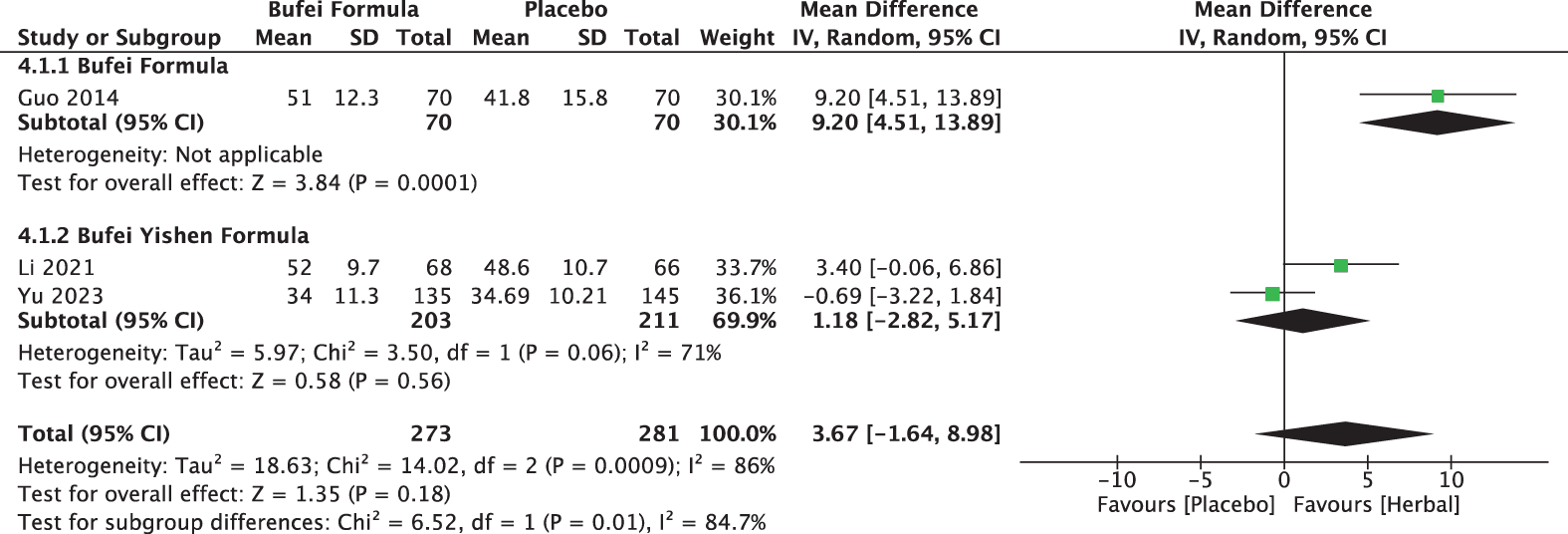
Figure 4. The effect of Bufei formula and Bufei Yishen formula in improving FEV1%. FEV1%: forced expiratory volume % in one second, CI: confidence interval.
Discussion
This meta-analysis evaluated the effectiveness of Bufei and Bufei Yishen formulas in managing COPD, focusing on exacerbation prevention, dyspnea reduction, exercise capacity improvement, and lung function enhancement. Our findings demonstrate significant benefits of Bufei and Bufei Yishen formulas, including a significant reduction in COPD exacerbations, improvement in dyspnea scores, and enhancement in daily activity levels. However, no significant improvement in lung function was observed. These results align with previous studies that have reported the efficacy of traditional Chinese medicine (TCM) formulas in managing COPD symptoms and preventing exacerbations.26,27 Our findings provide new insights by highlighting the specific impact of Bufei Yishen formula on reducing exacerbation rates as a long-term benefit, observed across all stages of COPD from GOLD 1 to 4. This underscores its value as an adjuvant treatment in the management of COPD. While improvement in FEV1% was statistically significant in one study assessing the Bufei formula, this significance was not observed when pooled with Bufei Yishen studies, suggesting that the impact on lung function parameters may be variable or less pronounced compared to symptom control and exacerbation prevention.
Bufei and Bufei Yishen formulas are widely used in TCM for respiratory diseases, particularly COPD, where they are believed to strengthen lung function, improve immune response, and reduce inflammation.28,29 The Bufei formula is typically prescribed for patients across various stages of COPD. It is mainly used to manage symptoms such as chronic cough and dyspnea, which are common in this patient population.30 Bufei Yishen formula, a refined version of Bufei, is specifically designed to address deficiencies in the lung and kidney systems according to TCM principles.31 This formula is often utilized in more advanced stages of COPD, as reflected in its application across GOLD stages 1 to 4 in the studies included in our meta-analysis. Integrating these formulas into COPD management offers a complementary approach that aligns with holistic and patient-centered care paradigms. Both formulas are administered orally, and their use is typically guided by TCM practitioners who tailor treatments to the patient’s specific symptoms and underlying deficiencies.
The therapeutic effects of Bufei and Bufei Yishen formulas are based on their multifaceted mechanisms of action. According to TCM theory, the Bufei formula consists of herbs that reinforce lung function, enhance qi (vital energy), and clear phlegm. Key ingredients include Astragalus membranaceus, which possesses immunomodulatory and anti-inflammatory properties,32 and Codonopsis pilosula, which supports respiratory health by tonifying the lungs.33 These components work together to reduce airway inflammation, enhance mucociliary clearance, and improve overall respiratory function. Bufei Yishen formula, meanwhile, extends its action by addressing both lung and kidney deficiencies. The inclusion of herbs like Rehmannia glutinosa and Cornus officinalis helps to nourish the kidneys and support systemic balance, which is considered crucial in managing chronic conditions like COPD.34,35 The formula also enhances systemic circulation, reduces oxidative stress, and modulates immune responses, which are important in preventing exacerbations and improving the quality of life in COPD patients. These mechanisms not only address the respiratory aspects of COPD but also contribute to overall systemic resilience against disease progression.
This meta-analysis focused on the additional effects of Chinese herbal medicine as an adjuvant therapy for COPD, rather than a direct comparison with Western medicine. Herbal medicine offers potential advantages, including affordability and ease of use, which may enhance accessibility and patient adherence. Furthermore, its holistic approach may provide supportive benefits in managing chronic diseases. Further research is needed to clarify the specific roles of both herbal and Western medicine in COPD care.
Despite the promising results, this meta-analysis has several limitations. First, all included studies were conducted in China, which may limit the generalizability of our findings to other populations, particularly in Western countries where differences in lifestyle, healthcare access, and genetic factors may influence outcomes. Second, the sample sizes of the included studies were relatively small, and variations in study quality and potential biases could affect the robustness of our conclusions. Third, the high heterogeneity observed in subgroup analyses, such as for FEV1%, suggests variability in patient populations, formula composition, and study methodologies that were not fully accounted for in our analysis. Fourth, the literature search was limited to English-language databases due to language restrictions and access. This limitation may introduce selection bias, as it could exclude relevant studies published in Chinese-language journals, potentially impacting the comprehensiveness of our findings.
Conclusion
Bufei and Bufei Yishen formulas show significant potential in reducing COPD exacerbations and improving symptom control. While these findings support the integration of TCM formulas into COPD management, further large-scale, multicenter trials are needed to confirm their long-term efficacy and safety across diverse patient populations.
Acknowledgments
None.
Funding
This research received no external funding.
Author Contributions
Y.Z. contributed to the study search, quality check, data extraction, and drafting. As principal investigators, Y.H. and D.Y. worked on the study search, quality check, data extraction, and analysis. Y.H., D.Y., and Y.Z. worked on the interpretation of data and the revision process. All authors have read the manuscript and agree with the content and data.
Data Availability Statement
The data supporting this study’s findings are available from the corresponding author upon reasonable request.
Ethical Statement
Meta-analyses are exempt from Institutional Review Board approval.
Conflicts of Interest
The authors report no conflicts of interest in this work.
Supplemental Information
Supplemental information for this article can be found online at https://sup.jclinque.com/api/articles/50/download-suppl.
References
[1] Halpin DMG, Criner GJ, Papi A, et al. Global initiative for the diagnosis, management, and prevention of chronic obstructive lung disease. The 2020 GOLD science committee report on COVID-19 and chronic obstructive pulmonary disease. Am J Respir Crit Care Med. January 1, 2021;203(1):24–36. doi:10.1164/rccm.202009-3533SO.
[2] Roman-Rodriguez M, Kaplan A. GOLD 2021 strategy report: implications for asthma–COPD overlap. Int J Chron Obstruct Pulmon Dis. 2021;16:1709–1715. doi:10.2147/COPD.S300902.
[3] Agustí A, Celli BR, Criner GJ, et al. Global initiative for chronic obstructive lung disease 2023 report: GOLD executive summary. Eur Respir J. April 2023;61(4):2300239. doi:10.1183/13993003.00239-2023.
[4] Vij N, Chandramani-Shivalingappa P, Van Westphal C, et al. Cigarette smoke-induced autophagy impairment accelerates lung aging, COPD-emphysema exacerbations and pathogenesis. Am J Physiol Cell Physiol. January 1, 2018;314(1):C73–c87. doi:10.1152/ajpcell.00110.2016.
[5] Wu M, Wang Z, Li M, et al. Daily symptom variability in patients with stable COPD: a narrative review. West J Nurs Res. October 2018;40(10):1543–1561. doi:10.1177/0193945917705132.
[6] Labaki WW, Rosenberg SR. Chronic obstructive pulmonary disease. Ann Intern Med. August 4, 2020;173(3):Itc17–itc32. doi:10.7326/aitc202008040.
[7] Guo P, Li R, Piao TH, et al. Pathological mechanism and targeted drugs of COPD. Int J Chron Obstruct Pulmon Dis. 2022;17:1565–1575. doi:10.2147/copd.S366126.
[8] Zhou JS, Li ZY, Xu XC, et al. Cigarette smoke-initiated autoimmunity facilitates sensitisation to elastin-induced COPD-like pathologies in mice. Eur Respir J. September 2020;56(3):2000404. doi:10.1183/13993003.00404-2020.
[9] Wouters EFM, Wouters B, Augustin IML, et al. Personalised pulmonary rehabilitation in COPD. Eur Respir Rev. March 31, 2018;27(147):170125. doi:10.1183/16000617.0125-2017.
[10] Murray MA, Mulryan K, M NC, et al. Caring for patients with advanced COPD: beyond the inhalers. Breathe (Sheff). March 2023;19(1):220229. doi:10.1183/20734735.0229-2022.
[11] MacLeod M, Papi A, Contoli M, et al. Chronic obstructive pulmonary disease exacerbation fundamentals: diagnosis, treatment, prevention and disease impact. Respirology. June 2021;26(6):532–551. doi:10.1111/resp.14041.
[12] Talman S, Uzun S, Djamin RS, et al. Long-term azithromycin maintenance treatment in patients with frequent exacerbations of chronic obstructive pulmonary disease. Int J Chron Obstruct Pulmon Dis. 2021;16:495–498. doi:10.2147/COPD.S284397.
[13] Lin P, Shen C, Li Q, et al. A systematic review and meta-analysis of chronic obstructive pulmonary disease in asia: risk factors for readmission and readmission rate. BMC Pulm Med. August 12, 2024;24(1):388. doi:10.1186/s12890-024-03203-6.
[14] Cao X, Wang Y, Chen Y, et al. Advances in traditional Chinese medicine for the treatment of chronic obstructive pulmonary disease. J Ethnopharmacol. May 10, 2023;307:116229. doi:10.1016/j.jep.2023.116229.
[15] Xu M, Zhang D, Yan J. Targeting ferroptosis using Chinese herbal compounds to treat respiratory diseases. Phytomedicine. July 25, 2024;130:155738. doi:10.1016/j.phymed.2024.155738.
[16] Zhang LX, Tian YG, Zhao P, et al. Network pharmacology analysis uncovers the effect on apoptotic pathway by Bu-Fei formula for COPD treatment. J Ethnopharmacol. May 10, 2022;289:115022. doi:10.1016/j.jep.2022.115022.
[17] Seo CS. An ultra-performance liquid chromatography-tandem mass spectrometric method for the simultaneous determination of eighteen marker compounds in the traditional herbal formula Bopyeo-Tang. Pharmaceuticals (Basel). March 8, 2024;17(3). doi:10.3390/ph17030352.
[18] He W, Liu C, Li X, et al. Integrated approach of network pharmacology, molecular docking, and clinical observations in evaluating the efficacy and safety of Bufei Huoxue capsules for pulmonary hypertension associated with chronic obstructive pulmonary disease. Pulm Circ. July 2024;14(3):e12414. doi:10.1002/pul2.12414.
[19] Yang XX, Wang S, Cui LL, et al. Pharmacological effects of Bufei Jianpi granule on chronic obstructive pulmonary disease and its metabolism in rats. Front Pharmacol. 2022;13:1090345. doi:10.3389/fphar.2022.1090345.
[20] University Hospital Medical Information Network. Effectiveness of Bufei formula and Bufei Yishen formula as adjuvant treatment for chronic obstructive pulmonary disease. Published 2024. Accessed November 5, 2024. https://center6.umin.ac.jp/cgi-open-bin/ctr_e/ctr_view.cgi?recptno=R000064047.
[21] The GRADE Working Group. The GRADE Book version 1.0. Published 2024. Accessed November 5, 2024. https://bookgradepro.org.
[22] Li J, Xie Y, Zhao P, et al. A Chinese herbal formula ameliorates COPD by inhibiting the inflammatory response via downregulation of p65, JNK, and p38. Phytomedicine. March 2021;83:153475. doi:10.1016/j.phymed.2021.153475.
[23] Guo S, Sun Z, Liu E, et al. Effect of bufei granule on stable chronic obstructive pulmonary disease: a randomized, double blinded, placebo-controlled, and multicenter clinical study. J Tradit Chin Med. August 2014;34(4):437–444. doi:10.1016/S0254-6272(15)30043-1.
[24] Xie Y, Li JS, Yu XQ, et al. Effectiveness of Bufei Yishen Granule combined with acupoint sticking therapy on quality of life in patients with stable chronic obstructive pulmonary disease. Chin J Integr Med. April 2013;19(4):260–268. doi:10.1007/s11655-013-1438-2.
[25] Yu XQ, Di JQ, Zhang W, et al. Bu-Fei Yi-Shen granules reduce acute exacerbations in patients with GOLD 3-4 COPD: a randomized controlled trial. Int J Chron Obstruct Pulmon Dis. 2023;18:2439–2456. doi:10.2147/COPD.S413754.
[26] Kong Z, Yang SH, Zhao H, et al. Methodology for the selection and evaluation of outcomes for Chinese herbal injection in acute exacerbation of chronic obstructive pulmonary disease (AECOPD): a comprehensive study. Ann Med. December 2024;56(1):2396567. doi:10.1080/07853890.2024.2396567.
[27] Fan Y, Wen X, Zhang Q, et al. Effect of traditional Chinese medicine bufei granule on stable chronic obstructive pulmonary disease: a systematic review and meta-analysis based on existing evidence. Evid Based Complement Alternat Med. 2020;2020:3439457. doi:10.1155/2020/3439457.
[28] Huang L, Guan Q, Lu R, et al. Mechanism underlying the therapeutic effects of effective component compatibility of Bufei Yishen formula III combined with exercise rehabilitation on chronic obstructive pulmonary disease. Ann Med. December 2024;56(1):2403729. doi:10.1080/07853890.2024.2403729.
[29] Liu Y, Zhang L, Zhao J, et al. Effective-component compatibility of Bufei Yishen formula III suppresses mitochondrial oxidative damage in COPD: via Pkm2/Nrf2 pathway. Int J Chron Obstruct Pulmon Dis. 2024;19:1905–1920. doi:10.2147/COPD.S468825.
[30] Ma YY, Li R, Shang ZX, et al. An in silico and in vitro integrated analysis method to reveal the curative mechanisms and pharmacodynamic substances of Bufei granule on chronic obstructive pulmonary disease. Mol Divers. February 2023;27(1):103–123. doi:10.1007/s11030-022-10404-w.
[31] Zhao P, Li J, Tian Y, et al. Restoring Th17/Treg balance via modulation of STAT3 and STAT5 activation contributes to the amelioration of chronic obstructive pulmonary disease by Bufei Yishen formula. J Ethnopharmacol. May 10, 2018;217:152–162. doi:10.1016/j.jep.2018.02.023.
[32] Yang X, Jia M, Luo J, et al. Investigation of the lipid-lowering activity and mechanism of three extracts from astragalus membranaceus, Hippophae rhamnoides L., and Taraxacum mongolicum hand. Mazz based on network pharmacology and in vitro and in vivo experiments. Foods. September 2, 2024;13(17). doi:10.3390/foods13172795.
[33] Chen Z, Su Y, Ding J, et al. Lobetyolin protects mice against LPS-induced sepsis by downregulating the production of inflammatory cytokines in macrophage. Front Pharmacol. 2024;15:1405163. doi:10.3389/fphar.2024.1405163.
[34] Bian Z, Zhang R, Zhang X, et al. Extraction, structure and bioactivities of polysaccharides from Rehmannia glutinosa: a review. J Ethnopharmacol. April 6, 2023;305:116132. doi:10.1016/j.jep.2022.116132.
[35] Tang X, Tang H. Cornus iridoid glycoside alleviates sepsis-induced acute lung injury by regulating NF-κB and Nrf2/HO-1 pathways. Allergol Immunopathol (Madr). 2022;50(5):121–128. doi:10.15586/aei.v50i5.638.
 |
Copyright: © 2024 Han et al. This work is licensed under a Creative Commons Attribution 4.0 International License, which permits unrestricted use, distribution, and reproduction in any medium, provided the original work is properly cited. |