| Journal of Clinical Question. 2025; 2(6): e97 https://doi.org/10.69854/jcq.2025.0034 Advance access publication date 08 December 2025 |
 |
Original Research
Development and Evaluation of an ISO-Containerized Class III Clean Operating Room for Mobile Surgical Applications
Yimu Wu1, Yanmin Liu2, Zan Chen3, Yan Jiang1, Ao Zeng1, Dongning Lu1, Mengtao Wang1, Ling Zhang 4,*, Xiao Zhou1,*
1Department of Thoracic Surgery, Tongji University Affiliated Shanghai Pulmonary Hospital, Shanghai, China.
2School of Mechanical Engineering, Tongji University, Shanghai, China.
3Department of Infrastructure Management, Tongji University Affiliated Shanghai Pulmonary Hospital, Shanghai, China.
4Department of Pulmonology, Tongji University Affiliated Shanghai Pulmonary Hospital, Shanghai, China.
*Corresponding Authors: Ling Zhang. e-mail: greendepzl@tongji.edu.cn; Xiao Zhou. e-mail: zx_ty68@163.com
Submitted: October 01, 2025 Accepted: December 07, 2025
Clinical Question Box
Can an ISO-standard container be adapted into a Class III clean operating room for mobile surgical use?
The study demonstrated that an ISO 40-foot high-cube container could be successfully adapted to meet most Class III clean operating room requirements. Air cleanliness, temperature, and illumination were within standards, while humidity and noise required further optimization. This supports the feasibility of standardized, transportable clean operating rooms for disaster relief, military, and remote medical missions.
Abstract
Background: Mobile surgical units (MSUs) are indispensable for delivering healthcare in disaster zones, conflict areas, and remote settings. However, most ISO-container-based MSUs lack compliant cleanroom features, limiting their use as standardized operating environments. Methods: To address this limitation, a container-based Class III clean operating room was developed according to the Technical Code for Clean Operating Departments in Hospitals (GB50333-2013), while retaining the ISO-standard format for multimodal transport. The 40-foot high-cube container was fitted with a purification air-conditioning system to regulate temperature, humidity, and particulate concentration, and its performance was assessed through measurements of airflow, particle concentration, temperature, humidity, noise, and illumination. Results: The air change rate reached 37.4 per hour, exceeding the minimum requirement of 18. Particle concentrations (63 particles/L at 0.5 μm and 1 particle/L at 5.0 μm) met Class III standards. The temperature was within the acceptable range (22.2°C), but humidity exceeded recommendations (69%). Noise levels (54.6 dB[A]) were above the stipulated limit of 49 dB(A), while illuminance (≥541 lx) met standards. Conclusion: The containerized clean operating room met most Class III cleanroom standards, demonstrating feasibility for deployment in mobile surgical contexts. However, optimization of humidity and noise reduction is required. This design provides a scalable model for extending surgical capabilities into resource-constrained environments while ensuring compliance with cleanroom requirements.
Keywords: Mobile surgical unit, MSU, Class III cleanroom, purification system, disaster medicine, modular healthcare
Introduction
The mobility of medical facilities has emerged as a critical trend in contemporary healthcare delivery.1 Conventional operating rooms, while firmly established within tertiary hospitals, lack the flexibility required to respond effectively to urgent demands arising from military conflicts, natural disasters, or the provision of care in remote and resource-constrained environments.2,3 To address these challenges, mobile surgical units (MSUs) have gained widespread adoption, offering rapid deployment, installation, and relocation capabilities that extend surgical capacity beyond fixed hospital infrastructures.4 Since their inception, MSUs have undergone significant evolution, reflecting diverse design philosophies and operational contexts. For instance, the Containerized Bio-Containment System was developed during the 2014 Ebola outbreak, demonstrating that ISO-standard container facilities could be equipped with advanced biosafety features.5 This system was later deployed during the coronavirus disease 2019 outbreak aboard the Diamond Princess cruise ship in 2020.6 Similarly, Rheinmetall’s Forward Surgical Team system exemplifies a battlefield-oriented modular complex designed to provide X-ray diagnostics, surgical interventions, and intensive care under austere conditions.7
Typically, MSUs are constructed from standardized or customized containers mounted on trucks or trailers, equipped with essential surgical instruments, and supported by independent power, ventilation, and water supply systems.8 In the civilian domain, early initiatives such as Mobile Medical International Corporation’s deployable units and Médecins Sans Frontières’ mobile surgical trailers in Mosul demonstrated the effectiveness of truck- and trailer-mounted operating rooms for humanitarian and emergency response.8 More recent developments have extended MSUs into specialized fields, including the single-port thoracic surgery platform pioneered by Diego González Rivas.9 Vehicle-mounted interventional suites now integrate advanced features such as angiography systems, 5G communication, and remote-guidance capabilities.10
Despite recent advances, most ISO-container-based MSUs remain equipped only with basic ventilation and air-conditioning, lacking centralized laminar airflow. Some customized or expandable modules incorporate high-efficiency particulate air filtration and laminar airflow, but their nonstandard dimensions limit efficient transport by air, sea, or rail, restricting operational mobility.11 Consequently, they function as general operating rooms without formal cleanroom classification. To address these limitations, this study developed a containerized clean operating room that integrates compliant surgical equipment with a ventilation system meeting the standards for Class III clean operating rooms, as defined by the Technical Code for Clean Operating Departments in Hospitals (GB50333-2013, hereafter referred to as The Code).12 Crucially, the design retained the ISO-standard 40-foot high-cube container format, ensuring multimodal transport by air, sea, and land. The performance of the purification air-conditioning system was then evaluated in accordance with The Code.
Methods
Operating Room Physical Model Design
For the construction of a container-based operating room compliant with Class III cleanroom requirements, a purification system was incorporated according to the principal technical specifications for clean operating department facilities outlined in The Code (summarized in Table S1). A comprehensive literature review was also conducted, focusing on comparisons between previously reported MSUs and ISO-standard container dimensions (Tables S1 and S2).
The ISO-standard 40-foot high-cube container has external dimensions of 12.192 m × 2.438 m × 2.896 m (length × width × height) and internal dimensions of 11.882 m × 2.352 m × 2.696 m. The clean operating room was equipped with a purification air-conditioning system capable of regulating temperature, humidity, and particulate cleanliness throughout the enclosed environment. An internal clearance exceeding 2.4 m ensured sufficient spatial capacity for the integration and effective operation of these environmental control systems.
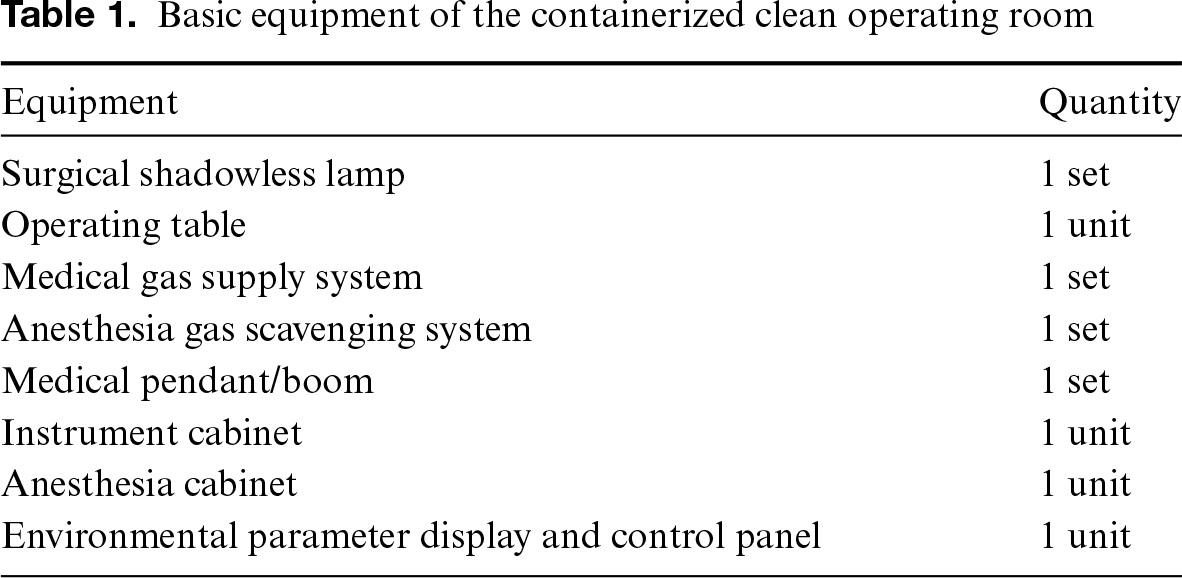
Within the dimensional constraints of the container, the spatial configuration of the operating unit comprised the surgical suite, staff dressing area with anteroom, patient access anteroom, waste disposal facility, and dedicated equipment rooms for the air-conditioning and purification systems (Fig. 1). A detailed inventory of compliant surgical equipment is presented in Table 1.
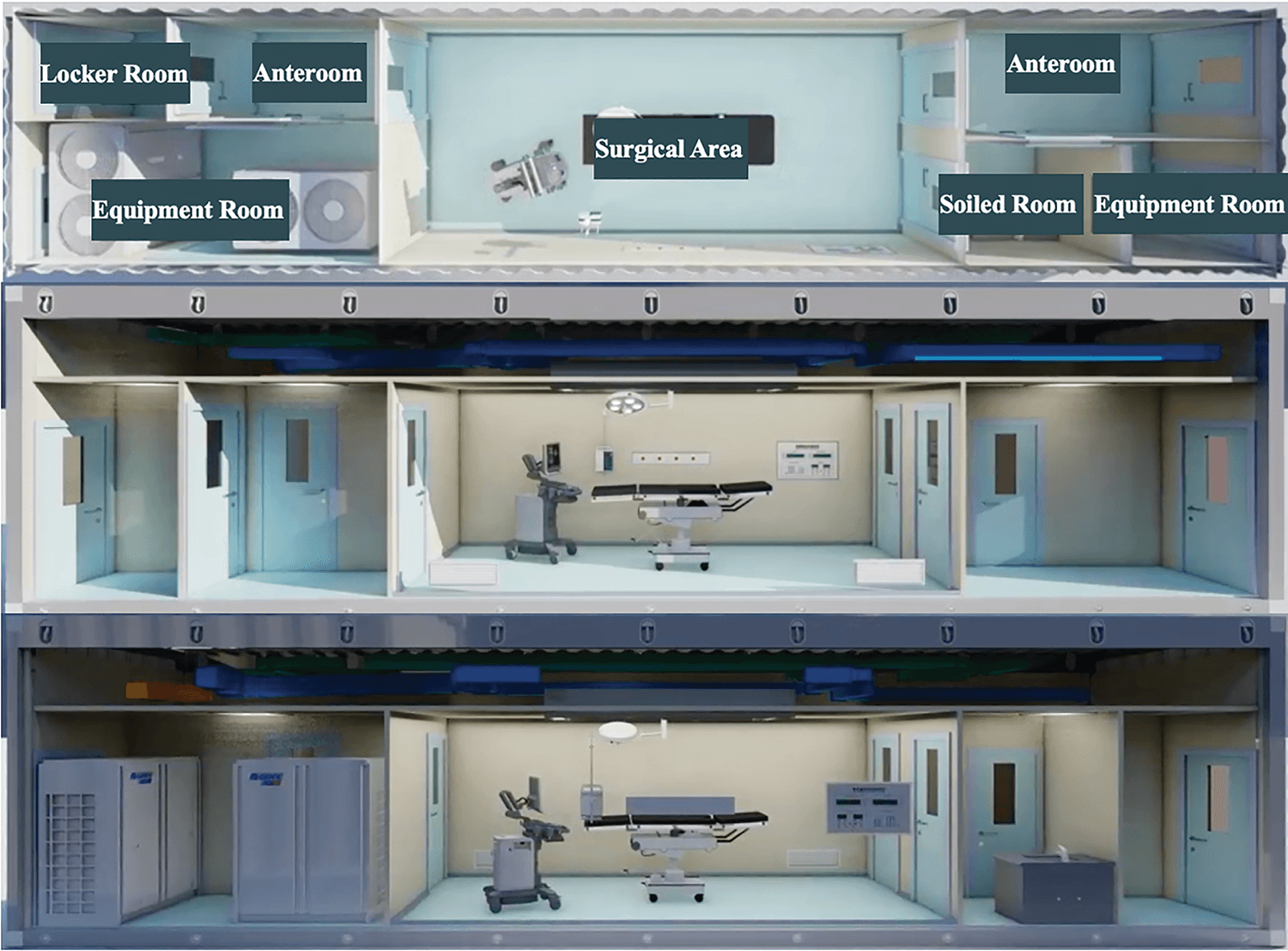
Figure 1. Layout of the MSU using an ISO-40 high-cube container. Top, left-side, and right-side views. MSU, mobile surgical unit.
Operating Room Model Evaluation
For a Class III clean operating room, the average air supply velocity at the air outlet surface should be measured. The measured static pressure difference between the operating room and the clean corridor (5.0 Pa) met the positive pressure requirements specified in The Code. The technical parameters of the operating room, anterooms, and other areas were evaluated. The air change rate (n) was calculated as
where Q is the supply airflow (m³/h), v the average supply velocity (m/s), F the effective supply area (m²), and V the room volume (m³).
Measurement points were positioned 0.1 m below the outlet surface, with spacing not exceeding 0.3 m. In the cross-sectional arrangement of measurement points (Fig. S1), the outermost points were placed within 0.05 m of the air outlet boundary and evenly distributed. Air velocity was assessed using a TSI 9515 anemometer (TSI Inc., USA).
Average dust concentrations along the airflow path from the supply vent to the return vent were measured at four locations: 0.1 m from the supply vent, 1.5 m above the floor, 0.25 m above the operating table, and at the return vent. The arrangement of particle concentration measurement points in the Class III operating room is shown in Fig. S2, with a total of nine test points. Measurements were performed using a BCJ-1 laser particle counter (Huada Instrument Co. Ltd., Suzhou, China).
Temperature was recorded at three locations: 0.1 m below the air supply, 1.5 m above the floor, and 0.25 m above the operating table. Humidity was measured at the central point, 0.8 m above the floor.
The clean operating room had an area of 12.87 m², smaller than the 15 m² threshold. Accordingly, a single noise measurement point was located at the center of the room. Noise levels were assessed both inside the operating room and outside the container under conditions with the air-conditioning purification unit operating and turned off, using a digital sound level meter (DT-805; CEM, Shenzhen, China).
For illuminance measurements, points were positioned 0.8 m above the floor and 0.5 m from the wall, evenly distributed at intervals not exceeding 2 m. Measurement points were not deliberately positioned directly beneath or distant from light sources. Illuminance was assessed using a digital lux meter (TES-1330A; TES Electrical Electronic Corp., Taipei, Taiwan).
Airflow, temperature, humidity, and noise measurements were obtained using calibrated instruments with documented accuracy ranges. All devices were verified prior to testing, with calibration dates recorded according to manufacturer specifications. Measurements were conducted under stable environmental conditions, and instruments were allowed to equilibrate before data collection. Data from multiple tests are presented as the mean and standard deviation.
Results
Air Velocity and Airflow
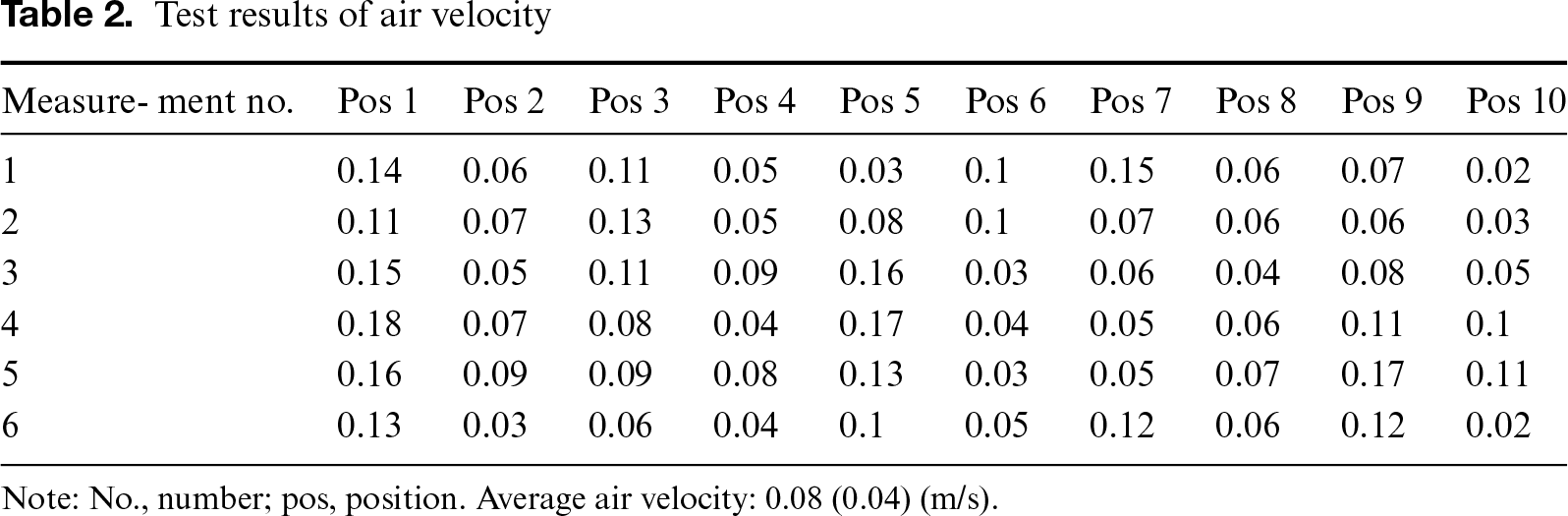
Table 2 summarizes air velocity data. The average airflow velocity measured 0.1 m below the air supply device was 0.08 (0.04) m/s, slightly below the required range of 0.1–0.4 m/s. The operating room dimensions were 5.32 m³ × 2.42 m³ × 2.24 m³, and the net area of the air supply device was 2.5 m × 1.3 m. The supply air volume was 1,048 m³/h, corresponding to 37.4 air changes per hour. This value exceeded the minimum requirement of 18 air changes per hour for a Class III operating room, surpassing the design specification with a redundancy margin of 15%.
Particle Concentration
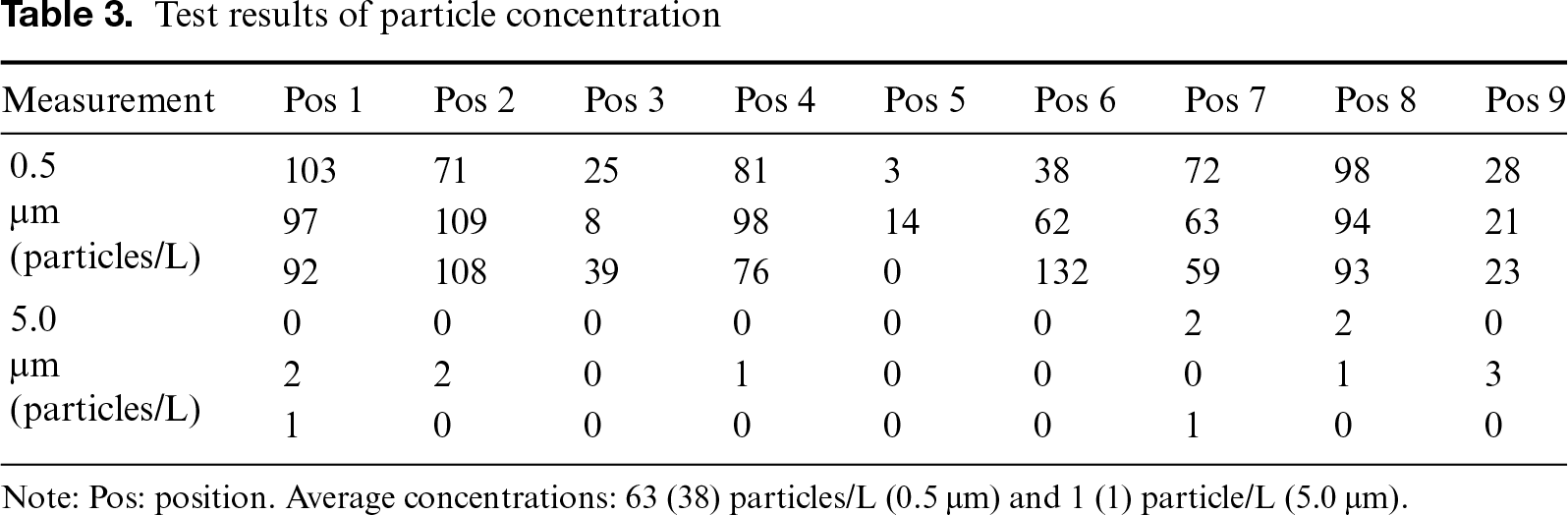
Table 3 presents the results of dust concentration measurements. The average concentrations of 0.5 and 5.0 μm particles in the operating room were 63 (38) particles/L and 1 (1) particle/L, respectively, both complying with the Class III cleanroom standards specified in The Code, which limit concentrations to below 352 and 3 particles/L.
Indoor Temperature and Humidity
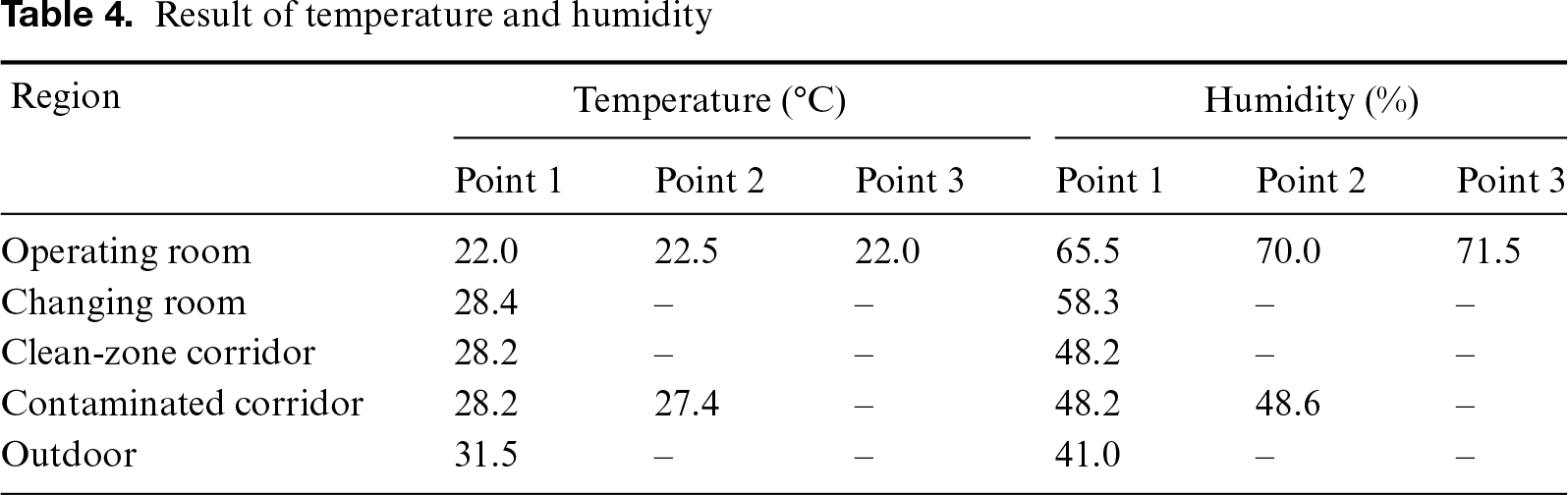
The results are summarized in Table 4. The measured temperature was 22.2 (0.3)°C, and the relative humidity 69 (3)%. The temperature met the Class III cleanroom requirement of 21°C–25°C, whereas the relative humidity slightly exceeded the recommended range of 30%–60% (Table S3).
Indoor Noise and Illumination
The indoor noise level was 54.6 dB(A), exceeding the Class III operating room standard of ≤49 dB(A) specified in The Code. With the air-conditioning purification unit turned off, the noise level decreased to 37.7 dB(A). The results of illuminance measurements (Table S4) indicated a minimum value of 541 lx, which exceeded the Class III operating room requirement of ≥350 lx, even when the shadowless lamp was turned off.
Discussion
The present study demonstrates that a containerized clean operating room built within a standard ISO 40-foot high-cube container can achieve environmental parameters consistent with Class III cleanroom requirements. This marks a notable advancement over many previously reported MSUs, which typically provide only basic ventilation and air-conditioning and lack cleanroom-level environmental control. Earlier MSU designs, although highly mobile, were often limited by the absence of standardized biosafety features or reliance on custom, non-ISO modules that complicate international transport.13 In contrast, the unit described here integrates compliant surgical equipment with a purification air-conditioning system while maintaining strict ISO dimensional conformity, enabling operating-room-grade sterility within a globally transportable platform. Compared to existing MSUs, the container-based system exhibits competitive performance in ventilation, particulate control, and illumination while remaining compact and rapidly deployable. Its modular footprint and compatibility with standard logistics infrastructure further enhance mobility compared with trailer- or bus-mounted systems.14 The unit also satisfies several compliance criteria for emergency healthcare facilities.
Despite these achievements, several limitations should be noted. Although the purification system maintained particulate cleanliness, the measured supply velocity was slightly below the recommended range. This shortfall was largely mitigated by the high air-change rate, but it still suggests a need for system recalibration or diffuser refinement. The large-area, low-velocity diffusers were designed to distribute air uniformly and deliver the required volumetric flow without creating drafts, promoting adequate mixing and minimizing stagnant zones.15 Turbulence intensity near the diffuser outlets also remained within acceptable limits, indicating stable flow introduction. Together, these characteristics compensate for the lower supply velocity and support the adequacy of the ventilation system.
Second, although illumination levels exceeded the required thresholds, the noise generated by the purification system surpassed acceptable limits, raising concerns about staff comfort and potential impacts on surgical team communication. Excessive background noise has been linked to reduced concentration and heightened stress in operating room personnel, indicating an area for targeted engineering improvements.16 Distinguishing between mechanical noise (from the compressor and fans) and structurally transmitted noise is important for identifying the root cause. Our observations indicate that both direct mechanical sound and vibration-induced transmission through the container’s lightweight steel panels contribute to the elevated noise levels. Mechanical noise may be mitigated through equipment isolation or fan-speed adjustments, whereas structurally borne noise may require architectural interventions such as panel stiffening or the addition of sound-absorbing materials.17,18 Addressing these pathways will help guide future system and structural improvements.
Additionally, relative humidity levels exceeded the upper limit of the recommended range, which, if unaddressed, may compromise both patient comfort and microbial control.19 This elevated humidity appears partly attributable to regional climatic conditions during the testing period, as high outdoor moisture levels imposed an additional load on the system. Equipment-related factors, particularly the limited dehumidification capacity of the compact purification unit, likely contributed as well. Moreover, characteristics inherent to the container structure, including low thermal mass and modest insulation thickness, may have reduced moisture buffering and allowed greater humidity ingress. These combined influences indicate that future designs may benefit from enhanced dehumidification capability, improved insulation, or supplemental climate-control measures to maintain optimal indoor humidity under varying environmental conditions.
From a clinical perspective, the deployment of an ISO-standard, containerized clean operating room offers considerable promise. The combination of mobility and sterility makes the unit particularly suitable for disaster response, humanitarian aid, and military medicine.20 Experiences from recent natural disasters and pandemic crises have consistently shown that surgical capacity is a critical bottleneck in early relief phases.21 Surgical units could provide immediate, sterile surgical environments in regions where existing hospital infrastructure has been destroyed or is otherwise inaccessible. The integration of standardized modules also enables interoperability with other mobile medical platforms, supporting scalable deployment strategies that could extend from single-unit emergency setups to multi-unit field hospitals.22 Furthermore, the possibility of equipping such modules with advanced imaging or telecommunication capabilities aligns with the global trend toward digitalized, networked surgical services, broadening their utility for complex procedures and remote guidance.
Nevertheless, several limitations of the present evaluation must be considered. Measurements were obtained under controlled, non-clinical conditions, meaning that the performance of the unit under real-world operating scenarios, where door openings, personnel movement, and equipment use may alter airflow and particulate loads, remains untested. Additionally, the study did not assess microbial contamination directly, focusing instead on surrogate markers such as particle concentration and airflow. While these are standard engineering metrics, they cannot fully substitute microbiological monitoring, which is essential to validate infection control performance. The reliance on a single prototype further limits generalizability, as manufacturing variations and operational wear could affect long-term performance. A further limitation is that the potential influence of heat-generating surgical equipment, such as monitors, electrocautery units, and anesthesia machines, on the room’s temperature and humidity regulation was not evaluated in this study, despite their likely contribution to additional thermal loads and moisture fluctuations.
Conclusion
The development of a containerized clean operating room within an ISO-standard high-cube container demonstrates the feasibility of combining global transportability with Class III cleanroom compliance. Despite remaining challenges in airflow, noise, and humidity control, this design represents a significant advance in mobile surgical capacity with strong potential for disaster response, humanitarian relief, and military medicine.
Acknowledgments
None.
Funding Statement
The Tongji University Affiliated Shanghai Pulmonary Hospital Foundation supported project initiation and article publication (SKPY2021009). The funders had no role in data collection, management, analysis, or interpretation.
Author Contributions
Y.W., Y.L., and Z.C. contributed to the study design and drafting of the manuscript. Y.J., A.Z., D.L., M.W., L.Z., and X.Z. worked on data interpretation and manuscript revision. All authors have read and approved the final manuscript and agree with its content and data.
Availability of Data and Materials
Not applicable. The original data of this paper are available in the mentioned databases, and the new data generated have also been presented in the paper.
Ethics Approval and Consent to Participate
Not applicable, as this study does not involve new human or animal studies.
Competing Interests
There are no conflicts of interest in this article.
Supplemental Information
Supplemental information for this article can be found online at https://sup.jclinque.com/api/articles/97/download-suppl.
References
[1] Singh SP, Baig F, Singh S. Mobile health clinics as a healthcare delivery model to address community disparities. Kans J Med. 2022;15(2):259–261. doi:10.17161/kjm.vol15.16543.
[2] Cvetković VM, Tanasić J, Renner R, Rokvić V, Beriša H. Comprehensive risk analysis of emergency medical response systems in serbian healthcare: assessing systemic vulnerabilities in disaster preparedness and response. Healthcare. 2024;12(19):1962. doi:10.3390/healthcare12191962.
[3] Chen X, Lu L, Shi J, et al. Application and prospect of a mobile hospital in disaster response. Disaster Med Public Health Prep. June 2020;14(3):377–383. doi:10.1017/dmp.2020.113.
[4] Mugisha N, Uwishema O, Noureddine R, Ghanem L, Manoel AZ, Shariff S. Utilization of mobile surgical units to address surgical needs in remote African communities: a narrative review. BMC Surg. October 12, 2024;24(1):304. doi:10.1186/s12893-024-02596-9.
[5] Cieslak TJ, Kortepeter MG. A brief history of biocontainment. Curr Treat Options Infect Dis. 2016;8(4):251–258. doi:10.1007/s40506-016-0096-2.
[6] Zhang H, Wang Q, Chen J, Rangel-Buitrago N, Shu Y. Cruise tourism in the context of COVID-19: dilemmas and solutions. Ocean Coast Manag. September 1, 2022;228:106321. doi:10.1016/j.ocecoaman.2022.106321.
[7] Cai YL, Ju JT, Liu WB, Zhang J. Military trauma and surgical procedures in conflict area: a review for the utilization of forward surgical team. Mil Med. March 1, 2018;183(3–4):e97–e106. doi:10.1093/milmed/usx048.
[8] Wayne CD, Jacobs TH, Alexander K, et al. On the Move: a review of mobile and military surgery. Emerg Care Medic. 2025;2(3):40. doi:10.3390/ecm2030040.
[9] Gonzalez-Rivas D, Bosinceanu M, Manolache V, et al. Uniportal fully robotic-assisted major pulmonary resections. Ann Cardiothorac Surg. January 31, 2023;12(1):52–61. doi:10.21037/acs-2022-urats-29.
[10] Perez K, Wisniewski D, Ari A, Lee K, Lieneck C, Ramamonjiarivelo Z. Investigation into application of AI and telemedicine in rural communities: a systematic literature review. Healthcare. 2025;13(3):324. doi:10.3390/healthcare13030324.
[11] Jeong H, Kim SH. Derivation of architectural planning elements for sustainable utilization of modular emergency medical facilities (MEMF). Int J Sustaina Build Technolo Urban Develop. June 2025;16(2):268–289. doi:10.22712/susb.20250017.
[12] National Standard of the People’s Republic of China. Architectural technical code for hospital clean operating department. Published September, 2025. Accessed September 25, 2025. https://www.chinesestandard.net/PDF/English.aspx/GB50333-2013.
[13] Venables KM. Surgery on the battlefield: Mobile surgical units in the Second World War and the memoirs they produced. J Med Biogr. August 2023;31(3):202–211. doi:10.1177/09677720211012190.
[14] Suliman A. Mobile phone-based surgical telemedicine in Sudan: a conflict-driven innovation with global relevance. BMJ Glob Health. September 10, 2025;10(9):e020184. doi:10.1136/bmjgh-2025-020184.
[15] Saad M, William MA, Hassan AA, Hanafy AA. Influence of air ceiling diffusers in enclosed spaces: An experimental and numerical investigation. Energy Rep. September 01, 2023;9:59–71. doi:10.1016/j.egyr.2023.05.253.
[16] Kennedy-Metz LR, Arshanskiy M, Keller S, Arney D, Dias RD, Zenati MA. Association between operating room noise and team cognitive workload in cardiac surgery. IEEE Conf Cogn Comput Asp Situat Manag. June 2022;2022:89–93. doi:10.1109/cogsima54611.2022.9830675.
[17] Han E, Kang H, Jang Y. Noise reduction interventions in intensive care units: a systematic review. Intensive Crit Care Nurs. September 19, 2025;92(3):104234. doi:10.1016/j.iccn.2025.104234.
[18] de Lima Andrade E, da Cunha ESDC, de Lima EA, de Oliveira RA, Zannin PHT, Martins ACG. Environmental noise in hospitals: a systematic review. Environ Sci Pollut Res Int. April 2021;28(16):19629–19642. doi:10.1007/s11356-021-13211-2.
[19] Guarnieri G, Olivieri B, Senna G, Vianello A. Relative humidity and its impact on the immune system and infections. Int J Mol Sci. May 29, 2023;24(11):9456. doi:10.3390/ijms24119456.
[20] Tsai SH, Liao WI, Peng CT, et al. Insights and lessons from recent conflicts: A narrative review from the military medicine perspective. J Formos Med Assoc. September 10, 2025;237(2):364. doi:10.1016/j.jfma.2025.09.006.
[21] Kelley KM, Toscano N, Gestring ML, et al. Disaster planning for a surgical surge: when mass trauma threatens to overwhelm your operating rooms. Trauma Surg Acute Care Open. 2023;8(1):e001224. doi:10.1136/tsaco-2023-001224.
[22] Torab-Miandoab A, Samad-Soltani T, Jodati A, Akbarzadeh F, Rezaei-Hachesu P. A unified component-based data-driven framework to support interoperability in the healthcare systems. Heliyon. August 15, 2024;10(15):e35036. doi:10.1016/j.heliyon.2024.e35036.
 |
Copyright © 2025 Wu et al. This work is licensed under a Creative Commons Attribution 4.0 International License, which permits unrestricted use, distribution, and reproduction in any medium, provided the original work is properly cited. |