| Journal of Clinical Question. 2025; 2(6): e94 https://doi.org/10.69854/jcq.2025.0033 Advance access publication date 22 November 2025 |
 |
Meta-Analysis
Comparative Efficacy and Safety of Semaglutide, Cagrilintide, and CagriSema in Adults with Overweight or Obesity: A Bayesian Network Meta-Analysis
Yange Meng 1, Ting Jin2, Luping Ren3, Michelle L. Thompson4, Yue Wang5,6,*
1Department of General Practice, Sir Run Run Shaw Hospital, Zhejiang University School of Medicine, Hangzhou, China.
2Department of Endocrinology, Sir Run Run Shaw Hospital, Zhejiang University School of Medicine, Hangzhou, China.
3Endocrinology Department, Hebei General Hospital, Shijiazhuang, China.
4Lifestyle Medicine, University of Pittsburgh Medical Center, Pittsburgh, USA.
5UPMC Hillman Cancer Center, University of Pittsburgh, Pittsburgh, USA.
6Department of Pathology, University of Pittsburgh, Pittsburgh, USA.
*Corresponding Author: e-mail: yue.wang@pitt.edu
Submitted: September 30, 2025 Accepted: November 21, 2025
Clinical Question Box
In adults with overweight or obesity, does the combination of Semaglutide and Cagrilintide provide the most effective weight loss while maintaining an acceptable safety profile?
Evidence suggests that the combination therapy, known as CagriSema, produces the largest reductions in both body weight and waist circumference. Semaglutide alone results in substantial weight loss with additional glycemic benefits, whereas Cagrilintide is better tolerated but less effective. Liraglutide appears to be both less effective and less tolerable. None of these agents are associated with an increased risk of serious adverse events, although gastrointestinal side effects are more frequent with glucagon-like peptide-1–based therapies.
Abstract
Introduction: Incretin-based therapies, including glucagon-like peptide-1 receptor agonists and amylin analogues, have emerged as promising treatments for obesity. However, the relative efficacy and safety of Semaglutide, Cagrilintide, Liraglutide, and the novel combination therapy CagriSema remain uncertain. Methods: A systematic review and network meta-analysis of randomized controlled trials was conducted in adults with overweight or obesity (body mass index 25–40 kg/m2), with or without comorbidities. Outcomes included reductions in body weight and waist circumference, glycated hemoglobin, serious adverse events (SAEs), overall treatment discontinuation, and discontinuation due to gastrointestinal symptoms. Mean differences (MDs) and log odds ratios (LORs) with 95% confidence intervals (CIs) were calculated. Results: Twelve trials involving 25,401 patients were included, with follow-up periods ranging from 20 to 104 weeks. CagriSema achieved the greatest reduction in body weight (MD: 17.7%, 95% CI: 14.2–21.3), followed by Semaglutide (MD: 11.1%, 95% CI: 9.5–12.7) and Cagrilintide (MD: 5.9%, 95% CI: 1.5–10.0). CagriSema also showed the largest reduction in waist circumference (MD: −13.4 cm, 95% CI: −17.1 to −9.7), followed by Semaglutide (MD: −8.4 cm, 95% CI: −10.0 to −7.0) and Cagrilintide (MD: −3.6 cm, 95% CI: −7.0 to 0.0). None of the treatments increased the risk of SAEs compared with placebo. However, Semaglutide was associated with higher rates of treatment discontinuation (LOR: 0.6, 95% CI: 0.1–1.2). Gastrointestinal-related discontinuation was highest with Liraglutide (LOR: 3.6, 95% CI: 1.5–5.6), followed by CagriSema (LOR: 2.5, 95% CI: 1.3–3.7) and Semaglutide (LOR: 1.7, 95% CI: 1.0–2.3), while no significant effect was observed with Cagrilintide. Conclusions: CagriSema provides the greatest reductions in body weight and waist circumference. Semaglutide combines substantial weight loss with glycemic benefits, whereas Cagrilintide is better tolerated but less effective. Meanwhile, Liraglutide is both less effective and less tolerable.
Keywords: Semaglutide, Cagrilintide, CagriSema, obesity, overweight, network meta-analysis
Introduction
Obesity has become a defining health challenge of the modern era. According to the World Health Organization (WHO), more than 2.5 billion adults worldwide are overweight, and nearly 900 million meet the criteria for obesity.1 These conditions substantially increase the risk of cardiometabolic disease, nonalcoholic fatty liver disease, sleep-disordered breathing, and certain malignancies, and are associated with diminished life expectancy.2 Beyond their clinical consequences, obesity and overweight impose a substantial societal burden, with far-reaching psychological, social, and economic costs.3 Despite the central role of lifestyle modification, long-term adherence to dietary and behavioral interventions is difficult, and durable, clinically meaningful weight loss is uncommon.4 As a result, pharmacologic therapy has become a critical component of comprehensive obesity management.5
Among the available agents, glucagon-like peptide-1 receptor agonists (GLP-1 RAs) have redefined therapeutic expectations.6 Semaglutide, a long-acting GLP-1 RA, has consistently produced weight loss of unprecedented magnitude in randomized controlled trials (RCTs).7 In the STEP program, once-weekly subcutaneous Semaglutide (2.4 mg) resulted in weight reductions approaching those typically seen after bariatric surgery, alongside broad improvements in cardiometabolic risk factors.8 The drug’s safety profile is generally acceptable, though gastrointestinal adverse events, particularly nausea, vomiting, and diarrhea, are frequent.9 The striking efficacy of Semaglutide has intensified efforts to develop novel peptide-based therapies that target complementary pathways involved in appetite and energy balance. Liraglutide, an earlier GLP-1 RA, demonstrated proof of concept that incretin-based therapy can facilitate weight reduction, though with more modest effects compared with Semaglutide.
One such complementary pathway involves amylin, a pancreatic hormone co-secreted with insulin that slows gastric emptying and promotes satiety.10 Cagrilintide, a next-generation, long-acting amylin analogue, has demonstrated reductions in food intake and clinically meaningful weight loss in both preclinical and early-phase clinical trials.11 Notably, Cagrilintide has also shown additive benefits when combined with GLP-1 RA, offering a strong rationale for dual-hormone approaches.12,13 The fixed-dose combination of Cagrilintide and Semaglutide, known as CagriSema, represents a novel therapeutic approach designed to exploit this synergy.14 Early trials suggest that CagriSema may achieve greater weight loss than either agent alone, with parallel improvements in metabolic outcomes and an acceptable safety profile.15 These encouraging findings have fueled considerable interest in dual-target therapies to address the limitations of monotherapy and meet the unmet needs of patients with obesity. However, direct head-to-head comparisons of Semaglutide, Cagrilintide, and CagriSema remain limited.
Bayesian network meta-analysis (NMA) provides a robust framework for evaluating such interventions. By synthesizing direct and indirect evidence, NMA allows simultaneous comparison of multiple agents and generates probabilistic treatment rankings to inform clinical decision-making. Given the rapidly evolving pharmacologic landscape, a comprehensive analysis of Semaglutide, Cagrilintide, and CagriSema is timely. The present study was designed to assess the relative efficacy and safety of these agents and to establish their comparative ranking in the treatment of overweight and obesity.
Methods
Protocol and Registration
This systematic review and NMA were conducted in accordance with the Preferred Reporting Items for Systematic Reviews and Meta-Analyses (PRISMA) 2020 and the PRISMA extension for NMAs (PRISMA-NMA). The protocol was prospectively registered in the Open Science Framework to ensure methodological transparency and reduce duplication (Registration ID: osf.io/m3f6w).
Eligibility Criteria
Eligible studies were RCTs enrolling adults (≥18 years) with overweight (body mass index [BMI] ≥25 kg/m2) or obesity (BMI ≥30 kg/m2). Interventions of interest included GLP-1 RAs (Liraglutide or Semaglutide), Cagrilintide, or their combination, compared with placebo or active comparators. All interventions were administered subcutaneously with a minimum follow-up of 20 weeks. Studies including participants with prediabetes were eligible, whereas trials primarily focused on type 2 diabetes were excluded. Open-label, crossover, or observational studies, as well as those combining pharmacologic therapy with additional nonpharmacologic interventions, were excluded.
Search Strategy
A systematic search of PubMed, Embase, the Cochrane Library, and Web of Science was performed from database inception through August 15, 2025. The search strategy combined Medical Subject Headings and relevant keywords. Terms describing the study population included “overweight” and “obesity.” Intervention terms included “semaglutide,” “cagrilintide,” “CagriSema,” “GLP-1 receptor agonist,” and “amylin analogue.” Comparator terms included “placebo” and “controlled.” No language restrictions were applied. Reference lists of eligible studies and relevant systematic reviews were also screened. The detailed search strategy is provided in Table S1.
Study Selection
Titles and abstracts were independently screened by two reviewers, followed by full-text evaluations of potentially eligible reports. Disagreements were resolved through consensus or, when necessary, consultation with a third reviewer. The selection process was summarized in a PRISMA flow diagram.
Data Extraction
Data were extracted independently by two reviewers using a standardized electronic form. Extracted information included study characteristics (author, year, country, design, sample size, follow-up duration), participant characteristics (age, sex, baseline BMI), intervention details (drug, dose, route, schedule), and outcomes. When numerical data were unavailable, corresponding authors were contacted or data were estimated from published figures using validated extraction methods.
Risk of Bias Assessment
The quality of the included studies was assessed using the Cochrane Risk of Bias 2.0 tool, which evaluates randomization, deviations from intended interventions, missing outcome data, outcome measurement, and selective reporting. Each trial was rated as “low risk,” “some concerns,” or “high risk.” Assessments were performed independently by two reviewers, with discrepancies resolved through discussion.
Statistical Analysis
A Bayesian NMA was performed to compare the efficacy and safety of Semaglutide, Cagrilintide, and CagriSema. Random-effects models were used to account for heterogeneity. Analyses were conducted using Markov Chain Monte Carlo simulations in R with the gemtc and BUGSnet packages. Four chains of 50,000 iterations were run, following a burn-in of 20,000 iterations and a thinning interval of 10. Convergence was assessed by inspecting trace plots and the Gelman–Rubin statistic. Results were expressed as mean differences (MDs) or odds ratios (ORs) with 95% credible intervals (CIs).
Outcomes
The primary outcome was the percentage change in body weight from baseline. Secondary outcomes included changes in waist circumference, glycated hemoglobin (HbA1c), and safety outcomes such as serious adverse events (SAEs), discontinuations due to adverse events, and discontinuations due to gastrointestinal symptoms. Comparative effectiveness was further evaluated using the surface under the cumulative ranking curve (SUCRA), which estimates the probability of each treatment being the most effective.
Assessment of Inconsistency and Heterogeneity
Global inconsistency was evaluated using the design-by-treatment interaction model, while local inconsistency was examined using node-splitting analyses. Statistical heterogeneity was quantified using the posterior distribution of τ², representing between-study variance. Publication bias was identified by Egger’s test.
Certainty of Evidence
The certainty of evidence was evaluated using the Grading of Recommendations Assessment, Development, and Evaluation (GRADE) framework adapted for NMAs. Considerations included risk of bias, inconsistency, indirectness, imprecision, and publication bias. Evidence for each major outcome was rated as high, moderate, low, or very low.
Results
Study Selection and Characteristics
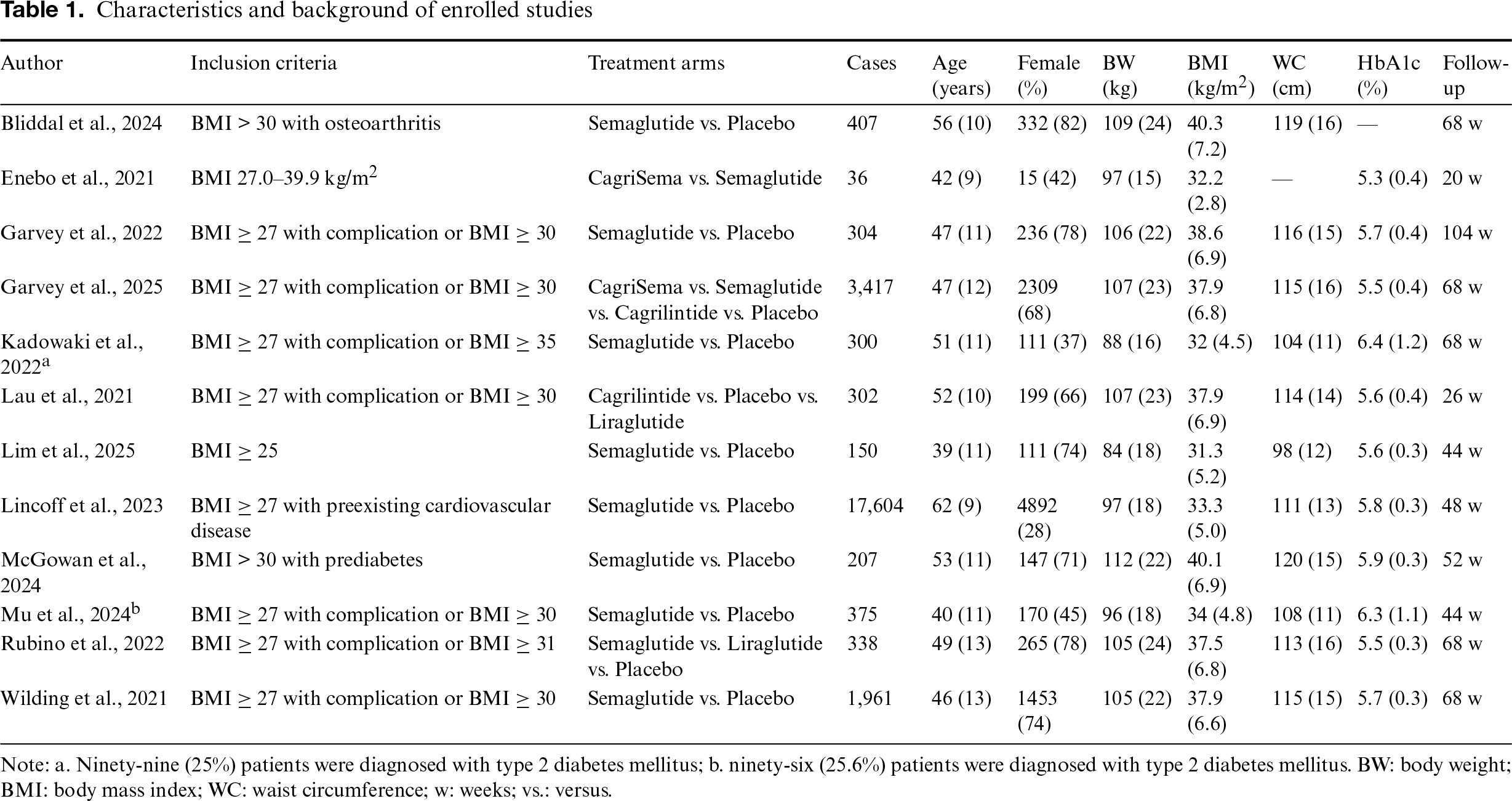
A total of 4,648 records were identified from four databases. After removing 216 duplicates, 4,432 records were screened. Of these, 4,311 records were excluded, leaving 121 reports that were assessed for eligibility. A further 109 reports were excluded (reviews, non-RCTs, duplicates, oral admissions, or different backgrounds). Ultimately, 12 studies met the eligibility criteria (Fig. S1). The included trials recruited adults with overweight or obesity (BMI 25–40), often with comorbidities such as osteoarthritis, prediabetes, or cardiovascular disease (Table 1).16–27 Most studies compared Semaglutide against placebo, while several also tested CagriSema, Cagrilintide, or Liraglutide. Sample sizes ranged from fewer than 40 participants in early-phase work to more than 17,000 in the largest cardiovascular outcomes trial. Follow-up durations spanned from 20 to 104 weeks. Participants were typically in their 40s and 50s, although the cardiovascular trial enrolled an older cohort with a mean age of 62 years. Women comprised two-thirds to four-fifths of most study populations. Average BMI values generally ranged from 32 to 40 kg/m2. Mean baseline HbA1c values were mostly close to the non-diabetic range (5.3–6.4%). All data included in the analysis were derived from studies using the approved doses of Cagrilintide or Semaglutide 2.4 mg.
Body Weight Reduction
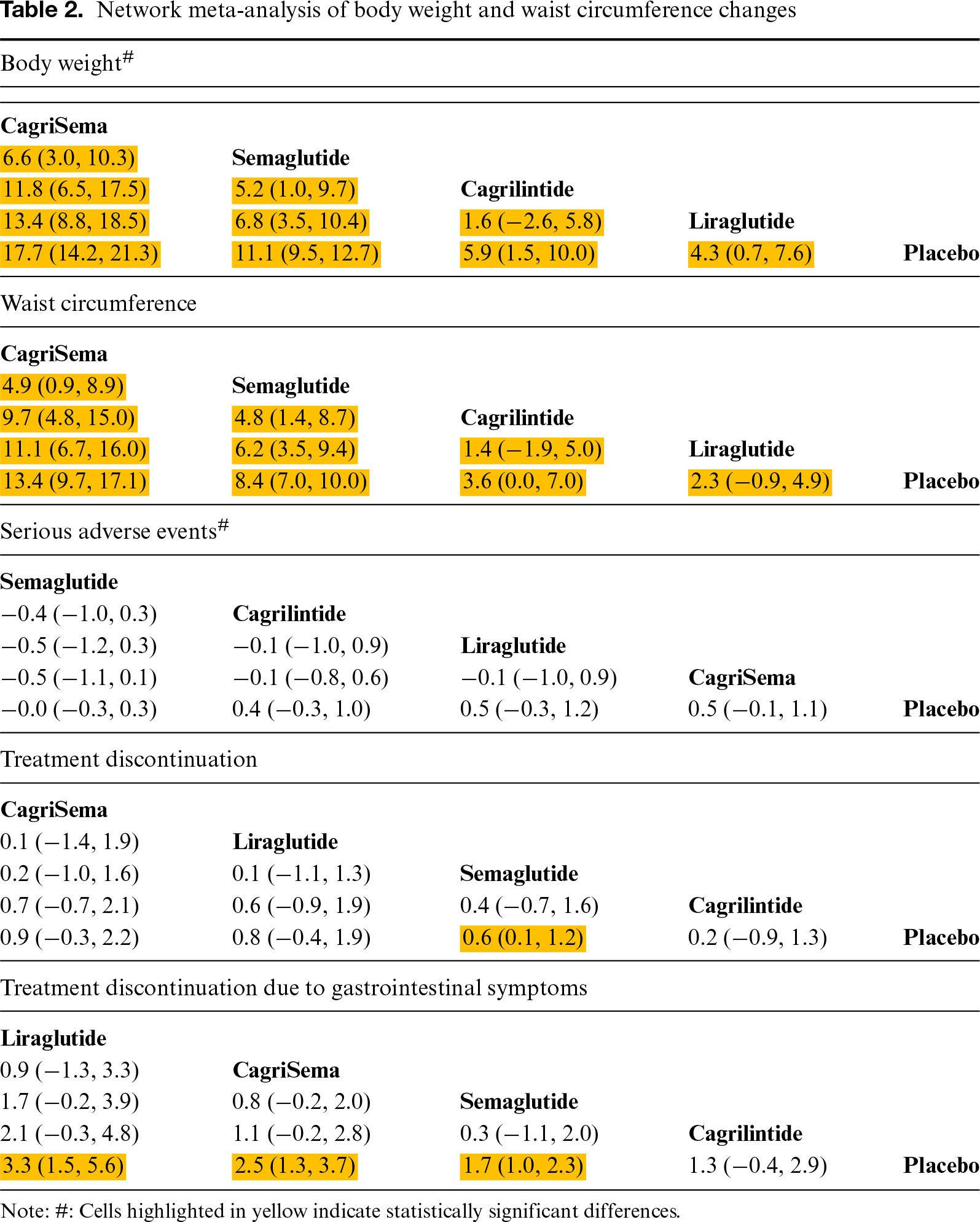
The network of included studies assessing body weight is shown in Fig. 1A. Eight trials evaluated Semaglutide vs. placebo, with additional comparisons of Liraglutide vs. placebo, Cagrilintide vs. placebo, and CagriSema vs. placebo. The estimated effects relative to placebo are presented in Fig. 2A. CagriSema produced the greatest reduction in body weight (MD: 17.7%, 95% CI: 14.2–21.3), followed by Semaglutide (MD: 11.9%, 95% CI: 9.5–12.7), Cagrilintide (MD: 5.9%, 95% CI: 1.5–10.0), and Liraglutide (MD: 4.3%, 95% CI: 0.7–7.6). The NMAs are summarized in Table 2. CagriSema was superior to all active comparators, compared with Semaglutide (MD: 6.6%, 95% CI: 3.0–10.3), Cagrilintide (MD: 11.8%, 95% CI: 6.5–17.5), and Liraglutide (MD: 13.4%, 95% CI: 8.8–18.5). Semaglutide was also superior to Cagrilintide (MD: 5.2%, 95% CI: 1.0–9.7) and Liraglutide (MD: 6.8%, 95% CI: 3.5–10.4). In contrast, Cagrilintide and Liraglutide did not differ significantly from each other (MD: 1.6%, 95% CI: −2.6 to 5.8).
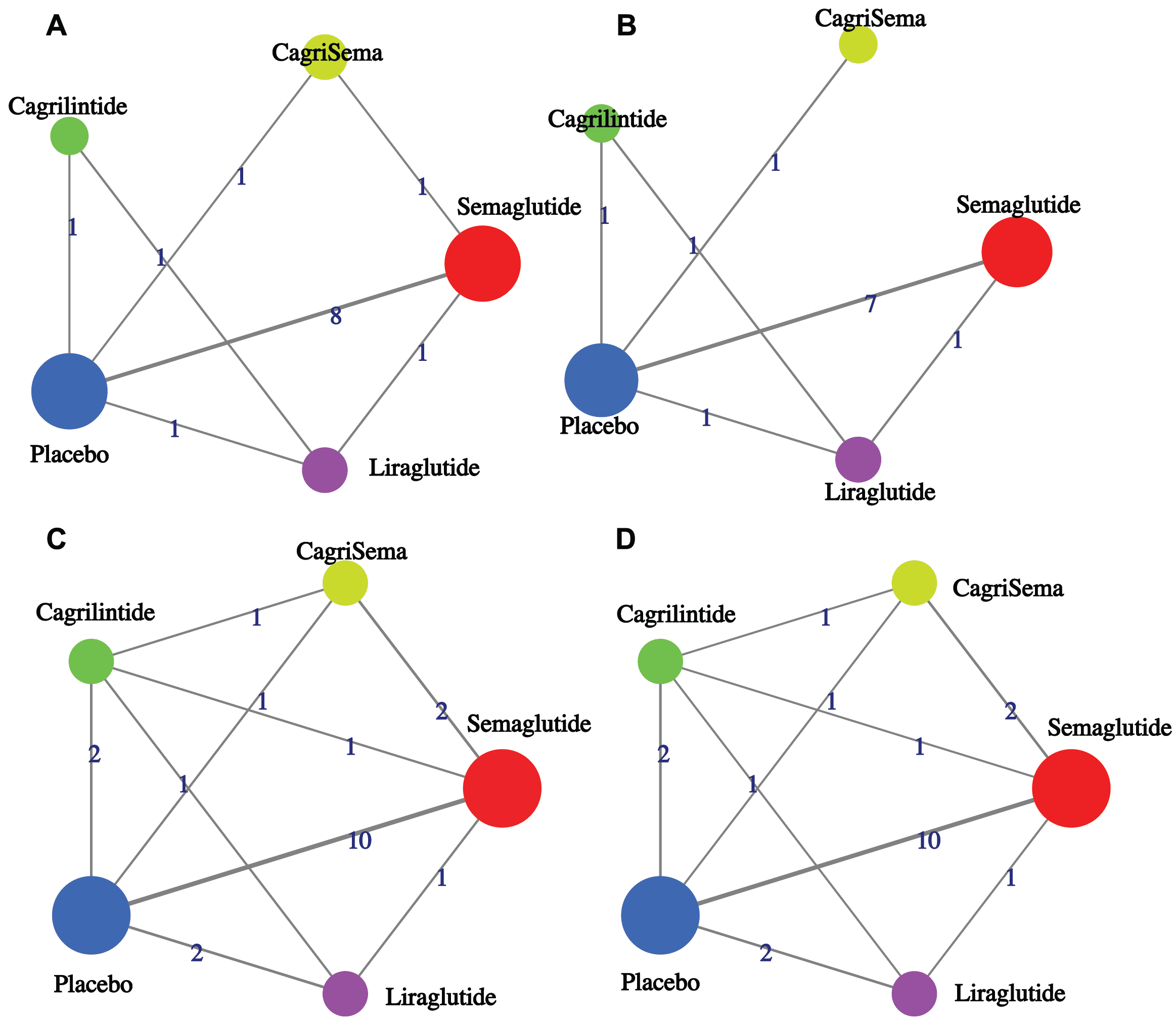
Figure 1. Network graph of enrolled studies. (A) Body weight; (B) waist circumference; (C) serious adverse events and treatment discontinuation; (D) treatment discontinuation due to gastrointestinal symptoms.
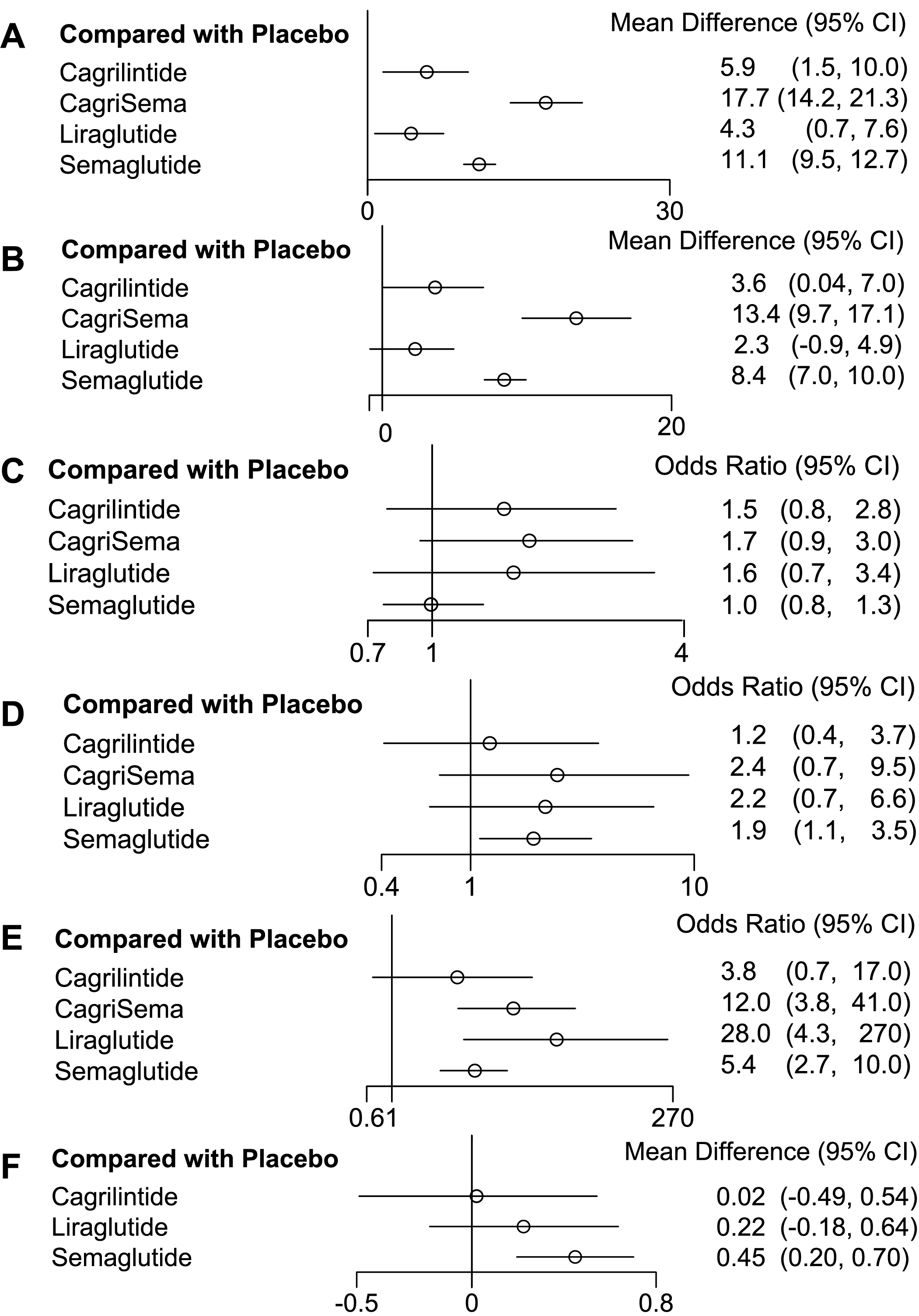
Figure 2. Effects of each agent compared with placebo across different outcomes. (A) Body weight; (B) waist circumference; (C) serious adverse events; (D) treatment discontinuation; (E) discontinuation due to gastrointestinal symptoms; (F) HbA1c reduction.
SUCRA rankings (Fig. S2) were as follows: CagriSema (0.999), Semaglutide (0.747), Cagrilintide (0.450), Liraglutide (0.298), and placebo (0.005). Egger’s test indicated no evidence of small-study effects (p = 0.34). The consistency assessment (Fig. S3) showed no statistically significant differences (p ≥ 0.05) between direct, indirect, and network estimates, indicating no notable inconsistency.
Waist Circumference Reduction
The network of included studies assessing waist circumference is shown in Fig. 1B. Seven trials evaluated Semaglutide vs. placebo, with additional comparisons of Liraglutide vs. placebo, Cagrilintide vs. placebo, and CagriSema vs. placebo. The estimated effects relative to placebo are presented in Fig. 2B. CagriSema produced the greatest reduction in waist circumference (MD: 13.4 cm, 95% CI: 9.7–17.1), followed by Semaglutide (MD: 8.4 cm, 95% CI: 7.0–10.0), Cagrilintide (MD: 3.6 cm, 95% CI: 0.7–7.0), and Liraglutide (MD: 2.3 cm, 95% CI: −0.9 to 4.9). The NMA results are summarized in Table 2. CagriSema was superior to all active comparators: Semaglutide (MD: 4.9 cm, 95% CI: 0.9–8.9), Cagrilintide (MD: 9.7 cm, 95% CI: 4.8–15.0), and Liraglutide (MD: 11.1 cm, 95% CI: 6.7–16.0). Semaglutide was also superior to Cagrilintide (MD: 4.8 cm, 95% CI: 1.4–8.7) and Liraglutide (MD: 6.2 cm, 95% CI: 3.5–9.4). In contrast, Cagrilintide and Liraglutide did not differ significantly from each other (MD: 1.4 cm, 95% CI: −1.9 to 5.0).
SUCRA rankings (Fig. S4) were as follows: CagriSema (0.996) ranked highest, followed by Semaglutide (0.751), Cagrilintide (0.453), Liraglutide (0.278), and placebo (0.022). Egger’s test indicated no evidence of small-study effects (p = 0.52). The consistency assessment (Fig. S5) showed no statistically significant differences (p ≥ 0.05) between direct, indirect, and network estimates, indicating no notable inconsistency.
SAEs
The network of included studies assessing SAEs is shown in Fig. 1C. Ten trials evaluated Semaglutide vs. placebo, two trials compared Liraglutide or Cagrilintide with placebo, and two trials compared CagriSema with Semaglutide. The estimated effects relative to placebo are presented in Fig. 2C: Semaglutide (odds ratio [OR]: 1.0, 95% CI: 0.8–1.3), Cagrilintide (OR: 1.5, 95% CI: 0.8–2.8), Liraglutide (OR: 1.6, 95% CI: 0.7–3.4), and CagriSema (OR: 1.7, 95% CI: 0.9–3.0). None of these agents demonstrated a statistically significant increase in the risk of SAEs compared with placebo.
The NMA results of LORs are summarized in Table 2, showing that no treatment was superior or inferior to the others. SUCRA rankings (Fig. S6) indicated that Semaglutide (0.812) and placebo (0.804) had the highest probabilities of being safest, followed by Cagrilintide (0.358), Liraglutide (0.318), and CagriSema (0.208). Egger’s test showed no evidence of small-study effects (p = 0.55). The consistency assessment (Fig. S7) revealed no statistically significant differences (p ≥ 0.05) between direct, indirect, and network estimates, indicating no notable inconsistency.
Treatment Discontinuation
The network of included studies assessing treatment discontinuation was the same as for SAEs (Fig. 1C). The estimated effects relative to placebo are presented in Fig. 2D. Semaglutide (OR: 1.9, 95% CI: 1.1–3.5) was associated with a significantly higher risk of treatment discontinuation compared with placebo. In contrast, Cagrilintide (OR: 1.2, 95% CI: 0.4–3.7), Liraglutide (OR: 2.2, 95% CI: 0.7–6.6), and CagriSema (OR: 2.4, 95% CI: 0.7–9.5) did not show statistically significant differences.
The NMA results of LORs are summarized in Table 2. No treatment was superior or inferior to the others, except for Semaglutide, which showed a higher risk of discontinuation than placebo. SUCRA rankings (Fig. S8) placed placebo highest (0.873), followed by Cagrilintide (0.709), Semaglutide (0.373), Liraglutide (0.314), and CagriSema (0.232). Egger’s test showed no evidence of small-study effects (p = 0.21). The consistency assessment (Fig. S9) revealed some inconsistency in studies comparing Semaglutide or Cagrilintide with Liraglutide.
Gastrointestinal Symptoms
The network of included studies assessing treatment discontinuation due to gastrointestinal symptoms is shown in Fig. 1D. Seven trials evaluated Semaglutide vs. placebo, and two trials compared CagriSema with Semaglutide. The estimated effects relative to placebo are presented in Fig. 2E. Cagrilintide showed the lowest risk of treatment discontinuation (OR: 3.8, 95% CI: 0.68–17.0) without significant statistical differences. Other agents showed a higher risk of treatment discontinuation with Semaglutide (OR: 5.4, 95% CI: 2.7–10.0), CagriSema (OR: 12.0, 95% CI: 3.8–41.0), and Liraglutide (OR: 28.0, 95% CI: 4.3–270).
The NMA results of LORs are summarized in Table 2. No treatment was superior or inferior to the others, except for Semaglutide, which showed a higher risk of discontinuation than placebo. SUCRA rankings (Fig. S10) placed placebo at the highest for the lowest risk of discontinuation due to GS (0.985), followed by Cagrilintide (0.664), Semaglutide (0.556), CagriSema (0.225), and Liraglutide (0.070). Egger’s test showed no evidence of small-study effects (p = 0.21). The consistency assessment (Fig. S11) revealed no statistically significant differences (p ≥ 0.05) between direct, indirect, and network estimates, indicating no notable inconsistency.
HbA1c
The network of included studies assessing waist circumference is shown in Fig. S12. Four trials evaluated Semaglutide vs. placebo, with additional comparisons of Liraglutide and Cagrilintide versus placebo. The estimated effects relative to placebo are presented in Fig. 2F. Semaglutide produced the greatest reduction in waist circumference (MD: 0.45%, 95% CI: 0.20–0.70), followed by Liraglutide (MD: 0.22%, 95% CI: −0.18 to 0.64), and Cagrilintide (MD: 0.02%, 95% CI: −0.49 to 54). The NMA results are summarized in Table S2. Semaglutide was superior to the placebo (log odds ratio [LOR]: 0.4, 95% CI: 0.2–0.7), while no other agents were superior or inferior to the others.
SUCRA rankings (Fig. S13) were as follows: Semaglutide (0.949) ranked highest, followed by Liraglutide (0.611), Cagrilintide (0.253), and placebo (0.187). Egger’s test indicated no evidence of small-study effects (p = 0.52). The consistency assessment (Fig. S14) showed no statistically significant differences (p ≥ 0.05) between direct, indirect, and network estimates, indicating no notable inconsistency.
Certainty of Evidence
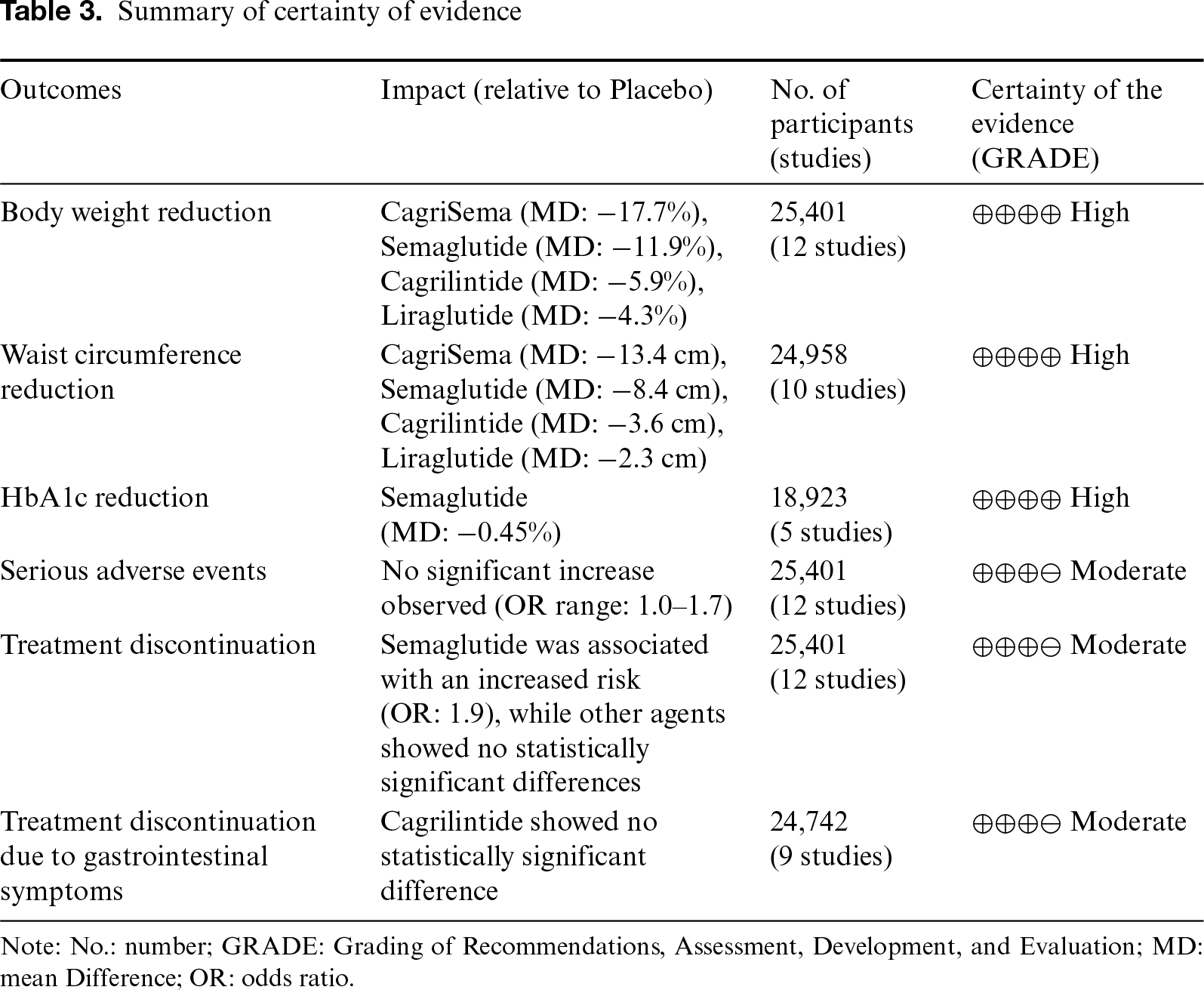
The risk of bias is presented in Fig. S15. Two studies showed some concerns regarding the overall risk of bias, while the remaining 10 studies were assessed as having a low risk of bias. The certainty of evidence is summarized in Table 3: high for reductions in body weight and waist circumference, consistently showing that CagriSema was the most effective, followed by Semaglutide. Evidence for HbA1c reduction was also rated high for Semaglutide, but low to moderate for Liraglutide and Cagrilintide, both of which showed no significant effect. For safety outcomes, the certainty of evidence was moderate: no agent increased the risk of SAEs, although Semaglutide and Liraglutide were associated with higher rates of treatment discontinuation, particularly due to GS. Overall, the evidence supports a high level of confidence in efficacy outcomes and a moderate level of confidence in safety and tolerability outcomes.
Discussion
This NMA consolidates evidence from randomized trials comparing CagriSema, Semaglutide, Cagrilintide, Liraglutide, and placebo in adults with overweight or obesity. The principal finding is that dual-agonist therapy with CagriSema provides the greatest reductions in body weight and waist circumference. Semaglutide also yields substantial benefits, achieving weight loss exceeding 10%, alongside meaningful improvements in glycemic control. Liraglutide and Cagrilintide, while superior to placebo, produce comparatively more modest effects, generally achieving weight loss of more than 5%.28 This NMA represents the ranking of all available agents across multiple outcomes in a single comparative framework, confirming the superiority of CagriSema and clarifying the trade-off between efficacy and tolerability. These results align with recent data from the REDEFINE program, which showed CagriSema achieving greater weight reductions than Semaglutide alone. This is consistent with earlier findings from the STEP program, confirming the superiority of Semaglutide over Liraglutide in weight management.29,30
Different agents demonstrated distinct profiles when considering weight, glycemic outcomes, and safety. CagriSema consistently ranked highest for weight and waist circumference reduction, confirming its additive benefit over single-agent therapies and mirroring results from REDEFINE-1, where weight loss in adherent participants exceeded 20%.19 Semaglutide maintains a central role due to its dual impact on weight and glycemic control, supported by both trial and real-world data demonstrating significant HbA1c improvements and durable weight loss.31,32 Oral Semaglutide also demonstrated more flexible usage in weight control; however, it is not included in the NMA.33 Liraglutide, though widely studied, is less potent than Semaglutide and is associated with higher rates of gastrointestinal adverse events, as shown in STEP-8 and corroborated in observational cohorts.26,34 Cagrilintide, in contrast, is generally better tolerated but achieves smaller reductions in weight and metabolic outcomes, suggesting a niche role for patients prioritizing tolerability over maximum efficacy.35
Safety outcomes across trials show broadly comparable rates of SAEs between active agents and placebo, consistent with prior GLP-1 receptor agonist meta-analyses.36 However, gastrointestinal adverse events, particularly nausea, vomiting, and diarrhea, remain the primary tolerability issue and a major driver of discontinuation.37 Higher discontinuation rates with semaglutide and liraglutide reflect the well-established dose-dependent relationship between incretin therapies and gastrointestinal side effects.38 These symptoms often peak during dose escalation, especially at higher maintenance doses or in combination regimens.39 Although structured titration schedules in trials help mitigate intolerance, real-world adherence to these protocols may be variable, contributing to greater symptom burden and higher discontinuation rates. Individuals such as older adults or those with multimorbidity may be especially vulnerable.
The findings of this analysis have important implications for clinical practice. Notably, most included trials enrolled relatively younger and healthier adults. The generalizability of these results to older adults, individuals with multimorbidity, and other clinically complex subgroups remains uncertain. These populations may exhibit different patterns of treatment response, tolerability, and adherence, highlighting the need for dedicated studies to better characterize the effectiveness and safety of these therapies in higher-risk groups. It is also important to situate these findings within the broader landscape of obesity pharmacotherapy. Several other agents, such as tirzepatide, phentermine/topiramate, naltrexone/bupropion, orlistat, and emerging incretin-based combinations, are widely used in clinical practice.40,41 Although comparisons with these therapies were outside the scope of this NMA, clinicians should interpret the present results in the context of the full range of available treatment options. Treatment selection should be individualized, incorporating considerations of efficacy, tolerability, comorbidities, accessibility, and patient preference. Because long-term adherence is a key determinant of real-world effectiveness, proactive strategies to support persistence with therapy are essential for achieving and sustaining meaningful clinical outcomes.
Longer-term studies are needed to clarify the durability of weight loss, relapse rates, and maintenance strategies beyond 2 years. Cardiovascular and renal outcomes, which have been established for some GLP-1 RAs, must be evaluated specifically for dual agonists like CagriSema. Direct comparative studies with emerging agents, including tirzepatide and other multi-agonists, are also warranted to determine the optimal balance of efficacy and tolerability. Future research should incorporate real-world data to capture the effects of adherence, discontinuation, and cost, all of which may substantially affect effectiveness outside controlled trial conditions. Additionally, outcomes beyond weight and glycemia, such as quality of life, functional capacity, and patient-reported outcomes, should be more systematically integrated into trials to inform patient-centered care.
This analysis has several limitations. First, substantial heterogeneity across the included trials, encompassing differences in population characteristics, baseline comorbidities, and follow-up durations, may have influenced the validity of the indirect comparisons. Two studies with relatively short follow-up periods were also included; however, because they evaluated different agents, a robust sensitivity analysis could not be performed. Second, although no major inconsistency was identified, reporting of safety and treatment discontinuation outcomes varied considerably among studies, limiting the precision of the pooled estimates. Third, many of the included trials were industry-sponsored, which may introduce reporting bias or selective emphasis on favorable outcomes. Finally, because this NMA is composed of indirect rather than direct comparisons, further head-to-head trials are required to strengthen the evidence base.
Conclusion
This NMA confirms that CagriSema provides the greatest efficacy for body weight and waist circumference reduction, with Semaglutide offering a strong balance of efficacy and glycemic benefit. Cagrilintide demonstrates better tolerability with modest effects, while Liraglutide is both less effective and less well tolerated. These findings underscore the central role of incretin-based therapies in obesity management and highlight the need for individualized treatment strategies. Future trials with extended follow-up and direct comparisons against emerging therapies are necessary to further define optimal treatment approaches.
Acknowledgment
None.
Funding
None.
Author Contributions
Y.M. and T.J. designed the study, conducted the literature search, performed the quality assessment, extracted data, carried out the analyses, and drafted the manuscript. L.R., M.L.T., and Y.W. contributed to data interpretation and critically revised the manuscript. All authors have read and approved the final version of the manuscript and agree with its content and data.
Data Availability Statement
The datasets used and analyzed in this study are available from the corresponding author upon reasonable request.
Ethical Statement
Institutional Review Board approval was waived, as this study is a meta-analysis of previously published data.
Conflict of Interest
The authors declare no conflicts of interest.
Supplemental Information
Supplemental information for this article can be found online at https://sup.jclinque.com/api/articles/94/download-suppl.
References
[1] World Health Organization. Obesity and Overweight. Published May 2025, Accessed on September 1, 2025. https://www.who.int/news-room/fact-sheets/detail/obesity-and-overweight
[2] Ahmed SK, Mohammed RA. Obesity: prevalence, causes, consequences, management, preventive strategies and future research directions. Metabolism Open. September 01, 2025;27:100375. doi:10.1016/j.metop.2025.100375.
[3] Ullah MI, Tamanna S. Obesity: clinical impact, pathophysiology, complications, and modern innovations in therapeutic strategies. Medicines. 2025;12(3):19. doi:10.3390/medicines12030019.
[4] Gostoli S, Raimondi G, Popa AP, Giovannini M, Benasi G, Rafanelli C. Behavioral lifestyle interventions for weight loss in overweight or obese patients with type 2 diabetes: a systematic review of the literature. Curr Obes Rep. June 2024;13(2):224–241. doi:10.1007/s13679-024-00552-5.
[5] Pasarica M, Dhurandhar NV, Stensel DJ. Obesity management with next-generation drugs. Int J Obes (Lond). March 2025;49(3):367–368. doi:10.1038/s41366-025-01734-4.
[6] Moiz A, Filion KB, Tsoukas MA, Yu OHY, Peters TM, Eisenberg MJ. The expanding role of GLP-1 receptor agonists: a narrative review of current evidence and future directions. EClinicalMedicine. August 2025;86(2):103363. doi:10.1016/j.eclinm.2025.103363.
[7] Anam M, Maharjan S, Amjad Z, et al. Efficacy of semaglutide in treating obesity: a systematic review of randomized controlled trials (RCTs). Cureus. December 2022;14(12):e32610. doi:10.7759/cureus.32610.
[8] Amaro A, Skolnik NS, Sugimoto D. Cardiometabolic risk factors efficacy of semaglutide in the STEP program. Postgrad Med. January 2022;134(sup1):18–27. doi:10.1080/00325481.2022.2147325.
[9] Wharton S, Calanna S, Davies M, et al. Gastrointestinal tolerability of once-weekly semaglutide 2.4 mg in adults with overweight or obesity, and the relationship between gastrointestinal adverse events and weight loss. Diabetes Obes Metab. January 2022;24(1):94–105. doi:10.1111/dom.14551.
[10] Lutz TA. Role of amylin in feeding and satiation. Neuropharmacology. November 01, 2025;278:110587. doi:10.1016/j.neuropharm.2025.110587.
[11] Walker CS, Aitken JF, Vazhoor Amarsingh G, Zhang S, Cooper GJS. Amylin: emergent therapeutic opportunities in overweight, obesity and diabetes mellitus. Nat Rev Endocrinol. August 2025;21(8):482–494. doi:10.1038/s41574-025-01125-9.
[12] D’Ascanio AM, Mullally JA, Frishman WH. Cagrilintide: a long-acting amylin analog for the treatment of obesity. Cardiol Rev. 2024;32(1):83–90.
[13] Reiss AB, Gulkarov S, Lau R, et al. v. Biomolecules. 2025;15(3):408.
[14] Kokkorakis M, Chakhtoura M, Rhayem C, et al. Emerging pharmacotherapies for obesity: a systematic review. Pharmacol Rev. January 01, 2025;77(1):100002. doi:10.1124/pharmrev.123.001045.
[15] Frias JP, Deenadayalan S, Erichsen L, et al. Efficacy and safety of co-administered once-weekly cagrilintide 2·4 mg with once-weekly semaglutide 2·4 mg in type 2 diabetes: a multicentre, randomised, double-blind, active-controlled, phase 2 trial. Lancet. August 26, 2023;402(10403):720–730. doi:10.1016/s0140-6736(23)01163-7.
[16] Bliddal H, Bays H, Czernichow S, et al. Once-weekly semaglutide in persons with obesity and knee osteoarthritis. N Engl J Med. October 31, 2024;391(17):1573–1583. doi:10.1056/NEJMoa2403664.
[17] Enebo LB, Berthelsen KK, Kankam M, et al. Safety, tolerability, pharmacokinetics, and pharmacodynamics of concomitant administration of multiple doses of cagrilintide with semaglutide 2·4 mg for weight management: a randomised, controlled, phase 1b trial. Lancet. May 8, 2021;397(10286):1736–1748. doi:10.1016/s0140-6736(21)00845-x.
[18] Garvey WT, Batterham RL, Bhatta M, et al. Two-year effects of semaglutide in adults with overweight or obesity: the STEP 5 trial. Nat Med. October 2022;28(10):2083–2091. doi:10.1038/s41591-022-02026-4.
[19] Garvey WT, Blüher M, Osorto Contreras CK, et al. Coadministered cagrilintide and semaglutide in adults with overweight or obesity. N Engl J Med. August 14, 2025;393(7):635–647. doi:10.1056/NEJMoa2502081.
[20] Davies MJ, Bajaj HS, Broholm C, et al. Cagrilintide-semaglutide in adults with overweight or obesity and type 2 diabetes. N Engl J Med. August 14, 2025;14(7):648–659. doi:10.1056/NEJMoa2502082.
[21] Kadowaki T, Isendahl J, Khalid U, et al. Semaglutide once a week in adults with overweight or obesity, with or without type 2 diabetes in an east Asian population (STEP 6): a randomised, double-blind, double-dummy, placebo-controlled, phase 3a trial. Lancet Diabetes Endocrinol. March 2022;10(3):193–206. doi:10.1016/s2213-8587(22)00008-0.
[22] Lim S, Buranapin S, Bao X, et al. Once-weekly semaglutide 2·4 mg in an Asian population with obesity, defined as BMI ≥25 kg/m(2in South Korea and Thailand (STEP 11): a randomised, double-blind, placebo-controlled, phase 3 trial. Lancet Diabetes Endocrinol. August 14, 2025;13(10):833–847. doi:10.1016/s2213-8587(25)00164-0.
[23] Lincoff AM, Brown-Frandsen K, Colhoun HM, et al. Semaglutide and cardiovascular outcomes in obesity without diabetes. N Engl J Med. December 14, 2023;389(24):2221–2232. doi:10.1056/NEJMoa2307563.
[24] McGowan BM, Bruun JM, Capehorn M, et al. Efficacy and safety of once-weekly semaglutide 2·4 mg versus placebo in people with obesity and prediabetes (STEP 10): a randomised, double-blind, placebo-controlled, multicentre phase 3 trial. Lancet Diabetes Endocrinol. September 2024;12(9):631–642. doi:10.1016/s2213-8587(24)00182-7.
[25] Mu Y, Bao X, Eliaschewitz FG, et al. Efficacy and safety of once weekly semaglutide 2·4 mg for weight management in a predominantly east Asian population with overweight or obesity (STEP 7): a double-blind, multicentre, randomised controlled trial. Lancet Diabetes Endocrinol. March 2024;12(3):184–195. doi:10.1016/s2213-8587(23)00388-1.
[26] Rubino DM, Greenway FL, Khalid U, et al. Effect of weekly subcutaneous semaglutide vs daily liraglutide on body weight in adults with overweight or obesity without diabetes: the STEP 8 randomized clinical trial. J American Med Associat. January 11, 2022;327(2):138–150. doi:10.1001/jama.2021.23619.
[27] Wilding JPH, Batterham RL, Calanna S, et al. Once-weekly semaglutide in adults with overweight or obesity. N Engl J Med. March 18, 2021;384(11):989–1002. doi:10.1056/NEJMoa2032183.
[28] Ryan DH, Yockey SR. Weight loss and improvement in comorbidity: differences at 5%, 10%, 15%, and over. Curr Obes Rep. June 2017;6(2):187–194. doi:10.1007/s13679-017-0262-y.
[29] Bhat S, Fernandez CJ, Lakshmi V, Pappachan JM. Efficacy and safety of incretin co-agonists: transformative advances in cardiometabolic healthcare. World J Cardiol. August 26, 2025;17(8):107991. doi:10.4330/wjc.v17.i8.107991.
[30] Krüger N, Schneeweiss S, Fuse K, et al. Semaglutide and tirzepatide in patients with heart failure with preserved ejection fraction. Jama. August 31, 2025;334(14):1255–1266. doi:10.1001/jama.2025.14092.
[31] Thomsen RW, Mailhac A, Løhde JB, Pottegård A. Real-world evidence on the utilization, clinical and comparative effectiveness, and adverse effects of newer GLP-1RA-based weight-loss therapies. Diabetes Obes Metab. April 2025;27(Suppl 2):66–88. doi:10.1111/dom.16364.
[32] Moiz A, Filion KB, Toutounchi H, et al. Efficacy and safety of glucagon-like peptide-1 receptor agonists for weight loss among adults without diabetes: a systematic review of randomized controlled trials. Ann Intern Med. February 2025;178(2):199–217. doi:10.7326/annals-24-01590.
[33] Wharton S, Lingvay I, Bogdanski P, et al. Oral semaglutide at a dose of 25 mg in adults with overweight or obesity. N Engl J Med. September 18, 2025;393(11):1077–1087. doi:10.1056/NEJMoa2500969.
[34] Stefanou MI, Chatziralli I, Lambadiari V, et al. Efficacy and safety of GLP-1 and dual GIP/GLP-1 receptor agonists in idiopathic intracranial hypertension: a systematic review and meta-analysis. Eur J Neurol. September 2025;32(9):e70358. doi:10.1111/ene.70358.
[35] Carvas AO, Leuthardt A, Kulka P, et al. Cagrilintide lowers bodyweight through brain amylin receptors 1 and 3. EBioMedicine. August 2025;118:105836. doi:10.1016/j.ebiom.2025.105836.
[36] Njei B, Al-Ajlouni Y, Lemos SY, et al. Efficacy and safety of GLP-1 receptor agonists in patients with metabolic dysfunction-associated steatotic liver disease: a systematic review and meta-analysis of randomized controlled trials. Cureus. October 2024;16(10):e71366. doi:10.7759/cureus.71366.
[37] Ismaiel A, Scarlata GGM, Boitos I, et al. Gastrointestinal adverse events associated with GLP-1 RA in non-diabetic patients with overweight or obesity: a systematic review and network meta-analysis. Int J Obesity. October 01, 2025;49(10):1946–1957. doi:10.1038/s41366-025-01859-6.
[38] Galli M, Benenati S, Laudani C, et al. Cardiovascular effects and tolerability of GLP-1 receptor agonists: a systematic review and meta-analysis of 99,592 patients. J Am Coll Cardiol. August 19, 2025;86(20):1805–1819. doi:10.1016/j.jacc.2025.08.027.
[39] Aroda VR, Bain SC, Cariou B, et al. Efficacy and safety of once-weekly semaglutide versus once-daily insulin glargine as add-on to metformin (with or without sulfonylureas) in insulin-naive patients with type 2 diabetes (SUSTAIN 4): a randomised, open-label, parallel-group, multicentre, multinational, phase 3a trial. Lancet Diab Endocrinol. 2017;5(5):355–366. doi:10.1016/S2213-8587(17)30085-2.
[40] Liu L, Li Z, Ye W, et al. Safety and effects of anti-obesity medications on weight loss, cardiometabolic, and psychological outcomes in people living with overweight or obesity: a systematic review and meta-analysis. eClinicalMedicine. 2025;79:103020. doi:10.1016/j.eclinm.2024.103020.
[41] Gudzune KA, Kushner RF. Medications for obesity: a review. JAMA. August 20, 2024;332(7):571–584. doi:10.1001/jama.2024.10816.
 |
Copyright: © 2025 Meng et al. This work is licensed under a Creative Commons Attribution 4.0 International License, which permits unrestricted use, distribution, and reproduction in any medium, provided the original work is properly cited. |