| Journal of Clinical Question. 2026; 3(2): e111 https://doi.org/10.69854/jcq.2026.0010 Advance access publication date 25 March 2026 |
 |
Meta-Analysis
Comparative Effectiveness of Simulation-Based Bronchoscopy Training Strategies: A Network Meta-Analysis of Randomized Controlled Trials
Jingchao Ma, Suparata Kiartivich, Tup Kuang Ming, Zixiang Wang, Ye Zhao *
*
Department of Medical and Nursing Science, International College, Krirk University, Bangkok, Thailand.
*Corresponding Author: e-mail: zhao.ye@staff.krirk.ac.th
Submitted: February 17, 2026 Accepted: March 24, 2026
Clinical Question Box
Among trainees learning bronchoscopy, which simulation-based training strategies are most effective for improving procedural performance?
Simulation-based bronchoscopy training significantly improves procedural efficiency and performance compared to traditional lecture-based instruction. In this network meta-analysis of randomized controlled trials, simulator-based strategies that incorporate artificial intelligence, virtual reality, or expert guidance ranked favorably; however, their advantages over conventional simulator training were modest. These findings suggest that structured simulation-based practice is the primary driver of skill acquisition, while technological enhancements provide incremental benefits.
Abstract
Background: Although the importance of simulation-based education has gradually increased in bronchoscopy training, the relative effectiveness of different simulation technologies remains uncertain. Therefore, this study aimed to compare the effectiveness of various bronchoscopy simulation modalities using a network meta-analysis of randomized controlled trials (RCTs). Methods: A systematic search of PubMed, the Cochrane Library, and Web of Science was conducted from database inception to January 31, 2026. RCTs evaluating bronchoscopy simulation training were included, and the outcomes comprised procedure time (PT), diagnostic completeness (DC), and structured progress (SP). Results: Nine RCTs involving bronchoscopy trainees were included in the study. In addition to traditional simulators, artificial intelligence (AI), virtual reality (VR), and anatomical simulators with anatomical variability were incorporated. Compared with lecture-based instruction, all simulation-based approaches significantly improved bronchoscopy performance. For PT, Simulator-AI (mean difference [MD] = −6.42 minutes, 95% confidence interval [CI] [−10.8, −2.03], Simulator-VR (MD = −6.11, 95% CI [−10.3, −1.97]), Anatomical Simulator (MD = −5.81, 95% CI [−10.5, −1.11]), Simulator-Expert (MD = −5.69, 95% CI [−10.1, −1.32]), and Simulator alone (MD = −4.82, 95% CI [−7.15, −2.49) all reduced PT compared to lecture training. For DC, Simulator-AI demonstrated the largest improvement versus lecture (MD = 27%, 95% CI [19%–35%]), followed by Simulator (MD = 26%, 95% CI [20%–33%]), Anatomical Simulator (MD = 26%, 95% CI [19%–34%]), Simulator-VR (MD = 24%, 95% CI [14%–34%]), and Simulator-Expert (MD = 24%, 95% CI [14%–34%]). For SP, Simulator-Expert showed the greatest improvement (MD = 56%, 95% CI [21%–91%]), followed by Simulator-AI (MD = 53%, 95% CI [17%–88%]) and Simulator-VR (MD = 52%, 95% CI [17%–86%]). Differences between advanced simulator configurations and conventional simulator training were generally modest. Conclusions: Simulation-based bronchoscopy training significantly improves procedural efficiency and performance compared to lecture-based teaching.
Keywords: Flexible bronchoscopy, simulation-based training, network meta-analysis, artificial intelligence, virtual reality
Introduction
Bronchoscopy, a core procedural competency in pulmonary and critical care medicine, is widely performed in thoracic surgery, anesthesiology, and intensive care settings.1 Since its first clinical application by Gustav Killian, bronchoscopy has evolved from rigid instrumentation to flexible fiberoptic and high-definition video platforms capable of advanced diagnostic and therapeutic interventions.2 Contemporary practice includes bronchoalveolar lavage, transbronchial biopsy, endobronchial ultrasound-guided sampling, navigational bronchoscopy, and airway stenting.3 As procedural capabilities have expanded, so too have the technical complexity and cognitive demands required for safe and effective performance.
Effective bronchoscopy mandates refined psychomotor coordination, three-dimensional spatial orientation, and real-time clinical judgment. Therefore, operators must navigate a flexible endoscope through branching bronchial anatomy while interpreting two-dimensional video images, systematically examining airway segments and minimizing mucosal trauma. Simultaneously, they must recognize pathological findings and respond promptly to complications such as hypoxemia, bleeding, or bronchospasm.4 These multidimensional demands make bronchoscopy highly dependent on structured, high-quality training.
Historically, bronchoscopy education relied on an apprenticeship model based on graded responsibility under expert supervision. Although experiential learning remains fundamental even today, contemporary healthcare constraints have limited its adequacy as a standalone strategy.5 Increased emphasis on patient safety, reductions in trainee duty hours, variability in procedural volume, and growing procedural complexity, especially with the integration of endobronchial ultrasound and navigational technologies, have reduced opportunities for repetitive supervised practice.6 Ethical concerns regarding early trainee involvement in invasive procedures further underscore the need for structured and standardized training approaches.
Therefore, simulation-based education has become central to modern bronchoscopy training, evolving from basic task rehearsal to technologically advanced, data-driven learning systems. Contemporary simulation offers a controlled environment for deliberate practice, objective performance assessment, and competency-based progression.7 For instance, high-fidelity virtual reality (VR) platforms provide immersive three-dimensional visualization, realistic haptic feedback, and programmable clinical scenarios that replicate anatomical variability and procedural complexity.8 Randomized studies have demonstrated that VR-enhanced training improves procedural efficiency, reduces airway wall collisions, and enhances structured airway examination compared to traditional teaching methods.9,10 Automated performance metrics, including procedure time (PT), segmental completeness, and movement economy, allow benchmarking against expert standards and standardized competency assessment.
Recent innovations have further expanded the capabilities of simulation through artificial intelligence (AI) and augmented reality technologies. AI-driven systems analyze real-time performance data, compare trainee movements with expert-derived benchmarks, and provide individualized corrective feedback, enabling adaptive and personalized learning pathways.11 Emerging evidence suggests that AI-augmented simulation may accelerate skill acquisition and enhance procedural completeness beyond conventional simulator training alone. While augmented and mixed reality platforms enhance spatial orientation by overlaying anatomical guidance and navigational cues, hybrid systems integrate physical airway models with digital analytics to combine tactile realism and objective feedback.12 Together, these advances reflect a transition toward intelligent, performance-oriented training ecosystems.
To determine which simulation strategies, or combinations of technologies, offer the greatest educational benefit, we conducted a network meta-analysis of randomized controlled trials (RCTs) comparing bronchoscopy simulation modalities. Our objective was to evaluate their relative effectiveness in improving procedural efficiency, diagnostic performance, and structured airway examination, thereby informing evidence-based curriculum development in bronchoscopy education.
Methods
Study Design and Registration
A systematic review and frequentist network meta-analysis were conducted to compare the effectiveness of different bronchoscopy simulation modalities in procedural training. The protocol was prospectively registered in the Open Science Framework before initiation to ensure methodological transparency and reduce the risk of reporting bias.13 The review was conducted in accordance with the Preferred Reporting Items for Systematic Reviews and Meta-Analyses extension for Network Meta-Analysis guidelines. As this study synthesized data from previously published research, institutional ethical approval was not required.
Literature Search Strategy
A comprehensive literature search was conducted from database inception to January 31, 2026, in PubMed, the Cochrane Library, and Web of Science. The database-specific search strategies are presented in Table S1. In brief, the search combined terms related to bronchoscopy and simulation, using the following core strategy: ((bronchoscopy) OR (flexible bronchoscopy)) AND ((simulation) OR (simulator)). In addition, the reference lists of included studies and relevant review articles were manually screened to identify any further eligible studies. Only studies published in English were included.
Eligibility Criteria
Studies were included if they met the following criteria: (1) RCT design; (2) evaluation of bronchoscopy simulation as an educational intervention; and (3) inclusion of at least one intervention arm using bronchoscopy simulation, either as a standalone intervention or combined with other teaching strategies such as didactic instruction or structured feedback.
Studies were excluded if they met any of the following criteria: (1) they primarily focused on non-procedural laboratory training; (2) they were conducted in experimental environments without procedural bronchoscopy simulation; or (3) relevant outcomes could not be extracted.
Outcomes
All outcomes were analyzed as continuous variables and extracted as means with corresponding standard deviations. The predefined outcomes were PT, diagnostic completeness (DC), and structured progress (SP). PT was defined as the total duration of the bronchoscopy procedure, with the timer automatically initiated upon the visualization of the main carina and terminated upon the withdrawal of the bronchoscope. DC was measured as the total number of bronchopulmonary segments successfully entered, with a maximum possible score of 18 segments (10 in the right lung and 8 in the left lung); SP was defined as a sequential performance metric in which one point was awarded each time a participant visualized a successive bronchial segment in the correct ascending anatomical order. For consistency across studies, the DC and SP values were converted to percentages of the maximum achievable score.
Study Selection and Data Extraction
Two reviewers (J.M. and S.K.) independently screened titles and abstracts for eligibility, followed by full-text assessment of potentially relevant studies. Disagreements were resolved through discussion or consultation with a third reviewer (Y.Z.) when required. Moreover, two investigators independently extracted the data using a standardized data collection form. Extracted information included study characteristics (author, year, country, and design), participant demographics, and outcome data. When data were incomplete or unclear, corresponding authors were contacted for clarification.
Statistical Analysis
All statistical analyses were performed using R (version 4.5.1; R Foundation for Statistical Computing, Vienna, Austria). Pairwise meta-analyses were conducted using the meta package. For all continuous outcomes, pooled effect estimates were expressed as mean differences (MDs) with corresponding 95% confidence intervals (CIs). A frequentist network meta-analysis was subsequently performed using the netmeta package in R to enable simultaneous comparison of multiple bronchoscopy simulation modalities by integrating both direct and indirect evidence within a unified analytical framework. Furthermore, a random-effects model was applied to account for anticipated clinical and methodological heterogeneity across studies. Statistical heterogeneity was assessed using Cochran’s Q test and quantified with the I2 statistic, with higher I2 values indicating greater inconsistency among studies. Additionally, global inconsistency was evaluated using the design-by-treatment interaction model, while local inconsistency was examined through node-splitting analyses. Treatments were ranked using the surface under the cumulative ranking curve (SUCRA), with higher values indicating a greater probability of being the most effective simulation strategy.
Risk-of-Bias Assessment
Two reviewers independently assessed the risk of bias using the Cochrane Risk of Bias 2 tool. The evaluation addressed potential bias arising from the randomization process, deviations from intended interventions, missing outcome data, outcome measurement, and selective reporting. For the sensitivity analyses, studies at high risk of bias were excluded, and the analyses were restricted to novice trainees to evaluate the robustness of findings. Publication bias was assessed through visual inspection of funnel plots and Egger’s regression test when a sufficient number of studies were available for a given outcome.
Results
Study Selection and Characteristics
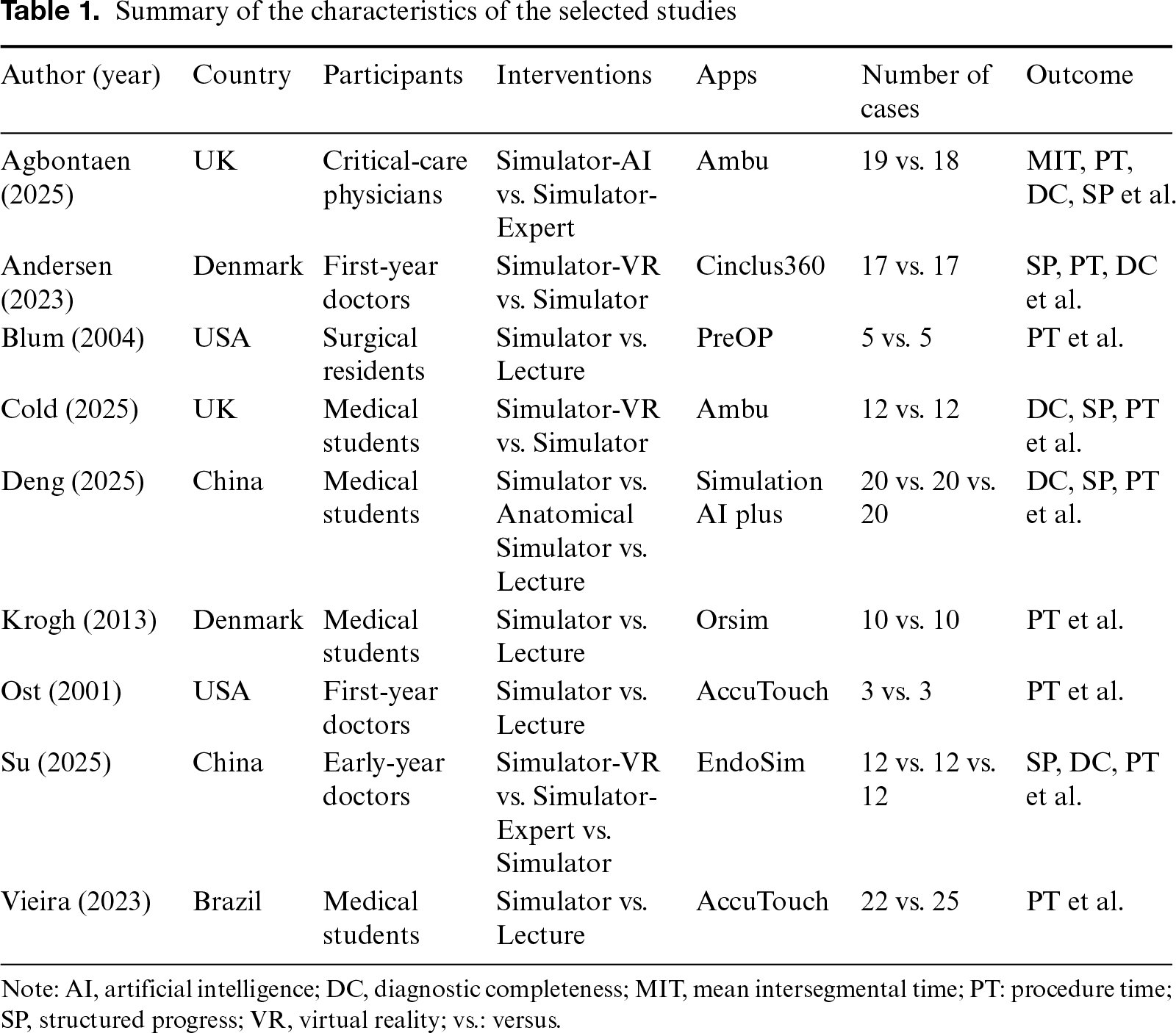
After searching the databases, a total of 1,014 articles were identified (Fig. 1). After removing 117 duplicate records, 879 articles underwent the first screening, followed by 109 full-text articles in the second screening. Finally, nine RCTs were included in the meta-analysis. Table 1 presents the characteristics of the selected studies.9,14–21 Nine studies published between 2001 and 2025 were included, comprising two studies each from the United Kingdom, the United States of America, China, and Denmark, as well as one study from Brazil. The studies involved critical-care physicians, first-year doctors, surgical residents, and medical students. Bronchoscopy training was primarily delivered through simulation-based platforms, including devices such as Ambu BPS, AccuTouch, PreOP, EndoSim, and Orsim. Interventions constituted standard simulator-based training alone (Simulator), an anatomical simulator with variations (Anatomical Simulator), simulator training combined with AI (Simulator-AI), VR-assisted simulation (Simulator-VR), simulator training with expert guidance (Simulator-Expert), and traditional lecture-based teaching (Lecture). The outcomes primarily evaluated bronchoscopy performance and training efficiency, PT, DC, and SP, including mean intersegmental time, bronchoscopy quality scores, and simulator performance metrics. Sample sizes per study arm ranged from three to 25 participants.
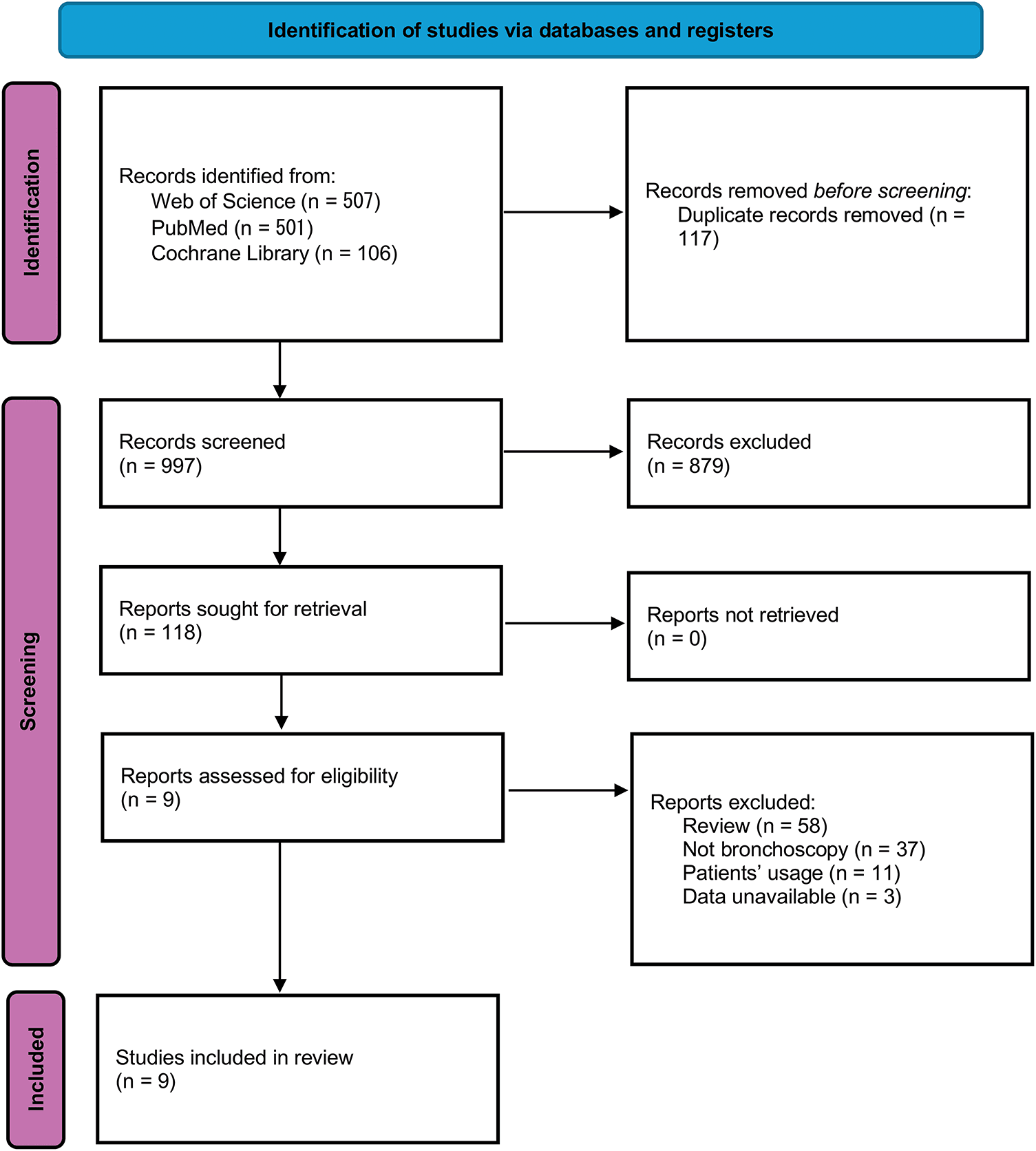
Figure 1. Flowchart of the study selection.
PT
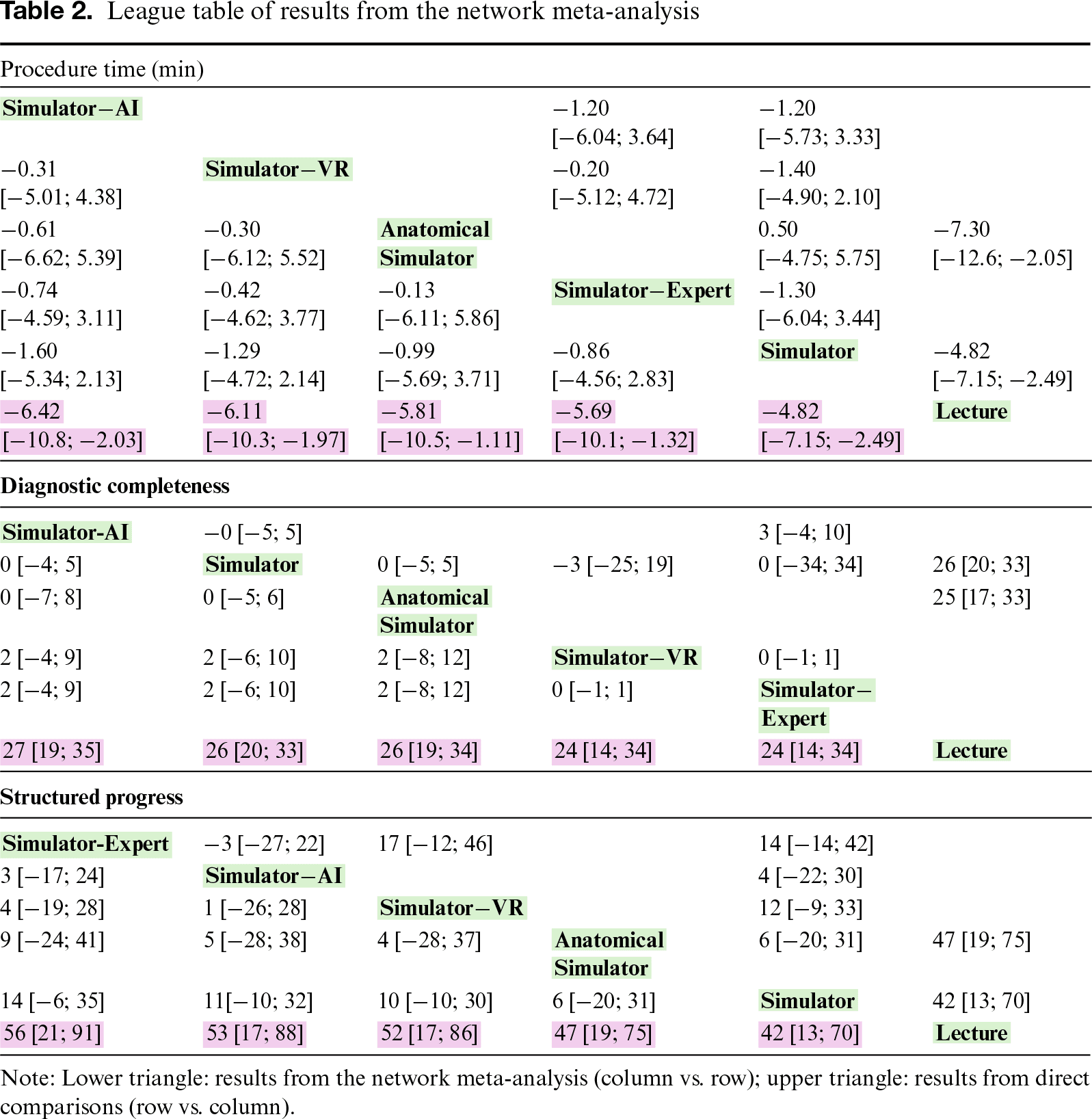
A total of 14 pairs of comparisons were included to evaluate different strategies in bronchoscopy education (Fig. 2A). Direct comparisons revealed that Simulator-AI achieved the shortest PT when compared with Lecture, with an MD of −6.62 minutes (95% CI [−10.8, −2.03]), followed by Simulator-VR and Anatomical Simulator training (Fig. 3A). In the network meta-analysis, Simulator-AI, Simulator-VR, Anatomical Simulator, Simulator-Expert, and Simulator were all superior to Lecture alone, with MDs of −6.42 (95% CI [−10.8, −2.03]), −6.11 (95% CI [−10.3, −1.97]), −5.81 (95% CI [−10.5, −1.11]), −5.69 (95% CI [−10.1, −1.32]), and −4.82 (95% CI [−7.15, −2.49]) minutes, respectively (Table 2). However, Simulator-AI, Simulator-VR, and Simulator-Expert did not demonstrate significant superiority over Simulator alone.
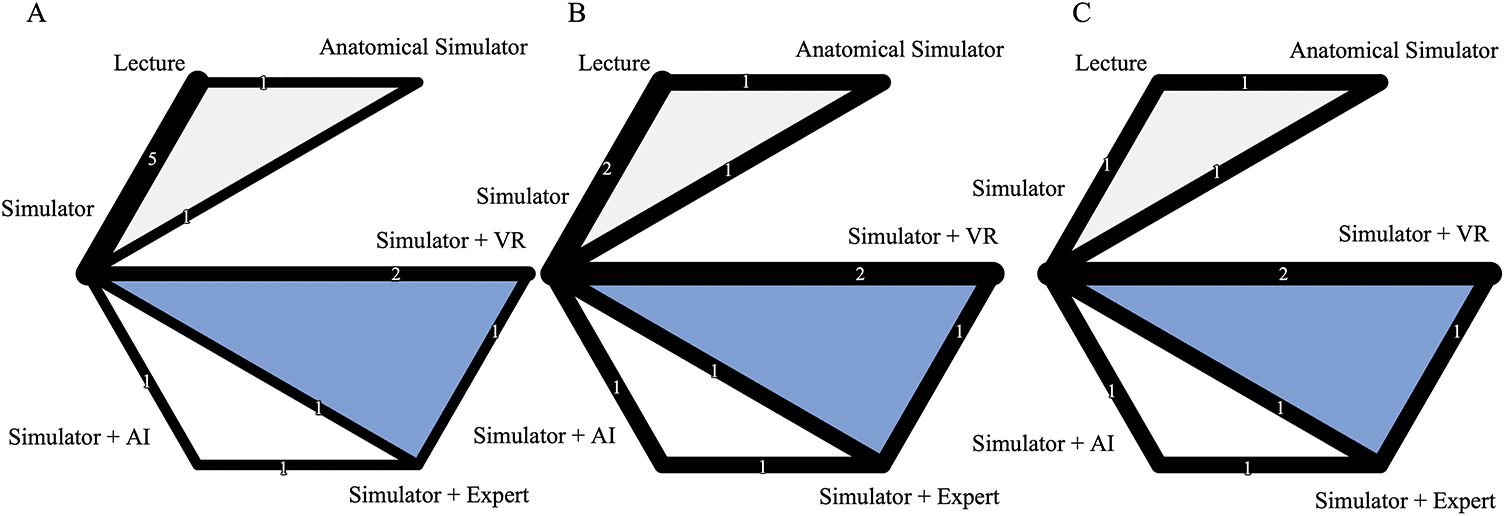
Figure 2. Network plots of the selected studies. (A) Procedure time; (B) diagnostic completeness; (C) structured progress. AI, artificial intelligence; VR, virtual reality.
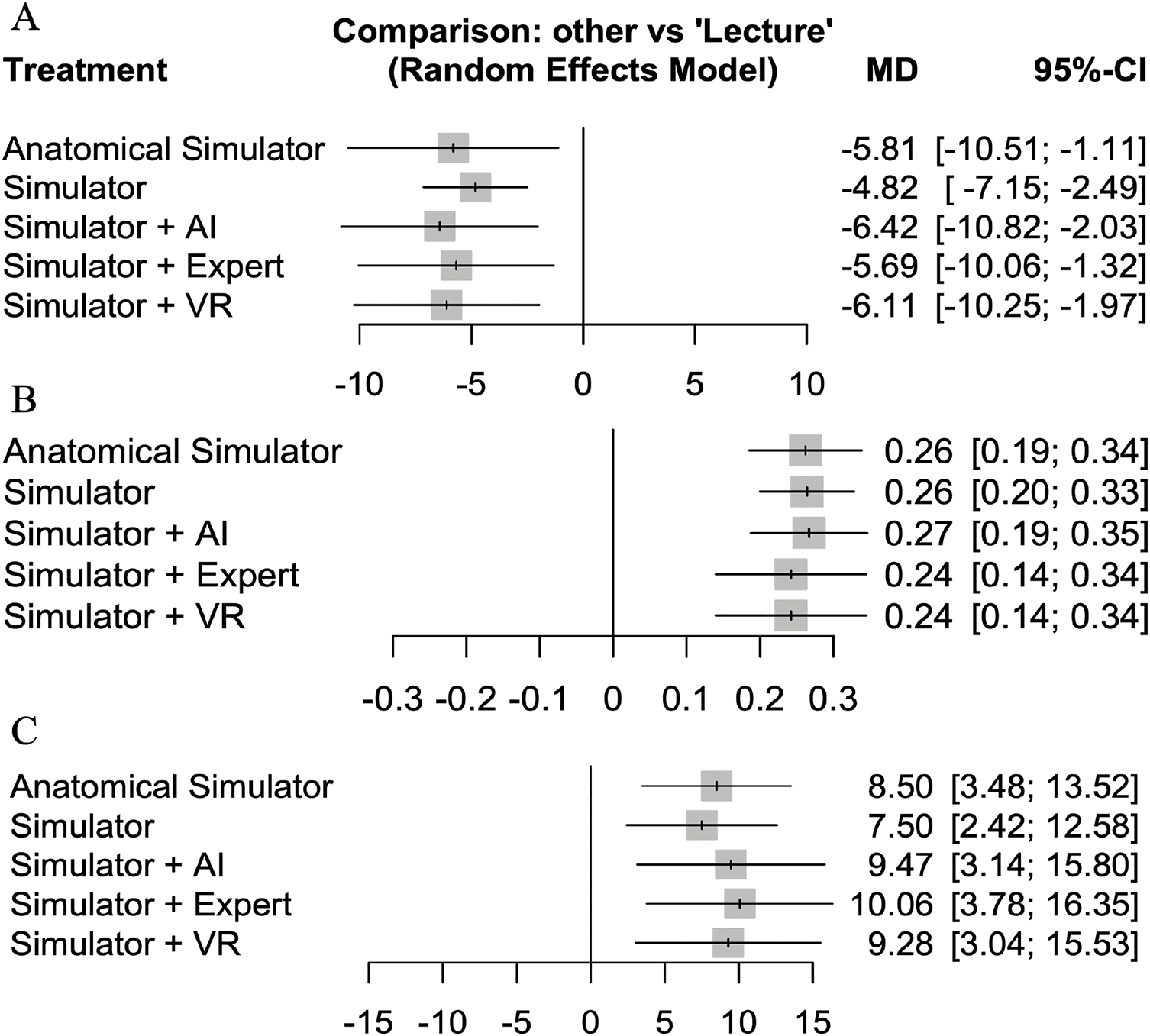
Figure 3. Direct pairwise comparisons of all outcomes. (A) Procedure time; (B) diagnostic completeness; (C) structured progress. AI, artificial intelligence; CI, confidence interval; MD, medan difference.
Treatment ranking based on SUCRA indicated that Simulator-AI had the highest probability of being the most effective intervention (SUCRA = 0.71), followed by Simulator-VR (0.66), Anatomical Simulator (0.61), Simulator-Expert (0.59), and Simulator alone (0.41), whereas Lecture-based teaching ranked the lowest (0.00) (Fig. S1). Cochran’s Q test indicated significant heterogeneity across the network (Q = 50.7, degrees of freedom [df] = 6, p < 0.01), mainly driven by within-design variability (Q = 38.6, df = 3, p < 0.01), particularly in Lecture versus Simulator comparisons. Although between-design inconsistency was initially significant (Q = 12.1, df = 3, p < 0.01), the design-by-treatment interaction random-effects model showed no significant global inconsistency (Q = 1.11, df = 3, p = 0.77). Node-splitting analysis further demonstrated no significant disagreement between direct and indirect evidence (all p > 0.20), indicating good consistency within the network.
DC
A total of 10 pairs of comparisons were included to evaluate different strategies in bronchoscopy education (Fig. 2B). Direct comparisons showed that Simulator-AI achieved the highest DC compared with Lecture, with an MD of 27% (95% CI [19%–35%]), followed by Simulator and Anatomical Simulator training (Fig. 3B). In the network meta-analysis, Simulator-AI, Simulator, Anatomical Simulator, Simulator-VR, and Simulator-Expert were all superior to Lecture alone, with MDs of 27% (95% CI [19%–35%]), 26% (95% CI [20%–33%]), 26% (95% CI [19%–34%]), 24% (95% CI [14%–34%]), and 24% (95% CI 14%–34%), respectively (Table 2). Overall, all simulator-based strategies demonstrated better diagnostic performance than lecture-based teaching. However, the performance among Simulator alone and simulator-based combinations (AI, VR, or expert guidance) was comparable, with no clear superiority observed between these approaches.
Ranking based on the SUCRA showed that Simulator-AI had the highest probability of being the most effective intervention for DC (SUCRA = 0.72), followed by Simulator (0.70) and Anatomical Simulator (0.65). Simulator-VR (0.47) and Simulator-Expert (0.46) demonstrated moderate rankings, while Lecture was ranked the lowest (SUCRA = 0.00) (Fig. S2). Assessment of heterogeneity using Cochran’s Q statistic showed no significant heterogeneity or inconsistency across the network (Q = 2.49, df = 3, p = 0.48). Moreover, the design-by-treatment interaction model similarly indicated no evidence of inconsistency (p = 0.48, τ2 = 0). Further, node-splitting analysis demonstrated no significant disagreement between direct and indirect evidence for any comparison (all p > 0.13), thus supporting the overall consistency of the network meta-analysis.
SP
A total of nine pairs of comparisons were included to evaluate different strategies in bronchoscopy education (Fig. 2C). Direct comparisons showed that Simulator-Expert achieved the highest SP compared with Lecture, with an MD of 56% (95% CI [21%–91%]), followed by Simulator-AI and Simulator-VR training (Fig. 3C). In the network meta-analysis, Simulator-Expert, Simulator-AI, Simulator-VR, Anatomical Simulator, and Simulator were all superior to Lecture alone, with MDs of 56% (95% CI [21%–91%]), 53% (95% CI [17%–88%]), 52% (95% CI [17%–86%]), 47% (95% CI [19%–75%]), and 42% (95% CI [13%–70%]), respectively (Table 2). Overall, all simulator-based strategies demonstrated better diagnostic performance than lecture-based teaching. However, the performance among Simulator alone and simulator-based combinations (AI, VR, or expert guidance) was comparable, with no clear superiority observed between these approaches.
Treatment ranking based on the SUCRA indicated that Simulator-Expert had the highest probability of being the most effective intervention (SUCRA = 0.77), followed by Simulator-AI (0.68), Simulator-VR (0.65), Anatomical Simulator (0.54), and Simulator alone (0.36), while Lecture ranked lowest (0.00) (Fig. S3). Assessment of heterogeneity using Cochran’s Q statistic revealed significant inconsistency across the network (Q = 9.17, df = 2, p = 0.010), suggesting the presence of between-design heterogeneity. However, node-splitting analysis demonstrated no significant disagreement between direct and indirect evidence for any comparison (all p > 0.14), indicating acceptable local consistency within the network meta-analysis.
Risk of Bias and Publication Bias
The risk-of-bias assessments are presented in Fig. S4. Although all included studies were RCTs, some domains raised concerns, primarily because blinding of participants and personnel was difficult to implement given the nature of the educational interventions. Therefore, the overall interpretation was that the studies were subject to some concerns in risk of bias, rather than uniformly high risk across all domains. Only nine studies were included in the final analysis, and the sparse network limited the reliability and statistical power of publication-bias assessments. Using the simulator group as the reference, Egger’s test was performed for PT, DC, and SP (Figs. S5–S7). For these outcomes, no clear evidence of publication bias was identified; however, these findings should be interpreted cautiously given the small number of included studies and the limited sensitivity of such tests in this setting.
Discussion
This network meta-analysis of RCTs evaluating bronchoscopy training strategies found that all simulation-based educational approaches significantly improved bronchoscopy performance compared to traditional lecture-based instruction. Among the evaluated strategies, Simulator-AI and Simulator-Expert frequently ranked the highest; however, differences between these advanced simulator configurations and conventional simulator training were generally modest. These findings suggest that the primary educational benefit arises from simulation-based procedural practice itself, whereas technological enhancements, such as AI, VR, or expert feedback, may provide incremental but not consistently superior advantages. Engagement in structured simulation training is the key determinant of improved bronchoscopy performance, while technological enhancements appear to offer supportive rather than transformative benefits. Therefore, training programs should prioritize well-designed simulation curricula, deliberate practice, and competency-based assessment rather than focusing primarily on the technological sophistication of the simulation platform.
Our results support the growing body of literature focusing on the importance of simulation-based training in bronchoscopy education.22 Traditional apprenticeship-based training relies on patient-based procedural exposure, which has become increasingly constrained by duty-hour regulations, patient safety considerations, and variability in procedural volume. Simulation provides a controlled environment for deliberate practice, allowing trainees to develop fundamental bronchoscopy skills such as airway navigation, scope manipulation, and systematic airway examination without risk to patients.23 Consistent with previous studies, our analysis demonstrates that simulation training significantly improves PT, DC, and SP compared to lecture-based teaching, emphasizing the importance of experiential procedural learning.24,25
Among the evaluated strategies, Simulator-AI ranked the highest for PT and DC, suggesting that automated feedback systems may facilitate early skill acquisition by providing real-time analysis of procedural performance and individualized feedback. However, Simulator-AI did not consistently outperform standard simulator training in direct comparisons, indicating that its added benefit may depend on trainee experience or curriculum design. Simulator-VR also ranked favorably for PT, likely due to immersive visualization and dynamic airway environments, but likewise showed no clear advantage over conventional simulator training. In contrast, Simulator-Expert ranked the highest for SP, underscoring the importance of expert-guided feedback for teaching nuanced bronchoscopy techniques and clinical decision-making. Although AI- and VR-enhanced simulators may provide incremental benefits, their adoption should be weighed against likely higher implementation costs, resource requirements, and educational return on investment. As no formal cost-effectiveness analyses were reported in the included studies, future research should address whether these modest gains justify wider use.
Although the included studies involved different learner populations and simulator platforms, indirect comparisons were considered reasonable because all interventions targeted the same procedural skill, were delivered in broadly comparable educational settings, and were evaluated using similar outcomes, supporting the transitivity assumption of the network meta-analysis. In addition, the network showed generally acceptable consistency: heterogeneity was low for DC, while greater heterogeneity was observed for PT and SP, particularly in comparisons involving lecture-based instruction; however, no significant inconsistency was found between direct and indirect evidence. A likely contributor to this heterogeneity was inconsistency in lecture-based instruction across studies, including differences in content, duration, instructional format, and its integration with practical training. Overall, these findings support the robustness of the network estimates, although further large multicenter RCTs are needed to assess emerging simulation technologies, long-term skill retention, transfer to clinical practice, and cost-effectiveness.
The limitations of the present study should be acknowledged. First, the number of included trials was limited, and individual studies involved relatively small sample sizes, which may reduce the precision of treatment rankings. Second, participant populations varied across studies, including medical students, residents, and practicing physicians, potentially introducing variability in baseline procedural skills. Third, the simulator platforms differed substantially, ranging from early mechanical simulators to modern VR- and AI-enhanced systems, which may introduce technological heterogeneity. Finally, blinding was not feasible due to the nature of educational interventions, resulting in an inherent risk of performance bias.
Conclusion
Simulation-based bronchoscopy training significantly improves PT, DC, and SP compared to lecture-based teaching alone. While advanced technologies such as AI-assisted and VR-enhanced simulation show favorable rankings, their advantages over conventional simulator training appear limited. These findings support the integration of structured simulation-based curricula as a fundamental component of bronchoscopy education, with technological innovations serving as complementary tools to enhance training rather than replace core simulation practice.
Acknowledgment
None.
Funding Source
This research received no external funding.
Author Contributions
J.M., S.K., and Y.Z. contributed to the literature search, quality assessment, data extraction, and manuscript drafting. T.M. and Z.W. were responsible for data interpretation and manuscript revision. All authors have read the manuscript and agree with its content and data.
Data Availability
The data supporting this study’s findings are available from the corresponding author upon reasonable request.
Ethical Statement
Institutional Review Board approval was waived due to the nature of the meta-analysis.
Conflict of Interest
The authors report no conflicts of interest in this work.
Generative AI Declaration
During the preparation of this manuscript, the authors used ChatGPT to assist with proofreading. All content was subsequently reviewed and edited by the authors, who assume full responsibility for the accuracy and integrity of the published work.
Supplemental Information
Supplemental information for this article can be found online at https://sup.jclinque.com/api/articles/111/download-suppl.
References
[1] Gupta S, Ghiathi C, DiBardino D, et al. Effect of interventional pulmonology fellowships on pulmonary critical care fellows’ core bronchoscopy competencies. ATS Scholar. 2025;6(2):179–190. doi:10.34197/ats-scholar.2024-0079OC.
[2] Chandrika S, Yarmus L. Recent developments in advanced diagnostic bronchoscopy. Eur Respir Rev. 2020;29(157):190184. doi:10.1183/16000617.0184-2019.
[3] Vuong RQ, Nicely P, Velu D. Chapter 13—procedural technique development. In: Eltorai AEM, Hartnett DA, Bakal JA, Tereshchenko LG (Eds.), Translational Pulmonology. Academic Press; 2025:65–70.
[4] Cold KM, Vamadevan A, Laursen CB, Bjerrum F, Singh S, Konge L. Artificial intelligence in bronchoscopy: a systematic review. Eur Respir Rev. 2025;34(176):240274. doi:10.1183/16000617.0274-2024.
[5] Shore D, Patel P, Ahmad D. Assessment of bronchoscopy training and competency: a narrative review. AME Med J. 2024;9:16. doi:10.21037/amj-23-147.
[6] Sachdeva A, Sethi S. Motivation and learning: leveraging artificial intelligence to improve bronchoscopy performance. CHEST. 2024;165(2):243–245. doi:10.1016/j.chest.2023.09.018.
[7] Gerretsen ECF, Groenier M, Annema JT, et al. Basic bronchoscopy competence achieved by a nationwide one-day simulation-based training. J Bronchology Interv Pulmonol. January 1, 2025;32(1):3826. doi:10.1097/lbr.0000000000000995.
[8] Fu R, Hone NG, Broadbent JR, Guy BJ, Young JS. Dynamic three-dimensional printing: the future of bronchoscopic simulation training? Anaesth Intensive Care. Jul 2023;51(4):274–280. doi:10.1177/0310057x231154015.
[9] Andersen AG, Rahmoui L, Dalsgaard TS, et al. Preparing for reality: a randomized trial on immersive virtual reality for bronchoscopy training. Respiration. 2023;102(4):316–323. doi:10.1159/000528319.
[10] Wong DT, Mehta A, Singh KP, et al. The effect of virtual reality bronchoscopy simulator training on performance of bronchoscopic-guided intubation in patients: a randomised controlled trial. Eur J Anaesthesiol. March 2019;36(3):227–233. doi:10.1097/eja.0000000000000890.
[11] Sorbello M, La Via L, Paternò DS, et al. Artificial intelligence in airway management: a narrative review. Br J Anaesthesia. February 4, 2026. doi:10.1016/j.bja.2025.12.052.
[12] Okachi S, Sakurai M, Matsui T, et al. The application of mixed reality in bronchoscopy simulation training: a feasibility study. Surg Innov. October 2023;30(5):685–686. doi:10.1177/15533506231160201.
[13] Ye Z. Comparative effectiveness of simulation-based bronchoscopy training strategies: a network meta-analysis of randomized controlled trials. Open Sci Framew. doi:10.17605/OSF.IO/QSBM9.
[14] Agbontaen KO, Cold KM, Woods D, et al. Artificial intelligence-guided bronchoscopy is superior to human expert instruction for the performance of critical-care physicians: a randomized controlled trial. Crit Care Med. May 1, 2025;53(5):e1105–e1115. doi:10.1097/ccm.0000000000006629.
[15] Blum MG, Powers TW, Sundaresan S. Bronchoscopy simulator effectively prepares junior residents to competently perform basic clinical bronchoscopy. Ann Thorac Surg. July 2004;78(1):287–291. doi:10.1016/j.athoracsur.2003.11.058.
[16] Cold KM, Wei W, Agbontaen K, Singh S, Konge L. Mastery learning guided by artificial intelligence is superior to directed self-regulated learning in flexible bronchoscopy training: an RCT. Respiration. 2025;104(3):206–215. doi:10.1159/000542045.
[17] Deng M, Li F, Tang F, et al. Digital twin-based bronchoscopy simulator improves training performance and skill retention of novices: a randomised controlled study. Thorax. November 9, 2025. doi:10.1136/thorax-2025-223147.
[18] Krogh CL, Konge L, Bjurström J, Ringsted C. Training on a new, portable, simple simulator transfers to performance of complex bronchoscopy procedures. Clin Respir J. July 2013;7(3):237–244. doi:10.1111/j.1752-699X.2012.00311.x.
[19] Ost D, DeRosiers A, Britt EJ, Fein AM, Lesser ML, Mehta AC. Assessment of a bronchoscopy simulator. Am J Respir Crit Care Med. December 15, 2001;164(12):2248–2255. doi:10.1164/ajrccm.164.12.2102087.
[20] Su P, He H, Liang Y, et al. Feedback from human instructors is superior to guidance by a virtual reality simulator when learning flexible bronchoscopy: a randomized controlled trial. Respiration. 2025;104(10):701–707. doi:10.1159/000546827.
[21] Vieira LMN, Ibiapina CDC, Camargos PAM, Brand PLP. Simulation-based bronchoscopy training: randomized trial comparing worked example to video introduction. Pediatr Pulmonol. November 2023;58(11):3227–3234. doi:10.1002/ppul.26648.
[22] Gerretsen EC, Strauch U, Groenier M, van Mook WN, Smeenk FW, Segers RP. Development, implementation and evaluation of a bronchoscopy simulation training program for intensive care Fellows and intensivists in the Netherlands. Anaesth Intensive Care. November 2025;53(6):369–378. doi:10.1177/0310057x251337756.
[23] Gerretsen ECF, Chen A, Annema JT, et al. Effectiveness of flexible bronchoscopy simulation-based training: a systematic review. CHEST. November 1, 2023;164(4):952–962. doi:10.1016/j.chest.2023.05.012.
[24] Milesi J, Tronchetti J, Lovato JB, Nguyen NAT, Dutau H, Astoul P. Learning gain during a fast self-driven bronchoscopy simulation training: a preliminary study comparing low and high-fidelity models. J Bronchol Interv Pulmonol. 2024;31(3):e0972. doi:10.1097/LBR.0000000000000972.
[25] Bejani M, Taghizadieh A, Samad-Soltani T, Asadzadeh A, Rezaei-Hachesu P. The effects of virtual reality-based bronchoscopy simulator on learning outcomes of medical trainees: a systematic review. Health Sci Rep. July 2023;6(7):e1398. doi:10.1002/hsr2.1398.
 |
Copyright: © 2026 Ma et al. This work is licensed under a Creative Commons Attribution 4.0 International License, which permits unrestricted use, distribution, and reproduction in any medium, provided the original work is properly cited. |