| Journal of Clinical Question. 2026; 3(1): e107 https://doi.org/10.69854/jcq.2026.0001 Advance access publication date 16 February 2026 |
 |
Meta-Analysis
Comparative Effectiveness of Monoclonal Antibody Prophylaxis for Preventing Severe Respiratory Syncytial Virus Infection in Infants: A Network Meta-Analysis
Tetsuya Nosho, Yukiho Otsu, Miri Nomura, Yumeng Zhang *
*
Department of Pediatrics, Faculty of Medicine, Saga University, Saga, Japan.
*Corresponding Author: email: yumeng1990228@gmail.com
Submitted: January 01, 2026 Accepted: February 15, 2026
Clinical Question Box
Which monoclonal antibody demonstrates the most favorable balance of effectiveness and safety for respiratory syncytial virus (RSV) prophylaxis across clinically relevant outcomes?
There is moderate-to-high certainty of evidence that monoclonal antibodies are superior to placebo or standard care for the prophylaxis of serious RSV infection. Compared to palivizumab, nirsevimab and clesrovimab demonstrated equal or greater efficacy in preventing RSV-associated hospitalization, medically attended RSV-associated lower respiratory tract infection (LRTI), and severe RSV-associated LRTI in both the general population and high-risk infants. Across all agents, no monoclonal antibody was associated with an increased risk of treatment-related adverse events, indicating comparable safety profiles.
Abstract
Introduction: Respiratory syncytial virus (RSV) is a leading cause of lower respiratory tract infetion (LRTI) and hospitalization in infants and young children. Passive immunization with monoclonal antibodies represents a major strategy for RSV prevention. While palivizumab has been used for over two decades in high-risk infants, recently long-acting monoclonal antibodies such as nirsevimab and clesrovimab have been approved for clinical use. Methods: A systematic literature search was conducted in databases until November 27, 2025. Randomized controlled trials (RCTs) evaluating monoclonal antibody prophylaxis for RSV were included. Outcomes included RSV-associated hospitalization, medically attended RSV-associated lower respiratory tract infection (LRTI), severe RSV-associated LRTI, and treatment-associated adverse events (AEs). Odds ratios (ORs) and 95% confidence intervals (CIs) were calculated. Results: Thirteen RCTs involving 21,505 participants were included. All three intramuscular monoclonal antibodies—palivizumab, nirsevimab, and clesrovimab—significantly reduced RSV-associated hospitalization, medically attended RSV-associated LRTI, and severe RSV-associated LRTI compared with control, whereas experimental intranasal palivizumab was ineffective. Both clesrovimab and nirsevimab were more effective than palivizumab in preventing RSV-associated hospitalization (OR 0.45, 95% CI 0.23–0.87 and OR 0.47, 95% CI 0.28–0.76, respectively). For medically attended RSV-associated LRTI, nirsevimab demonstrated the greatest efficacy (OR 0.23, 95% CI 0.16–0.32), followed by palivizumab (OR 0.27, 95% CI 0.16–0.45) and clesrovimab (OR 0.37, 95% CI 0.27–0.51). In preventing severe RSV-associated LRTI, clesrovimab and nirsevimab were more effective than palivizumab (OR 0.18, 95% CI 0.10–0.32 and OR 0.55, 95% CI 0.32–0.94, respectively). No monoclonal antibody was associated with an increased risk of treatment-associated AEs. Conclusion: Nirsevimab and clesrovimab, long-acting monoclonal antibodies, provide efficacy comparable to or greater than that of palivizumab for preventing serious RSV infection in infants, without an increased risk of AEs.
Keywords: Respiratory syncytial virus, Lower respiratory tract infection, Palivizumab, Nirsevimab, Clesrovimab, Network meta-analysis.
Introduction
Respiratory syncytial virus (RSV) circulates annually in seasonal epidemics, with RSV A and RSV B subtypes co-circulating worldwide.1 Up to 90% of children are infected with RSV at least once in the first 2 years of life, and RSV represents a leading cause of lower respiratory tract infection (LRTI) and hospitalization in this population.2,3 Although severe RSV disease disproportionately affects high-risk infants, such as preterm infants and those with chronic lung disease (CLD) of prematurity, congenital heart disease (CHD), or immunocompromising conditions, severe RSV infection can also occur in otherwise healthy infants without underlying comorbidities.4 To date, treatment options for RSV infection are limited, with clinical management relying largely on supportive care.5 Consequently, RSV continues to contribute substantially to infant morbidity and mortality worldwide and imposes a considerable burden on healthcare systems and society, underscoring the need for effective preventive strategies.6
Three major approaches are available for RSV prevention: active immunization of infants, maternal vaccination during pregnancy, and passive immunization using monoclonal antibodies (mAbs).7–9 Progress in the development of active RSV vaccines for infants has been limited, partly due to concerns regarding insufficient efficacy and the risk of vaccine-enhanced respiratory disease.10 Maternal vaccination aims to protect infants through transplacental transfer of RSV-specific antibodies, and a bivalent RSV prefusion protein vaccine has recently been approved.11 However, antibody transfer is reduced in preterm infants, who are among the populations at highest risk of serious RSV disease.12 Moreover, effective maternal vaccination is highly dependent on the timing of vaccination during pregnancy and is sensitive to regional and seasonal variability in RSV circulation.13 Economic evaluations further suggest that maternal RSV vaccination may avert fewer RSV-related clinical events and provide less consistent cost-effectiveness compared to mAb preventive strategies.14
Passive immunization with mAbs has therefore emerged as a central approach to RSV prevention. Palivizumab, a humanized murine mAb targeting antigenic site II of the RSV fusion (F) protein, has served as the standard prophylaxis for high-risk infants for more than two decades.15,16 Although palivizumab has demonstrated favorable efficacy and safety, its requirement for monthly dosing throughout the RSV season limits its feasibility and cost-effectiveness. Several second-generation mAbs, including motavizumab and suptavumab, were subsequently developed but discontinued after failing to demonstrate sufficient clinical benefit in late-phase trials.17 More recently, nirsevimab, a long-acting mAb targeting antigenic site Ø of the RSV prefusion F protein, has been approved for routine infant prophylaxis and provides single-dose protection across an RSV season.18 Additionally, clesrovimab, another long-acting mAb that targets antigenic site IV of the RSV F protein and exhibits an extended half-life of approximately 45 days, has shown promising efficacy in recent randomized controlled trials (RCTs) and was approved by the US Food and Drug Administration in 2025.19
Despite the increasing availability of mAb-based prophylactic options, their relative efficacy and safety remain uncertain, as direct head-to-head comparisons are limited. To address this evidence gap, robust comparative analyses that integrate both direct and indirect evidence are required. Accordingly, this systematic review and network meta-analysis synthesizes data from RCTs to evaluate the efficacy and safety of mAb prophylaxis for preventing RSV-associated LRTI and hospitalization in infants and young children. By combining direct and indirect comparisons, we aim to establish a comparative hierarchy of available mAb therapies based on clinical effectiveness and safety, thereby informing clinical decision-making, guiding future research, and clarifying optimal strategies for the prevention of severe RSV infection.
Methods
Study Design and Registration
This systematic review and network meta-analysis was conducted per the Preferred Reporting Items for Systematic Reviews and Meta-Analyses (PRISMA) guidelines and the PRISMA extension for network meta-analysis. The study protocol was registered with the University Hospital Medical Information Network (UMIN000060139) before data extraction.20 As this study involved a secondary analysis of published data, ethical approval and informed consent were not required.
Eligibility Criteria
Studies were selected based on predefined inclusion and exclusion criteria. Eligible studies met the following criteria: (1) participants younger than 2 years; (2) evaluation of mAb prophylaxis for RSV; and (3) placebo or standard care in the control group of an RCT study design. Studies were excluded if they (1) included fewer than 10 participants in any study arm; (2) represented subgroup or post hoc analyses of previously published trials; or (3) focused on discontinued medicines such as motavizumab or suptavumab.
Information Sources and the Search Strategy
A comprehensive literature search was conducted in PubMed, Embase, the Cochrane Library, and Web of Science from database inception to November 27, 2025. The search strategy combined terms related to the intervention, such as “mAb,” “palivizumab,” “nirsevimab,” and “clesrovimab.” The participants were identified by “respiratory syncytial virus” or “RSV,” and the control was identified by “randomized controlled trial,” “placebo,” or “control.” Reference lists of relevant articles and gray literature were also manually searched to identify additional eligible studies.
Study Selection, Data Extraction, and Quality Assessment
Two reviewers (T.N. and Y.O.) independently screened titles and abstracts for eligibility. Full-text articles were then assessed per the predefined inclusion and exclusion criteria. Any disagreements were resolved through discussion or consultation with a third reviewer (Y.Z.). The study selection process was documented using a PRISMA flow diagram, detailing the number of studies identified, screened, included, and excluded at each stage. Two reviewers independently extracted data through a standardized data extraction form. Extracted information included study characteristics (author, publication year, study design, and sample size), participant characteristics (age, weight, sex, gestational age, and risk factors), and intervention details (type of mAb, dose, route of administration, and dosing frequency). Comparator interventions were categorized as placebo or standard care.
Definition and Outcomes
The control group was defined as either placebo or standard care. High-risk infants were defined as preterm infants or those with CLD or CHD. Severe RSV-associated LRTI was defined as LRTI requiring high-flow nasal cannula, oxygen by face mask, mechanical ventilatory support, or admission to the intensive care unit. Outcomes included RSV-associated hospitalization, medically attended RSV-associated LRTI, severe RSV-associated LRTI, and treatment-associated AEs. We extracted participant-level outcomes from the first follow-up period only for each trial (the first RSV season or initial post-dose follow-up, ranging from 150 days to up to 1 year) and did not include repeated multi-season observations. No clustering adjustment was applied.
Statistical Analysis
Statistical analyses were performed using the “meta” and “netmeta” packages in R software. Random-effects models were applied for both pairwise and network meta-analyses to account for between-study heterogeneity. Direct comparisons were synthesized using inverse-variance weighting, and indirect comparisons were estimated through the Bucher method. Effect estimates were reported as odds ratios (ORs) with 95% confidence intervals (CIs) for dichotomous outcomes. The relative ranking of mAb prophylaxis strategies was assessed using the surface under the cumulative ranking curve (SUCRA), with higher values indicating greater efficacy or safety.
Heterogeneity, Consistency, and Certainty of Evidence Assessment
Statistical heterogeneity was assessed using the I² statistic, with values exceeding 50% indicating substantial heterogeneity. The risk of bias in individual studies was evaluated using the Cochrane Risk of Bias 2 tool, assessing potential bias arising from randomization, deviations from intended interventions, missing outcome data, outcome measurement, and selective reporting. Publication bias was explored using funnel plots where sufficient studies were available. Egger’s test was conducted if the number of studies was fewer than 10. The certainty of evidence for each outcome was assessed using the Grading of Recommendations Assessment, Development, and Evaluation (GRADE) framework, considering risk of bias, inconsistency, indirectness, imprecision, and publication bias.
Results
Study Selection and Characteristics
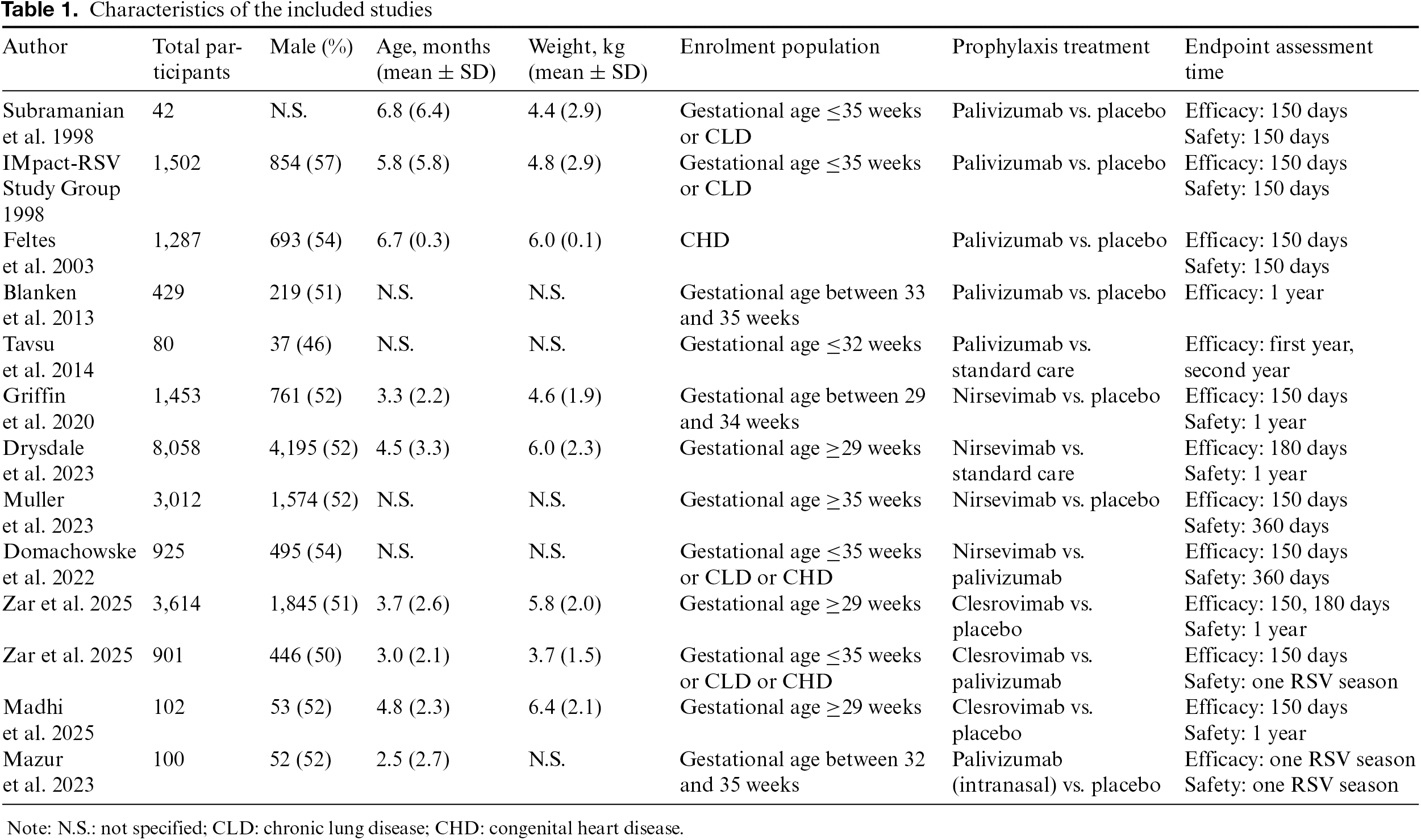
A total of 1,387 records were identified through database searches. After the removal of 343 duplicates, 848 records were excluded during title and abstract screening, and another 183 following full-text review. Thirteen RCTs comprising 21,505 participants from multiple countries were included in the final analysis (Fig. S1 and Table 1).15,21–32 Across the included studies, participant characteristics were similar between the intervention and control groups, with mean ages ranging from 2.5 to 6.8 months and mean weights from 3.7 to 6.4 kg. Study populations included term and preterm infants, as well as infants at increased risk for serious RSV disease, including those with CLD or CHD. Eight trials evaluated palivizumab, four evaluated nirsevimab, and three evaluated clesrovimab. Palivizumab was administered intramuscularly at 15 mg/kg monthly for five doses. Nirsevimab and clesrovimab were administered as a single intramuscular injection before the RSV season, with nirsevimab dosed at 50 mg for infants weighing <5 kg and 100 mg for those weighing ≥5 kg, and clesrovimab at a dose of 105 mg. One experimental study evaluated intranasal palivizumab, with a daily dose of 50 μg per nostril. Primary efficacy outcomes were assessed during one RSV season (approximately 150 days).
RSV-Associated Hospitalization
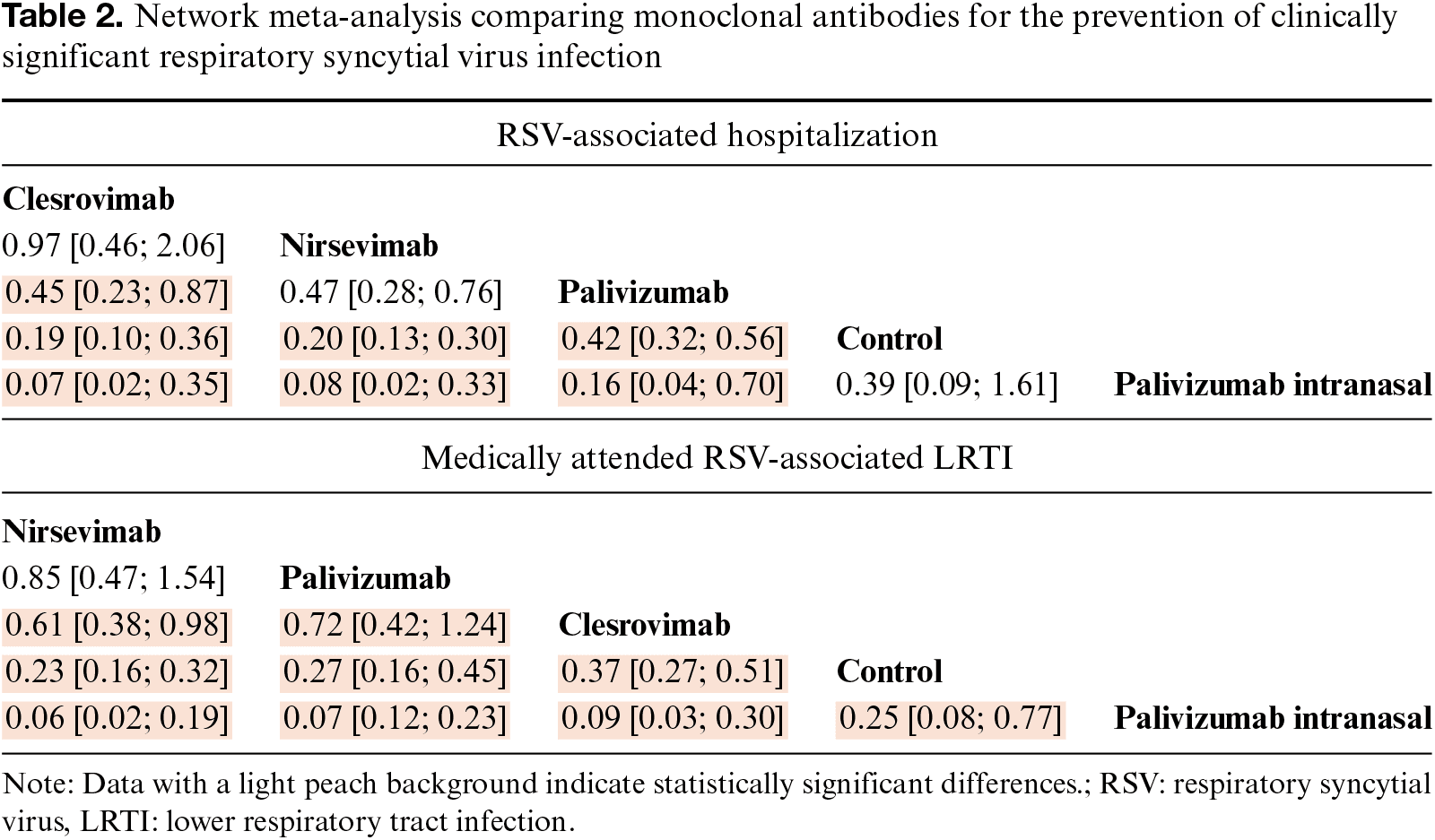
Fig. 1A displays the network plot of mAb prophylaxis strategies for preventing RSV-associated hospitalization. Thirteen studies compared the efficacy of different treatment regimens. Fig. 2A presents direct comparisons of estimated effects relative to control. Clesrovimab was associated with the largest reduction in hospitalization risk compared with control (OR 0.19, 95% CI 0.10–0.36), followed by nirsevimab (OR 0.20, 95% CI 0.13–0.30) and palivizumab (OR 0.42, 95% CI 0.32–0.56). Table 2 summarizes network meta-analysis estimates. Head-to-head comparisons suggested that both clesrovimab and nirsevimab outperformed palivizumab in preventing RSV-associated hospitalization (OR 0.45, 95% CI 0.23–0.87 and OR 0.47, 95% CI 0.28–0.76, respectively), while no statistically significant difference was identified between clesrovimab and nirsevimab. SUCRA values for RSV-associated hospitalization ranked clesrovimab highest (0.8788), followed by nirsevimab (0.8680) and palivizumab (0.5010) (Fig. S2). Minimal heterogeneity was observed, with I2 = 0%.
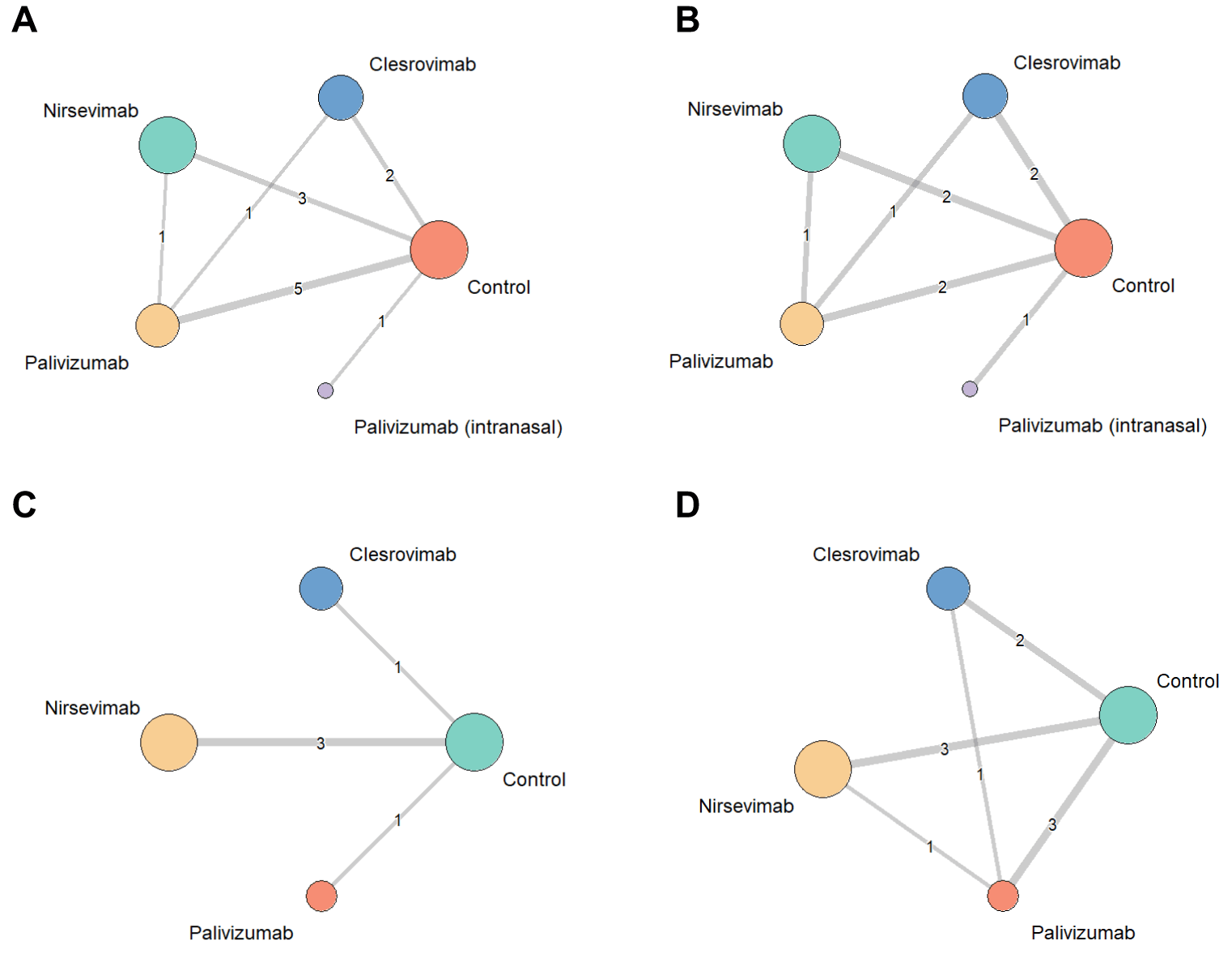
Figure 1. Network Plots of Enrolled Studies for Each Outcome. (A) Respiratory syncytial virus (RSV)-associated hospitalization; (B) medically attended RSV-associated lower respiratory tract infection; (C) severe RSV-associated lower respiratory tract infection; (D) treatment-associated adverse events.
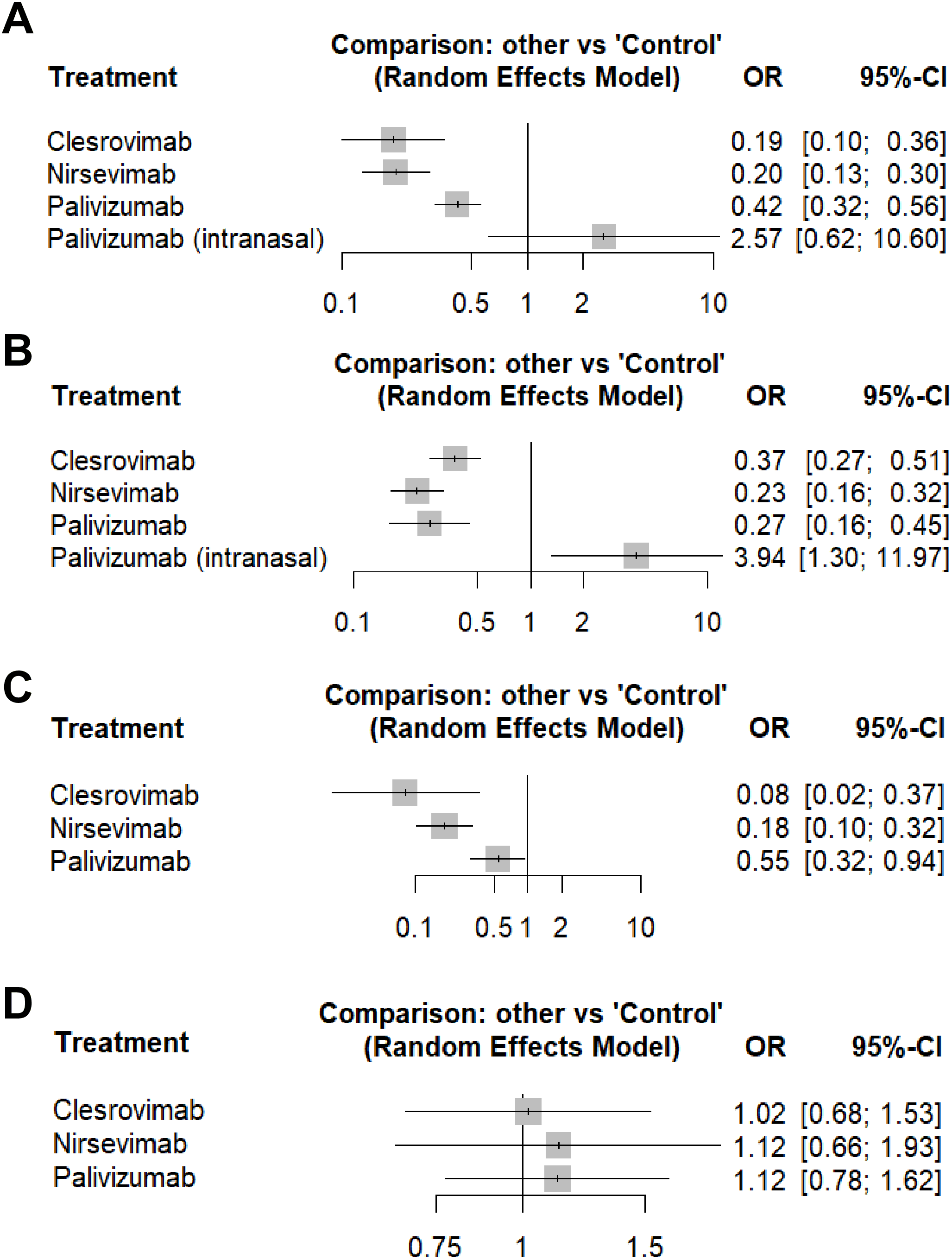
Figure 2. Direct Comparisons of Monoclonal Antibodies Versus Control across Outcomes. (A) Respiratory syncytial virus (RSV)-associated hospitalization; (B) medically attended RSV-associated lower respiratory tract infection; (C) severe RSV-associated lower respiratory tract infection; (D) treatment-associated adverse events.
RSV-Associated LRTI
Fig. 1B displays the network plot of mAb prophylaxis strategies for preventing medically attended RSV-associated LRTI. Nine studies compared the efficacy of different treatment regimens. Direct comparisons of estimated effects relative to control are presented in Fig. 2B. Nirsevimab demonstrated the greatest efficacy compared to control (OR 0.23, 95% CI 0.16–0.32), followed by palivizumab (OR 0.27, 95% CI 0.16–0.45) and clesrovimab (OR 0.37, 95% CI 0.27–0.51). Table 2 summarizes network meta-analysis estimates. In head-to-head comparisons, nirsevimab was significantly more effective than clesrovimab (OR 0.61, 95% CI 0.38–0.98), while no statistically significant differences were observed between nirsevimab and palivizumab or between clesrovimab and palivizumab. Ranking probabilities based on 1,000 simulations are shown in Fig. S3. The SUCRA values were highest for nirsevimab (0.9265), followed by palivizumab (0.7862) and clesrovimab (0.5372). No heterogeneity was observed, with I2 = 0%.
Severe RSV-Associated LRTI
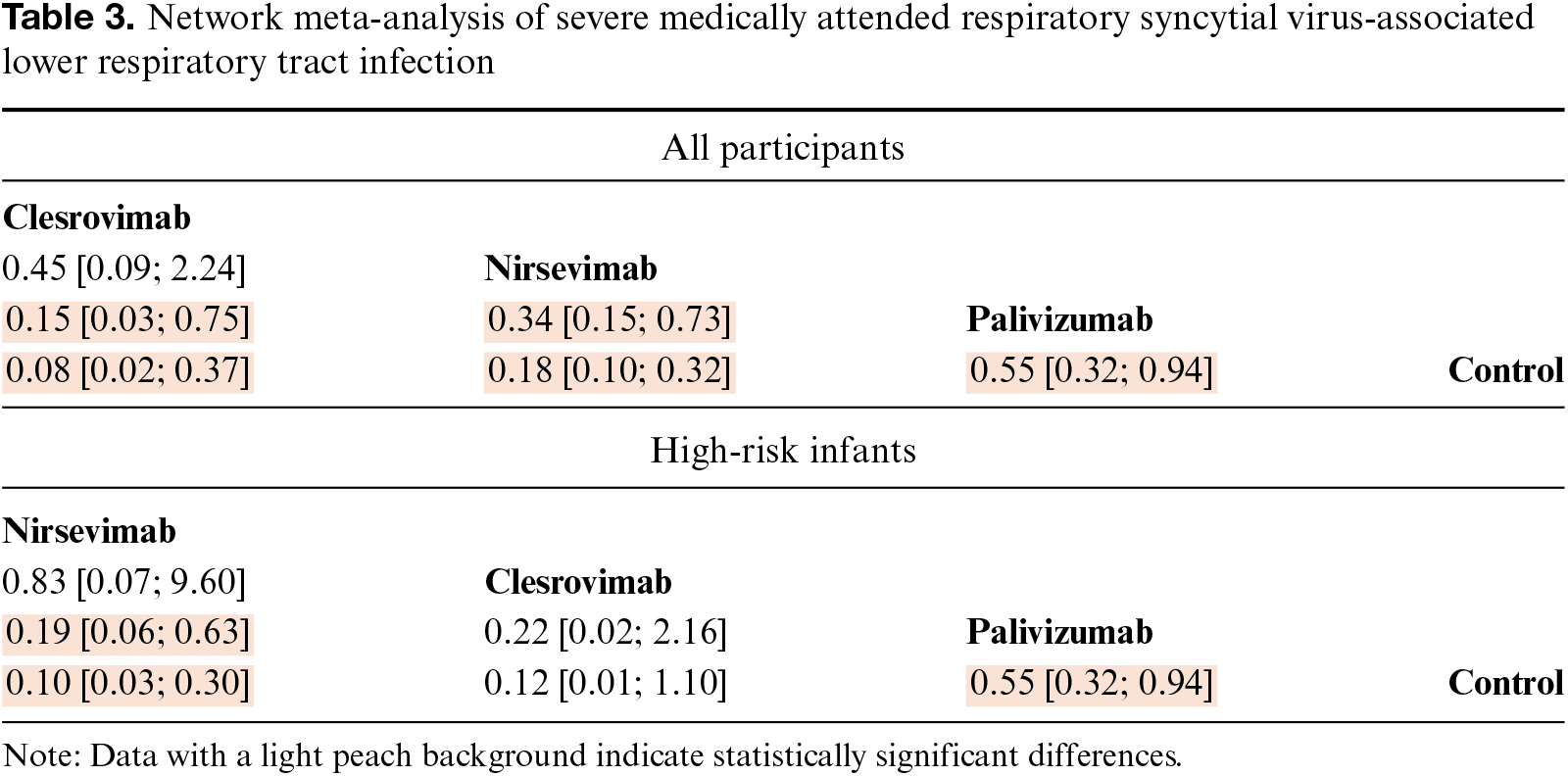
Fig. 1C presents the network plot of mAb prophylaxis strategies for preventing severe RSV-associated LRTI. Four studies compared the efficacy of different treatment regimens. Direct comparisons of estimated effects compared with control are presented in Fig. 2C. Among the intramuscular agents, clesrovimab showed the greatest protective effect relative to control (OR 0.08, 95% CI 0.02–0.37), followed by nirsevimab (OR 0.15, 95% CI 0.03–0.75) and palivizumab (OR 0.34, 95% CI 0.15–0.73). In head-to-head comparisons, both clesrovimab and nirsevimab were more effective than palivizumab (OR 0.18, 95% CI 0.10–0.32 and OR 0.55, 95% CI 0.32–0.94, respectively), while no statistically significant difference was observed between clesrovimab and nirsevimab (Table 3). SUCRA rankings for severe medically attended RSV-associated LRTI favored clesrovimab (0.9420), followed by nirsevimab (0.7213) and palivizumab (0.3297) (Fig. S4). Minimal heterogeneity was observed, with I2 = 0%.
Sensitivity Analysis in High-Risk Infants
Sensitivity analyses were conducted in high-risk infants (Table S1). A total of 10, seven, and three studies were included for RSV-associated hospitalization, RSV-associated LRTI, and RSV-associated severe LRTI outcomes, respectively (Fig. S5). For RSV-associated hospitalization, nirsevimab showed the greatest effect (OR 0.20, 95% CI 0.09–0.43), followed by clesrovimab (OR 0.22, 95% CI 0.09–0.54) and palivizumab (OR 0.41, 95% CI 0.30–0.57) (Fig. S6). In direct comparisons for RSV-associated LRTI, palivizumab demonstrated an OR of 0.22 (95% CI 0.12–0.39), followed by clesrovimab and nirsevimab with ORs of 0.22 (95% CI 0.12–0.42) and 0.24 (95% CI 0.15–0.39), respectively (Fig. S7). For severe RSV-associated LRTI, nirsevimab demonstrated the strongest efficacy (OR 0.10, 95% CI 0.03–0.30), followed by clesrovimab (OR 0.12, 95% CI 0.01–1.01) and palivizumab (OR 0.55, 95% CI 0.32–0.94) (Fig. S8). In network comparisons among high-risk infants, no mAb demonstrated statistically significant superiority for RSV-associated LRTI or RSV-associated hospitalization (Table S2). However, for severe RSV-associated LRTI, nirsevimab was significantly more effective than palivizumab (OR 0.19, 95% CI 0.06–0.63), while no statistically significant difference was observed between nirsevimab and clesrovimab (Table 3). The treatment ranking probabilities for each outcome are presented in Figs. S9–S11.
Treatment-Associated AEs
Ten studies evaluated treatment-associated AEs (Fig. 1D). Across the included studies, direct comparisons showed that intramuscular mAb prophylaxis was not associated with a significantly increased risk of treatment-associated AEs compared to control (Fig. 2D). The estimated ORs were 1.02 (95% CI 0.68–1.53) for clesrovimab, 1.12 (95% CI 0.66–1.93) for nirsevimab, and 1.12 (95% CI 0.78–1.62) for palivizumab. Network meta-analysis demonstrated no statistically significant differences among treatments (Table S3). SUCRA rankings for AEs favored control (0.6397), followed by clesrovimab (0.5687), nirsevimab (0.4083), and palivizumab (0.3833) (Fig. S12). Moderate heterogeneity was observed (I2 = 50.3%).
Bias and Certainty of Evidence
Figures S13–S16 display publication bias for RSV-associated hospitalization, RSV-associated LRTI, severe RSV-associated LRTI, and treatment-associated AEs. Publication bias was observed only for RSV-associated hospitalization. The results of the risk-of-bias assessment are shown in Figs. S17–S20, and the risk of bias was judged to be low across all outcomes. According to GRADE assessment, the certainty of evidence for RSV-associated hospitalization and treatment-associated AEs was rated moderate, downgraded due to publication bias and heterogeneity, respectively. The certainty of evidence for RSV-associated LRTI and severe RSV-associated LRTI was rated high.
Discussion
To our knowledge, this is the first systematic review and network meta-analysis to compare both efficacy and safety across four mAb strategies for the prevention of serious RSV disease: intramuscular palivizumab, nirsevimab, clesrovimab, and experimental intranasal palivizumab. Our findings support a key role for intramuscular mAb in reducing clinically meaningful RSV outcomes, including RSV-associated hospitalization, medically attended RSV-associated LRTI, and severe RSV-associated LRTI. Across these endpoints, palivizumab, nirsevimab, and clesrovimab were all significantly more effective than control, whereas intranasal palivizumab did not demonstrate benefit. Palivizumab has been the standard prophylactic option for high-risk infants for more than two decades. Prior randomized trials and evidence syntheses have consistently shown that palivizumab reduces RSV-related hospitalization and may also reduce markers of severity, such as length of hospital stay and oxygen requirement in high-risk populations.33,34 However, its population impact is constrained by the need for monthly intramuscular injections throughout the RSV season and by high programmatic costs, which increase the burden for families and healthcare systems and limit scalability for universal prophylaxis. In contrast, long-acting mAbs such as nirsevimab and clesrovimab are designed for single-dose seasonal protection, offering a more feasible approach for broader coverage, potentially including all infants. Although only a few trials have directly compared long-acting mAbs with palivizumab, comparative trial evidence remains incomplete.
This network meta-analysis indicated that relative performance differed by clinical endpoint. For RSV-associated hospitalization and severe RSV-associated LRTI, both long-acting agents showed greater efficacy than palivizumab. For medically attended RSV-associated LRTI, nirsevimab was significantly more effective than clesrovimab, while neither of the long-acting mAbs differed significantly from palivizumab. Severe RSV outcomes disproportionately affect high-risk infants. Because these groups have traditionally been the primary target population for palivizumab, confirming comparative benefit in this subgroup is clinically important.35 In sensitivity analyses restricted to high-risk infants, nirsevimab and clesrovimab demonstrated efficacy comparable to palivizumab across outcomes, with nirsevimab showing superiority over palivizumab for severe medically attended RSV-associated LRTI. Collectively, these findings reinforce the fact that intramuscular prophylaxis remains beneficial in high-risk infants and suggest that long-acting mAbs may provide protection that is at least comparable to monthly palivizumab, while also offering practical advantages through single-dose seasonal administration. These comparative rankings should be interpreted in light of clinical context, implementation feasibility, access, and cost, which are critical for real-world decision-making.
Besides preventing acute RSV disease, longer-term respiratory morbidity, particularly recurrent wheeze, is increasingly recognized as clinically important.36 In a randomized trial among preterm infants, palivizumab prophylaxis reduced the total number of wheezing days during the first year of life, suggesting a potential downstream benefit on post-RSV wheezing trajectories.23 For nirsevimab, evidence regarding wheezing remains limited: a recent real-world retrospective analysis reported a lower subsequent risk of wheezing following nirsevimab exposure. Further randomized studies with longer follow-up are needed to confirm this finding.37 No comparable wheezing data are currently available for clesrovimab. Given the clinical relevance of recurrent wheeze and its potential relationship to early-life RSV disease, future trials and high-quality real-world studies should prospectively evaluate standardized wheeze outcomes and enable comparative assessment across different mAbs.
Safety analyses did not raise concerns. Across studies reporting treatment-associated AEs, none of the intramuscular mAbs was associated with a statistically significant increase in AEs compared to control, and network estimates did not indicate meaningful differences among interventions. A key safety concern in RSV immunoprophylaxis is antibody-dependent enhancement, particularly if antibody concentrations are insufficient for complete neutralization.38 However, available follow-up data for palivizumab and nirsevimab have not shown evidence of enhanced RSV disease, including in subsequent RSV seasons.39,40 Continued pharmacovigilance and longer-term follow-up remain essential, particularly for newer agents such as clesrovimab. Another crucial consideration is viral escape and reduced susceptibility. Because these mAbs neutralize RSV by binding specific sites on the F protein, mutations at or near these sites could reduce antibody binding and lower susceptibility.41,42 From a programmatic perspective, the fact that palivizumab, nirsevimab, and clesrovimab target different antigenic regions may help diversify the prevention landscape; nonetheless, ongoing surveillance, particularly sequencing and susceptibility testing of viruses from breakthrough infections, is important to detect and interpret emerging changes in susceptibility over time.43,44
This network meta-analysis has several limitations. Differences in study populations and outcome definitions may affect the comparability of trials and the precision of indirect estimates. Except for high-risk profiles, several potential effect modifiers were not consistently reported across trials; therefore, the transitivity assumption cannot be fully verified. Evidence was limited for some interventions, reducing confidence in certain comparisons. Subgroup analyses were constrained by available data.
Conclusion
This systematic review and network meta-analysis synthesizes randomized evidence on mAb prophylaxis against clinically significant RSV disease in infants. It indicates that intramuscular mAbs are effective without increasing treatment-associated AEs. Nirsevimab and clesrovimab, long-acting agents, provide protection comparable to or potentially greater than palivizumab in both the overall infant population and high-risk infants.
Acknowledgment
None.
Funding Statement
None.
Ethics Approval Statement
Not applicable.
Patient Consent Statement
Not applicable.
Conflict of Interest Disclosure
The authors declare that they have no competing interests.
Data Sharing Statement
The raw data are available upon reasonable request to the corresponding author via email.
Generative AI Declaration
During the preparation of this manuscript, the authors used ChatGPT to assist with proofreading. All content was subsequently reviewed and edited by the authors, who assume full responsibility for the accuracy and integrity of the published work.
Authors’ Contributions
Tetsuya Nosho: Conceptualization, methodology, investigation, data curation, writing—original draft. Yukiho Otsu: Methodology, data curation. Miri Nomura: Data curation, formal analysis, investigation. Yumeng Zhang: Supervision, formal analysis, writing—review and editing, data interpretation.
Supplemental Information
Supplemental information for this article can be found online at https://sup.jclinque.com/api/articles/107/download-suppl.
References
[1] Obando-Pacheco P, Justicia-Grande AJ, Rivero-Calle I, et al. Respiratory syncytial virus seasonality: a global overview. J Infect Dis. April 11, 2018;217(9):1356–1364. doi:10.1093/infdis/jiy056.
[2] Stobbelaar K, Mangodt TC, Van der Gucht W, et al. Risk factors associated with severe RSV infection in infants: what is the role of viral co-infections? Microbiol Spectr. June 15, 2023;11(3):e0436822. doi:10.1128/spectrum.04368-22.
[3] Baraldi E, Checcucci Lisi G, Costantino C, et al. RSV disease in infants and young children: can we see a brighter future? Hum Vaccin Immunother. November 30, 2022;18(4):2079322. doi:10.1080/21645515.2022.2079322.
[4] Dallagiacoma G, Lundholm C, Smew AI, et al. Risk factors for severe outcomes of respiratory syncytial virus infection in children: a nationwide cohort study in Sweden. Lancet Reg Health Eur. November 2025;58:101447. doi:10.1016/j.lanepe.2025.101447.
[5] Gatt D, Martin I, AlFouzan R, Moraes TJ. Prevention and treatment strategies for respiratory syncytial virus (RSV). Pathogens. January 17, 2023;12(2):154. doi:10.3390/pathogens12020154.
[6] Lade C, Bayer L, Huebbe B, et al. Clinical and economic inpatient burden of respiratory syncytial virus (RSV) infections in children <2 years of age in Germany, 2014–2019: a retrospective health claims analysis. Infection. February 2025;53(1):393–404. doi:10.1007/s15010-024-02391-x.
[7] Esposito S, Abu Raya B, Baraldi E, et al. RSV prevention in all infants: which is the most preferable strategy? Front Immunol. 2022;13:880368. doi:10.3389/fimmu.2022.880368.
[8] Scotta MC, Stein RT. Current strategies and perspectives for active and passive immunization against Respiratory Syncytial Virus in childhood. J Pediatr (Rio J). March–April 2023;99 Suppl 1(Suppl 1):S4–S11. doi:10.1016/j.jped.2022.10.004.
[9] Torres-Torres J, Rojas-Zepeda L, Villafan-Bernal JR, et al. Maternal RSV vaccination for infant protection: a systematic review and meta-analysis of phase 3 trials with an integrated economic evaluation. Int J Gynaecol Obstet. November 4, 2025;399:2047. doi:10.1002/ijgo.70641.
[10] Hurwitz JL. Respiratory syncytial virus vaccine development. Expert Rev Vaccines. October 2011;10(10):1415–1433. doi:10.1586/erv.11.120.
[11] Kampmann B, Madhi SA, Munjal I, et al. Bivalent prefusion F vaccine in pregnancy to prevent RSV illness in infants. N Engl J Med. April 20, 2023;388(16):1451–1464. doi:10.1056/NEJMoa2216480.
[12] van den Berg JP, Westerbeek EA, van der Klis FR, Berbers GA, van Elburg RM. Transplacental transport of IgG antibodies to preterm infants: a review of the literature. Early Hum Dev. February 2011;87(2):67–72. doi:10.1016/j.earlhumdev.2010.11.003.
[13] Fleming-Dutra KE, Jones JM, Roper LE, et al. Use of the pfizer respiratory syncytial virus vaccine during pregnancy for the prevention of respiratory syncytial virus-associated lower respiratory tract disease in infants: recommendations of the advisory committee on immunization practices-United States, 2023. MWR Morb Mortal Wkly Rep. October 13, 2023;72(41):1115–1122. doi:10.15585/mmwr.mm7241e1.
[14] Kieffer A, Ghemmouri M, Soudani S, et al. Comparison of the public health impact of RSV disease prevention options for infants: a static decision model of the US birth cohort. Expert Rev Vaccines. December 2025;24(1):1086–1098. doi:10.1080/14760584.2025.2591816.
[15] Group I-RS. Palivizumab, a humanized respiratory syncytial virus monoclonal antibody, reduces hospitalization from respiratory syncytial virus infection in high-risk infants. The IMpact-RSV study group. Pediatrics. September 1998;102(3 Pt 1):531–537. doi:10.1542/peds.102.3.531.
[16] American Academy of Pediatrics Committee on Infectious D, American Academy of Pediatrics Bronchiolitis Guidelines C. Updated guidance for palivizumab prophylaxis among infants and young children at increased risk of hospitalization for respiratory syncytial virus infection. Pediatrics. August 2014;134(2):415–420. doi:10.1542/peds.2014-1665.
[17] Quinn LA, Shields MD, Groves HE. Respiratory syncytial virus prophylaxis for prevention of recurrent childhood wheeze and asthma: a protocol for a systematic review. Syst Rev. December 19, 2019;8(1):333. doi:10.1186/s13643-019-1251-x.
[18] Bizot E, Portet Sulla V, Vauloup-Fellous C, Rameix-Welti MA, Gajdos V, Seddiki N. Prophylactic monoclonal antibodies against respiratory syncytial virus in early life: an in-depth review of mechanisms of action, failure factors, and future perspectives. Pediatr Allergy Immunol. December 2025;36(12):e70257. doi:10.1111/pai.70257.
[19] Principi N, Perrone S, Esposito S. Challenges and limitations of current RSV prevention strategies in infants and young children: a narrative review. Vaccines (Basel). July 1, 2025;13(7):717. doi:10.3390/vaccines13070717.
[20] University Hospital Medical Information Network. Comparative effectiveness of monoclonal antibody prophylaxis for preventing respiratory syncytial virus infection in infants: a network meta-analysis. Published December 2025, Accessed December 30 2025. https://center6.umin.ac.jp/cgi-open-bin/ctr_e/ctr_view.cgi?recptno=R000068784.
[21] Subramanian KN, Weisman LE, Rhodes T, et al. Safety, tolerance and pharmacokinetics of a humanized monoclonal antibody to respiratory syncytial virus in premature infants and infants with bronchopulmonary dysplasia. MEDI-493 study group. Pediatr Infect Dis J. February 1998;17(2):110–115. doi:10.1097/00006454-199802000-00006.
[22] Feltes TF, Cabalka AK, Meissner HC, et al. Palivizumab prophylaxis reduces hospitalization due to respiratory syncytial virus in young children with hemodynamically significant congenital heart disease. J Pediatr. October 2003;143(4):532–540. doi:10.1067/s0022-3476(03)00454-2.
[23] Blanken MO, Rovers MM, Molenaar JM, et al. Respiratory syncytial virus and recurrent wheeze in healthy preterm infants. N Engl J Med. May 9, 2013;368(19):1791–1799. doi:10.1056/NEJMoa1211917.
[24] Tavsu I, Gursoy T, Dirman S, Erbil N, Ovali F. Palivizumab prophylaxis: does it have any influence on the growth and development of the infants? Am J Perinatol. September 2014;31(8):667–672. doi:10.1055/s-0033-1356485.
[25] Griffin MP, Yuan Y, Takas T, et al. Single-dose nirsevimab for prevention of RSV in preterm infants. N Engl J Med. July 30, 2020;383(5):415–425. doi:10.1056/NEJMoa1913556.
[26] Drysdale SB, Cathie K, Flamein F, et al. Nirsevimab for prevention of hospitalizations due to RSV in infants. N Engl J Med. December 28, 2023;389(26):2425–2435. doi:10.1056/NEJMoa2309189.
[27] Muller WJ, Madhi SA, Seoane Nunez B, et al. Nirsevimab for prevention of RSV in term and late-preterm infants. N Engl J Med. April 20, 2023;388(16):1533–1534. doi:10.1056/NEJMc2214773.
[28] Domachowske J, Madhi SA, Simoes EAF, et al. Safety of nirsevimab for RSV in infants with heart or lung disease or prematurity. N Engl J Med. March 3, 2022;386(9):892–894. doi:10.1056/NEJMc2112186.
[29] Mazur NI, Lowensteyn YN, Terstappen J, et al. Daily intranasal palivizumab to prevent respiratory syncytial virus infection in healthy preterm infants: a phase 1/2b randomized placebo-controlled trial. EClinicalMedicine. December 2023;66:102324. doi:10.1016/j.eclinm.2023.102324.
[30] Zar HJ, Simoes EAF, Madhi SA, et al. Clesrovimab for prevention of RSV disease in healthy infants. N Engl J Med. October 2, 2025;393(13):1292–1303. doi:10.1056/NEJMoa2502984.
[31] Zar HJ, Bont LJ, Manzoni P, et al. Clesrovimab in infants and children at increased risk for severe RSV disease. N Engl J Med. October 2, 2025;393(13):1343–1345. doi:10.1056/NEJMc2506107.
[32] Madhi SA, Simoes EAF, Acevedo A, et al. A phase 1b/2a trial of a half-life extended respiratory syncytial virus neutralizing antibody, clesrovimab, in healthy preterm and full-term infants. J Infect Dis. March 17, 2025;231(3):e478–e487. doi:10.1093/infdis/jiae581.
[33] Sevendal ATK, Hurley S, Bartlett AW, Rawlinson W, Walker GJ. Systematic review of the efficacy and safety of RSV-specific monoclonal antibodies and antivirals in development. Rev Med Virol. September 2024;34(5):e2576. doi:10.1002/rmv.2576.
[34] Garegnani L, Roson Rodriguez P, Escobar Liquitay CM, Esteban I, Franco JV. Palivizumab for preventing severe respiratory syncytial virus (RSV) infection in children. Cochrane Database Syst Rev. July 23, 2025;7(7):Cd013757. doi:10.1002/14651858.CD013757.pub3.
[35] Kirolos N, Mtaweh H, Datta RR, et al. Risk factors for severe disease among children hospitalized with respiratory syncytial virus. JAMA Netw Open. April 1, 2025;8(4):e254666. doi:10.1001/jamanetworkopen.2025.4666.
[36] Zar HJ, Cacho F, Kootbodien T, et al. Early-life respiratory syncytial virus disease and long-term respiratory health. Lancet Respir Med. October 2024;12(10):810–821. doi:10.1016/S2213-2600(24)00246-7.
[37] Ma KS, Tsai SY, El Saleeby CM, Kotton CN, Mansbach JM. Nirsevimab decreased the subsequent risk of respiratory syncytial virus infection and wheezing in the 2023–2024 RSV season. Pediatr Res. August 2025;98(2):388–390. doi:10.1038/s41390-024-03782-4.
[38] Luo T, Zhao X, Lu Y, et al. Sub-neutralizing levels of antibodies against RSV F protein enhance RSV infection via Fc-FcgammaR interactions. Front Immunol. 2025;16:1594937. doi:10.3389/fimmu.2025.1594937.
[39] Dagan R, Hammitt LL, Seoane Nuñez B, et al. Infants receiving a single dose of nirsevimab to prevent RSV do not have evidence of enhanced disease in their second RSV season. J Pediatric Infect Dis Soc. February 26, 2024;13(2):144–147. doi:10.1093/jpids/piad113.
[40] Lacaze-Masmonteil T, Seidenberg J, Mitchell I, et al. Evaluation of the safety of palivizumab in the second season of exposure in young children at risk for severe respiratory syncytial virus infection. Drug Saf. 2003;26(4):283–291. doi:10.2165/00002018-200326040-00005.
[41] Rios-Guzman E, Simons LM, Dean TJ, et al. Deviations in RSV epidemiological patterns and population structures in the United States following the COVID-19 pandemic. Nat Commun. April 20, 2024;15(1):3374. doi:10.1038/s41467-024-47757-9.
[42] Bates JT, Keefer CJ, Slaughter JC, Kulp DW, Schief WR, Crowe JE Jr. Escape from neutralization by the respiratory syncytial virus-specific neutralizing monoclonal antibody palivizumab is driven by changes in on-rate of binding to the fusion protein. Virology. April 2014;454–455:139–144. doi:10.1016/j.virol.2014.02.010.
[43] Ahani B, Tuffy KM, Aksyuk AA, et al. Molecular and phenotypic characteristics of RSV infections in infants during two nirsevimab randomized clinical trials. Nat Commun. July 19, 2023;14(1):4347. doi:10.1038/s41467-023-40057-8.
[44] Thambi N, Phuah JY, Staupe RP, et al. Development of high-titer antidrug antibodies in a phase 1b/2a infant clesrovimab trial are associated with RSV exposure beyond day 150. J Infect Dis. March 17, 2025;231(3):e488–e496. doi:10.1093/infdis/jiae582.
 |
Copyright: © 2026 Nosho et al. This work is licensed under a Creative Commons Attribution 4.0 International License, which permits unrestricted use, distribution, and reproduction in any medium, provided the original work is properly cited. |