| Journal of Clinical Question. 2025; 2(4): e79 https://doi.org/10.69854/jcq.2025.0016 Advance access publication date 22 July 2025 |
 |
Meta-Analysis
Biologic Agents in the Treatment of Severe Chronic Rhinosinusitis with Nasal Polyps in Adults: A Systematic Review and Meta-Analysis
Mengmeng Zheng 1, Wenjuan Hao1, Qingchao Meng2, Kaoutar Cherrabi3,*
1Department of Otolaryngology-Head and Neck Surgery, The Affiliated Lihuili Hospital, Ningbo University, Ningbo, China.
2Department of Otorhinolaryngology, South China Hospital, Medical School, Shenzhen University, Shenzhen, China.
3Department of Head and Neck Surgery, Hassan II University Hospital, Fez, Morocco.
*Corresponding Author: e-mail: cherrabi.kaoutar@gmail.com
Submitted: April 29, 2025 Accepted: July 21, 2025
Clinical Question Box
Are biologic agents recommended for the treatment of severe chronic rhinosinusitis with nasal polyps (CRSwNP) in adults?
Biologic agents are recommended for the treatment of CRSwNP in adults. Strong, high-certainty evidence shows that biologics significantly improve Nasal Polyp Scores and Sino-Nasal Outcome Test-22 scores while maintaining a tolerable safety profile. Although the random-effects model did not demonstrate the superiority of any one biologic over another, dupilumab and tezepelumab consistently ranked highest in terms of efficacy. These findings support their use in patients with severe CRSwNP who do not respond adequately to conventional therapies.
Abstract
Introduction: Severe chronic rhinosinusitis with nasal polyps (CRSwNP) is a type 2 inflammatory disease that significantly impairs patients’ quality of life. Biologic therapies offer targeted treatment options; however, comparative data remain limited. Methods: A systematic review and Bayesian network meta-analysis of randomized controlled trials (RCTs) was conducted to compare the efficacy and safety of approved biologics in adults with CRSwNP. Primary outcomes included changes in the Nasal Polyp Score (NPS), Sino-Nasal Outcome Test-22 (SNOT-22) score, and the incidence of serious adverse events (SAEs). Surface under the cumulative ranking (SUCRA) values were used to rank treatment performance. Results: Eight RCTs involving 2,564 patients were included. All biologics significantly reduced NPS and SNOT-22 scores compared to placebo. Dupilumab showed the greatest reduction in NPS (mean difference [MD]: −2.4; 95% credible interval [CrI]: −2.4 to −2.4) and SNOT-22 (MD: −19.2; 95% CrI: −19.2 to −19.1), followed by tezepelumab (NPS MD: −2.1; 95% CrI: −2.1 to −2.0; SNOT-22 MD: −17.0; 95% CrI: −17.1 to −16.9). GR1802 ranked highest in safety, with the lowest odds of SAEs (odds ratio [OR]: 0.06; 95% CrI: 0.001–1.0), followed by dupilumab (OR: 0.58; 95% CrI: −0.06 to 5.5). SUCRA values confirmed dupilumab (0.807) and tezepelumab (0.730) as the top performers in terms of efficacy, and GR1802 (0.954) as the safest option. The certainty of the evidence was high, and the risk of bias was low across most studies. Conclusion: Biologic therapies improve symptoms and reduce polyp burden in CRSwNP. Dupilumab and tezepelumab are the most effective agents, while GR1802 demonstrates the highest safety profile. These findings support the use of individualized treatment based on specific clinical goals. Further head-to-head trials are warranted to better guide therapeutic decision-making.
Keywords: Biologic agent, Chronic rhinosinusitis with nasal polyps, CRSwNP, Dupilumab, Network meta-analysis, Tezepelumab
Introduction
Severe chronic rhinosinusitis with nasal polyps (CRSwNP) is defined as persistent inflammation of the nasal and paranasal mucosa lasting more than 12 weeks and characterized by the formation of bilateral nasal polyps.1 It represents a distinct inflammatory phenotype of chronic rhinosinusitis, accounting for approximately one-third of all chronic rhinosinusitis cases. CRSwNP affects an estimated 2%–4% of the general adult population, with considerable variation across geographic regions.2 The most common clinical symptoms include nasal obstruction, rhinorrhea, facial pressure, and anosmia, all of which significantly impair patients’ quality of life (QoL), particularly during acute exacerbations.3 The burden of CRSwNP extends beyond physical discomfort. The disease results in substantial healthcare utilization, repeated medical interventions, and loss of work productivity.4 Moreover, patients often experience comorbid conditions such as asthma, allergic rhinitis, and aspirin-exacerbated respiratory disease (AERD), which further complicate management.5 Up to 50% of patients with CRSwNP have coexistent asthma, and AERD is present in approximately 10% of cases, particularly among those with more severe or treatment-resistant disease.6
CRSwNP is frequently linked to type 2 inflammation, which is marked by significant eosinophilic infiltration, local immunoglobulin E (IgE) production, and increased levels of interleukins (ILs), including IL-4, IL-5, and IL-13.7 By blocking critical signals, such as IgE-mediated mast cell activation, IL-4/IL-13–induced epithelial dysfunction, and IL-5–driven eosinophil survival, biologic therapies interrupt the inflammatory feedback loops that sustain chronic disease activity.8 As a result, there is a marked reduction in local eosinophilic infiltration, mast cell and basophil activation, mucus hypersecretion, and epithelial barrier disruption. This leads to reversal of tissue edema, suppression of pro-fibrotic and tissue-remodeling pathways involved in polyp formation, and restoration of a healthier mucosal immune environment.9 Conventional therapies, including intranasal corticosteroids (INCS), saline irrigations, and functional endoscopic sinus surgery (FESS), remain the cornerstone of CRSwNP management.10,11 However, their benefits are often transient, with polyp recurrence occurring in more than half of patients within 5 years after FESS.12 Moreover, the long-term use of systemic corticosteroids is constrained by adverse effects such as hyperglycemia, osteoporosis, and mood disturbances. Patients with severe disease may ultimately require multiple surgeries and lifelong maintenance therapy to adequately control symptoms and prevent relapse.
Advances in immunopathology have ushered in an era of precision treatment using biologic agents that target type 2 inflammation. These agents include anti-IgE (omalizumab), anti-IL-5 (mepolizumab, benralizumab, depemokimab), and anti–IL-4 receptor alpha (IL-4Rα) (dupilumab) monoclonal antibodies.13 Their use has shown promising results in reducing polyp burden, improving nasal airflow and olfaction, and enhancing health-related QoL, especially in patients who have failed conventional therapies.14 Biologic agents are increasingly recommended for patients who experience recurrence after FESS, have contraindications to surgery, or require multiple courses of systemic corticosteroids per year.15 Although individual trials have demonstrated the efficacy of each biologic agent, direct head-to-head comparisons are lacking. Furthermore, treatment selection is complicated by variability in inflammatory endotypes, comorbid conditions, and biomarker profiles, such as blood eosinophil counts and total IgE levels.
Network meta-analysis (NMA) is a powerful method for synthesizing existing evidence and enabling indirect comparisons among multiple treatments when direct head-to-head trials are unavailable. This systematic review and NMA aim to evaluate and rank the efficacy and safety of currently approved biologic therapies for adults with severe CRSwNP. By integrating data from randomized controlled trials (RCTs), the study seeks to assist clinicians and guideline developers in making informed decisions regarding the optimal biologic treatment for this complex and burdensome condition.
Methods
Overview
This review was conducted in accordance with the Preferred Reporting Items for Systematic Reviews and Meta-Analyses (PRISMA) guidelines and the PRISMA extension statement for NMA.16,17 The protocol was prospectively registered in a public database, the Open Science Framework.18
Search Strategy
A comprehensive literature search was conducted in PubMed, Embase, the Cochrane Library, and Web of Science from their inception through April 30, 2025. The search strategy combined terms related to the population (“CRSwNP,” “chronic rhinosinusitis,” “nasal polyps”), the interventions (“biologic agents,” “omalizumab,” “mepolizumab,” “benralizumab,” “depemokimab,” “dupilumab,” “tezepelumab”), and study design (“randomized,” “controlled,” “RCT”) to identify relevant RCTs. The detailed results are presented in Table S1.
Eligibility Criteria
The included studies met the following criteria: (1) RCT; (2) enrolled adult patients (≥18 years) with a confirmed diagnosis of CRSwNP; and (3) compared a biologic agent with either a placebo or another active treatment. Studies were excluded if they met any of the following criteria: (1) subgroup analyses that did not provide additional relevant information; (2) unavailable or incomplete data; or (3) non-randomized or observational study designs.
Data Extraction
Two independent reviewers (M.Z., and W.H.) screened the titles and abstracts, followed by a full-text assessment of eligible studies. Data were independently extracted using a standardized form, which included study details (author, year, country), patient demographics (sample size, age, sex), treatment regimens, follow-up duration, and outcomes of interest. Any discrepancies were resolved by consensus or adjudicated by a third reviewer (Q.M.).
Outcomes
The primary outcome was Nasal Polyp Score (NPS), while the secondary outcomes included the Sino-Nasal Outcome Test-22 (SNOT-22) score and the log ORs of serious adverse events (SAEs). The NPS assessed nasal polyp size endoscopically on a scale from 0 to 8 (0–4 per nostril), whereas the SNOT-22 measured symptom burden and QoL on a scale from 0 to 110. Log ORs were used to quantify the relative risk of SAEs across studies.
Statistical Analysis
A Bayesian random-effects NMA was conducted to compare the efficacy and safety of biologic treatments. The analyses were performed using R software (version 4.4.0; R Foundation for Statistical Computing, Vienna, Austria), with the “gemtc” package used for model construction and execution through Markov chain Monte Carlo methods, employing JAGS as the computational engine. The “dmetar” package was utilized to calculate SUCRA values and to facilitate result visualization. Treatment effects were reported as MDs for continuous outcomes and log ORs for binary outcomes, along with their corresponding 95% credible intervals (CrIs). SUCRA values were used to rank treatments according to their relative efficacy and safety.
Risk of Bias and Certainty Assessment
The risk of bias in the included RCTs was assessed using the Cochrane Risk of Bias 2.0 tool.19 The following domains were evaluated: the randomization process, deviations from intended interventions, missing outcome data, outcome measurement, and selection of reported results. Local inconsistency was assessed using the node-splitting method, while global inconsistency was evaluated using the design-by-treatment interaction model. The certainty of the evidence was assessed using the Grading of Recommendations Assessment, Development and Evaluation framework adapted for NMA.20 Each comparison was rated according to risk of bias, inconsistency, indirectness, imprecision, and publication bias.
Results
Study Selection and Characteristics
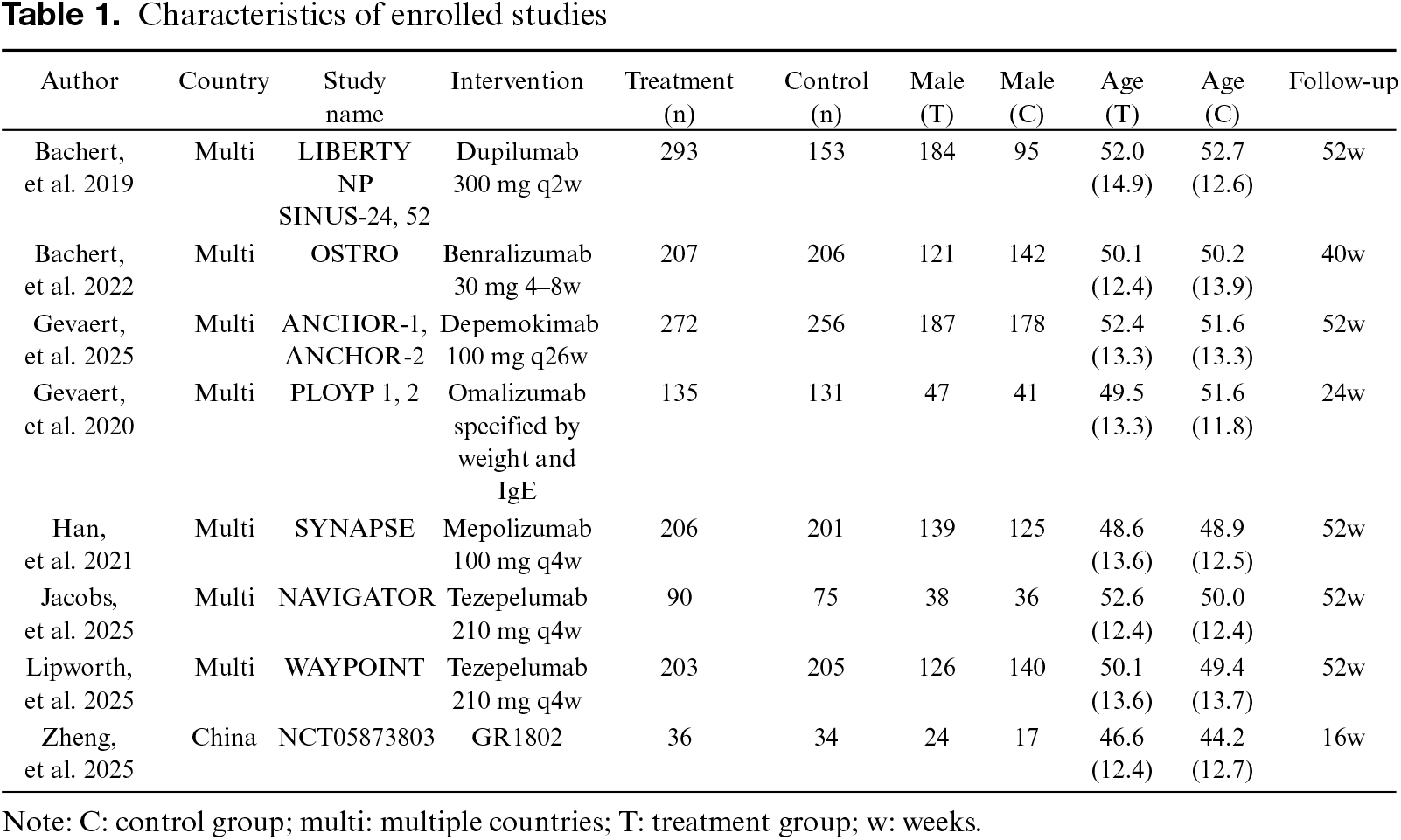
A total of 1,522 records were identified through the database search. After removing 279 duplicates, 1,243 records were screened by title and abstract, and 96 full-text articles were assessed for eligibility (Fig. S1). Ultimately, eight RCTs involving 2,564 patients were included in the NMA.21–28 The included trials evaluated seven biologic agents: benralizumab, GR1802 (a novel anti–IL-4Rα monoclonal antibody), depemokimab, dupilumab, mepolizumab, omalizumab, and tezepelumab. Study durations ranged from 16 to 52 weeks, and most studies were conducted across multiple countries, with one trial conducted in China. Key characteristics of the included studies are summarized in Table 1.
NPS
Seven studies evaluated the primary outcome of change in NPS (Fig. 1A). All biologics demonstrated reductions compared to placebo, although the CrIs overlapped (Fig. 2A). Among them, dupilumab showed the greatest estimated reduction in NPS, with an MD of −2.4 (95% CrI: −5.4 to 0.61), followed by tezepelumab (MD: −2.1; 95% CrI: −5.4 to 0.95) and GR1802 (MD: −2.0; 95% CrI: −5.0 to 1.1). The NMA results are presented in Table 2. No biologic agent demonstrated statistical superiority over the others. The possible efficacy rankings are shown in Fig. 3A. Dupilumab had the highest SUCRA value (0.807), followed by tezepelumab (0.730) and GR1802 (0.713), indicating superior overall efficacy. In contrast, placebo had the lowest SUCRA value (0.157). No heterogeneity was detected. The funnel plot assessing publication bias is shown in Fig. S2, with Egger’s test yielding a p-value of 0.78.
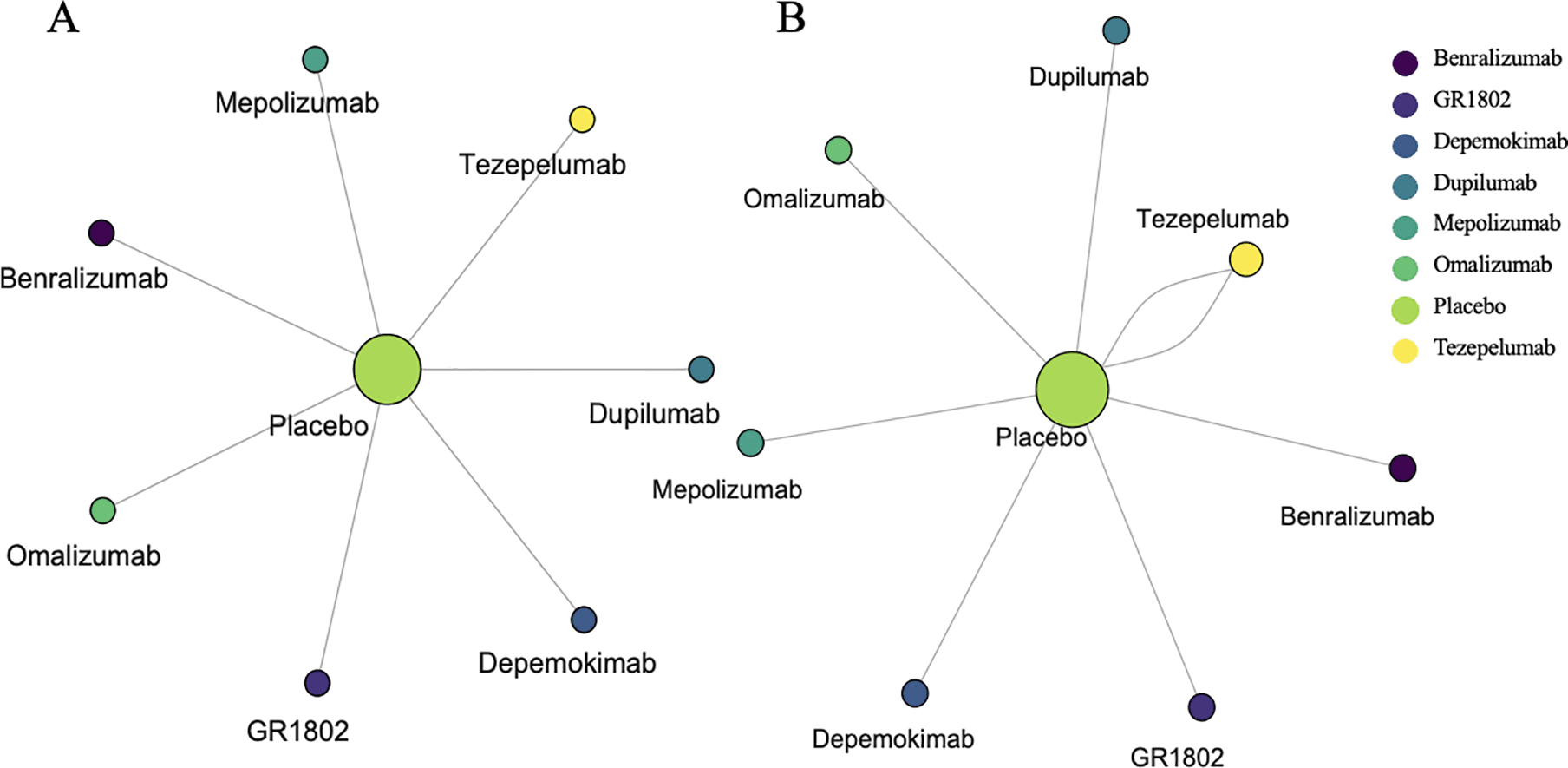
Figure 1. Network graphs of treatment comparisons. (A) NPS and (B) SNOT-22 score and serious AE.
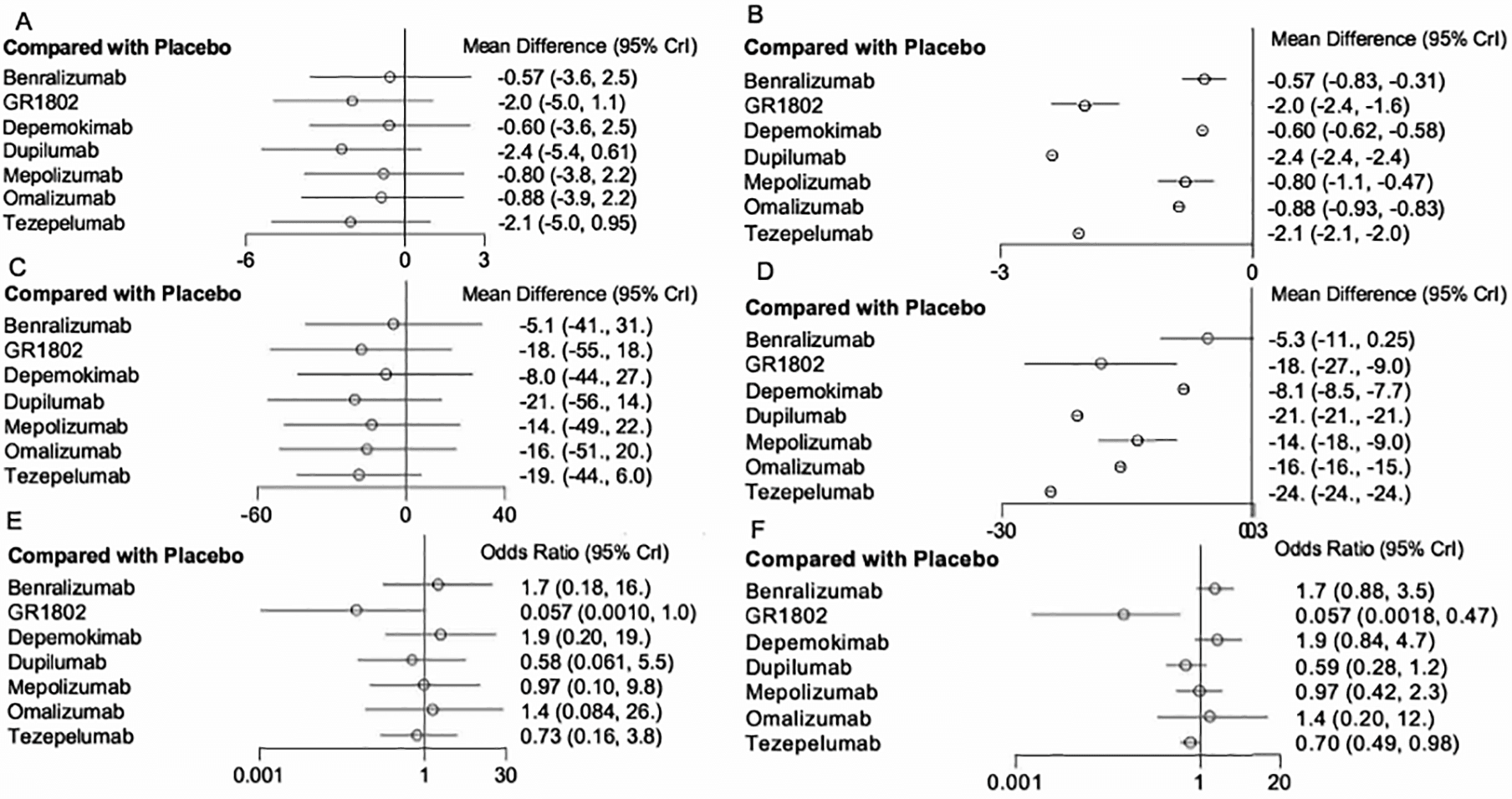
Figure 2. Outcomes by random- and fixed-effects models. (A) NPS by random model; (B) NPS by fixed model; (C) SNOT-22 score by random model; (D) SNOT-22 score by fixed model; (E) serious AE by random model; (F) serious AE by fixed model.
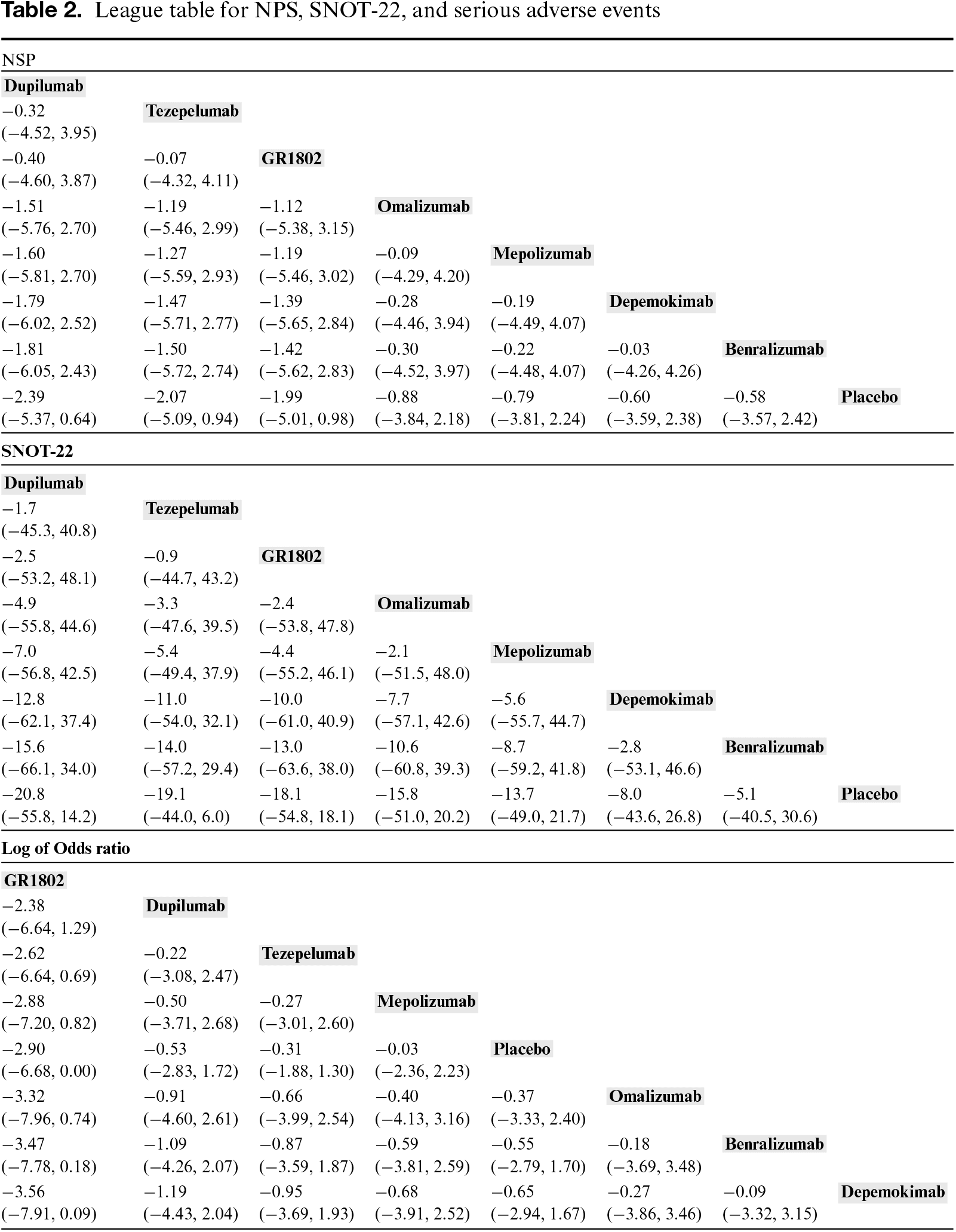
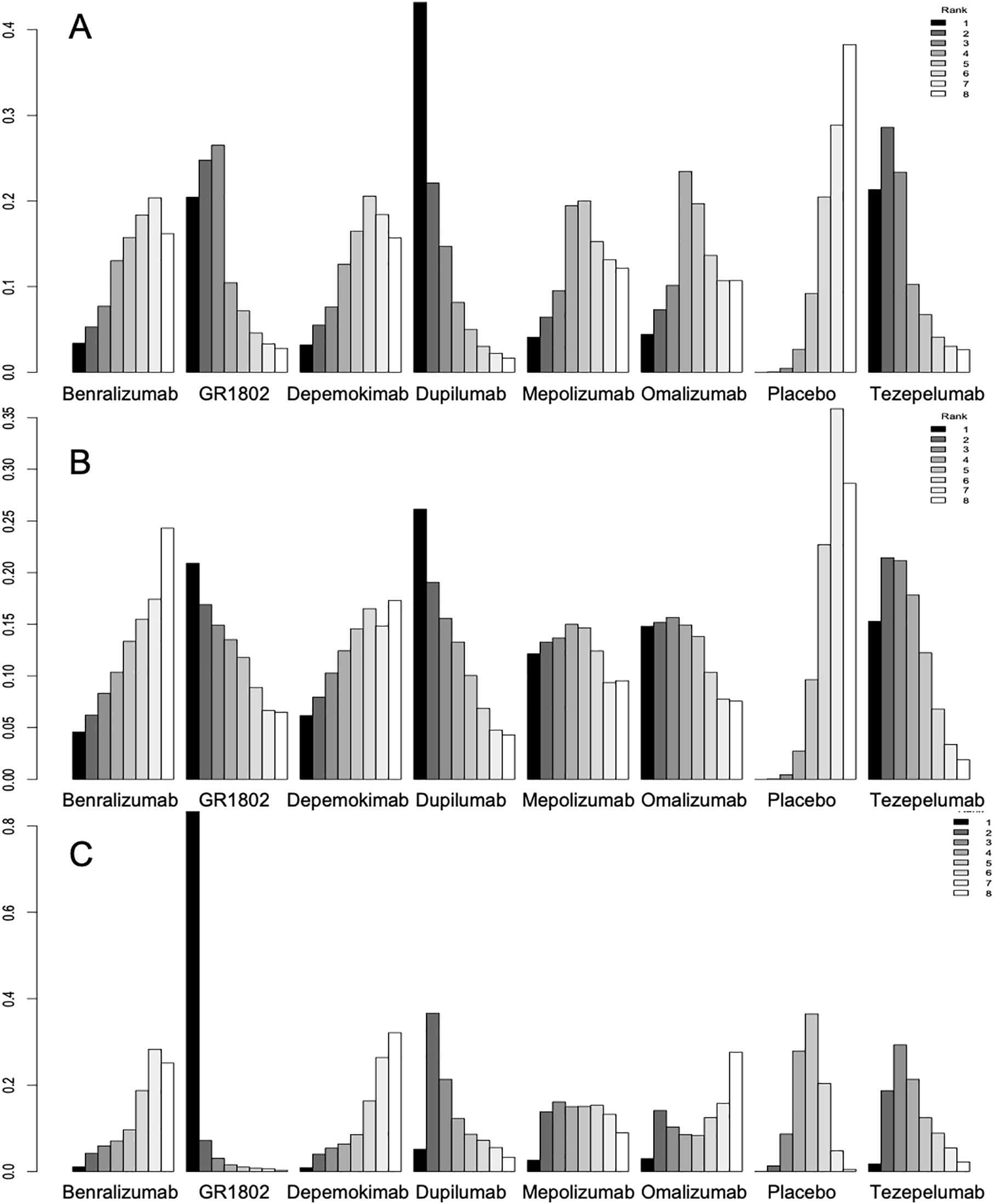
Figure 3. Treatment ranking probabilities by random-effects model. (A) NPS; (B) SNOT-22 score; (C) serious AE.
A fixed-effects model was used for sensitivity analysis. Direct comparisons with placebo are presented in Fig. 2B, where all biologics demonstrated reductions in NPS relative to placebo. Dupilumab showed the greatest estimated reduction, with an MD of −2.4 (95% CrI: −2.4 to −2.4), followed by tezepelumab (MD: −2.1; 95% CrI: −2.1 to −2.0). The NMA indicated that dupilumab was more effective than tezepelumab, with an MD of −0.32 (95% CrI: −0.36 to −0.28) (Table S2). Treatment ranking probabilities are shown in Fig. S3, with dupilumab ranked highest, followed by tezepelumab and GR1802.
SNOT-22 Score
Eight studies assessed the primary outcome of change in SNOT-22 (Fig. 1B). All biologics demonstrated reductions compared to placebo, although the CrIs overlapped (Fig. 2C). Among them, dupilumab showed the greatest estimated decrease in SNOT-22, with an MD of −21 (95% CrI: −56 to 14), followed by tezepelumab (MD: −19; 95% CrI: −44 to 6.0) and GR1802 (MD: −18; 95% CrI: −55 to 18). The NMA is presented in Table 2. No biologic agent showed superiority over the others. The probability of efficacy ranking is shown in Fig. 3B. Based on SUCRA values, dupilumab (0.681) ranked highest in efficacy, followed closely by tezepelumab (0.666) and GR1802 (0.623). Placebo had the lowest ranking at 0.176. No heterogeneity was found. The funnel plot assessing publication bias is shown in Fig. S4, with Egger’s test yielding a p-value of 0.66.
A fixed-effects model was used for sensitivity analysis. Direct comparisons with placebo are presented in Fig. 2C, where all biologics demonstrated reductions in SNOT-22 scores relative to placebo. Tezepelumab showed the greatest estimated reduction, with an MD of −24 (95% CrI: −24 to −24), followed by dupilumab (MD: −21; 95% CrI: −21 to −21). However, the NMA indicated that dupilumab was more effective than tezepelumab, with an MD of −3.2 (95% CrI: −3.7 to −2.8) (Table S3). Treatment ranking probabilities are shown in Fig. S3, with tezepelumab ranked highest, followed by dupilumab and GR1802.
SAE
Eight studies evaluated the primary outcome of change in SAE (Fig. 1B). No biologic demonstrated worse safety compared to placebo (Fig. 2E). Among them, GR1802 showed the highest safety, with an OR of 0.06 (95% CrI: 0.001–1.00), followed by dupilumab (OR: 0.58; 95% CrI: −0.06 to 5.50) and tezepelumab (OR: 0.73; 95% CrI: 0.16–3.80). The results of the NMA are presented in Table 2. No biologic agent showed a statistically significant safety advantage over the others. Safety ranking probabilities are shown in Fig. 3C. GR1802 ranked highest, with a SUCRA value of 0.954, followed by dupilumab (0.653) and tezepelumab (0.595), while depemokimab (0.239) and benralizumab (0.265) had the lowest rankings.
A fixed-effects model was used for sensitivity analysis. Direct comparisons with placebo are shown in Fig. 2F, where no biologic demonstrated worse safety outcomes than placebo. GR1802 exhibited the highest safety, with an OR of 0.005 (95% CrI: 0.002–0.47). The NMA indicated that GR1802 was more favorable than the other biologics (Table S4). Treatment ranking probabilities are presented in Fig. S7, with GR1802 ranked highest, followed by dupilumab and tezepelumab.
Risk of Bias and Certainty of Evidence
The risk of bias assessment is presented in Fig. S8. One study was rated as having some concerns, another was classified as high risk, and the remaining six studies were assessed as having a low risk of bias. The certainty of the evidence was strong across all outcomes, supporting the efficacy of biologics compared to placebo. Among these biologics, Dupilumab and Tezepelumab ranked highest in improving NPS and SNOT-22 scores while maintaining a tolerable safety profile.
Discussion
This systematic review and NMA provide a comprehensive synthesis of the current evidence on biologic agents for the treatment of CRSwNP. By integrating data from RCTs, this study offers a comparative assessment of the efficacy and safety of seven biologics, thereby addressing a critical gap created by the lack of direct head-to-head trials. The findings reaffirm the beneficial role of biologics in reducing symptom burden and improving QoL in patients with severe disease, consistent with previous clinical trial data.29,30 Notably, this analysis offers a more comprehensive overview by including the latest agents, such as tezepelumab and GR1802, and by clearly delineating differences in safety profiles and treatment rankings. Dupilumab consistently demonstrated the highest efficacy across both NPS and SNOT-22 scores, followed closely by tezepelumab, underscoring their potential as first-line biologic options for patients with severe CRSwNP. Although GR1802’s evidence is limited to a single-country, phase 2 trial with a relatively small sample size, it showed promising potential, particularly regarding safety, warranting further investigation in larger, multicenter studies. Overall, these results provide clinicians with an evidence-based framework for personalizing treatment strategies, moving beyond general efficacy comparisons toward precision-based care in the management of CRSwNP.
CRSwNP is a burdensome and heterogeneous inflammatory condition that significantly impairs QOL and presents a substantial therapeutic challenge, especially in its severe form. Traditional treatment options, such as INCSs and FESS, provide temporary relief for many patients but often prove insufficient for those with refractory disease. The frequent need for systemic corticosteroids and repeated surgeries underscores the limitations of conventional management, emphasizing the need for more targeted and lasting solutions.31 In recent years, the emergence of biologic agents has transformed the therapeutic landscape for CRSwNP by providing a precision medicine approach that targets the underlying immunopathology of the disease.32 These agents, designed to modulate type 2 inflammation, typically characterized by eosinophilia and elevated cytokines such as IL-4, IL-5, and IL-13, offer new hope for patients with recalcitrant symptoms or contraindications to surgery. IL-8 is also a potential agent. Additionally, IL-8 may represent a promising therapeutic target.33 Their targeted mechanisms of action allow for the modulation of specific immune pathways, potentially leading to sustained symptom control and improved rates of disease remission.34
Biomarkers such as serum eosinophil counts, total IgE levels, and fractional exhaled nitric oxide (FeNO) are increasingly recognized as valuable tools for guiding the selection of biologic therapies in CRSwNP.35 Elevated eosinophil and IgE levels are commonly associated with type 2 inflammation, indicating a higher likelihood of response to agents such as dupilumab or omalizumab.35 FeNO, which reflects airway eosinophilic activity, may further support treatment decisions involving therapies targeting IL-4, IL-13, or IL-5. However, current evidence suggests that no single biomarker has sufficient sensitivity or specificity to serve as a definitive guide for treatment selection.36 Therefore, an approach based on clinical phenotypes and underlying inflammatory endotypes is crucial to optimizing outcomes and minimizing the use of less effective therapies. In addition to biological factors, practical considerations such as treatment cost, accessibility, patient adherence, and long-term safety must also be taken into account. As biologic therapies become more widely adopted, their financial impact on both healthcare systems and individual patients should be carefully evaluated.37 Furthermore, patient education and shared decision-making are essential to promote adherence and to ensure that treatment goals are clearly understood and realistically aligned.
Several limitations merit consideration. First, there were no direct comparisons between treatments; therefore, the findings rely entirely on indirect comparisons, which should be interpreted with caution, particularly when the CrIs are wide. Second, the number of repeated surgical interventions is a crucial factor in evaluating treatment efficacy; however, this was not consistently reported across studies, making an NMA for this outcome infeasible. Third, although all patients had CRSwNP, variations in baseline characteristics, sex, and potential drug interactions across studies may have influenced treatment outcomes. Fourth, some included studies had short follow-up durations and small sample sizes, limiting the availability of data on long-term safety, especially for newer agents. Fifth, although we adjusted our search strategy to include all relevant studies and balance the screening workload, several studies may not have been included in the meta-analysis. Finally, information on cost-effectiveness is lacking, making it difficult to evaluate the economic impact of these therapies.
Conclusion
This systematic review and NMA demonstrate that biologics significantly improve outcomes in adults with CRSwNP. Dupilumab and tezepelumab were the most effective in improving NPS and SNOT-22 scores, while GR1802 exhibited the best safety profile. Although no single agent was superior across all measures, these findings support the personalized use of targeted therapies.
Abbreviations
| AE | adverse event |
| AERD | aspirin-exacerbated respiratory disease |
| CRSwNP | chronic rhinosinusitis with nasal polyps |
| CrI | credible interval |
| FeNO | fractional exhaled nitric oxide |
| FESS | functional endoscopic sinus surgery |
| GRADE | Grading of Recommendations Assessment, Development and Evaluation |
| IgE | immunoglobulin E |
| IL | interleukin |
| IL-4Rα | interleukin-4 receptor alpha |
| INCS | intranasal corticosteroids |
| MD | mean difference |
| NMA | network meta-analysis |
| NPS | Nasal Polyp Score |
| OR | odds ratio |
| PRISMA | Preferred Reporting Items for Systematic Reviews and Meta-Analyses |
| QoL | quality of life |
| RCT | randomized controlled trial |
| SAE | serious adverse event |
| SNOT-22 | Sino-Nasal Outcome Test-22 |
| SUCRA | surface under the cumulative ranking curve |
Acknowledgments
None.
Funding
This study was funded by the Medical and Health Research Project of Zhejiang Province (2025KY1294).
Author Contributions
M.Z. contributed to the study design and drafting. M.Z. and W.H. contributed to the study search, quality control, data extraction, and analysis. Q.M. and K.C. worked on data interpretation and revision. All authors have read the manuscript and agree with its content and data.
Data Availability
The corresponding author shall make the datasets available upon reasonable request.
Ethical Statement
Institutional Review Board approval was waived due to the nature of the meta-analysis.
Conflict of Interest
The authors report no conflicts of interest in this work.
Supplemental Information
Supplemental information for this article can be found online at https://sup.jclinque.com/api/articles/79/download-suppl.
References
[1] Costanzo GAML, Ledda AG, Sambugaro G, et al. A real-life evaluation of SNOT-22 domains in a cohort of CRSwNP patients treated with biologic therapies for 12 months. World Allergy Organ J. March 2025;18(3):101041. doi:10.1016/j.waojou.2025.101041.
[2] Bachert C, Han JK, Wagenmann M, et al. EUFOREA expert board meeting on uncontrolled severe chronic rhinosinusitis with nasal polyps (CRSwNP) and biologics: definitions and management. J Allergy Clin Immunol. January 2021;147(1):29–36. doi:10.1016/j.jaci.2020.11.013.
[3] Mullol J, Azar A, Buchheit KM, et al. Chronic rhinosinusitis with nasal polyps: quality of life in the biologics era. J Allergy Clin Immunol Pract. June 2022;10(6):1434–1453.e9. doi:10.1016/j.jaip.2022.03.002.
[4] Bachert C, Bhattacharyya N, Desrosiers M, Khan AH. Burden of disease in chronic rhinosinusitis with nasal polyps. J Asthma Allergy. 2021;14:127–134. doi:10.2147/jaa.S290424.
[5] Abuduruk SH, Sabb Gul BK, AlMasoudi SM, et al. Factors contributing to the recurrence of chronic rhinosinusitis with nasal polyps after endoscopic sinus surgery: a systematic review. Cureus. August 2024;16(8):e67910. doi:10.7759/cureus.67910.
[6] Spielman DB, Overdevest J, Gudis DA. Olfactory outcomes in the management of aspirin exacerbated respiratory disease related chronic rhinosinusitis. World J Otorhinolaryngol Head Neck Surg. December 2020;6(4):207–213. doi:10.1016/j.wjorl.2020.07.001.
[7] Toppila-Salmi S, Reitsma S, Hox V, et al. Endotyping in chronic rhinosinusitis—an EAACI task force report. Allergy. January 2025;80(1):132–147. doi:10.1111/all.16418.
[8] Olaguibel JM, Sastre J, Rodríguez JM, et al. Eosinophilia induced by blocking the IL-4/IL-13 pathway: potential mechanisms and clinical outcomes. J Investig Allergol Clin Immunol. June 20, 2022;32(3):165–180. doi:10.18176/jiaci.0823.
[9] Ha JG, Cho HJ. Unraveling the role of epithelial cells in the development of chronic rhinosinusitis. Int J Mol Sci. September 18, 2023;24(18):14229. doi:10.3390/ijms241814229.
[10] Bernstein JA, White AA, Han JK, et al. Review of evidence supporting the use of nasal corticosteroid irrigation for chronic rhinosinusitis. Ann Allergy Asthma Immunol. January 2023;130(1):46–57. doi:10.1016/j.anai.2022.09.008.
[11] Cavaliere C, Masieri S, Begvarfaj E, et al. Long-term perspectives on chronic rhinosinusitis with nasal polyps: evaluating recurrence rates after functional endoscopic sinus surgery in the biologics era—A 5-year follow-up study. J Pers Med. March 10, 2024;14(3):297. doi:10.3390/jpm14030297.
[12] Rizzi A, Gammeri L, Cordiano R, et al. Therapeutic strategies to prevent the recurrence of nasal polyps after surgical treatment: an update and in vitro study on growth inhibition of fibroblasts. J Clin Med. April 13, 2023;12(8):2841. doi:10.3390/jcm12082841.
[13] Alska E, Łaszczych D, Napiórkowska-Baran K, et al. Advances in biologic therapies for allergic diseases: current trends, emerging agents, and future perspectives. J Clin Med. Febuary 8, 2025;14(4):1079. doi:10.3390/jcm14041079.
[14] Jangan A, Mughal Z, Ahmad A, et al. Assessment and management of allergic rhinitis: a review and evidence-informed approach for family medicine. J Gen Fam Med. November 2024;25(6):305–308. doi:10.1002/jgf2.720.
[15] De Corso E, Bellocchi G, De Benedetto M, et al. Biologics for severe uncontrolled chronic rhinosinusitis with nasal polyps: a change management approach. Consensus of the joint committee of Italian society of otorhinolaryngology on biologics in rhinology. Acta Otorhinolaryngol Ital. Febuary 2022;42(1):1–16. doi:10.14639/0392-100x-n1614.
[16] Page MJ, McKenzie JE, Bossuyt PM, et al. The PRISMA 2020 statement: an updated guideline for reporting systematic reviews. BMJ. 2021;372:n71. doi:10.1136/bmj.n71.
[17] Veroniki AA, Hutton B, Stevens A, et al. Update to the PRISMA guidelines for network meta-analyses and scoping reviews and development of guidelines for rapid reviews: a scoping review protocol. JBI Evid Synth. March 1, 2025;23(3):517–526. doi:10.11124/jbies-24-00308.
[18] Open Science Framework. Biologic agents in the treatment of severe chronic rhinosinusitis with nasal polyps in adults: a systematic review and meta-analysis. Published May 2025. Accessed on May 26, 2025. https://osfio/gmcak.
[19] Flemyng E, Moore TH, Boutron I, et al. Using Risk of Bias 2 to assess results from randomised controlled trials: guidance from Cochrane. BMJ Evid Based Med. August 2023;28(4):260–266. doi:10.1136/bmjebm-2022-112102.
[20] Brignardello-Petersen R, Izcovich A, Rochwerg B, et al. GRADE approach to drawing conclusions from a network meta-analysis using a partially contextualised framework. BMJ. 2020;371:m3907. doi:10.1136/bmj.m3907.
[21] Bachert C, Han JK, Desrosiers M, et al. Efficacy and safety of dupilumab in patients with severe chronic rhinosinusitis with nasal polyps (LIBERTY NP SINUS-24 and LIBERTY NP SINUS-52): results from two multicentre, randomised, double-blind, placebo-controlled, parallel-group phase 3 trials. Lancet. November 2, 2019;394(10209):1638–1650. doi:10.1016/s0140-6736(19)31881-1.
[22] Bachert C, Han JK, Desrosiers MY, et al. Efficacy and safety of benralizumab in chronic rhinosinusitis with nasal polyps: a randomized, placebo-controlled trial. J Allergy Clin Immunol. April 2022;149(4):1309–1317.e12. doi:10.1016/j.jaci.2021.08.030.
[23] Gevaert P, Omachi TA, Corren J, et al. Efficacy and safety of omalizumab in nasal polyposis: 2 randomized phase 3 trials. J Allergy Clin Immunol. September 2020;146(3):595–605. doi:10.1016/j.jaci.2020.05.032.
[24] Gevaert P, Desrosiers M, Cornet M, et al. Efficacy and safety of twice per year depemokimab in chronic rhinosinusitis with nasal polyps (ANCHOR-1 and ANCHOR-2): phase 3, randomised, double-blind, parallel trials. Lancet. March 15, 2025;405(10482):911–926. doi:10.1016/s0140-6736(25)00197-7.
[25] Han JK, Bachert C, Fokkens W, et al. Mepolizumab for chronic rhinosinusitis with nasal polyps (SYNAPSE): a randomised, double-blind, placebo-controlled, phase 3 trial. Lancet Respir Med. October 2021;9(10):1141–1153. doi:10.1016/s2213-2600(21)00097-7.
[26] Jacobs JS, Han JK, Lee JK, et al. Effect of Tezepelumab on Sino-Nasal Outcome Test (SNOT)-22 domain and symptom-specific scores in patients with severe, uncontrolled asthma and a history of chronic rhinosinusitis with nasal polyps. Adv Ther. January 2025;42(1):510–522. doi:10.1007/s12325-024-03006-5.
[27] Lipworth BJ, Han JK, Desrosiers M, et al. Tezepelumab in adults with severe chronic rhinosinusitis with nasal polyps. N Engl J Med. March 27, 2025;392(12):1178–1188. doi:10.1056/NEJMoa2414482.
[28] Zheng M, Wu D, Piao Y, et al. Efficacy and safety of GR1802 in uncontrolled chronic rhinosinusitis with nasal polyps: placebo-controlled phase 2 trial. J Allergy Clin Immunol. May 2025;155(5):1575–1583. doi:10.1016/j.jaci.2025.01.034.
[29] Chen H, Wang L, Zhang J, et al. Long-term efficacy and safety of different biologics in treatment of chronic rhinosinusitis with nasal polyps: a network meta-analysis. Braz J Otorhinolaryngol. April 25, 2025;91(4):101633. doi:10.1016/j.bjorl.2025.101633.
[30] Faria N, Costa MI, Fernandes AL, et al. Biologic therapies for severe asthma: current insights and future directions. J Clin Med. May 2, 2025;14(9):3153. doi:10.3390/jcm14093153.
[31] Shafik J, Sangiuolo K, Sheinin E, et al. Postoperative oral corticosteroid use following endoscopic sinus surgery for chronic rhinosinusitis: a systematic review and meta-analysis. Am J Rhinol Allergy. April 24, 2025;39:19458924251335075. doi:10.1177/19458924251335075.
[32] Garvey E, Naimi B, Duffy A, et al. Optimizing the timing of biologic and surgical therapy for patients with refractory chronic rhinosinusitis with nasal polyposis (CRSwNP). Int Forum Allergy Rhinol. March 2024;14(3):651–659. doi:10.1002/alr.23246.
[33] Cergan R, Berghi O, Dumitru M, et al. Interleukin 8 molecular interplay in allergic rhinitis and chronic rhinosinusitis with nasal polyps: a scoping review. Life (Basel). March 15, 2025;15(3):469. doi:10.3390/life15030469.
[34] Toppila-Salmi S, Bjermer L, Cardell LO, et al. Multi-disciplinary expert perspective on the management of type 2 inflammation-driven severe CRSwNP: a brief overview of pathophysiology and recent clinical insights. J Asthma Allergy. 2024;17:431–439. doi:10.2147/jaa.S447093.
[35] Ogulur I, Pat Y, Ardicli O, et al. Advances and highlights in biomarkers of allergic diseases. Allergy. December 2021;76(12):3659–3686. doi:10.1111/all.15089.
[36] Pelletier G, Godbout K, Boulay M, et al. Increase in FeNO levels following IL5/IL5R-targeting therapies in severe asthma: a case series. J Asthma Allergy. 2022;15:691–701. doi:10.2147/jaa.S358877.
[37] Book R, Lazutkin A, Eliashar R. Long-term real-world outcomes and insights of biologic therapies in chronic rhinosinusitis with nasal polyps. Int J Mol Sci. 2025;26(10):4694. doi:10.3390/ijms26104694.
 |
Copyright: © 2025 Zheng et al. This work is licensed under a Creative Commons Attribution 4.0 International License, which permits unrestricted use, distribution, and reproduction in any medium, provided the original work is properly cited. |